Black Friday starts Friday 20 November: up to 30% off, plus free FedEx shipping
Orders placed from 15 to 30 November ship from 1 December, in time for Christmas. Our shipping partner: InXpress.
Maps & PrintsBartele Gallery · Langweer
Home / Antique Prints / Natural History / Animals / Mammals

Mammals

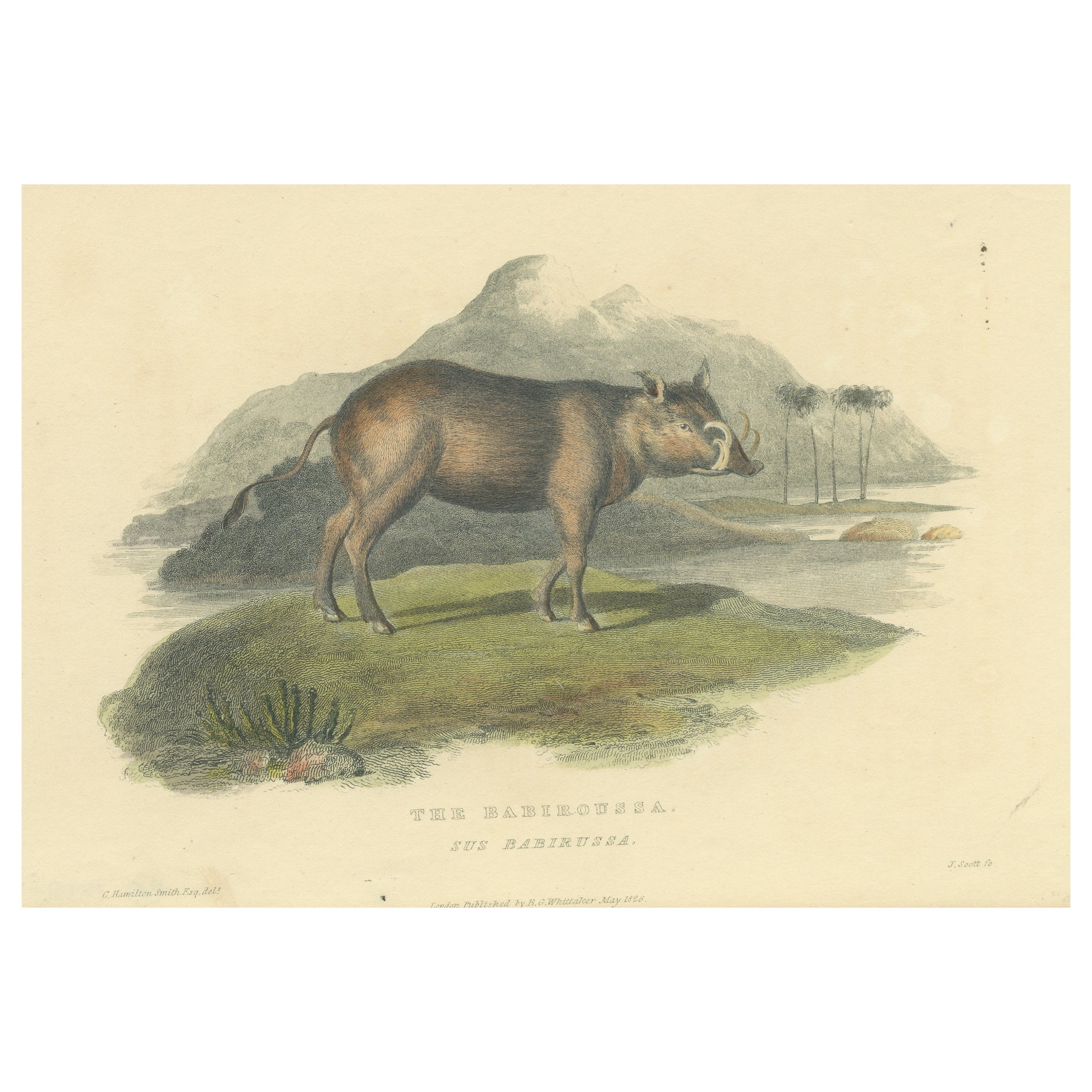
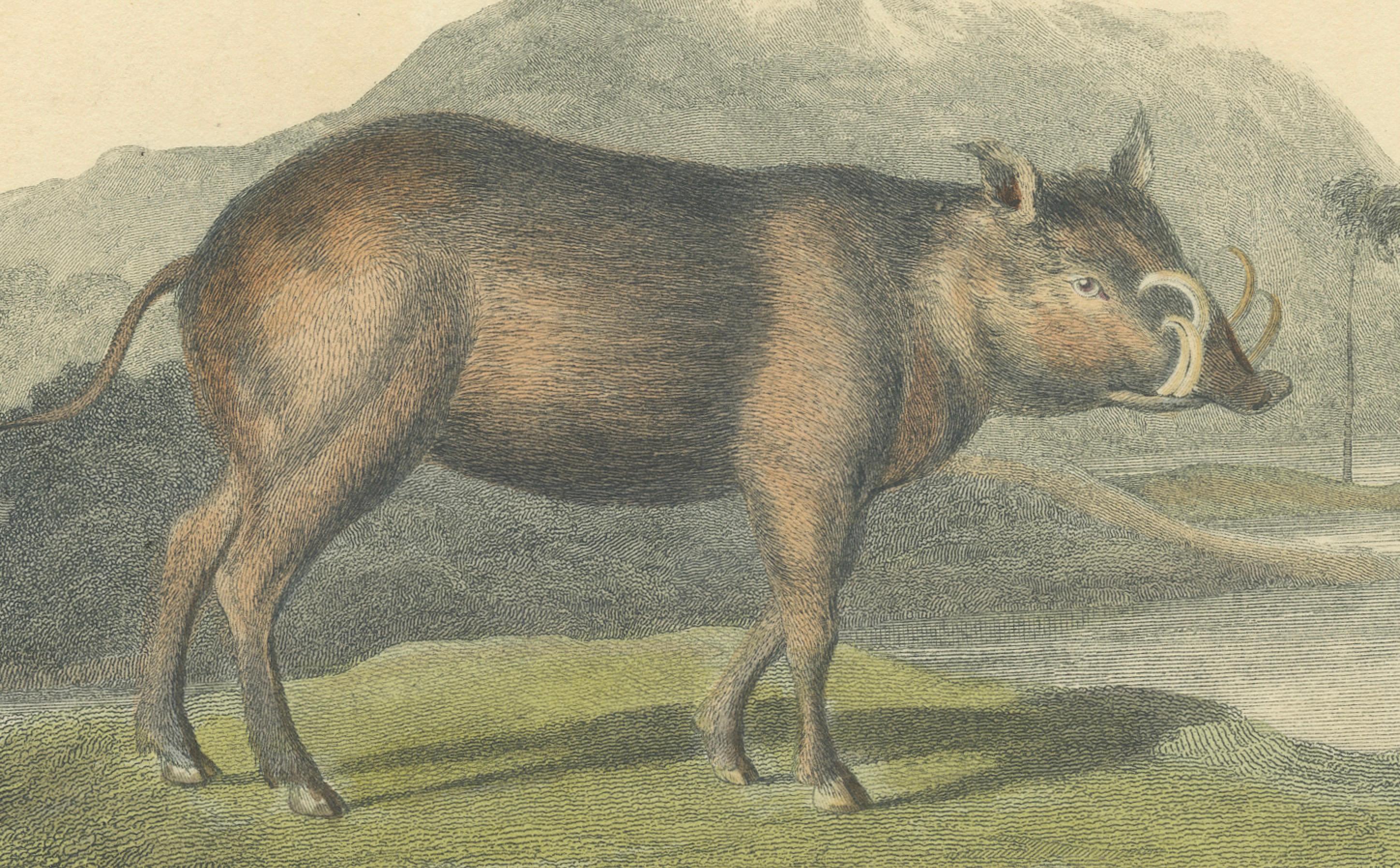
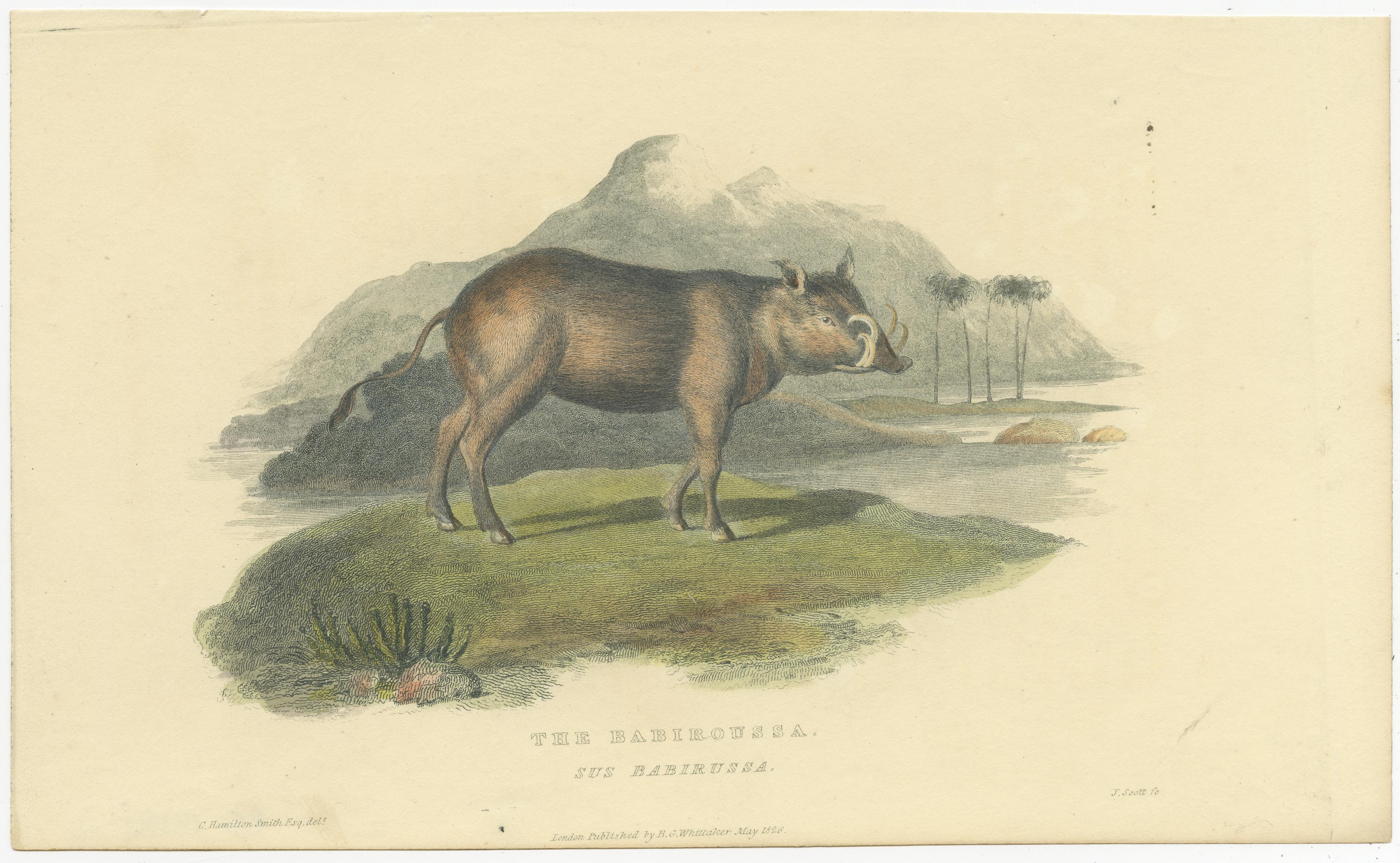
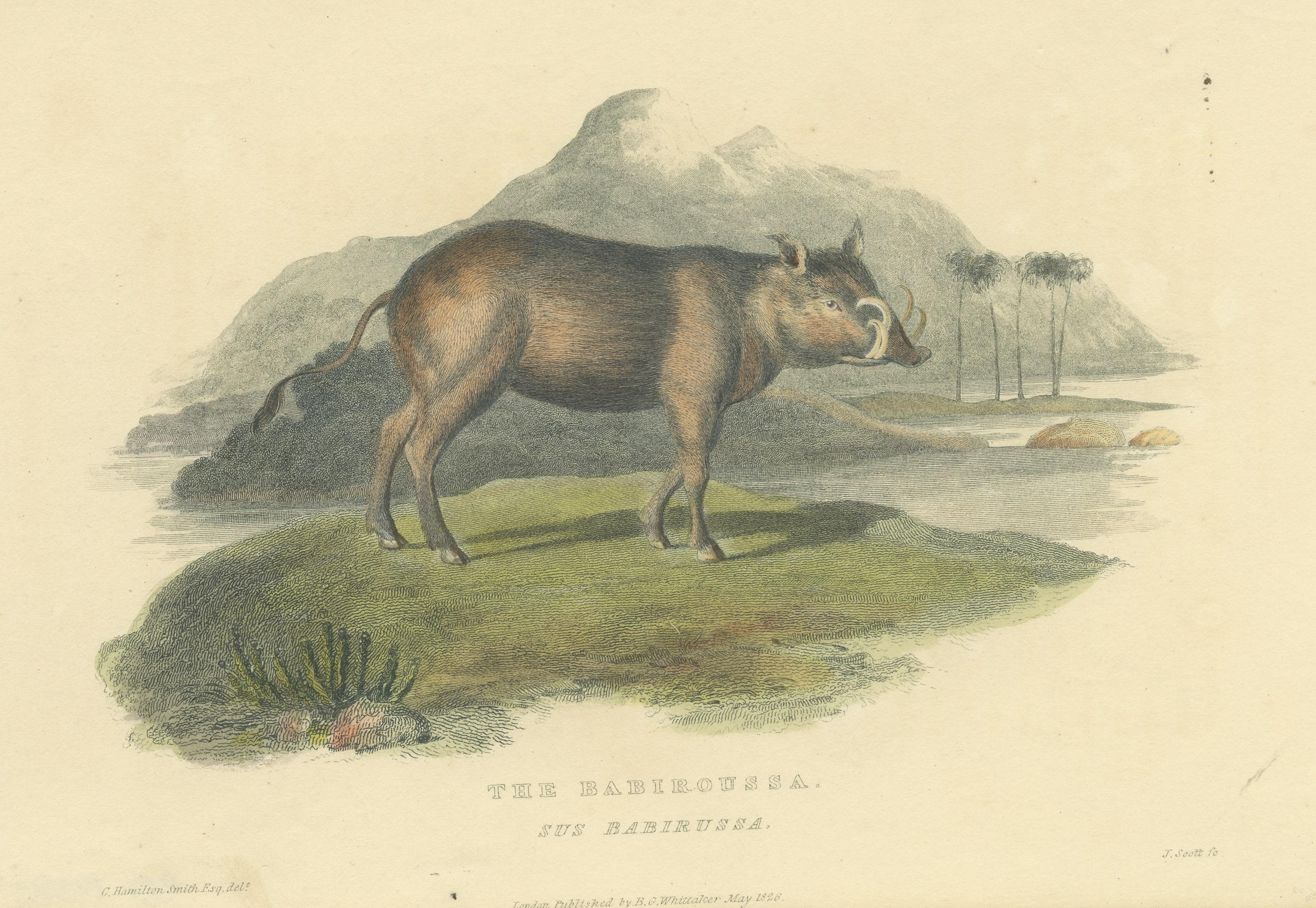
Antique Print with Hand Coloring of a Babirusa

€ 260

Original antique · The actual sheet photographed · Certificate of authenticity on request · Sold unframed · Worldwide shipping from € 15 (rates)

Sheet size
14.7 × 24.3 cm (5.8 × 9.6 in)
Condition
Good
Reference
BG-13585-11
What the condition grades mean
Excellent
Bright and clean, with no faults worth mentioning.
Very good
Only light signs of age, such as faint toning.
Good
Normal signs of age for a sheet of this period: toning, some foxing, small marks or neat old repairs.
Fair
Clear faults such as staining, tears or repairs, priced to match.

Every fault we see is written in the condition note, and the whole sheet is shown uncropped in the photos.

Condition

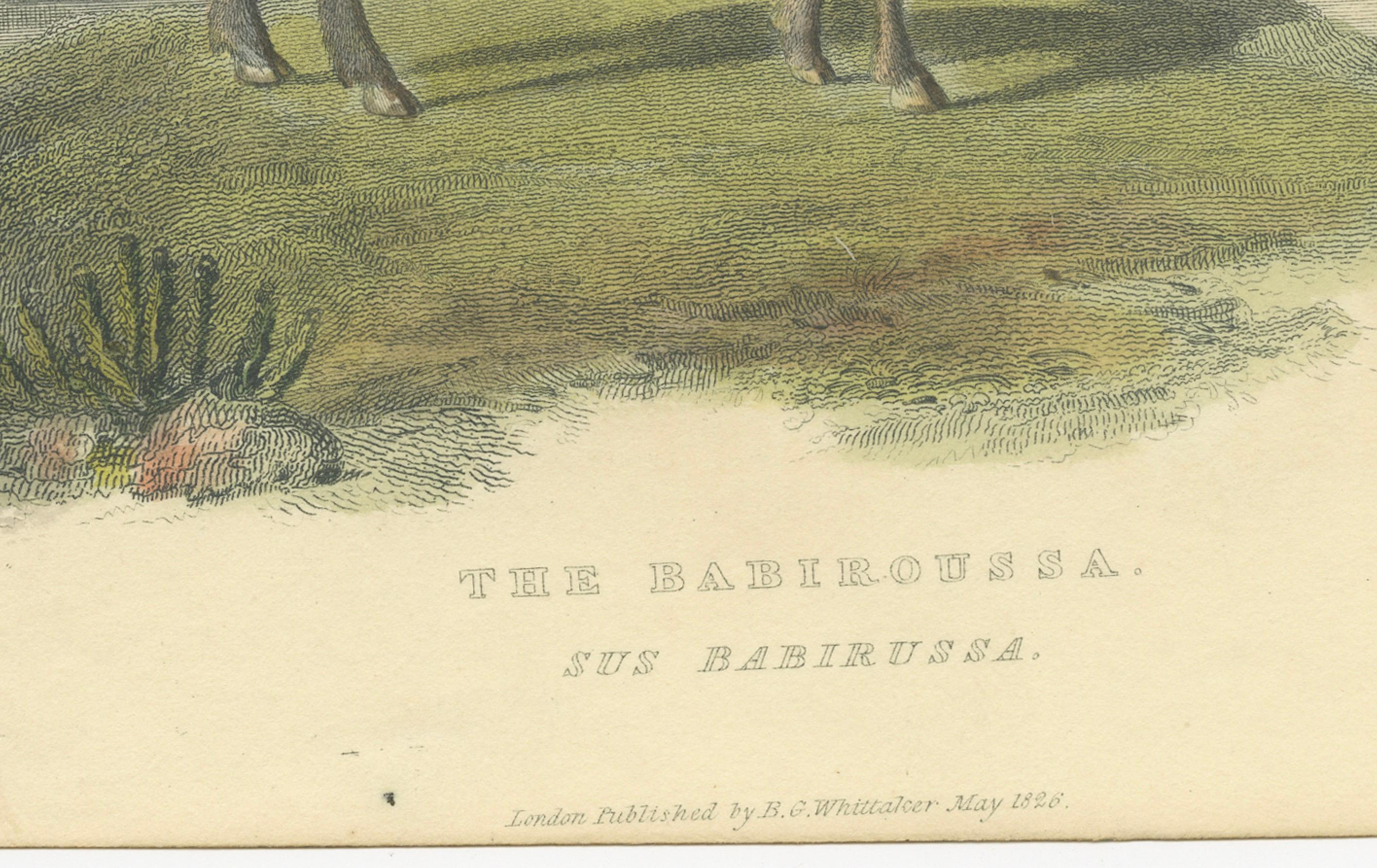
General age-related toning. Minor wear and soiling. Blank verso. Please review the images for further condition details.
About this sheet

Antique print of a babirusa, titled 'The Babiroussa, Sus Babirussa'. This print was published by G.B. Whittaker, and the illustration was created by Charles Hamilton Smith, approximately around the year 1826. The babirusa is an unusual member of the pig family (Suidae), endemic to several Indonesian islands, including Sulawesi, Togian, Sula, and Buru.

Charles Hamilton Smith was a distinguished naturalist and illustrator, whose illustrations were sought after for their scientific value and artistic quality. The publisher G.B. Whittaker was involved in distributing various works during the 19th century, contributing to the dissemination of knowledge about natural history through prints such as these.

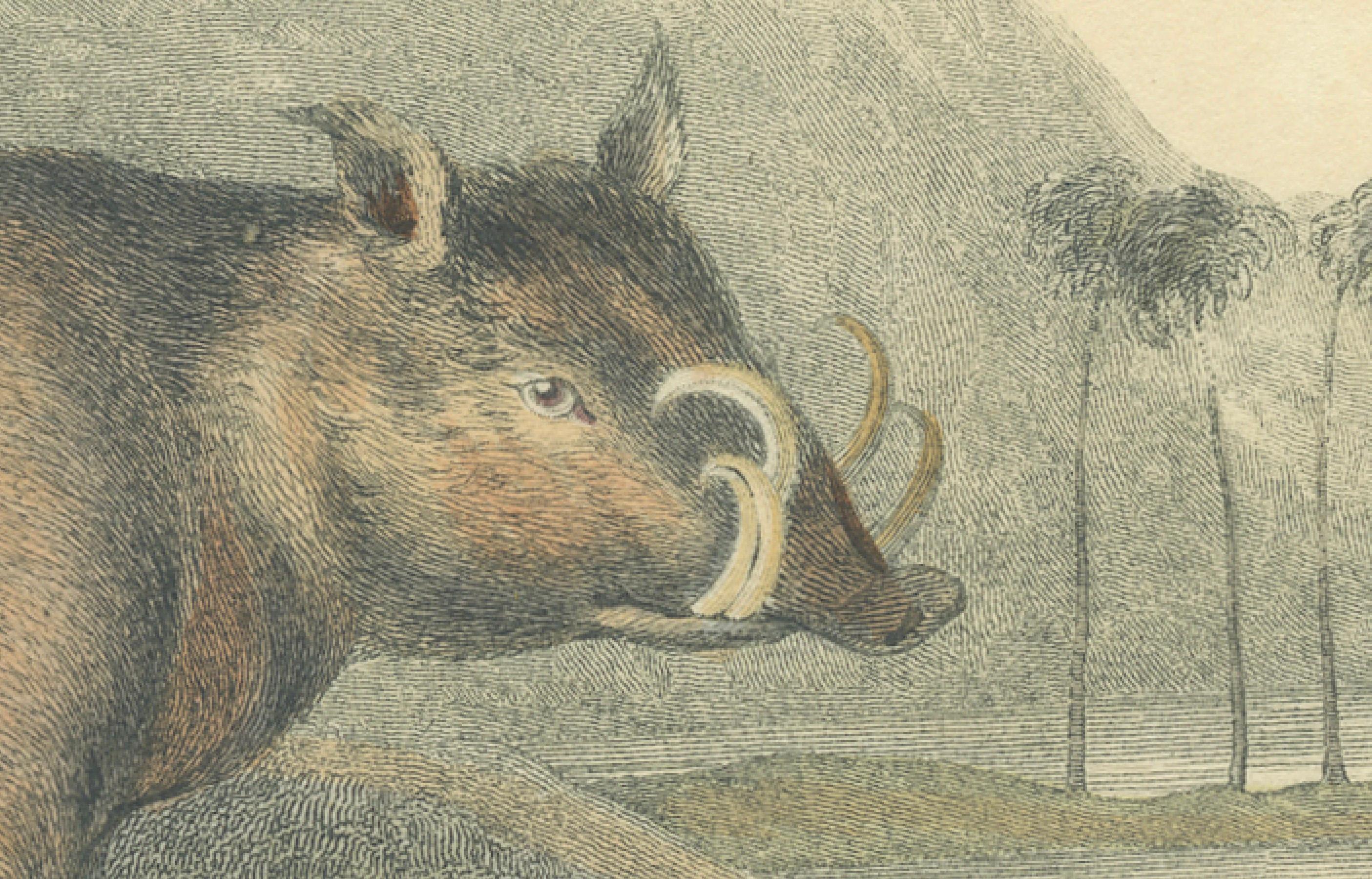
Babirusas are known for their distinctive tusks, which in males can grow upwards, curving back toward the forehead. They are called 'deer-pigs' because of these prominent tusks and their slender, deer-like legs. The genus Babyrousa is notable not only for its physical appearance but also for its rarity and the conservation concerns surrounding it. Babirusas are protected animals due to their vulnerability to hunting and habitat destruction. They are also a subject of interest in the field of conservation biology because of their limited distribution and unique ecological niches.

More from Mammals

Ask about this sheet

Antique Print with Hand Coloring of a Babirusa
Ref. BG-13585-11 · € 260
We reply by email, usually within one working day.

Your favorites

Saved in this browser. Email the list to yourself to keep it on any device.

We use your email to send this list and, only if you tick the box and confirm, for occasional new arrivals. Every email has an unsubscribe link. Bartele Gallery, the Netherlands.

Powered by SiteKeys