About this sheet
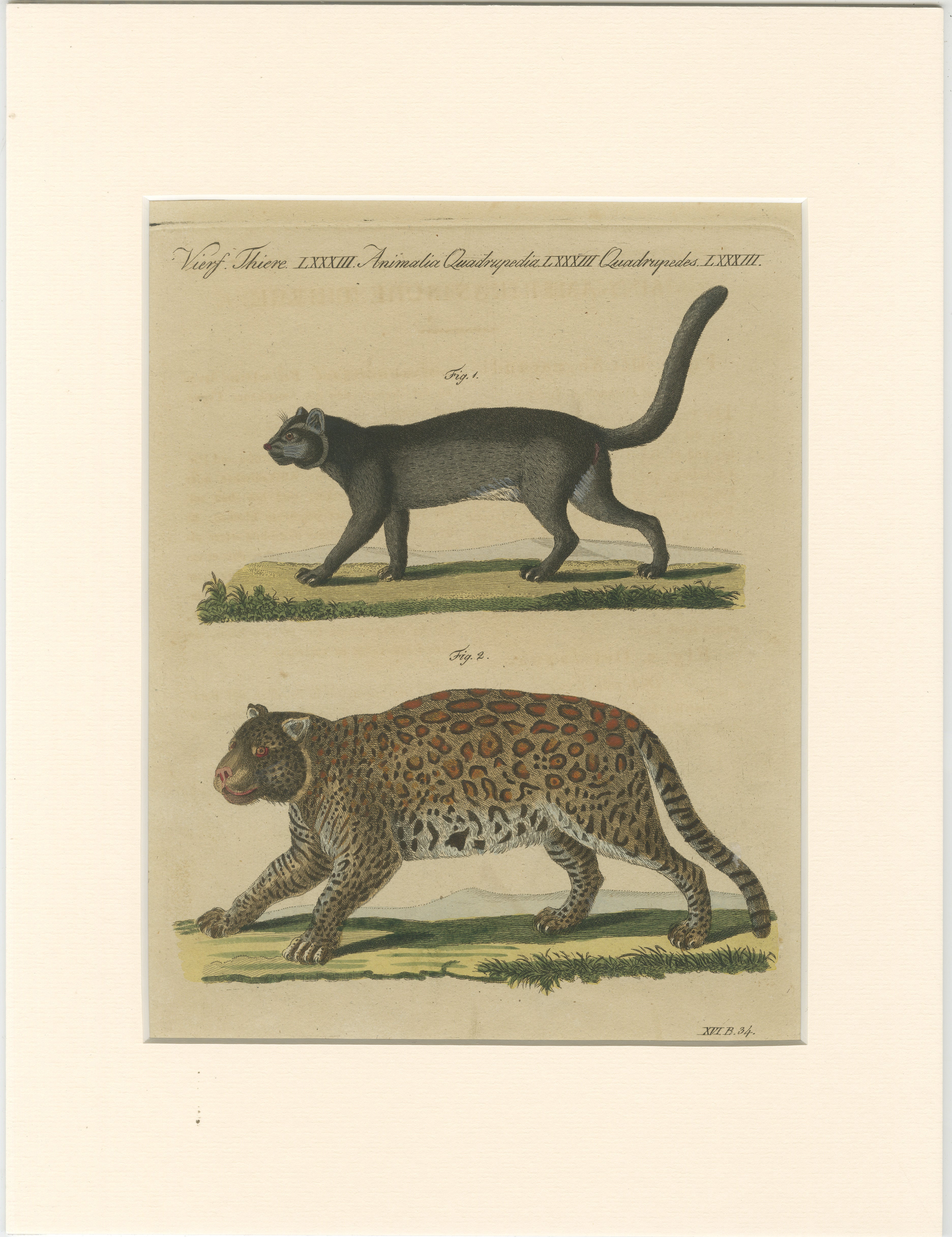
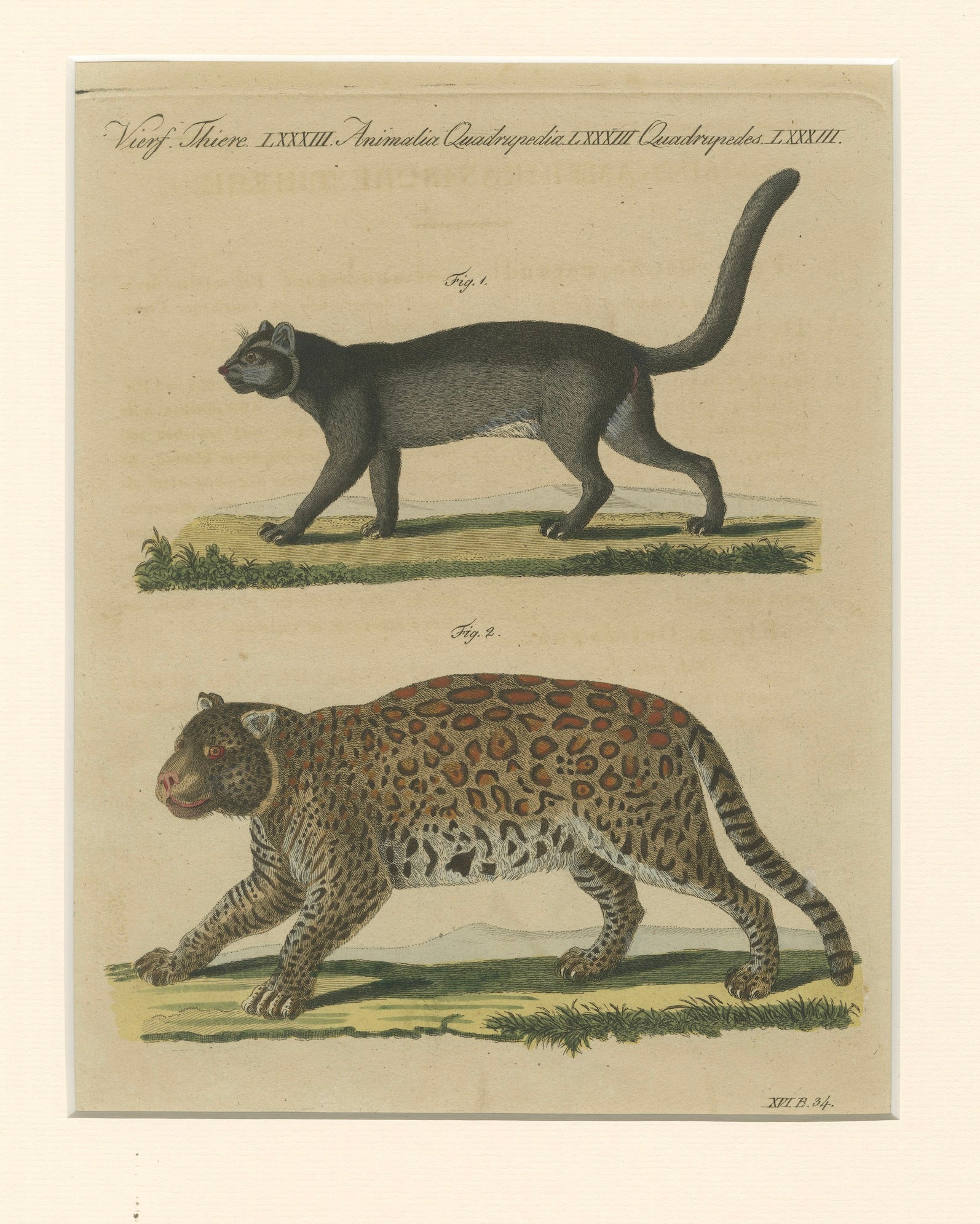
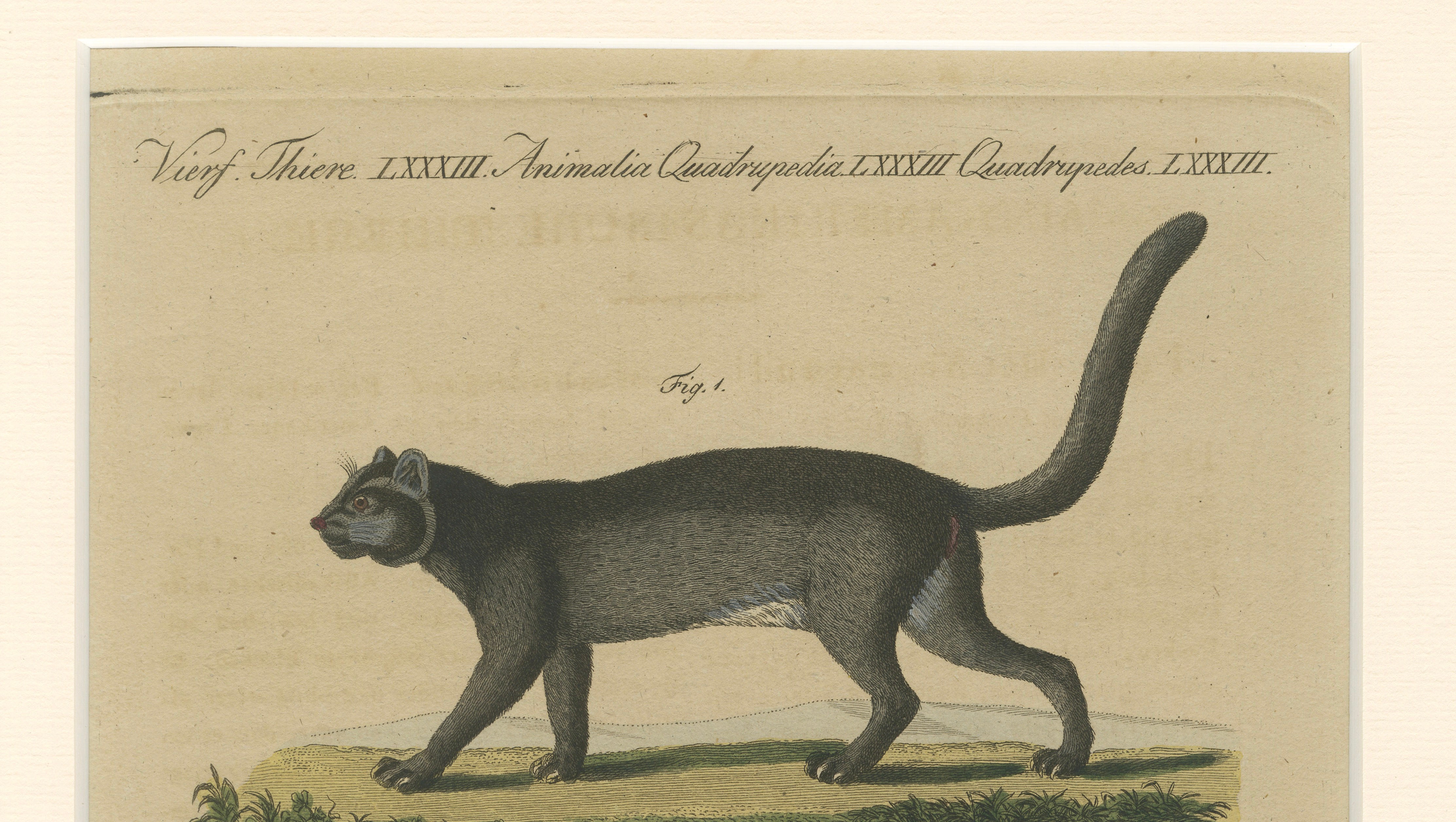
Original antique hand-colored copper engraving depicting two remarkable South American wild cats – the Jaguarundi and the Jaguar – published in Friedrich Justin Bertuch’s celebrated “Bilderbuch für Kinder” in Weimar in 1813.
The plate is headed “Vierfüßige Thiere LXXXIII / Animalia Quadrupedia LXXXIII / Quadrupèdes LXXXIII” and was titled by Bertuch “Südamericanische Thiere” – South American Animals.
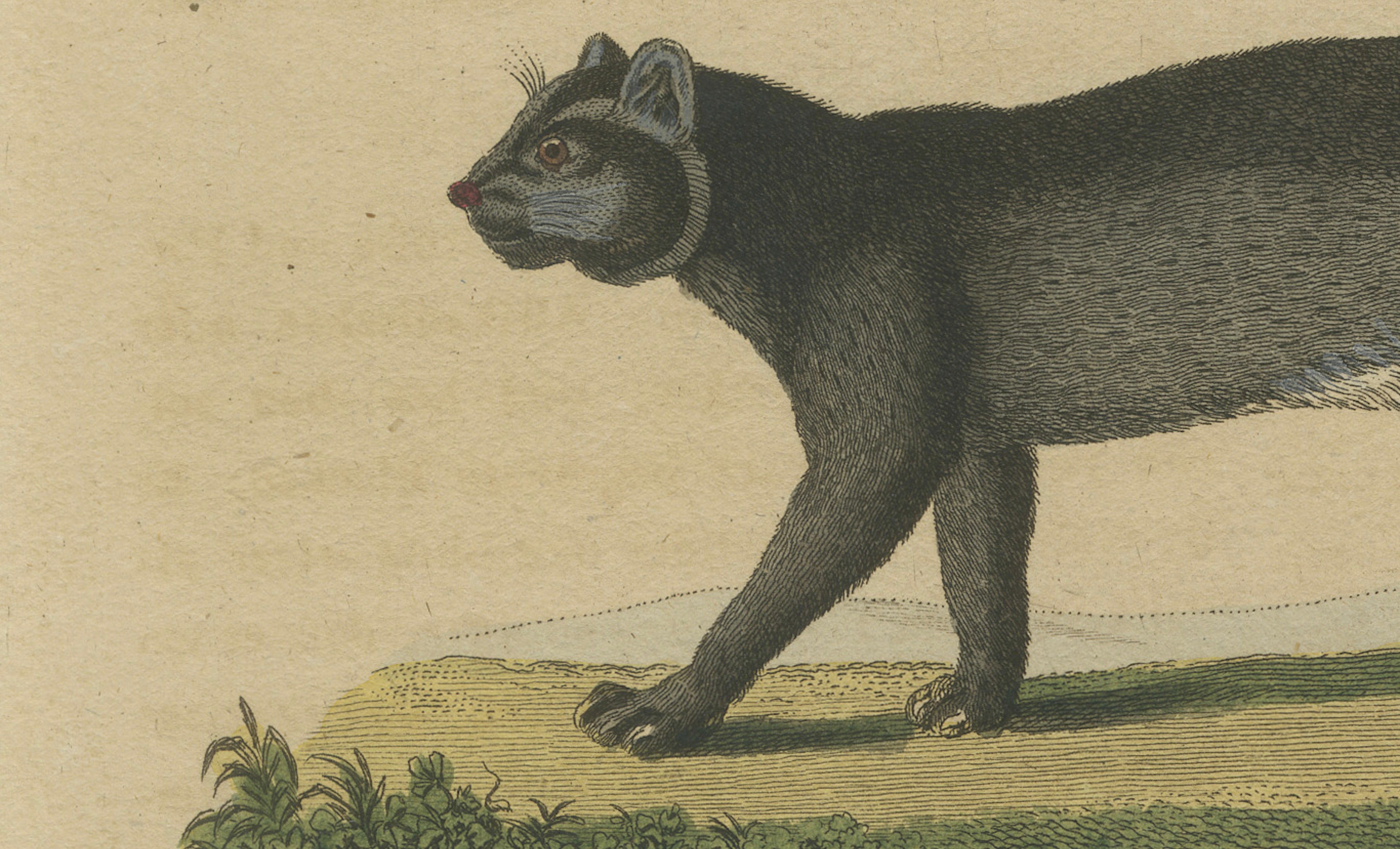
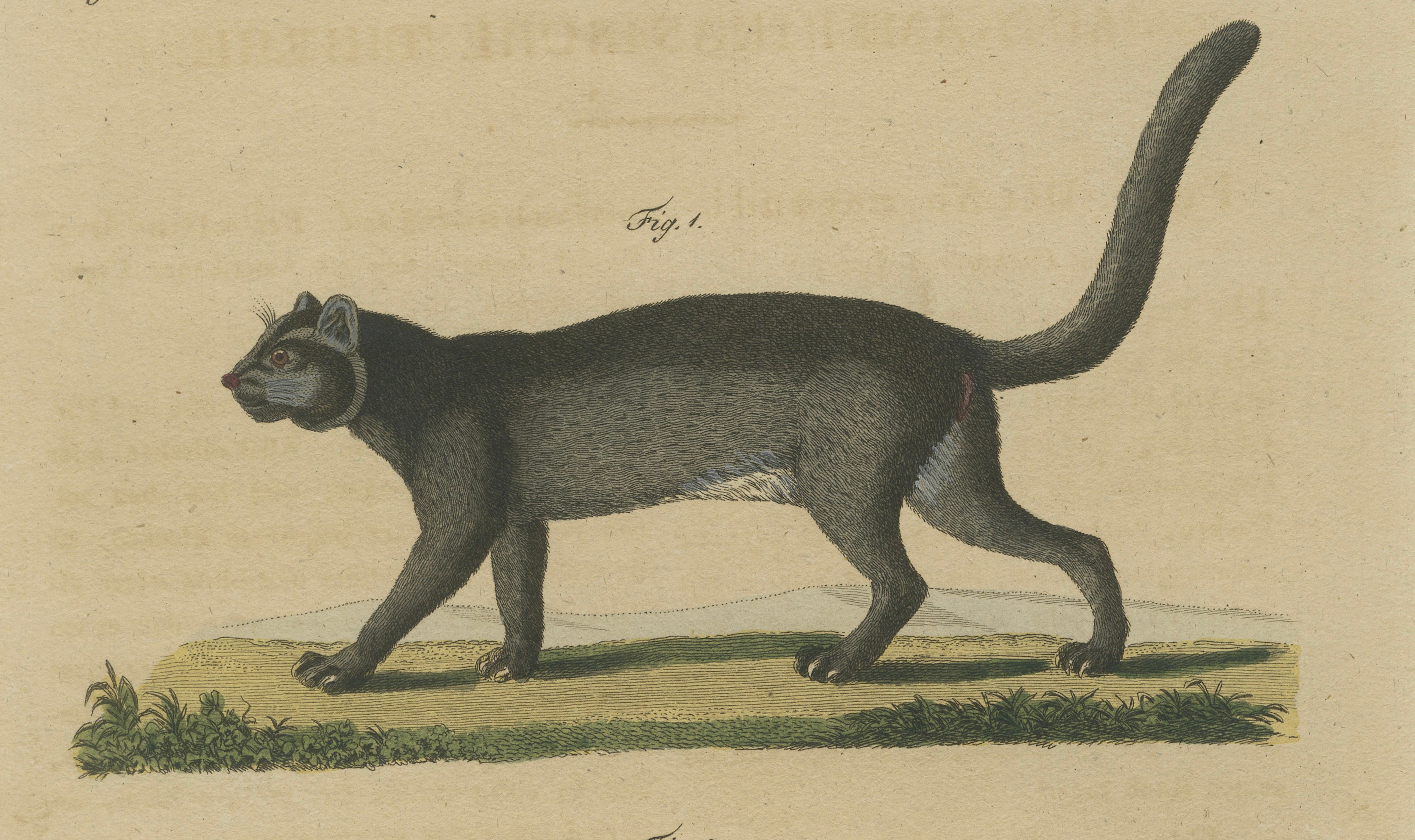
Fig. 1 – Jaguarundi / Yaguarundi
Modern name: Jaguarundi
Scientific name: Herpailurus yagouaroundi
Historical name used by Bertuch: Felis Yaguarundi
The elegant dark cat at the top of the engraving is a Jaguarundi, an unusual wild cat native to Central and South America.
Bertuch calls the animal the “Yaguarundi” and describes it as particularly associated with Brazil and dense forests.
Unlike the heavily built Jaguar below, the Jaguarundi has an unusually elongated body, relatively short legs, a small rounded head and an exceptionally long tail. Its proportions can appear almost weasel-like.
Jaguarundis occur in several color forms, including grey, dark brown or almost black individuals such as the animal represented in this engraving.
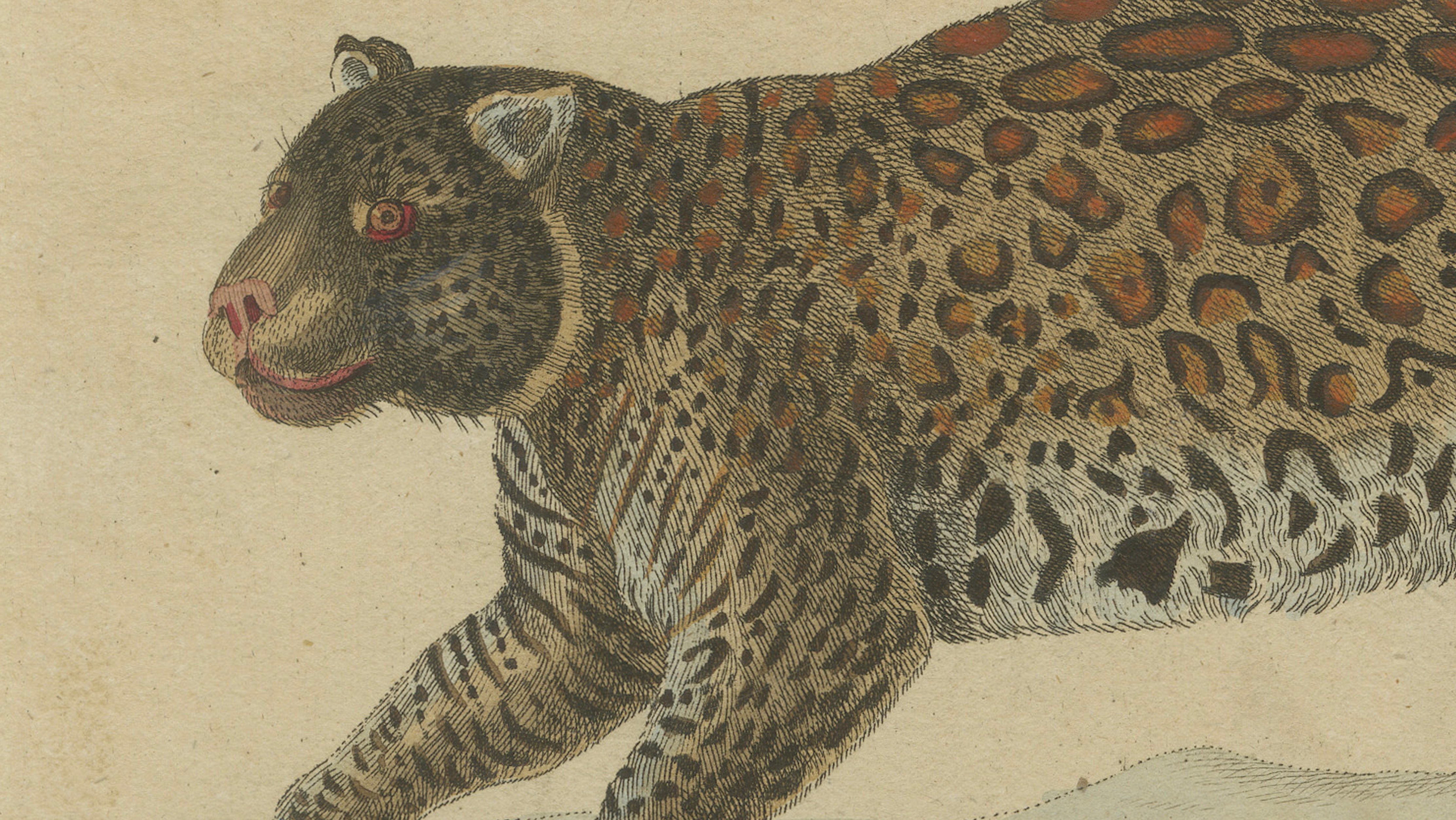
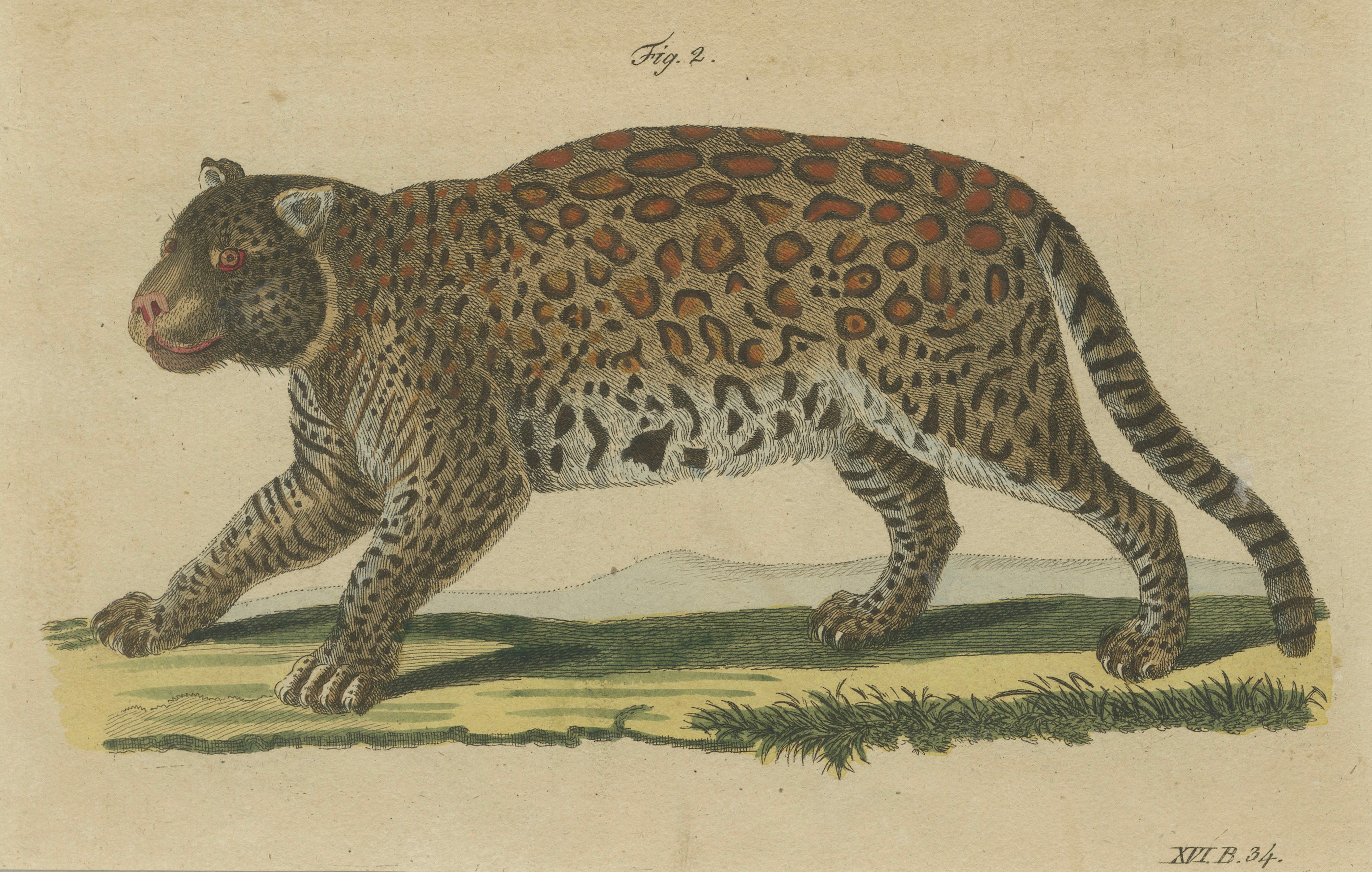
Fig. 2 – Jaguar
Modern name: Jaguar
Scientific name: Panthera onca
Historical name used by Bertuch: Felis onza
The magnificent spotted animal occupying the lower half of the plate is the Jaguar, the largest native cat of the Americas.
Bertuch describes the Jaguar as one of the great predators of South America and notes its abundance in Brazil. He compares its size and coloration with the panthers known to Europeans from Africa and the East Indies.
The Jaguar is immediately recognizable by its powerful build, broad head and richly patterned coat of dark rosettes and spots. The original hand coloring of this example beautifully emphasizes the warm ochre, reddish-brown and black markings of the animal.
Although Jaguars and Leopards can appear similar, they are different species. The Jaguar (Panthera onca) is native to the Americas, while the Leopard (Panthera pardus) occurs in Africa and Asia.
The Jaguar was an animal of enormous cultural importance in the Americas long before Europeans encountered it. It appears prominently in the mythology and art of several pre-Columbian civilizations and remains one of the most iconic animals of the South American rainforest.
Friedrich Justin Bertuch (1747–1822) was a German publisher, writer and patron of the arts. His monumental “Bilderbuch für Kinder” (Picture Book for Children), first published in Weimar in 1790, became one of the great illustrated educational encyclopedias of the late 18th and early 19th centuries.
Its hundreds of engraved and hand-colored plates introduced readers to animals, plants, geography, science, technology, antiquity and cultures from around the world.
This is a particularly attractive Bertuch mammal plate because it brings together two dramatically different South American cats: the slender, dark-coated Jaguarundi and the powerful, richly spotted Jaguar.
The contrast between the almost black upper animal and the strongly patterned Jaguar below creates an especially decorative composition.
Technique: Original hand-colored copper engraving
Publisher: Friedrich Justin Bertuch / Industrie-Comptoir
Publication: Bilderbuch für Kinder
Place: Weimar, Germany
Date: 1813
Volume: VIII
Plate: Vierfüßige Thiere LXXXIII / Animalia Quadrupedia LXXXIII / Quadrupèdes LXXXIII
Subject: South American Wild Cats
Fig. 1:
Jaguarundi / Yaguarundi
Historical scientific name: Felis Yaguarundi
Modern scientific name: Herpailurus yagouaroundi
Fig. 2:
Jaguar
Historical scientific name: Felis onza
Modern scientific name: Panthera onca
Geographical association: South America, particularly Brazil
Condition:
Good antique condition with overall age-related toning, scattered foxing and spotting and some visible show-through or offsetting from printed text. Minor marks and imperfections are present consistent with a print more than 200 years old. The original hand coloring remains particularly attractive, especially the richly patterned coat of the Jaguar. Please study the photographs carefully as they form part of the condition description.
The engraving is loosely inserted in an acid-free matting board.
Please note: This is an original antique hand-colored copper engraving from 1813, not a modern reproduction. The print is sold unframed. Framed images or interior views, if shown, are for presentation and inspiration only.
Other companion animal and natural-history plates from Bertuch’s “Bilderbuch für Kinder” are also available separately.
Keywords: Friedrich Justin Bertuch, Bilderbuch für Kinder, Jaguar, Jaguarundi, Yaguarundi, Panthera onca, Herpailurus yagouaroundi, Felis onza, Felis Yaguarundi, antique jaguar print, antique wild cat print, South American animals, South American wildlife, Brazil, Brazilian wildlife, rainforest animals, tropical...