About this sheet
Antique Bactrian Camel Engraving, Buffon Hand-Colored Print Amsterdam 1769
This beautifully hand-colored 18th-century engraving of the Bactrian camel, titled Le Chameau, comes from the Dutch edition of Buffon’s celebrated Histoire Naturelle, published in Amsterdam by J.H. Schneider in 1769. Appearing as Plate XXVII in Tome XI, this is one of the finest and most visually striking camel portraits produced for the Buffon series. Drawn by the renowned natural history artist Jacques de Sève and engraved by C.J. Fritsch, the plate captures the distinctive two-humped camel with its heavy winter coat, strong silhouette, and characteristic expression.
The scene is composed with elegance and balance. The camel stands in full profile against a backdrop of ancient ruins and distant hills, a classic Enlightenment device used to evoke both exotic geography and timeless history. De Sève’s refined linework defines the shaggy texture of the fur, the strong legs, and the pronounced humps with remarkable clarity. The hand coloring—typical of the Amsterdam Schneider edition—is subtle yet warm, blending earthy browns with soft ochre and muted landscape tones. The sky, washed in light shades of blue and gray, enhances the sense of depth and gives the plate a serene, dignified atmosphere.
Buffon and Daubenton regarded the Bactrian camel as one of the most important domesticated animals of Central Asia, valued for its endurance, strength, and adaptability to harsh climates. European audiences of the 18th century were fascinated by the camel’s unique physiology and role in trade routes such as the Silk Road. This engraving helped shape early Western perceptions of the species and remains a historically significant visual record.
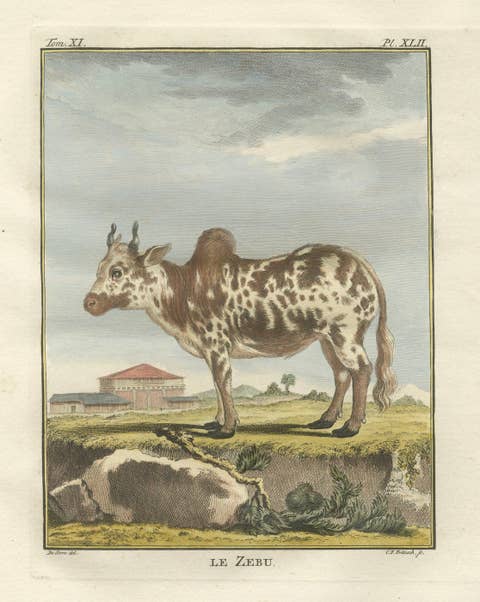
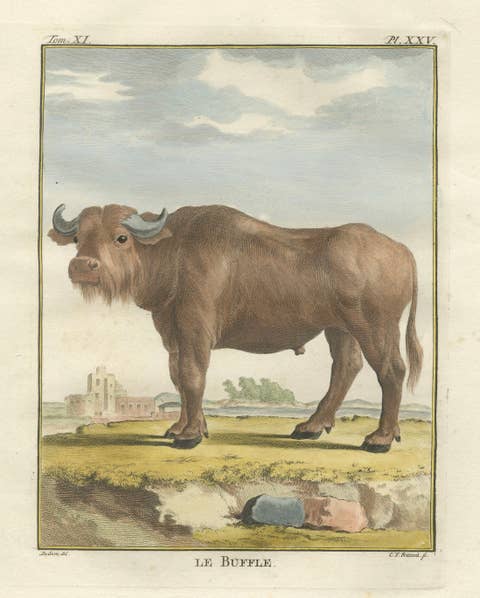
The Dutch Schneider edition is prized among collectors for its fine impressions, generous margins, and superior hand-colored plates. More than 250 years old, this example preserves exceptional detail and a strong plate mark, making it ideal for display either as a standalone statement piece or paired with related Buffon engravings such as the dromedary, rhinoceros, buffalo, or yak plates.
Condition report:
Very good for age. Minor toning and small scattered foxing in the margins, with light handling marks typical of 18th-century paper. Strong, clean impression with clearly visible plate mark. Colors remain bright and well preserved. No tears or repairs observed.
Framing tips:
This plate frames beautifully with a warm ivory, sand, or soft cream mat to enhance the camel’s earthy tones. A walnut, natural oak, or black frame complements the hand coloring. For a modern presentation, use a floating mount to showcase the wide margins and plate mark. Works especially well paired with the dromedary camel for a matched set.