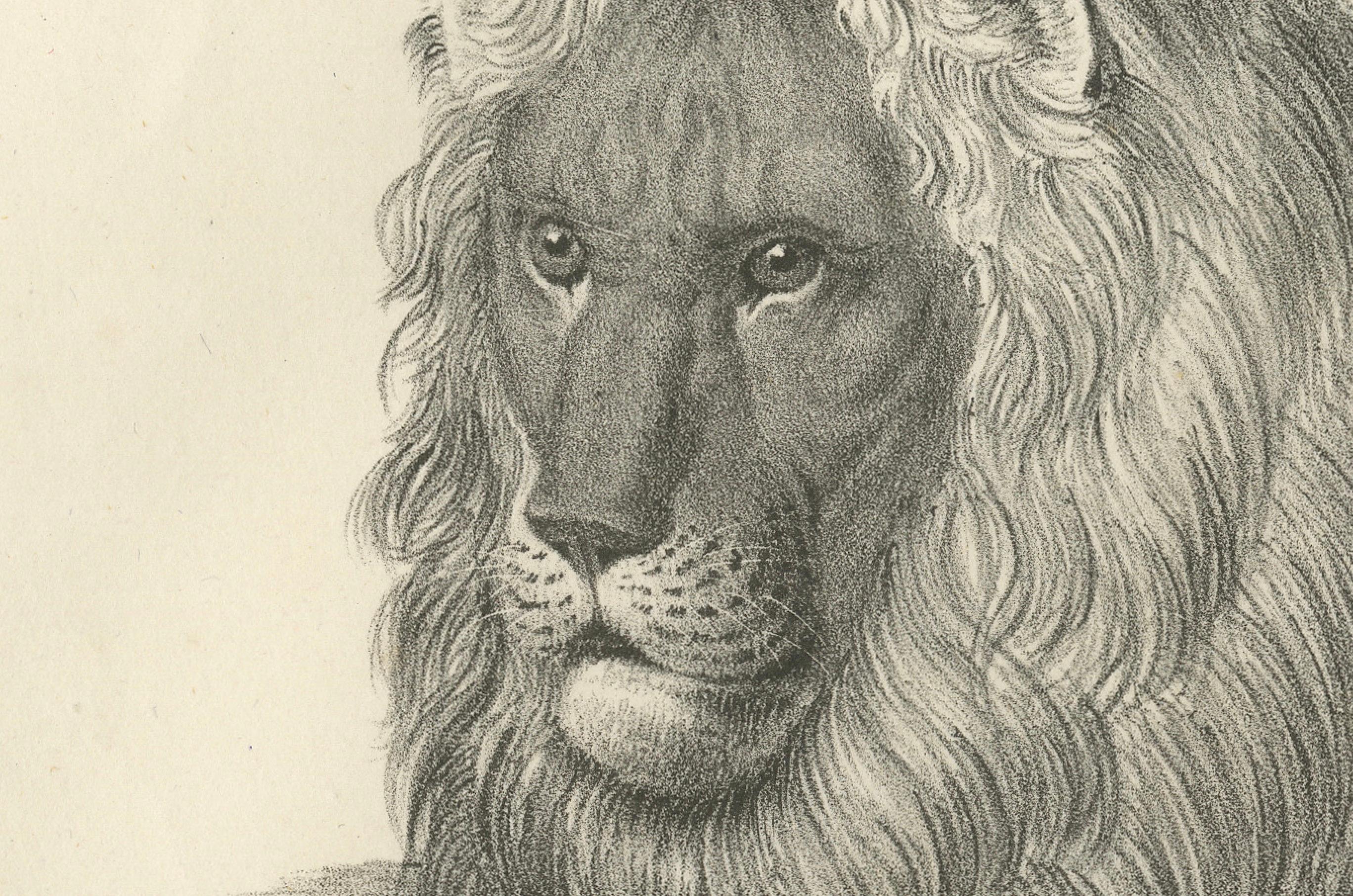
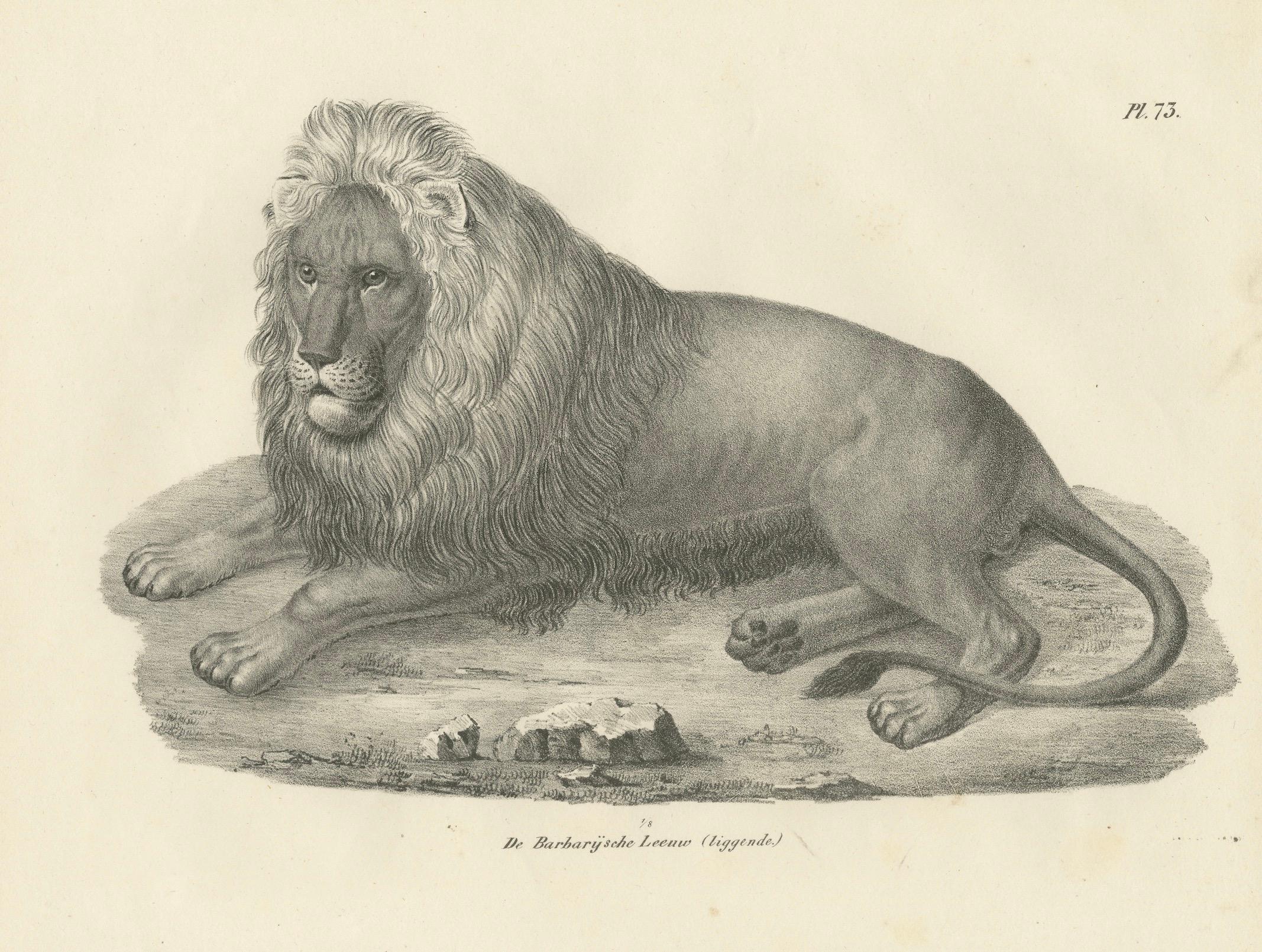
19th-Century Lithograph of the Barbary Lion in a Majestic Reclining Pose
€ 360
Original antique · The actual sheet photographed · Certificate of authenticity on request · Sold unframed · Worldwide shipping from € 15 (rates)
Sheet size
26 × 32.2 cm (10.2 × 12.7 in)
Condition
Good
Reference
BG-13176-73
What the condition grades mean
Excellent
Bright and clean, with no faults worth mentioning.
Very good
Only light signs of age, such as faint toning.
Good
Normal signs of age for a sheet of this period: toning, some foxing, small marks or neat old repairs.
Fair
Clear faults such as staining, tears or repairs, priced to match.
Every fault we see is written in the condition note, and the whole sheet is shown uncropped in the photos.
Condition
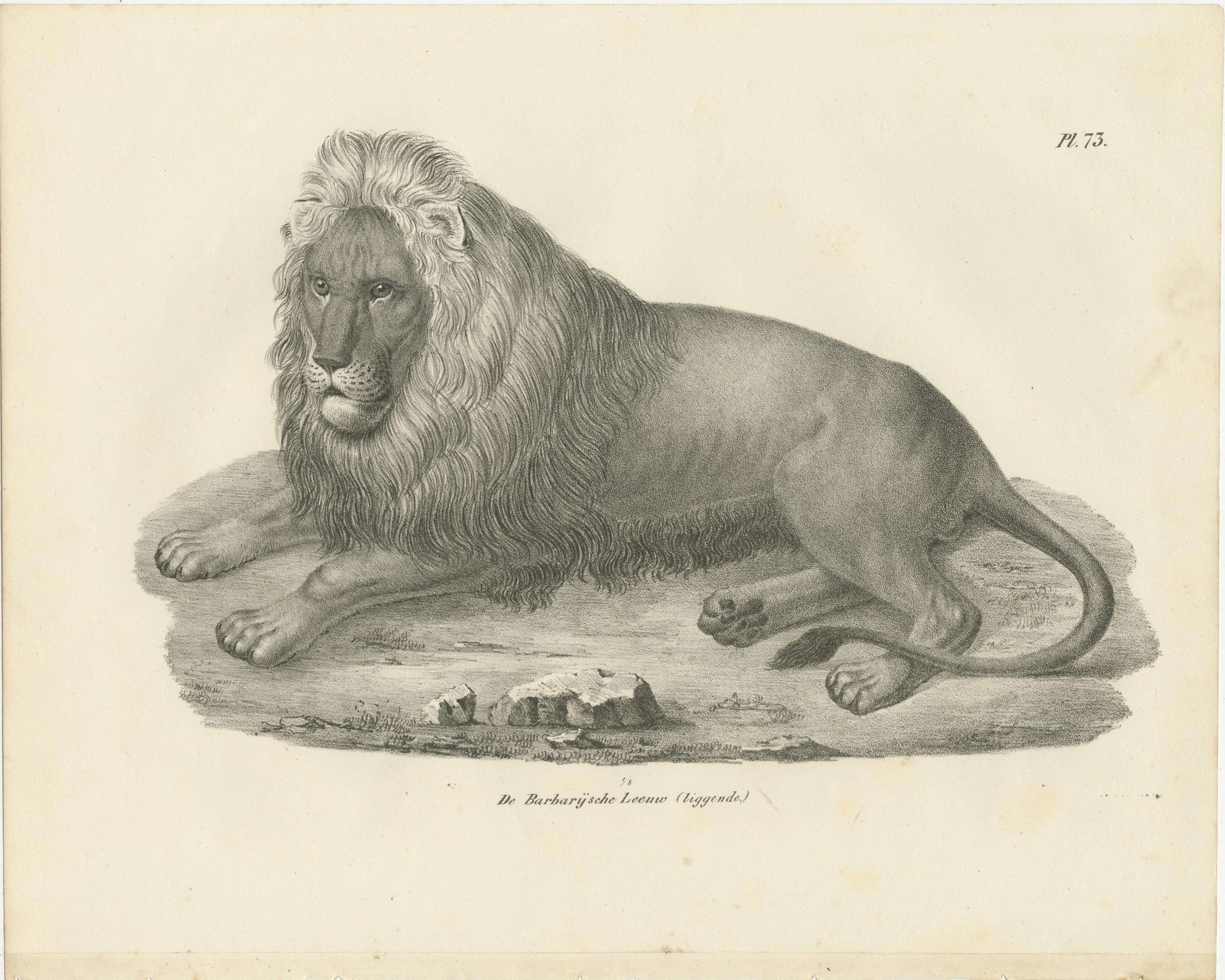
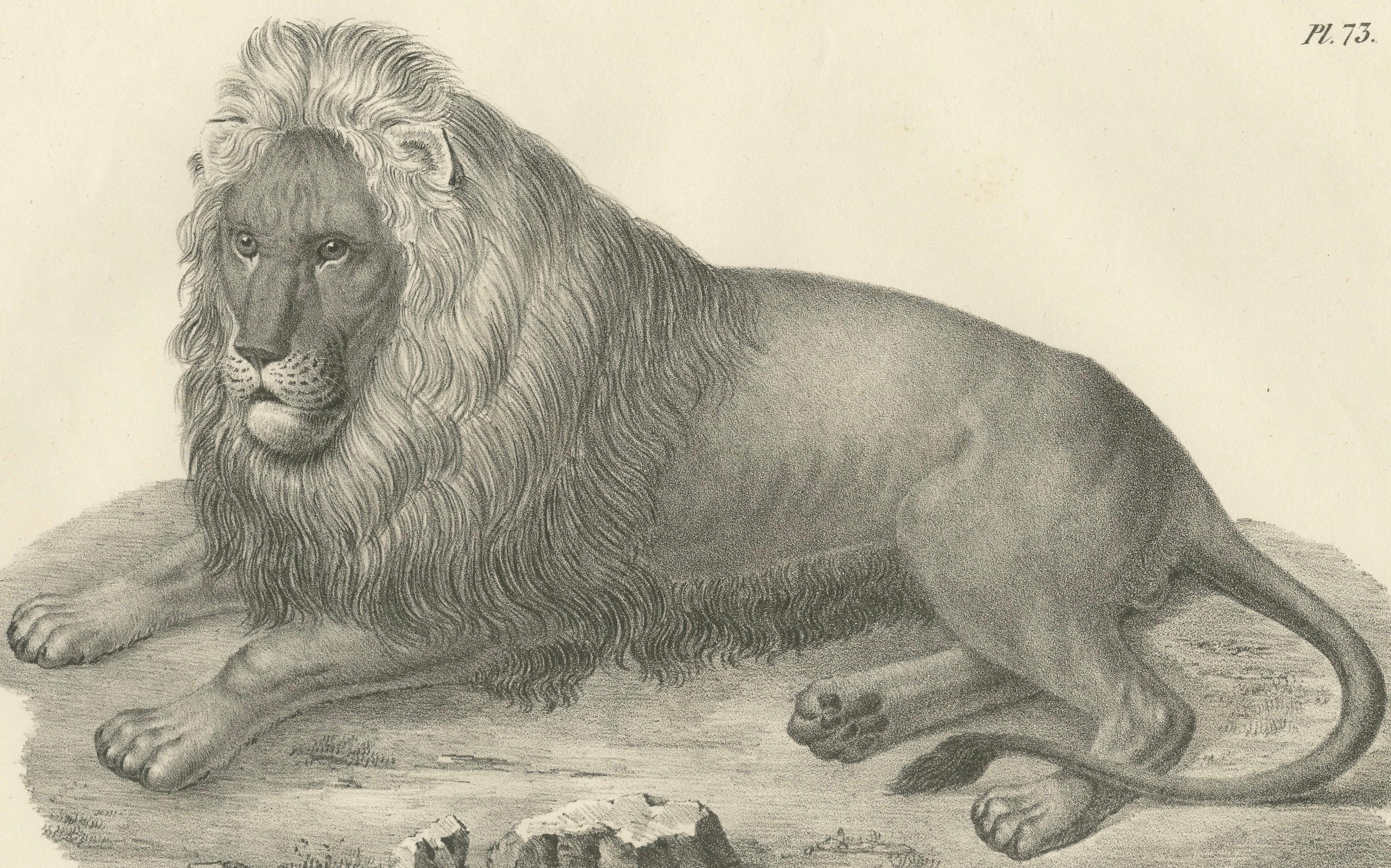
The print is in good condition, with some mild age-related toning and slight foxing along the margins. The lithographic details remain sharp, showcasing the intricate mane and muscular form of the lion.
About this sheet
19th-Century Lithograph of the Barbary Lion in a Majestic Reclining Pose
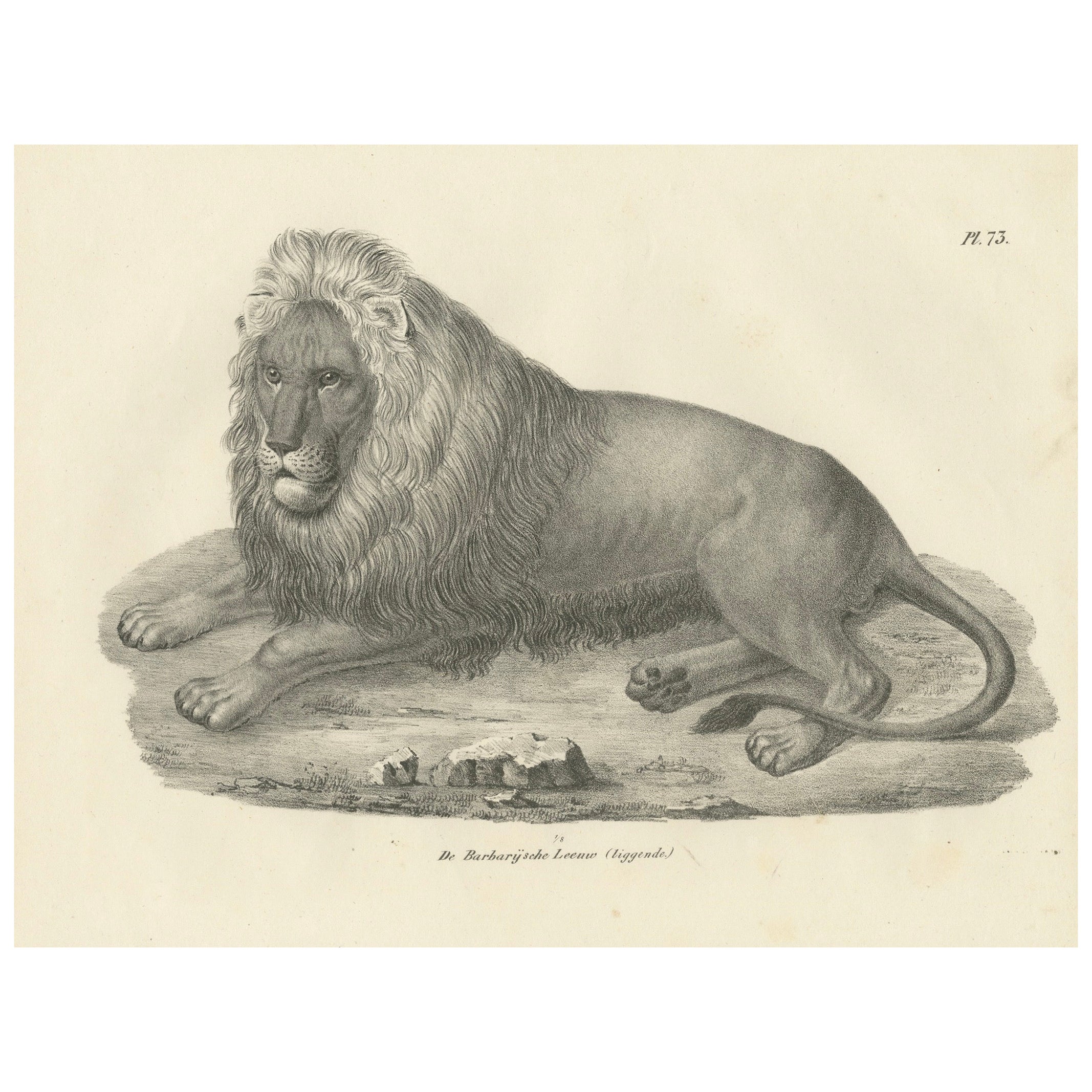
This stunning 19th-century lithograph showcases the Barbary lion (De Barbarijsche Leeuw), depicted in a powerful yet relaxed reclining pose. Originally published in 'De Zoogdieren: afgebeeld en in hunne levenswijze geschetst', this print exemplifies the artistic and scientific dedication of early zoological illustration, capturing the grandeur of one of the most legendary lion subspecies.
The Barbary lion (Panthera leo leo), also known as the Atlas lion, once roamed North Africa, particularly in the Atlas Mountains of Morocco, Algeria, and Tunisia. It was renowned for its thick, dark mane, which extended over its shoulders and chest, giving it a particularly regal appearance. Unlike its sub-Saharan relatives, the Barbary lion adapted to cooler mountainous climates. Sadly, it was driven to extinction in the wild by the mid-20th century, with only a few individuals surviving in captivity today.
Created by C.C. G. Zool. and printed by La Haye & J. L. G. V., this lithograph remains an important historical representation of a nearly lost species. It is a valuable piece for collectors of antique zoological prints, wildlife enthusiasts, and those interested in the history of Africa’s great predators.
Framing Tips: To enhance the dramatic presence of this lithograph, use an acid-free mat in a neutral tone such as off-white or light beige. A dark wooden or black frame will provide an elegant contrast, highlighting the fine details of the lion’s mane. UV-protective glass is recommended to prevent fading over time. If displayed with other wildlife lithographs, matching frames will create a cohesive and refined presentation.