19th-Century Lithograph of a Skunk and European Otter in Exquisite Detail
€ 290
Original antique · The actual sheet photographed · Certificate of authenticity on request · Sold unframed · Worldwide shipping from € 15 (rates)
Sheet size
32.2 × 26 cm (12.7 × 10.2 in)
Condition
Good
Reference
BG-13176-61
What the condition grades mean
Excellent
Bright and clean, with no faults worth mentioning.
Very good
Only light signs of age, such as faint toning.
Good
Normal signs of age for a sheet of this period: toning, some foxing, small marks or neat old repairs.
Fair
Clear faults such as staining, tears or repairs, priced to match.
Every fault we see is written in the condition note, and the whole sheet is shown uncropped in the photos.
Condition
The print is in good condition, with mild age-related toning and light foxing visible mainly along the margins. The lithographic details remain sharp, with rich shading and strong contrast. Some minor edge irregularities from past binding are present.
About this sheet
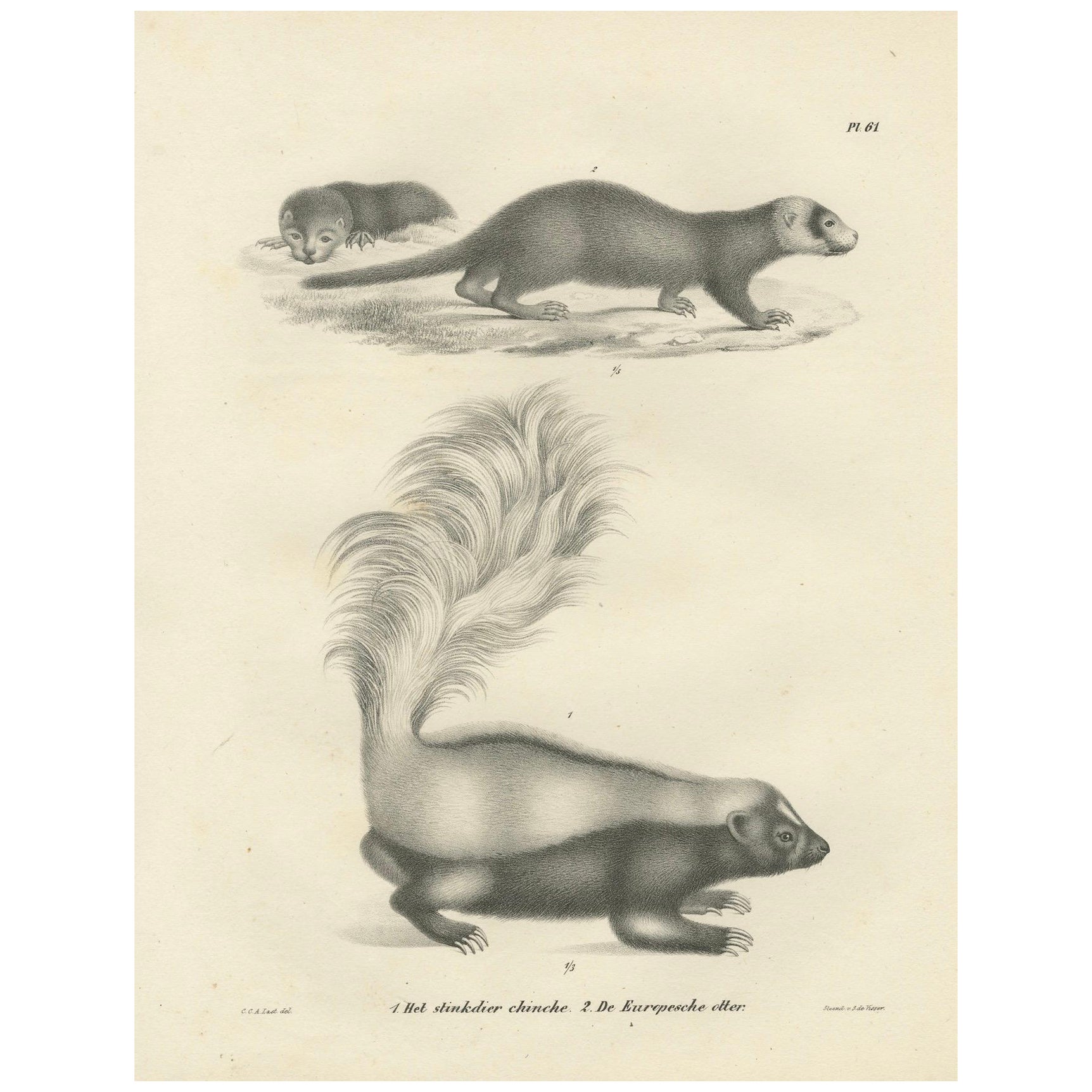
19th-Century Lithograph of a Skunk and European Otter in Exquisite Detail
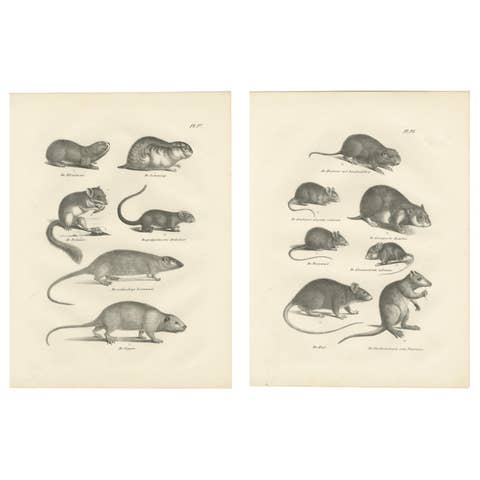
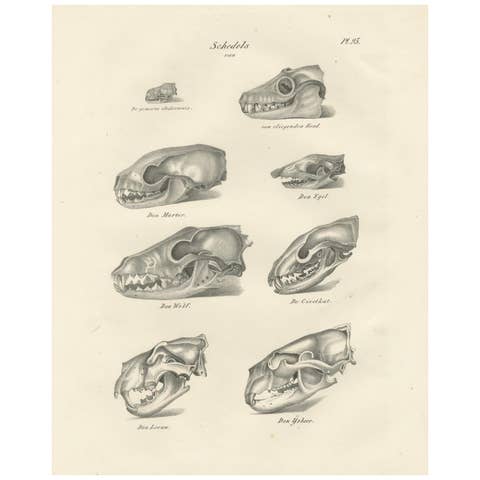
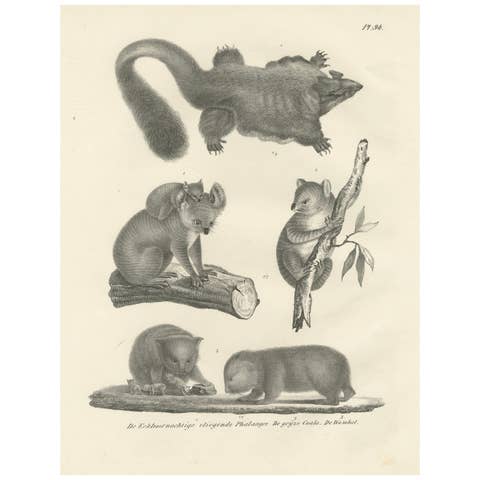
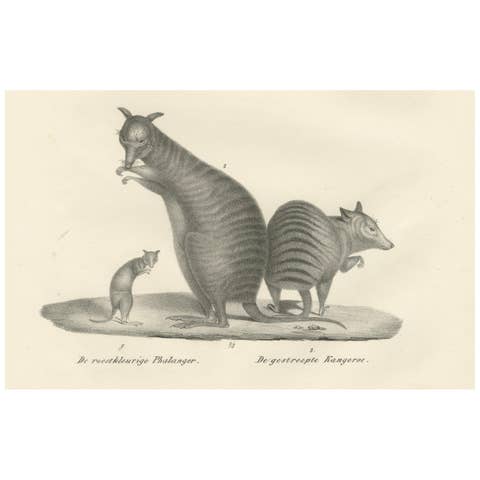
This beautifully executed 19th-century lithograph showcases two remarkable mammals: the skunk (Het stinkdier chinche) and the European otter (De Europeesche otter). Originally published in De Zoogdieren: afgebeeld en in hunne levenswijze geschetst, this illustration captures the detailed textures and anatomical accuracy of these animals, highlighting the artistic and scientific dedication of early zoological studies.
The skunk, native to North and Central America, is known for its distinctive black-and-white fur and its ability to spray a pungent defensive secretion when threatened. The European otter, widespread across Europe and parts of Asia, is a semi-aquatic carnivore that thrives in rivers, lakes, and coastal areas, admired for its playful nature and excellent swimming skills.
Created by C.C. G. Zool. and printed by La Haye & J. L. G. V., this lithograph is an excellent example of 19th-century scientific illustration, combining detailed artistry with early taxonomic research. It remains a valuable piece for collectors of antique natural history prints, wildlife enthusiasts, and those interested in historical representations of mammals.
Condition Summary: The print is in good condition, with mild age-related toning and light foxing visible mainly along the margins. The lithographic details remain sharp, with rich shading and strong contrast. Some minor edge irregularities from past binding are present but do not detract from the overall quality. There are no significant tears or folds, preserving the integrity of the artwork.
Framing Tips: To best present this lithograph, use an acid-free mat in an off-white or cream shade to highlight the detailed artwork. A dark wooden or black frame will create a striking contrast, emphasizing the sharp shading. UV-protective glass is recommended to prevent fading and discoloration over time. For a cohesive display, consider framing it alongside similar prints from the same series.