About this sheet
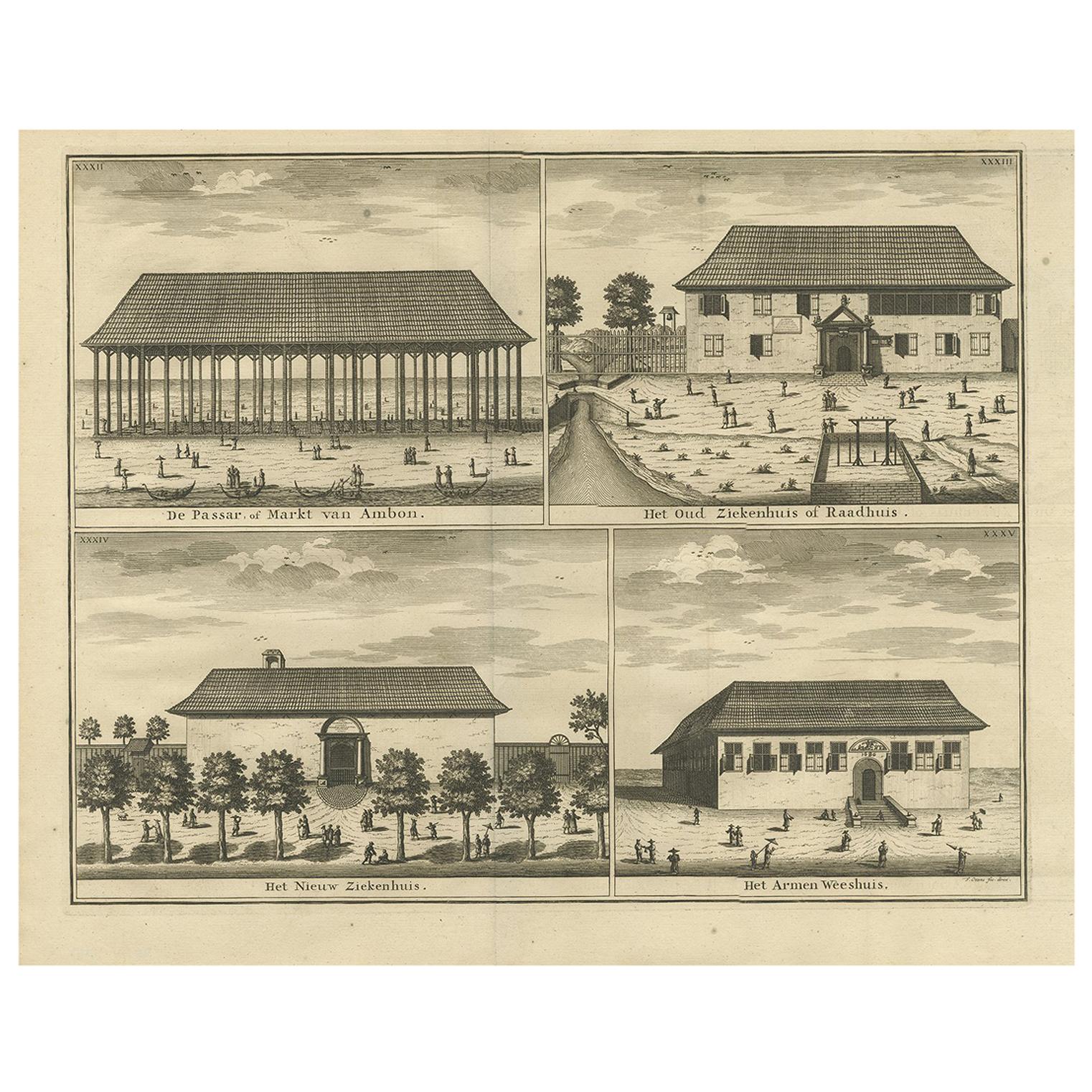
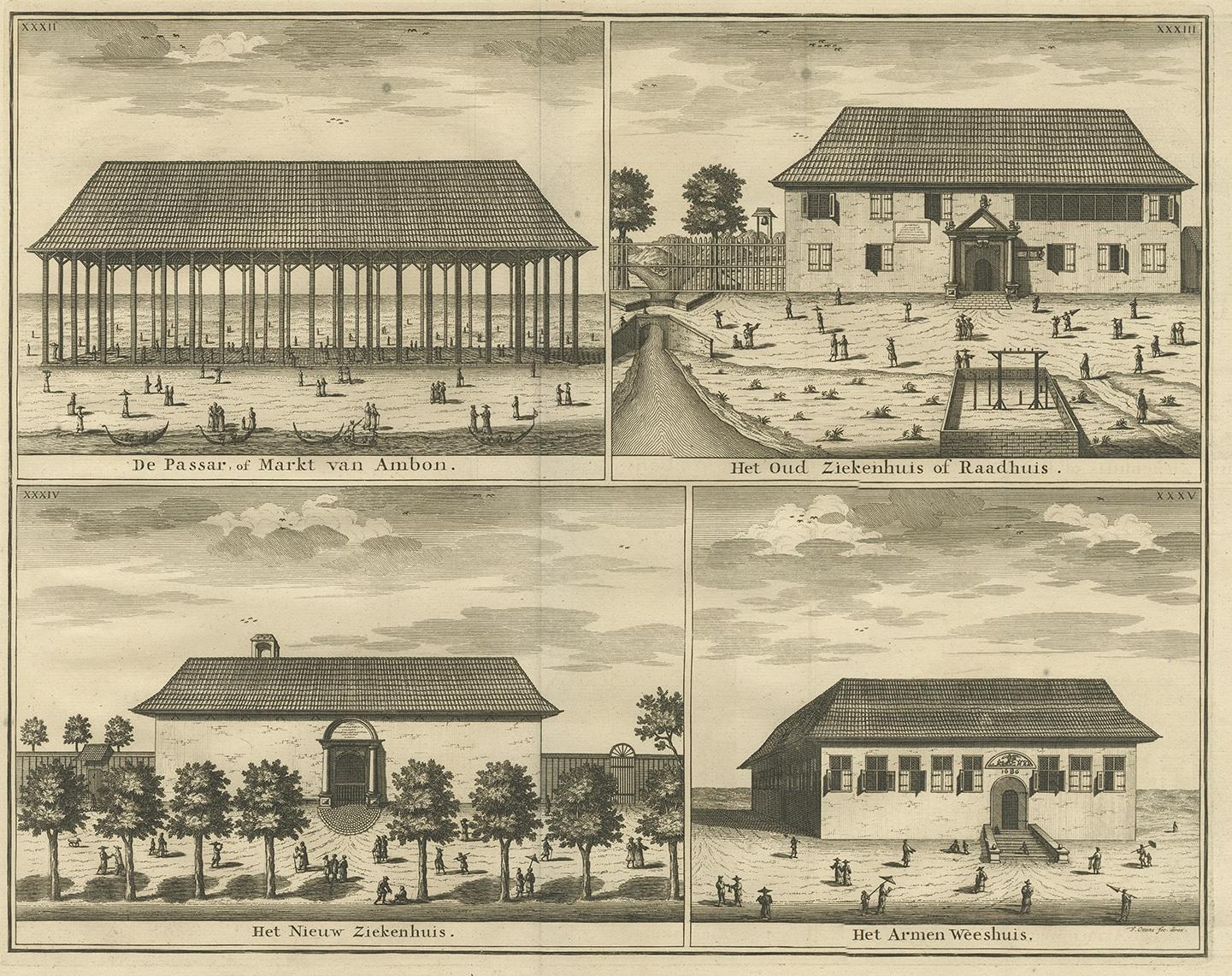
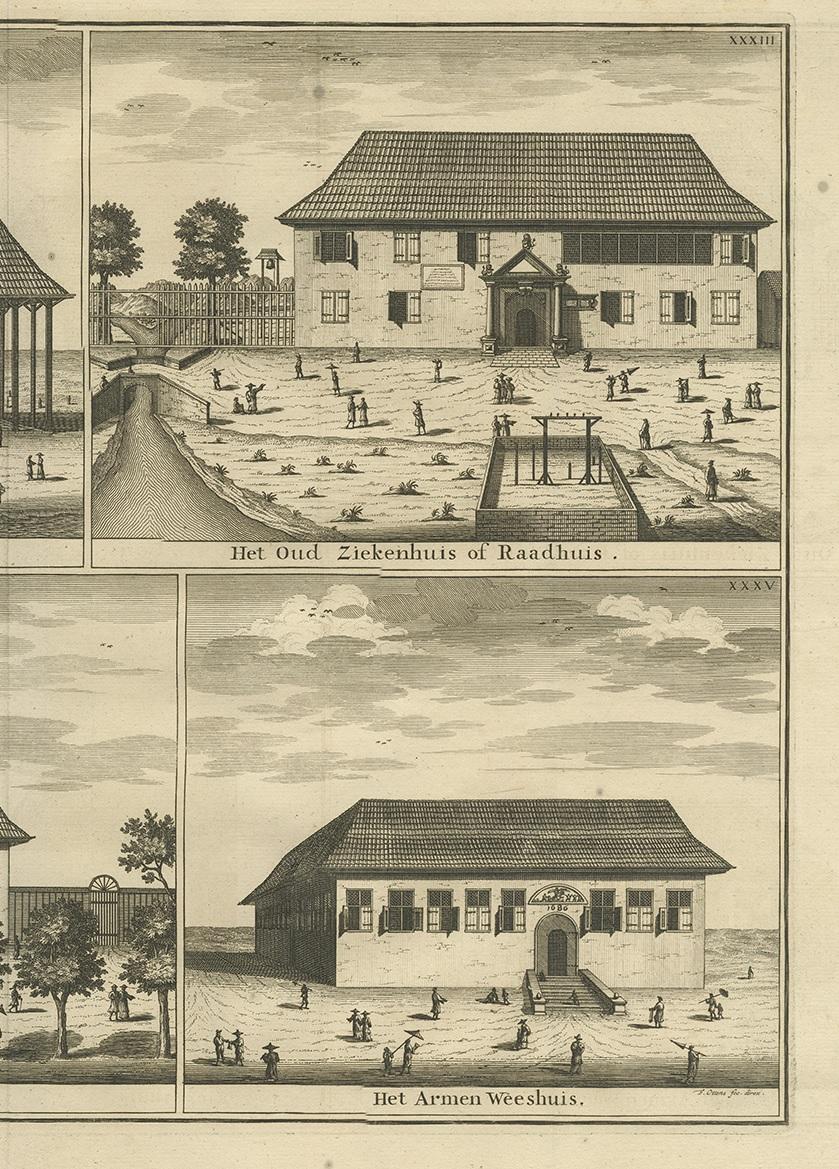
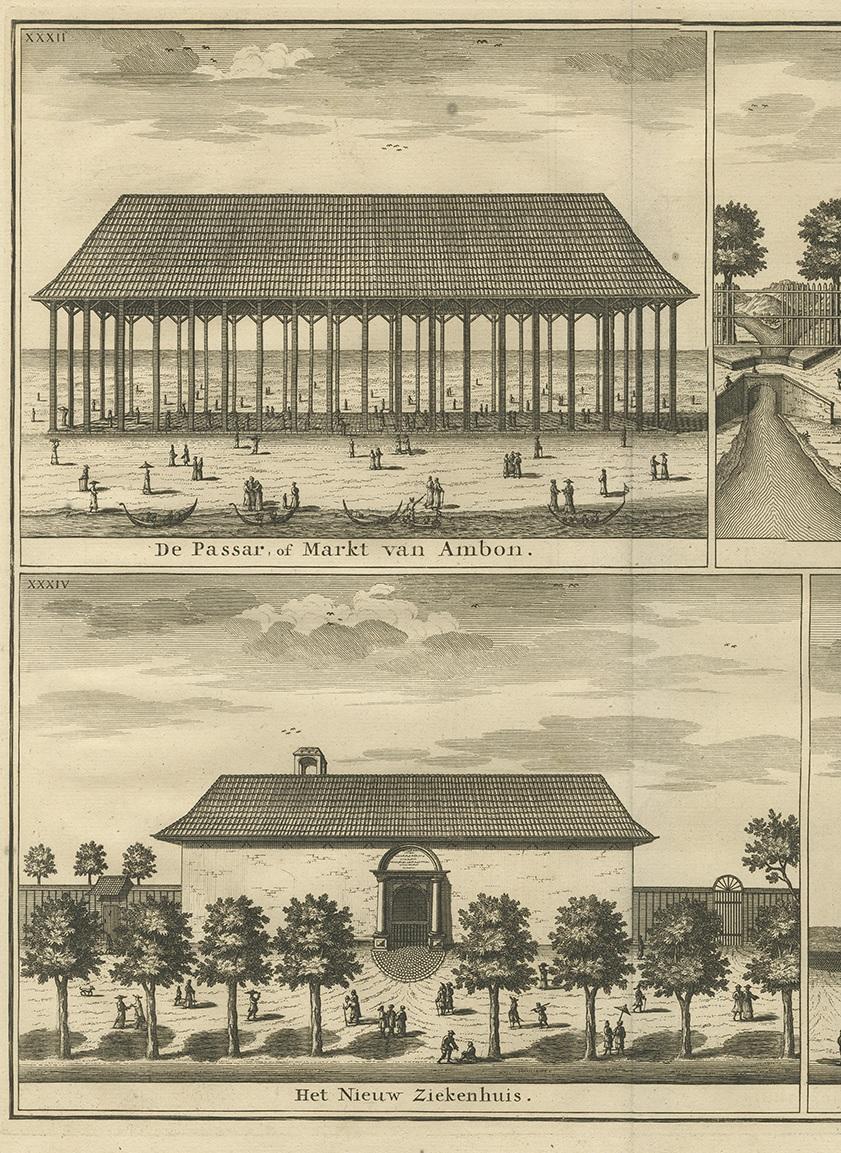
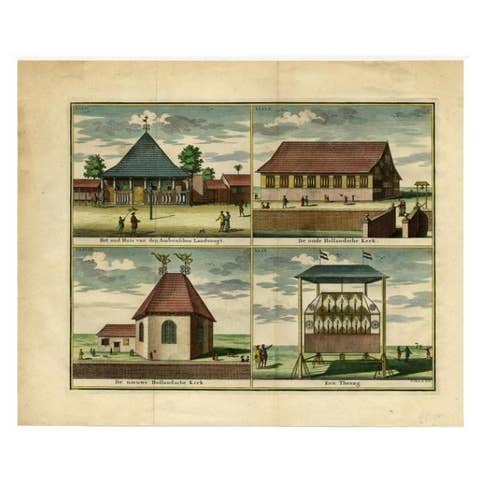
The print appears to be a collection of four separate illustrations arranged in a grid, each depicting notable buildings in Ambon, Indonesia, during the time of Dutch colonial rule. This is evidenced by the Dutch titles for each of the images, which translate to "The Market of Ambon," "The Old Hospital or Town Hall," "The New Hospital," and "The Orphanage."
Top Left: "De Passar, of Markt van Ambon" shows an open structure with a roof supported by columns, typical of a tropical market setup, allowing for ventilation and shade. The market seems to be bustling with activity, with people and goods visible.
Top Right: "Het oud ziekenhuis of Raadhuis" translates to "The Old Hospital or Town Hall." This building has a more solid construction with a gabled roof, and its elevated stature suggests its importance. There's a staircase leading to the entrance, and the grounds appear well-kept, with few individuals around it.
Bottom Left: "Het Nieuw Ziekenhuis" or "The New Hospital," depicts a building that is architecturally similar to the old hospital but has a bell on top, indicating it might have had additional functions such as a church or a community center.
Bottom Right: "Het Armen Weeshuis" or "The Orphanage," features a large, solid building with people, presumably children and caretakers, gathered in front. This structure has a simpler design compared to the others, which might reflect its functional purpose over administrative significance.
Overall, the print is titled "De Passar, of Markt van Ambon - Het oud ziekenhuis of Raadhuis - Het Nieuw Ziekenhuis - Het Armen Weeshuis". This suggests a focus on the civic and social institutions of Ambon, capturing the colonial architecture and public spaces that would have been integral to community life. These illustrations were part of "Oud en Nieuw Oost-Indiën" by François Valentijn, a significant work on the Dutch East Indies, providing valuable insights into the history and culture of the region. The attention to detail in the illustrations serves both as an ethnographic record and as an artifact of colonial influence in Indonesia.