About this sheet
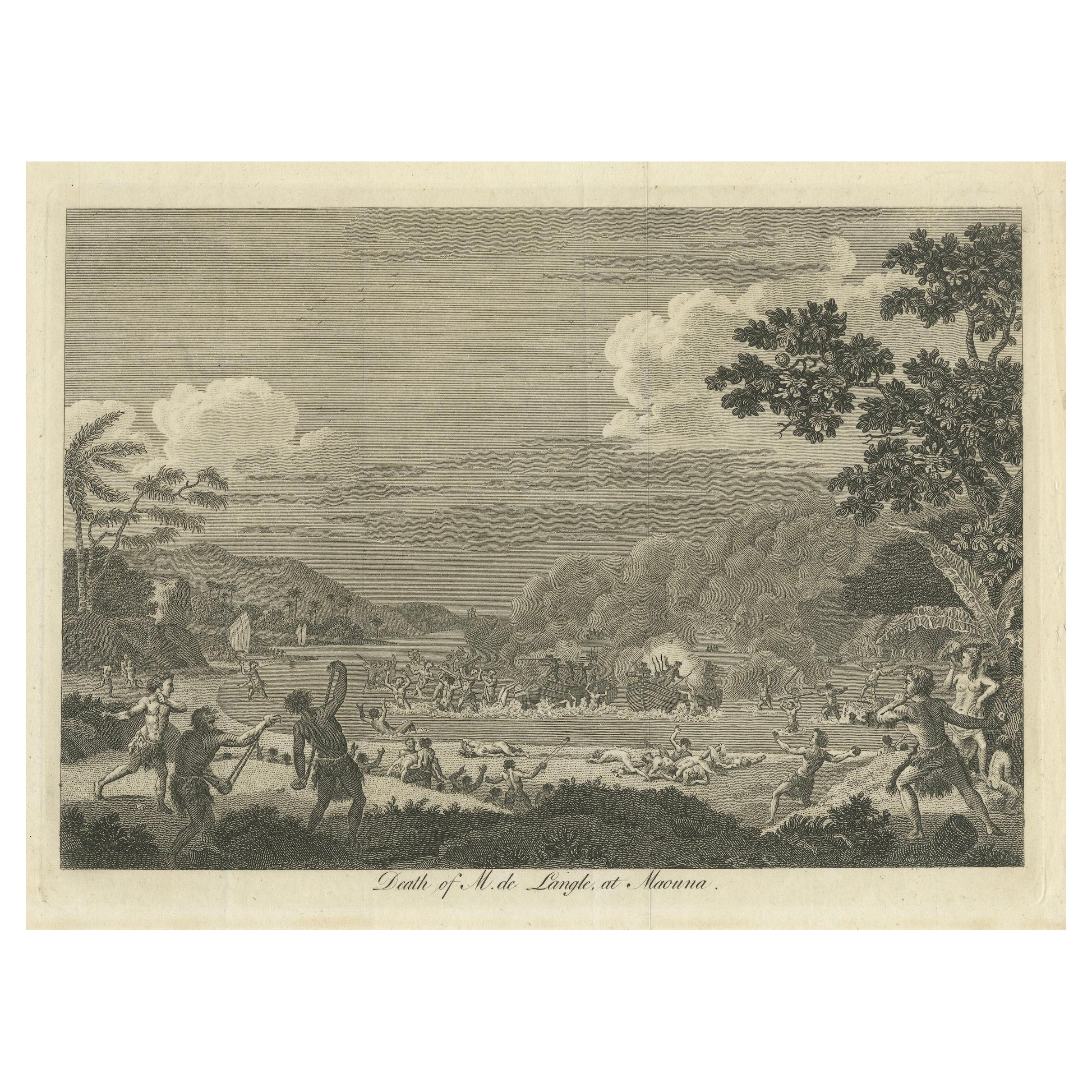
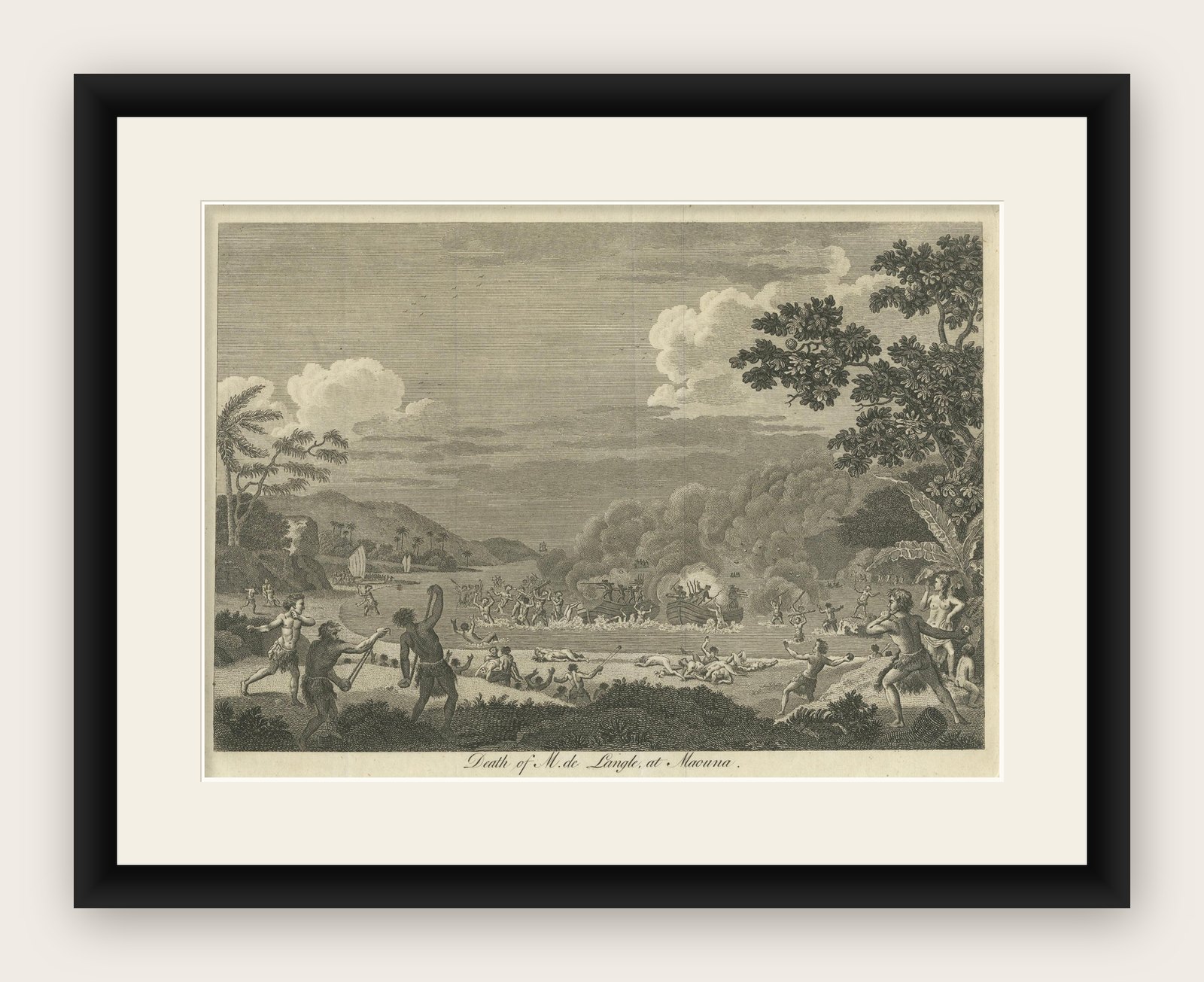
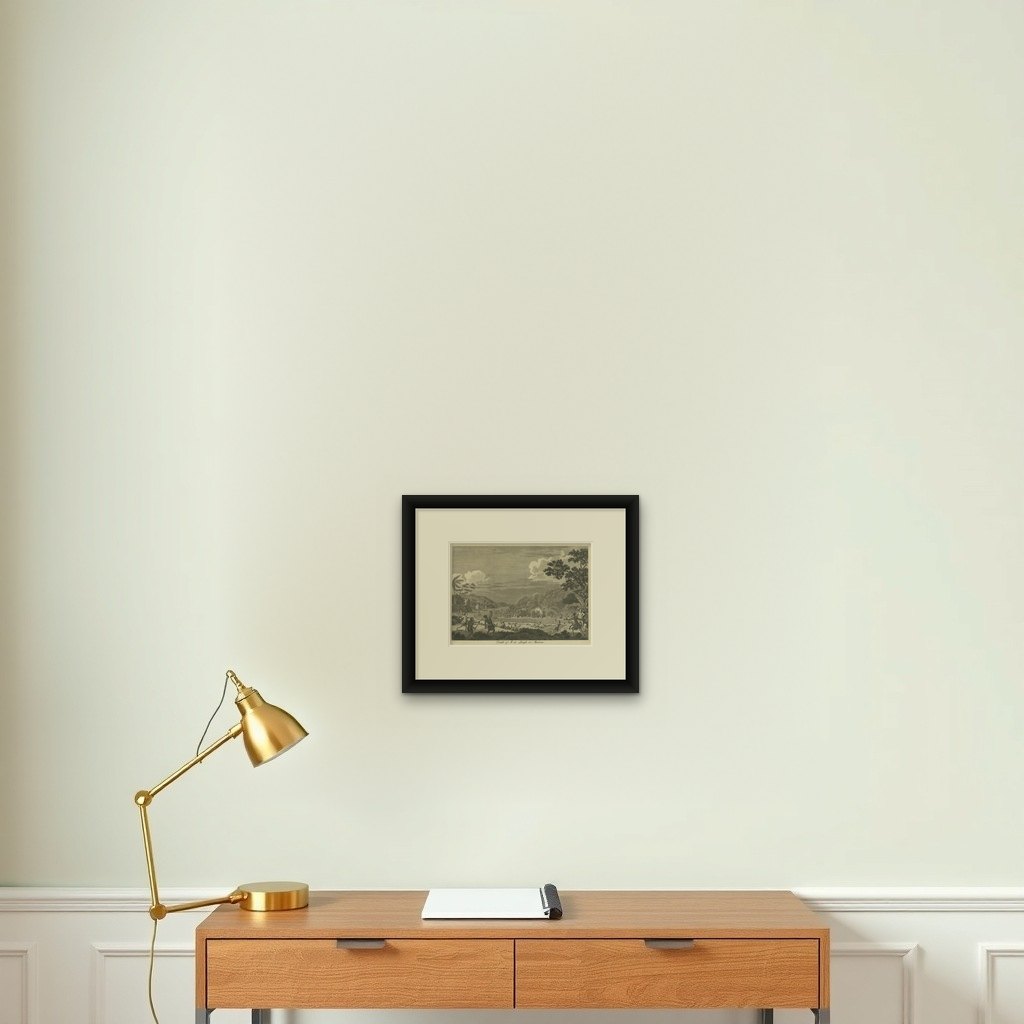
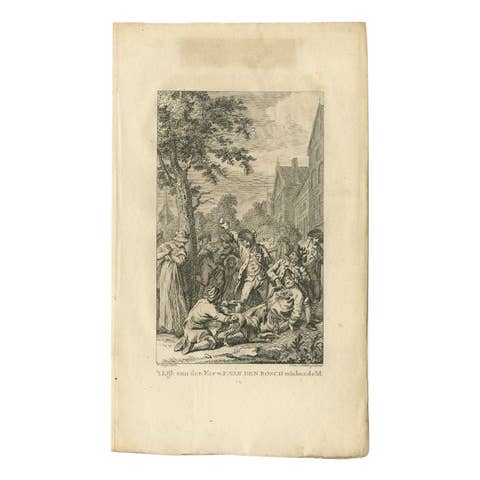
The engraving depicts a harrowing and chaotic scene from an 18th-century exploration, specifically the tragic event involving Commander Fleuriot de Langle and his men. The scene is set on the shores of an island identified as Maouna, and it captures the moment of a violent clash between the landing party from La Pérouse's expedition and the local islanders.
In the foreground, we can see European figures, identifiable by their clothing and weapons, engaged in a struggle with the indigenous islanders, who are depicted in various states of action, some attacking while others are falling or lying on the ground. The background features canoes in the water, suggesting the arrival or attempted departure of the Europeans, with more natives approaching from the left. The detail and drama of the scene are heightened by the expressive poses and the dense composition of figures, both of which convey the intensity and confusion of the skirmish.
It provides a visual narrative of the tragic incident during the La Pérouse expedition, a French exploratory venture into the Pacific Ocean from 1785 to 1788.
The event depicted is historically significant as part of the ill-fated journey of La Pérouse, which ended in mystery after the expedition failed to return, prompting much speculation and subsequent searches. The engraving, published in 1797, would have been part of the documentation and report of the expedition, which was of great interest to the public and other explorers at the time.
The location name Maouna or Mauna could be an older or alternative name associated with a location in the Navigator Islands, which are known today as the Samoa Islands. During the time of European exploration, many Pacific islands were given names by explorers that were later changed or fell out of common usage. The names used by indigenous peoples often differed from those used by European explorers, leading to multiple names for the same location.
The incident involving Commander Fleuriot de Langle occurred during the La Pérouse expedition, which did visit the Samoan Islands. The encounter that led to de Langle's death took place at Aasu Bay on Tutuila Island, which is part of present-day American Samoa. This conflict is one of the more tragic events of Pacific exploration, where misunderstandings between the European explorers and the local Samoan people led to violence.
Therefore, it is quite plausible that the engraving depicts this very incident and that Maouna refers to a location within the Samoan archipelago.