About this sheet
Royal Portrait Henry Stuart Lord Darnley, Vertue Engraving, 1732
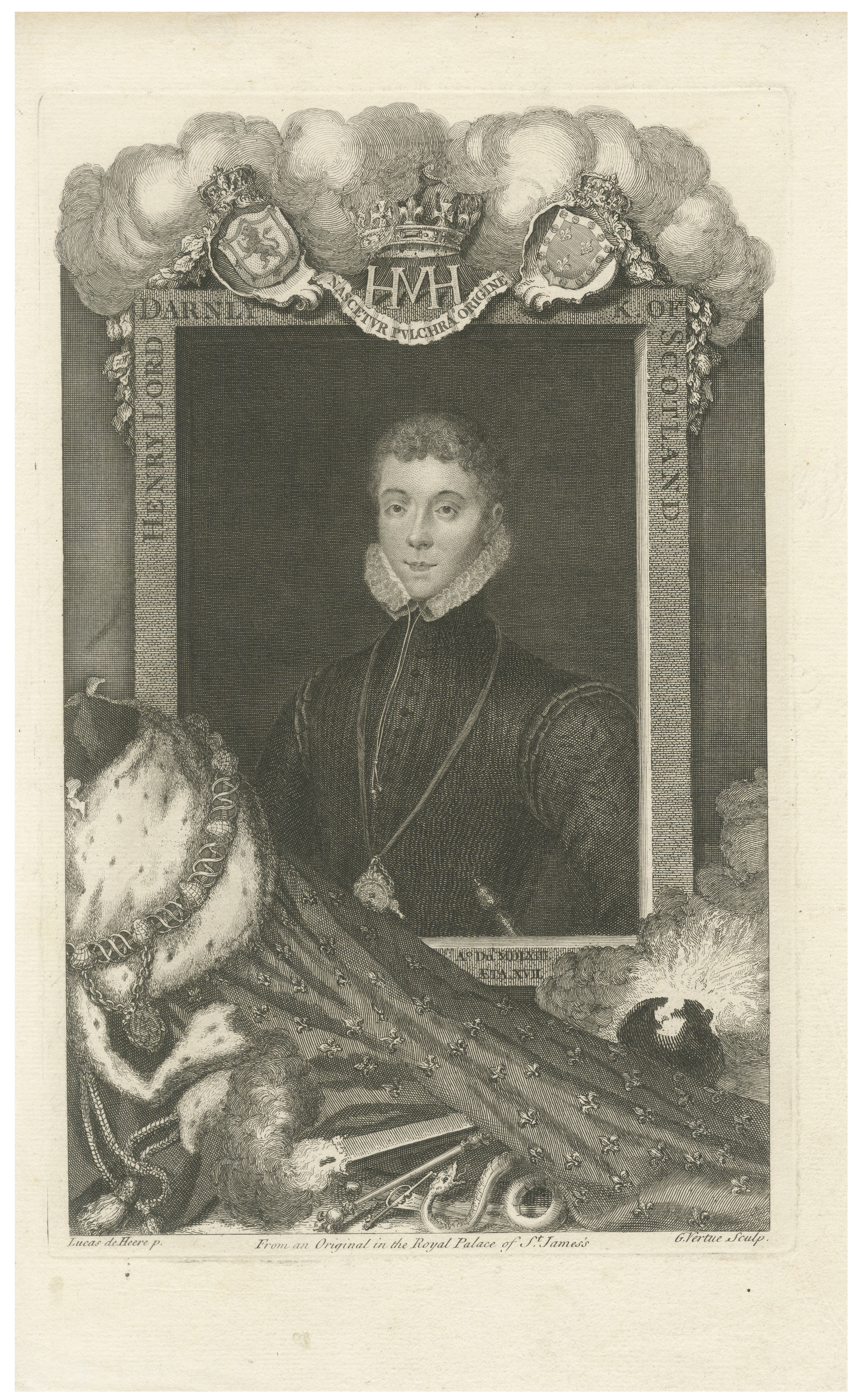
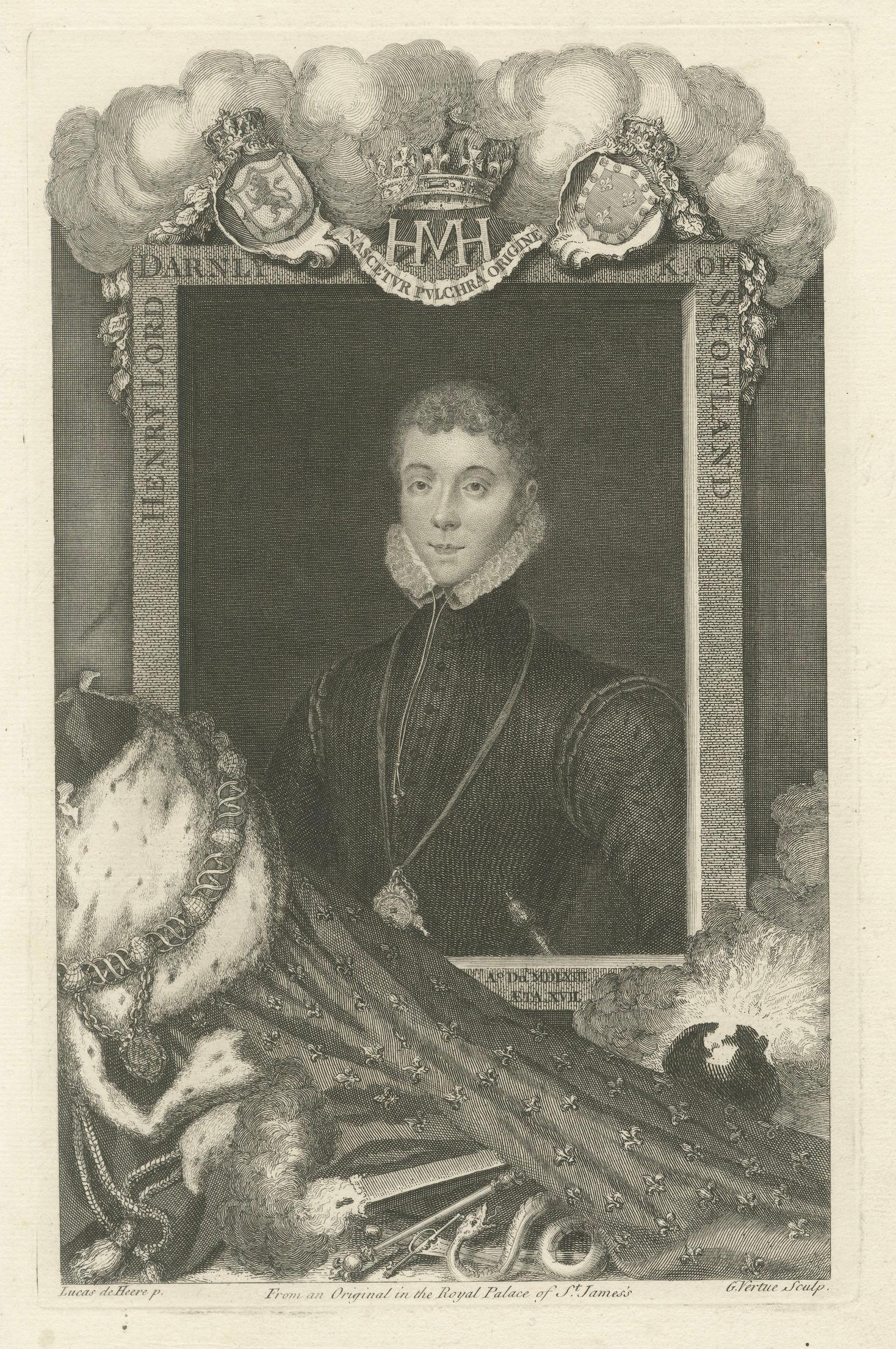
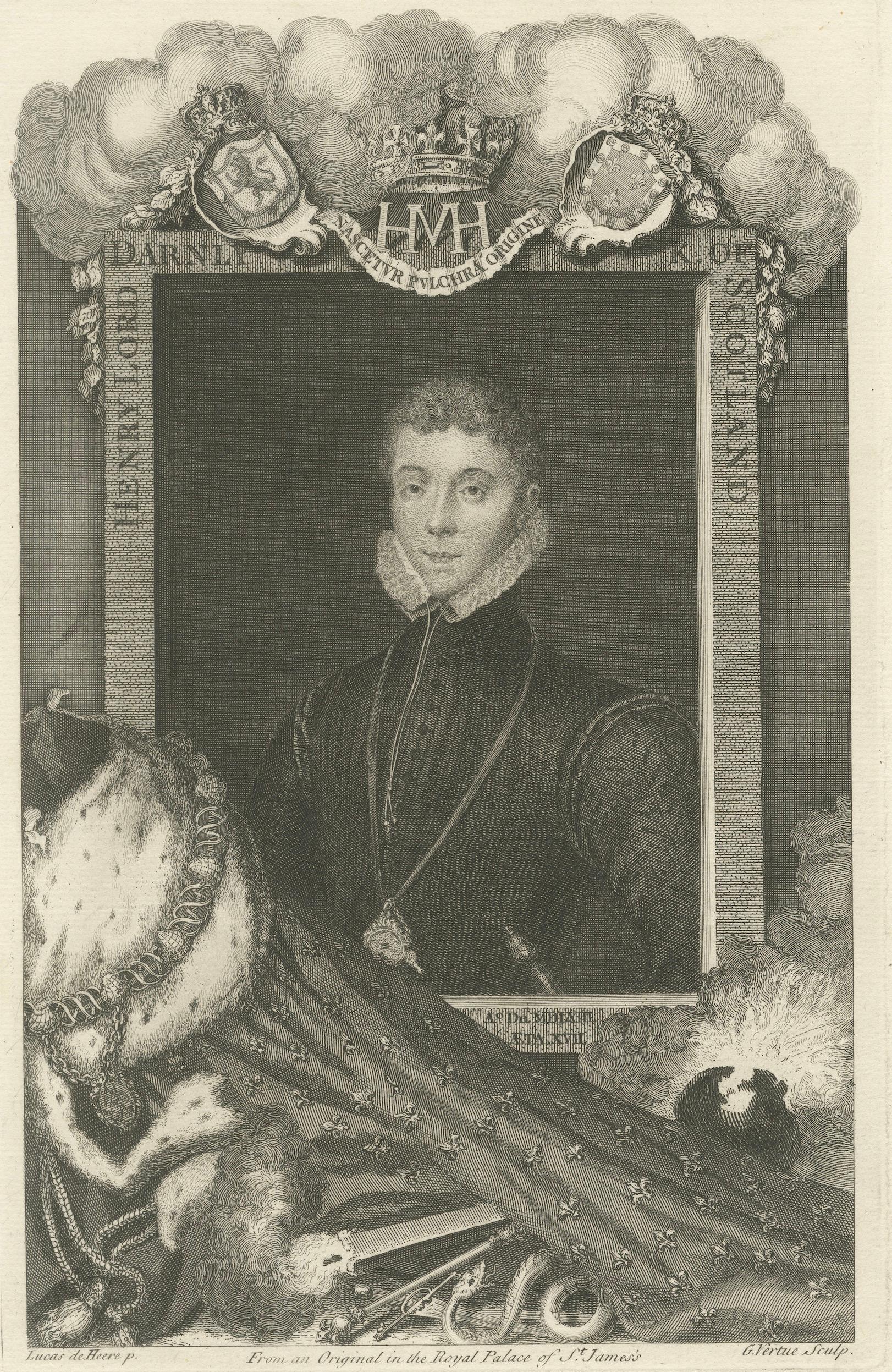
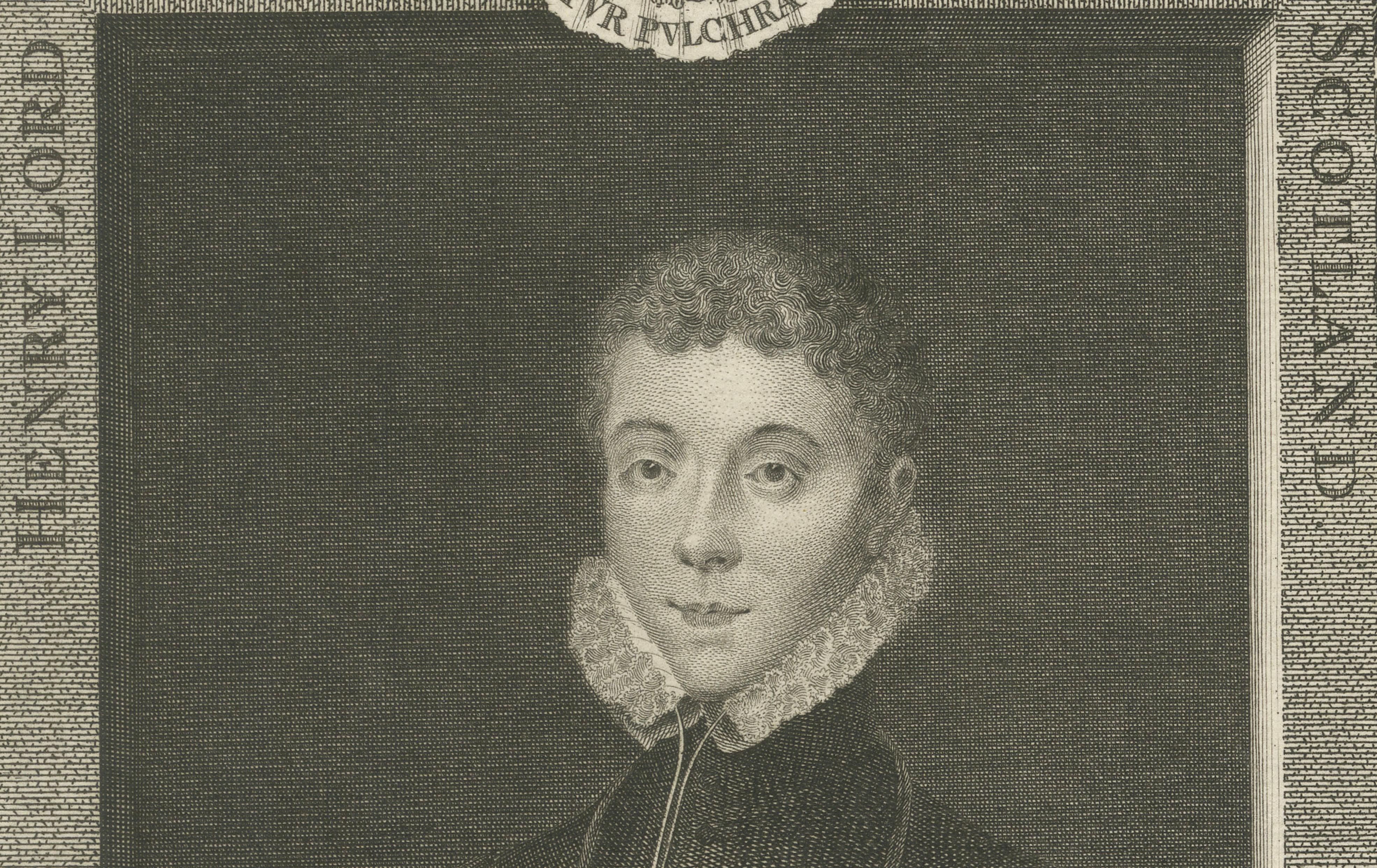
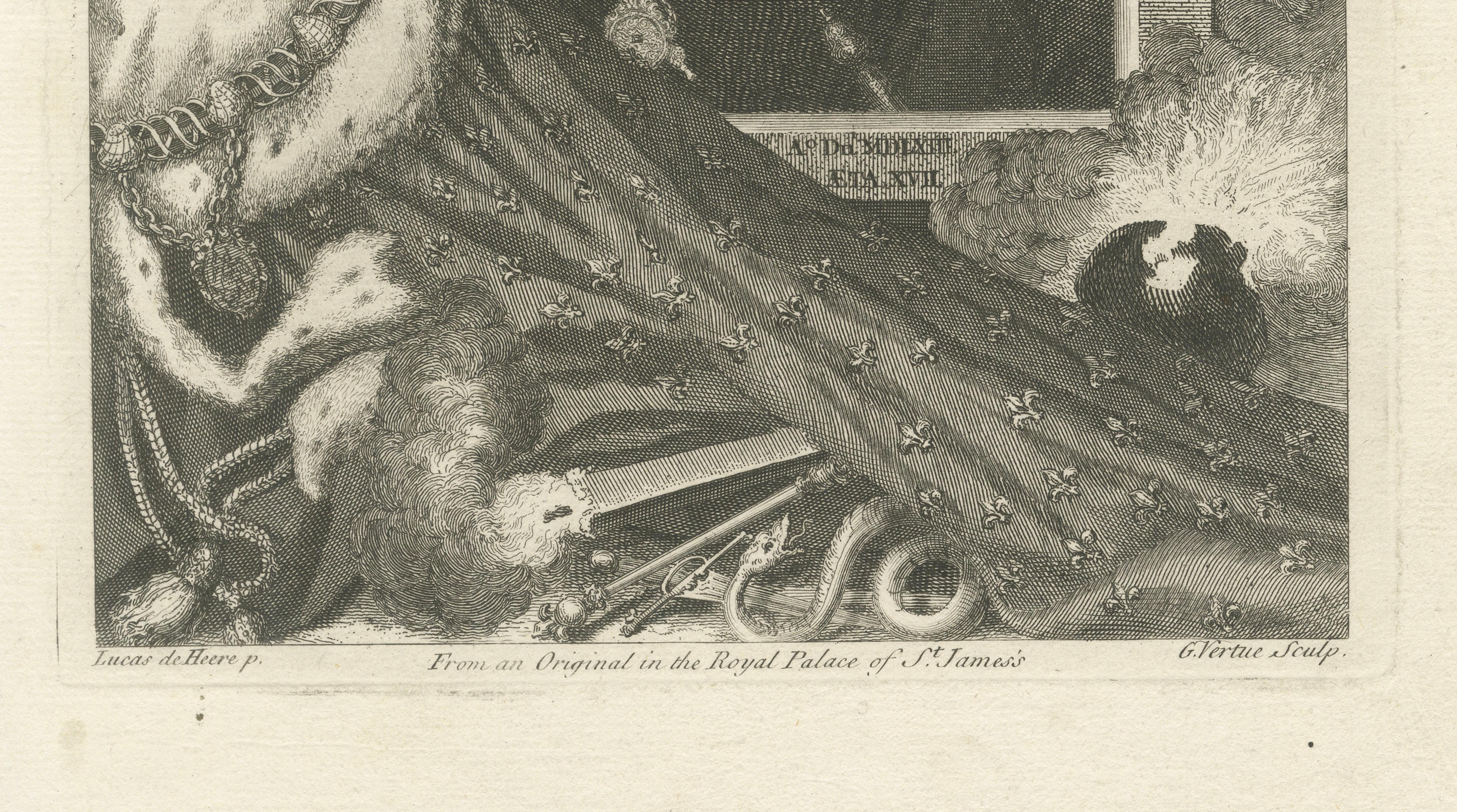
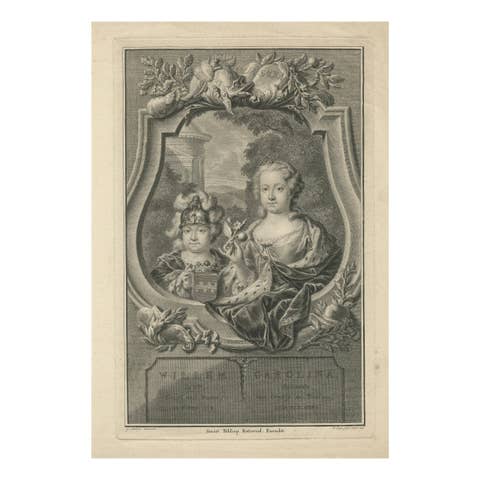
This refined 18th-century copperplate engraving presents a striking royal portrait of Henry Stuart, Lord Darnley (1545–1567), King Consort of Scotland and husband of Mary, Queen of Scots. Created in 1732 by the celebrated English engraver George Vertue, the print is based on an earlier court portrait attributed to Lucas de Heere (or possibly Hans Eworth), and reflects the enduring fascination with Tudor and early Stuart history.
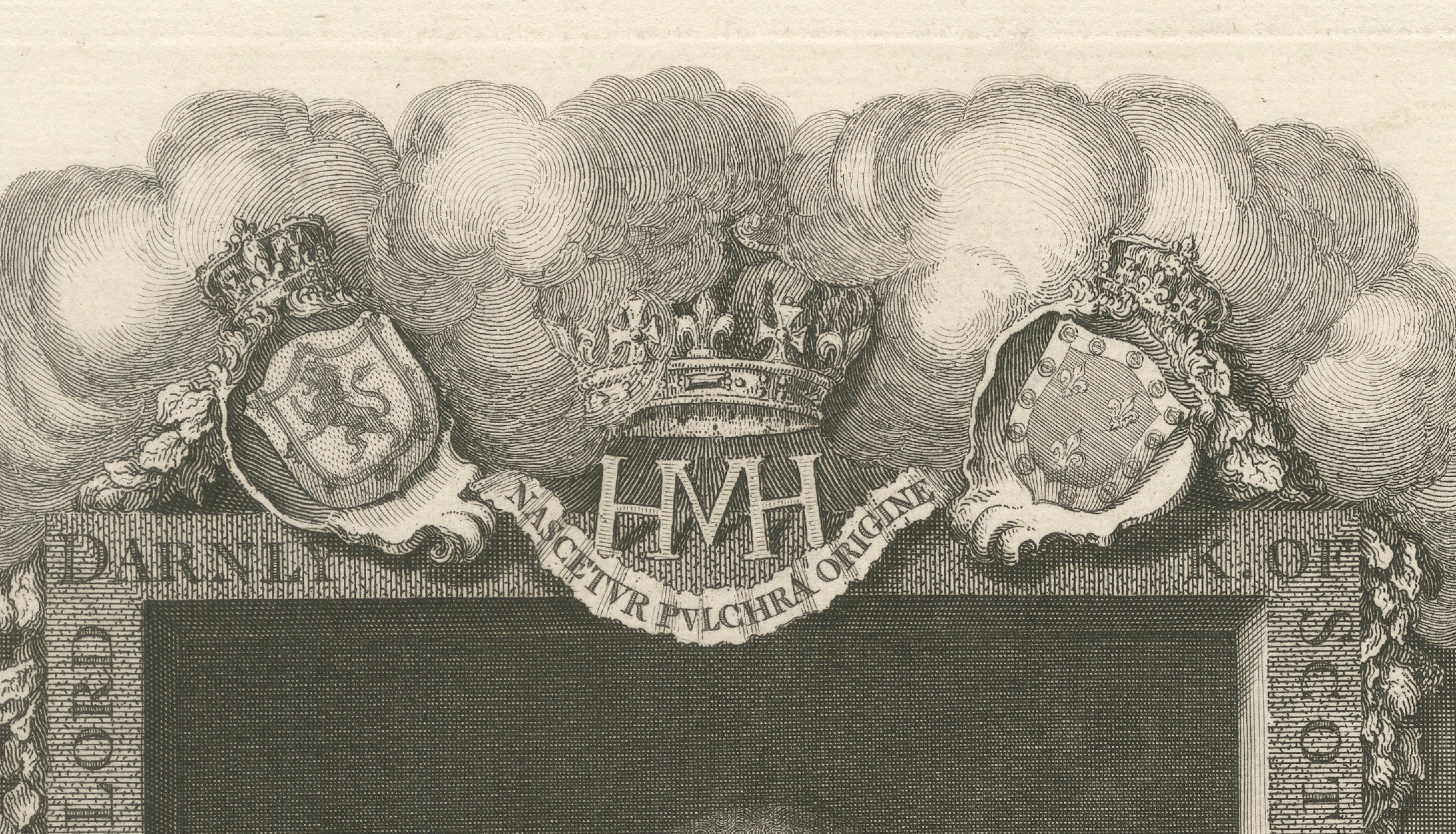
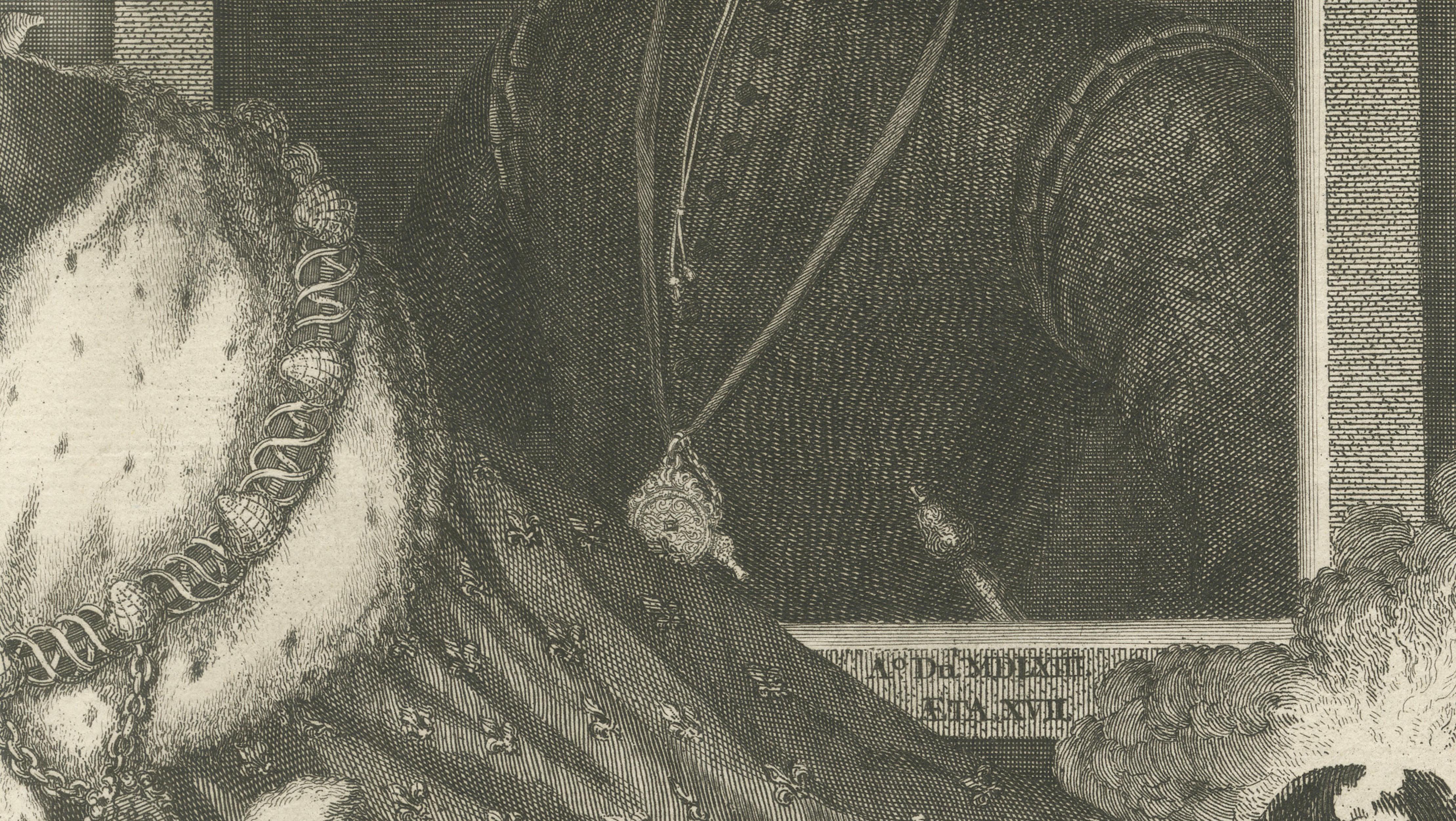
The composition is richly layered and highly decorative. At its center is a finely rendered bust-length portrait of Darnley, depicted with youthful elegance, wearing a lace ruff and formal court attire. Surrounding the portrait is an elaborate architectural frame adorned with royal heraldry, including the arms of Scotland and the intertwined monogram “HMH,” referring to Henry and Mary. Above, a crown rests within a clouded cartouche, emphasizing his royal status.
In the foreground, a luxurious ermine mantle decorated with fleurs-de-lys is draped across the composition, symbolizing monarchy and legitimacy. Additional symbolic elements, including a sceptre and a serpent, appear below, reinforcing themes of power, authority, and the political intrigue that defined Darnley’s life and legacy.
Darnley remains one of the most enigmatic figures of 16th-century Britain. As the father of James VI of Scotland (later James I of England), he occupies a pivotal place in the union of the English and Scottish crowns. His dramatic life and mysterious murder in 1567 contributed to the enduring historical and visual interest in his image.
George Vertue’s engraving exemplifies the precision and elegance of early 18th-century British printmaking. His work is highly regarded for its clarity of line and careful translation of painted portraits into engraved form, making his prints both historically important and visually compelling.
As a decorative piece, this engraving is particularly strong. The combination of portraiture, heraldry, and ornamental framing creates a sophisticated and regal composition, ideal for classic interiors, libraries, or gallery walls focused on historical portraiture.
Condition: Good condition for its age, with age-related toning and some spotting, mainly in the margins. The impression remains clear and well-defined. Plate mark visible.
Framing tips: Best presented with a generous ivory or museum-white mat to highlight the engraved details and plate mark. A dark walnut, ebonized, or lightly gilded frame enhances the regal character and provides a museum-quality presentation.
Note: The image is an original antique engraving and not a reproduction. The engraving is sold unframed.
Technique: Copperplate engraving
Maker: George Vertue (after Lucas de Heere / Hans Eworth), London, 1732