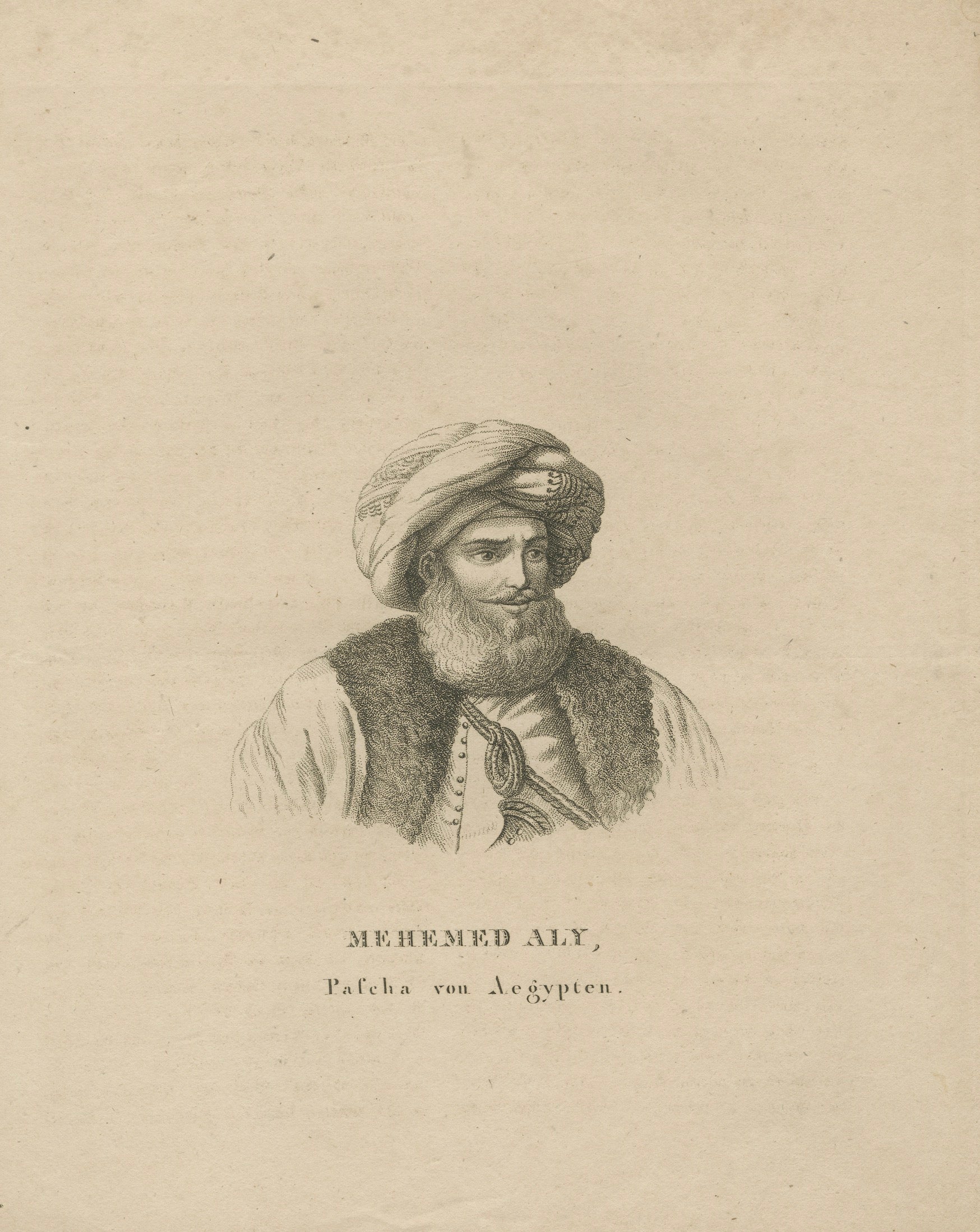
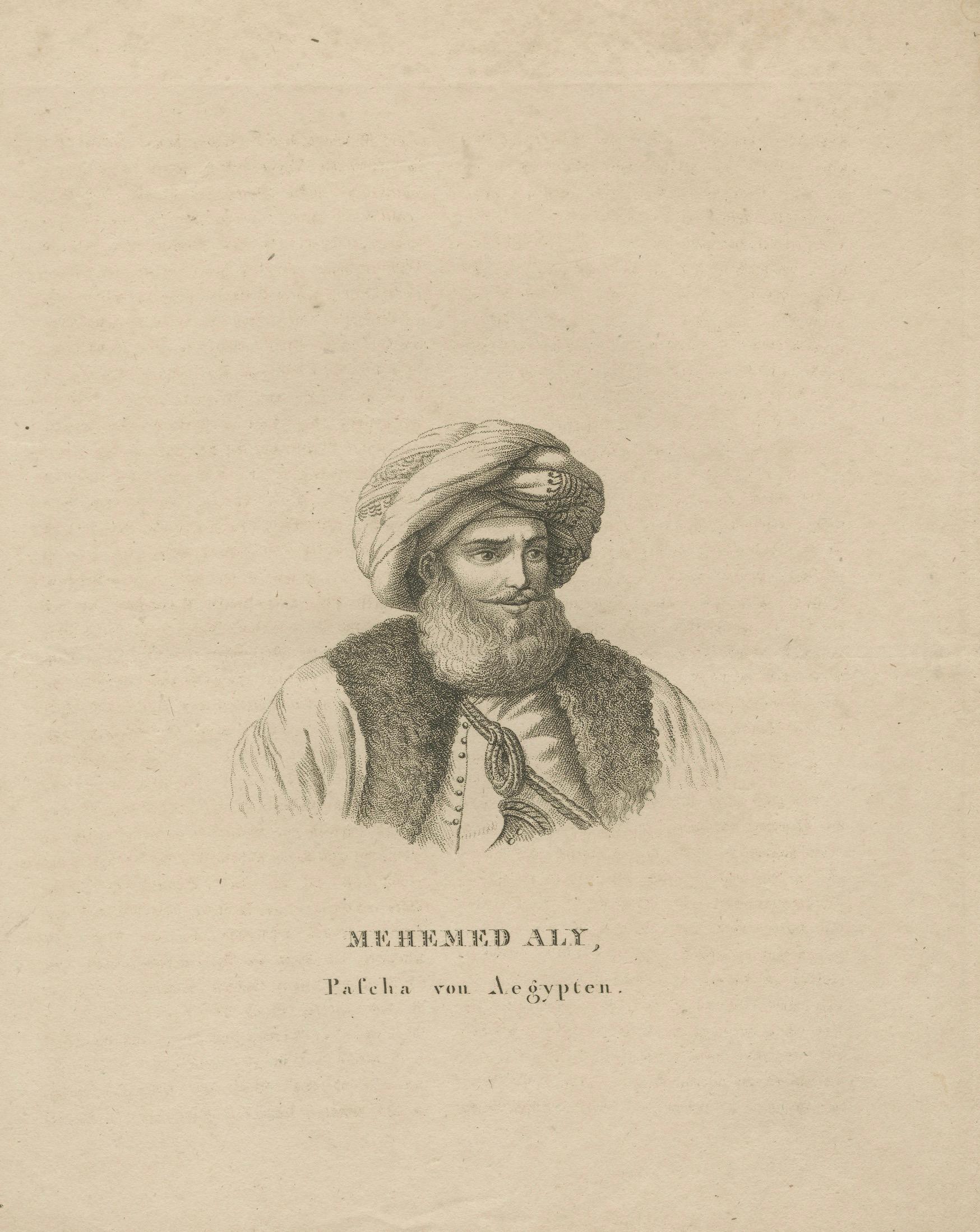
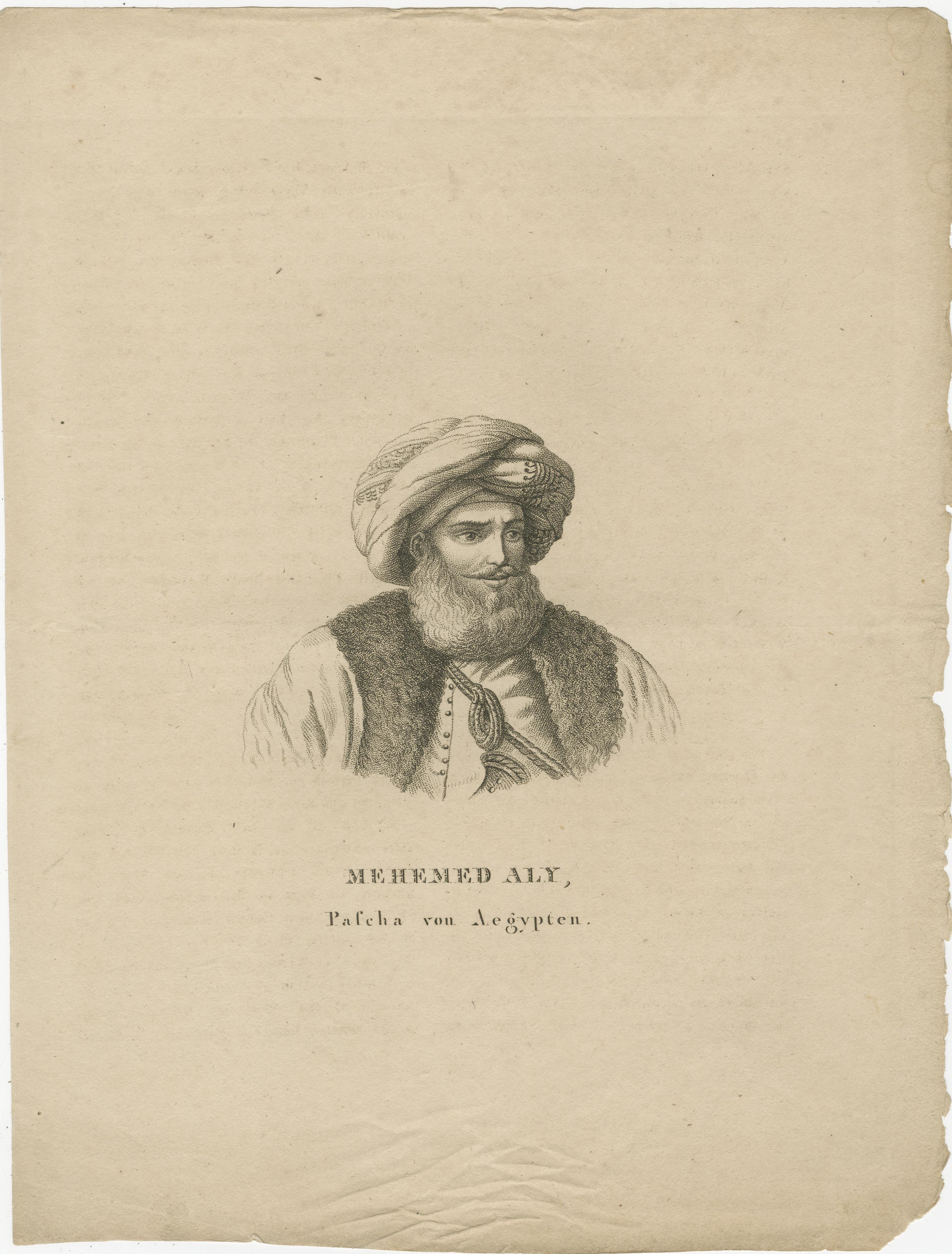
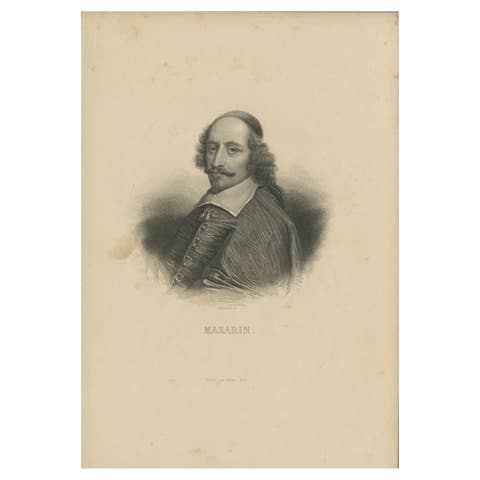
Mehmed Ali Pasha of Egypt – Early 19th Century Portrait Engraving, circa 1830
€ 270
One of a kind: this is the sheet in the photographs. Ships from Langweer, the Netherlands.
Date
1830
Sheet size
27 × 20.5 cm (10.6 × 8.1 in)
Condition
Good
Reference
BG-14073-7
Condition
Good condition for its age, with mild toning and scattered foxing, particularly in the wide margins. Right edge slightly rough from original binding removal. The impression is strong with crisp lines and subtle shading.
About this sheet
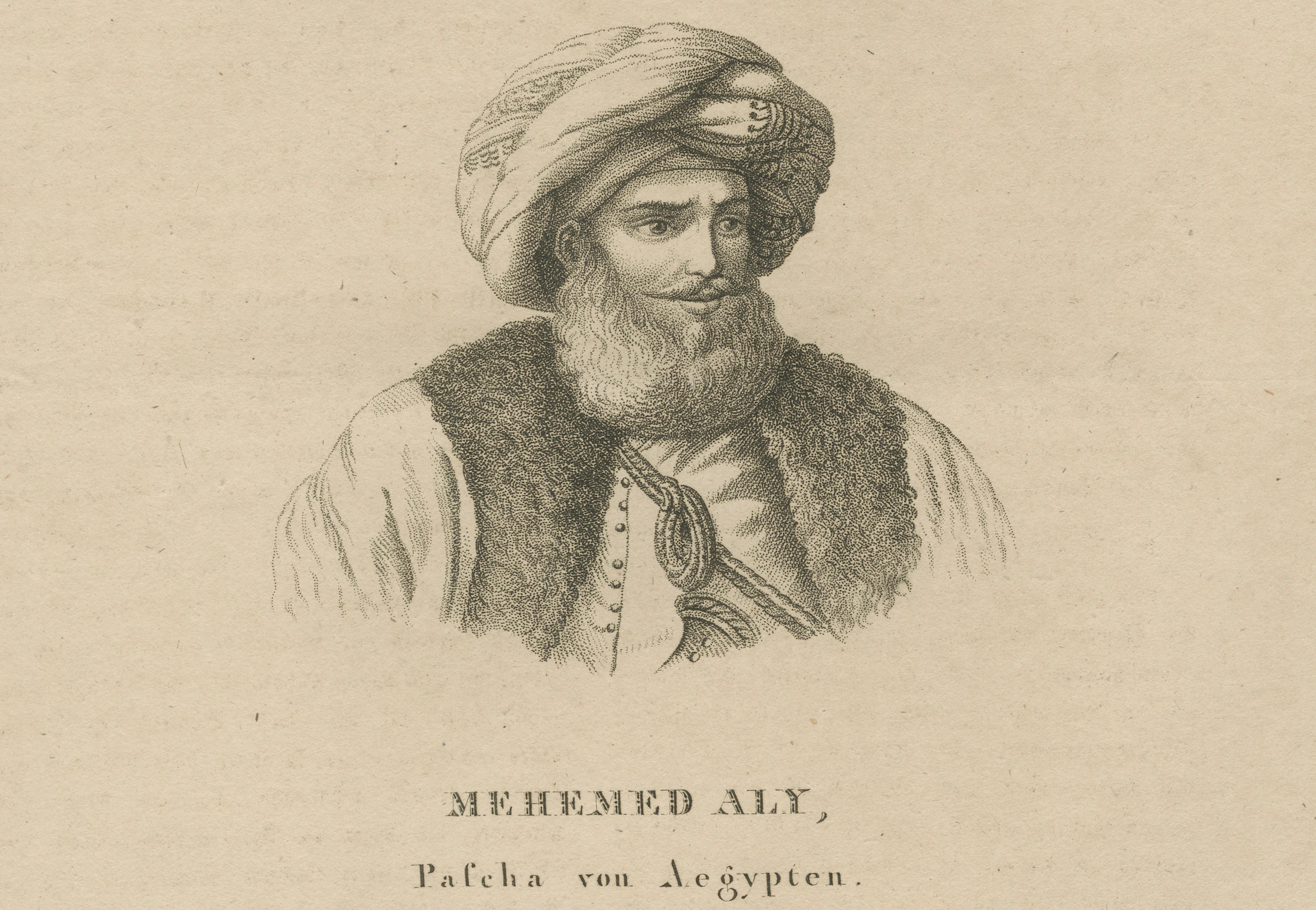
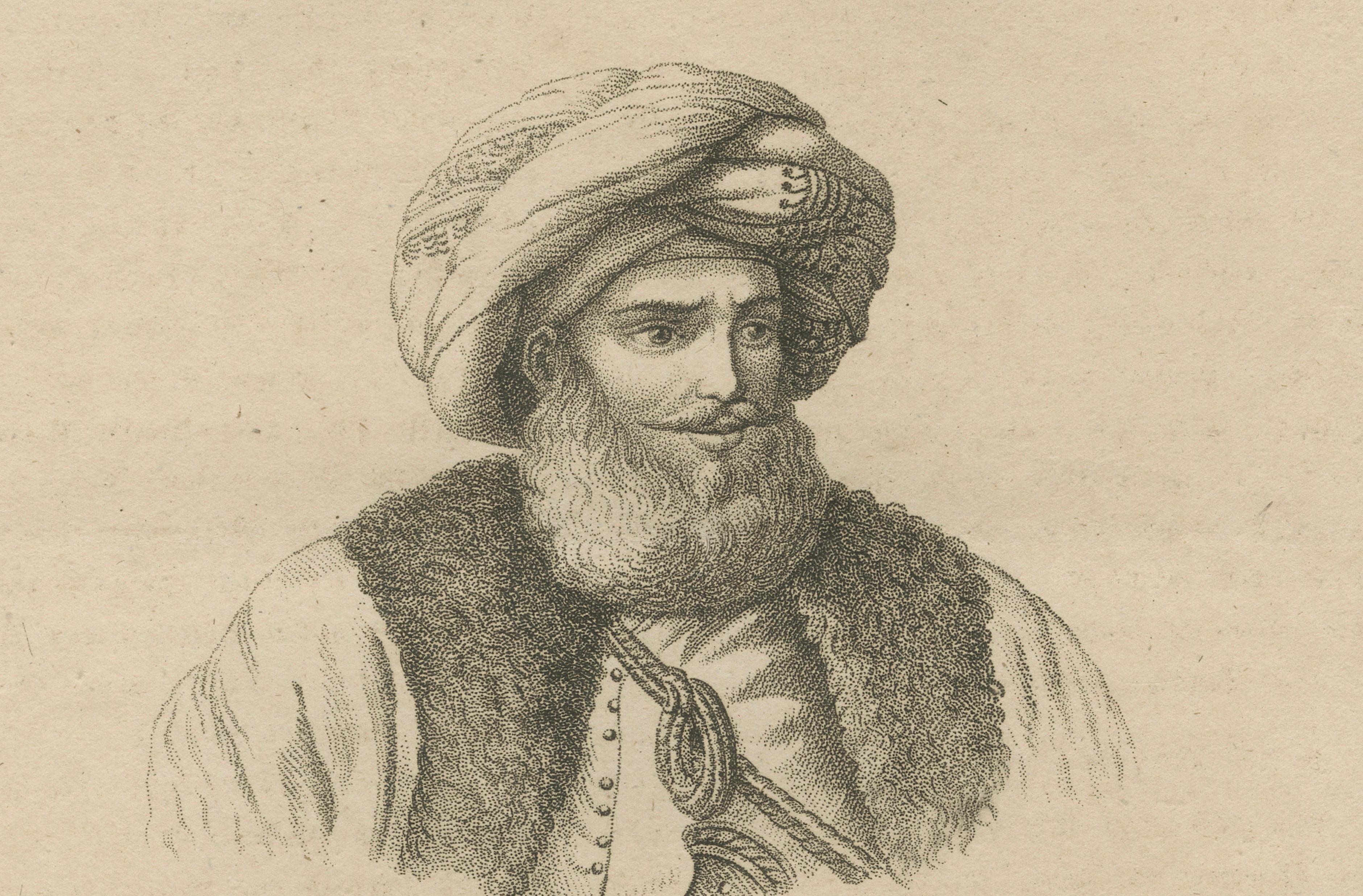
Portrait of Mehmed Ali Pasha of Egypt – Early 19th Century Engraving This finely detailed antique engraving portrays Mehmed Ali Pasha (c.1769–1849), the Ottoman Albanian commander who became the ruler of Egypt and is regarded as the founder of modern Egypt. Depicted half-length, facing slightly to his left, Mehmed Ali is shown with his characteristic thick beard, wearing a richly patterned turban and fur-lined cloak, conveying dignity, power, and authority. Beneath the image, the caption reads “Mehemed Ali, Pascha von Aegypten,” indicating its German publication context.
Mehmed Ali Pasha rose to power in the early 19th century and initiated sweeping economic, military, and educational reforms that transformed Egypt into a regional power independent from Ottoman rule. He modernised the army, developed cotton agriculture as a major export economy, and established schools and factories, laying the groundwork for Egypt’s autonomous administration. His legacy remains influential in Middle Eastern history, seen both as a reformer and as a ruler with imperial ambitions that extended into Sudan, Arabia, and the Levant.
The engraving, likely produced between 1820 and 1840 for a European publication documenting world leaders and Orientalist subjects, captures the era’s fascination with powerful Eastern figures and reflects the fine stipple and line engraving techniques typical of German printmakers of the period.
Condition report: Good condition for its age, with mild toning and scattered foxing, particularly in the wide margins. Right edge slightly rough from original binding removal. The impression is strong with crisp lines and subtle shading.
Framing tip: This portrait will suit a slender black or bronze frame with a neutral ivory or sand mount to emphasise its neoclassical composition and historical character. Ideal for display in Orientalist collections, Middle Eastern history libraries, or interiors seeking a refined academic accent.