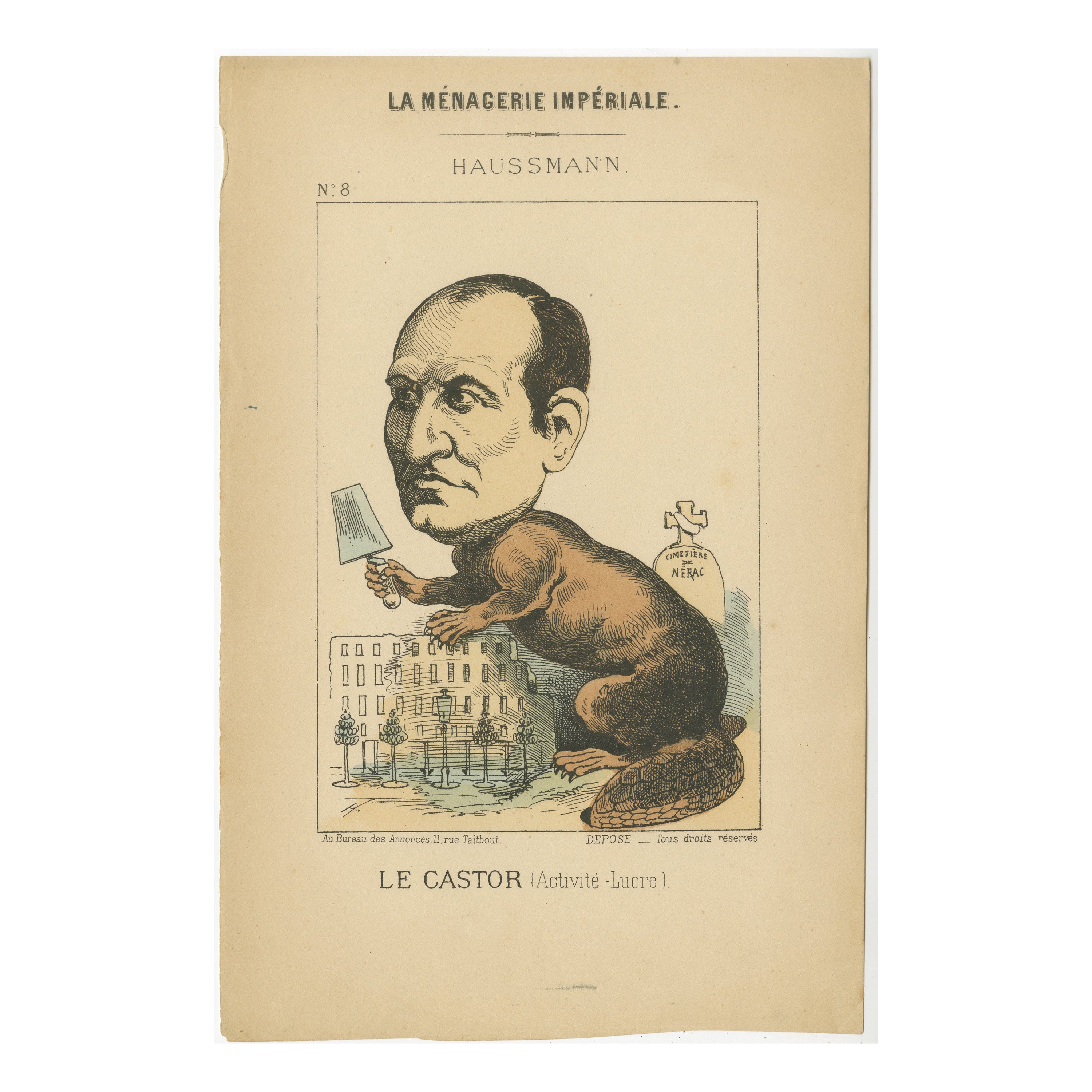
One of a kind: this is the sheet in the photographs. Ships from Langweer, the Netherlands.
Date
1870
Sheet size
30.5 × 24.1 cm (12.0 × 9.5 in)
Reference
BG-13805-8
Condition
good, given age. General age-related toning and/or occasional minor defects from handling. Please study scan carefully.
About this sheet
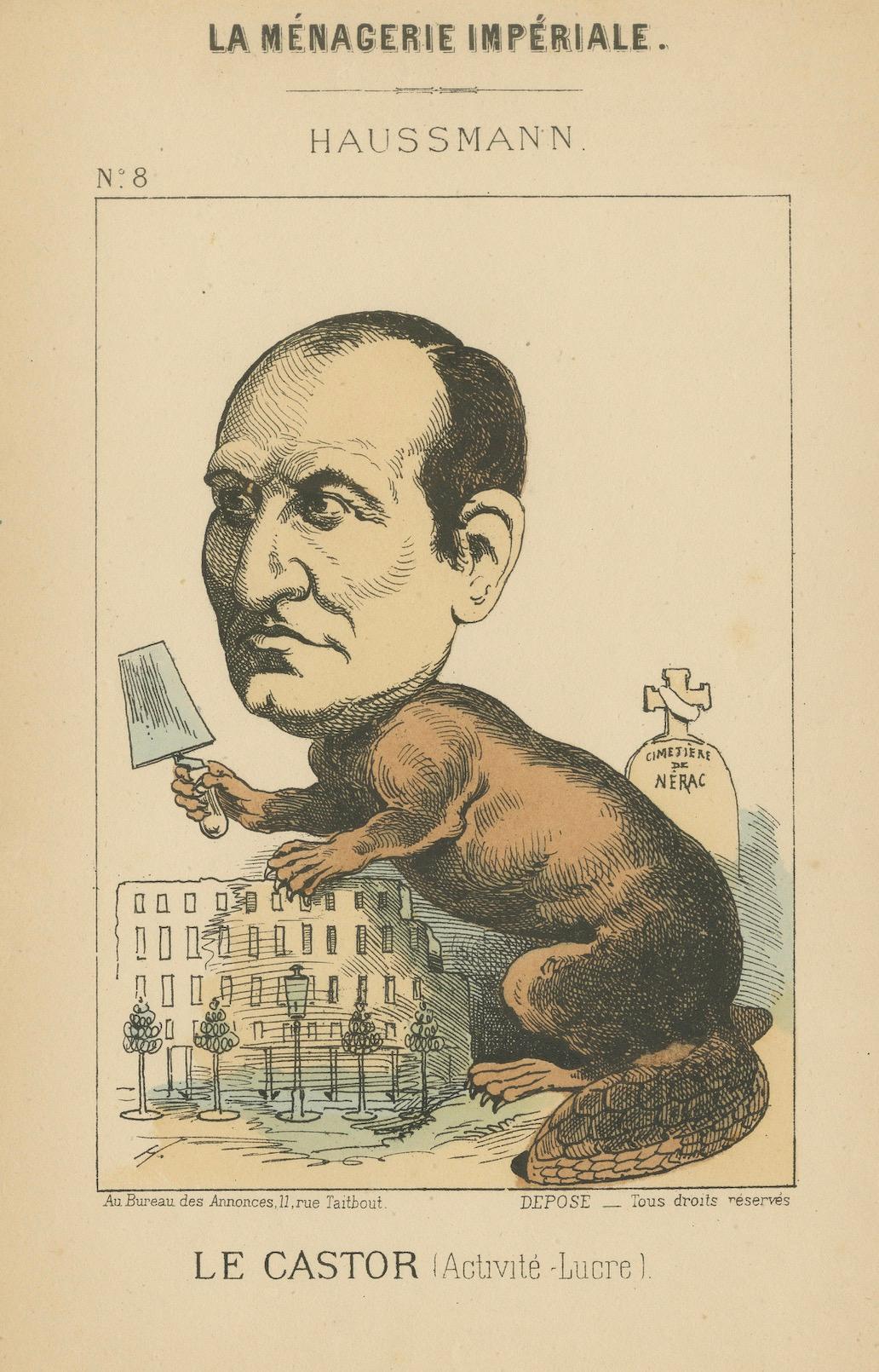
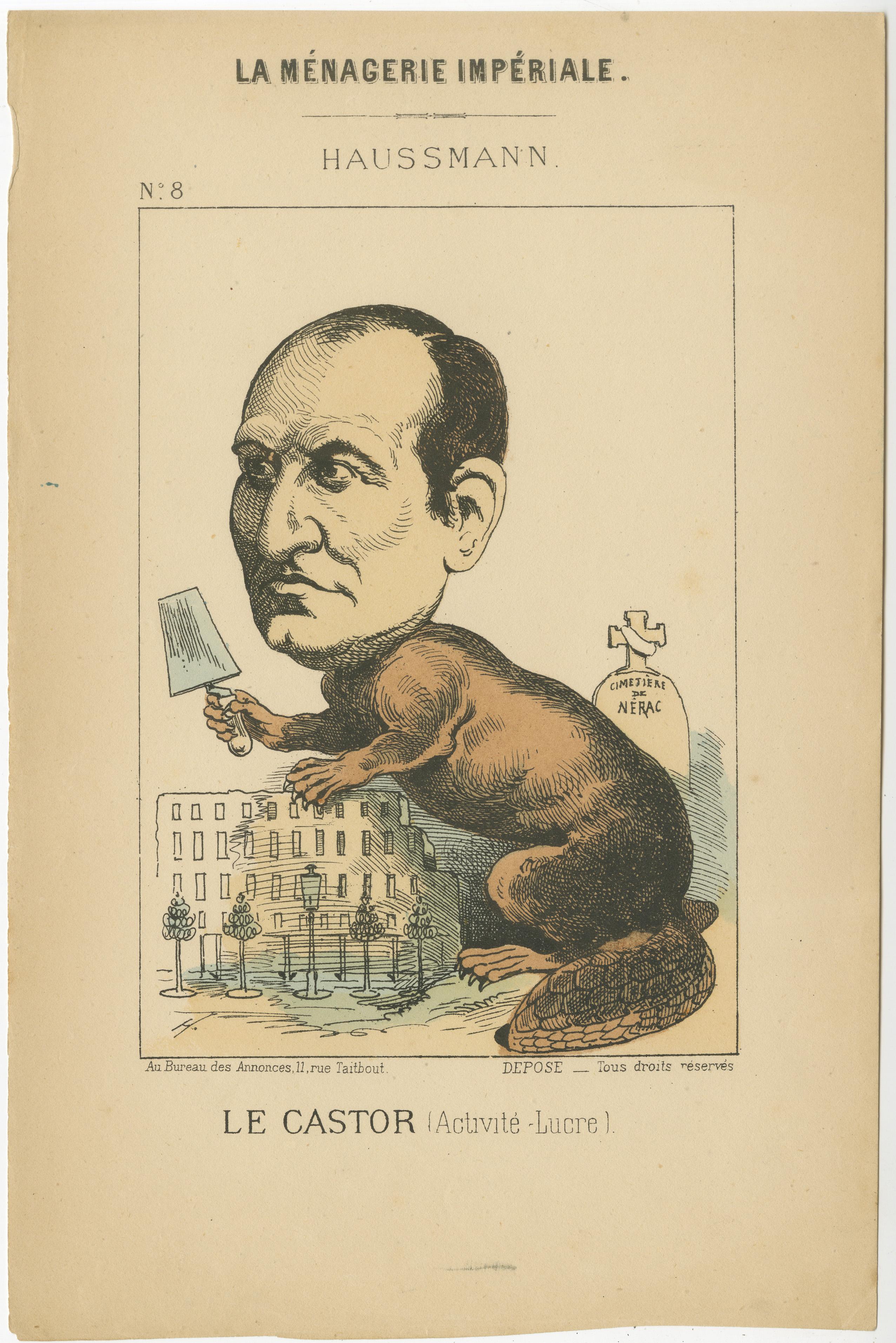
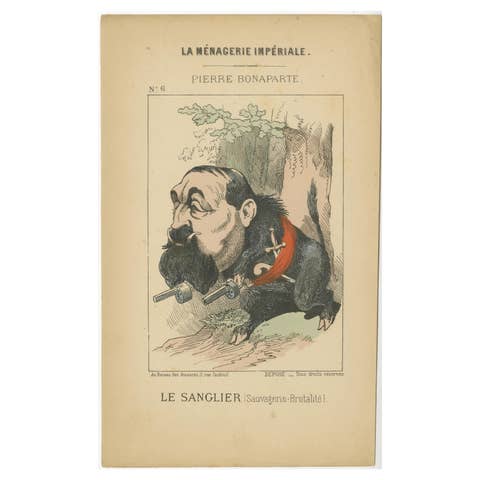
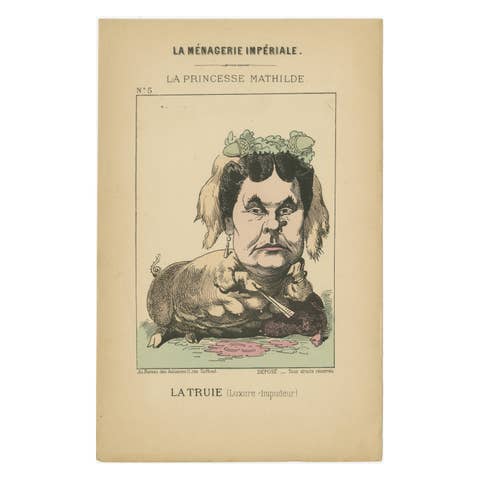
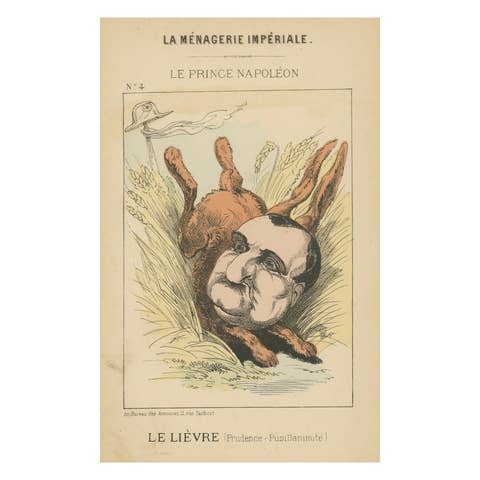
The print titled "La Ménagerie Impériale" is a satirical caricature featuring Georges-Eugène Haussmann. It is part of a series composed of 31 hand-colored lithograph plates by the artist Hadol, published in Paris by Au Bureau des Annonces around 1870. The album, "LA MENAGERIE IMPÉRIALE," depicts various figures as animals, metaphorically representing those who have "devoured" France over the past 20 years, including during the Franco-Prussian War (1870-1871).
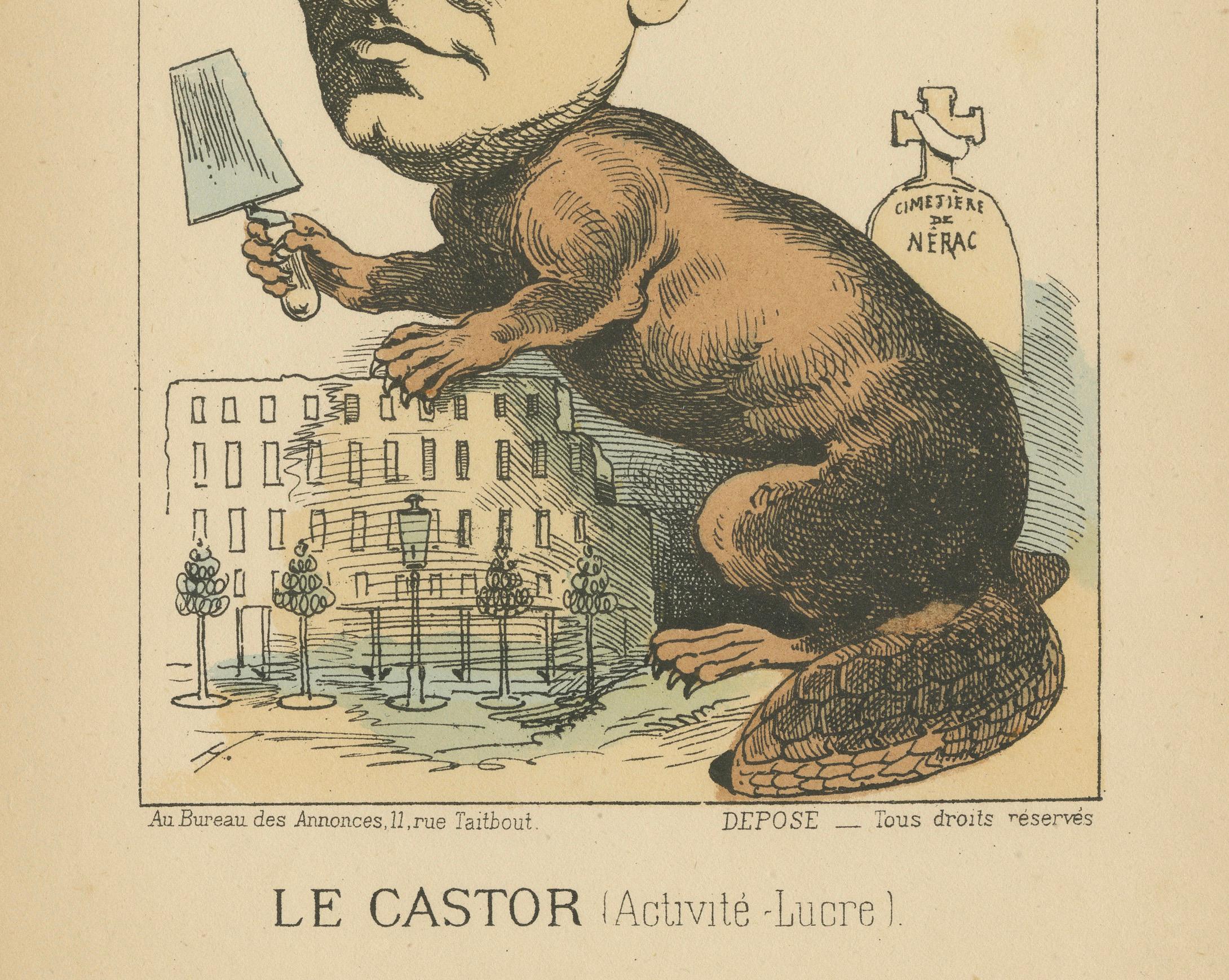
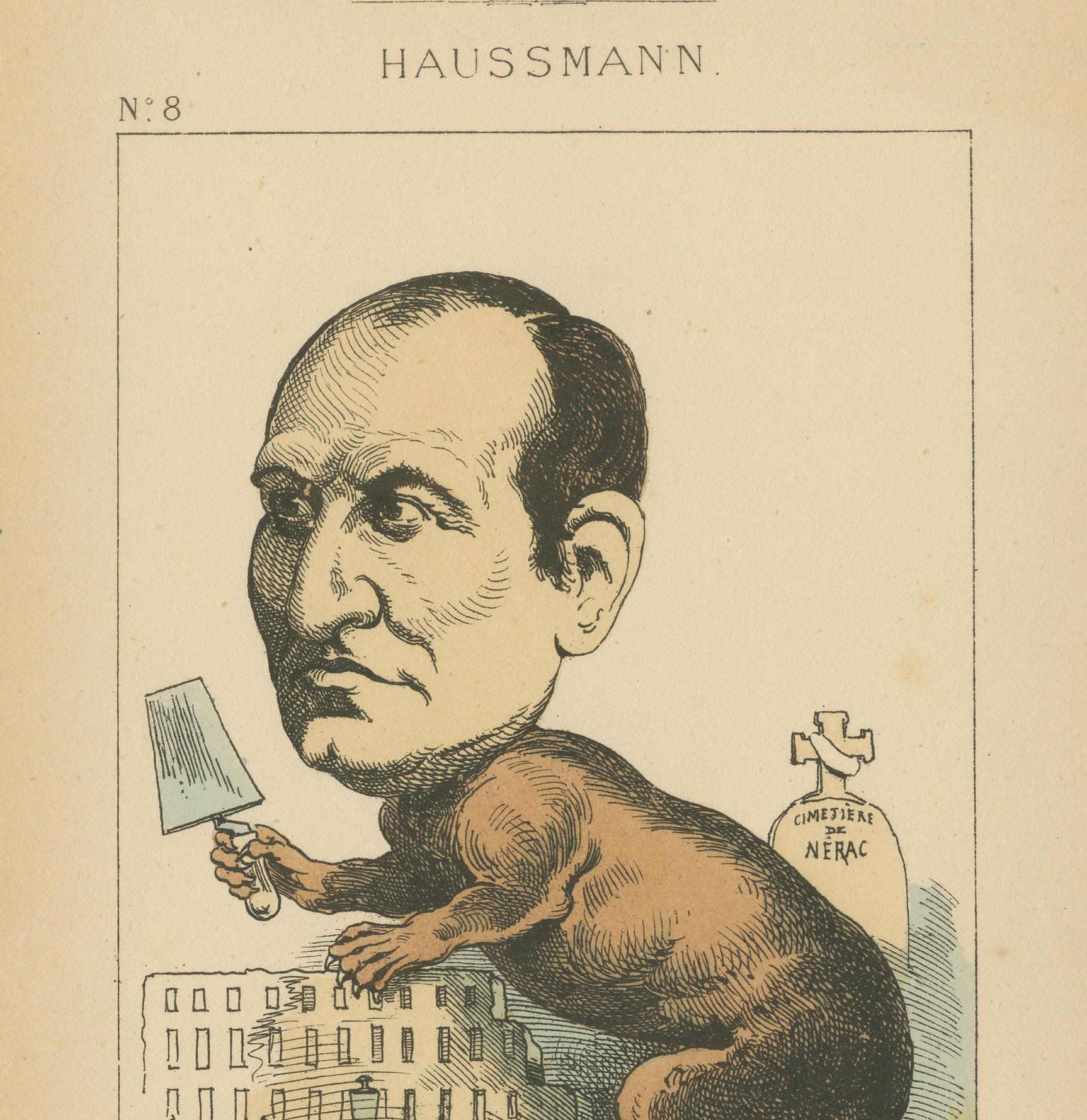
In this specific print, Georges-Eugène Haussmann is depicted with his head attached to the body of a beaver. The beaver, known for its industriousness, is shown holding a trowel and sitting atop an urban development project, symbolizing Haussmann's extensive renovations of Paris. In the background, a cemetery with the sign "CIMETIÈRE DE NÉRAC" is visible, alluding to the controversies and disruptions caused by his urban plans. The text at the top reads "HAUSSMANN" and "N° 8," indicating this is the eighth in the series. Below the image, the caption "LE CASTOR" (The Beaver) is followed by "Activité - Lucre" (Activity - Profit), emphasizing Haussmann's relentless activity and the financial benefits he reaped.
Georges-Eugène Haussmann, commonly known as Baron Haussmann; 27 March 1809 – 11 January 1891), was a French official who served as prefect of Seine (1853–1870), chosen by Emperor Napoleon III to carry out a massive urban renewal programme of new boulevards, parks and public works in Paris commonly referred to as Haussmann's renovation of Paris. Critics forced his resignation for extravagance, but his vision of the city still dominates central Paris.
The album as a whole, titled "LA MENAGERIE IMPÉRIALE," is a caricatural representation of the royal family and significant politicians of the time, using animal imagery to critique their roles and actions. The plates were originally issued loose in contemporary boards with a mounted hand-colored lithographed title. The format is small quarto (Sm. 4to), and the edges are slightly worn and browned, typical for works of this age.
This print, along with the rest of the album, serves as a historical and political commentary, utilizing humor and satire to criticize the leadership during a turbulent period in France’s history.