Idols of Campeche, Yucatán, and Tabasco in Early Colonial Imagination, 1734
€ 240
One of a kind: this is the sheet in the photographs. Ships from Langweer, the Netherlands.
Date
1734
Sheet size
42 × 26 cm (16.5 × 10.2 in)
Condition
Good
Reference
BG-13806-63
Condition
This print is in good condition with toning at the edges, minor foxing, and a strong plate impression. The edges of the paper are rough but the image area remains clean and richly detailed. Ready to be framed.
About this sheet
Idols of Campeche, Yucatán, and Tabasco in Early Colonial Imagination
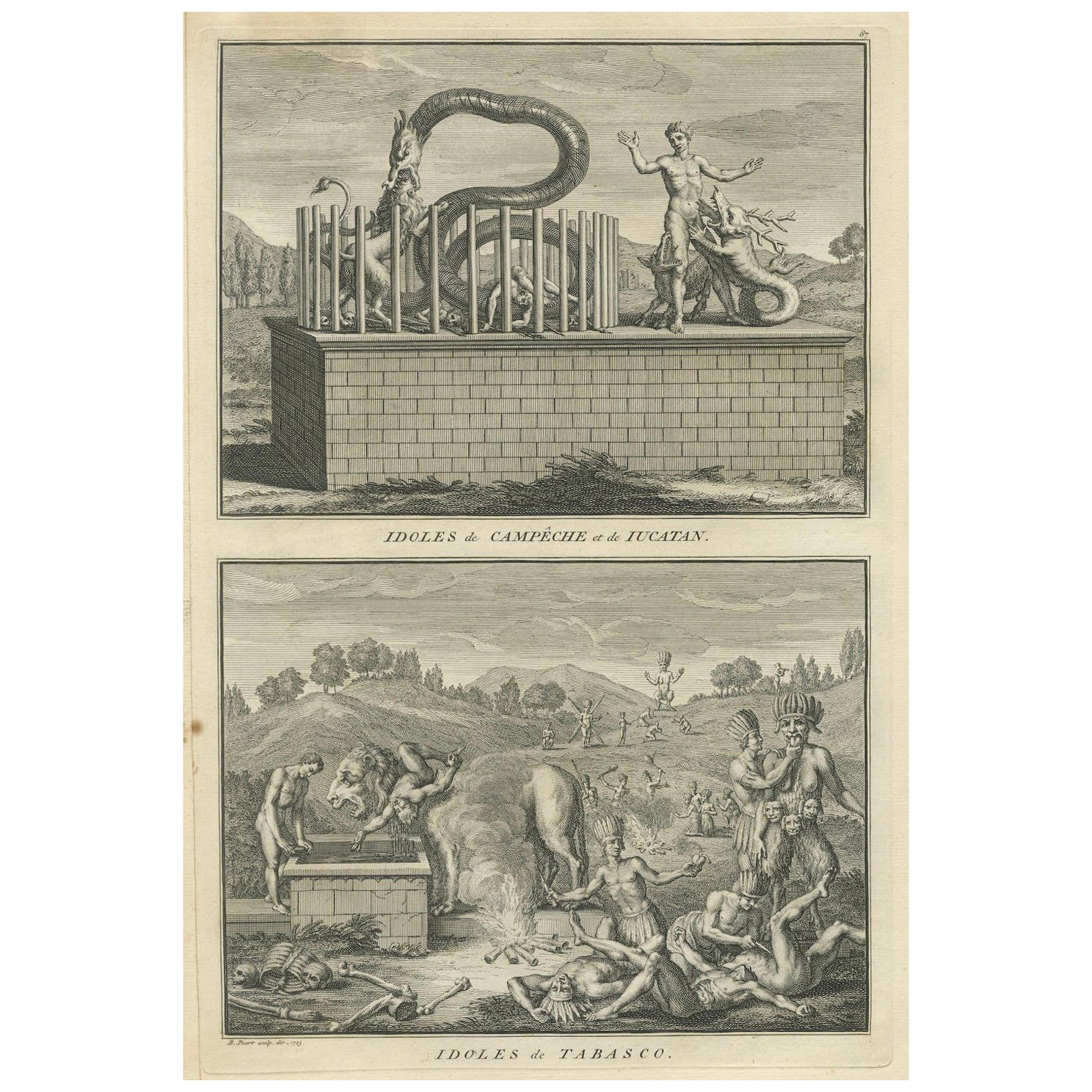
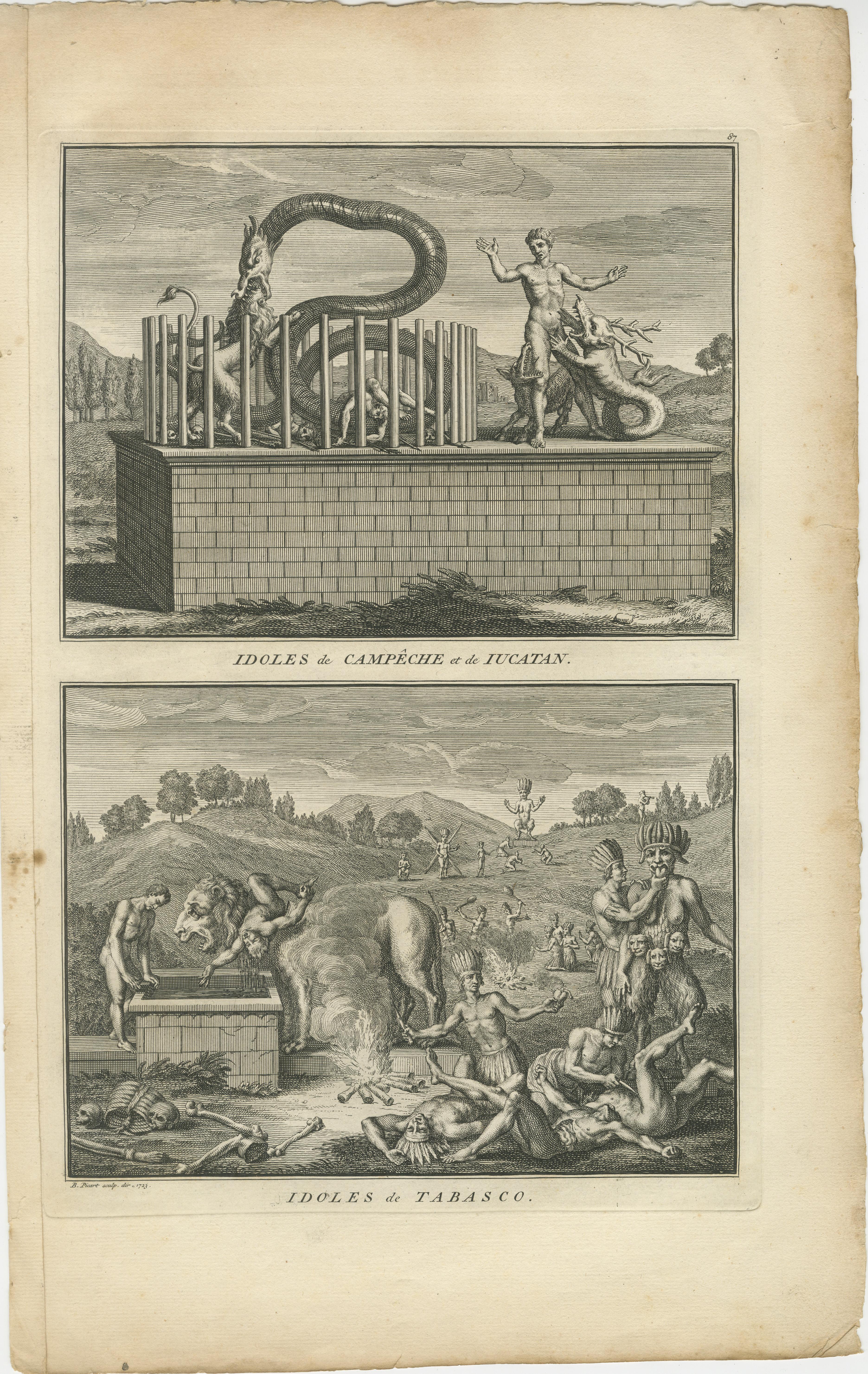
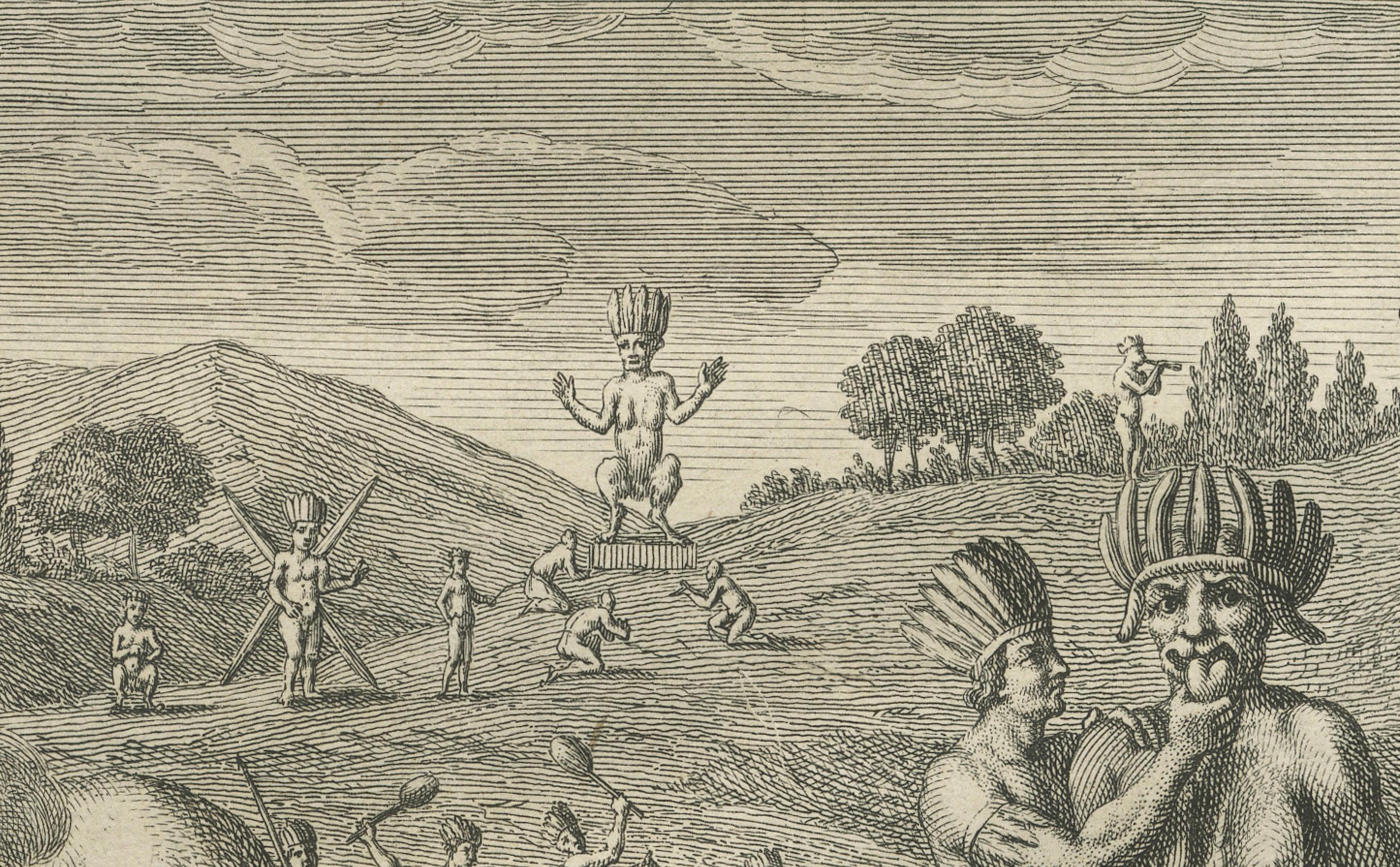
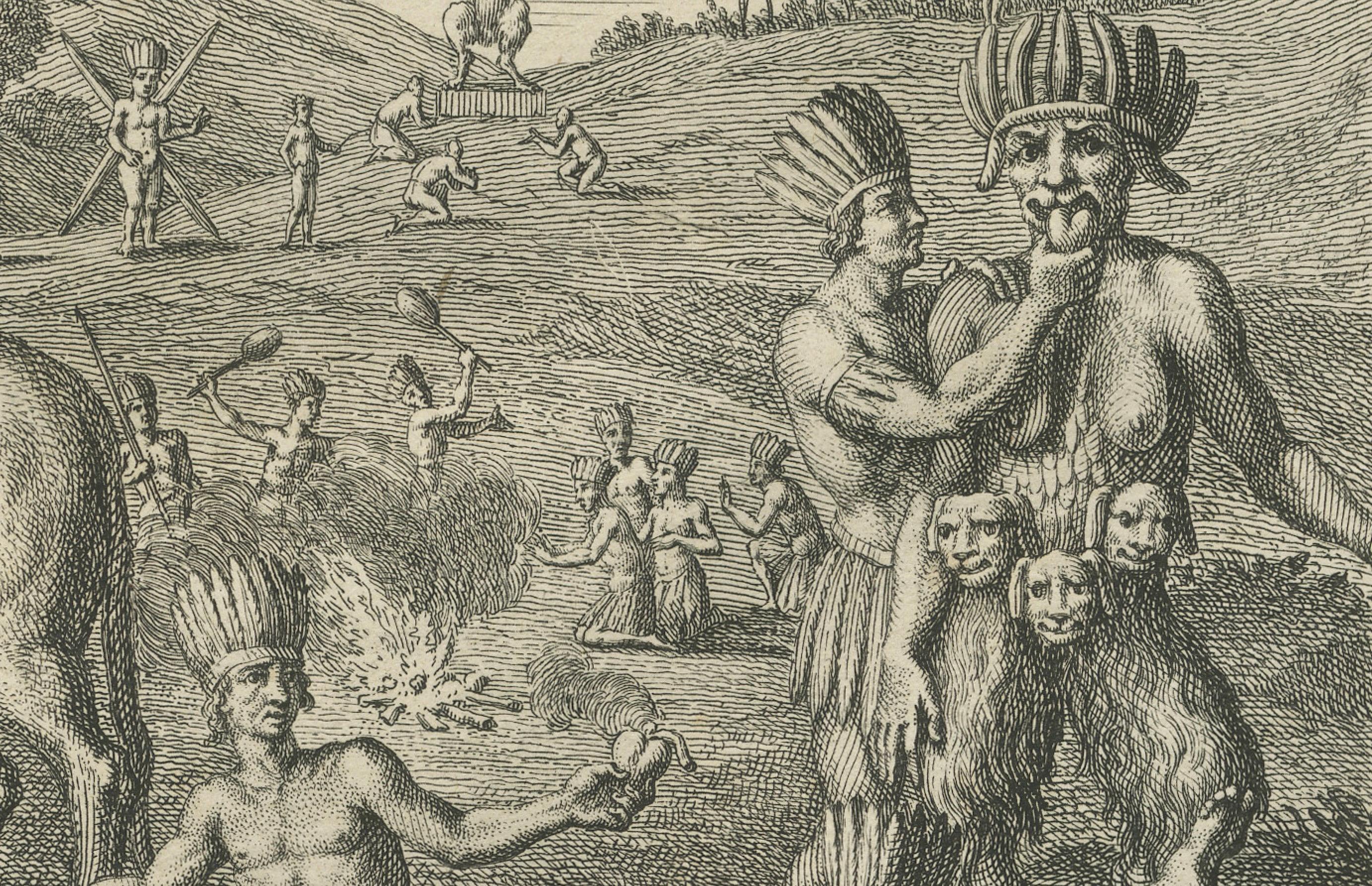
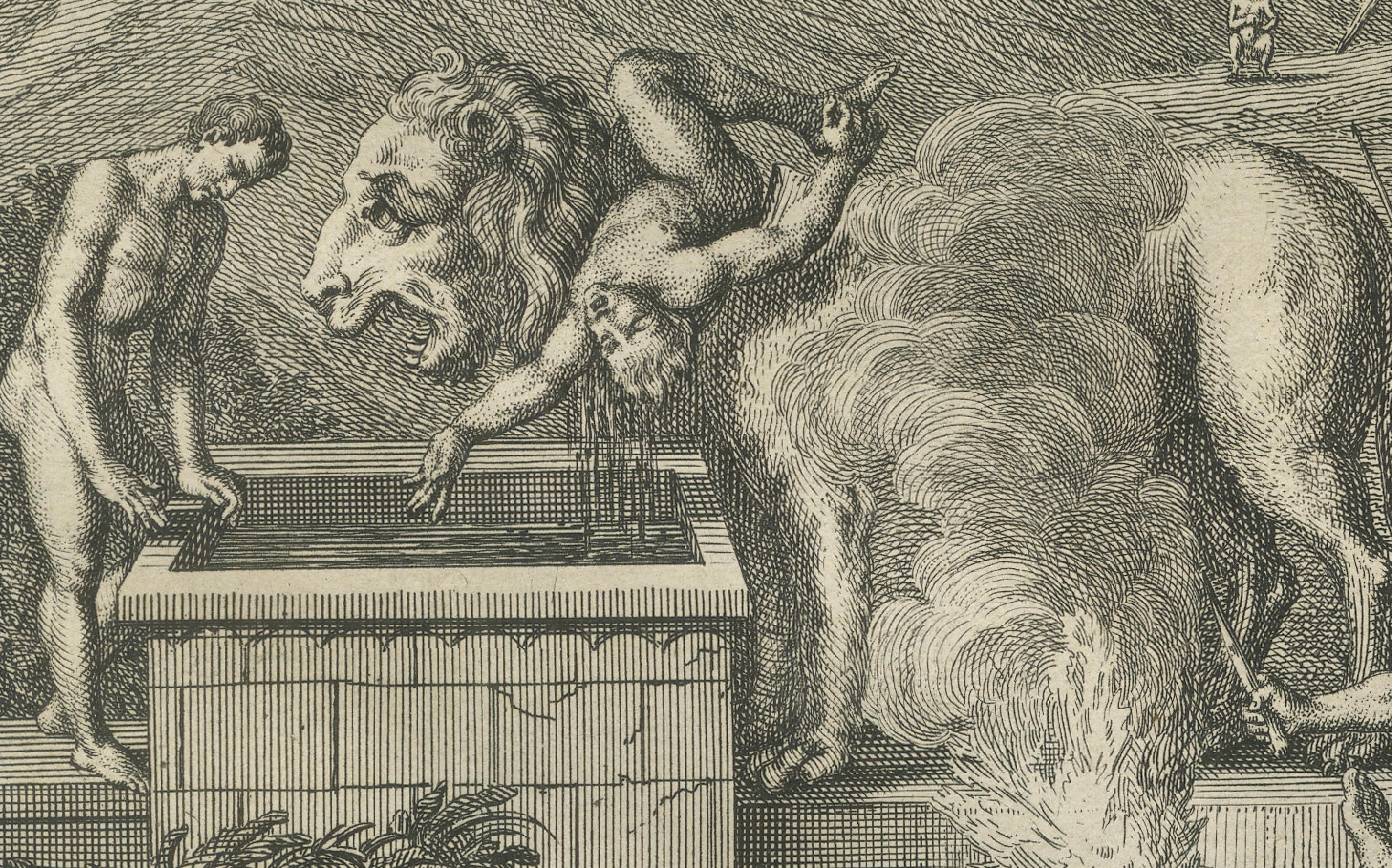
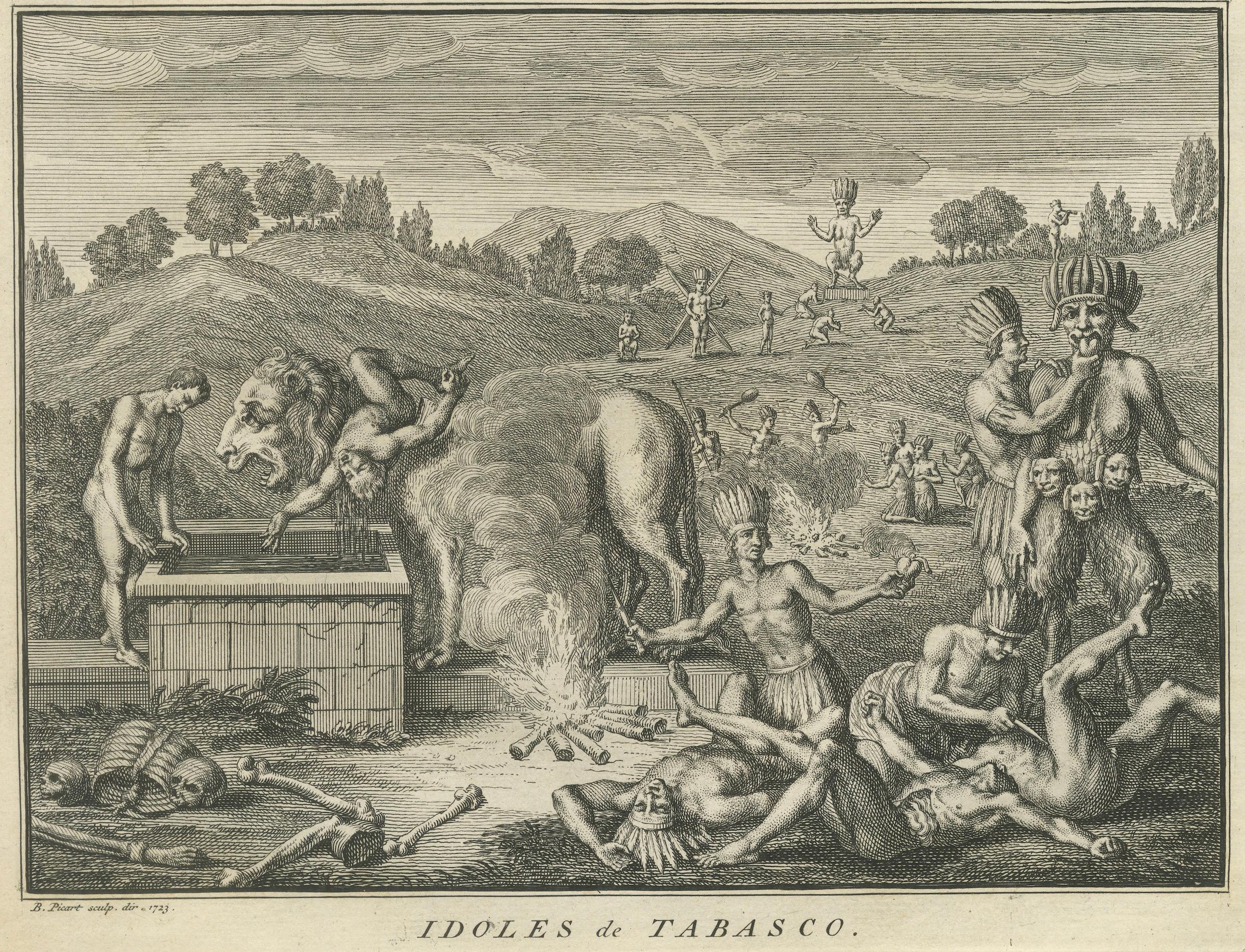
This dramatic 18th-century copperplate engraving, dated 1723, depicts the so-called idols and ritual scenes associated with the indigenous peoples of Campeche, Yucatán, and Tabasco in New Spain (present-day Mexico). Titled *Idoles de Campêche et de Iucatan* and *Idoles de Tabasco*, the engraving was created by Bernard Picart for the monumental work *Cérémonies et Coutumes Religieuses de tous les Peuples du Monde*, a wide-ranging Enlightenment-era project attempting to document global religious practices through European eyes.
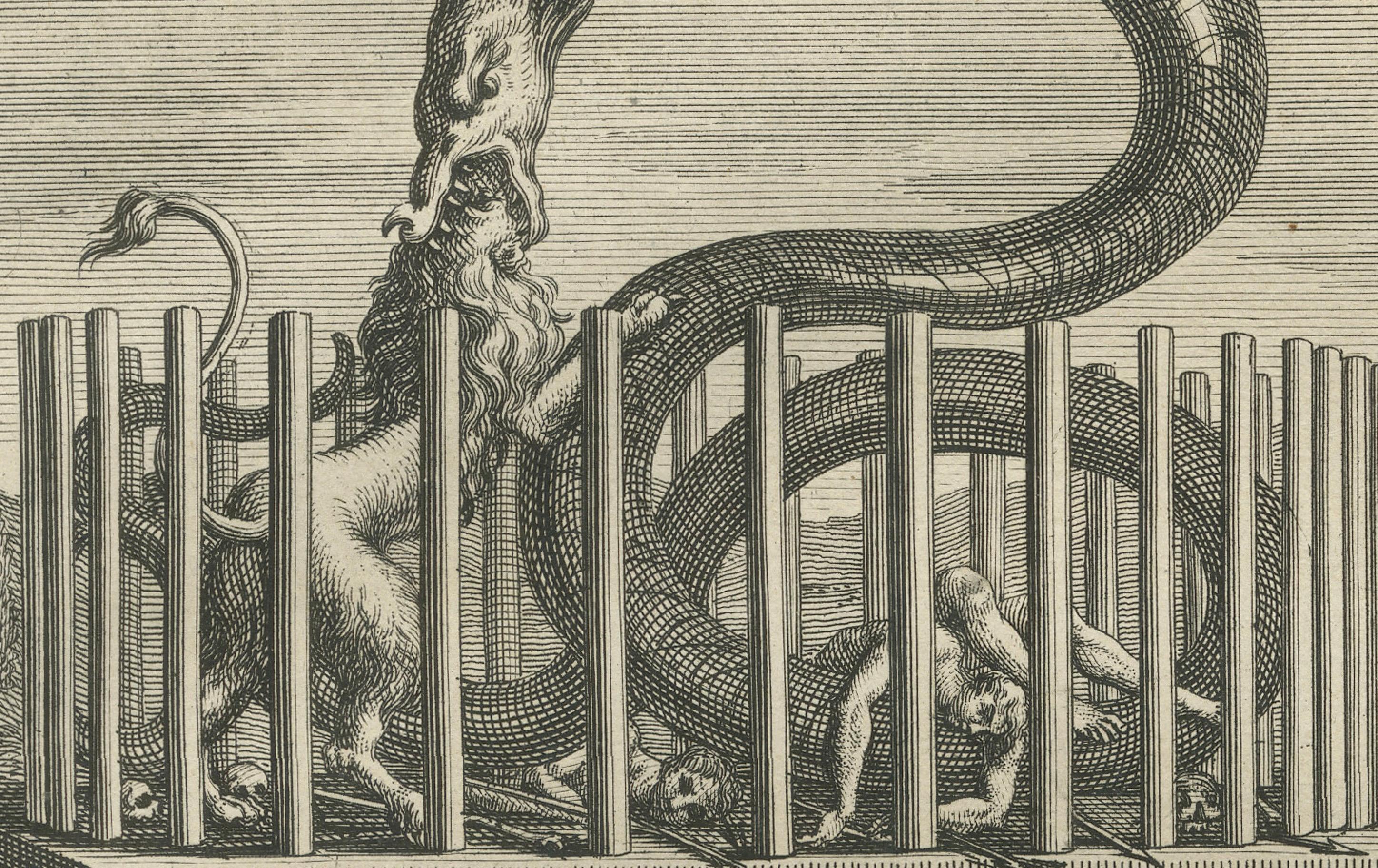
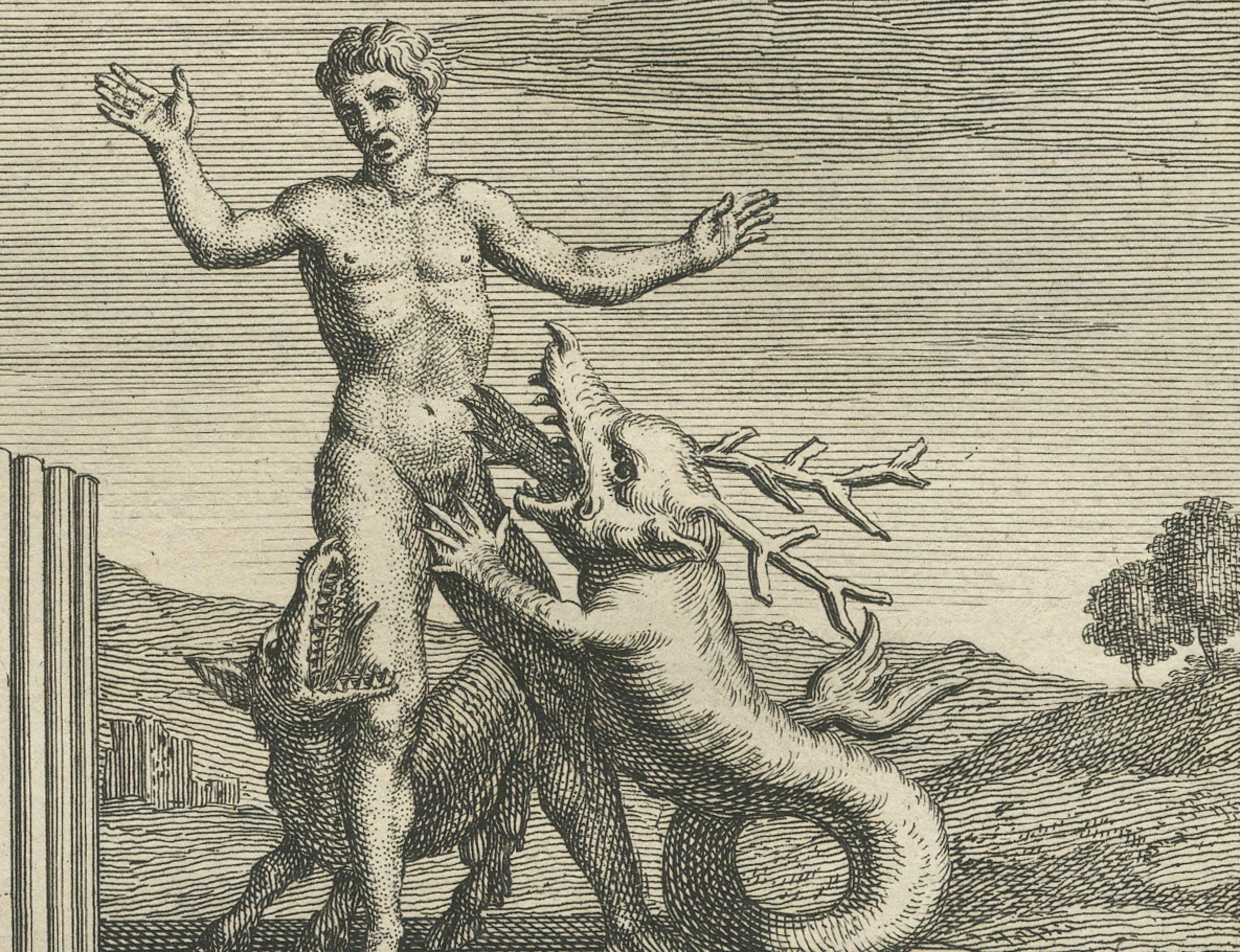
In the upper panel, the "idols" of Campeche and Yucatán are presented as a dramatic tableau featuring monumental sculptural figures and mythic beasts. A large, coiled serpent emerges from a fenced platform while two hybrid creatures—one resembling a griffon or dragon—interact with a nude male figure who stands in a commanding pose. These elements reflect European interpretations of Maya or Aztec cosmology but are infused with imaginative fantasy rather than anthropological accuracy.
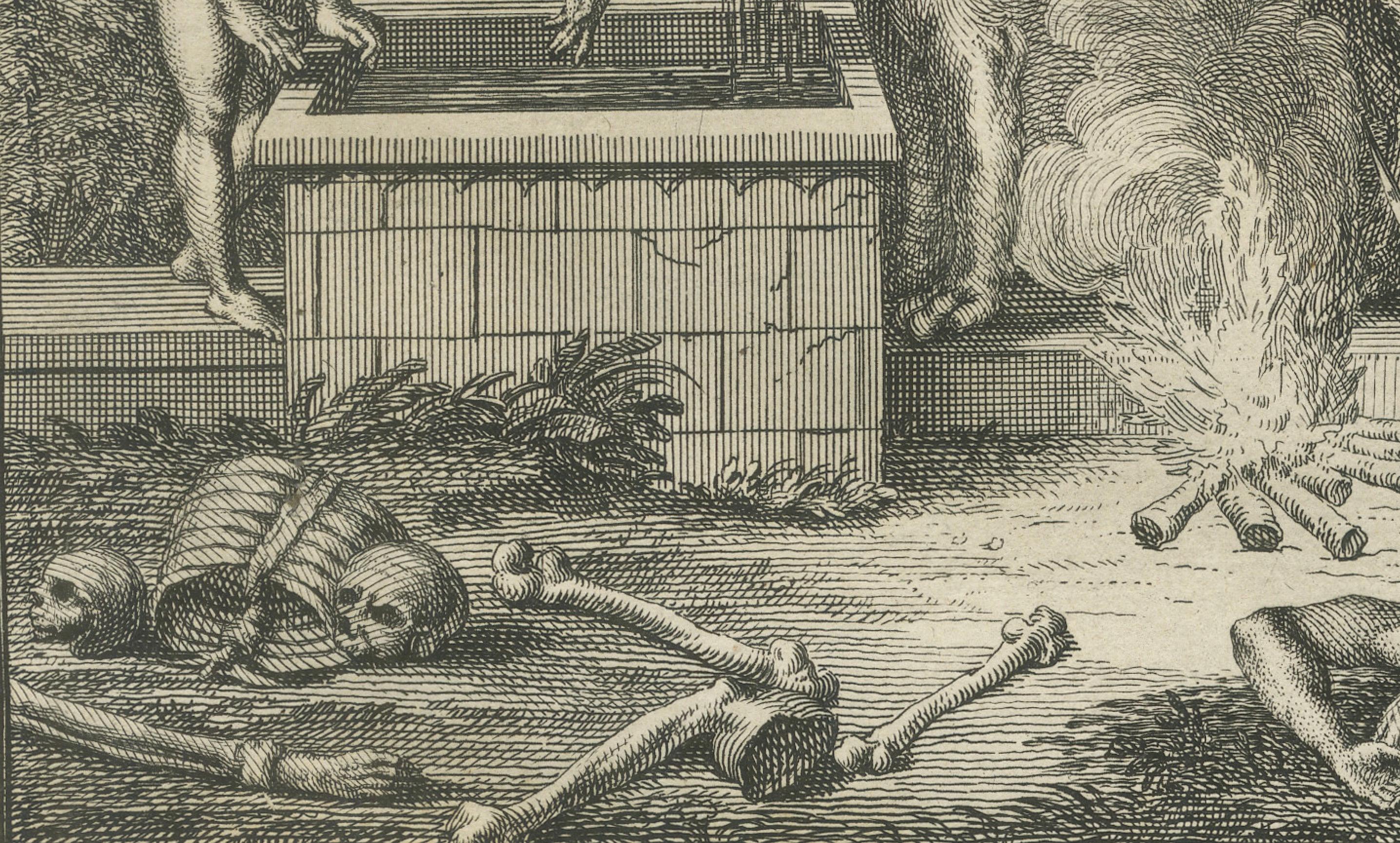
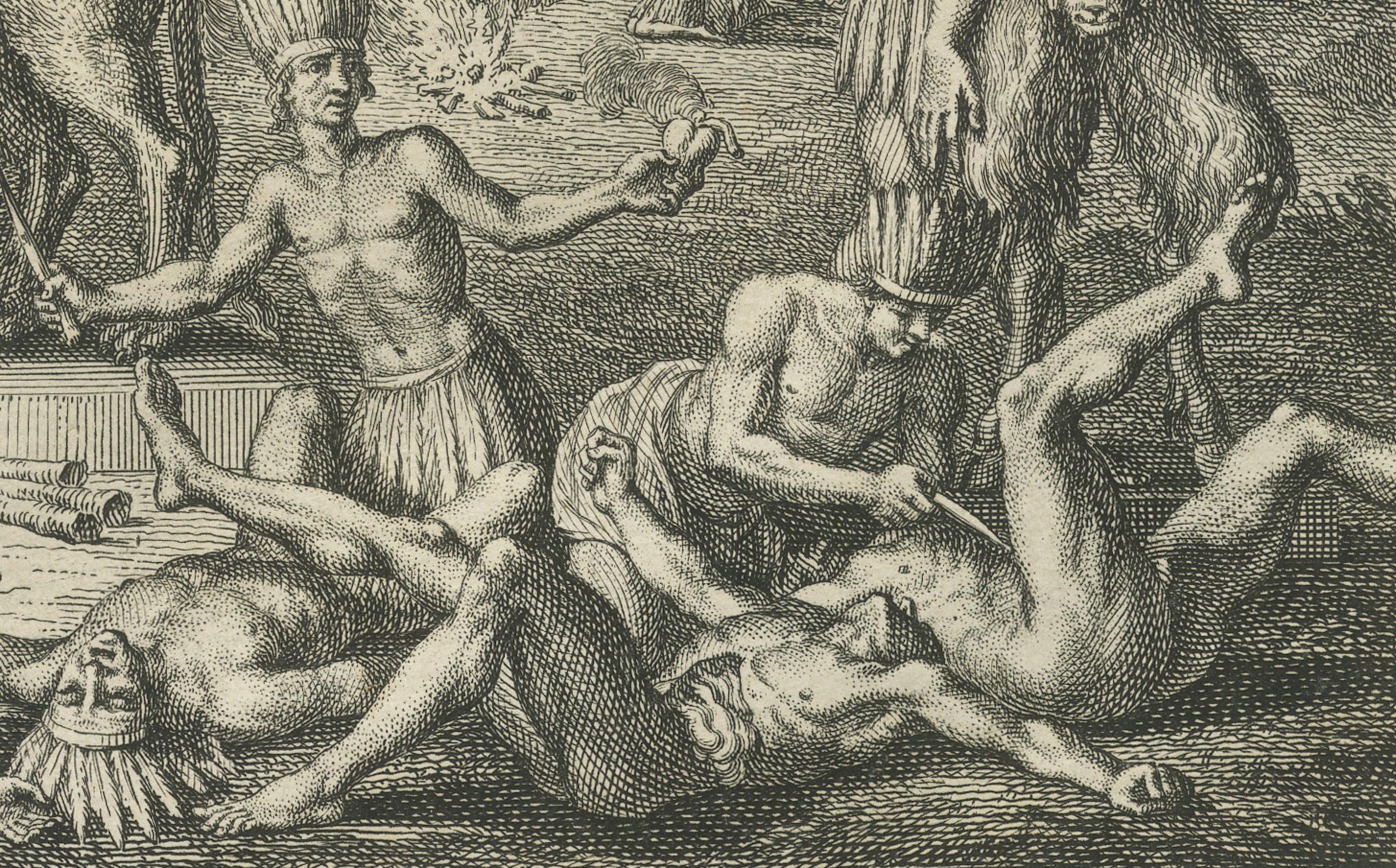
The lower panel illustrates the supposed idols and rituals of Tabasco. Here, a chaotic and ritualistic scene unfolds: skeletal remains, fire, exotic animals, dancing and gesturing figures with elaborate headdresses suggest a ceremony, possibly sacrificial in nature. The composition is rich in symbolic content, blending indigenous iconography with baroque European artistic conventions to conjure an image of exoticism, mystery, and spectacle. Scenes in the background reinforce themes of ritual dance and tribal unity, though they often reflect European misconceptions and dramatic exaggerations.
Like many plates in Picart’s volumes, these engravings were not intended as literal depictions but rather as moral and philosophical reflections filtered through Enlightenment ideals and colonial narratives. They reveal more about 18th-century European perspectives on the Americas than about the native practices themselves.
This print is in good condition with slight toning at the edges, minor foxing, and a strong plate impression. The image area remains clean and richly detailed.
Framing suggestion: A deep mat in ivory or pale sand, paired with a black or walnut frame, will emphasize the classical line work and allow the engraving to stand out. Ideal for collectors of colonial-era prints, ethnographic art, or early New World iconography.