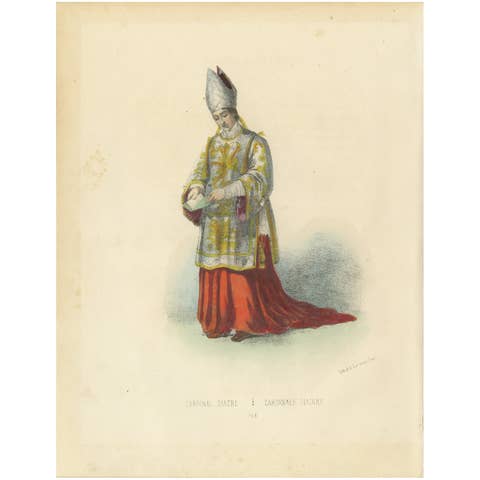
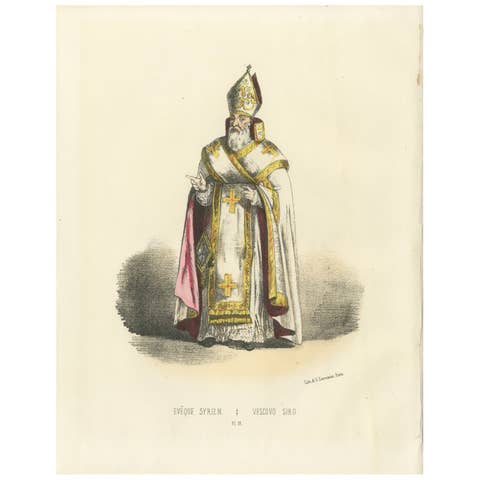
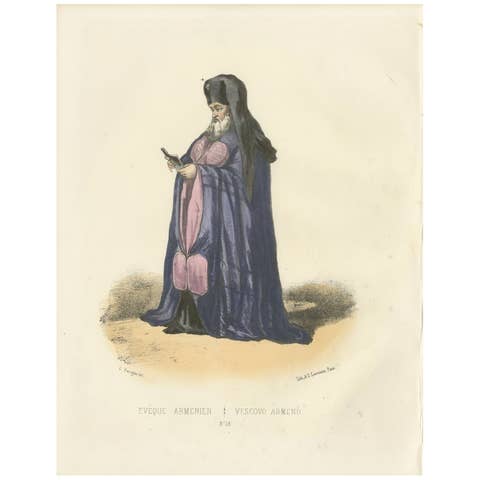
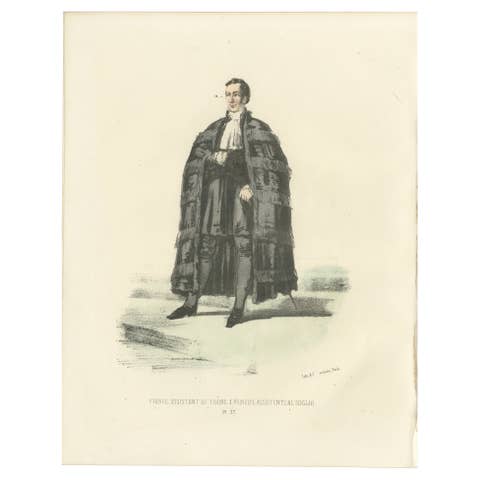
Handcolored Lithograph of Évêque Grec Latin (Greek Latin Bishop), Plate 11, 1862
€ 130
One of a kind: this is the sheet in the photographs. Ships from Langweer, the Netherlands.
Date
1862
Sheet size
26 × 20 cm (10.2 × 7.9 in)
Condition
Good
Reference
BG-14006-60
Condition
The print is in good condition, with vivid hand-coloring, minimal discoloration, slight edge wear but no visible major tears or stains. Perfect for display purposes. Please study the image carefully.
About this sheet
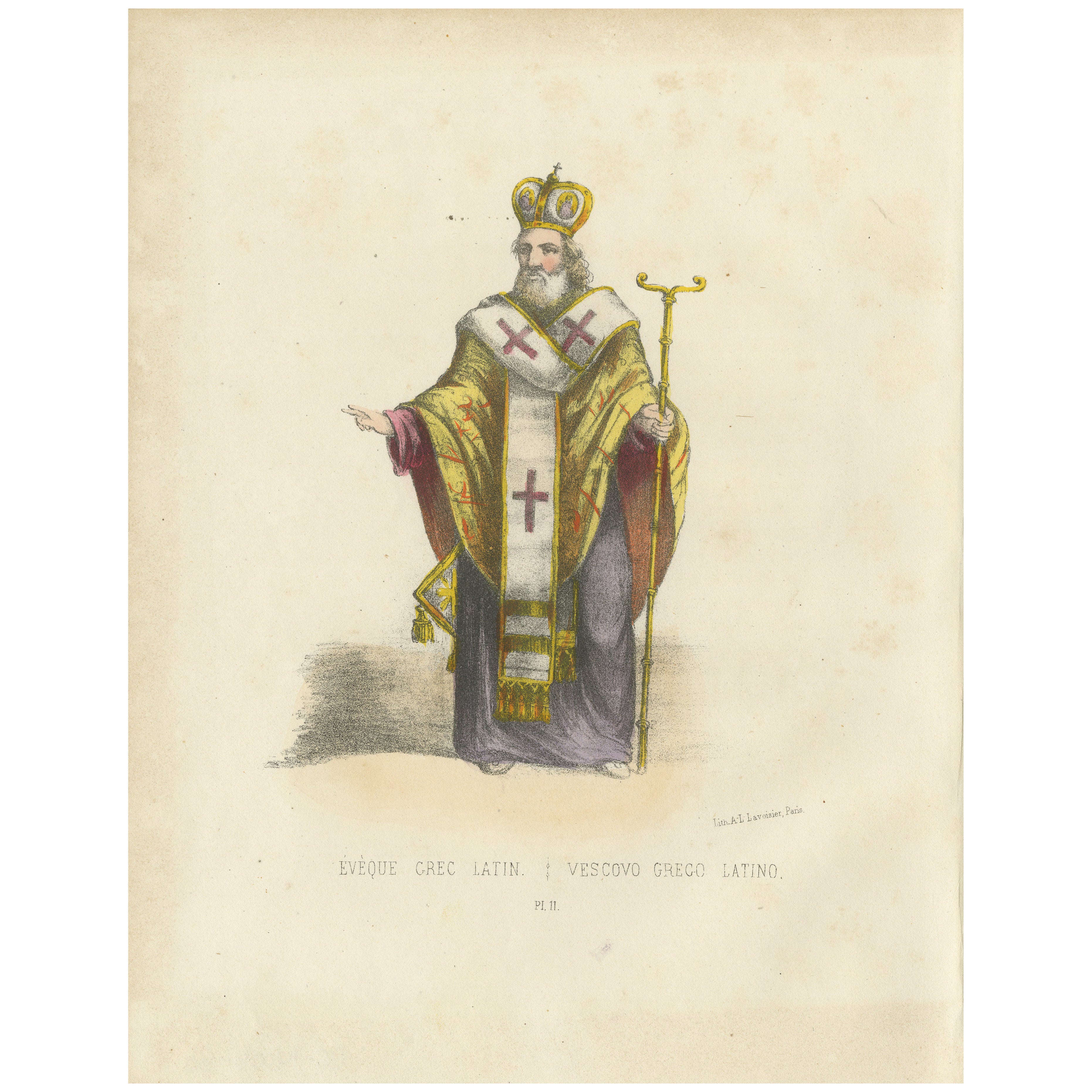
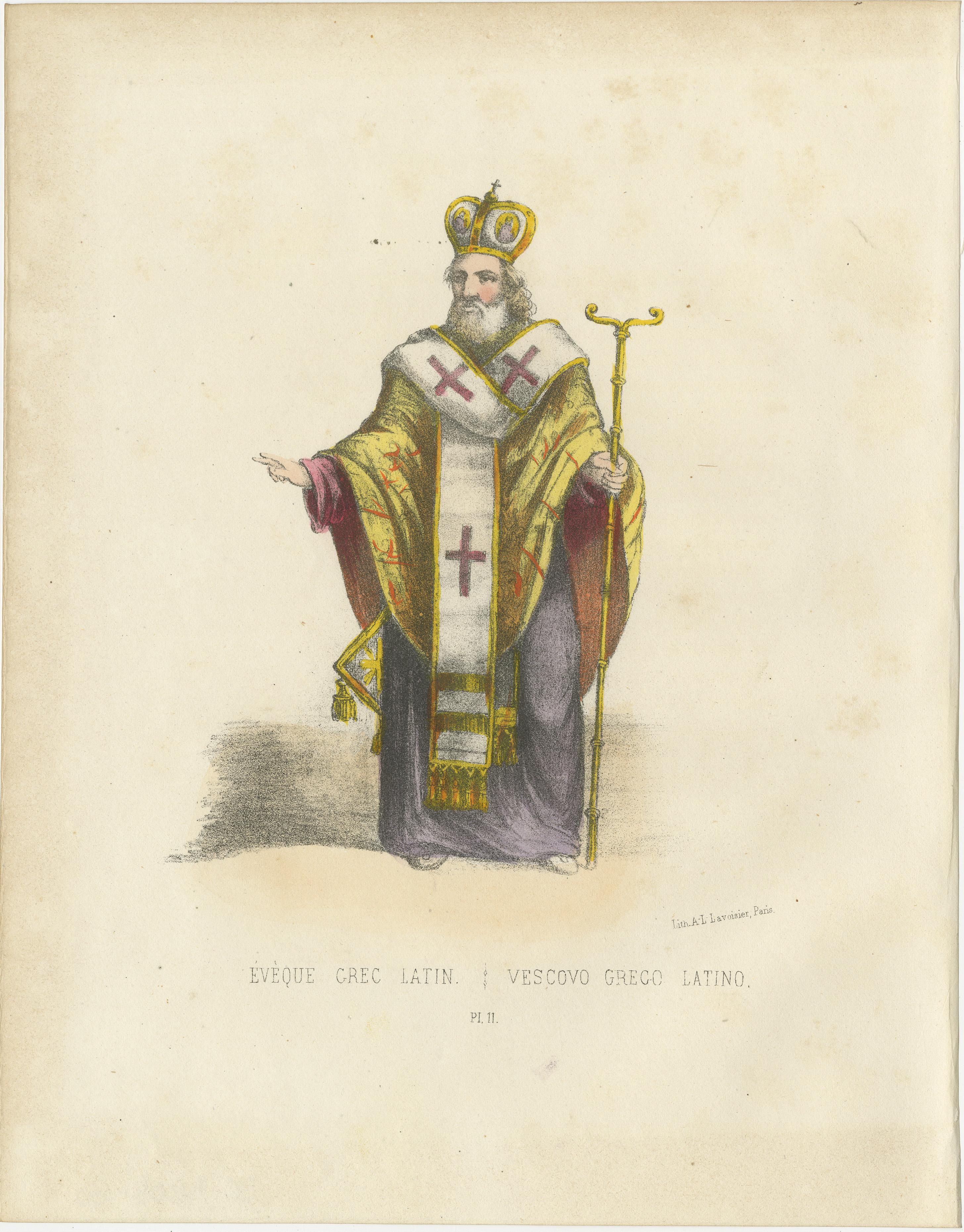
Handcolored Lithograph of Évêque Grec Latin (Greek Latin Bishop), Plate 11, 1862
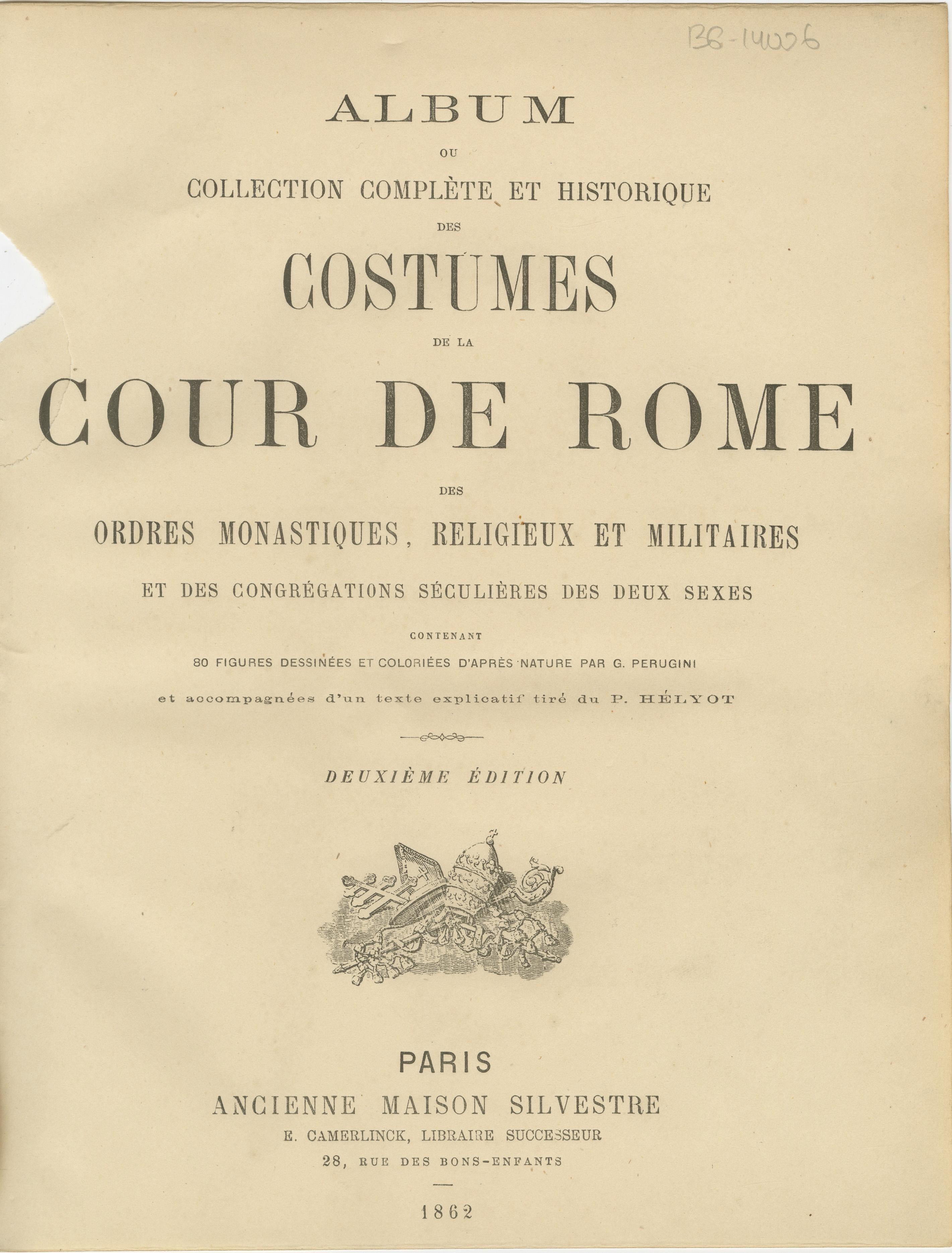
A magnificent handcolored lithograph showcasing an Évêque Grec Latin (Greek Latin Bishop) in full ceremonial regalia, Plate 11 from *Album ou Collection Complète, et Historique des Costumes de la Cour de Rome* by G. Perugini. This rare depiction illustrates the bishop adorned in a gold and crimson-embroidered chasuble, featuring prominent red crosses and intricate detailing on the vestments. The bishop wields a gold pastoral staff and wears a richly adorned mitre, symbolizing his high clerical rank and authority.
The figure's poised stance, with an extended hand, suggests a moment of benediction or a ceremonial proclamation. The vibrant palette highlights the opulence and splendor associated with ecclesiastical attire within the Greek Latin tradition.
Historical Context: The Greek Latin tradition is a unique confluence of Eastern and Western Christian rites, reflecting the integration of Byzantine and Roman liturgical practices. This bishop's attire reflects this blend, showcasing elements of both traditions in the vestment's design and ceremonial significance. Such attire was not merely functional but also a testament to the church's role as a bridge between diverse Christian cultures during the 19th century.
Provenance: Published by L’Aubert and Lemoine in Paris, this lithograph forms part of an extensive series documenting the attire of religious figures associated with the Roman Catholic Church and its affiliated rites.
A must-have for collectors of religious art, historical costumes, or ecclesiastical history, this plate vividly captures the grandeur and cultural significance of the Greek Latin tradition.