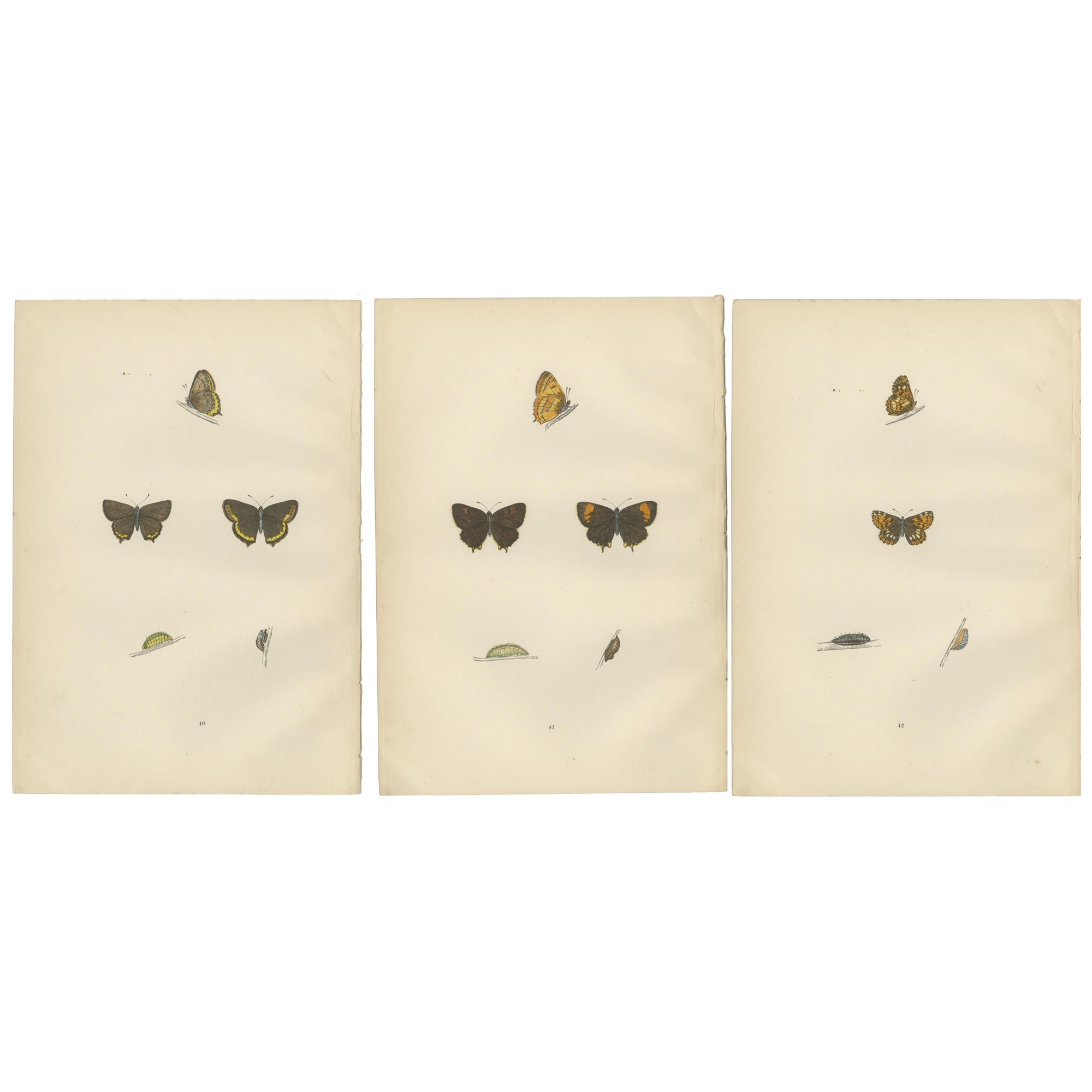
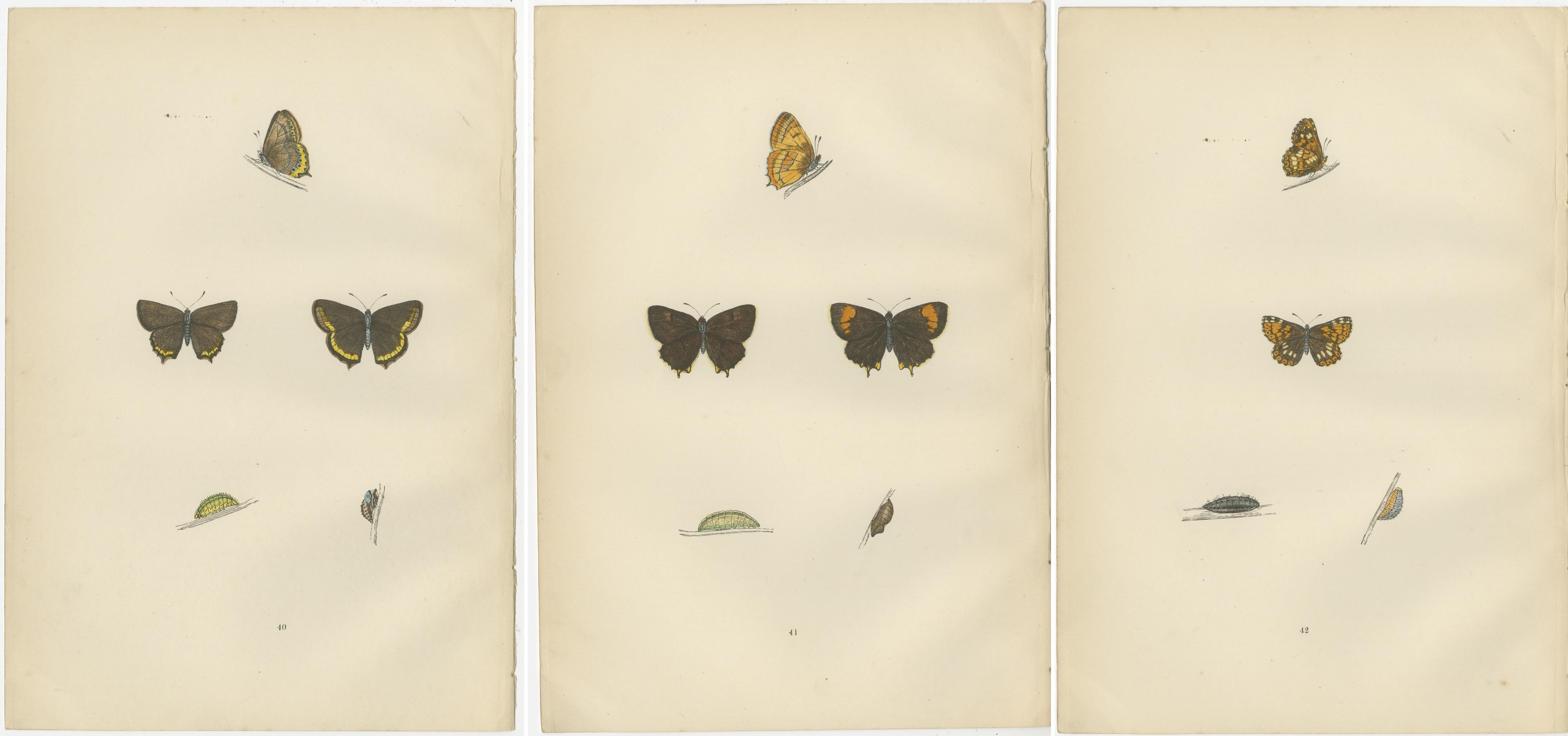
British Elegance in Flight: The Hairstreaks and Duke of Burgundy, 1890
€ 190
One of a kind: this is the sheet in the photographs. Ships from Langweer, the Netherlands.
Date
1890
Sheet size
25.4 × 17.3 cm (10.0 × 6.8 in)
Condition
Good
Reference
BG-13260-40, BG-13260-41, BG-13260-42
Condition
given age, general age-related toning. Some small spots.. Please study scan carefully.
About this sheet
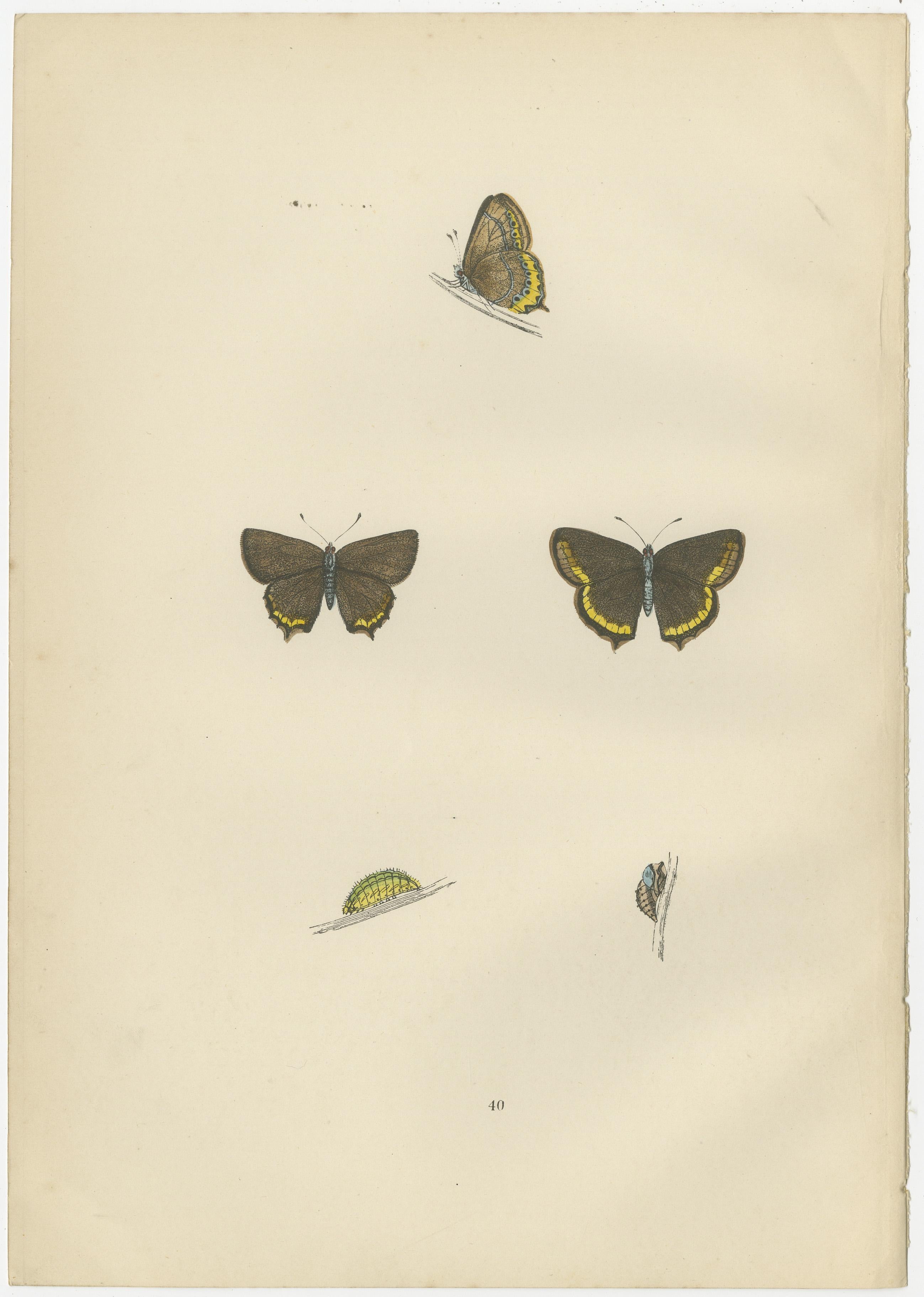
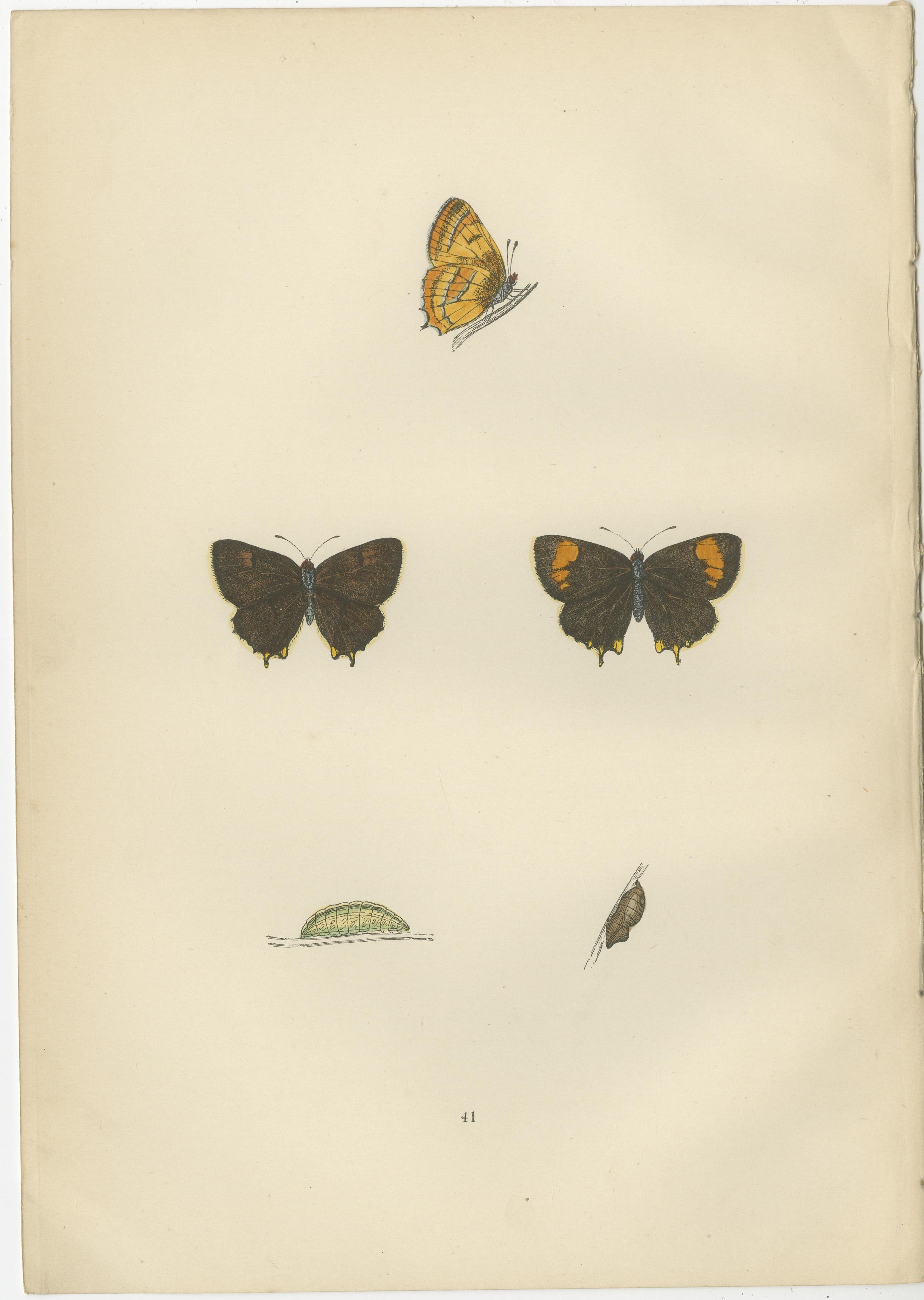
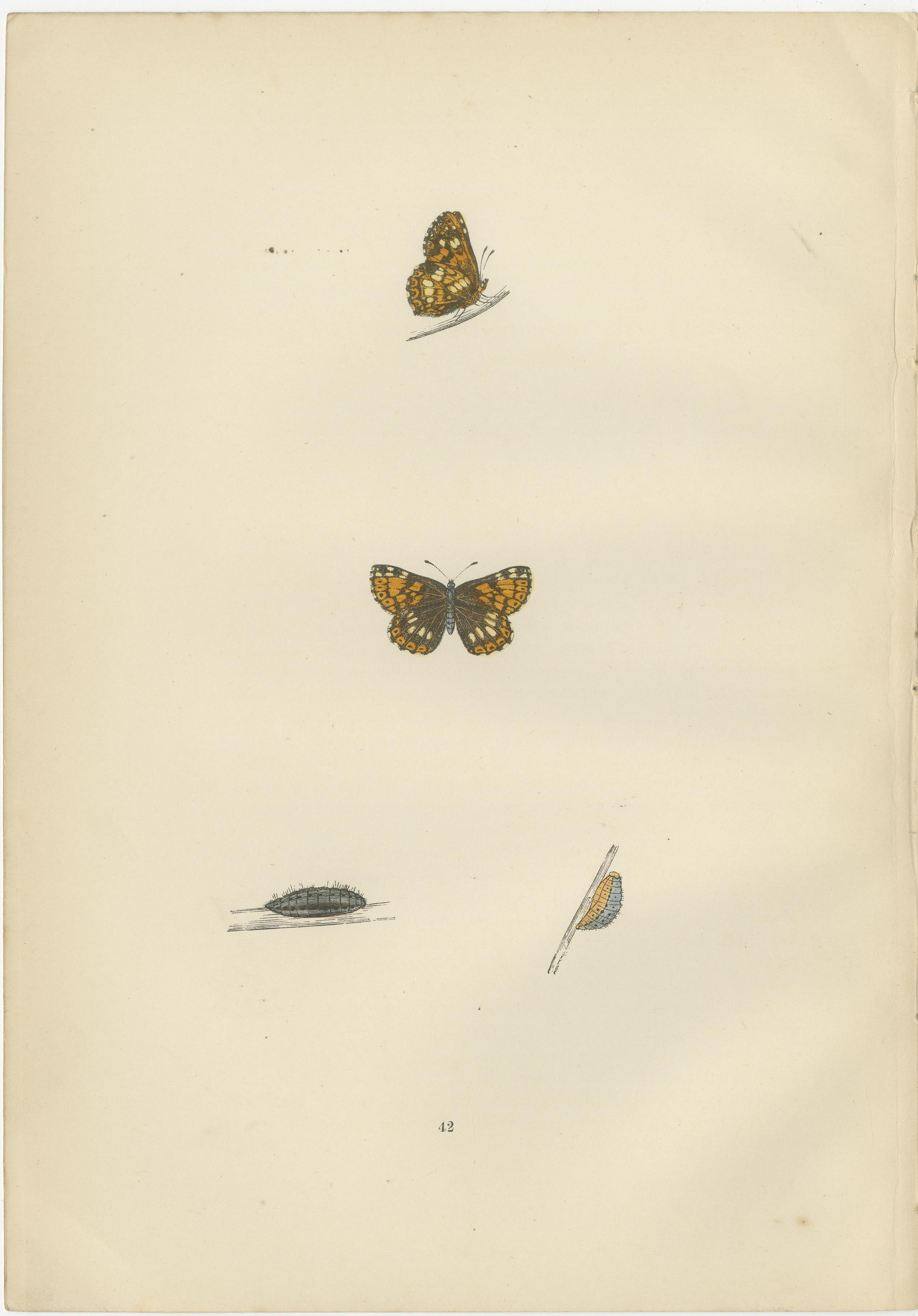
The butterflies are notable species in British lepidoptery, and here’s a brief overview of each:
**Black Hairstreak (Satyrium pruni):** The Black Hairstreak is a small, elusive butterfly with a wingspan of about 35-40mm. It is characterized by dark brown wings with a black cell spot and thin white striae (streaks). The edges of the wings are scalloped with small tails on the hindwings. The undersides have an orange band across both wings, and this feature distinguishes it from similar species. The Black Hairstreak is interesting because it is one of Britain's most localized butterflies, found in thickets and hedgerows, and has a lifecycle closely tied to the blackthorn bush where it lays its eggs.
**Brown Hairstreak (Thecla betulae):** The Brown Hairstreak has a larger wingspan than the Black Hairstreak, reaching up to 50mm. It's a beautifully marked butterfly with warm brown upper sides and orange patches near the tails of the hindwings. The undersides are lighter with an intricate pattern of white lines and orange spots. One of the most fascinating aspects of the Brown Hairstreak is its secretive nature, coupled with a late emergence in the year, often not until late August. The females are seen more often than males and are known to lay their eggs singly on young blackthorn twigs, which provides the caterpillar with its food source.
**Duke of Burgundy (Hamearis lucina):** This small, robust butterfly has a wingspan of 29-34mm. Its upper sides display a mosaic of orange and brown, with distinctive black spots and a checkerboard pattern. This pattern continues on the undersides but with a lighter hue. The Duke of Burgundy is of particular interest because it’s Britain’s only member of the metalmark family, even though it resembles fritillary butterflies in appearance. Its habitats are distinctly split between woodland clearings and chalk or limestone grassland where its caterpillar feeds on cowslip (Primula veris) and primrose (Primula vulgaris).
What makes these species interesting, apart from their aesthetics and biology, is their conservation status. They are indicative of the health of specific habitats and are sensitive to environmental changes. For instance, the Duke of Burgundy has seen a decline in numbers due to habitat loss, making it one of the UK's priority species for conservation efforts. Similarly, the Black and Brown Hairstreaks are also species of conservation concern, primarily due to changes in agricultural practices that affect their food plants and breeding habitats.etailed descriptions and illustrations of British butterfly species. It was published in London in 1890.
F. O. Morris's works were an important contribution to the natural history literature of the Victorian era. They were particularly valued for their hand-colored plates, which brought the details of these species to life for both the scientific community and amateur naturalists at a time when color photography was not yet available. The plates served an important role in the identification and appreciation of British butterflies, adding to the richness of natural history and aiding in the spread of knowledge about biodiversity during that period.