About this sheet
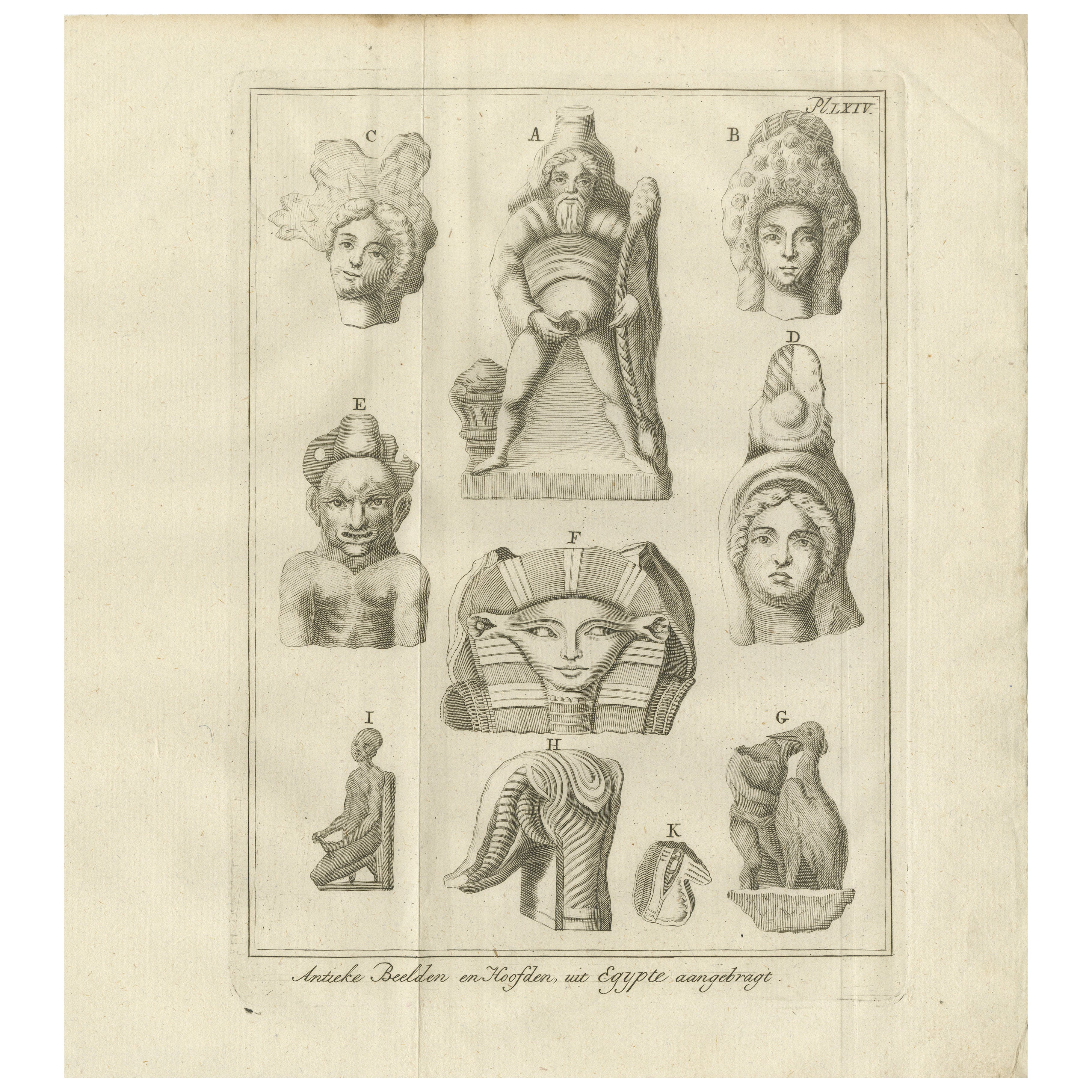
This detailed antique engraving presents a fascinating assemblage of ancient sculptures and heads originating from Egypt, reflecting both native Egyptian and Greco-Roman artistic influences. The plate is titled in Dutch as "Antieke Beelden en Hoofden uit Egypte aangebragt," meaning "Antique Statues and Heads Brought from Egypt." It likely dates to the mid-18th century and was published as part of a larger work documenting antiquities collected during early European explorations of Egypt.
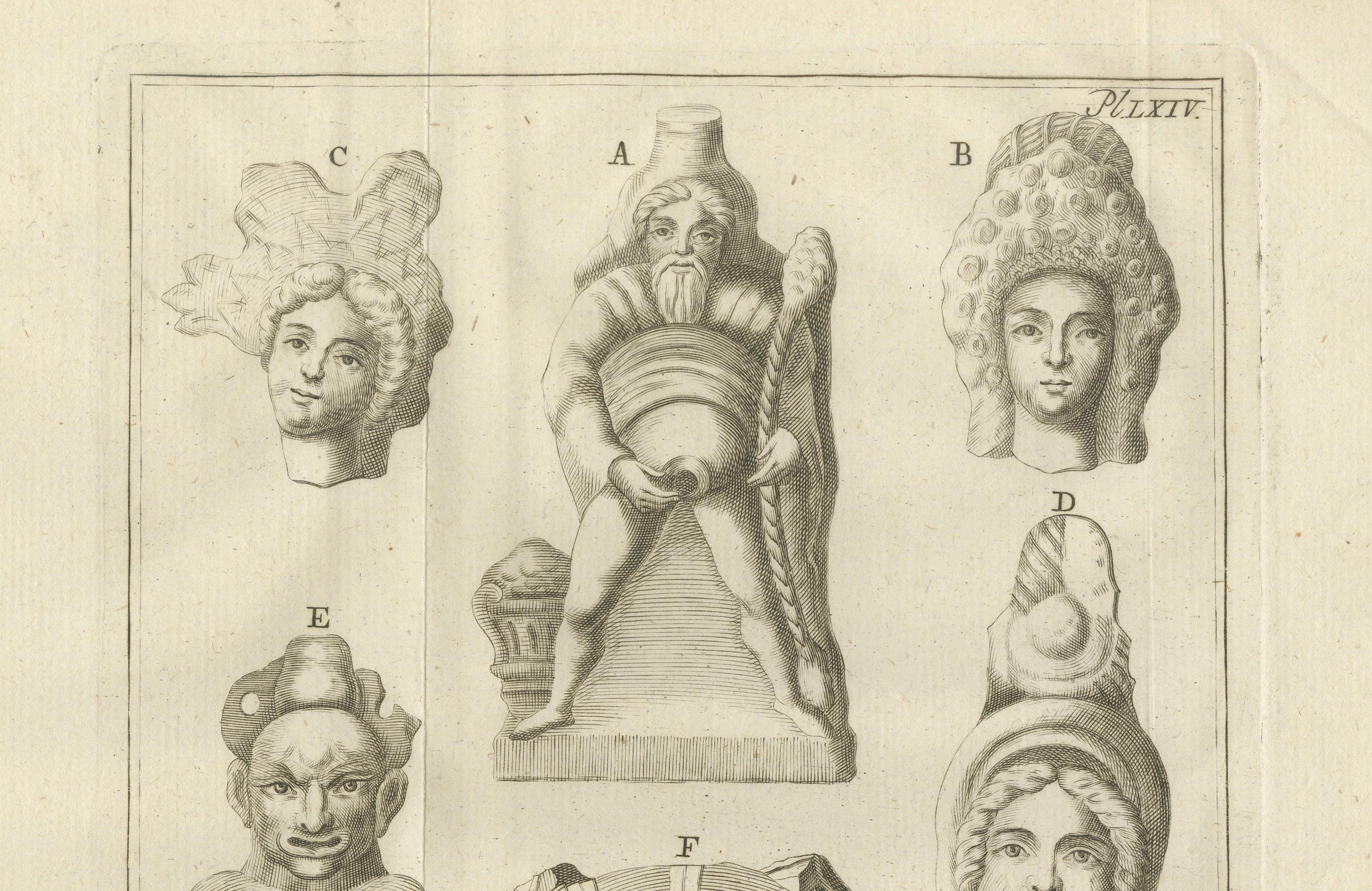
At the center of the composition (marked A) is a bearded male figure, stout and powerful, possibly representing the protective Egyptian deity Bes, though the pose and garment may also indicate a Roman interpretation of Hercules. The mix of attributes in this figure highlights the cultural blending that occurred in Egypt under Greek and Roman rule.
Several finely drawn heads surround this central statue:
* B and C depict female heads with elaborate, curled hairstyles common in Roman portraiture.
* D shows a more modest female figure, perhaps a funerary bust.
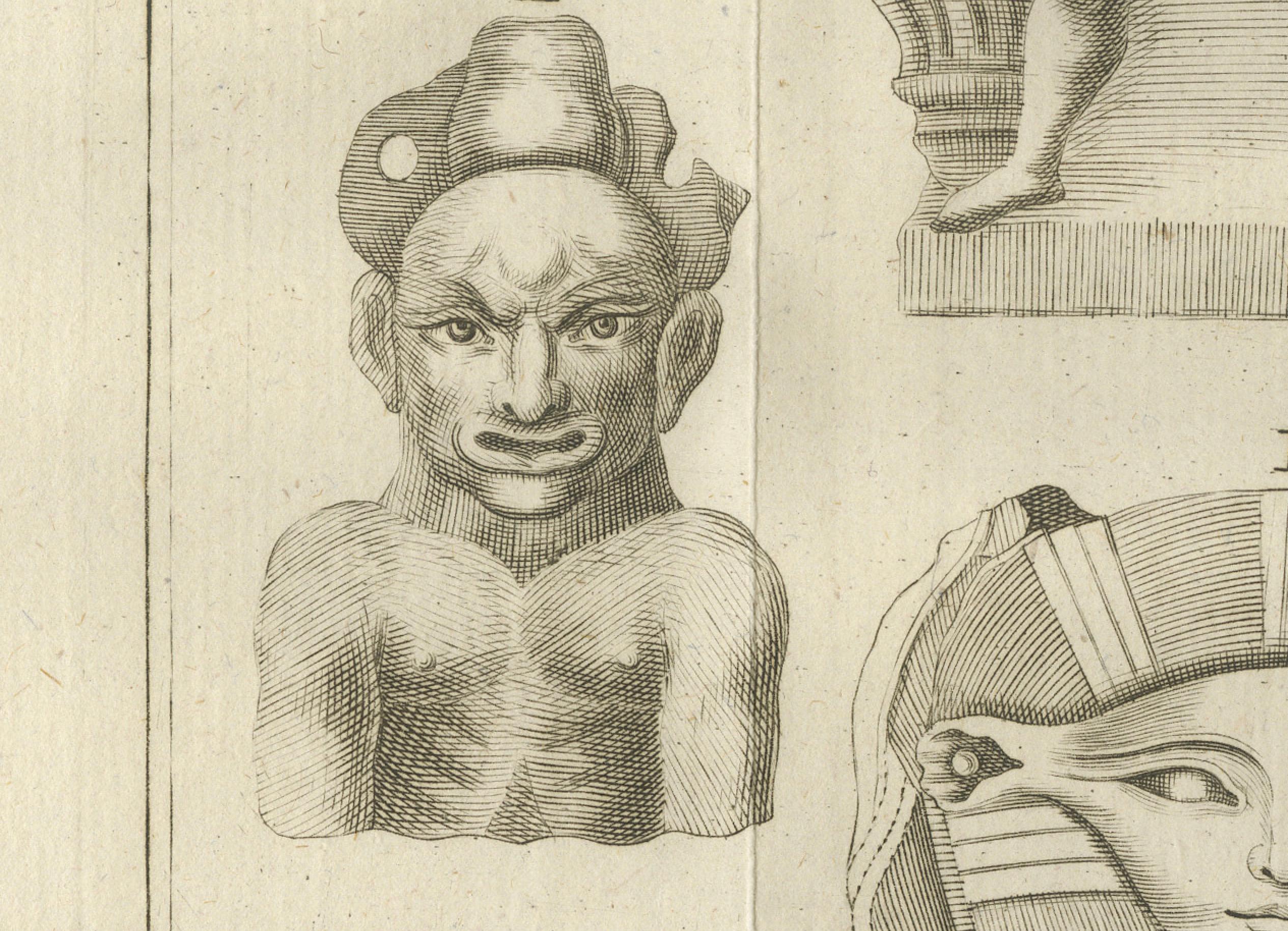
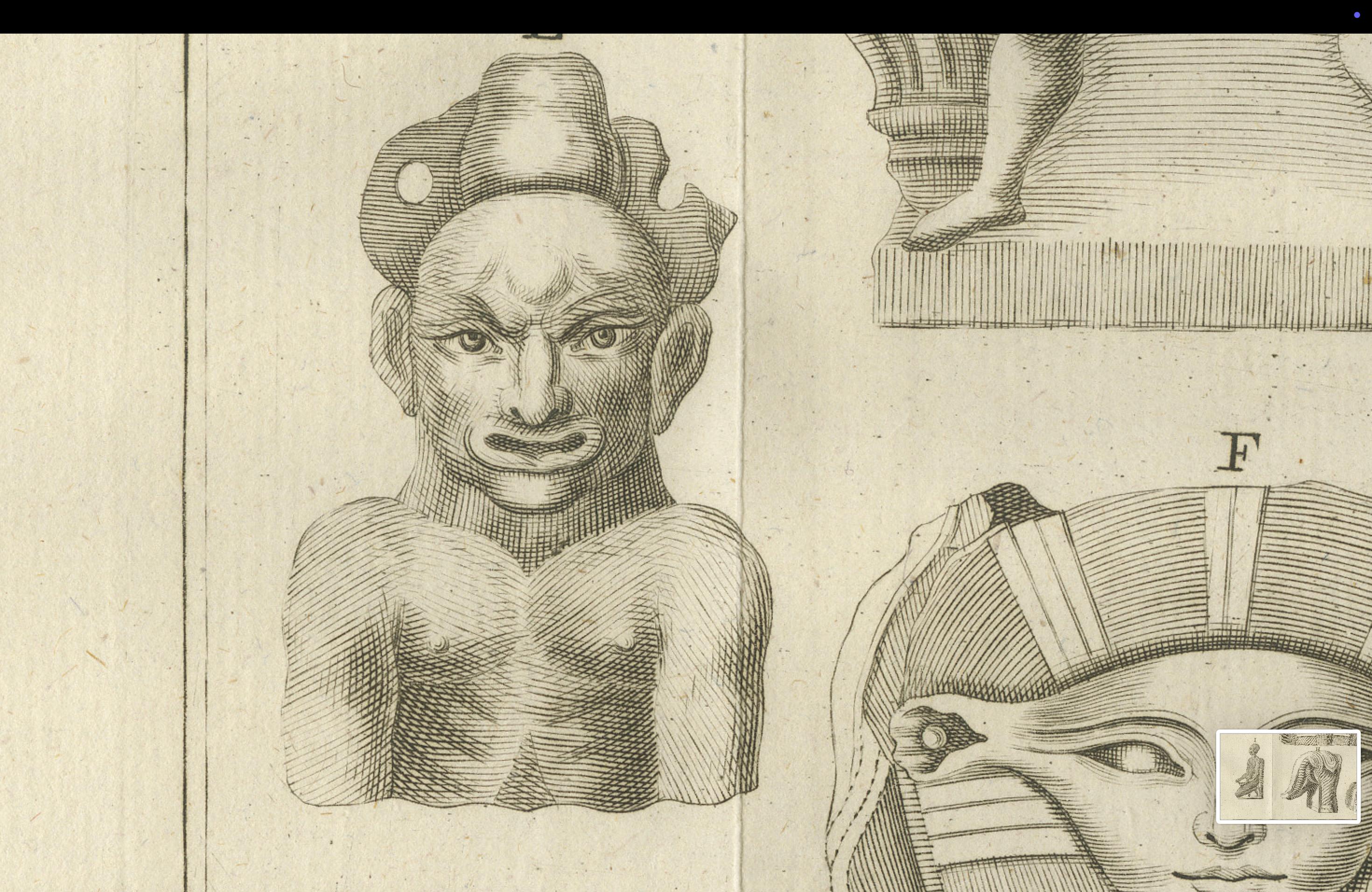
* E is a striking, exaggerated head with wide eyes and a toothy grin, possibly a grotesque or theatrical mask used in votive offerings.
In the lower portion:
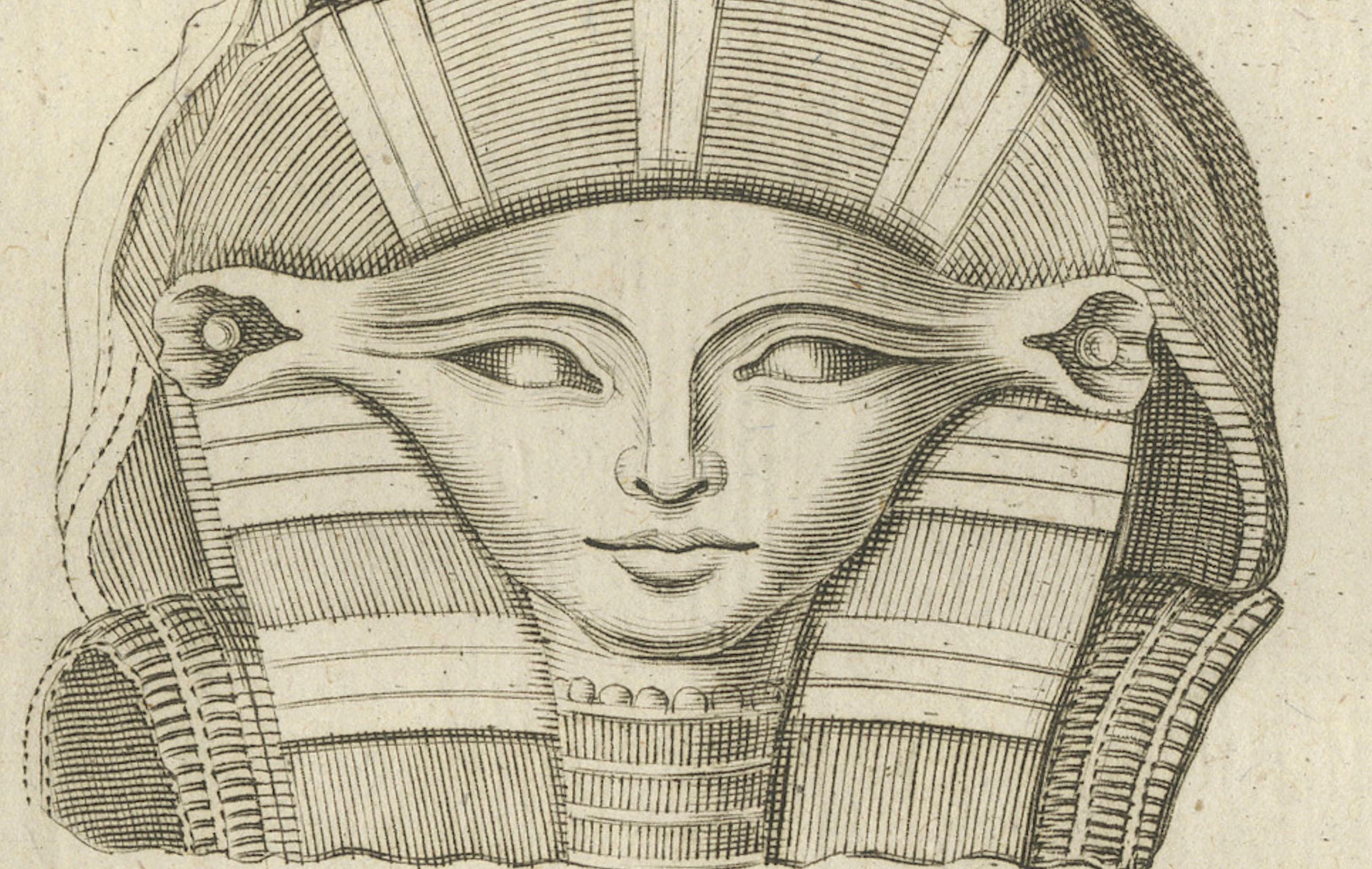
* F features the well-known stylized face of a Pharaoh wearing the nemes headdress, typical of New Kingdom funerary art.
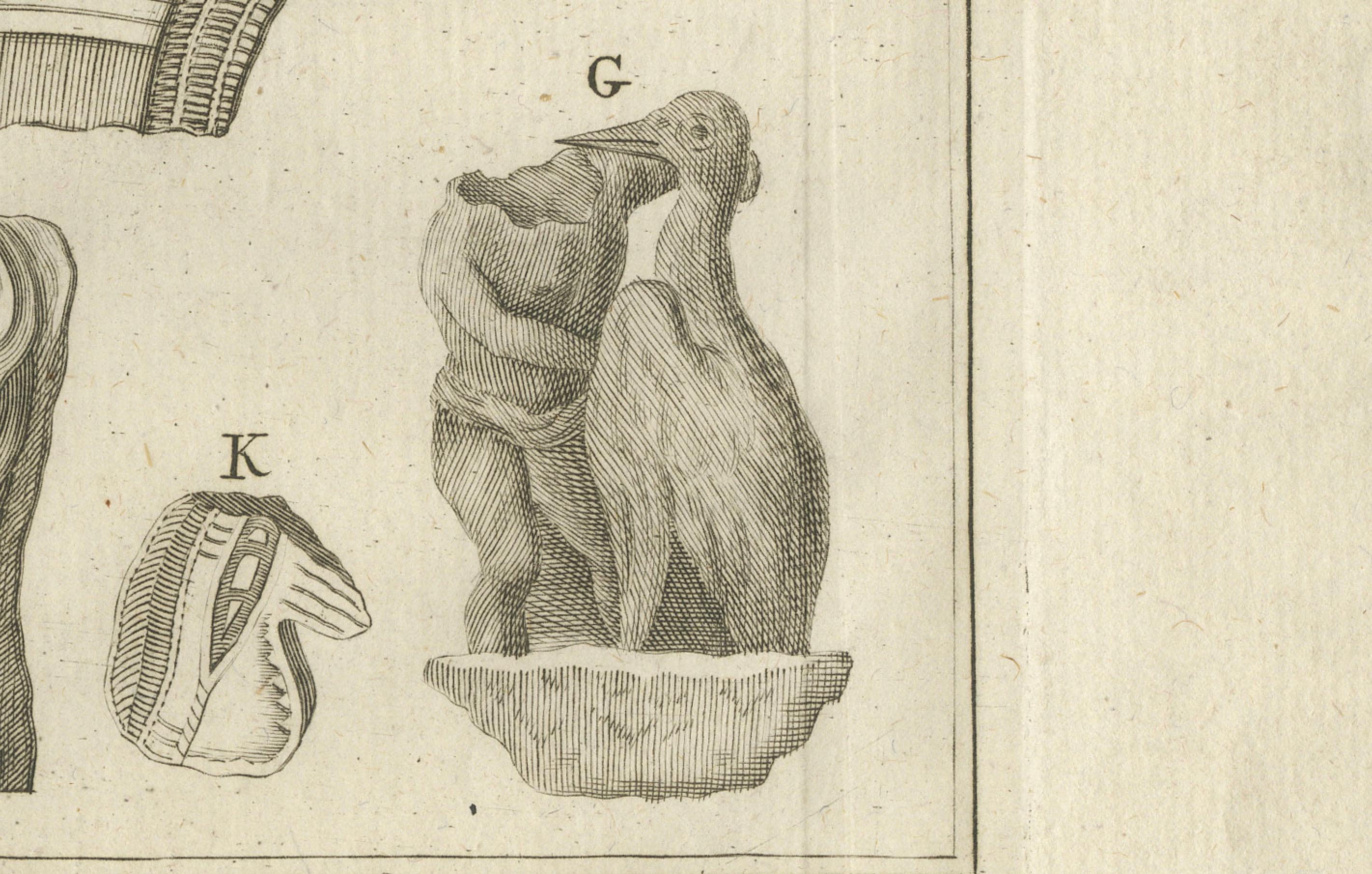
* G shows a group of intertwined figures, likely mythological in theme.
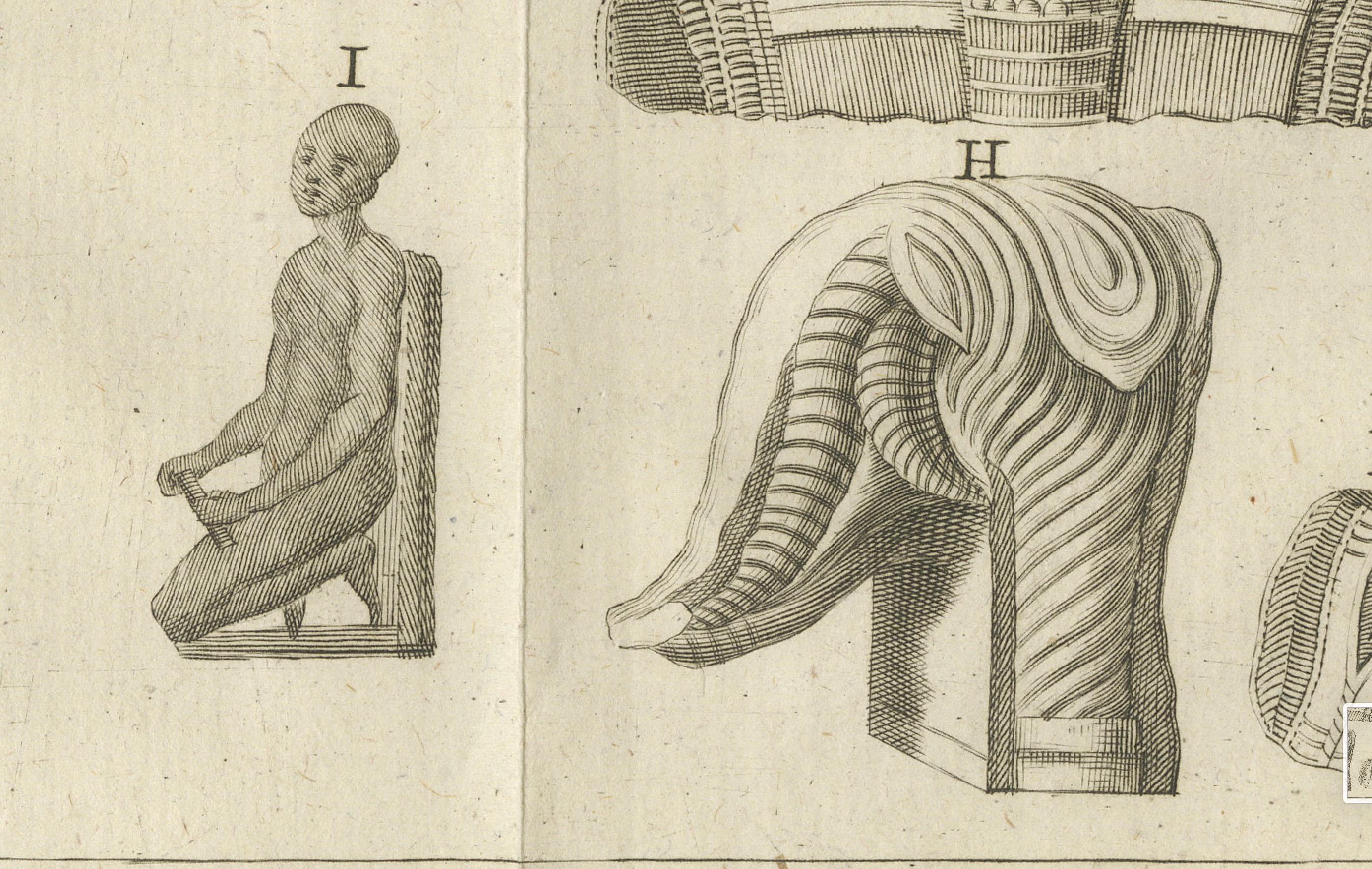
* H is an animal head, probably a ram or bull, which were sacred animals in Egyptian religion.
* I depicts a kneeling figure, often seen in votive sculptures placed in temples or tombs.
* K repeats the motif of the nemes headcloth, this time in a smaller, simplified form.
This print offers a compelling visual inventory of artistic forms that were collected, studied, and admired by Enlightenment-era scholars and collectors. It illustrates the strong European fascination with Egypt’s classical legacy and provides insight into how antiquities were interpreted and published in the 18th century.
Condition: Good condition overall. Minor edge toning and a vertical crease from past binding. A few light spots, but the paper is strong and margins are wide.
Framing tips: Ideal for framing in a dark wood or black frame with a warm, ivory or sand-colored mat. The vertical composition lends itself well to a narrow rectangular frame.
Technique: Engraving
Maker: Anonymous, Dutch, circa 1750–1770