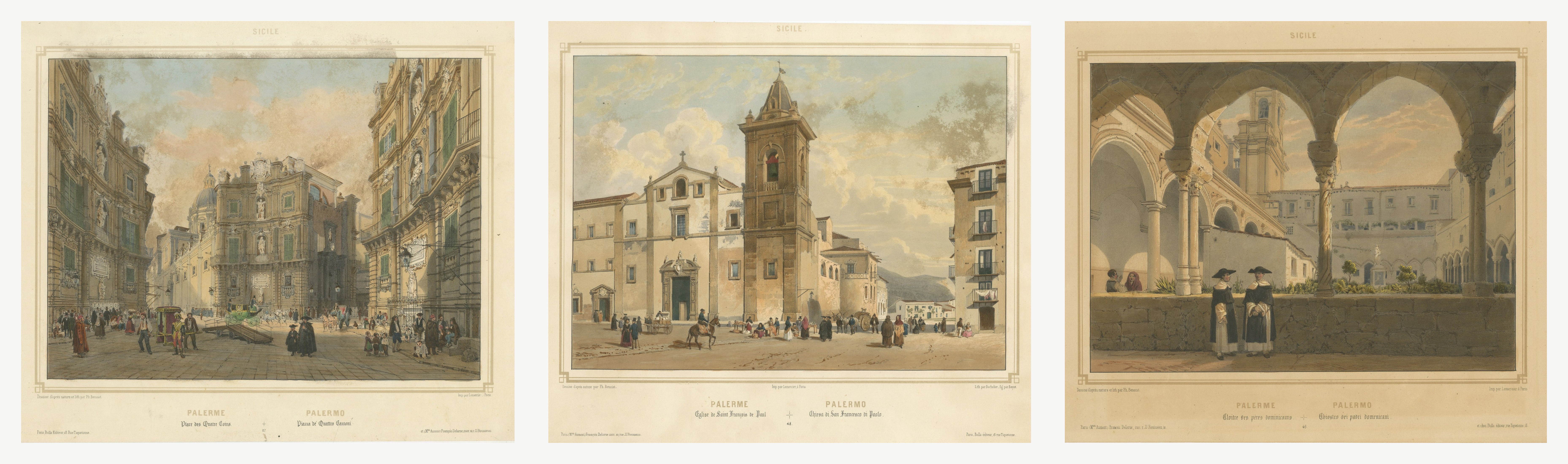
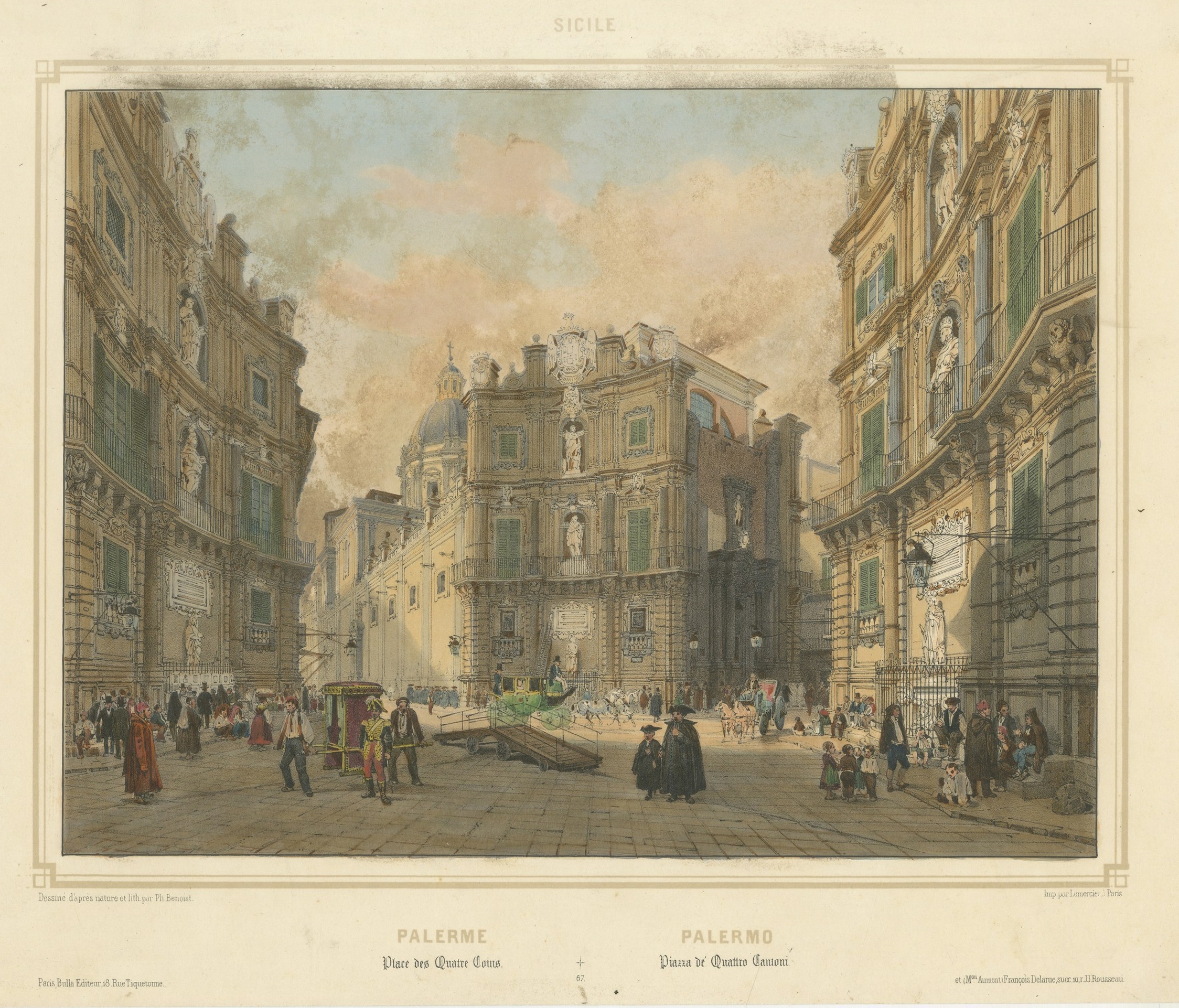
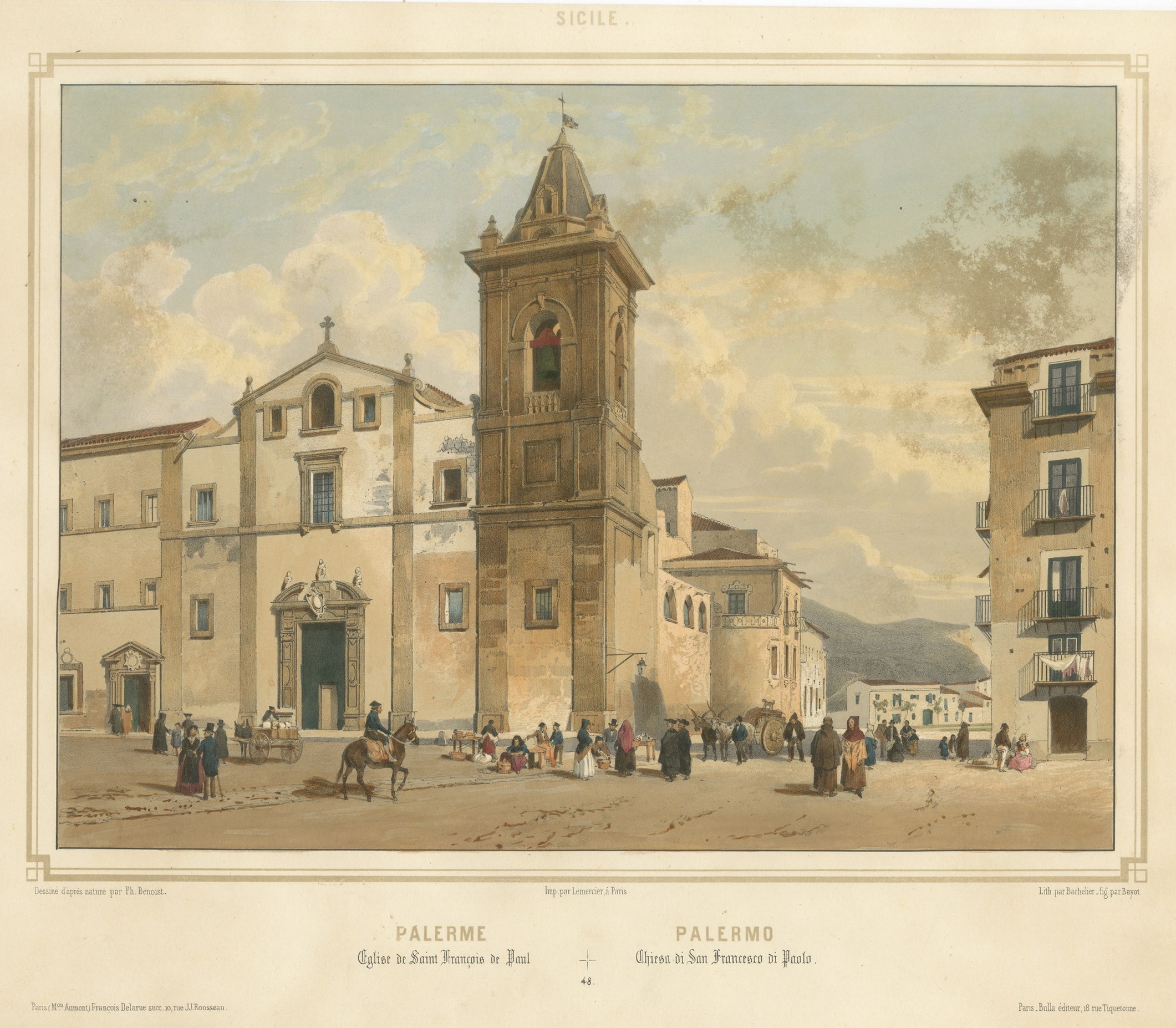
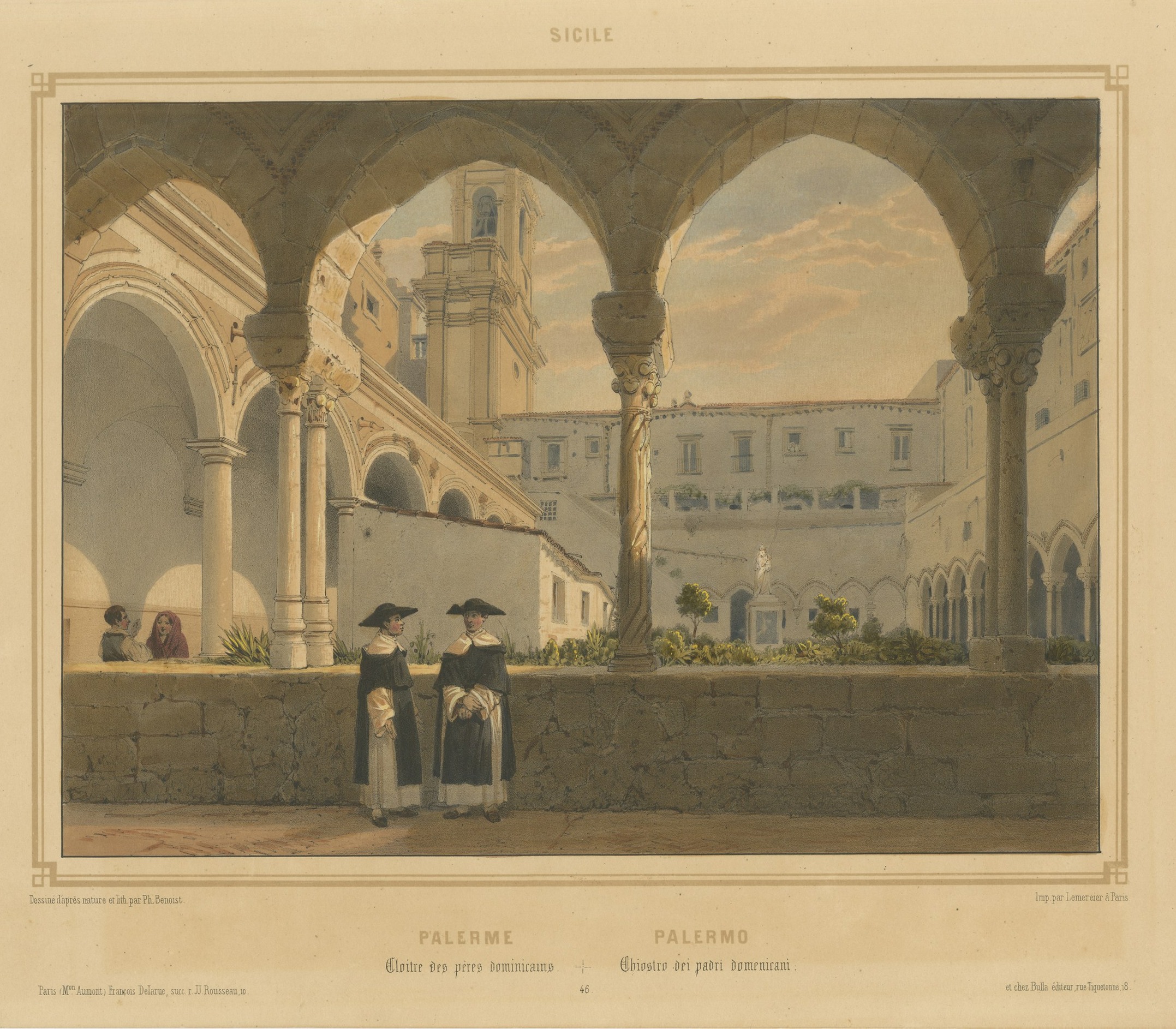
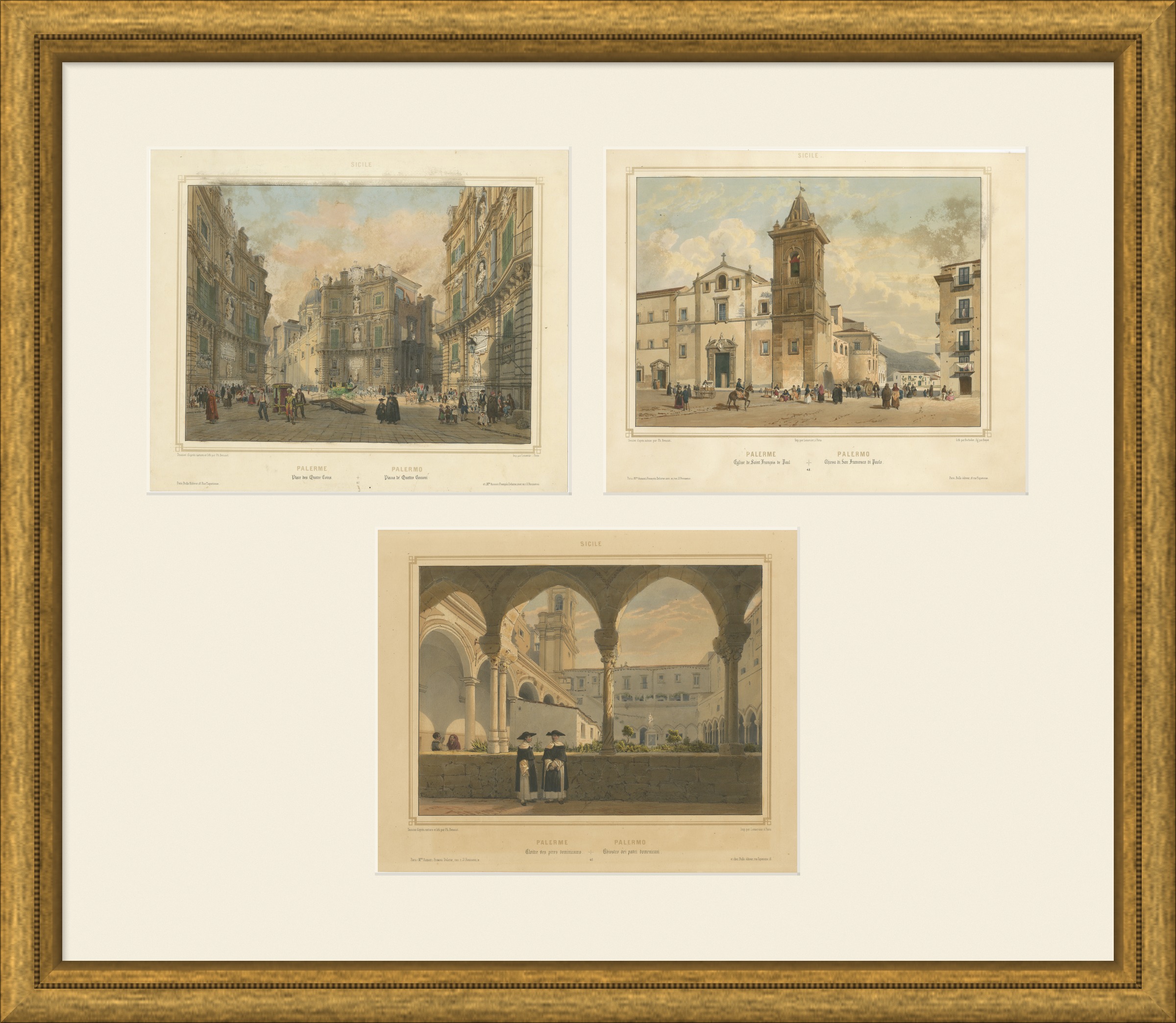
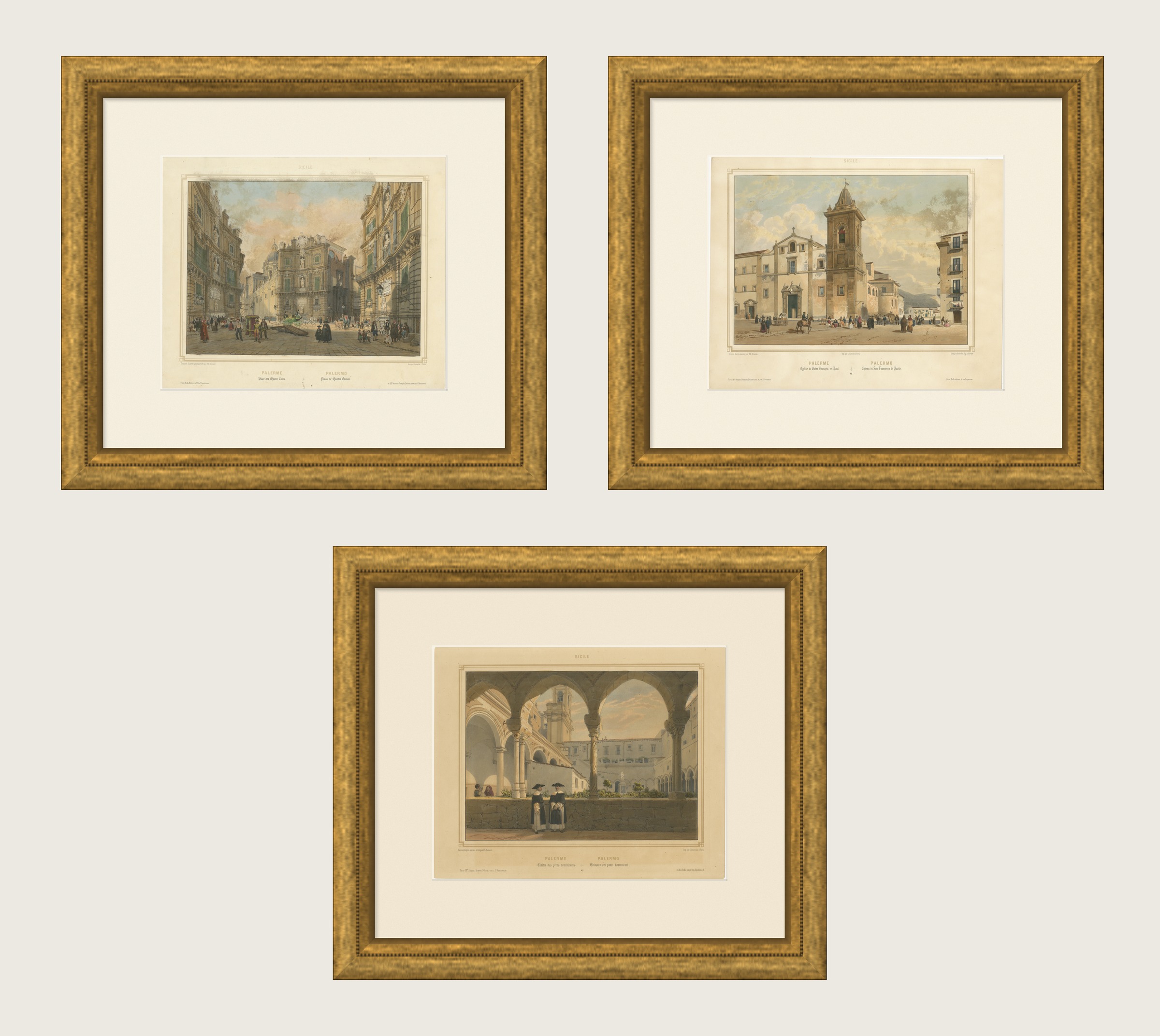
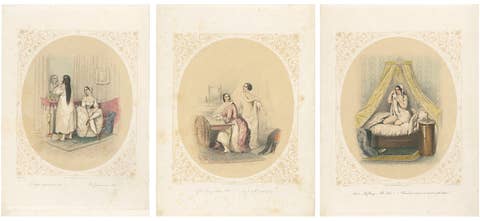
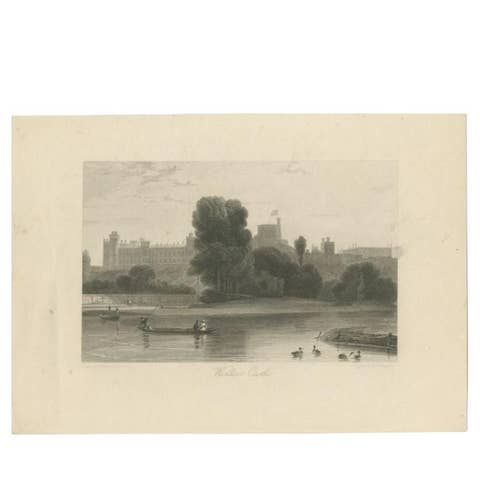
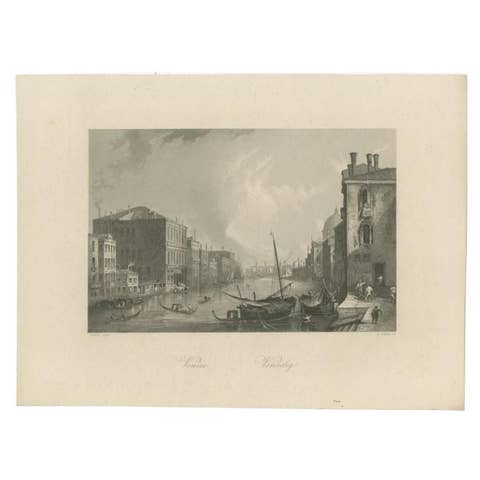
Three Views of Palermo by Philippe Benoist, Tinted Lithographs, circa 1850
€ 845
Original antique · The actual sheet photographed · Certificate of authenticity on request · Sold unframed · Worldwide shipping from € 15 (rates)
Date
circa 1850
Mapmaker / artist
Philippe Benoist
Publisher
Bulla, Paris and Francois Delarue, Paris
Technique
Lithograph
Coloring
Original hand color
Sheet size
27.5 × 33.5 cm (10.8 × 13.2 in)
Condition
Good
Reference
BG-14462-10
What the condition grades mean
Excellent
Bright and clean, with no faults worth mentioning.
Very good
Only light signs of age, such as faint toning.
Good
Normal signs of age for a sheet of this period: toning, some foxing, small marks or neat old repairs.
Fair
Clear faults such as staining, tears or repairs, priced to match.
Every fault we see is written in the condition note, and the whole sheet is shown uncropped in the photos.
Condition
Light uneven toning, browner towards the edges. Light foxing in the margins of two of the three sheets. Slight wear at the corners of one of the three sheets. Shallow nicks along an edge of one of the three sheets.
About this sheet
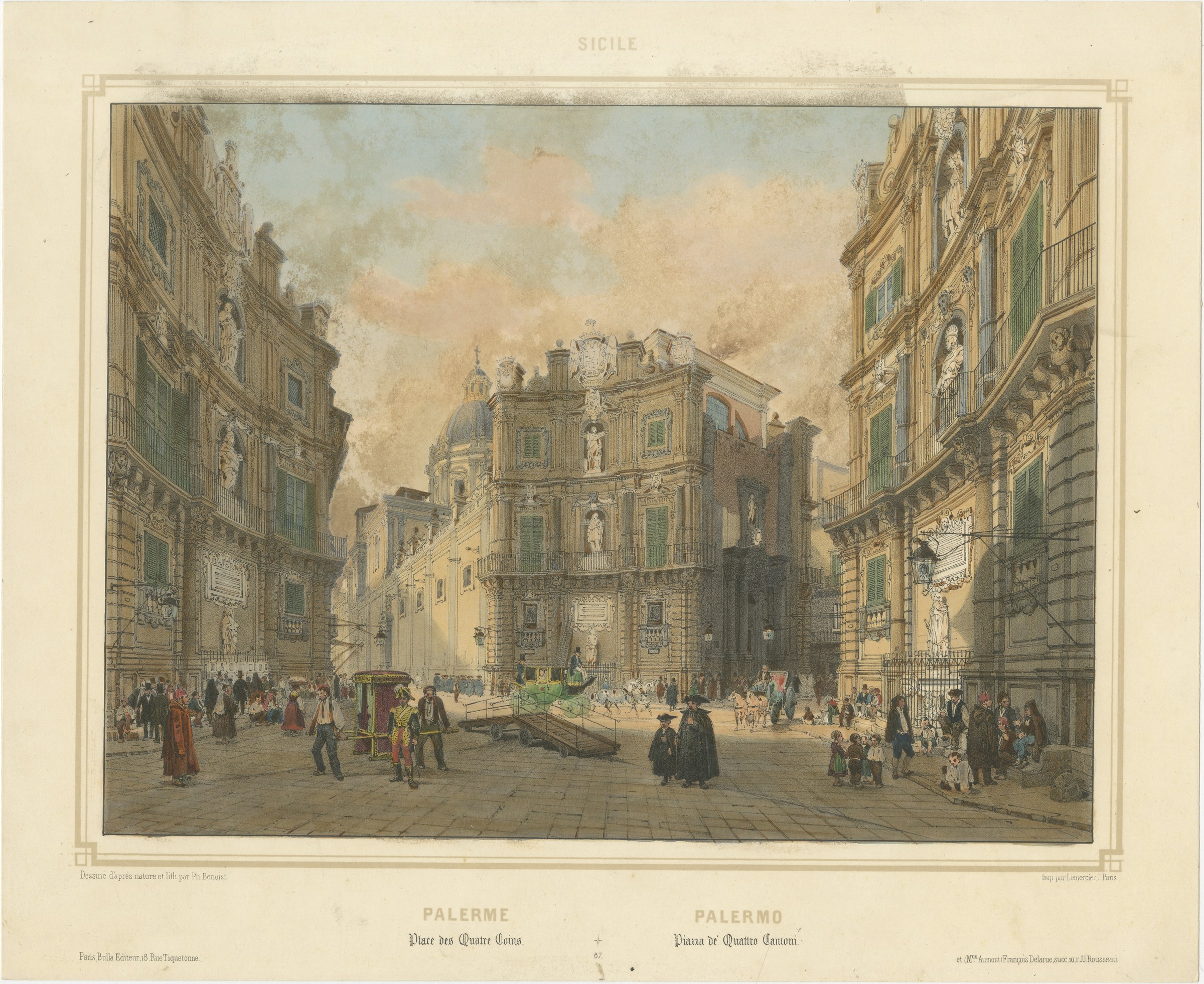
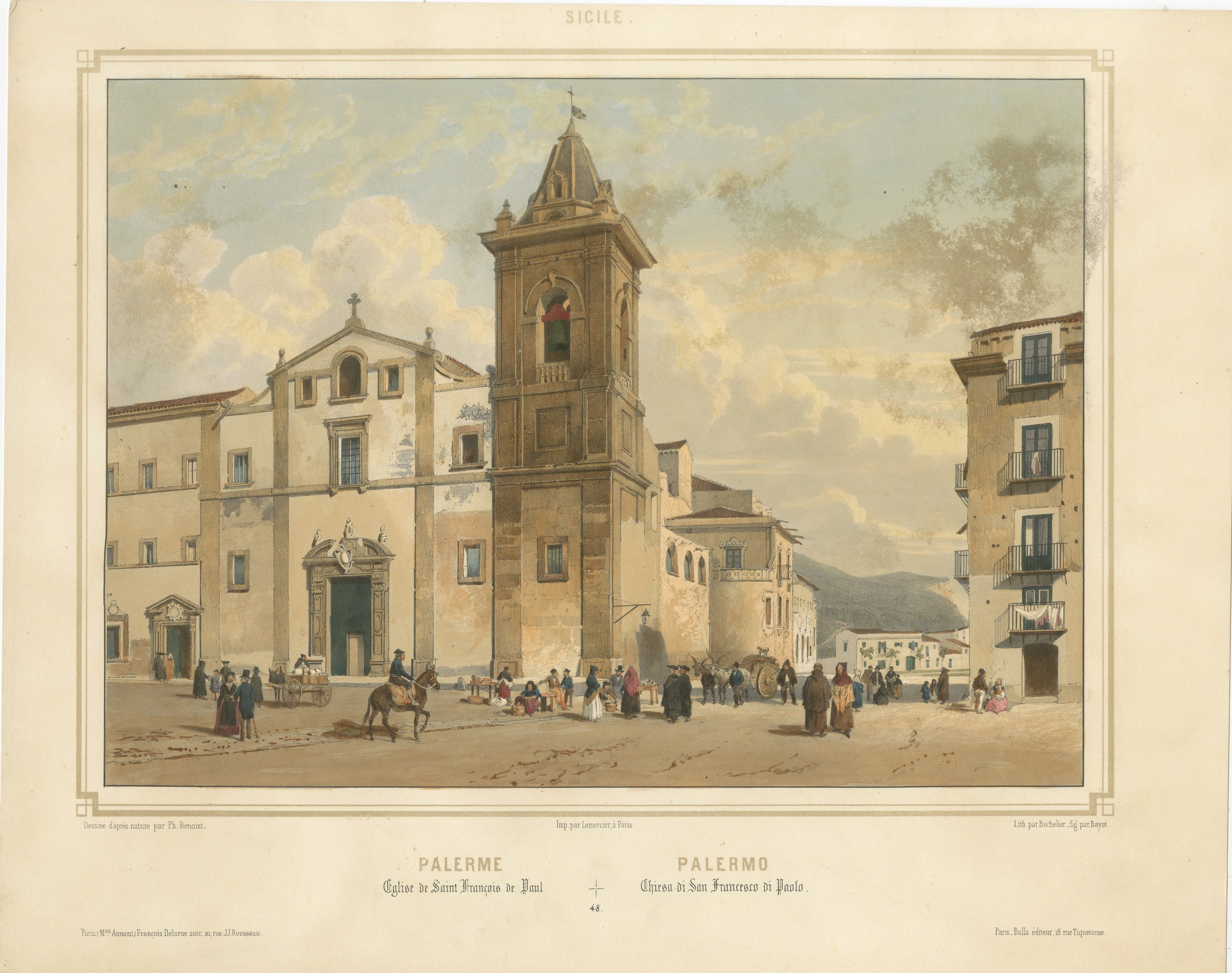
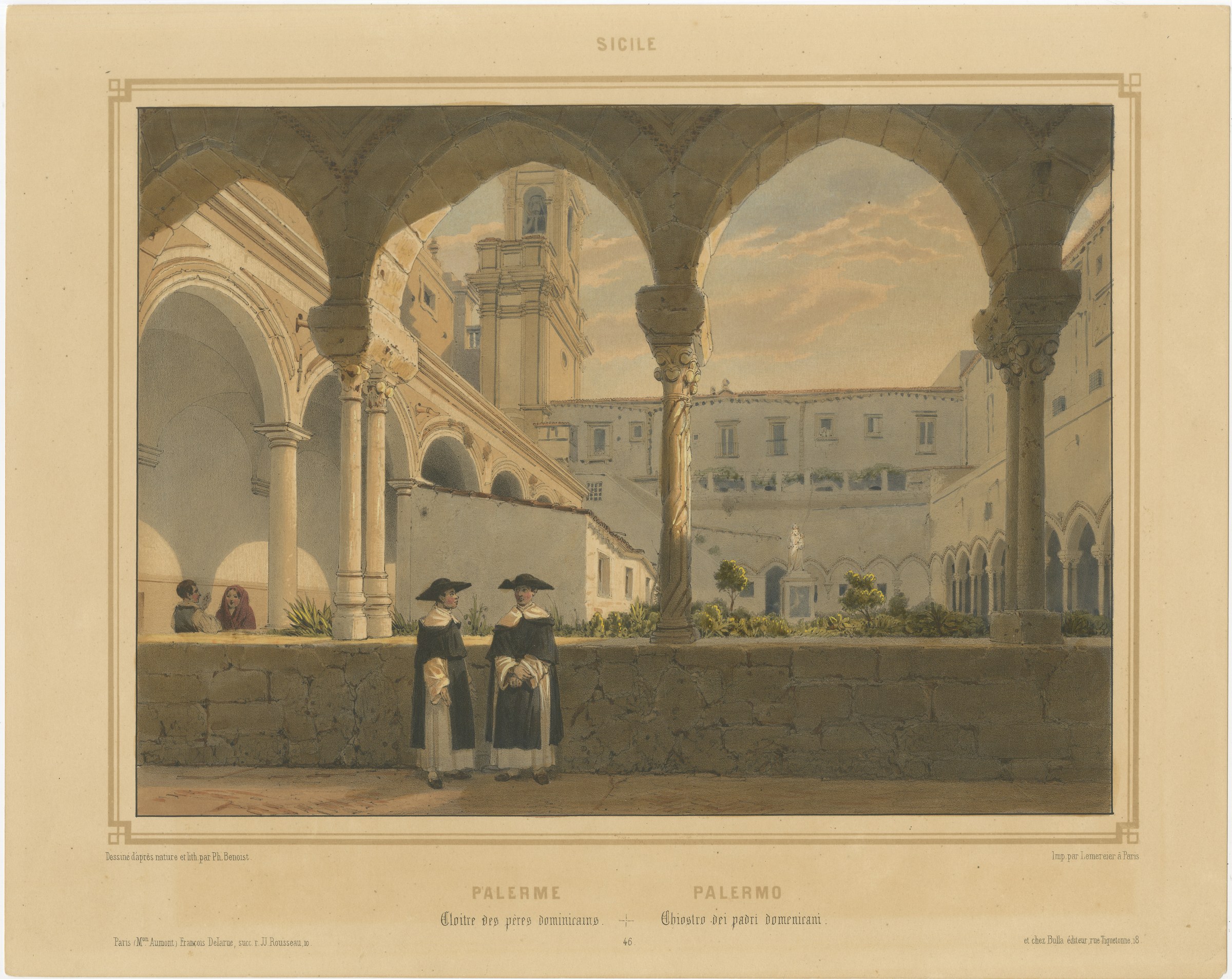
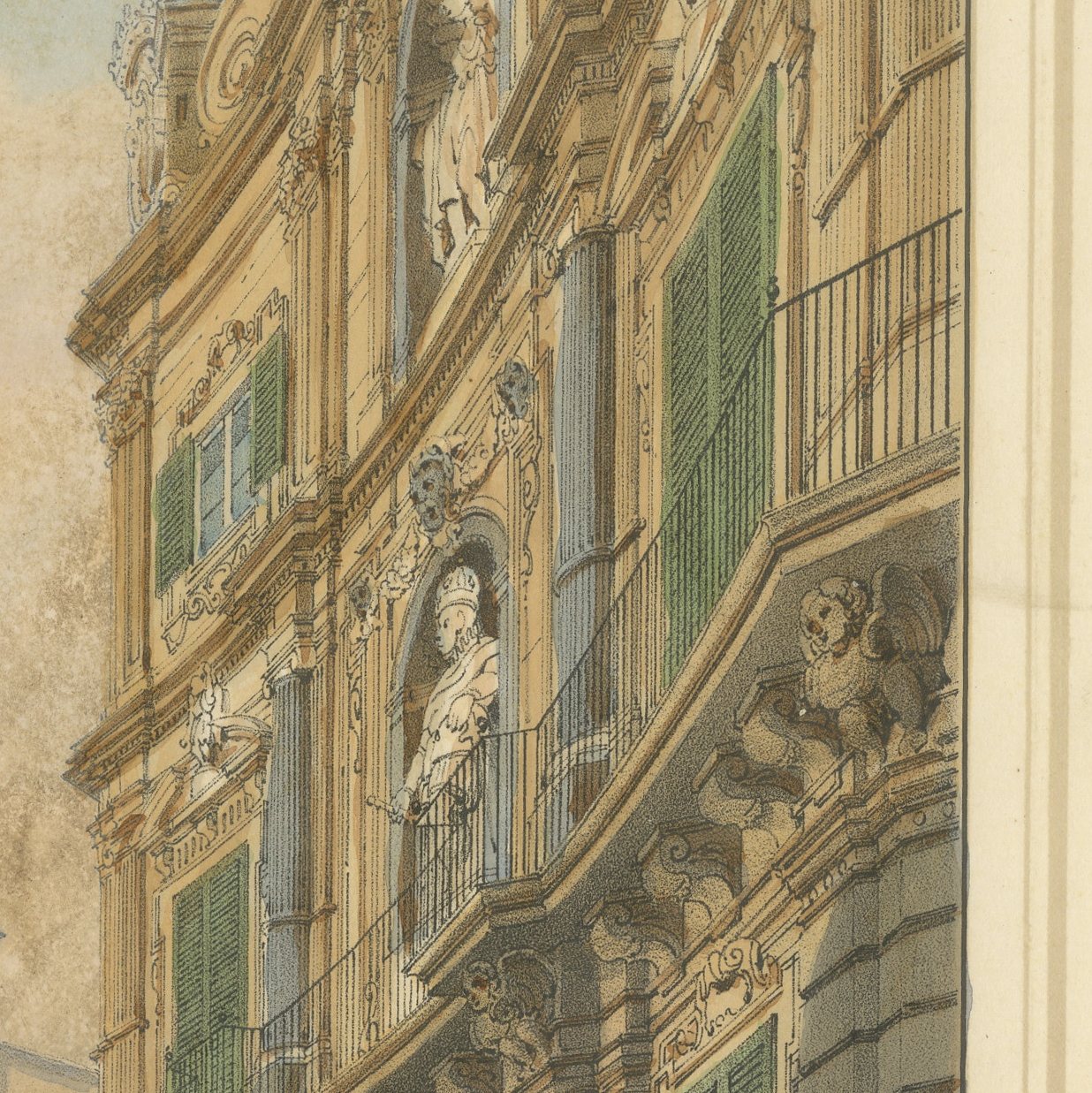
A set of three original antique tinted lithographs of Italy. They are three original sheets sold together, and the set is never split. The three views are The Quattro Canti, the baroque crossroads at the center of Palermo; The church and campanile of San Francesco di Paola, Palermo; The cloister of the Dominican friars at Palermo. Each is lettered beneath the image in French and in Italian, each was printed by the house of Lemercier in Paris about 1850 within a printed border.
All three plates come from a French series of Italian views published in Paris by Bulla at 18 rue Tiquetonne and by Francois Delarue, successor to the Maison Aumont, at 10 rue Jean Jacques Rousseau, and printed by the house of Lemercier. Philippe Benoist, born in 1813, was one of the finest topographical lithographers working in Paris in the middle of the nineteenth century, and his name is on every sheet in this set, on some of them as the draughtsman and the lithographer both. The printing is a lithograph with a continuous tint stone laid across the whole image, with color worked over it by hand and white body color used for the highlights. There is no plate mark, as there would be on an engraving.
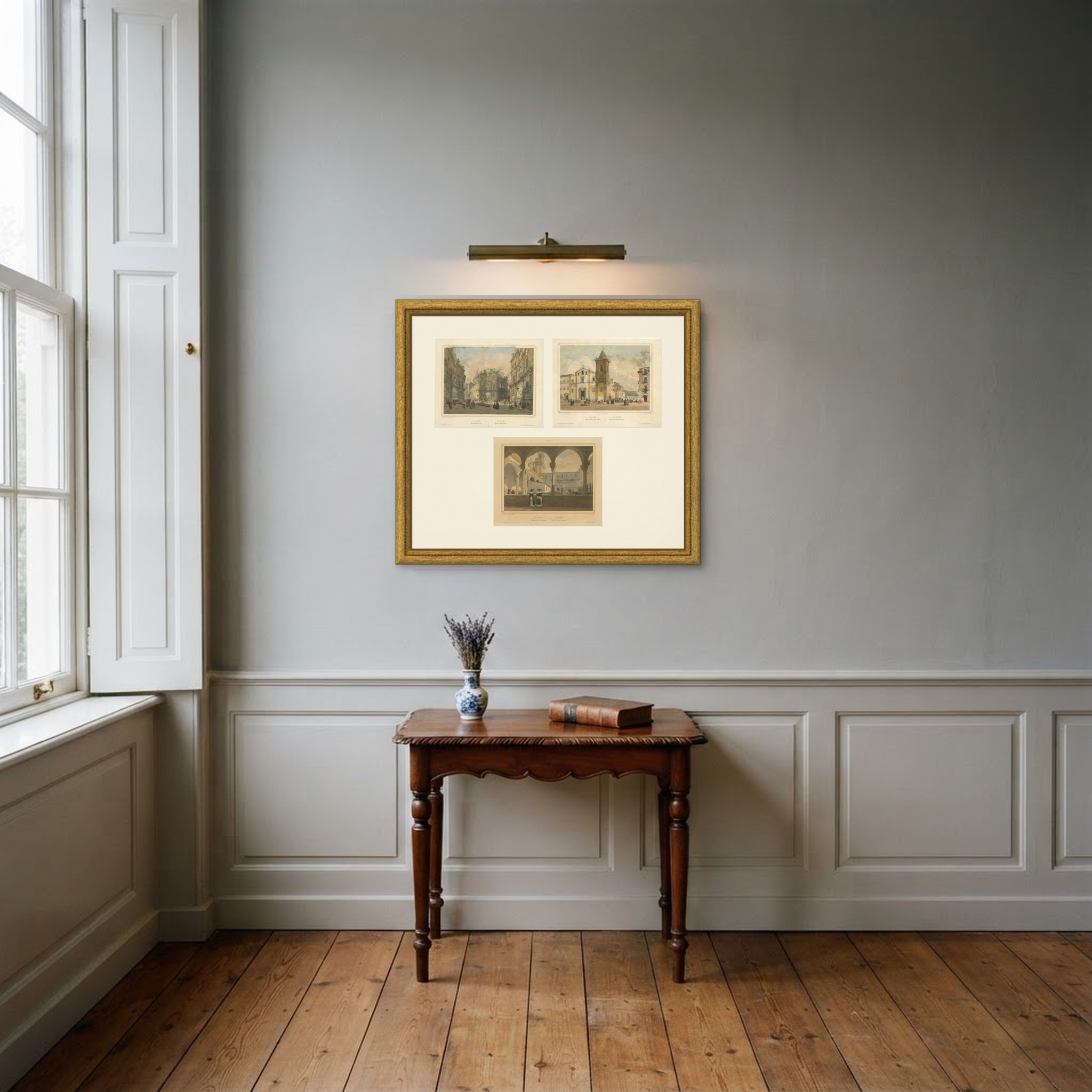
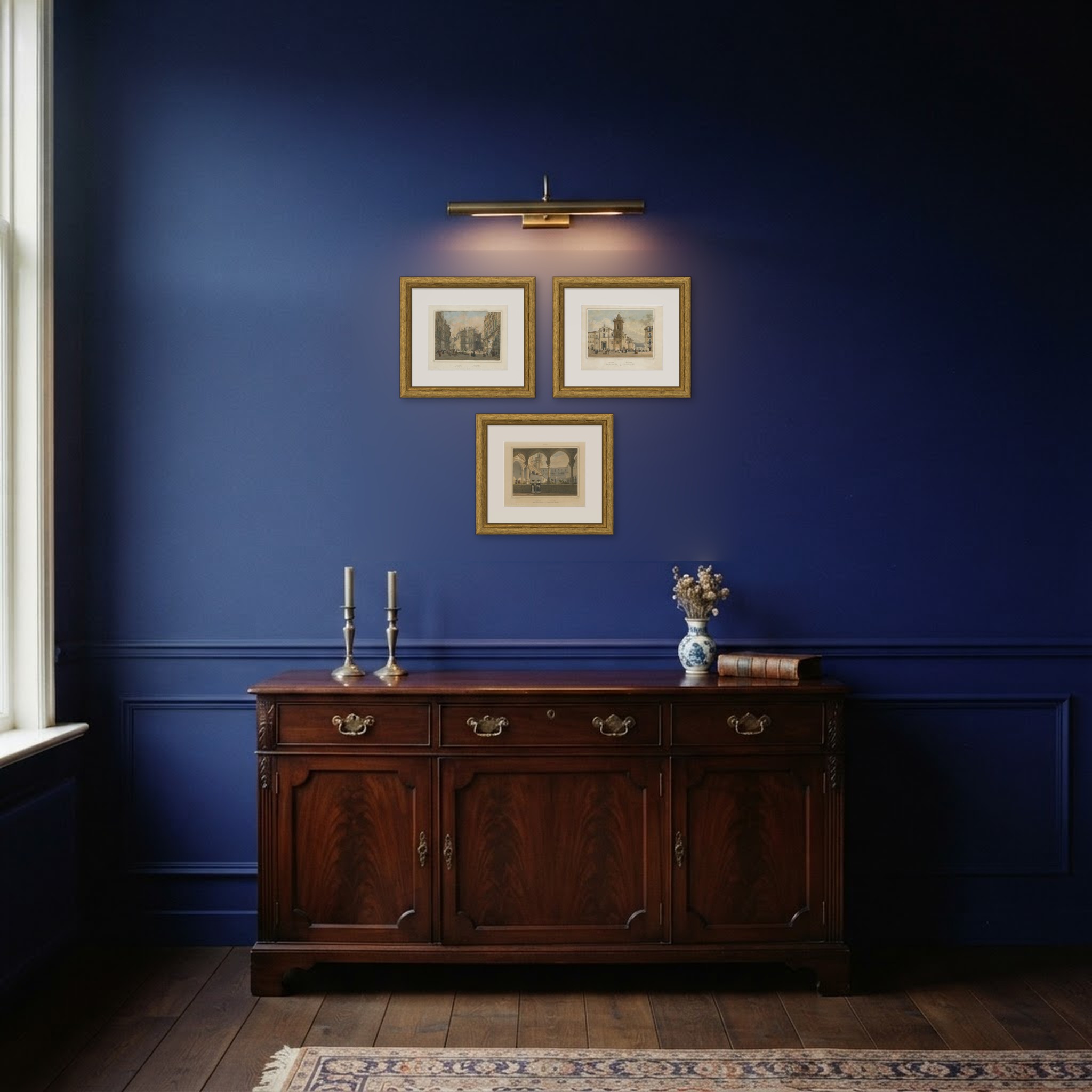
Views like these were made for the Grand Tour trade and they remain the most atmospheric record of these places before photography. Taken as a set they do what no single sheet can, which is to walk the viewer through one city or one site. The warm tinted ground, the hand applied color and the generous printed border mean they frame beautifully with very little work, and a group of them in matching gilt or dark wood moldings along a dining room or hall wall is one of the most satisfying arrangements in the whole field of topographical prints.
Light uneven toning, browner towards the edges. Light foxing in the margins of two of the three sheets. Slight wear at the corners of one of the three sheets. Shallow nicks along an edge of one of the three sheets.
These are original antique prints, not modern reproductions. This item is sold unframed. Any framed or interior images are shown for presentation and inspiration only, unless the listing explicitly states that the item is sold framed.