About this sheet
A Street in Tabriz, Persia — Orientalist Etching by Jules Laurens, Paris, 1881
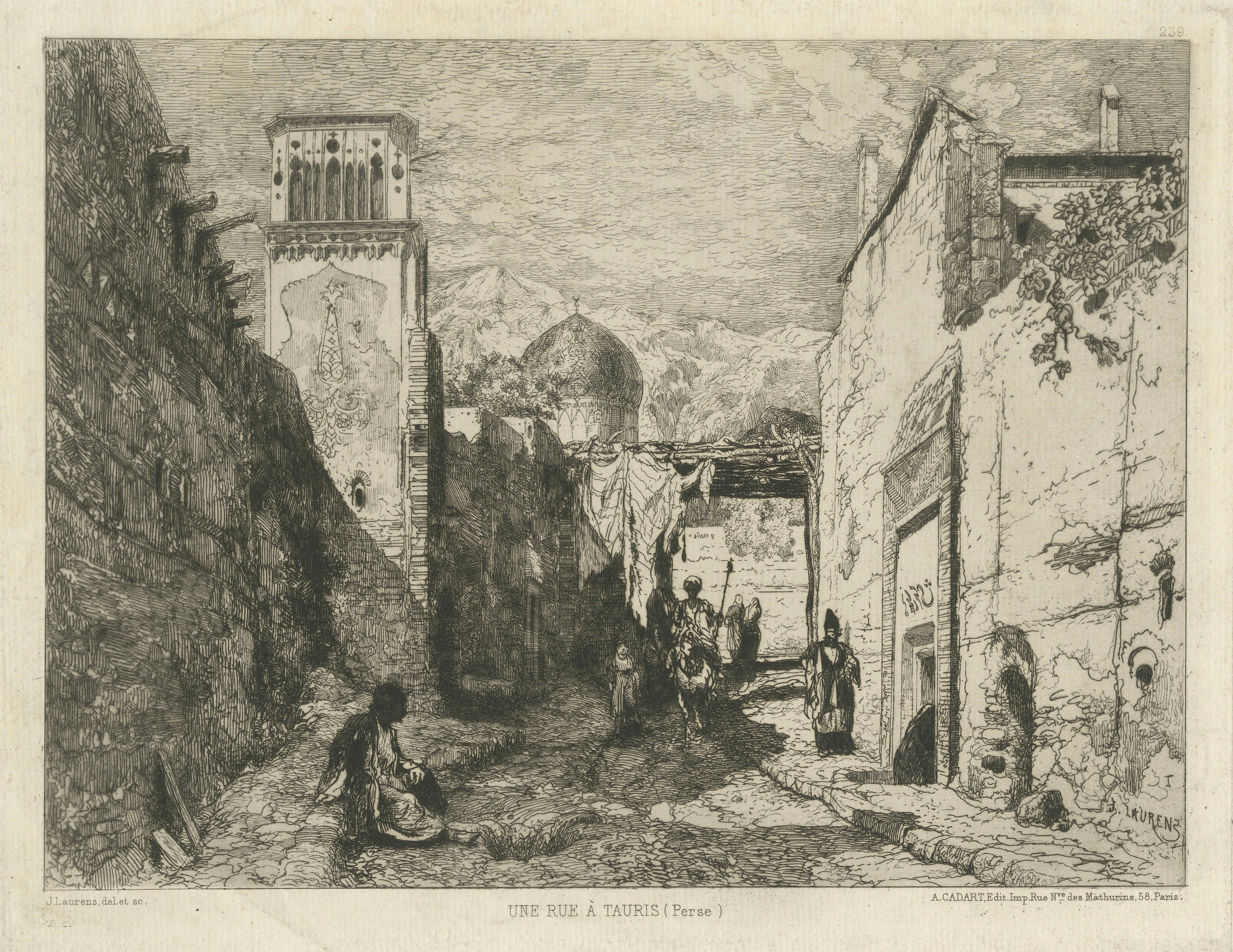
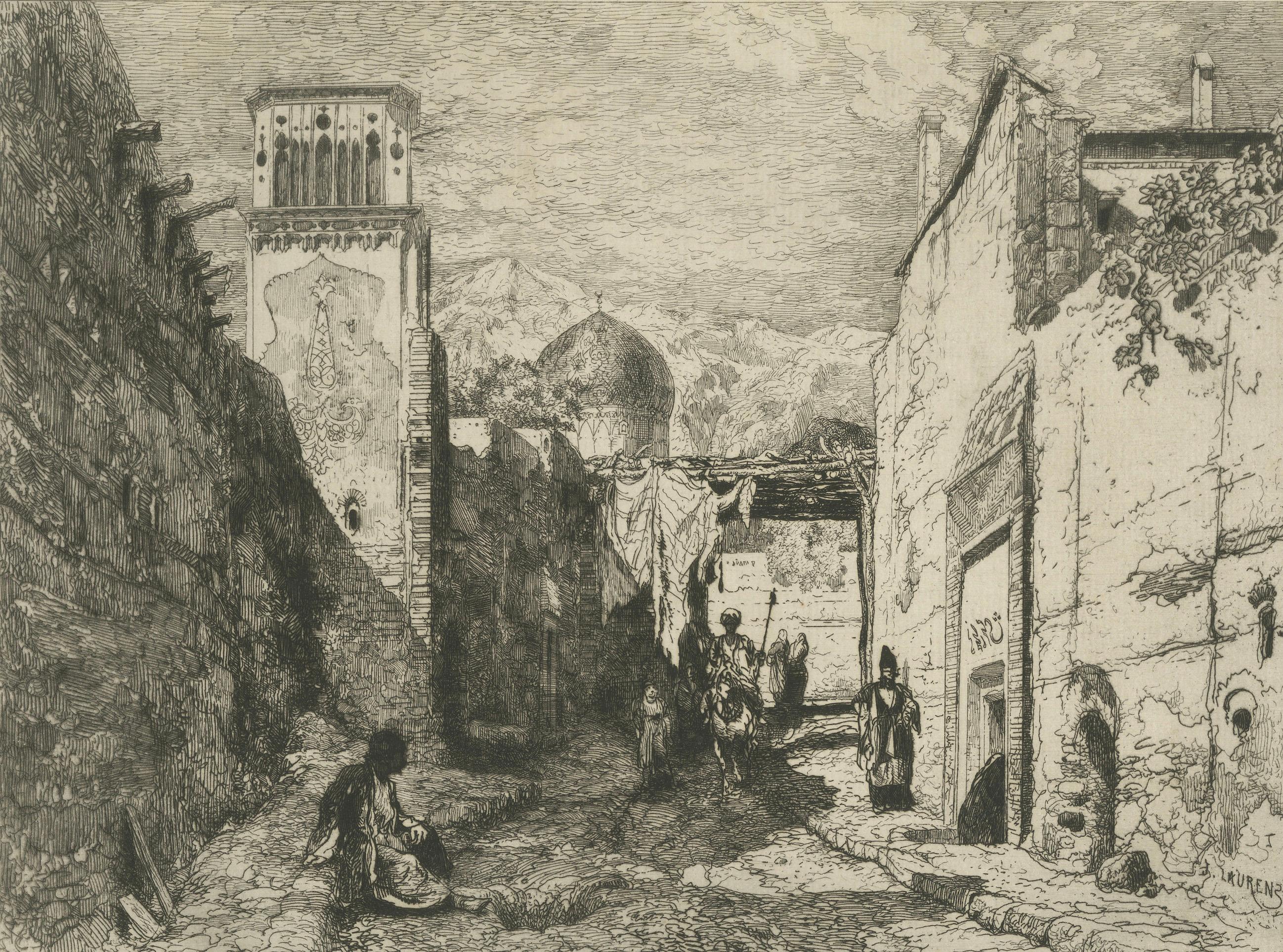
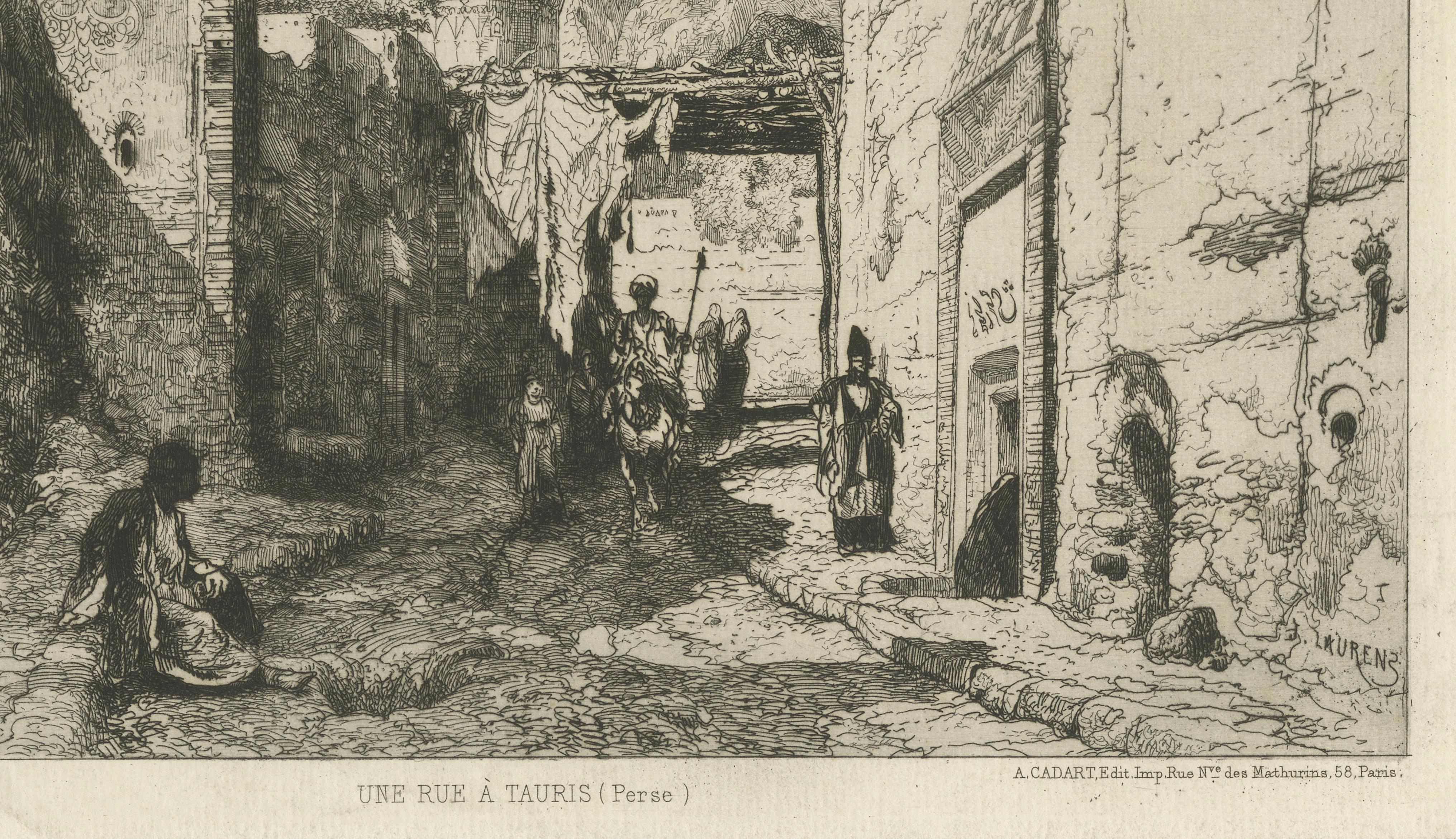
This atmospheric 19th-century etching titled Une Rue à Tauris (Perse) (“A Street in Tabriz, Persia”) was created by the French Orientalist artist Jules-Joseph-Augustin Laurens (1825–1901). The print presents a detailed and evocative view of a narrow street in Tabriz—historically known in Europe as Tauris—one of the most important cities of northwestern Iran and a major cultural and commercial center of the Persian world.
Laurens was a noted French painter, draftsman, and lithographer closely associated with the Orientalist movement in European art. During the 19th century, artists and travelers from Europe developed a strong fascination with the architecture, landscapes, and daily life of the Middle East. Laurens traveled extensively in the region and produced a series of highly detailed works inspired by his observations. His images combine documentary interest with the romantic sensibility that characterized Orientalist art of the period.
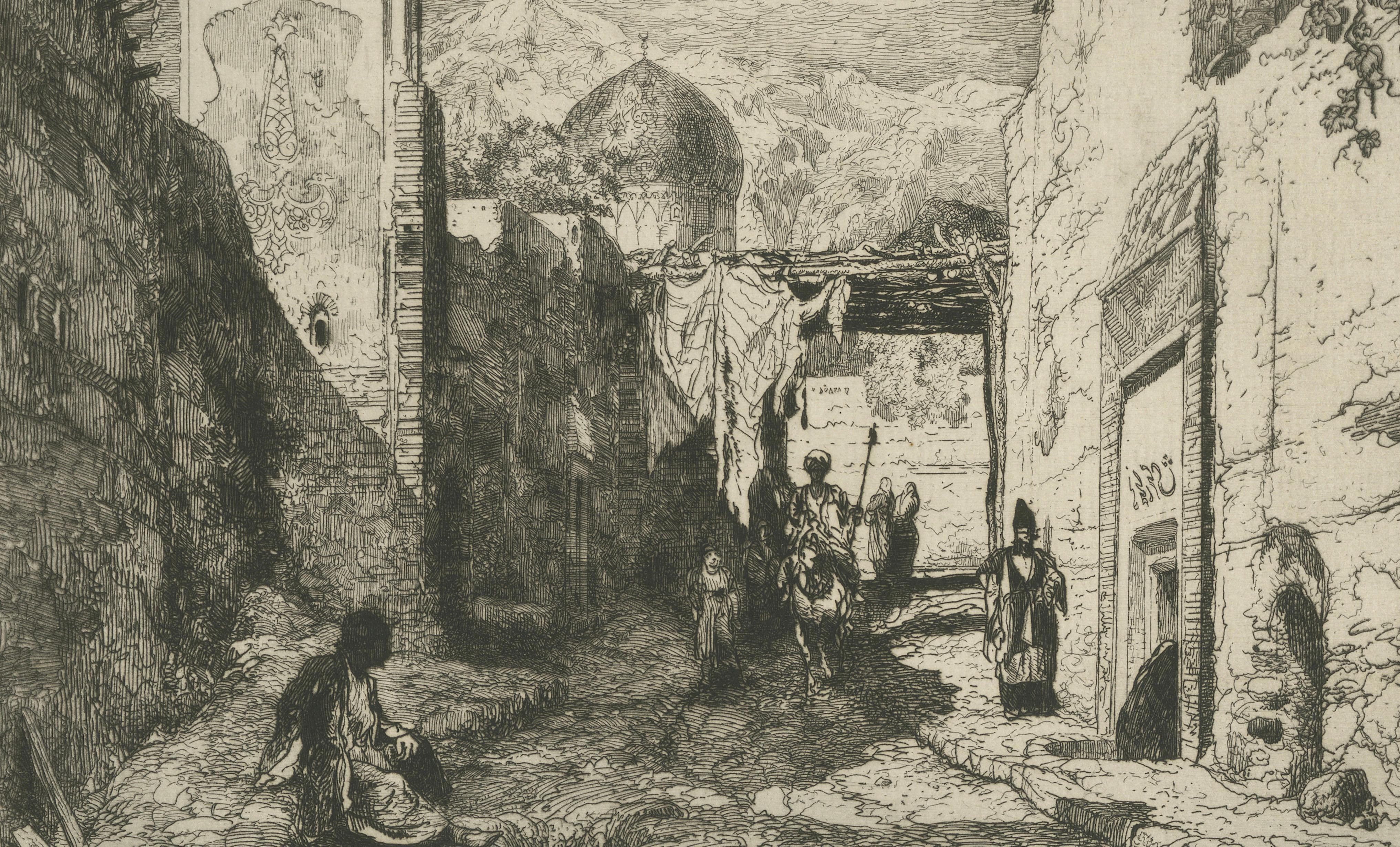
The composition captures a quiet moment within the city’s urban fabric. A narrow street leads the viewer toward a domed building rising in the background, likely representing a mosque or religious structure typical of Persian architecture. The alley is framed by textured masonry walls and plastered buildings, their surfaces rendered with delicate etched lines that emphasize age and character. A tower-like architectural structure rises above the walls to the left, adding vertical emphasis and suggesting the layered architectural landscape of the historic city.
Figures animate the scene and give a sense of everyday life. A seated man rests along the street in the foreground, while a mounted rider approaches through the passageway and several pedestrians stand or walk along the walls. Draped cloth hanging between buildings softens the architectural geometry and enhances the sense of depth and movement within the composition.
The print was published in Paris by the influential publisher Alfred Cadart, a central figure in the revival of original etching in France during the second half of the 19th century. Cadart collaborated with many artists to promote etching as an independent artistic medium rather than merely a reproductive technique. This particular example was issued in Paris around 1881, reflecting the continued European fascination with the architecture and atmosphere of Persia.
Tabriz itself has long been a center of Persian culture and learning, historically associated with poets and scholars such as Rumi and Khaqani. Laurens’ image captures not only the physical appearance of the city but also the romanticized vision of Persia that fascinated European audiences of the time.
This example is an original antique etching. It is not a modern reproduction. Any presentation images showing the print framed are for visual inspiration only. The engraving is supplied unframed.
Condition:
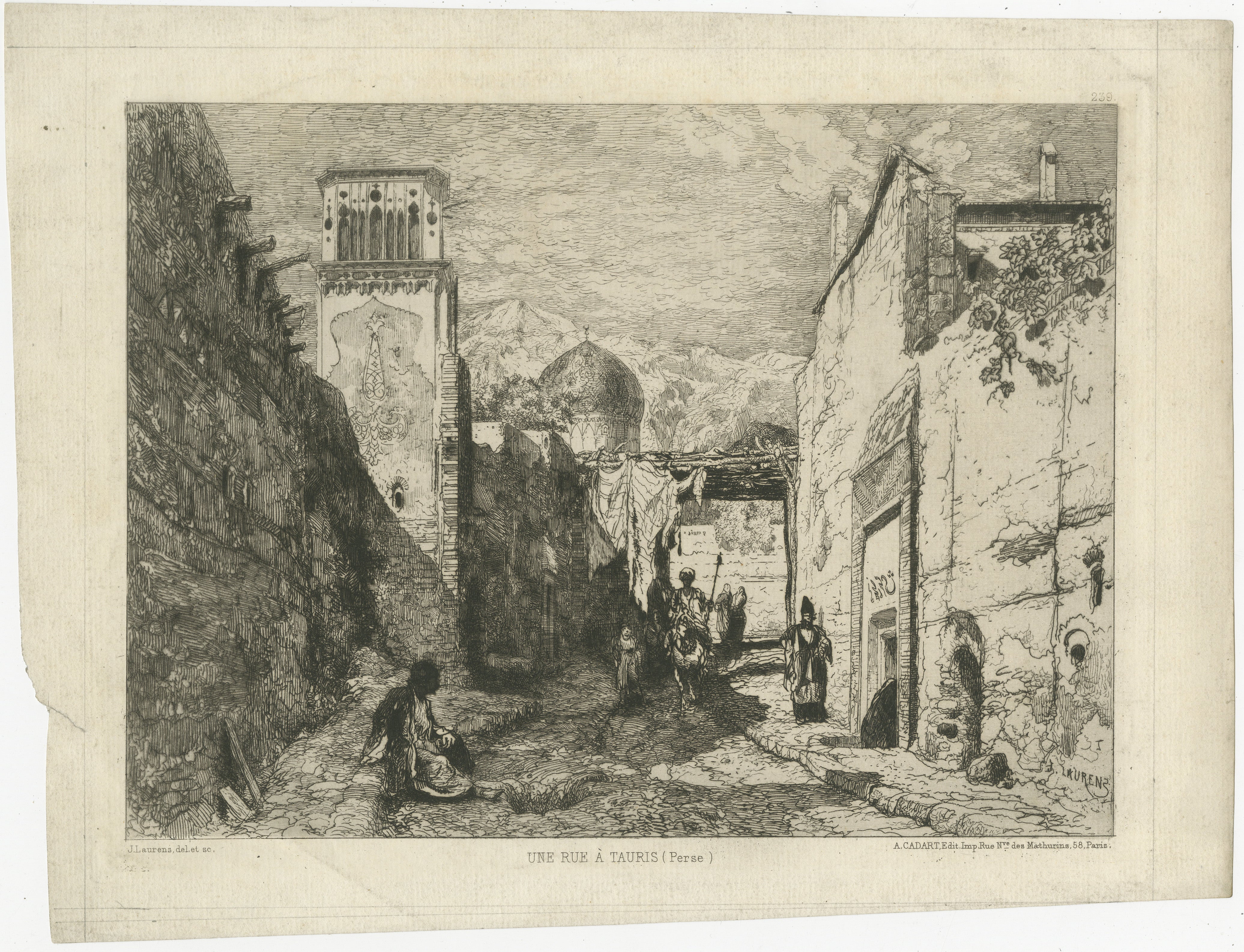
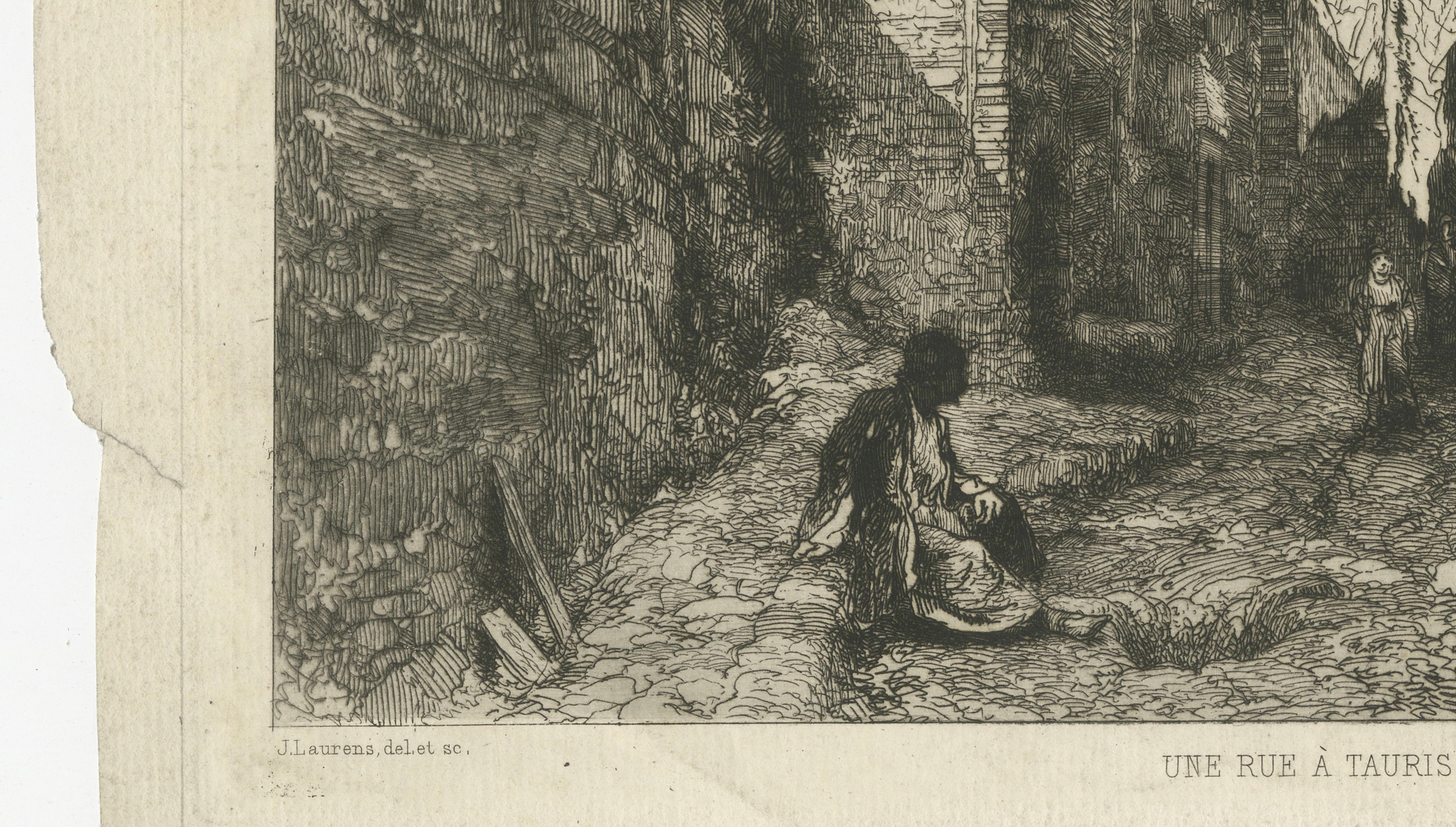
Good antique condition with light age toning to the paper and margins. A small tear is visible at the lower left margin outside the image area. The plate mark remains clearly visible, indicating the original etching impression. The image itself remains crisp and well preserved.
Framing tips:
This refined architectural scene frames beautifully in a dark walnut or black frame with a warm ivory or cream mat. A generous mat border enhances the delicate etched lines and creates a classic museum-style presentation suitable for both traditional and contemporary interiors.
Technique: Etching
Maker: Jules Laurens, France, published by Alfred Cadart, Paris, 1881