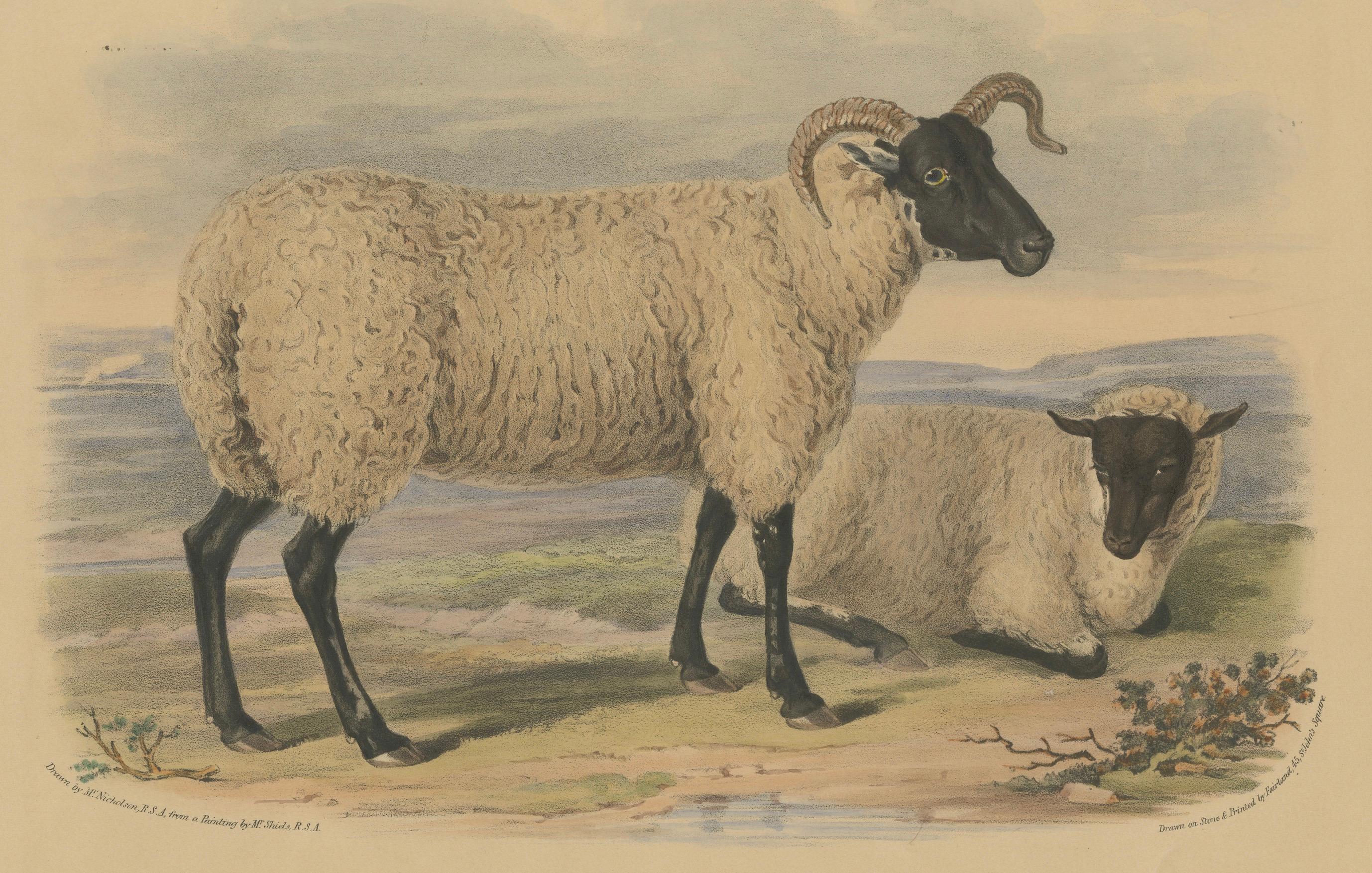
Old Lithograph of an Ewe and Lamb of the Old Norfolk Breed - 1841
€ 290
One of a kind: this is the sheet in the photographs. Ships from Langweer, the Netherlands.
Date
1841
Sheet size
31.2 × 42.5 cm (12.3 × 16.7 in)
Condition
Good
Reference
BG-13749-26
Condition
Good, considering age. The artwork is lightly browned overall due to aging, but otherwise fine. Please study scans carefully.
About this sheet
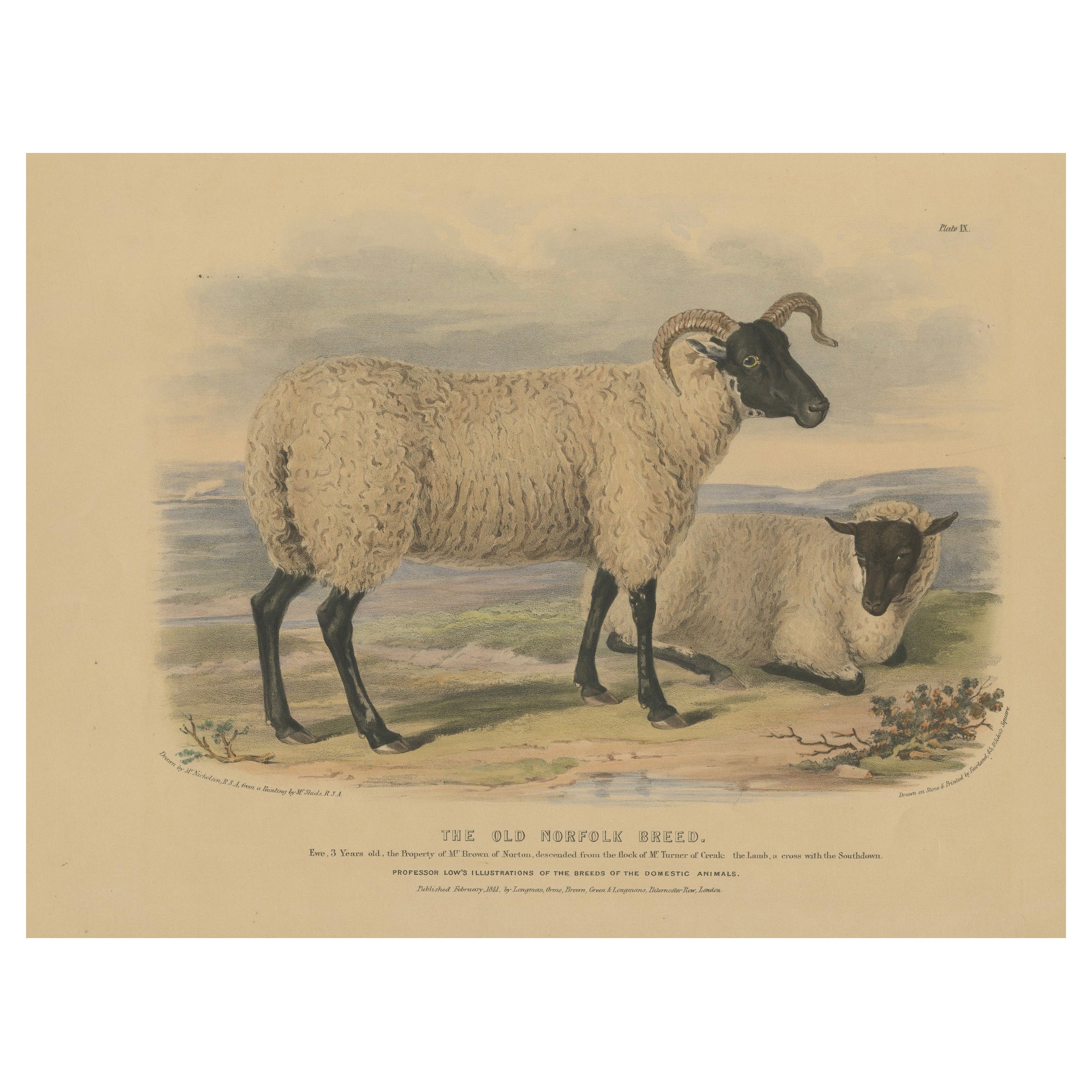
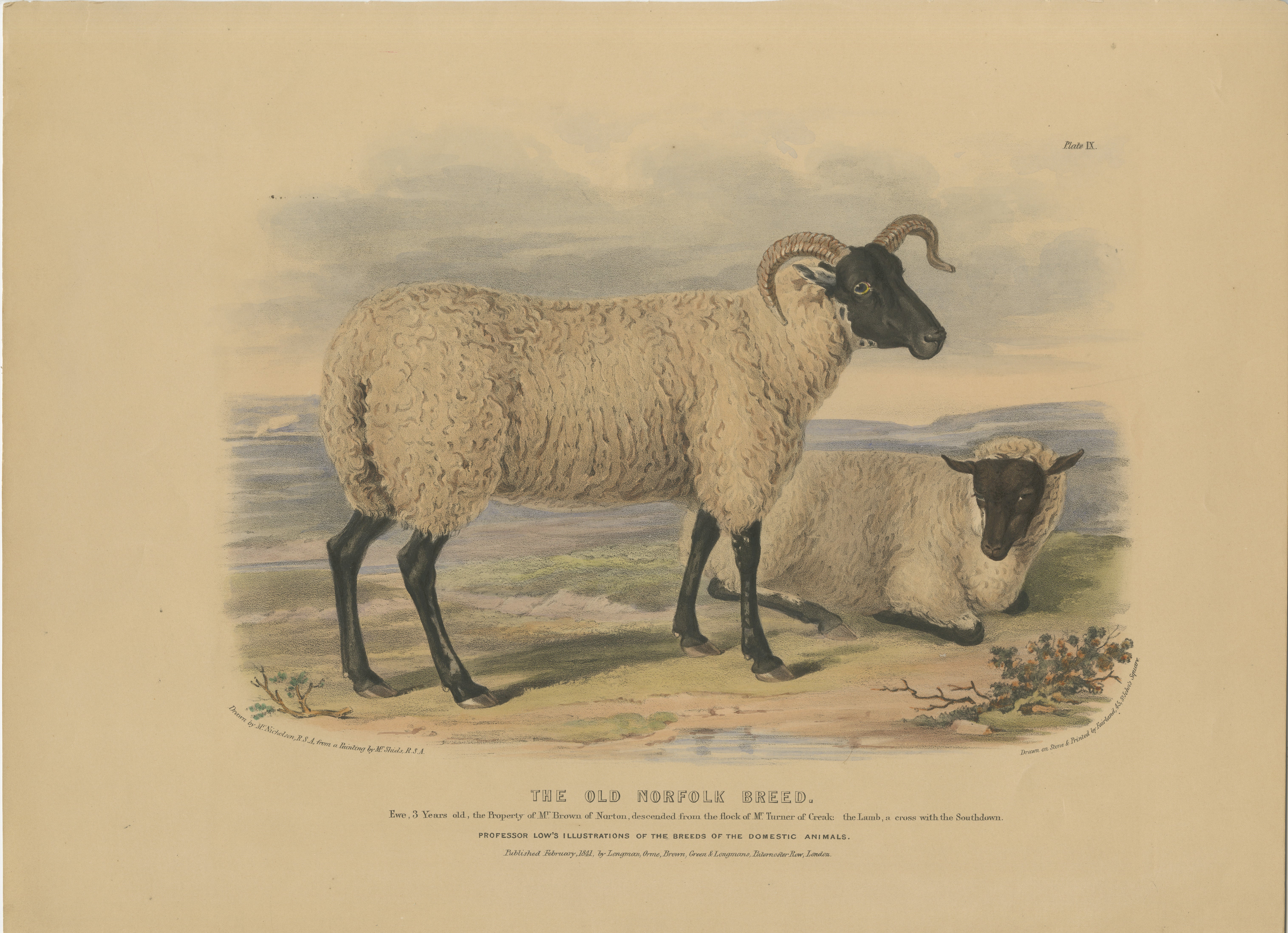
Old colored lithograph by Fairland after W. Nicholson, from "The Breeds of the Domestic Animals of the British Isles" by David Low, published in London, 1842.
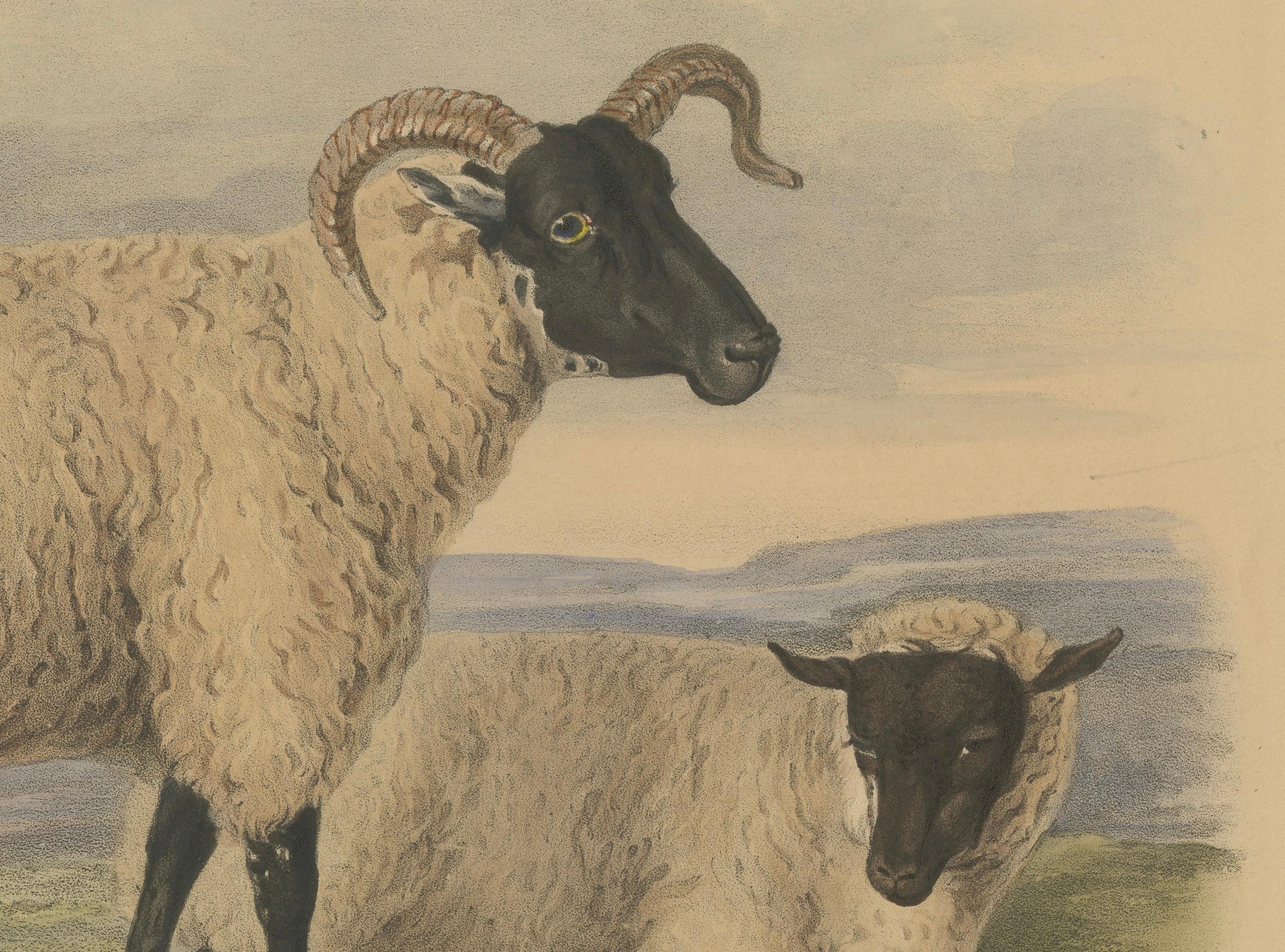
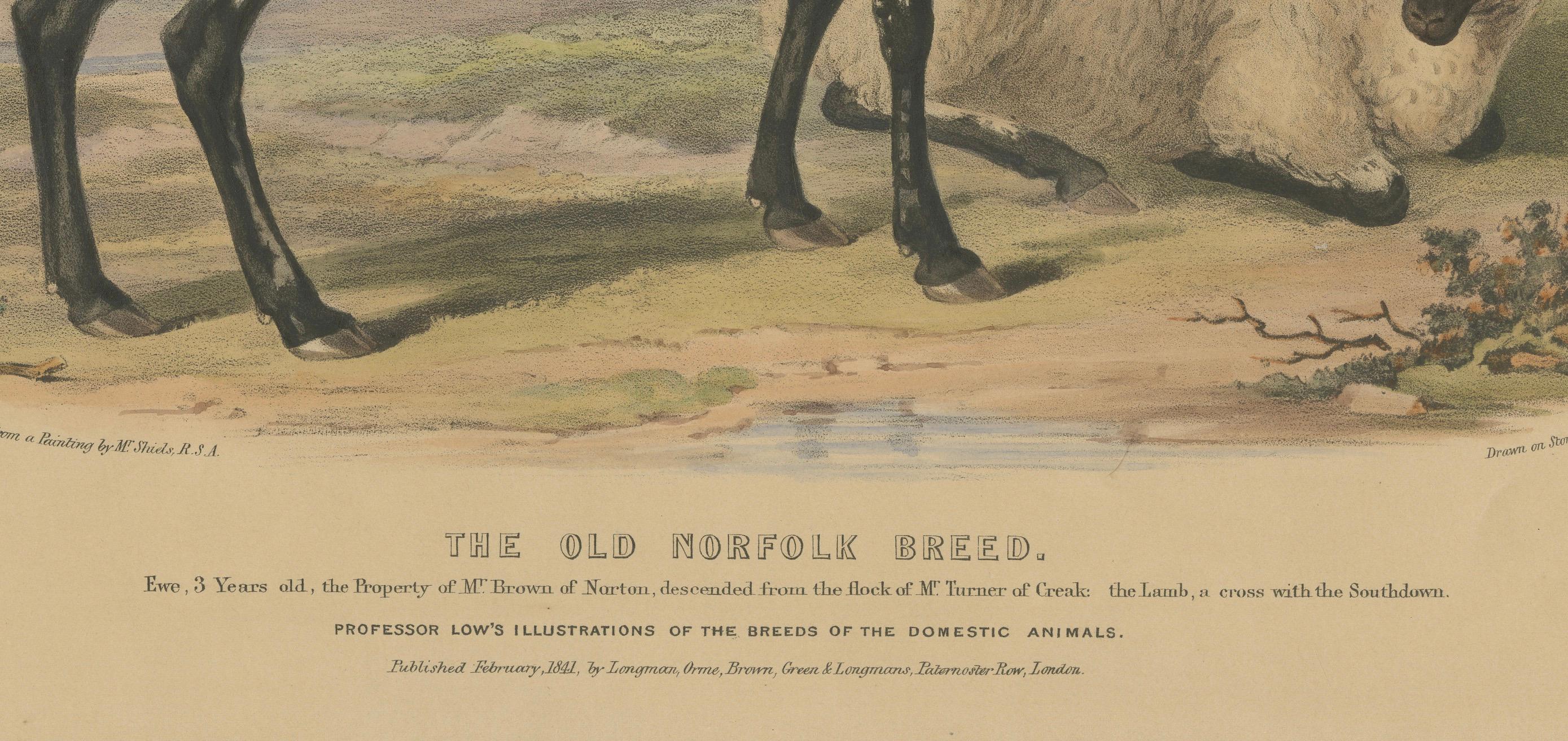
The lithograph depicts the Old Norfolk breed, showing an ewe aged three years, the property of Mr. Elmore of Nacton, descended from the flock of Mr. Turner of Creake. The lamb is a cross with the Southdown breed.
The image showcases detailed illustrations of the breed, with particular attention to their wool and physical characteristics, set against a pastoral backdrop. The lithograph was drawn on stone and printed by Fairland, with publication details indicating its release in February 1841 by Longman, Orme, Brown, Green, & Longmans, Paternoster Row, London.
Current Status of the Old Norfolk Breed
The Old Norfolk breed, also known as the Norfolk Horn, is an ancient breed of sheep that has had a significant impact on the development of modern sheep breeds.
1. **Breeding and Distribution:** The Norfolk Horn is primarily found in the UK, with a focus on conservation efforts to maintain its genetic heritage. It is known for its hardiness and ability to thrive in the challenging conditions of East Anglia's heaths and grasslands.
2. **Economic Importance:** The Norfolk Horn was historically valued for its meat and wool. Its resilient nature made it suitable for extensive farming systems, and it has contributed to the development of several other breeds, including the Suffolk sheep.
3. **Conservation and Popularity:** The breed faced decline in the 20th century but has since seen revival efforts. Organizations such as the Rare Breeds Survival Trust have played a key role in preserving the Norfolk Horn. Today, the breed is maintained by enthusiasts and conservationists, ensuring its continued presence and contribution to genetic diversity.