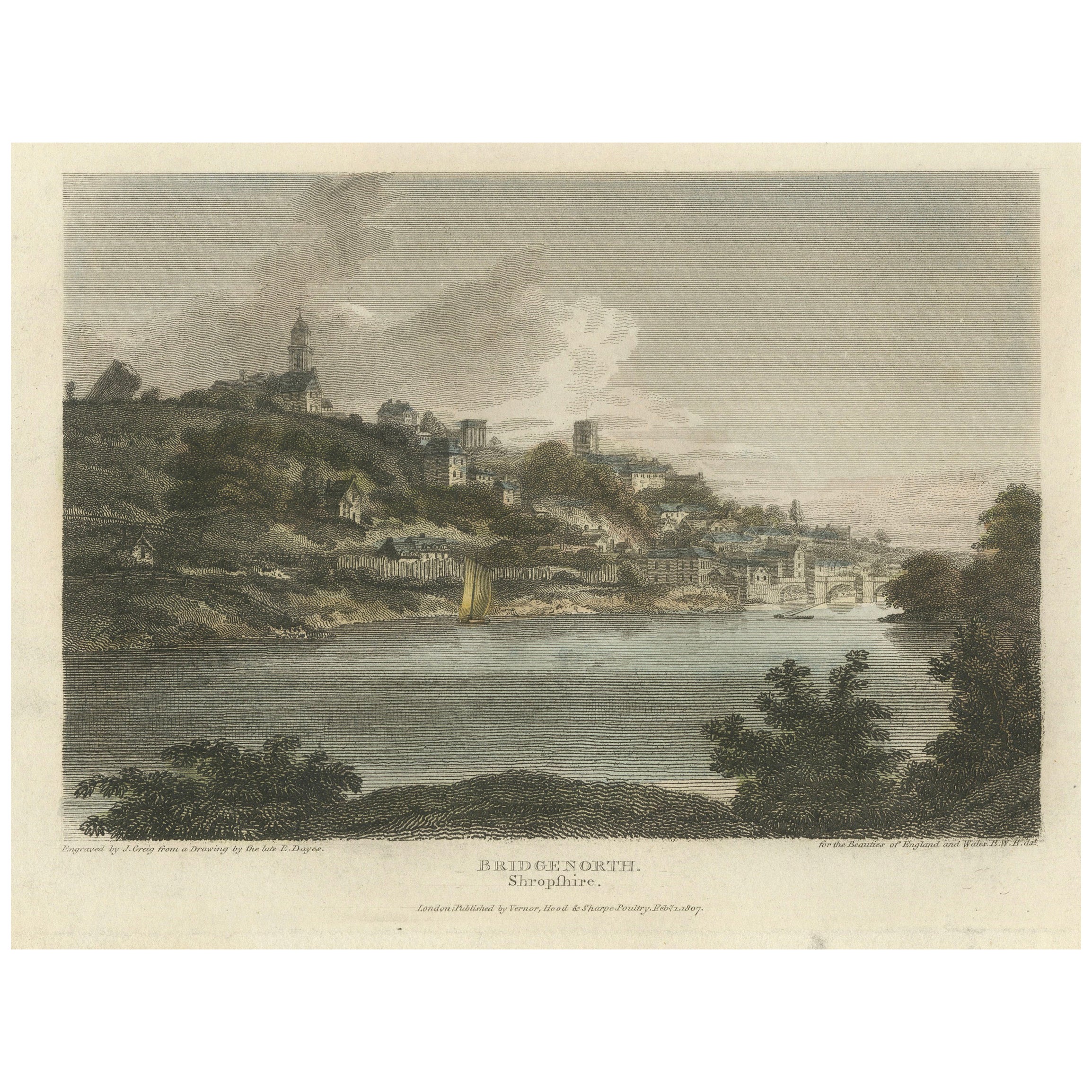
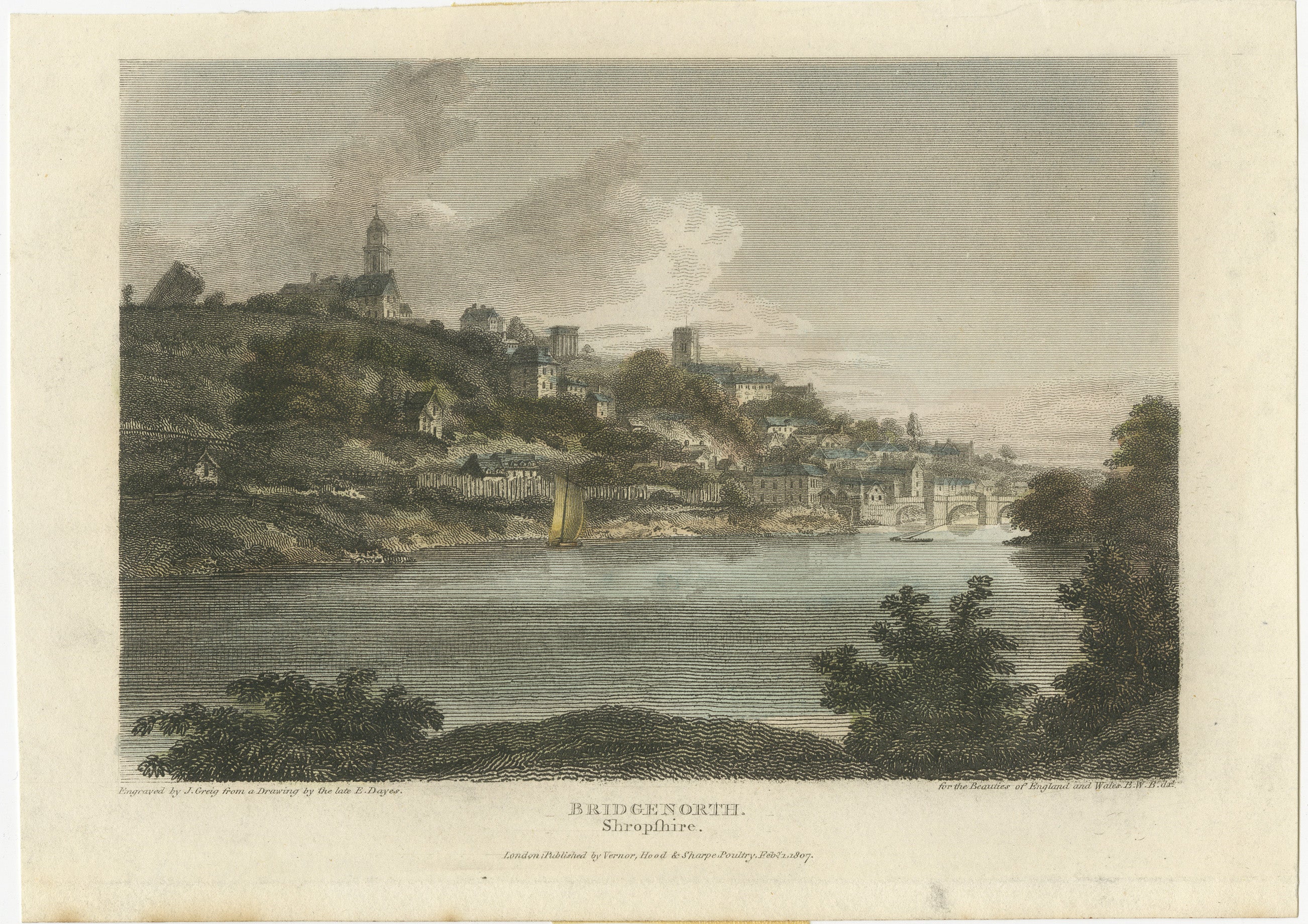
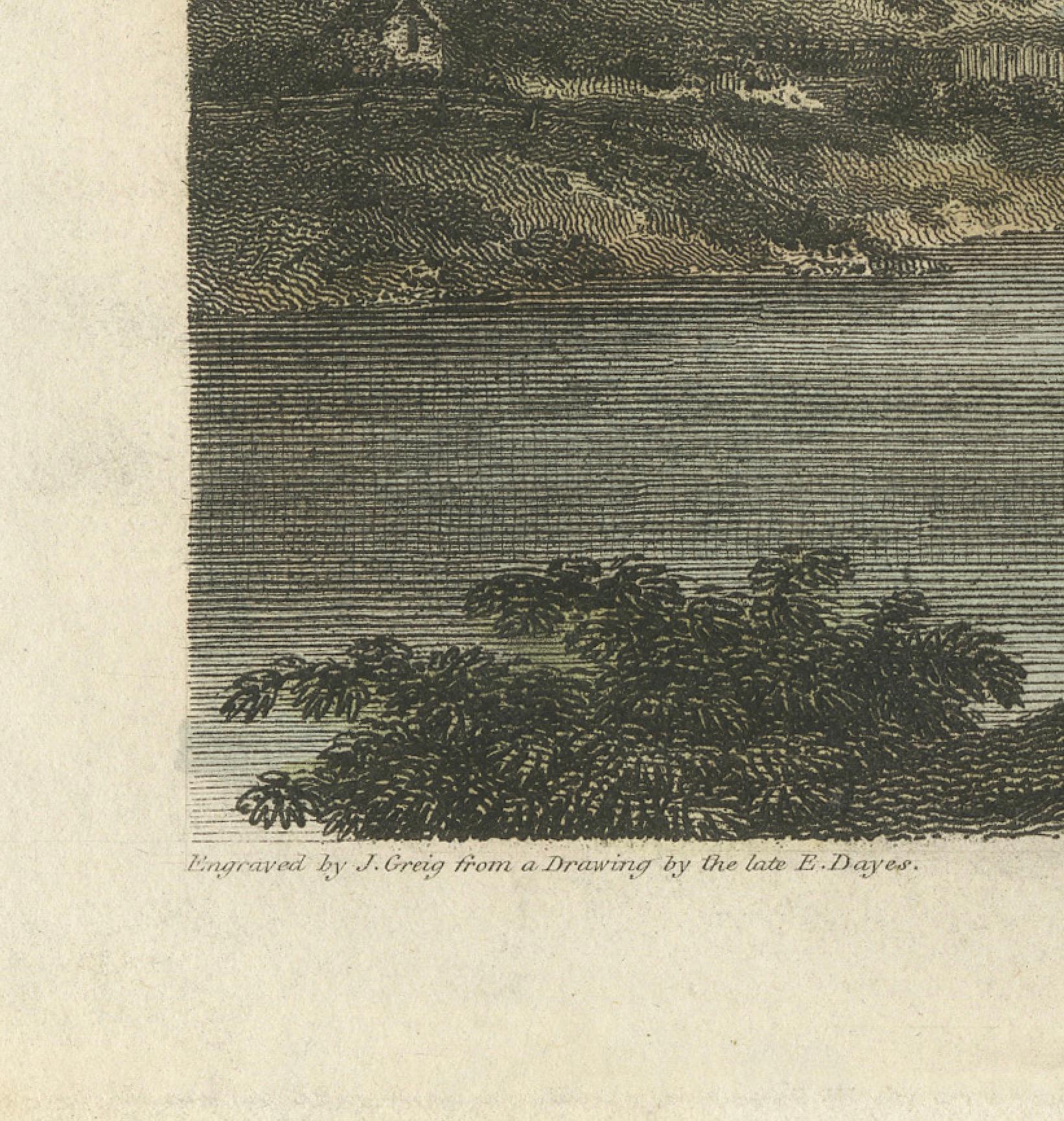
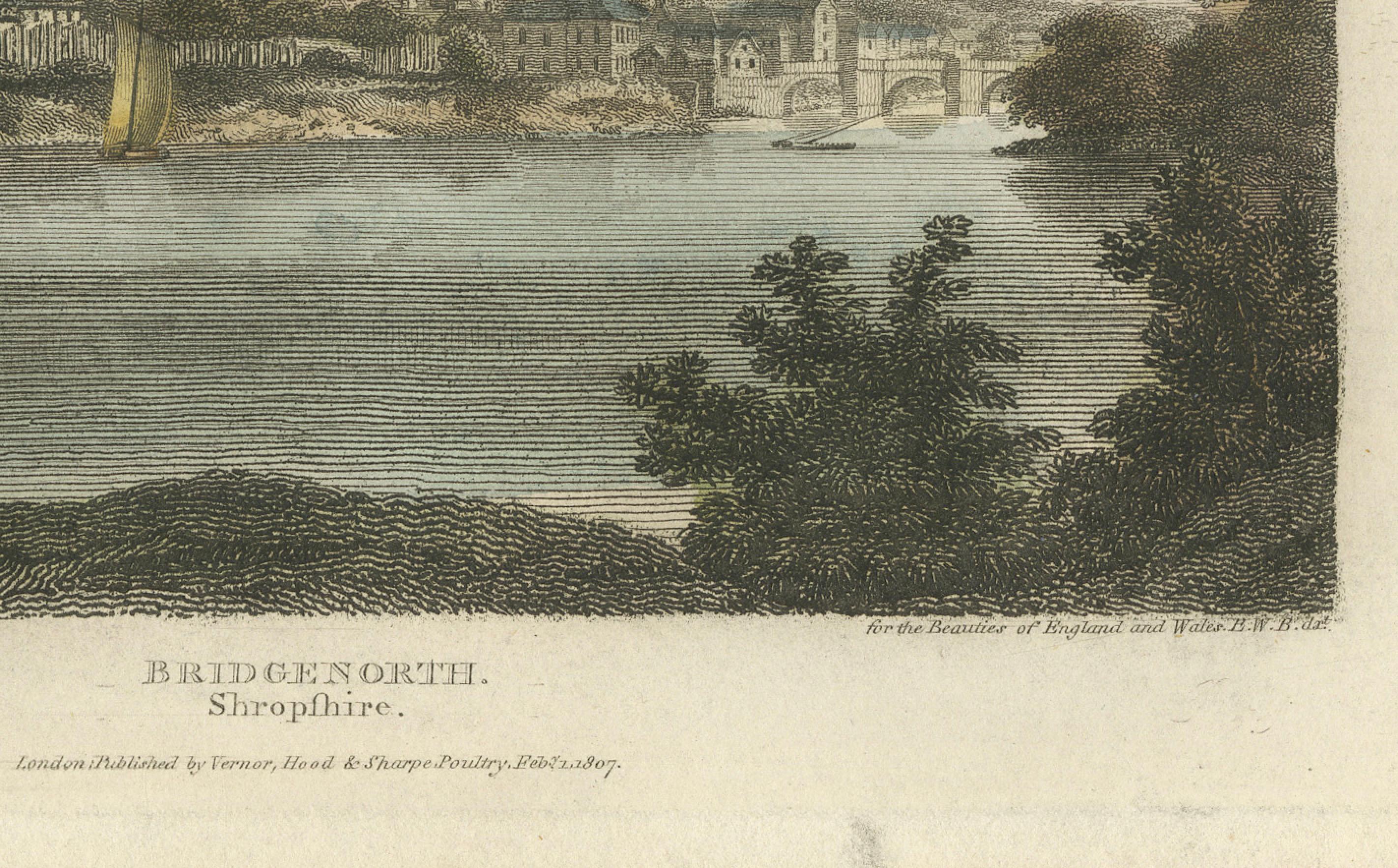
Engraved View of Bridgnorth, a Town in Shropshire, England, 1807
€ 140
One of a kind: this is the sheet in the photographs. Ships from Langweer, the Netherlands.
Date
1807
Sheet size
13 × 18 cm (5.1 × 7.1 in)
Condition
Good
Reference
BG-13600-12
Condition
Good, given age. General age-related toning. Later handcoloring. Two small pieces of tape on the reverse. Please study scan carefully.
About this sheet
This engraving is part of a collection showcasing the beauty of England and Wales, a series that was common in the 18th and 19th centuries to celebrate and document the picturesque landscapes and significant towns of Britain.
The text provided in the last image offers several details:
1. The title of the engraving is "BRIDGENORTH. Shropshire." 2. It was engraved by J. Greig from a drawing by the late E. Dayes. 3. The engraving was published in London by Vernor, Hood & Sharpe Poultry, February 1st, 1807. 4. It was created for "The Beauties of England and Wales."
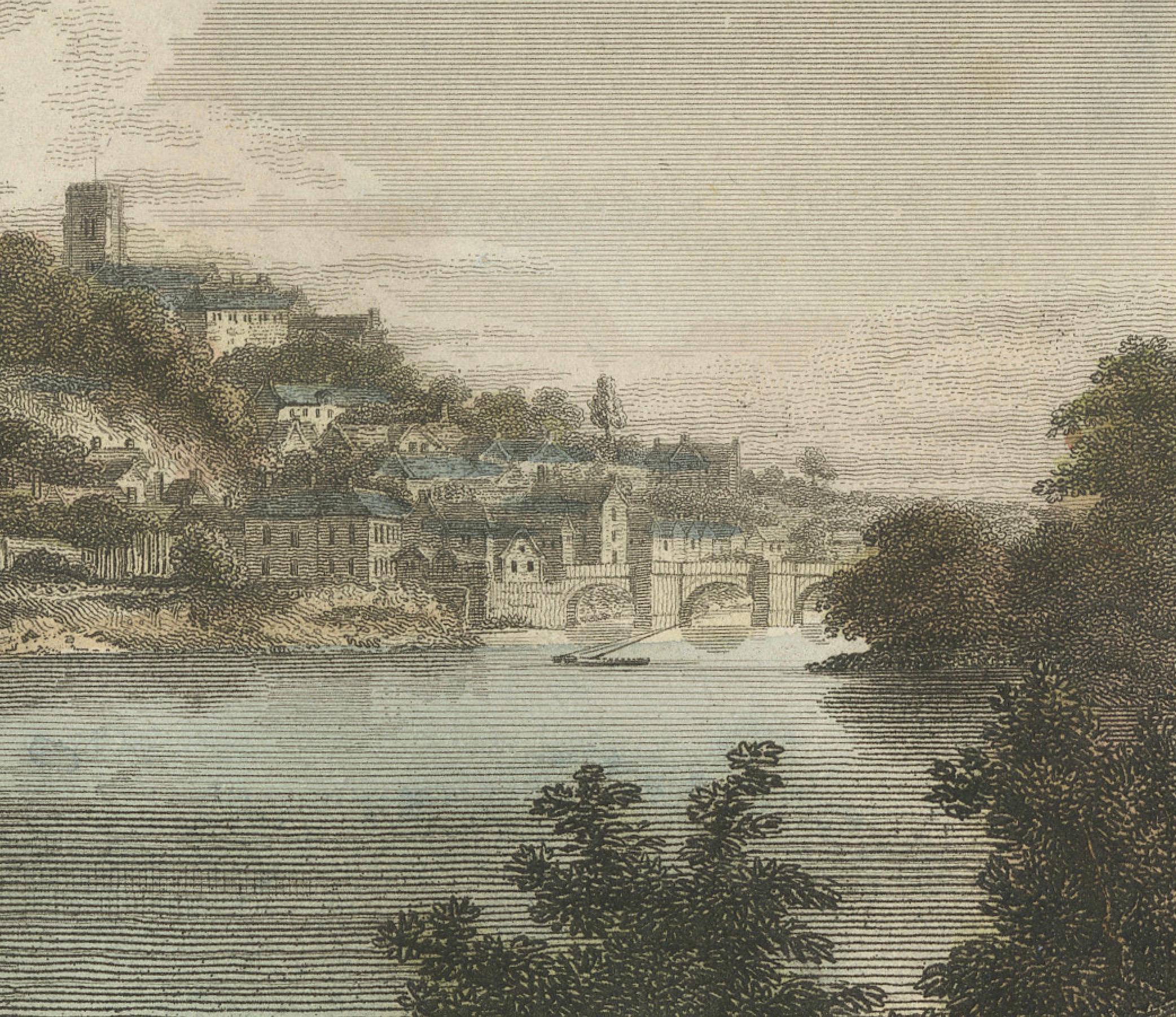
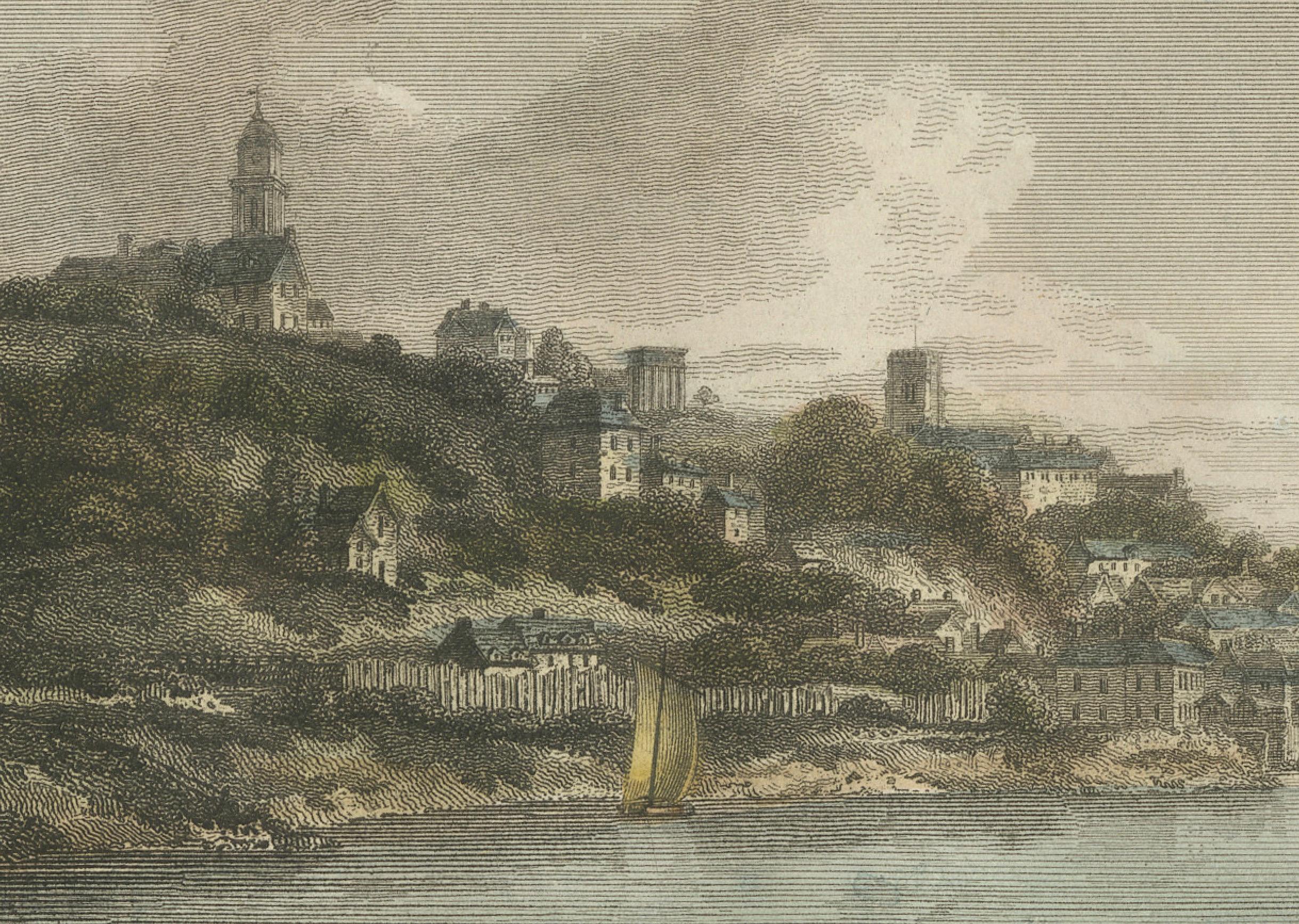
The artwork depicts Bridgnorth, a town in Shropshire, England. The engraving would have been intended to capture the charm and appeal of Bridgnorth, with its notable bridge and surrounding architecture. Engravings like this one were often collected by those who appreciated the artistry of such views and by those who were interested in the topographical and historical significance of the location.
E. Dayes (the late Edward Dayes) was a well-known artist of the period, and J. Greig was the engraver who transferred Dayes' artwork into the medium of engraving. The publication date of February 1st, 1807, places this work in the early 19th century, a time when such engravings were a popular form of mass media, providing a visual understanding of places that many people might not have the opportunity to visit themselves.
The engraving serves as both an artistic and historical record, capturing Bridgnorth in the early 19th century with a level of detail and craftsmanship that is characteristic of the period's topographical art. The inclusion of the town's geographical features and built environment would make this piece of significant interest to historians, collectors, and enthusiasts of antique prints.