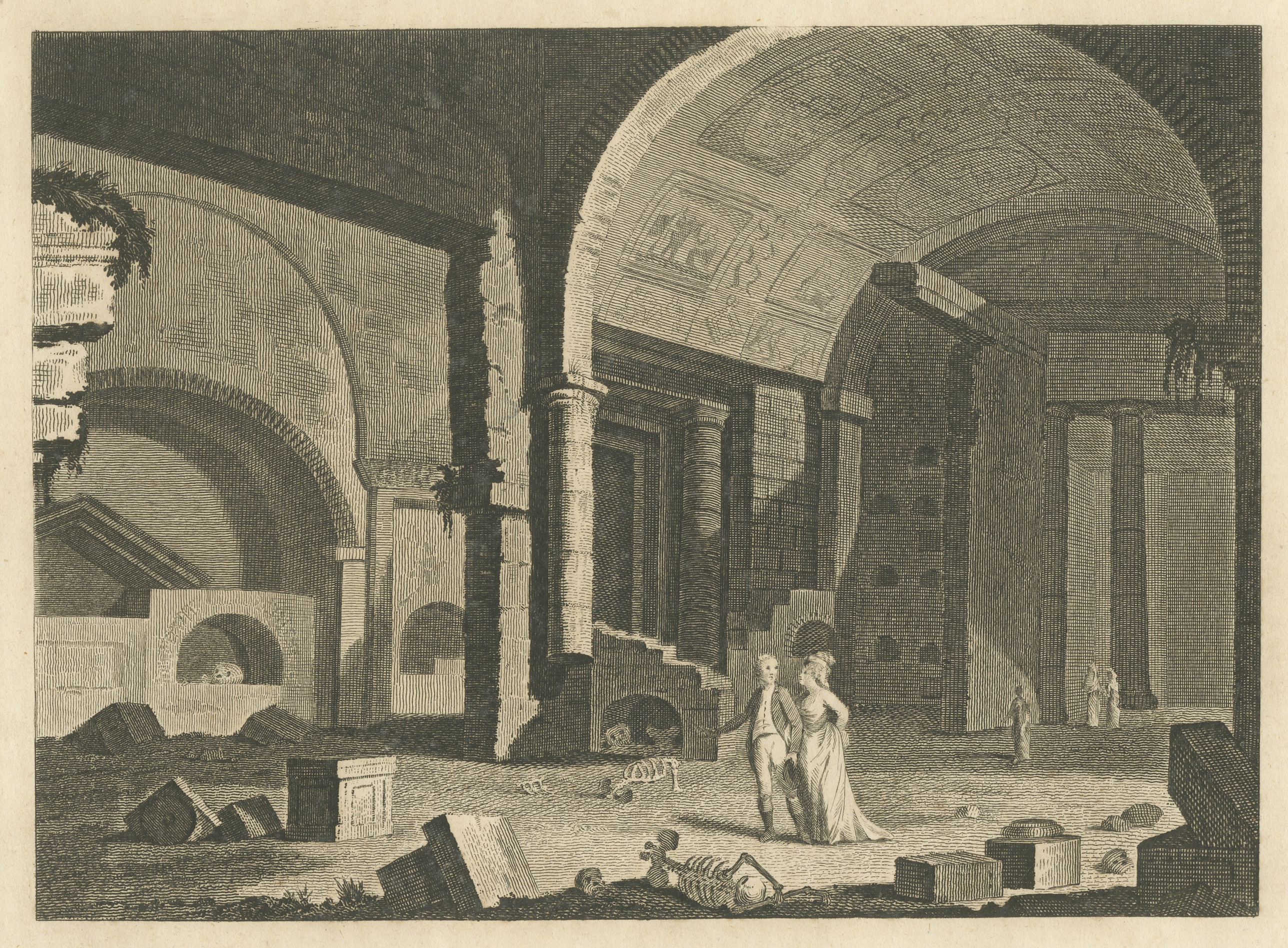
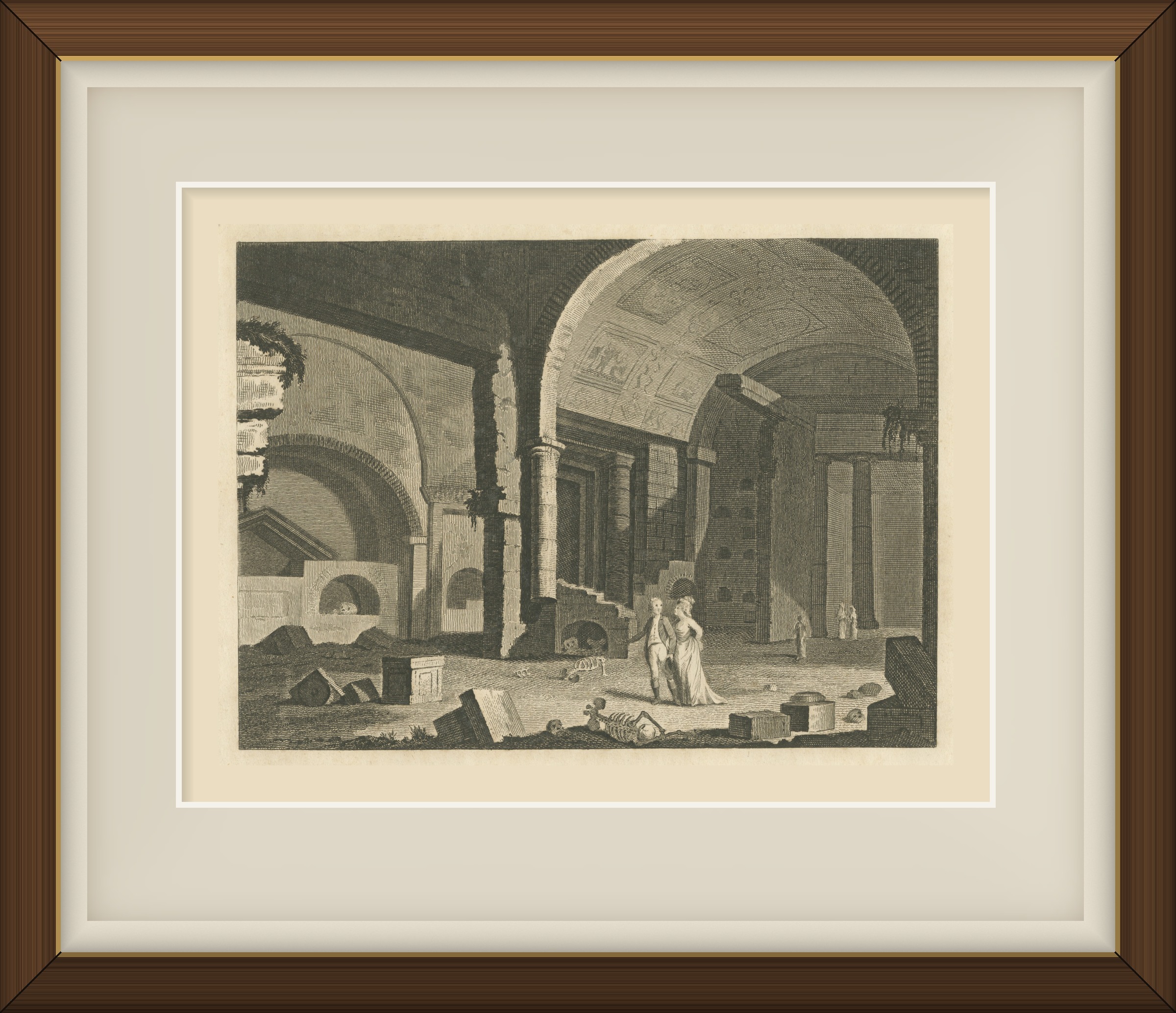
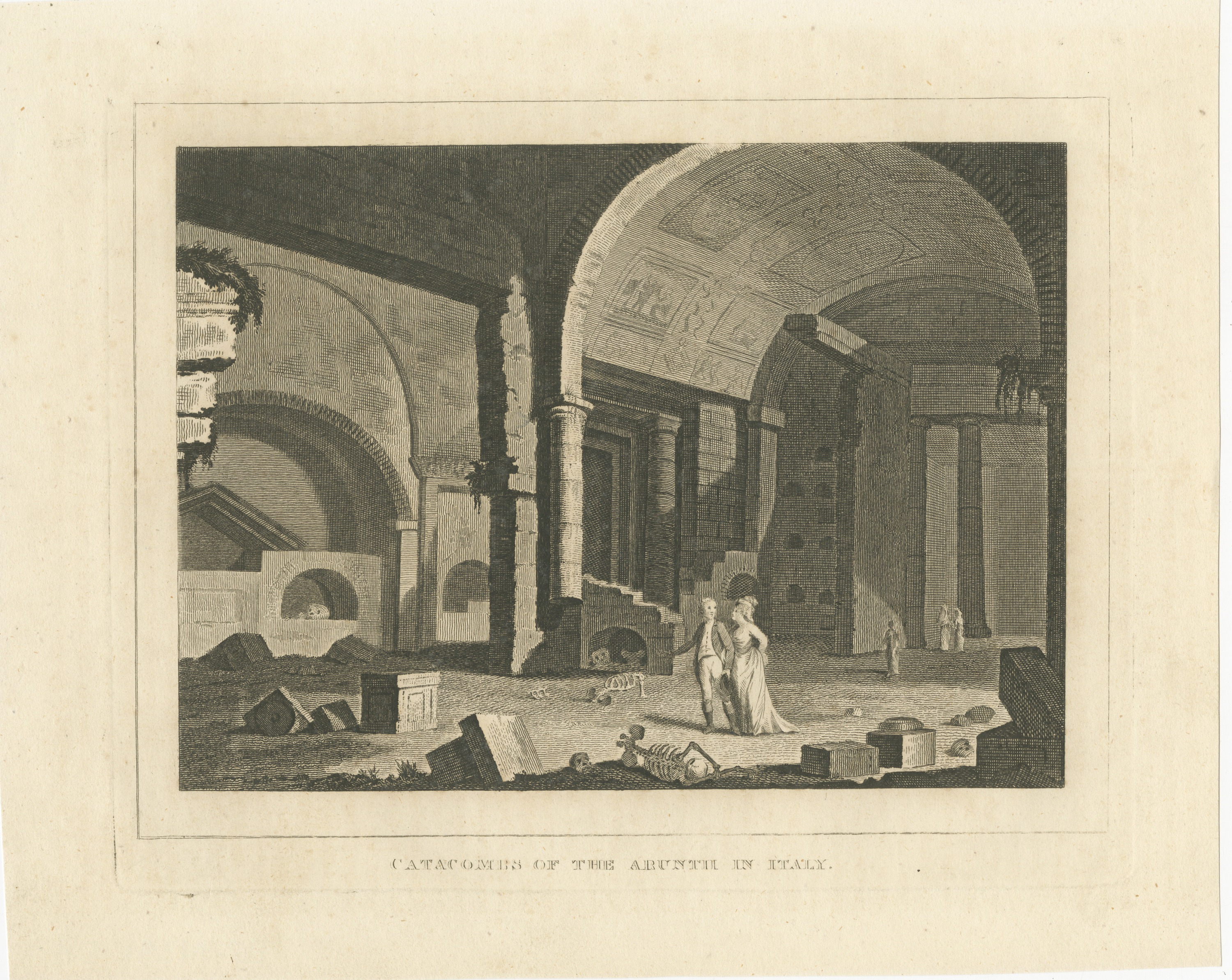
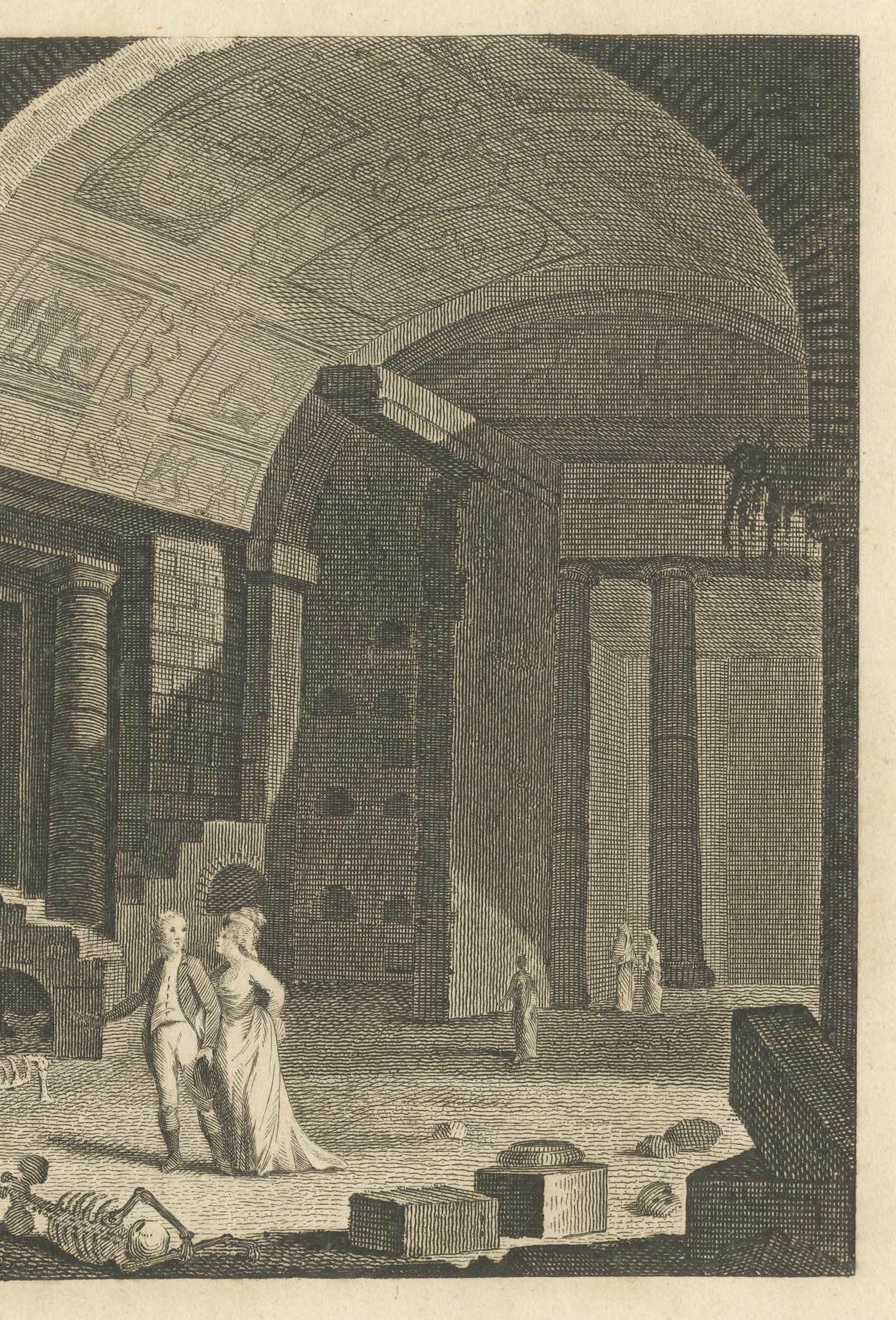
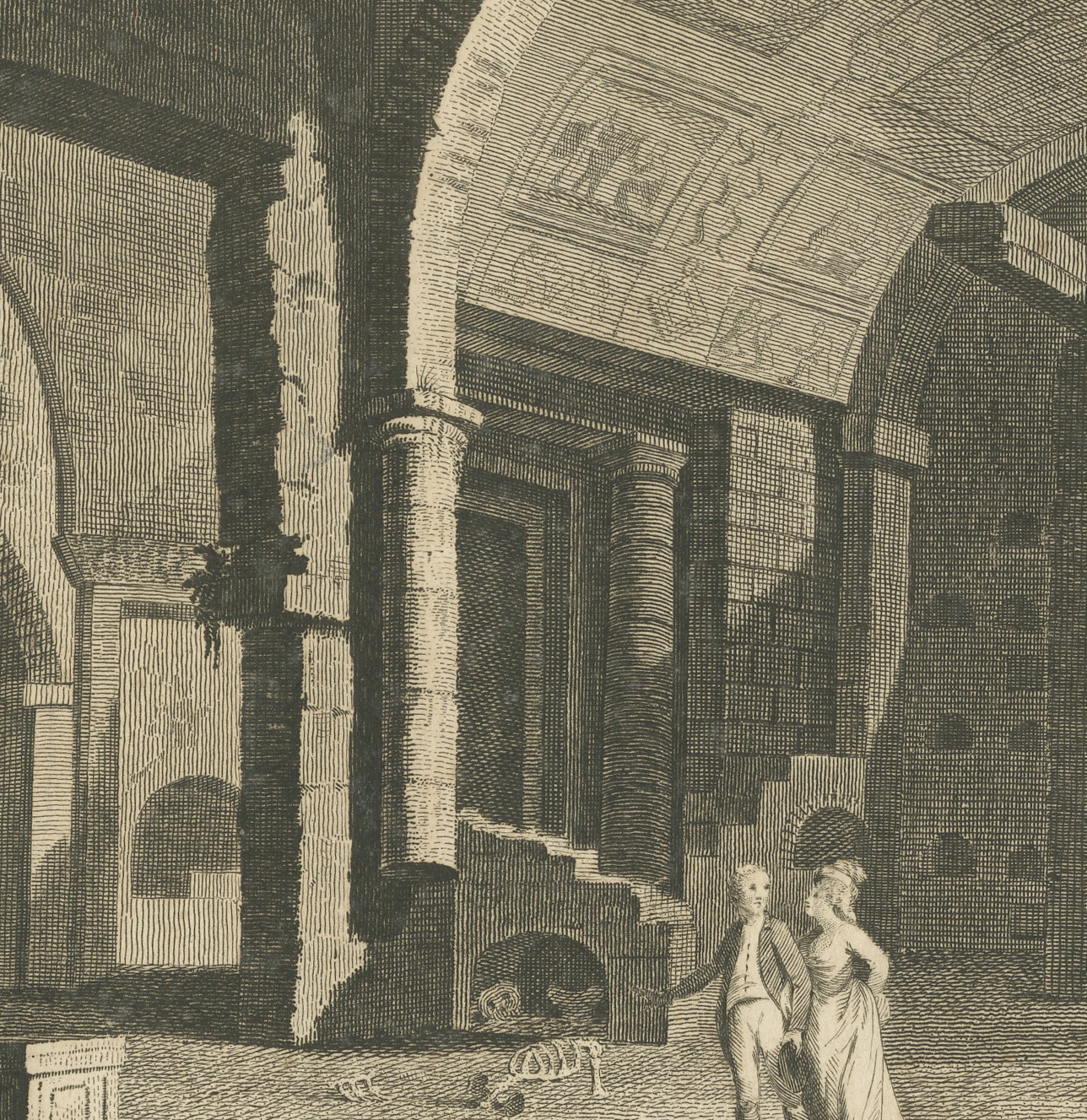
Catacombs of the Aruntii in Italy, Roman Tomb Interior, Engraving, circa 1783
€ 220
Original antique · The actual sheet photographed · Certificate of authenticity on request · Sold unframed · Worldwide shipping from € 15 (rates)
Date
circa 1783
Mapmaker / artist
Unsigned copper engraving
Publisher
Not named on the sheet
Technique
Copper engraving
Coloring
Uncolored
Condition
Good
Reference
BG-14391-58
What the condition grades mean
Excellent
Bright and clean, with no faults worth mentioning.
Very good
Only light signs of age, such as faint toning.
Good
Normal signs of age for a sheet of this period: toning, some foxing, small marks or neat old repairs.
Fair
Clear faults such as staining, tears or repairs, priced to match.
Every fault we see is written in the condition note, and the whole sheet is shown uncropped in the photos.
Condition
Good condition for its age. Light toning with scattered small foxing specks to the margins. Please review the images for further condition details.
About this sheet
An atmospheric eighteenth century copper engraving lettered "Catacombs of the Aruntii in Italy", showing the interior of an ancient Roman family tomb. The plate carries no artist's or publisher's name.
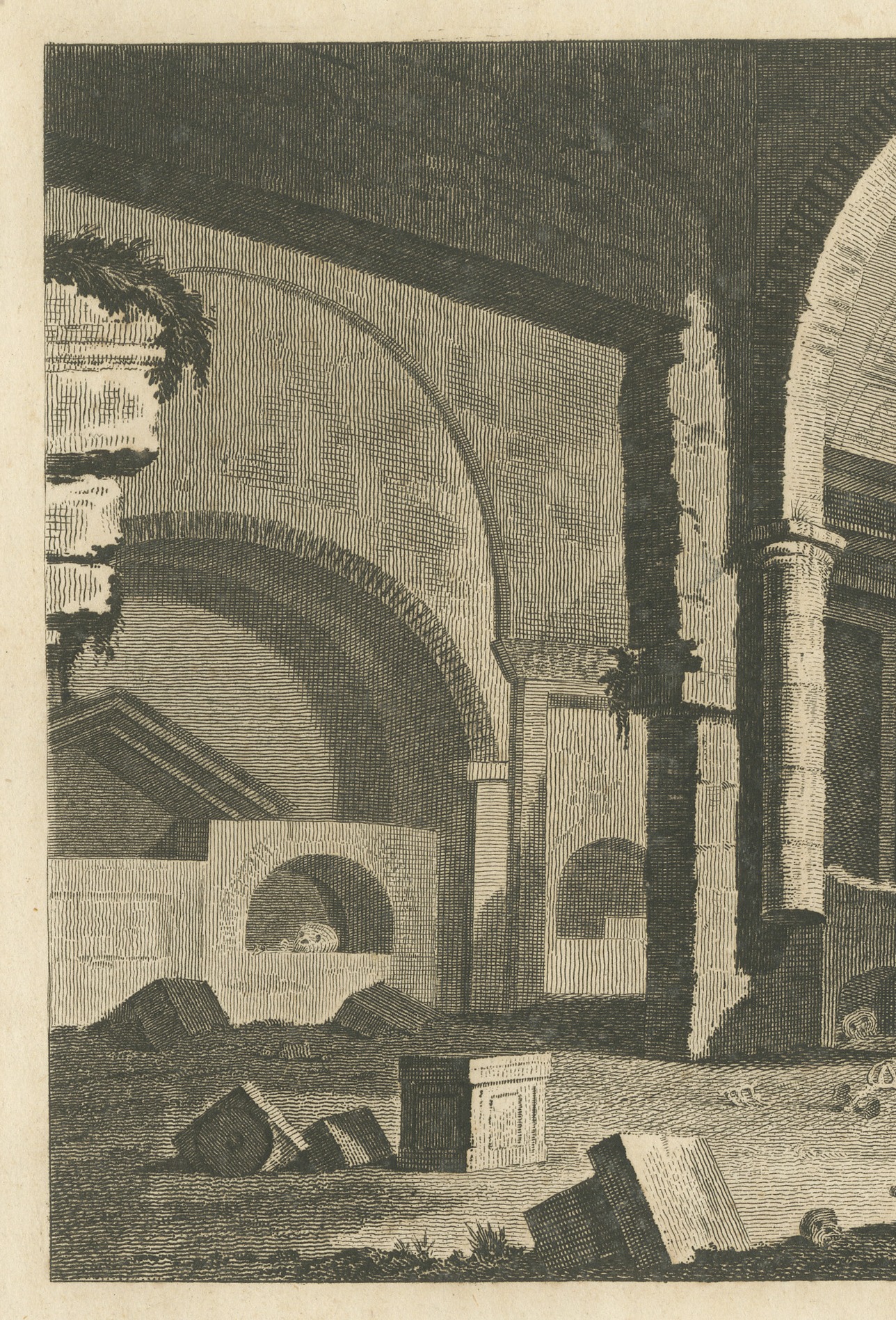
The view looks into a vast vaulted chamber. The great coffered arch at the center is painted and molded with panels of figures and ornament, columns and pilasters support the vaults, and the walls are pierced with rows of small niches for the urns of the dead. In the foreground a fashionable couple, a gentleman in a tailcoat and a lady in a long white gown and wide hat, stroll arm in arm through the gloom among scattered blocks, chests and fallen masonry. At their feet lie skeletons and skulls, and further figures stand in the light of a doorway at the back. Garlands of creeping plants hang from the broken walls at the left and right.
The sepulchre of the Arruntii, a Roman family of the early imperial period, was discovered near the Porta Maggiore in Rome in the eighteenth century and became famous for its painted and stuccoed vaults and its inscriptions. It was drawn and engraved by Piranesi and visited by travelers on the Grand Tour. The engraver here combines antiquarian interest with a strong sense of the macabre, contrasting the elegant visitors with the remains of the dead around them, a pairing much admired by readers of the age of sensibility.
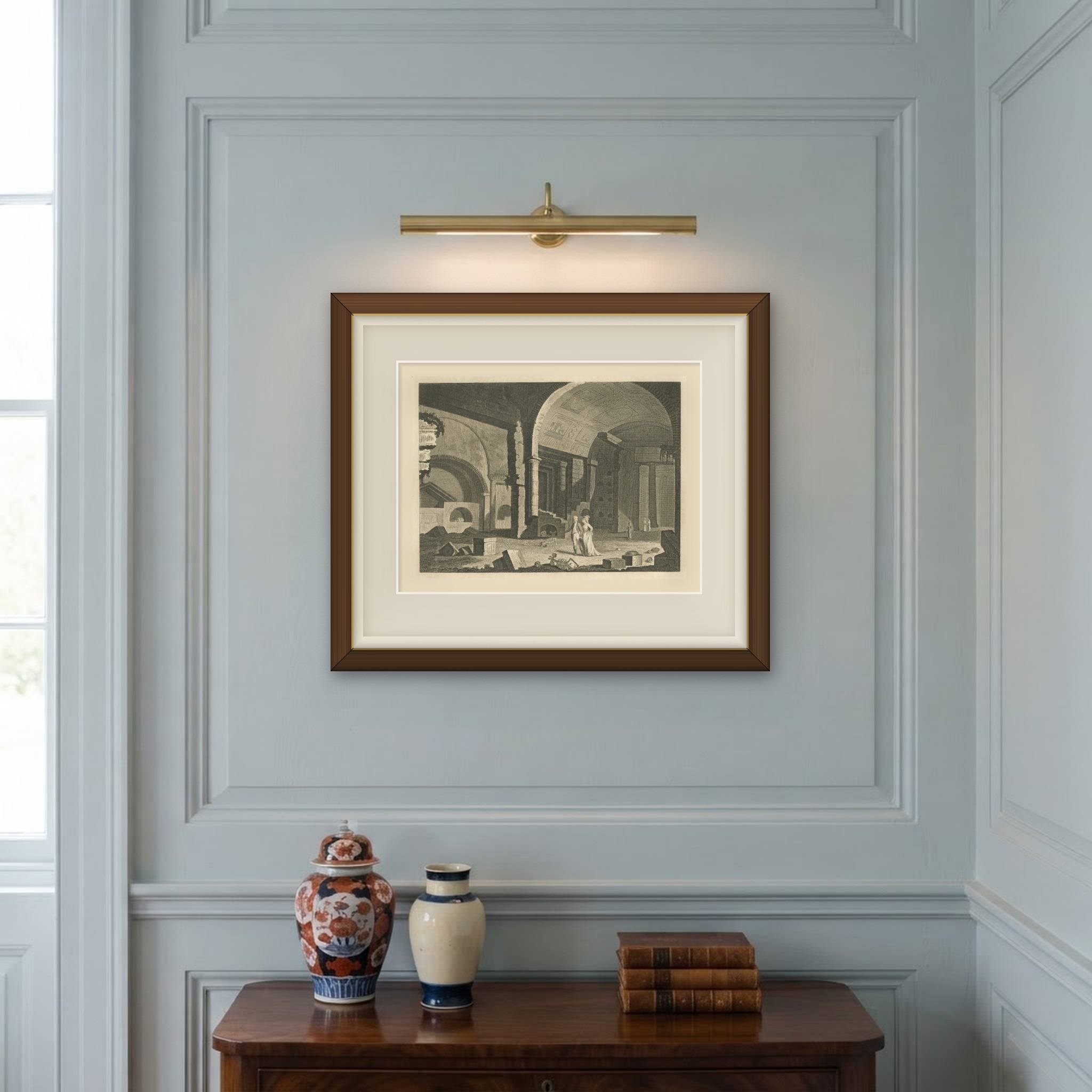
The plate matches in format, border and lettering a series of English topographical engravings that includes the Ruins of Palmyra and The Funeral Pile of a Talapoin, published by Harrison and Co. in London in 1782 and 1783, and the dress of the visitors belongs to those years. The engraving is crisp and well printed on laid paper with good margins. It will appeal to collectors of Roman antiquities, of Grand Tour subjects and of the gothic imagination, and it frames well in a dark molding.
This is an original antique print, not a modern reproduction. This item is sold unframed. Any framed or interior images are shown for presentation and inspiration only, unless the listing explicitly states that the item is sold framed.