Very good impression with vibrant, unfaded hand-colour. Minimal toning to margins and a few faint handling marks consistent with age. Text pages are clean with only light toning, crisp printing, and minimal signs of handling or age.
About this sheet
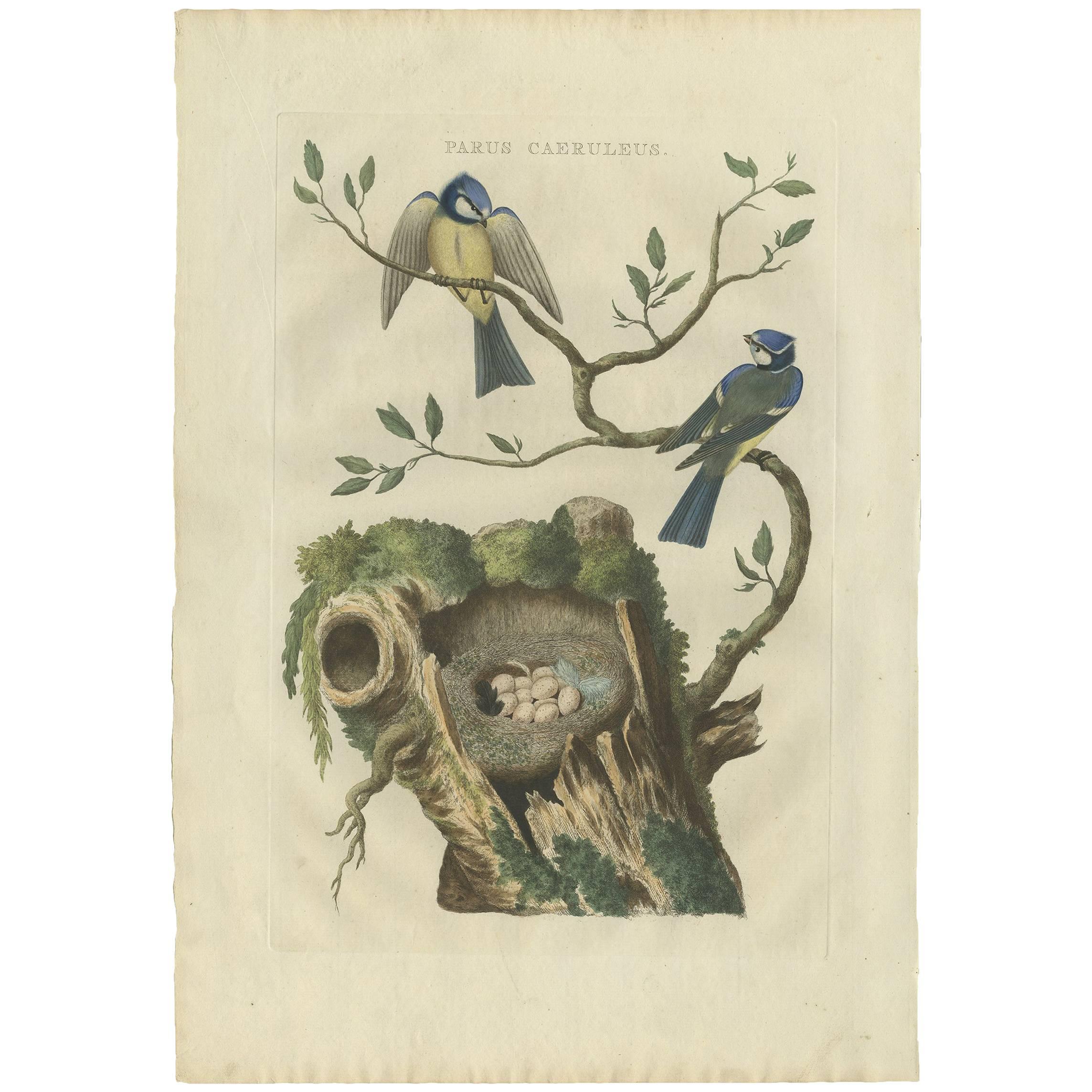
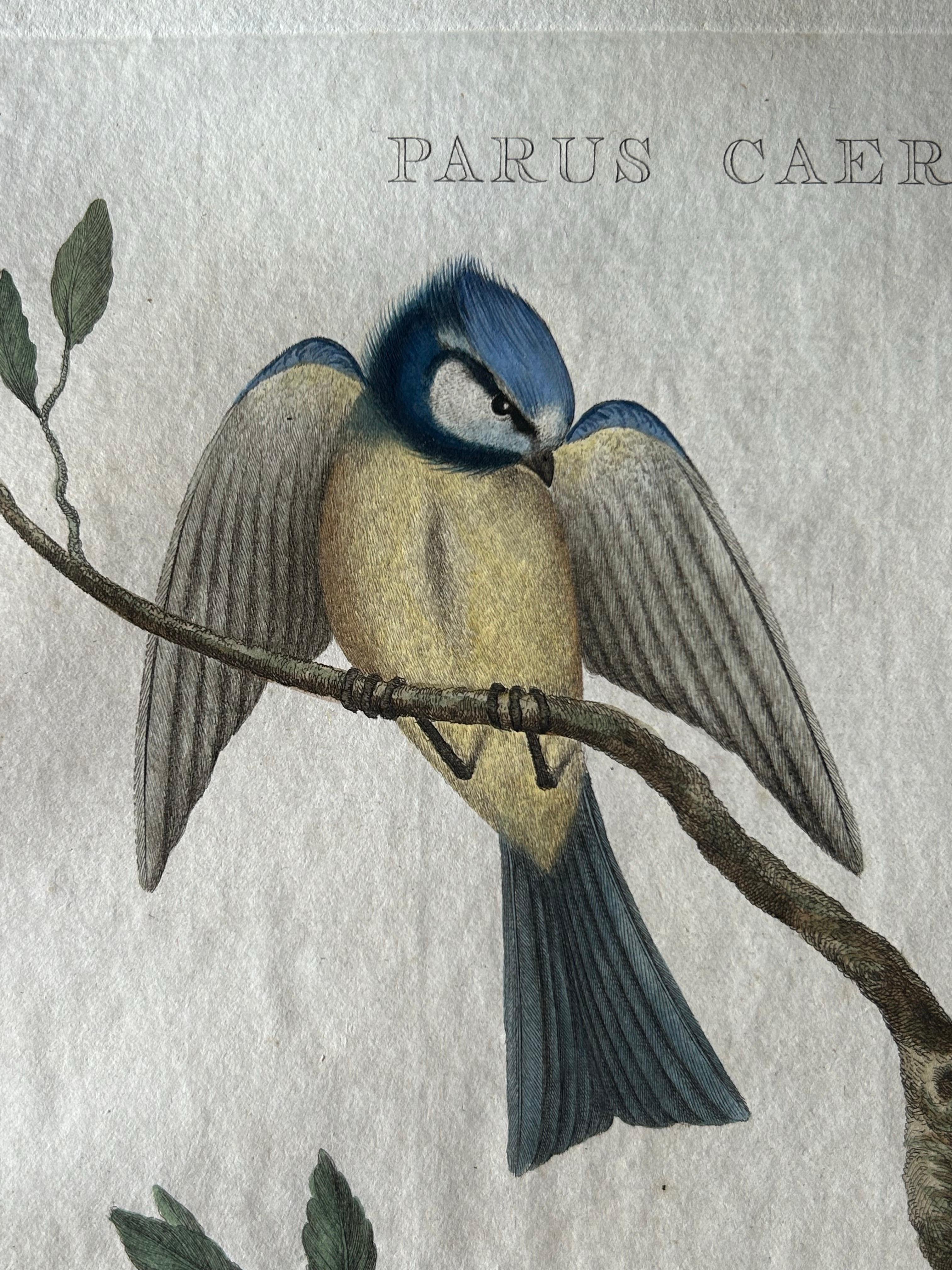
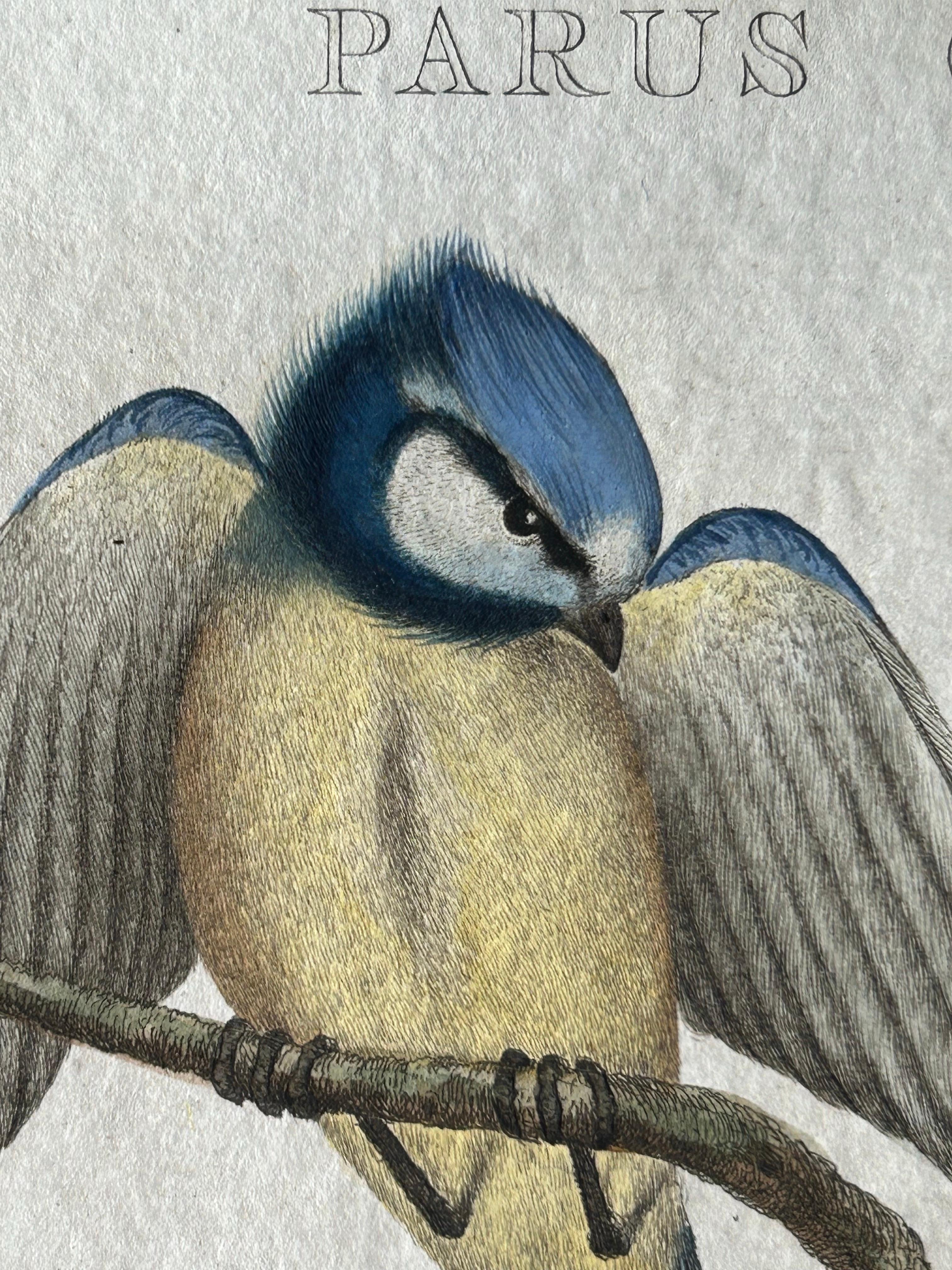
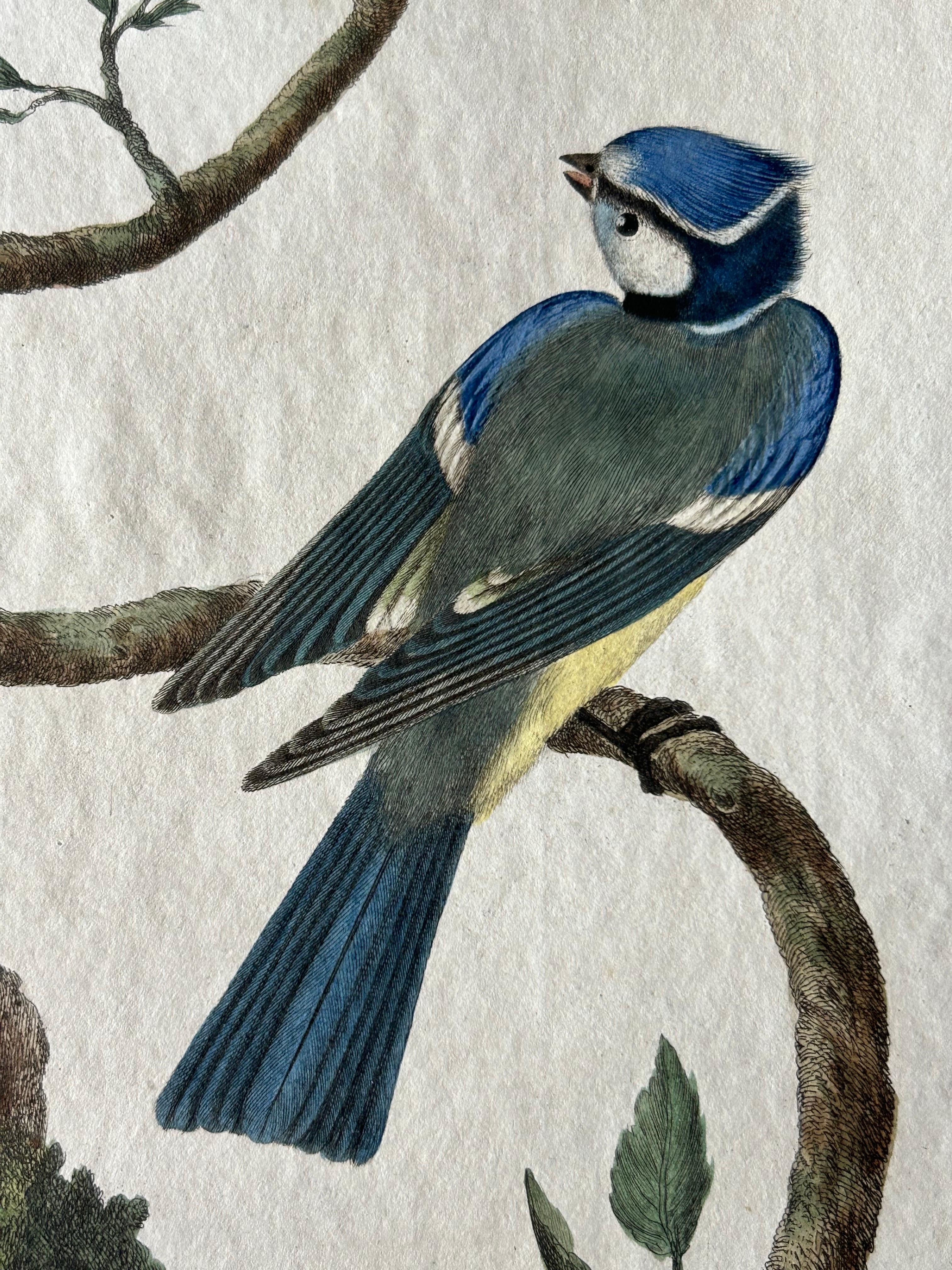
Blaeuwe Mees (Parus caeruleus) – Hand-Coloured Engraving with Text, 1770–1829
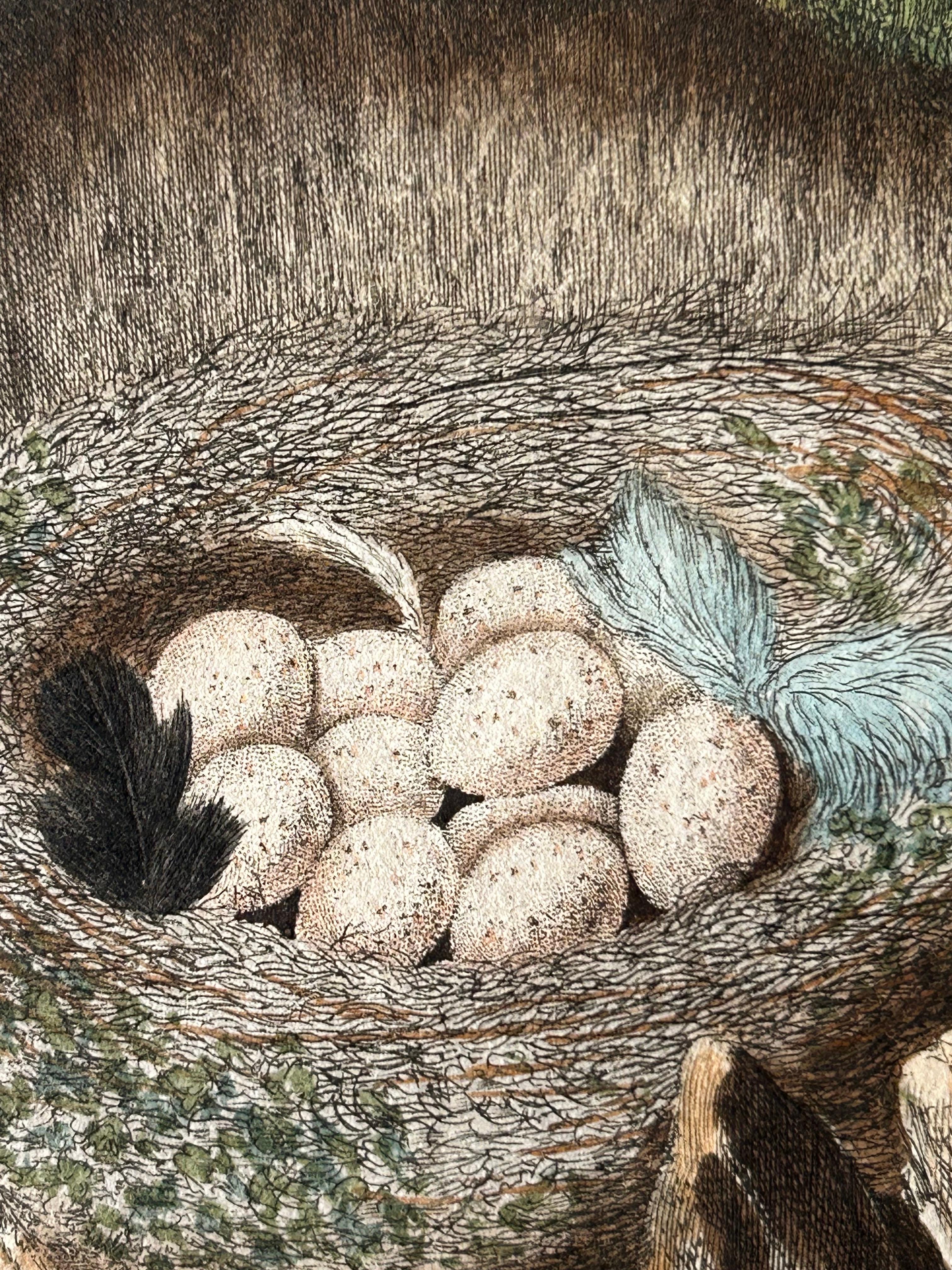
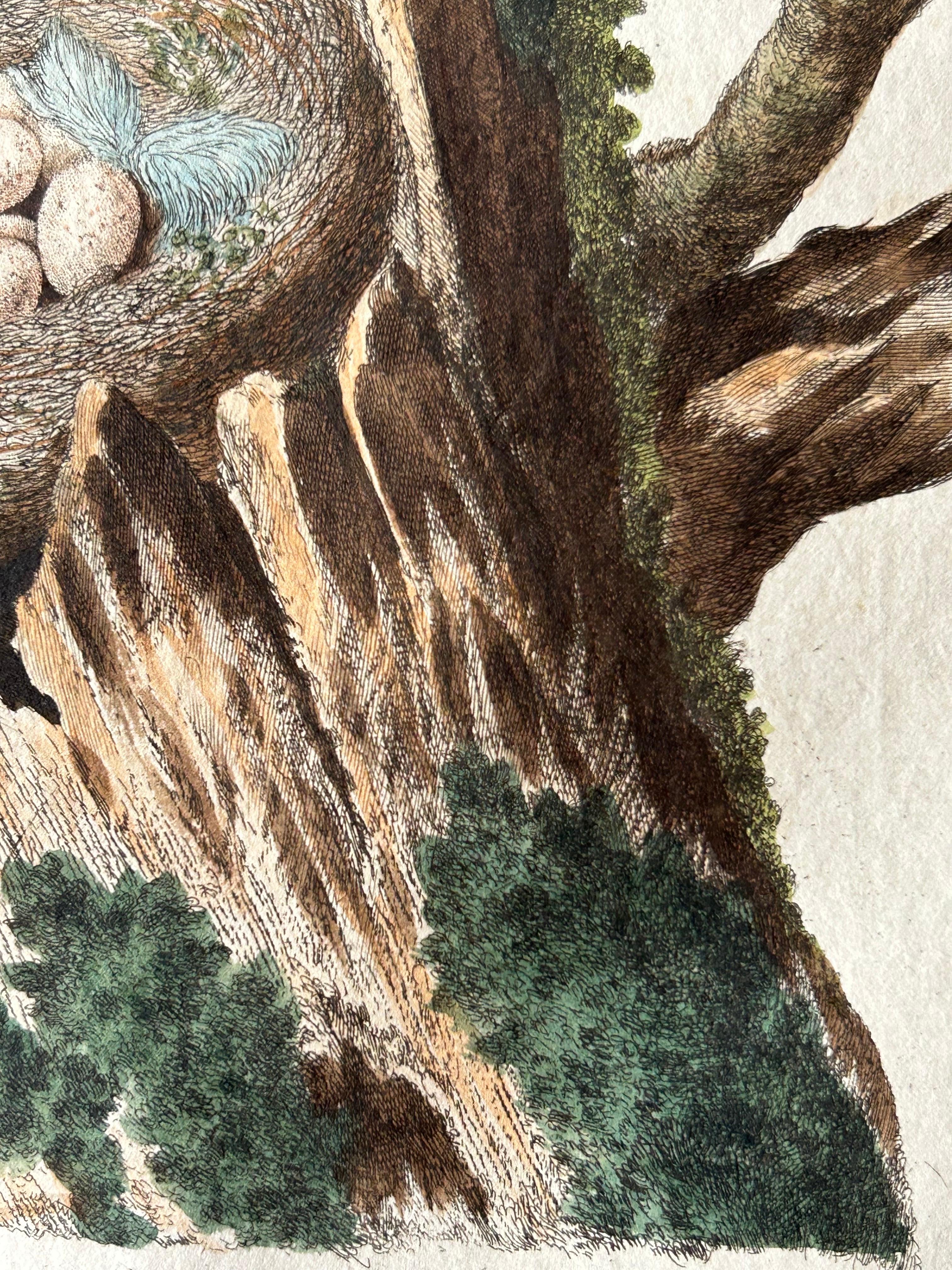
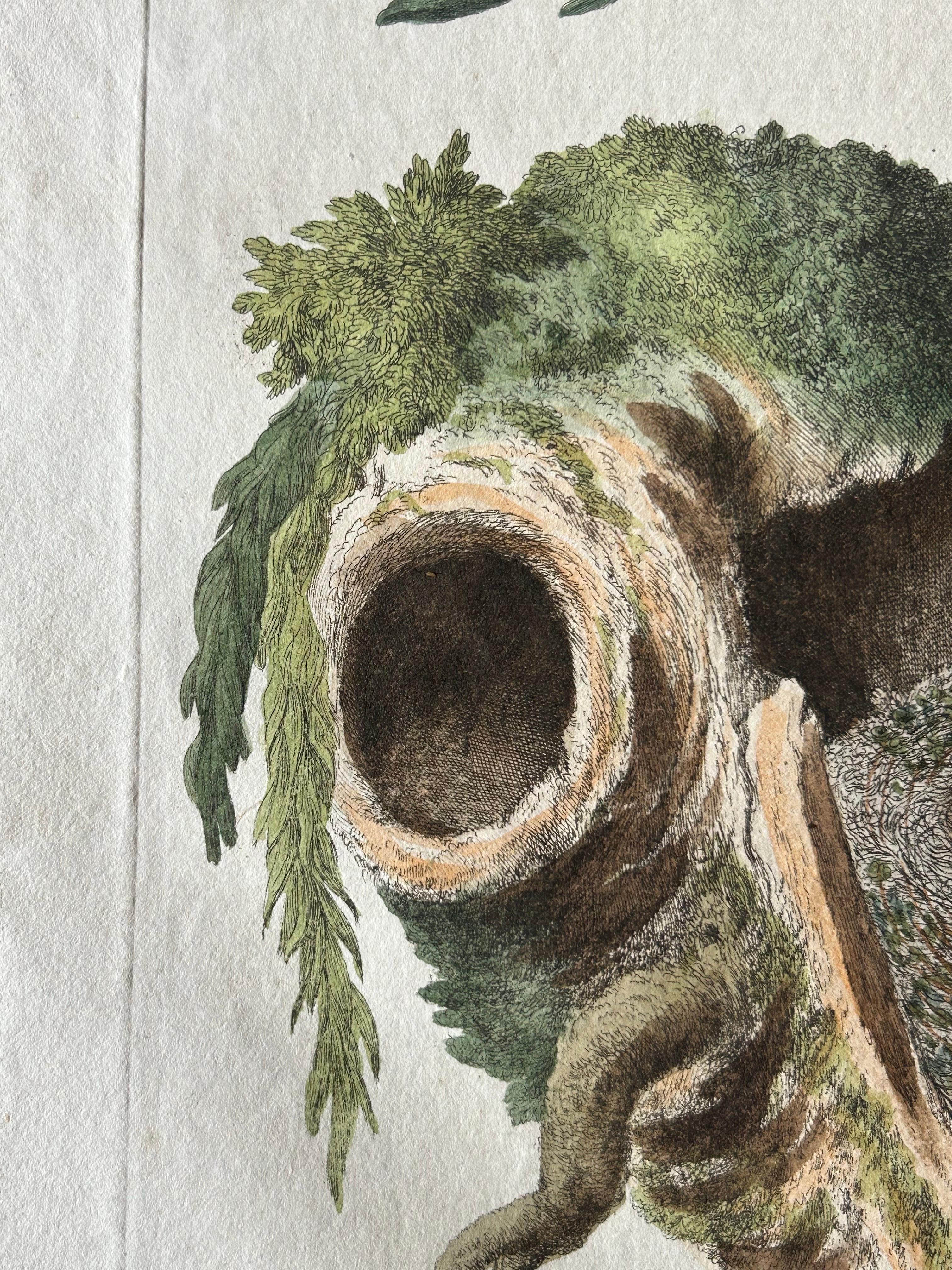
An exquisite hand-coloured engraving of the Eurasian blue tit (Parus caeruleus), from Nederlandsche Vogelen; volgens hunne huisdouding, aert, en eigenschappen beschreeven (Amsterdam, 1770–1829) by Cornelius Nozeman, M. Houttuyn and J.C. Sepp. This monumental multi-volume work was the first comprehensive ornithological study published in the Netherlands, illustrating and describing native birds in life-like poses and natural surroundings, often close to life-size. This example features a lively composition of two blue tits perched on and around a hollow tree stump, the nest interior revealed with delicately drawn eggs. The detail of the foliage, bark, and feather texture reflects the precision of Sepp’s engraving combined with rich contemporary hand-colouring.
The Eurasian blue tit is instantly recognisable by its vivid blue and yellow plumage, white cheeks, and nimble behaviour. In the text, Nozeman provides an extensive account of its appearance, behaviour, nesting habits, and seasonal activities. He describes their skill in navigating branches—often hanging upside down to forage for insects—and their diet of caterpillars, spiders, and other invertebrates. The species’ adaptability is emphasised, noting its readiness to use both natural tree cavities and human-made nest boxes. These birds breed widely across temperate Europe and parts of western Asia, preferring mixed woodlands, especially those rich in oak.
This print is accompanied by two original pages of Dutch descriptive text from the Nederlandsche Vogelen, detailing both physical characteristics and behavioural observations, providing an authentic historical context. Together, the plate and text offer a complete presentation as originally issued in the late 18th to early 19th century.
Condition: Very good impression with vibrant, unfaded hand-colour. Minimal toning to margins and a few faint handling marks consistent with age. Text pages are clean with only light toning, crisp printing, and minimal signs of handling or age.
Framing tips: This engraving would be beautifully presented in a classic gold or dark wood frame with a pale cream or soft ivory mount to complement the warmth of the paper and highlight the vibrant plumage. For a more modern display, a deep blue mount could enhance the bird’s colours.