Original antique · The actual sheet photographed · Certificate of authenticity on request · Sold unframed · Worldwide shipping from € 15 (rates)
Date
1869
Mapmaker / artist
Firmin-Didot, Paris, after Pralon, c.1869
Technique
Lithograph (grisaille)
Sheet size
40.4 × 28.8 cm (15.9 × 11.3 in)
Reference
BG-13766-56
What the condition grades mean
Excellent
Bright and clean, with no faults worth mentioning.
Very good
Only light signs of age, such as faint toning.
Good
Normal signs of age for a sheet of this period: toning, some foxing, small marks or neat old repairs.
Fair
Clear faults such as staining, tears or repairs, priced to match.
Every fault we see is written in the condition note, and the whole sheet is shown uncropped in the photos.
Condition
Very good condition. Slight toning and a few faint handling marks in the outer margins, image clean and crisp.
About this sheet
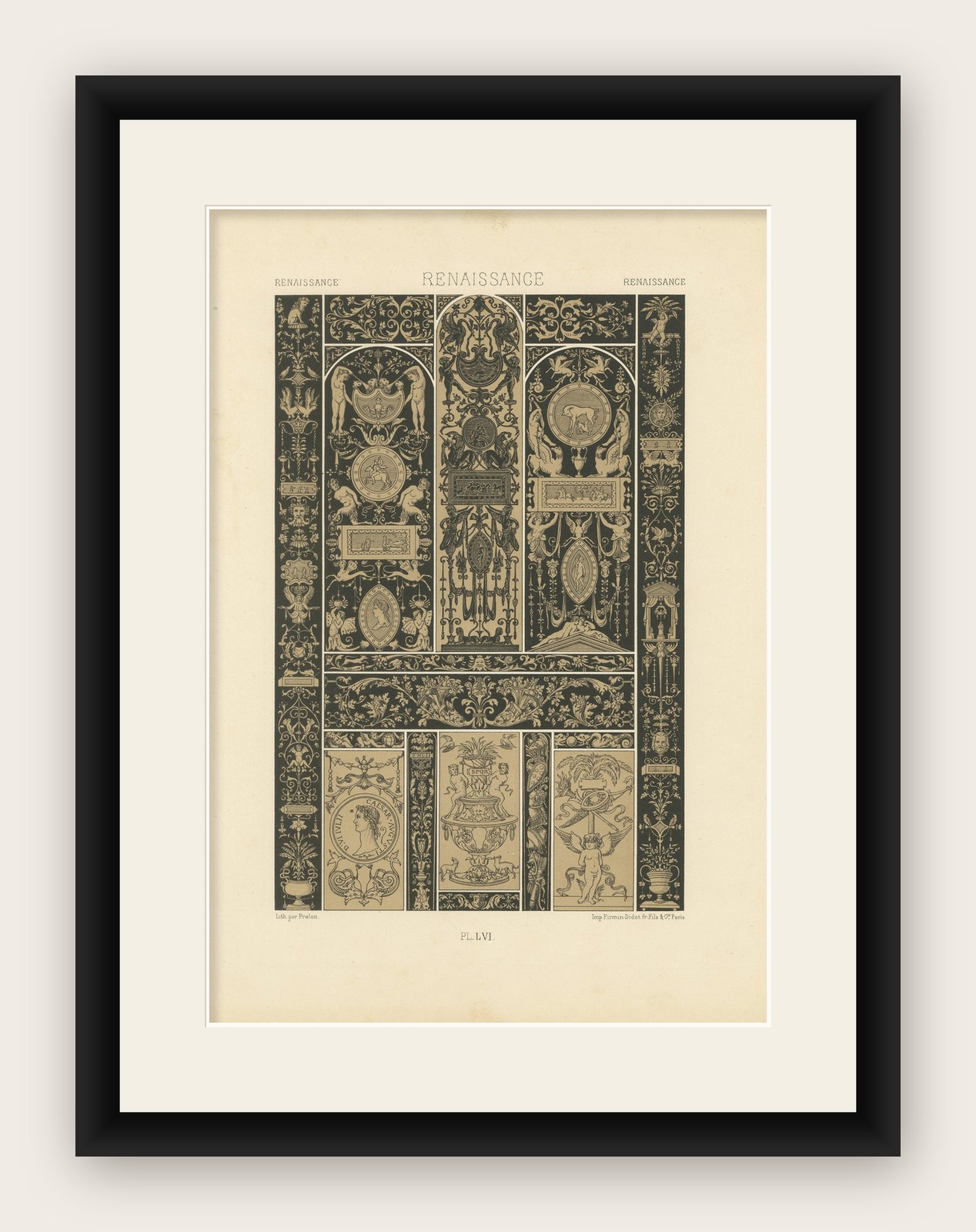
Renaissance Ornament Plate in Grisaille – Classical Scrollwork & Emblems, Pl. LVI
This monochromatic lithograph, Plate LVI from the celebrated series L'Ornement Polychrome (Paris, ca. 1869), features Renaissance ornamentation rendered in the refined grisaille technique—a decorative method using shades of gray and beige to imitate sculpture or bas-relief.
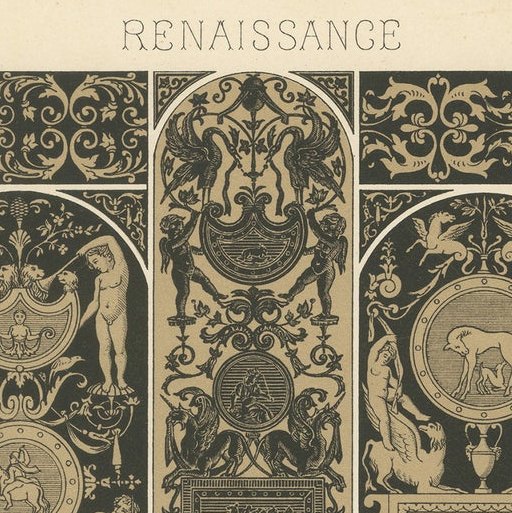
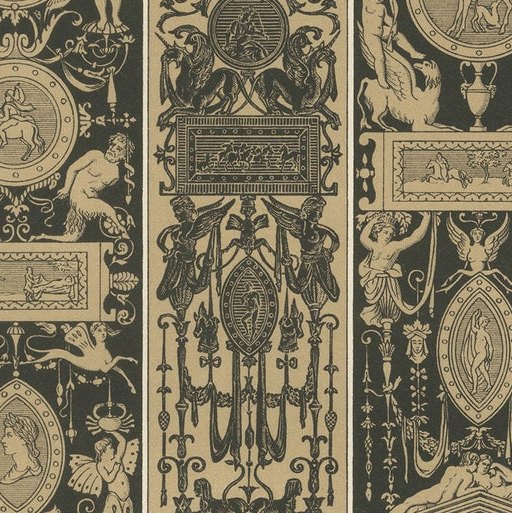
The page is divided into numerous panels displaying richly detailed vertical borders and medallions. The designs feature classical motifs such as urns, garlands, festoons, scrolls, winged putti, and Roman symbols including laurel wreaths, medallions with profile portraits (like CAESAR AVGUST), and inscriptions like “SPQR.” These emblems reflect the Renaissance fascination with ancient Rome and the revival of classical art during the 15th and 16th centuries in Italy.
At the center, tall arched panels show symmetrical grotesque compositions combining lions, winged figures, floral arabesques, mythological beasts, and architectural elements. The visual vocabulary mirrors the highly structured decoration found in frescoes, painted ceilings, and wood carvings of Renaissance palaces and chapels.
This plate was lithographed by Pralon and printed by Firmin-Didot in Paris, two names renowned in the 19th century for their contributions to chromolithography and the dissemination of historic ornament for study and use in applied arts.
Though this print lacks color, its high contrast and classical subject matter give it a sculptural elegance, appealing to collectors of architectural history, classical art, or antique design references.
Framing tips: Consider a wide black or charcoal mat to enhance the grayscale palette, paired with a classic black wooden or silver-gilt frame to echo the refined antique feel.