About this sheet
Monseigneur le Duc d’Aumale, French Belle Époque Satirical Chromolithograph, Album Comique, 1884
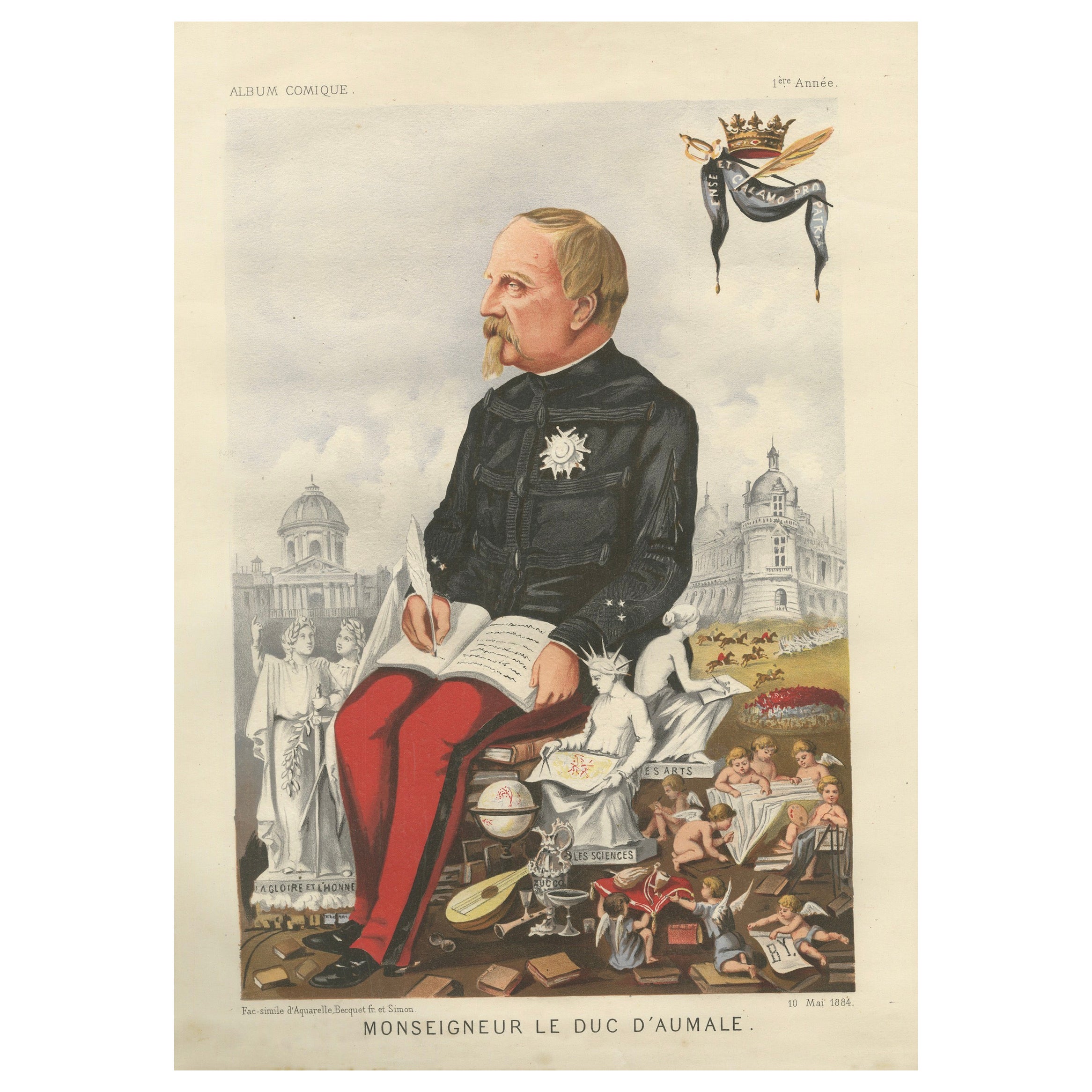
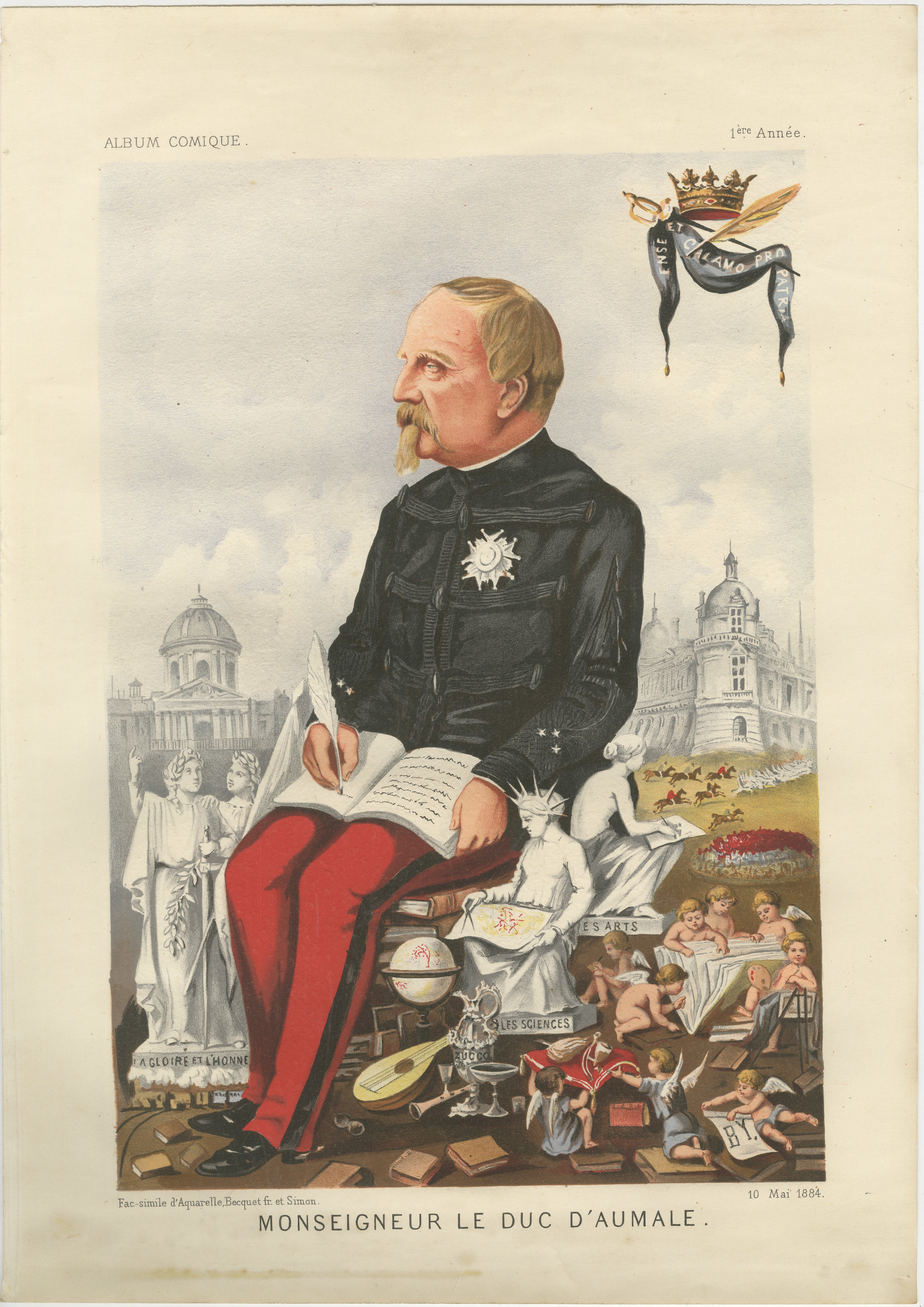
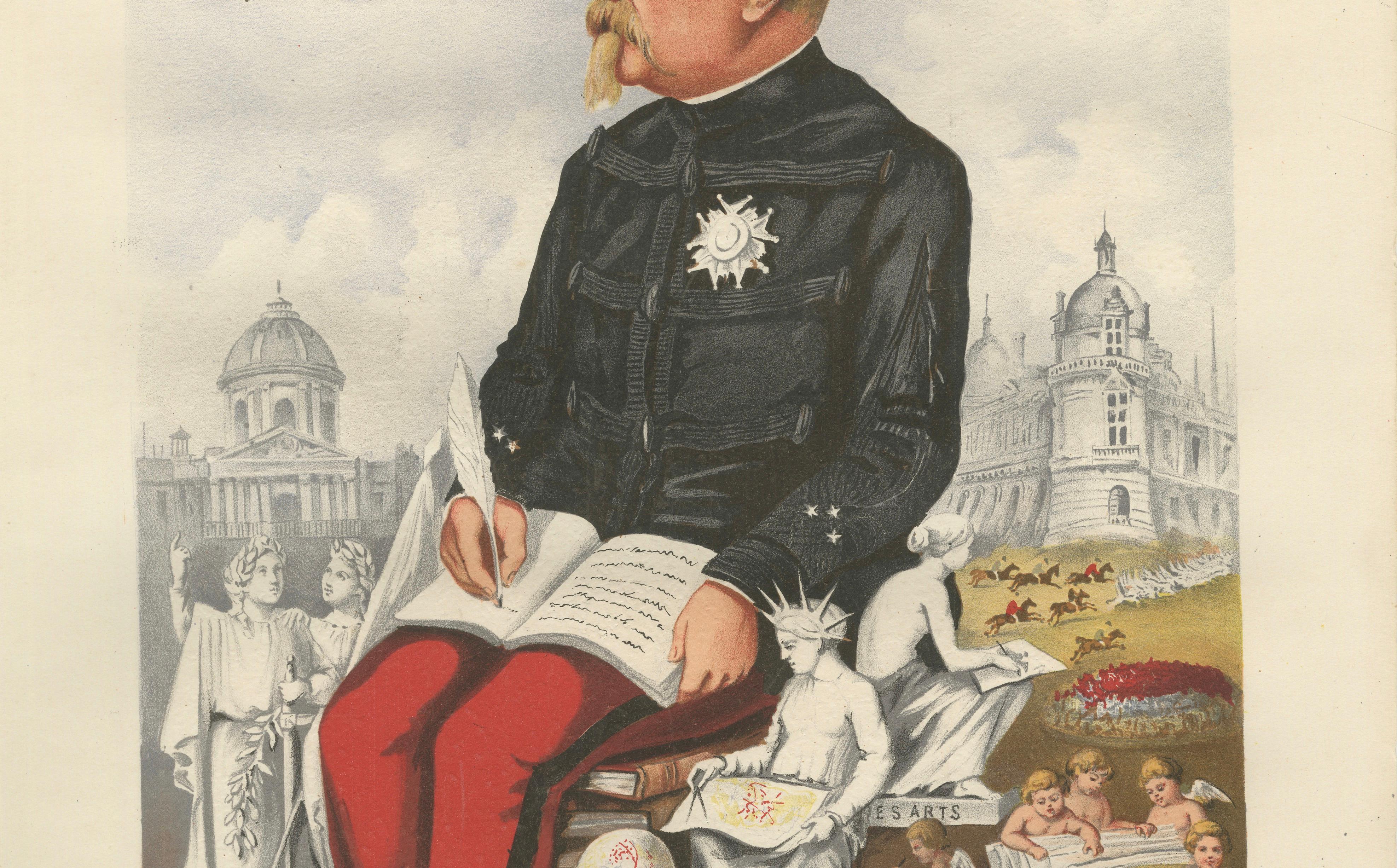
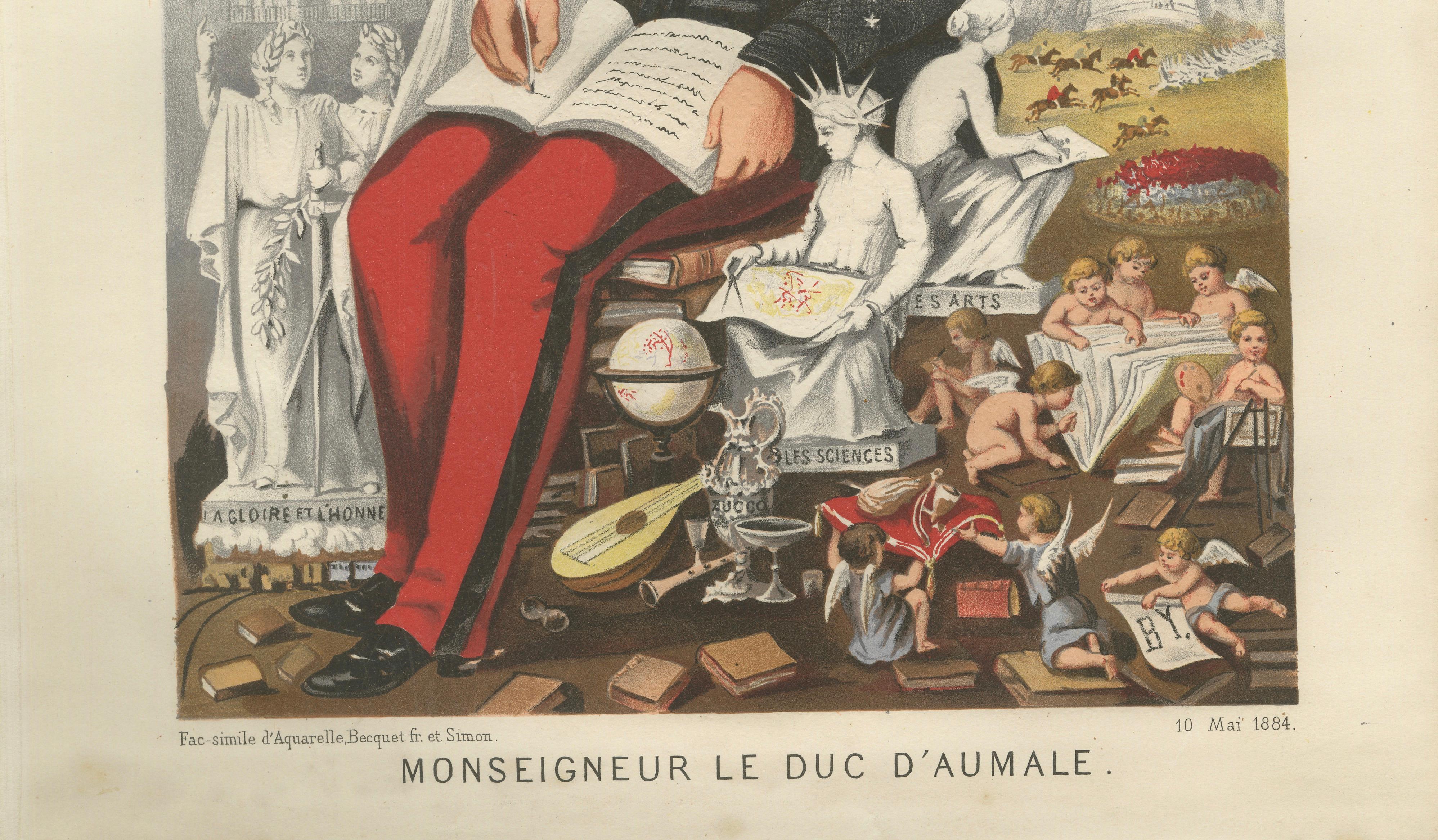
This richly detailed French chromolithograph caricature titled “Monseigneur le Duc d’Aumale” belongs to the illustrated satirical series Album Comique, produced in Paris during the late nineteenth century and attributed to the caricaturist Antoine Bisetsky (1817–1892). Executed as a facsimile after an original watercolor, the print combines refined chromolithographic technique with symbolic imagery reflecting the cultural and intellectual prestige associated with one of France’s notable aristocratic figures.
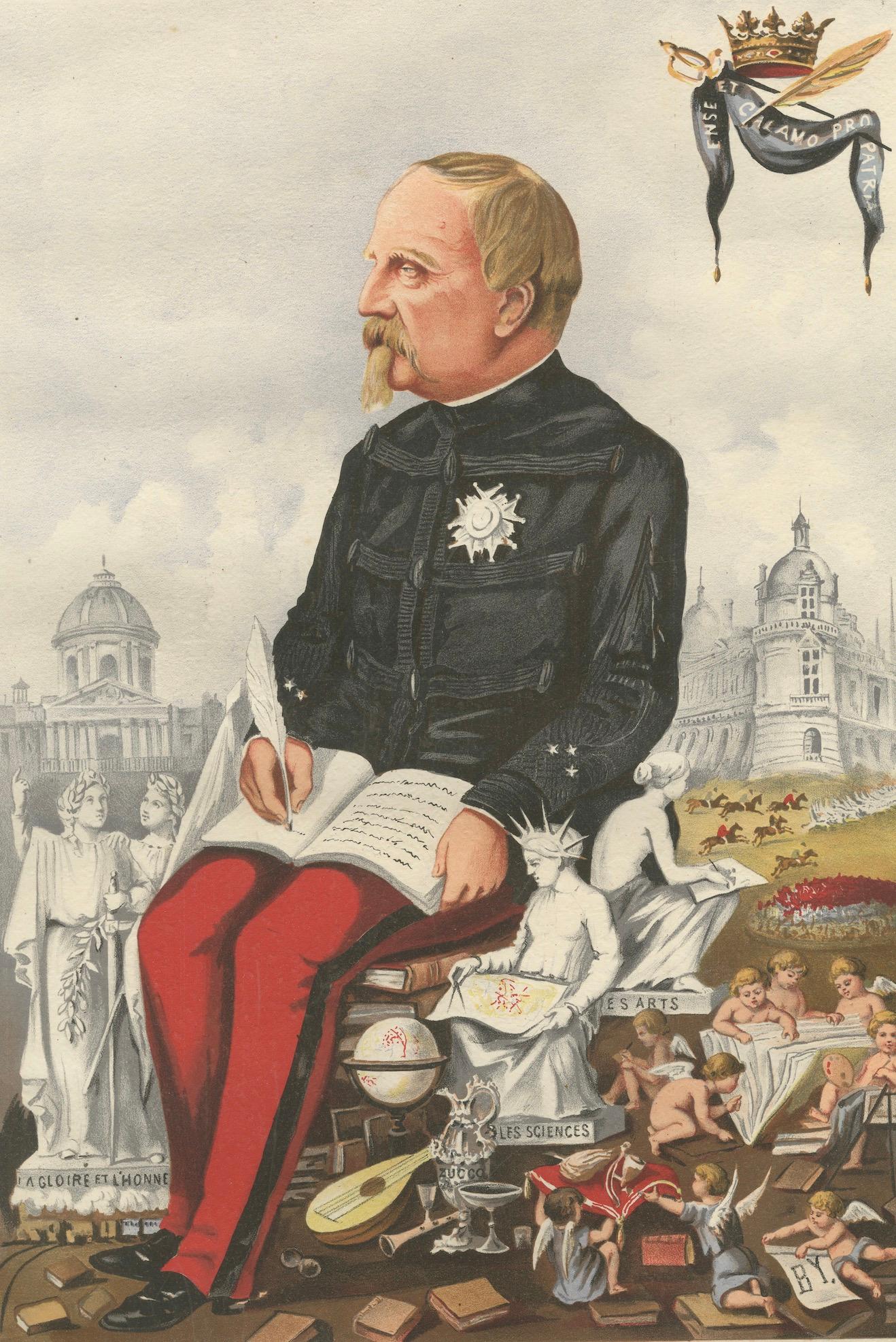
The composition presents the Duc d’Aumale seated in a monumental pose, surrounded by allegorical references to the arts, sciences, and intellectual pursuits. The figure is portrayed writing, emphasizing scholarship and patronage, while classical statues, scientific instruments, books, and cherubic figures populate the foreground. Architectural views in the background reinforce the academic and cultural context, suggesting the role of aristocratic leadership within artistic and intellectual life during the Belle Époque. Unlike the more humorous racing caricatures within the series, this plate carries a stronger symbolic narrative and historical gravitas, blending satire with respectful homage.
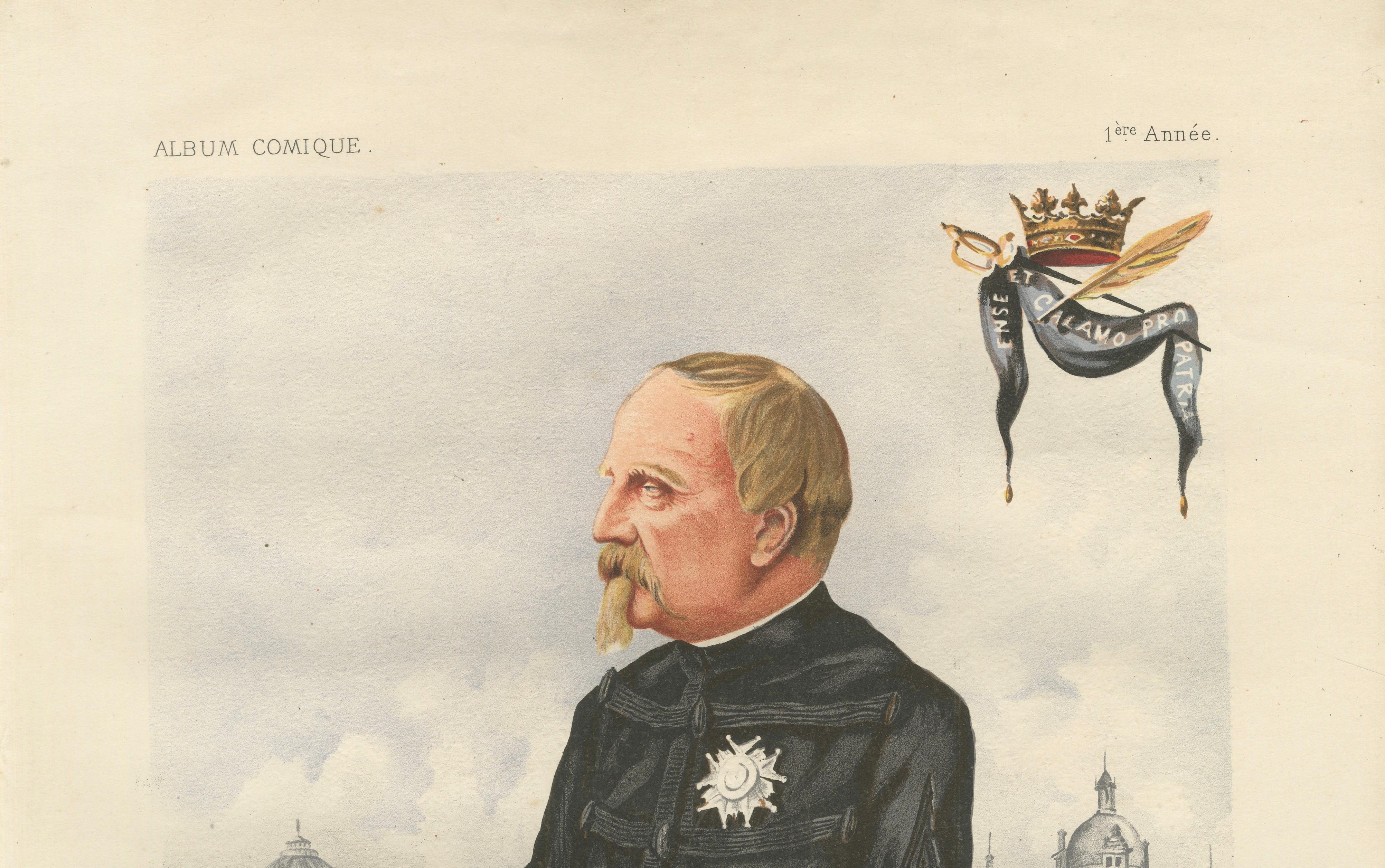
The chromolithograph displays subtle tonal gradation and layered color printing designed to replicate watercolor painting, highlighted by the printed inscription “Fac-similé d’Aquarelle.” Dated “10 Mai 1884” and marked as part of the first year (“1ère Année”) of the Album Comique series, this work reflects the broader ambition of the publication to portray prominent personalities across aristocratic, cultural, and social spheres. Such plates were issued individually and are now appreciated both for their historical relevance and decorative presence.
Decoratively, the composition’s complexity and narrative density give it strong visual impact, making it particularly suitable as a focal piece within a curated grouping of Belle Époque caricatures. The combination of architectural background, allegorical figures, and rich costume detail creates an engaging centerpiece that appeals to collectors interested in historical personalities and nineteenth-century French satire.
Condition report: Age-related foxing and light spotting visible primarily within margins, with mild overall toning consistent with nineteenth-century paper. Colors remain strong and well preserved. Minor handling wear commensurate with age.
Framing tips: A dark walnut or ebonized frame with a generous ivory mat enhances the classical character and balances the visual density of the composition. Suggested mat width approximately 6–8 cm (2.5–3 inches). Museum glass recommended.
Technique: Chromolithograph (facsimile of watercolor)
Maker: Antoine Bisetsky, France, dated 1884
Keywords (50): French caricature, Belle Époque satire, Album Comique, Antoine Bisetsky, Duc d’Aumale, aristocratic portrait, chromolithograph, nineteenth century lithograph, French historical figure, satirical portrait France, Belle Époque artwork, intellectual caricature, allegorical print, French illustration, antique chromolithograph, collectible caricature, decorative antique print, French society portrait, historical satire, Parisian illustration, nineteenth century French art, academic allegory, arts and sciences imagery, aristocratic caricature, French noble portrait, collectible lithograph, decorative wall art vintage, French cultural history, Belle Époque print, antique humorous illustration, European caricature art, antique portrait caricature, historical illustration France, luxury decorative print, collectible Belle Époque print, vintage French art, classical allegory print, antique satirical portrait, illustrated satire France, nineteenth century collectible, gallery wall print, interior design art, historical decorative print, academic themed artwork, Paris printmaker, antique intellectual portrait, vintage European caricature, decorative museum style print, nineteenth century satire.