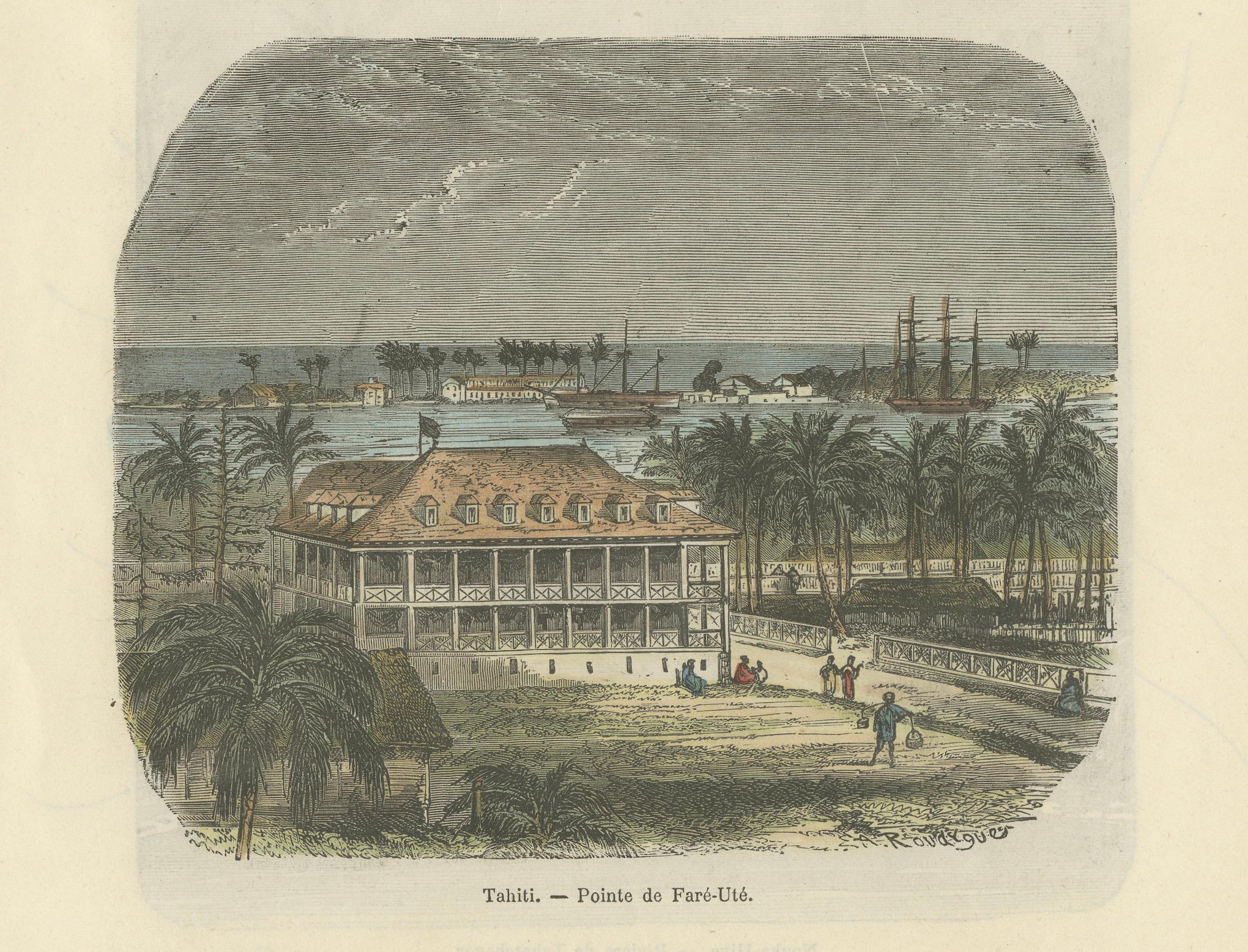
Pointe de Faré-Uté, Tahiti: Hand-Colored 19th Century Engraving
€ 70
One of a kind: this is the sheet in the photographs. Ships from Langweer, the Netherlands.
Sheet size
15.5 × 18.5 cm (6.1 × 7.3 in)
Reference
BG-13093-14
Condition
good, given age. Some creasing and general age-related toning and/or occasional minor defects from handling. Remains of tape on the reverse. Please study scan carefully.
About this sheet
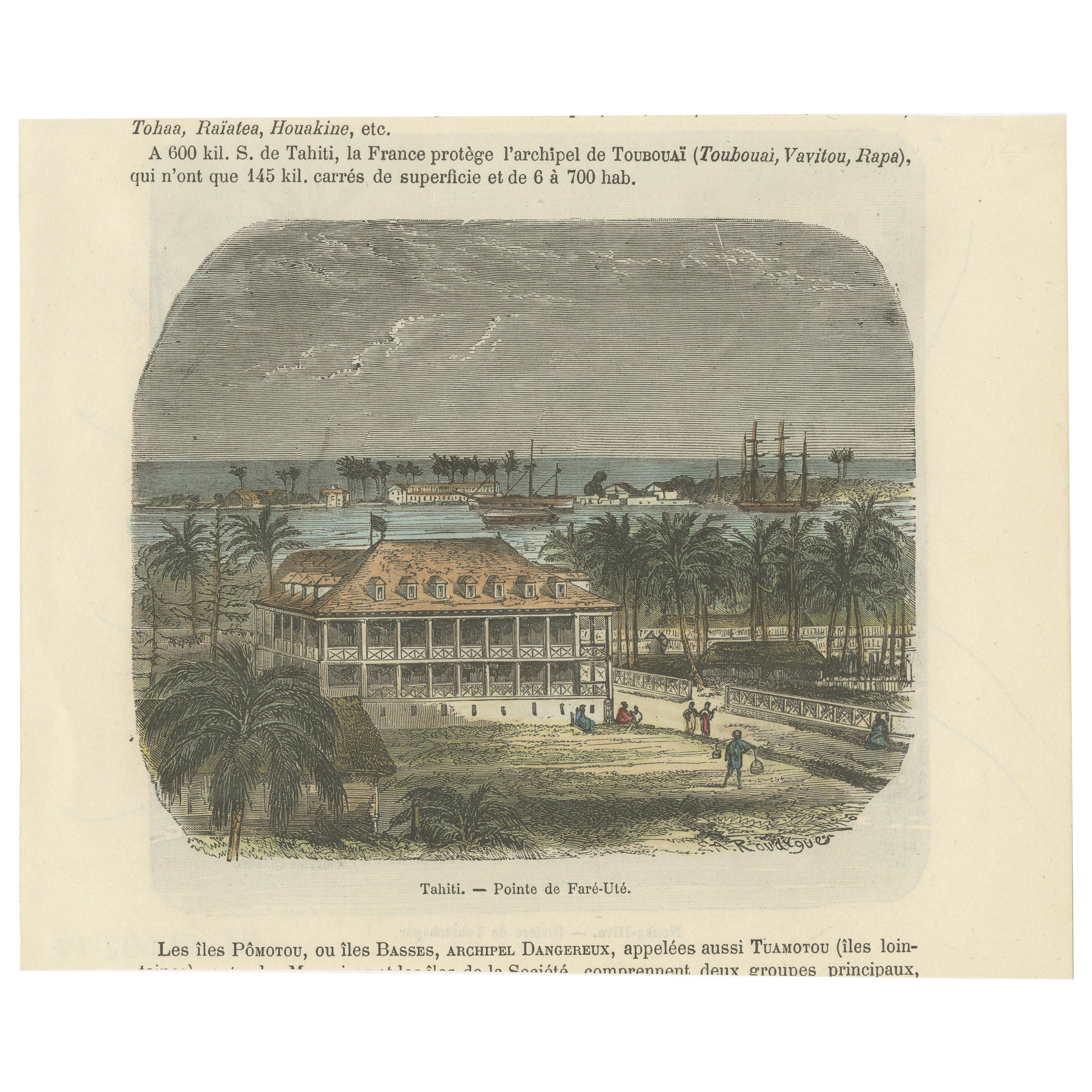
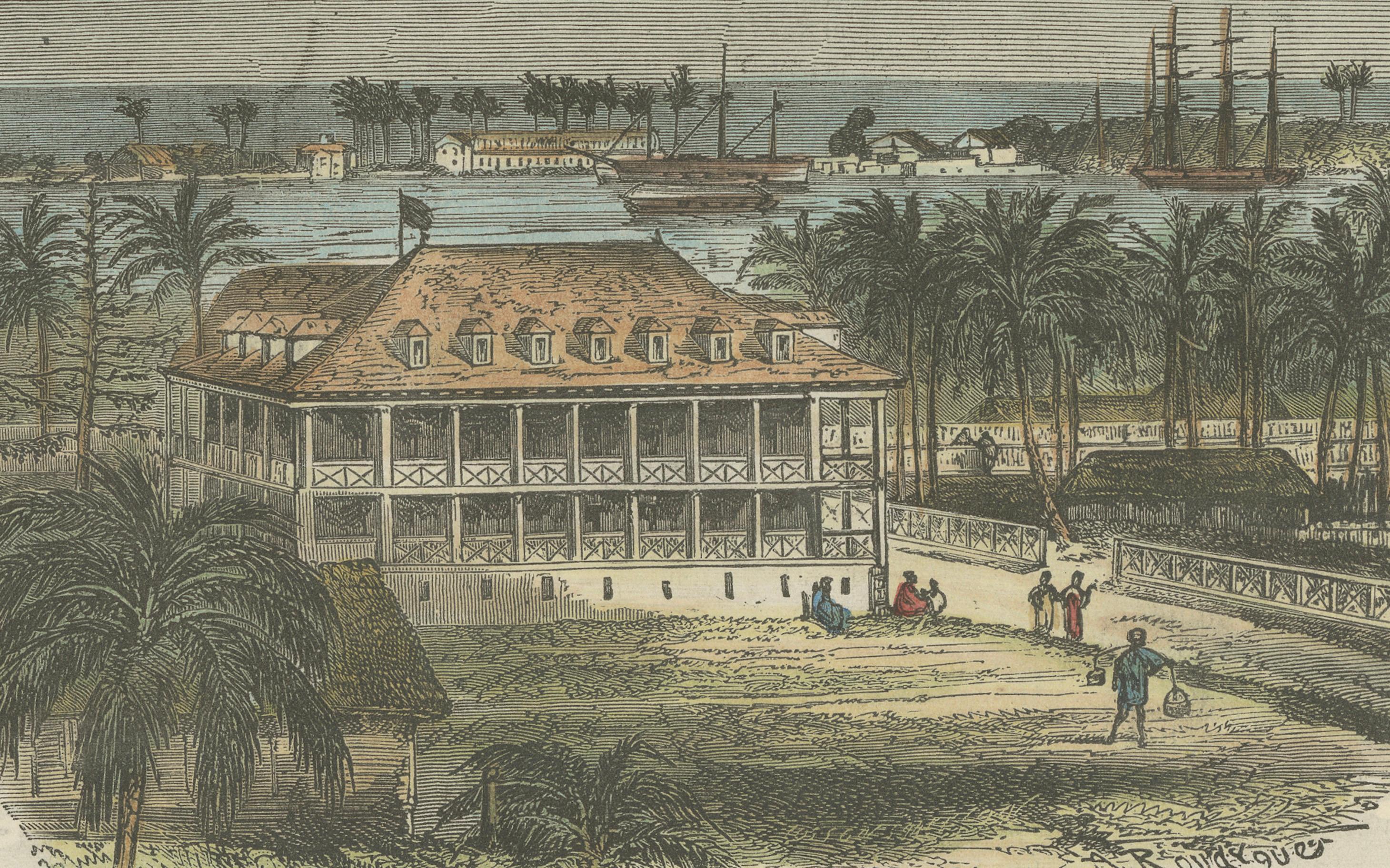
This hand-colored woodcut engraving titled "Tahiti — Pointe de Faré-Uté" is from "La France Illustrée" by V.-A. Malte-Brun. It depicts a scene at the Pointe de Faré-Uté in Tahiti, with the landscape and structures of this French Polynesian island vividly illustrated.
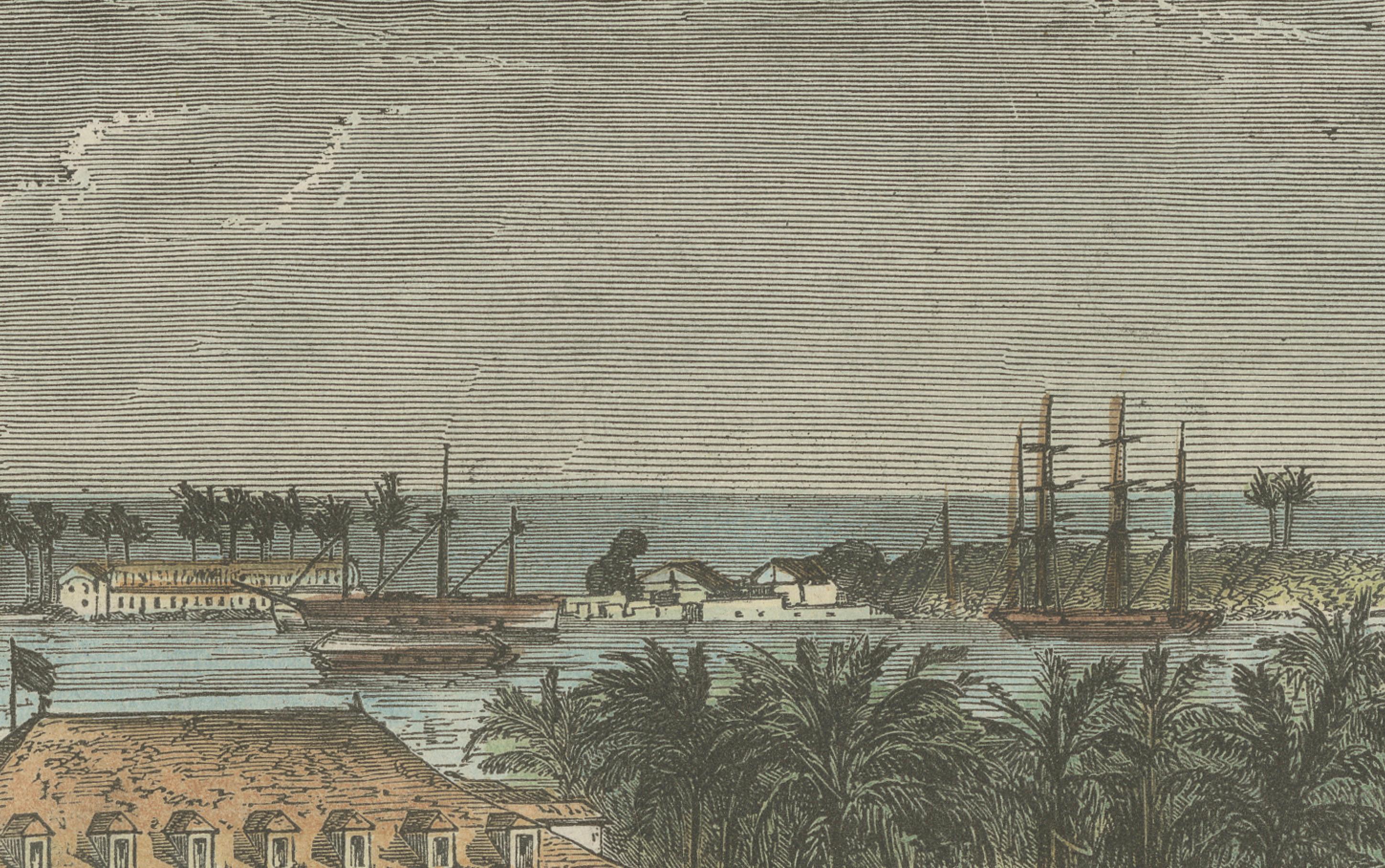
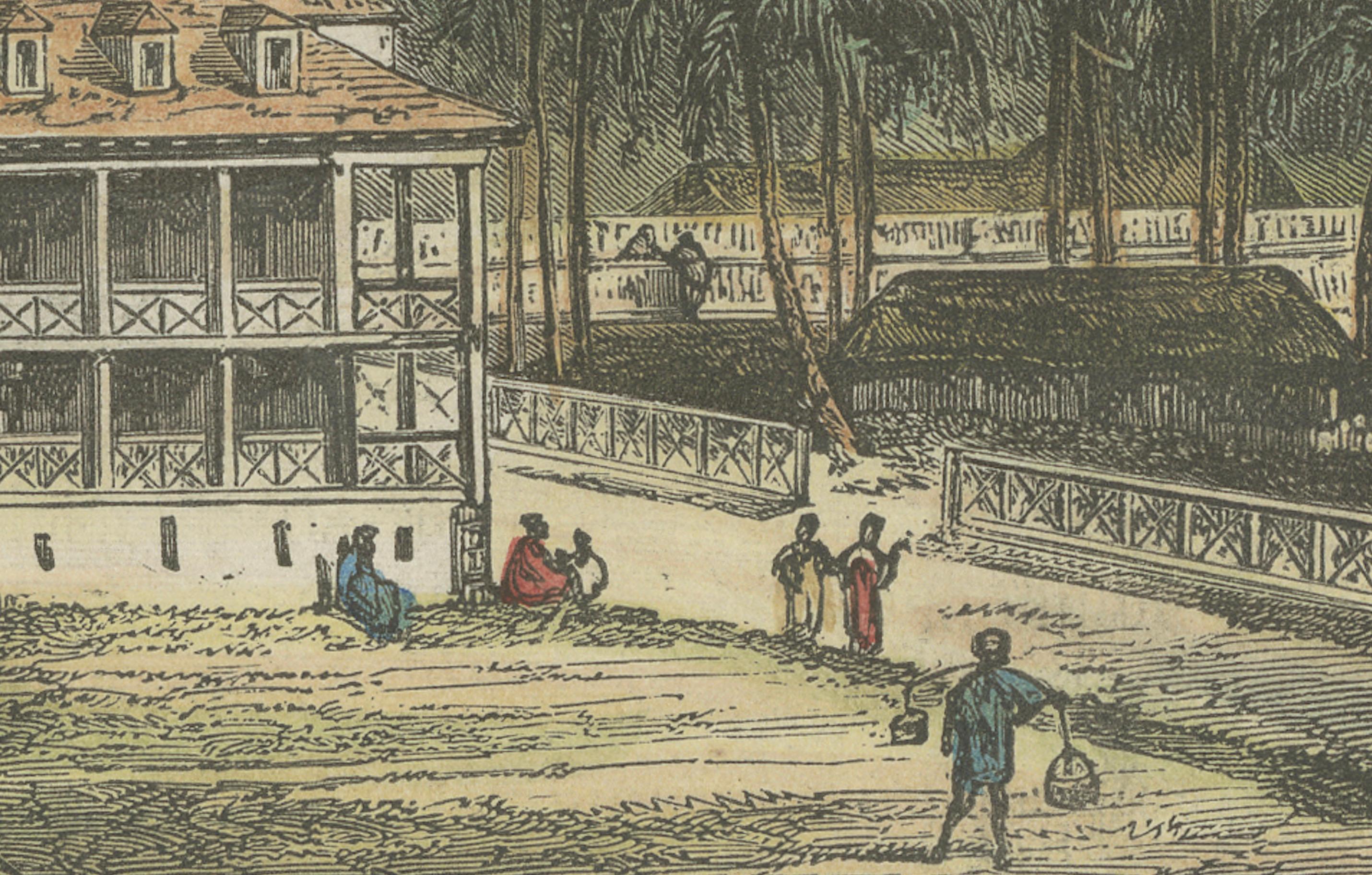
Visual Description: - The central structure is a large colonial-style building, likely a French administrative or residential building, which showcases the typical architecture of the time with a multi-story design and a large veranda. - The scene is framed by tropical palm trees and other lush vegetation, reflecting the tropical environment of Tahiti. - In the background, ships are anchored in the harbor, indicating the island’s role in maritime trade and its importance as a colonial outpost. - The engraving features several people walking in front of the building, adding a sense of daily life and activity. - The distant coastline and islands can be seen on the horizon, enhancing the scenic beauty of the location.
Artistic Elements: - The hand coloring is applied with care, using soft tones to highlight the building, trees, and ships, bringing the landscape to life. - The detailed linework characteristic of woodcut engravings allows for intricate textures, especially in the building's architecture and the foliage.
Historical and Geographic Context: - Pointe de Faré-Uté was likely a key location for French colonial administration in Tahiti during the late 19th century. - This illustration is part of a broader depiction of French colonies in Oceania**, specifically showing Tahiti and its surrounding islands, including the nearby Tubuai archipelago mentioned in the text above the engraving. - The inclusion of ships and port facilities suggests Tahiti’s strategic importance as a hub for naval and trade activity in the Pacific during French colonial rule.