About this sheet
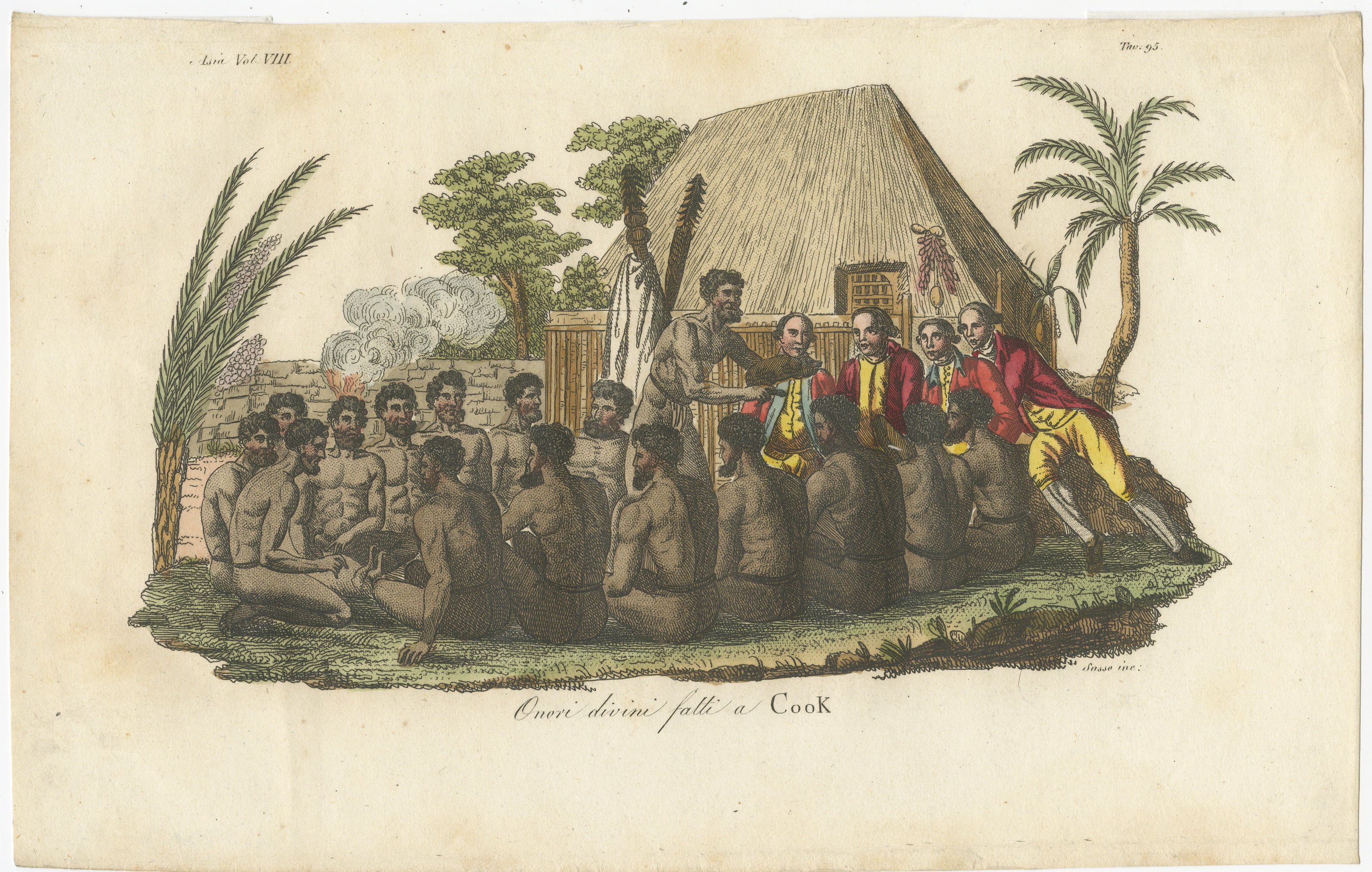
Antique Print “Onori divini fatti a Cook” – Captain James Cook Honored, c.1820
Description
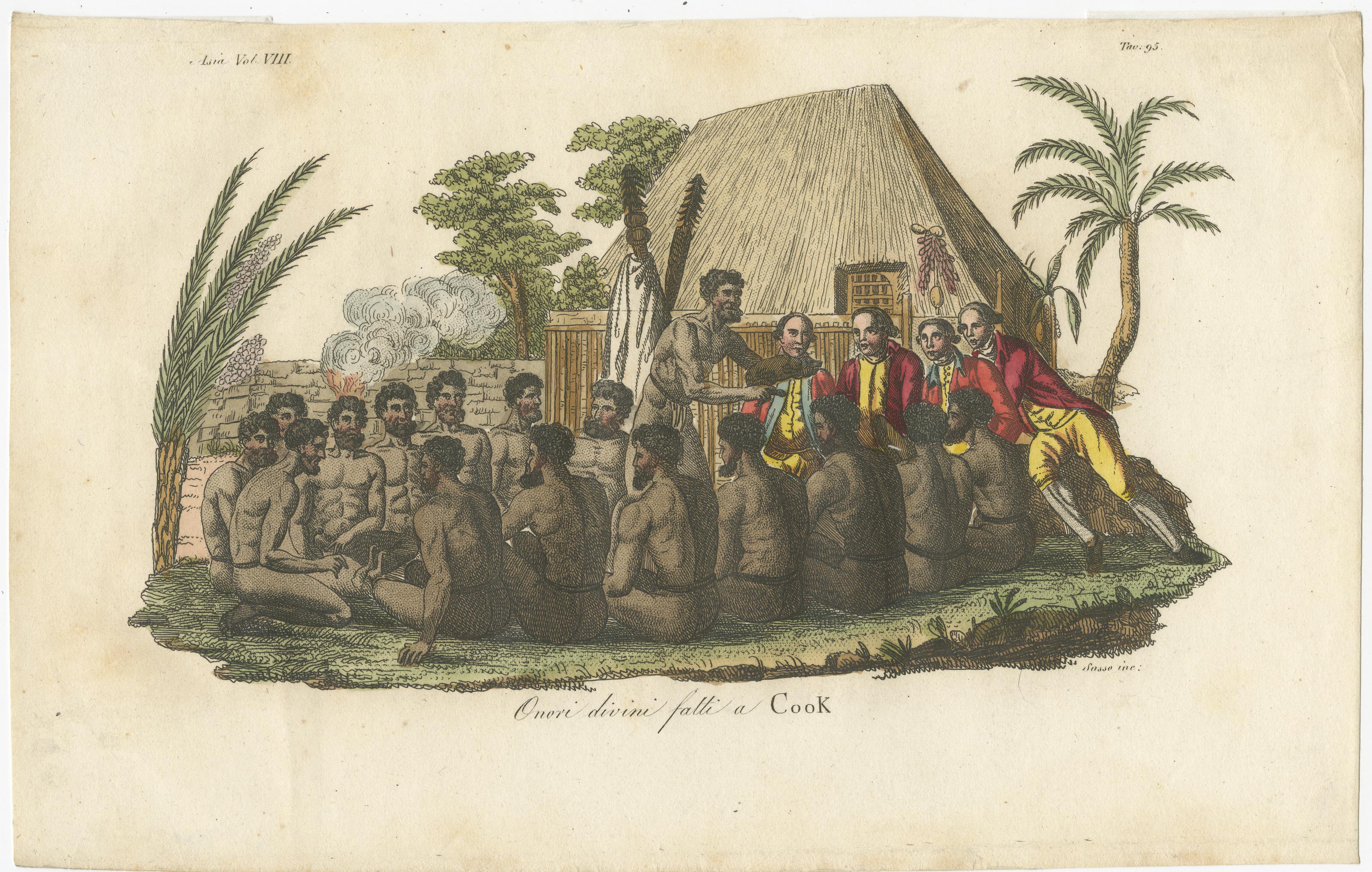
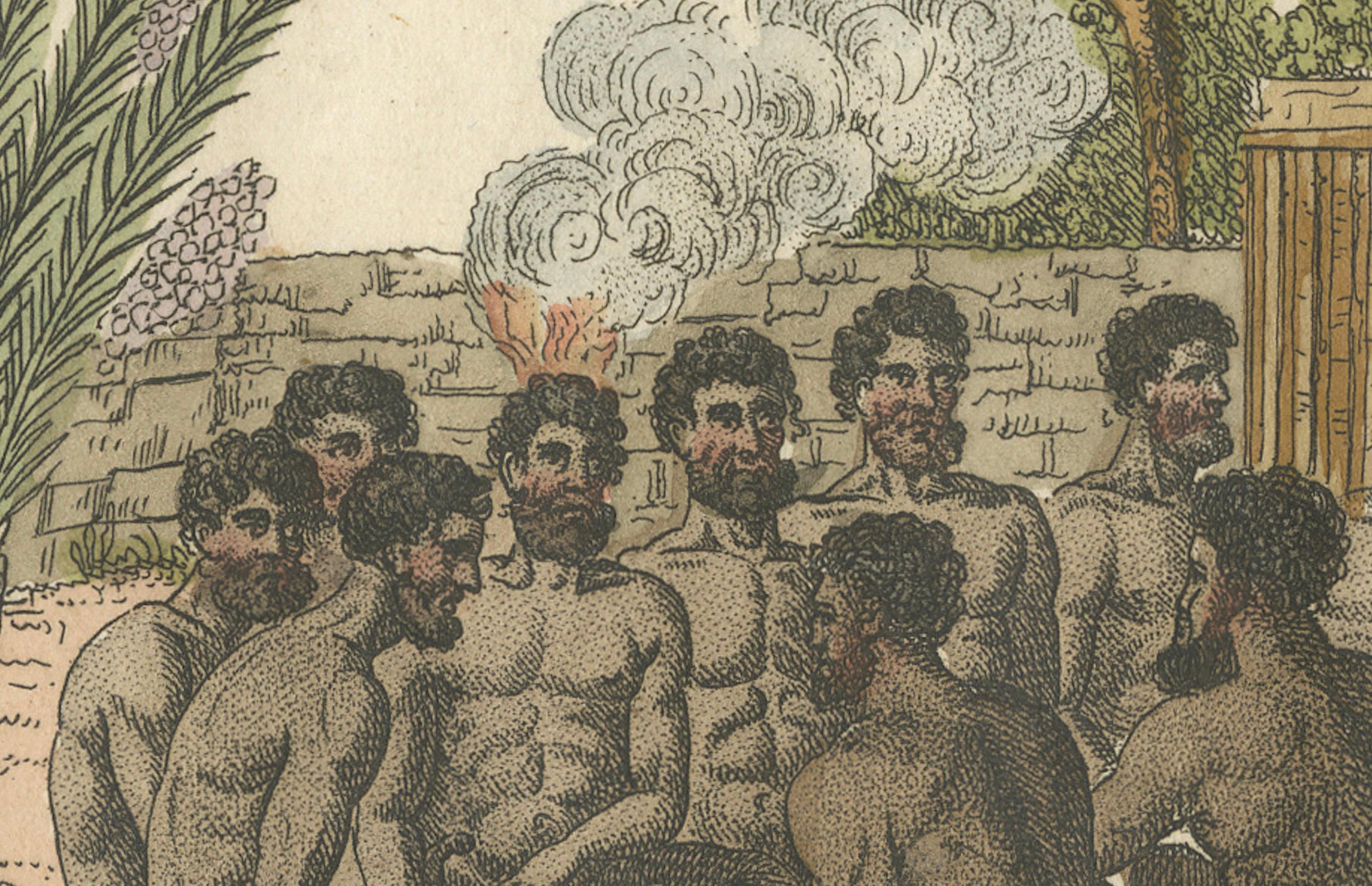
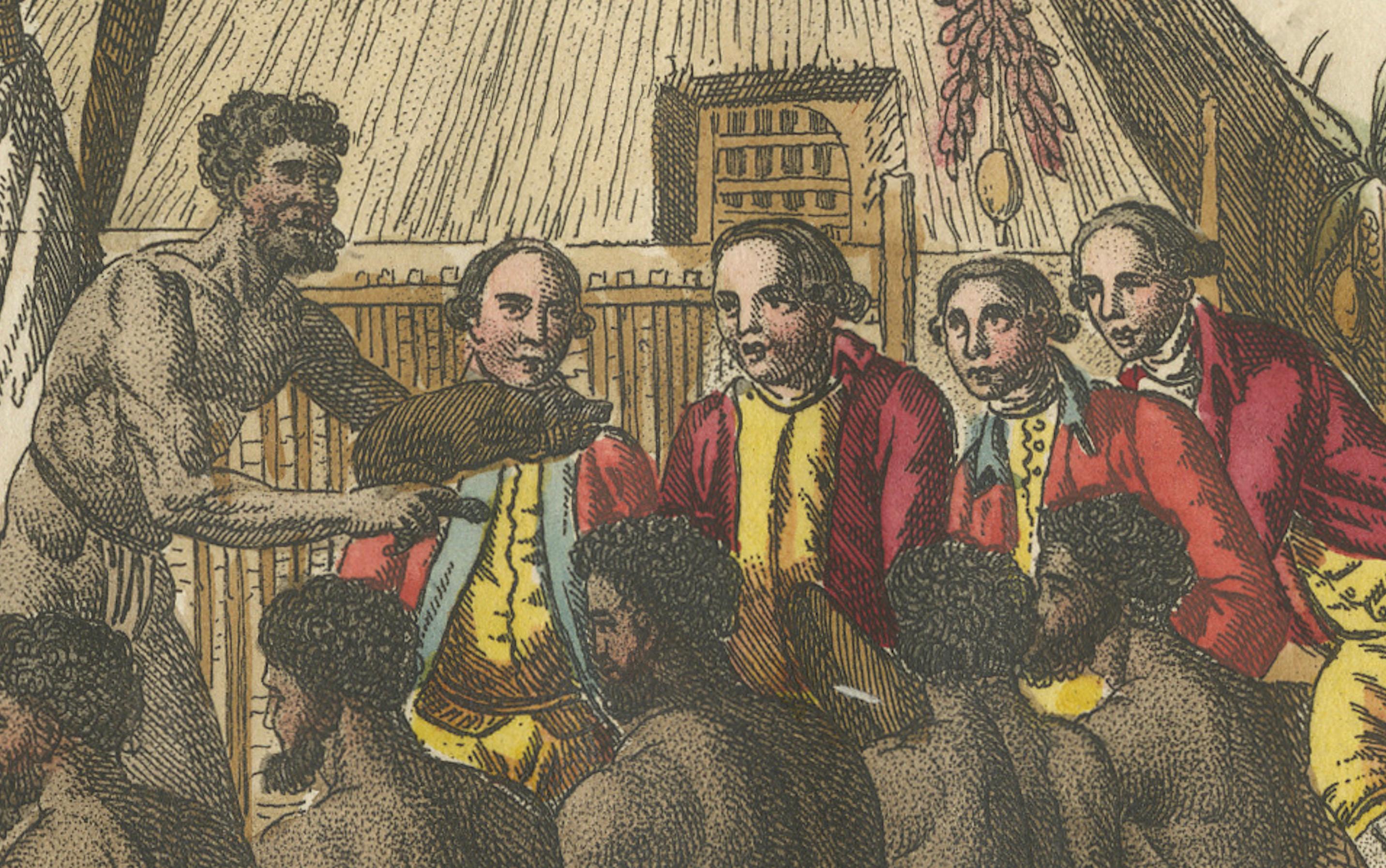
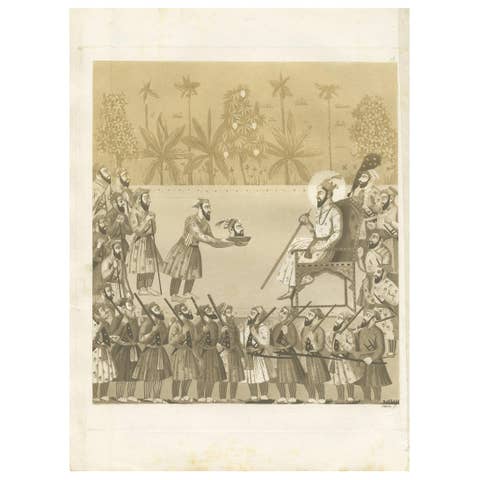
Antique hand-colored engraving titled “Onori divini fatti a Cook,” translating as “Divine honors given to Cook.” The print depicts a ceremonial scene in the Pacific in which James Cook is shown receiving ritual honors from an indigenous community during one of his voyages. The composition reflects early nineteenth-century European interpretations of cross-cultural encounters in Polynesia and the wider Pacific.
At the center of the scene, Cook and several members of his crew are shown wearing European naval and military-style dress, seated before a group of indigenous men arranged in a semicircle. The indigenous figures, portrayed bare-chested and muscular, appear engaged in a formal ritual or ceremonial gathering. One figure approaches Cook in a gesture that suggests reverence or presentation, reinforcing the idea—common in contemporary European narratives—that Cook was at times perceived as a divine or supernatural figure.
The background includes a large thatched structure, palm trees, and rising smoke, elements that enhance the ceremonial atmosphere and situate the event within a tropical island setting. The careful hand coloring adds visual richness and reflects the period’s taste for vivid, dramatic representations of exploration and encounter. Such images were intended to communicate both ethnographic curiosity and the perceived grandeur of European discovery to a European audience.
This print was engraved by Sasso and published around 1820. It belongs to a tradition of illustrated voyage literature and historical imagery that sought to memorialize the achievements of Cook while framing indigenous cultures through a European lens. Prints of this subject are historically important as visual documents of how early encounters in the Pacific were imagined, interpreted, and circulated in Europe during the early nineteenth century.
A striking and historically resonant print, appealing to collectors of Captain Cook material, Pacific exploration, and early ethnographic imagery, as well as to interior designers seeking a dramatic and narrative historical scene.
Condition
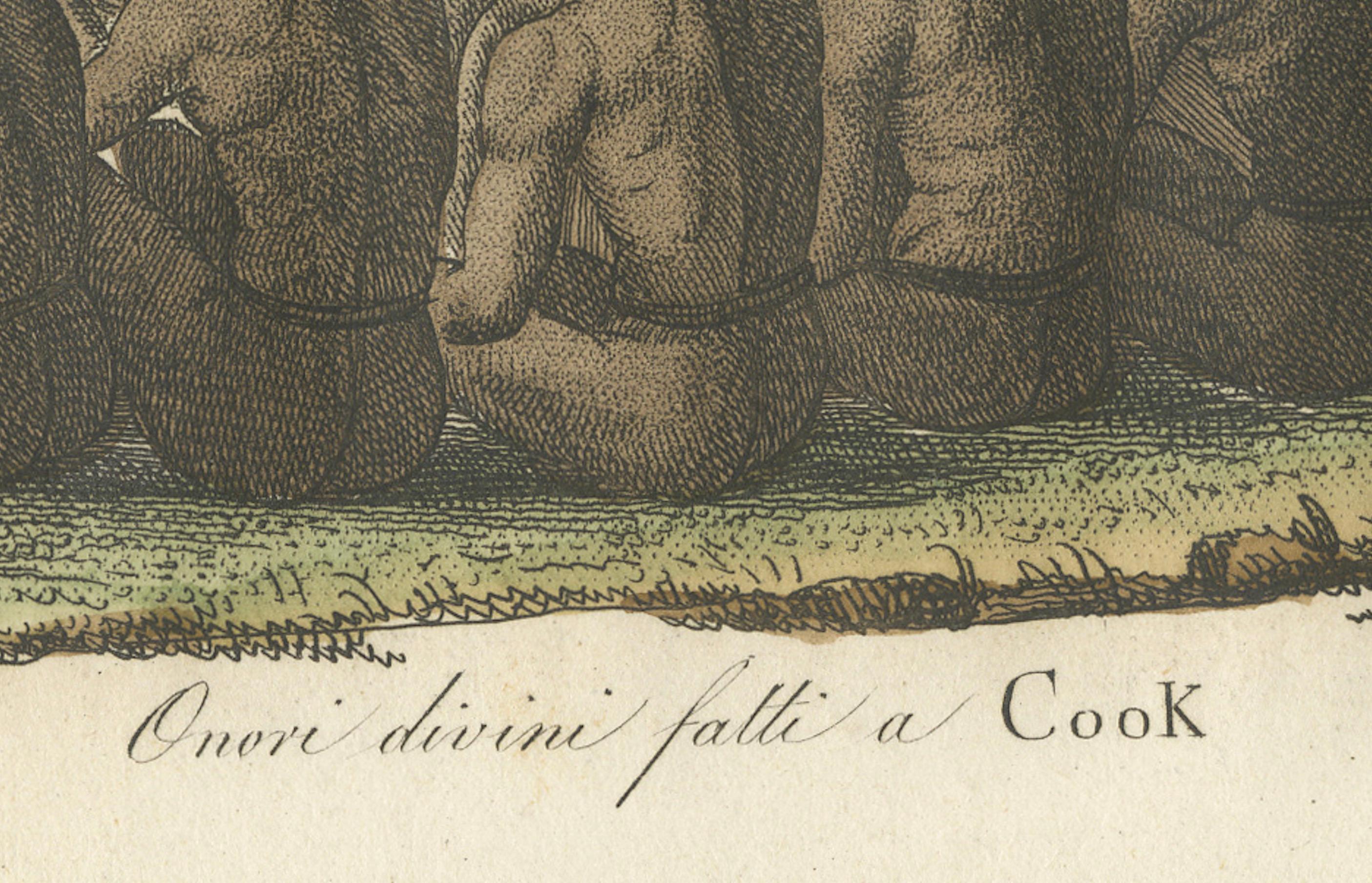
Good original condition with light age-related toning and minor surface wear consistent with early nineteenth-century hand-colored engravings.
Framing tips
This print presents particularly well in a dark walnut or ebonized frame with a wide ivory or warm off-white mat, allowing the colors and central ceremonial scene to stand out. Museum glass is recommended to protect the hand coloring and fine engraved lines.
Technique: Hand-colored engraving
Maker: Engraved by Sasso, Europe, circa 1820