About this sheet
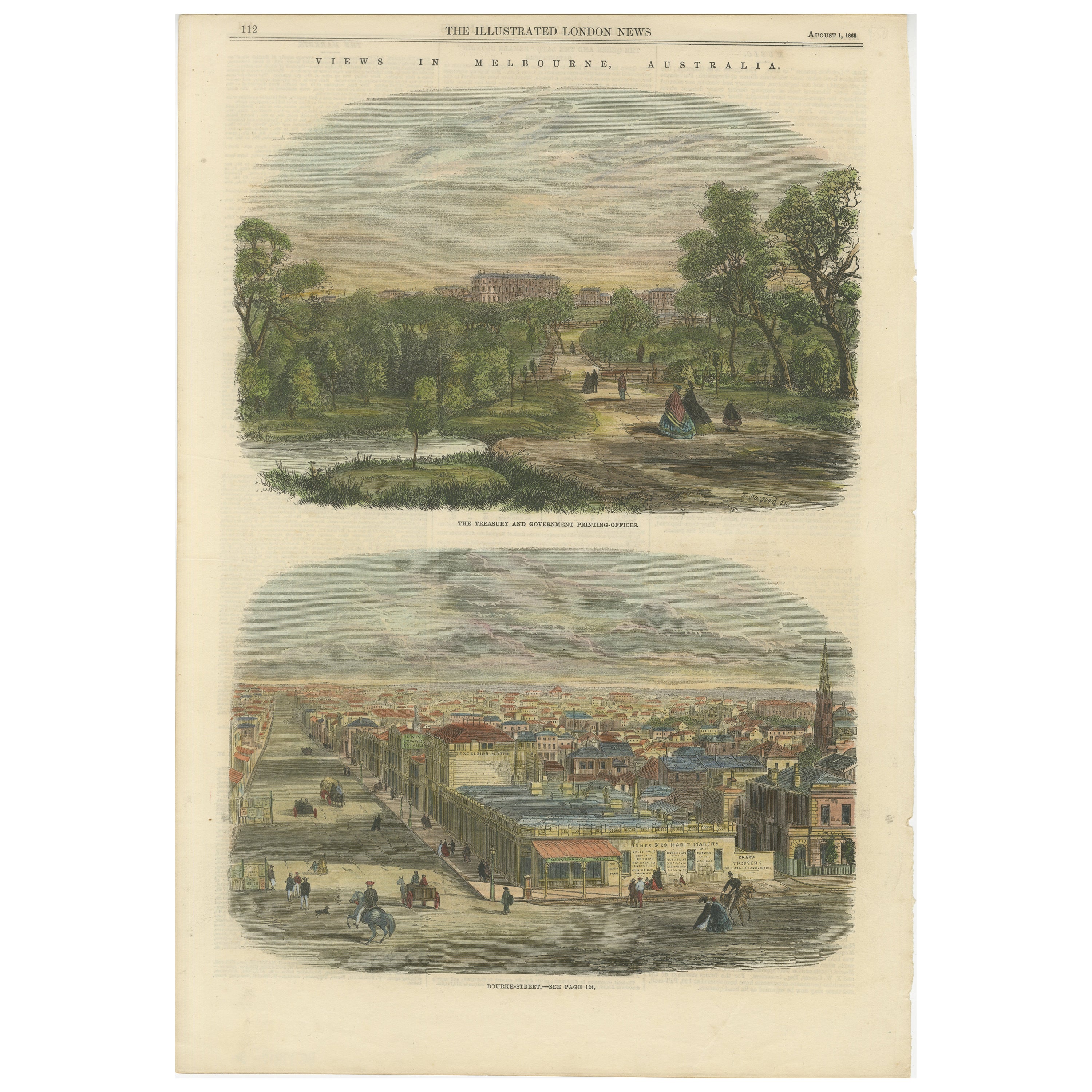
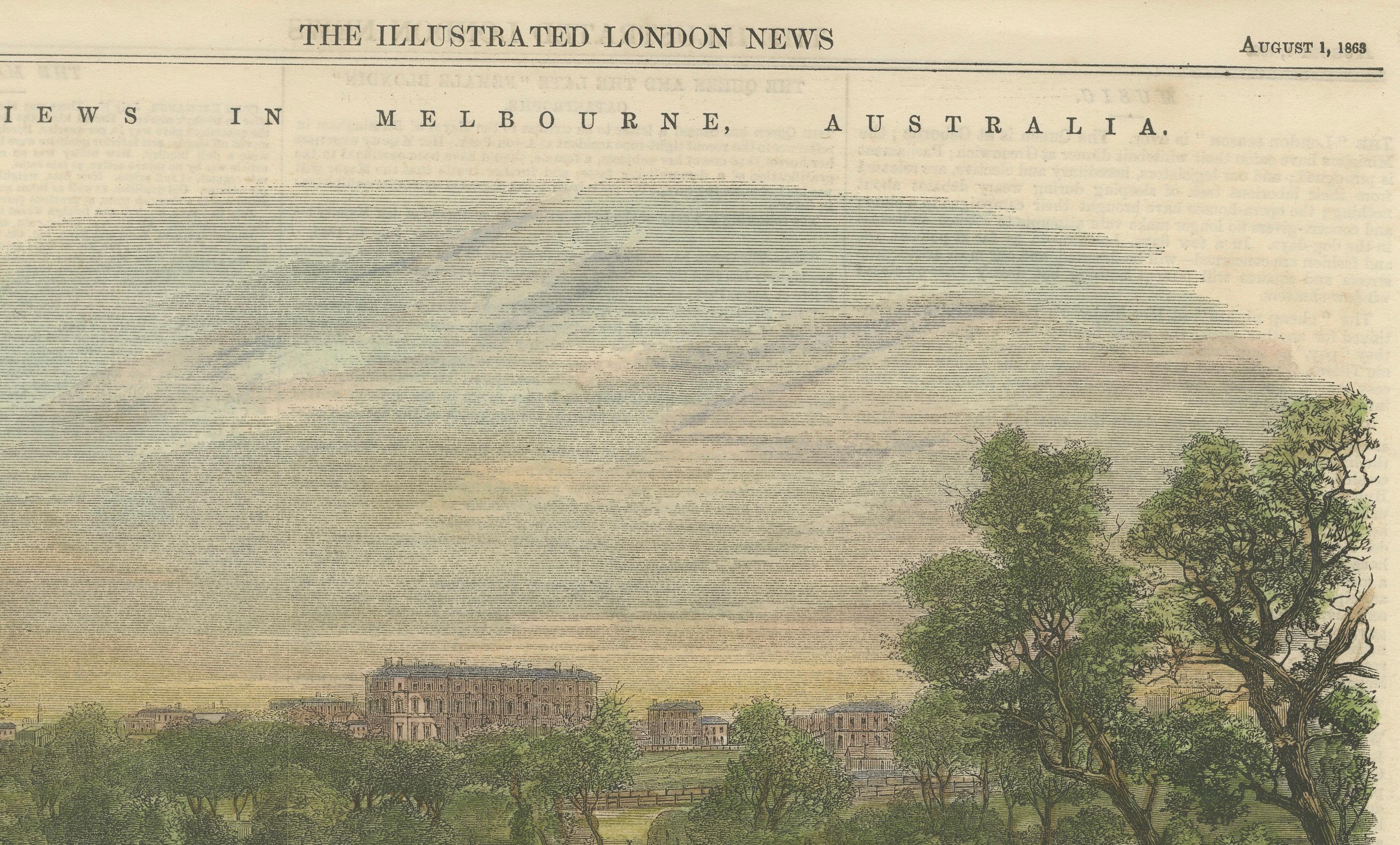
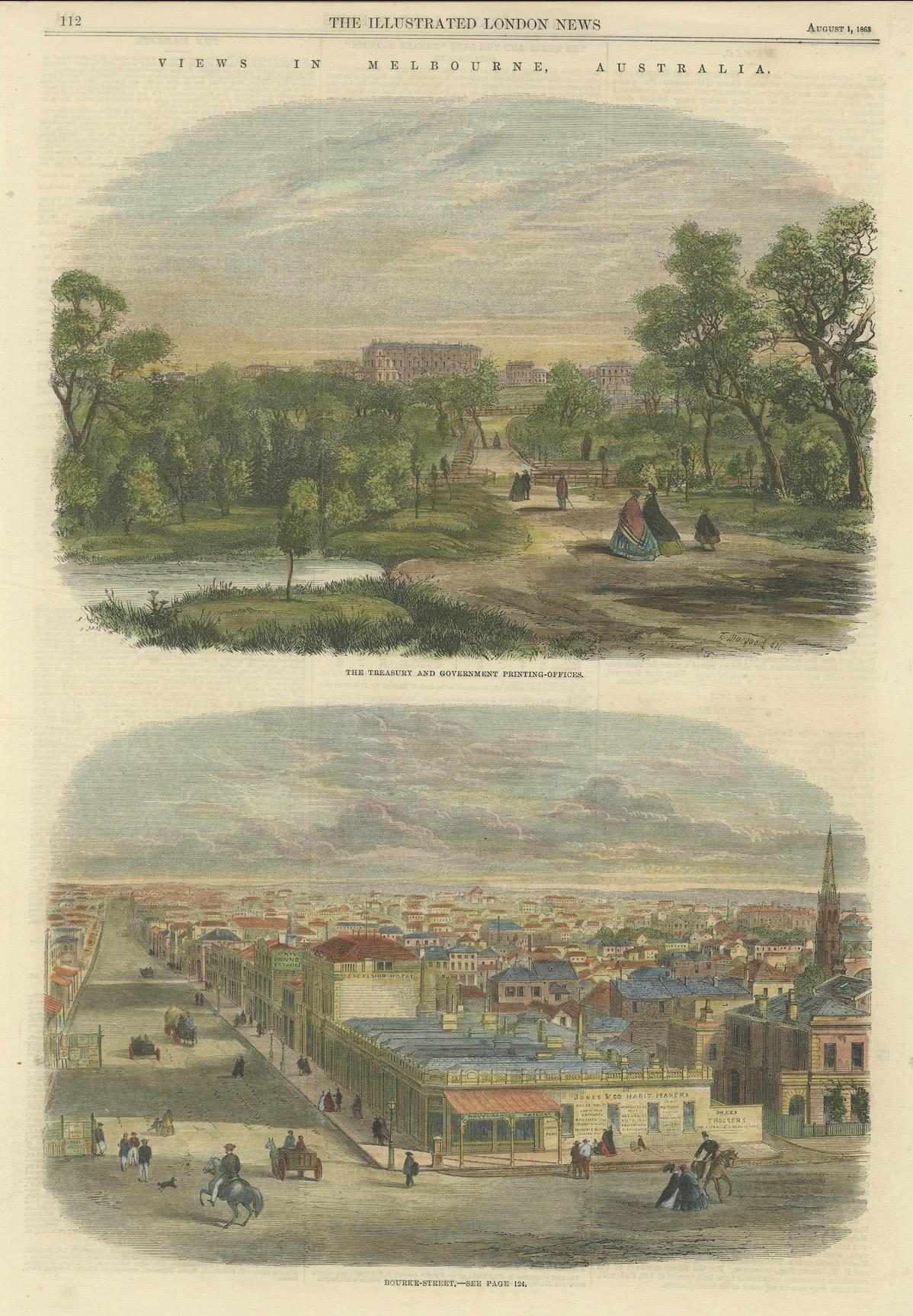
This page is from "The Illustrated London News," dated August 1, 1863, and features two hand-colored engravings of views in Melbourne, Australia.
Medium: Wood engraving. on wove (vellin) paper.
1. Top Illustration: "The Treasury and Government Printing-Office"
- The upper image shows a serene and picturesque park landscape with people leisurely walking along paths. In the background, a large, stately building, identified as the Treasury and Government Printing-Office, is visible beyond the trees. The setting is peaceful, with lush greenery, trees, and a small body of water in the foreground. The sky is slightly overcast, adding a gentle tone to the overall scene.
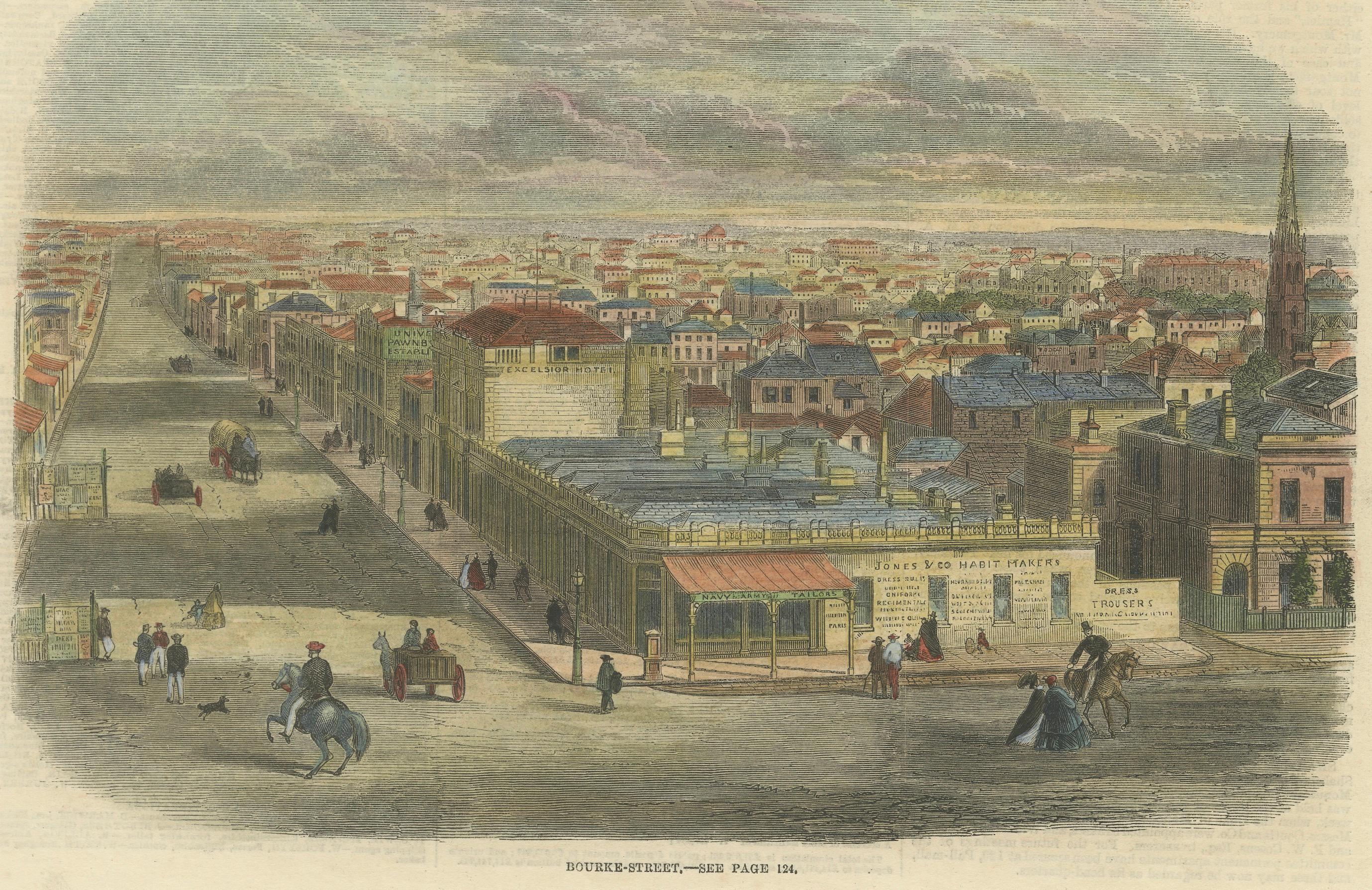
2. Bottom Illustration: "Bourke-Street"
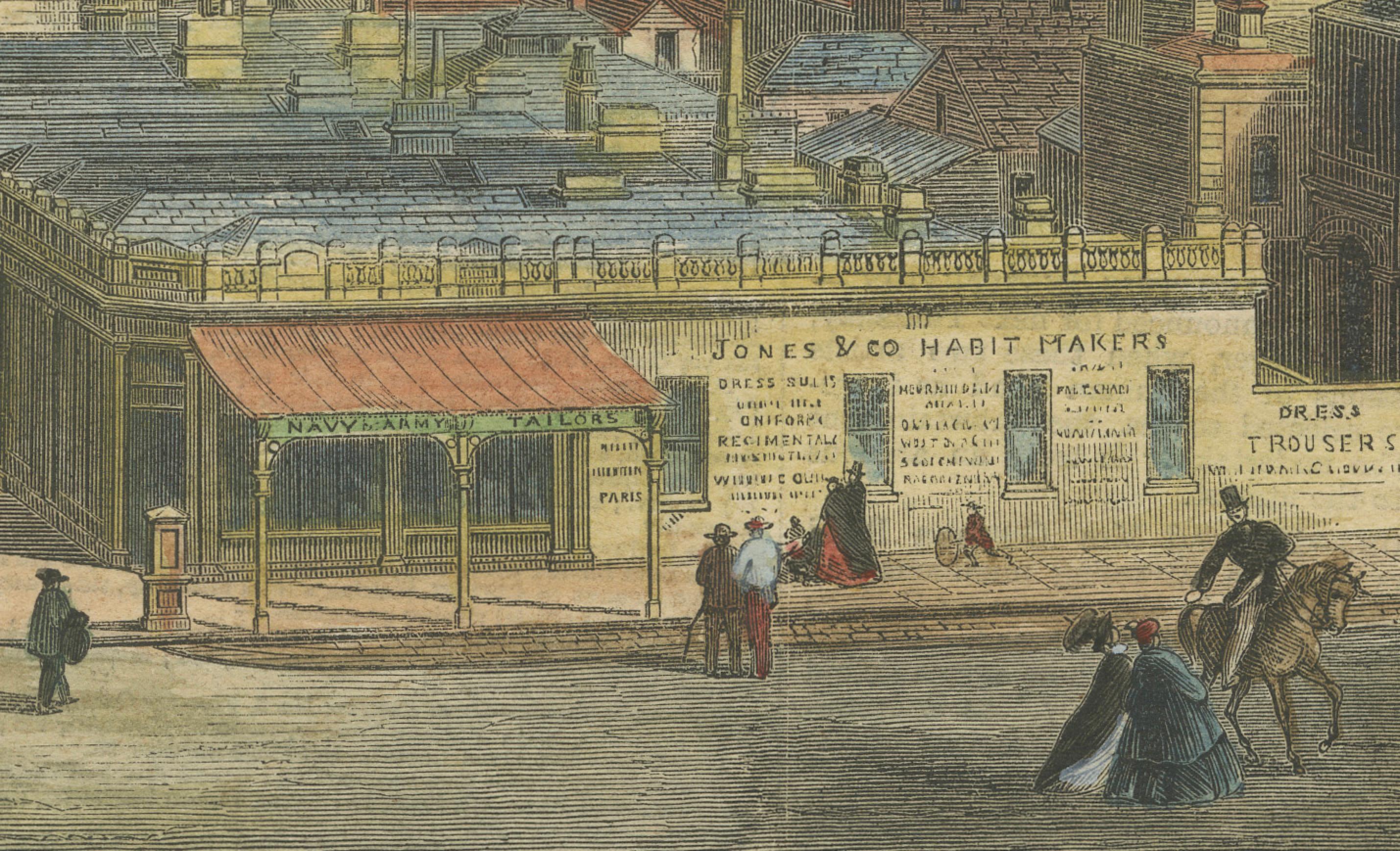
- The lower image provides a view of Bourke Street, one of Melbourne's main streets. It depicts a busy urban environment with rows of buildings lining the street, including shops and market stalls. Various people are seen walking along the sidewalks, riding horses, and engaging in daily activities. The architecture is a mix of styles, reflecting the development and prosperity of the city at that time. The perspective shows a vast expanse of the city, with a detailed skyline that includes several prominent buildings, churches, and other structures. The scene captures the bustling atmosphere of Melbourne in the 1860s.
In the 1860s, Melbourne was experiencing rapid growth due to the Victorian gold rush. By 1861, the population of Melbourne was approximately 125,000 people. The city's population continued to expand throughout the decade as it became one of the largest and most important cities in Australia.
The page overall reflects the growth and development of Melbourne as a thriving city in the mid-19th century, highlighting both its governmental architecture and its vibrant urban life.
During the 1860s, "The Illustrated London News" was one of the most popular and widely circulated newspapers in the world. At its peak during this period, the newspaper had a circulation of around 300,000 to 400,000 copies per issue. This was a significant number for the time, reflecting the publication's popularity and reach, both in the United Kingdom and internationally, including in the colonies such as Australia. The exact number of copies printed for each issue could vary, but it consistently remained in the hundreds of thousands.