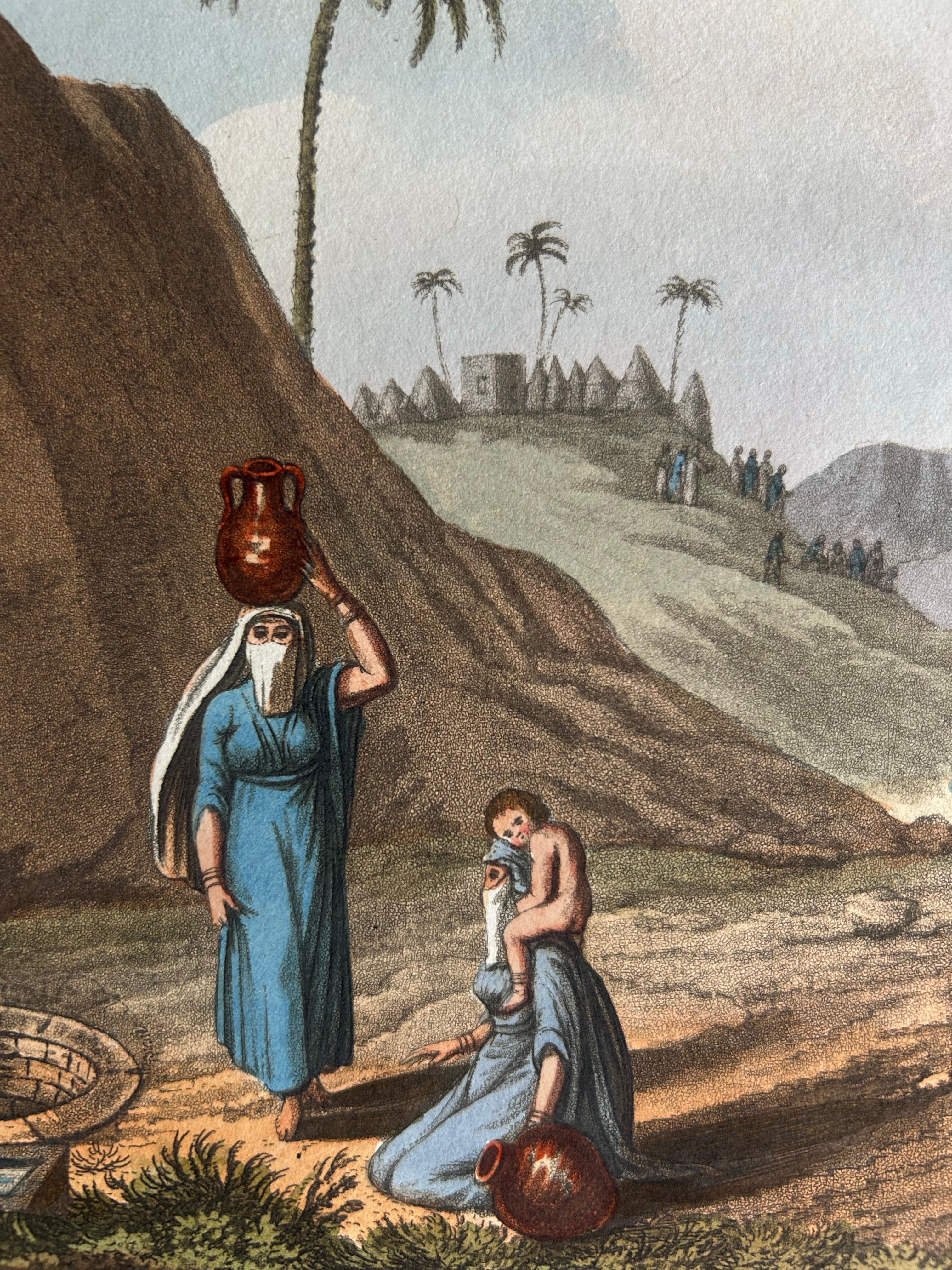
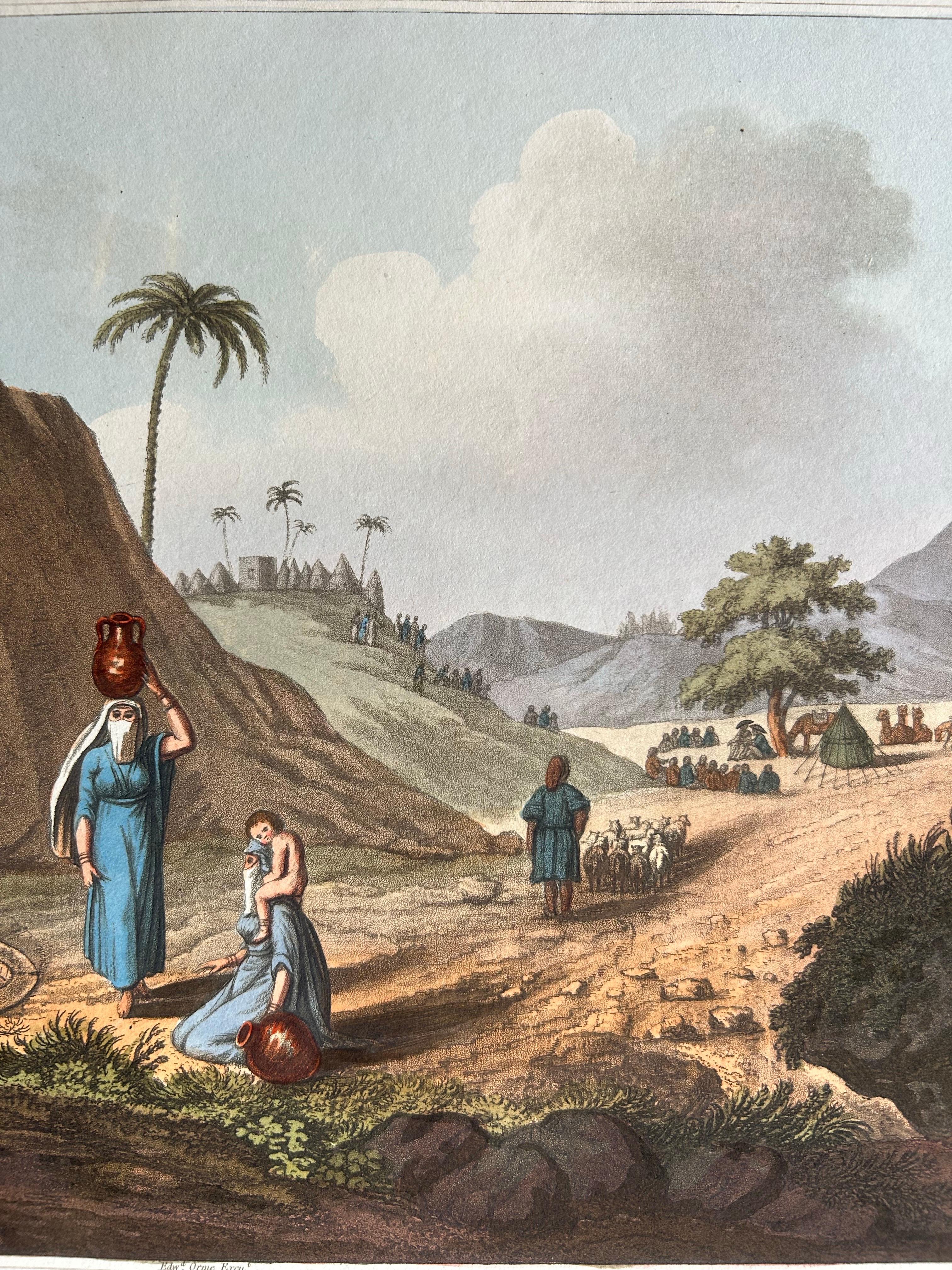
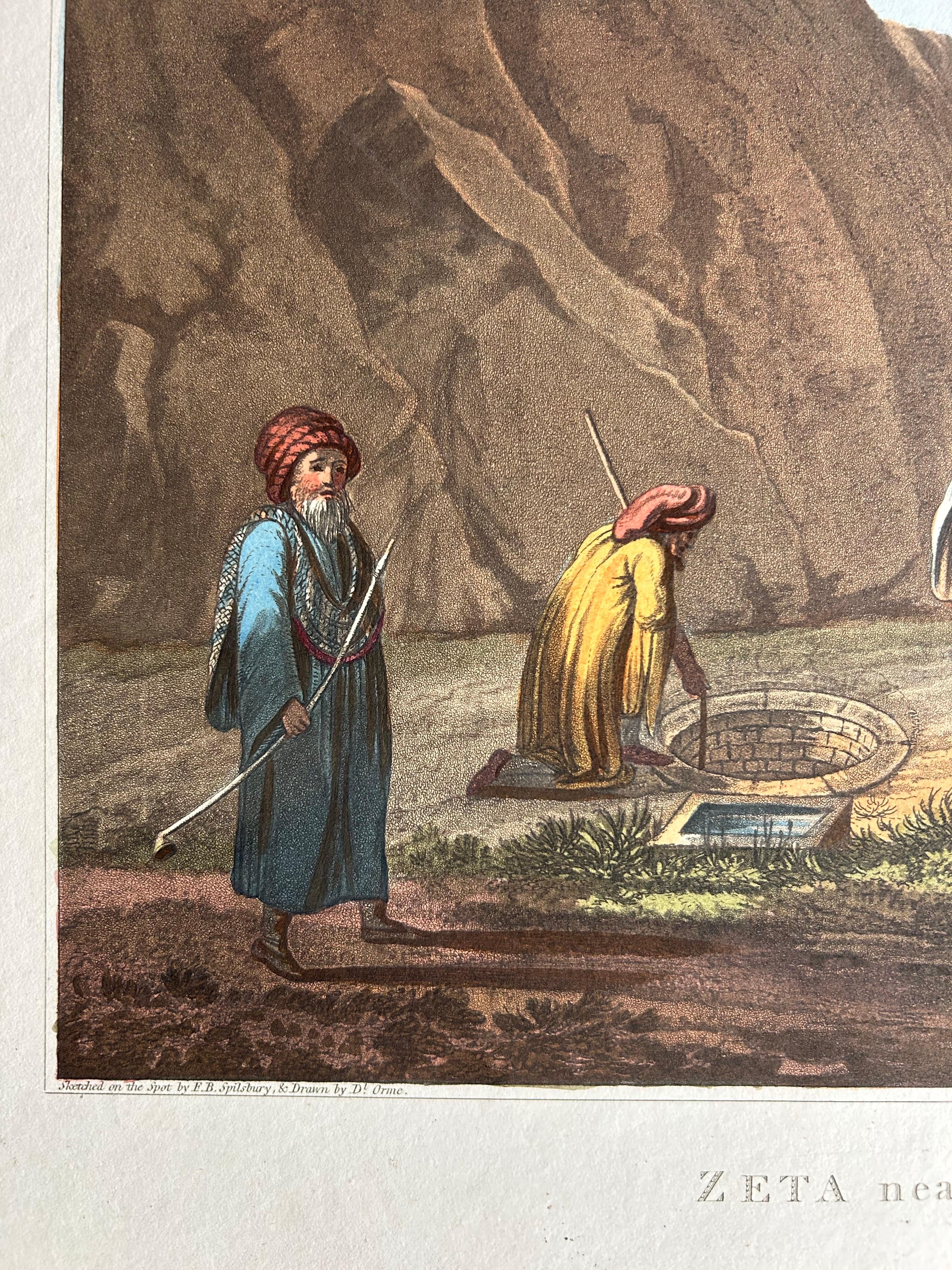
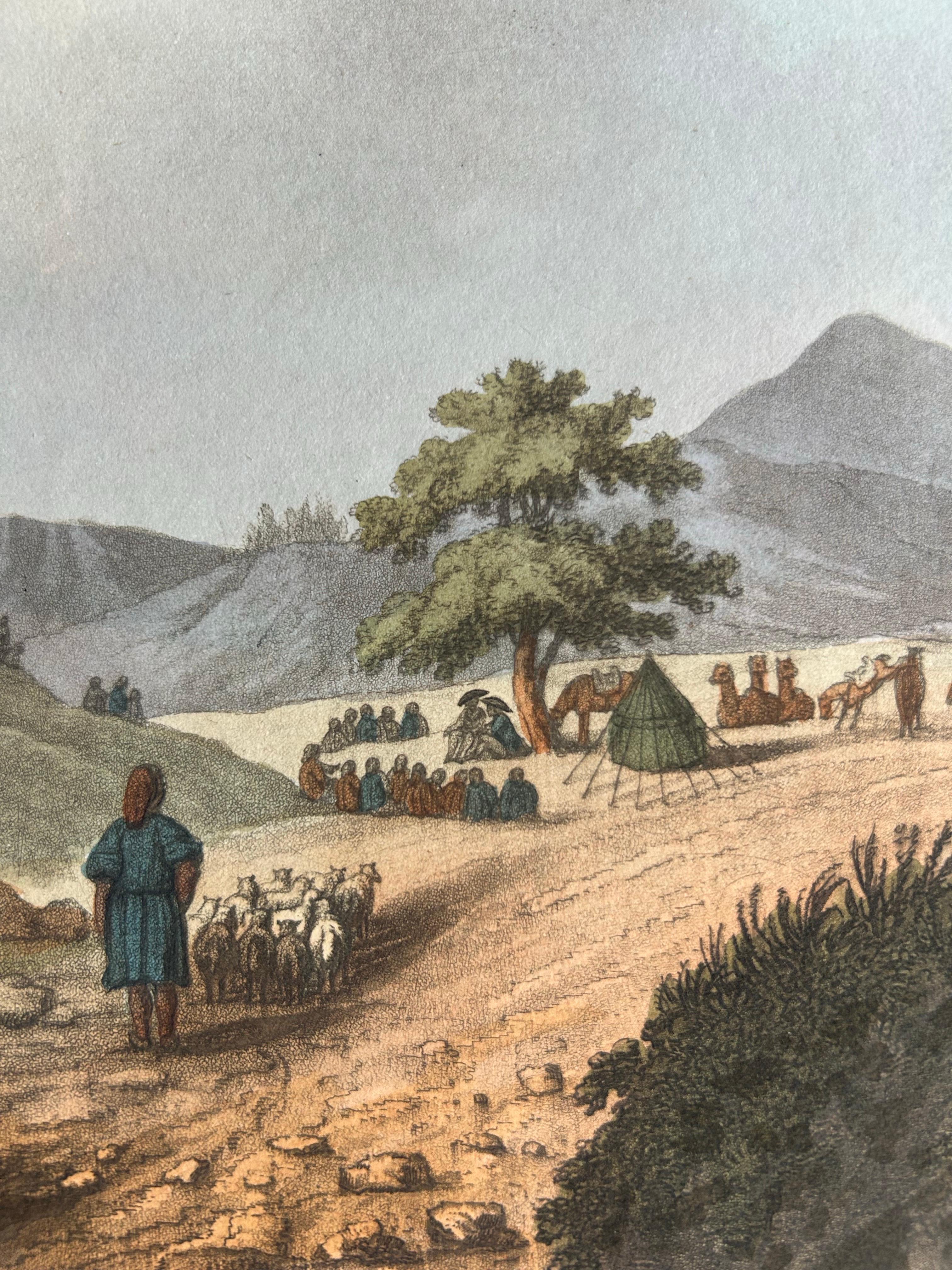
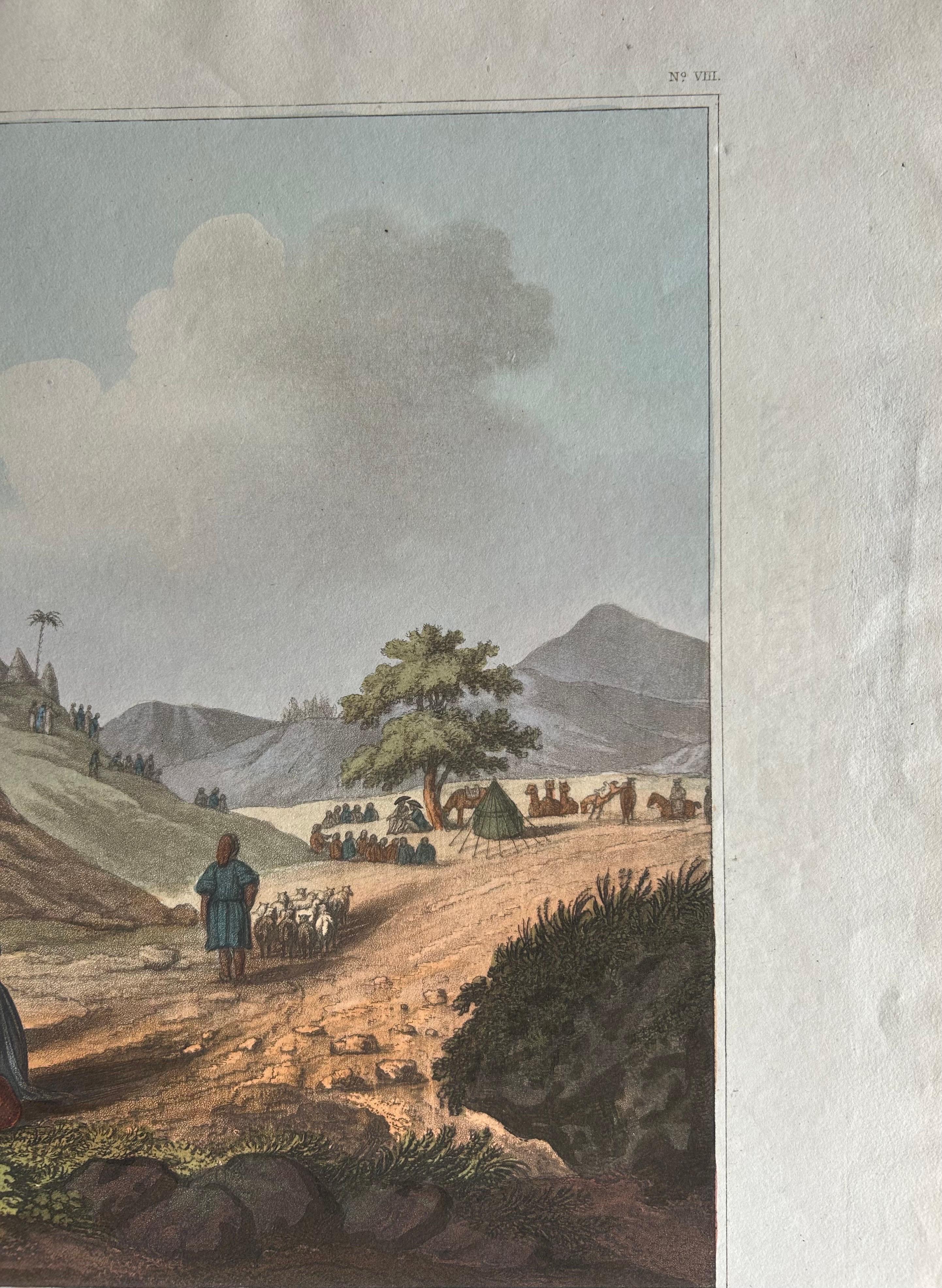
Zeta near Jaffa in Syria – Antique Aquatint of a Wellside Scene, 1803
€ 350
One of a kind: this is the sheet in the photographs. Ships from Langweer, the Netherlands.
Date
1803
Mapmaker / artist
F.B. Spilsbury (Artist)
Sheet size
33.5 × 49 cm (13.2 × 19.3 in)
Condition
Good
Reference
BG-11672-3
Condition
Excellent condition for its age. Soft hand-coloring remains vivid. Minor spotting in margins, with a clean central image. The paper has retained good strength and tone.
About this sheet
Zeta near Jaffa in Syria – Antique Aquatint of a Wellside Scene, 1803
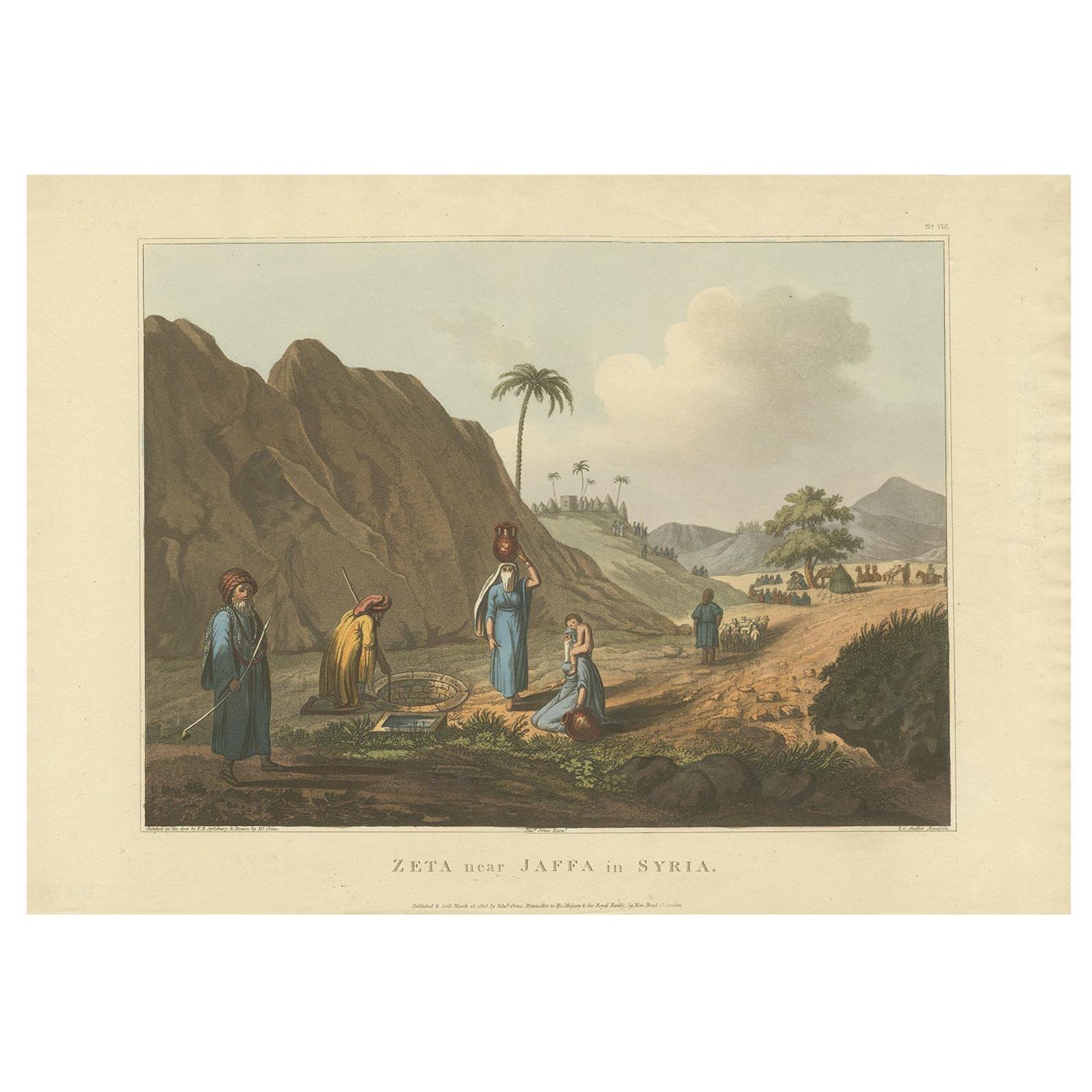
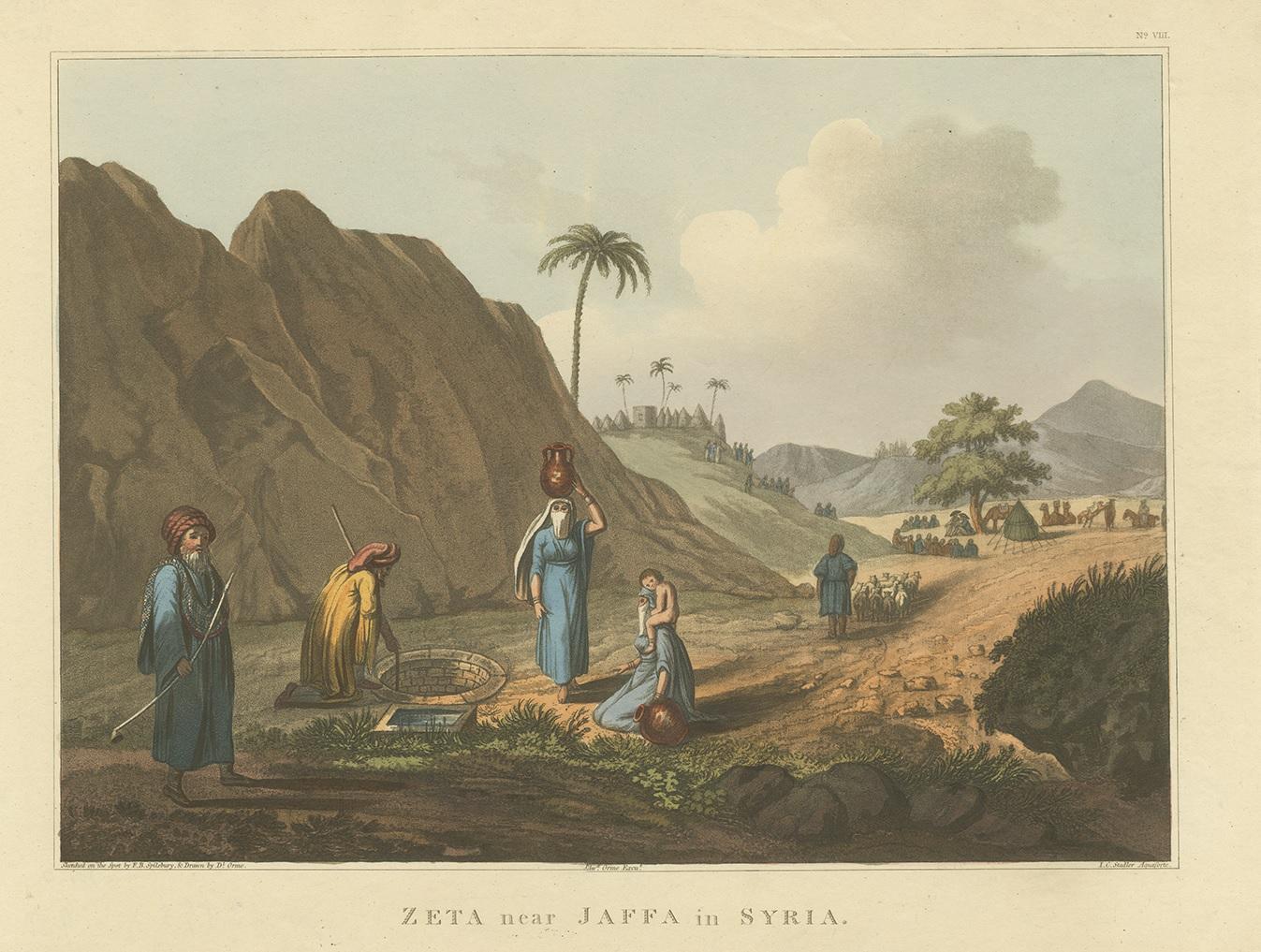
This atmospheric aquatint titled Zeta near Jaffa in Syria offers a rare and picturesque glimpse into everyday life in the Levant during the early 19th century. Captured near the port town of Jaffa—a historically significant city in modern-day Israel—this tranquil rural scene takes place at a village well, likely in the surrounding region once known as southern Syria or Ottoman Palestine.
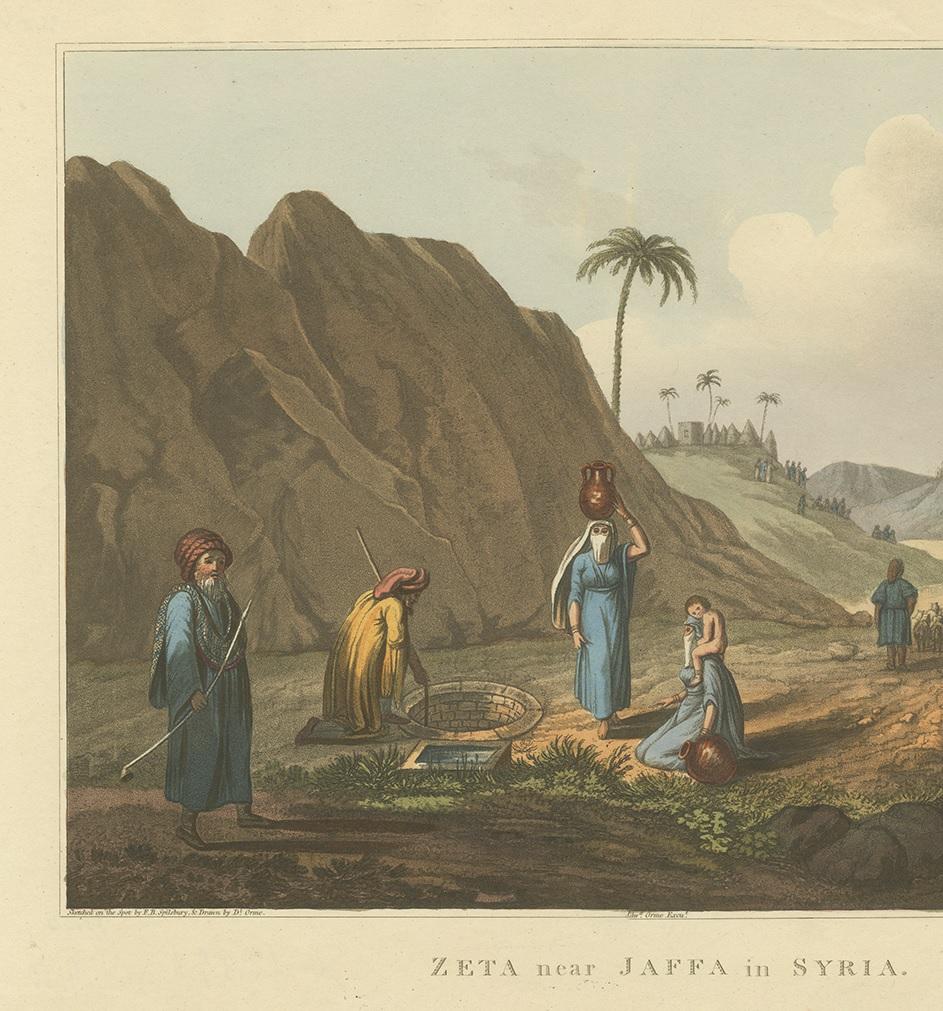
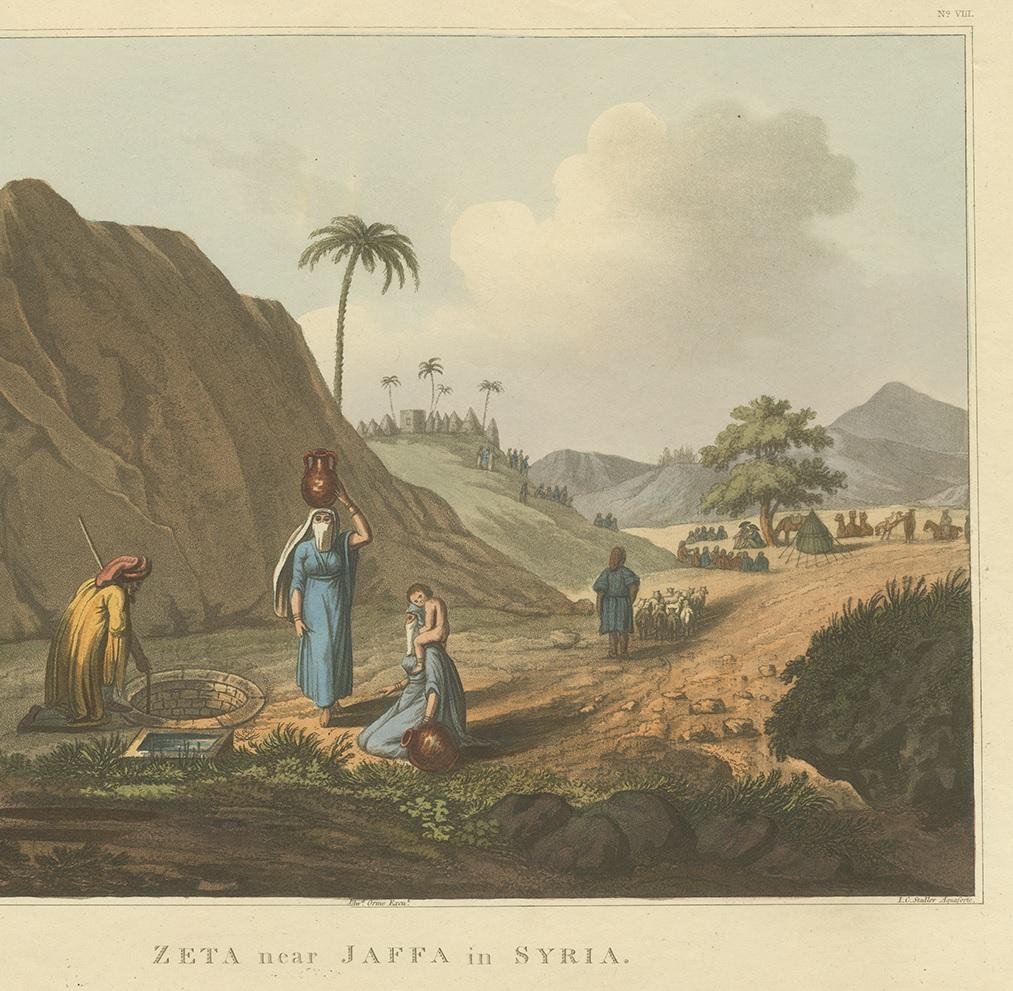
At the center of the composition, a group of local villagers go about their daily tasks: a man draws water with a rope, while a woman carries a jug on her head in graceful balance. Another woman kneels beside the stone trough, tending to her child. Further along the winding path, figures in traditional Middle Eastern dress move through the landscape, while distant palms and a low mountain range create a peaceful backdrop.
Drawn “on the spot” by F.B. Spilsbury, a British naval surgeon and artist, the image was engraved and published in London in 1803. It is part of Spilsbury’s celebrated visual record of his travels through the Mediterranean and Holy Land. His aquatints, produced during a time of European fascination with the Orient, are now valued for their ethnographic detail, romantic composition, and sensitive depictions of local life.
Condition report: Excellent condition for its age. Soft hand-coloring remains vivid. Minor spotting in margins, with a clean central image. The paper has retained good strength and tone.
Framing tips: A medium-toned wood frame—such as walnut or olive—with a neutral mount would complement the earth tones and emphasize the serene beauty of the composition.