Tragic Rites of Widowhood: Sati and Burial Customs in India, 1727
€ 440
Original antique · The actual sheet photographed · Certificate of authenticity on request · Sold unframed · Worldwide shipping from € 15 (rates)
Date
1727
Sheet size
42 × 25 cm (16.5 × 9.8 in)
Reference
BG-13806-21
What the condition grades mean
Excellent
Bright and clean, with no faults worth mentioning.
Very good
Only light signs of age, such as faint toning.
Good
Normal signs of age for a sheet of this period: toning, some foxing, small marks or neat old repairs.
Fair
Clear faults such as staining, tears or repairs, priced to match.
Every fault we see is written in the condition note, and the whole sheet is shown uncropped in the photos.
Condition
Good, given age. General age-related toning, the brown hue especially around the borders, and minor defects from handling. Some brown spots but mostly outside the image.
About this sheet
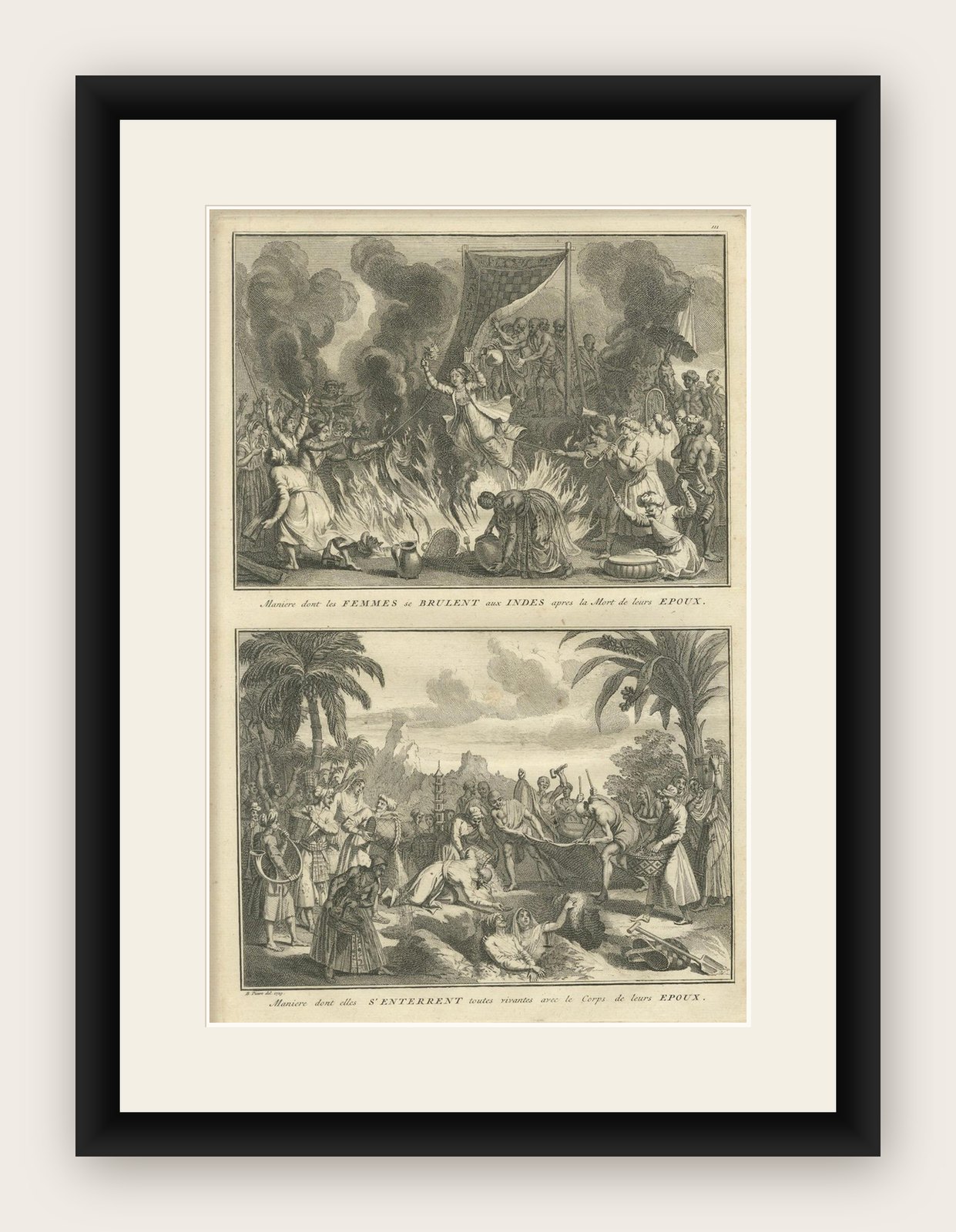
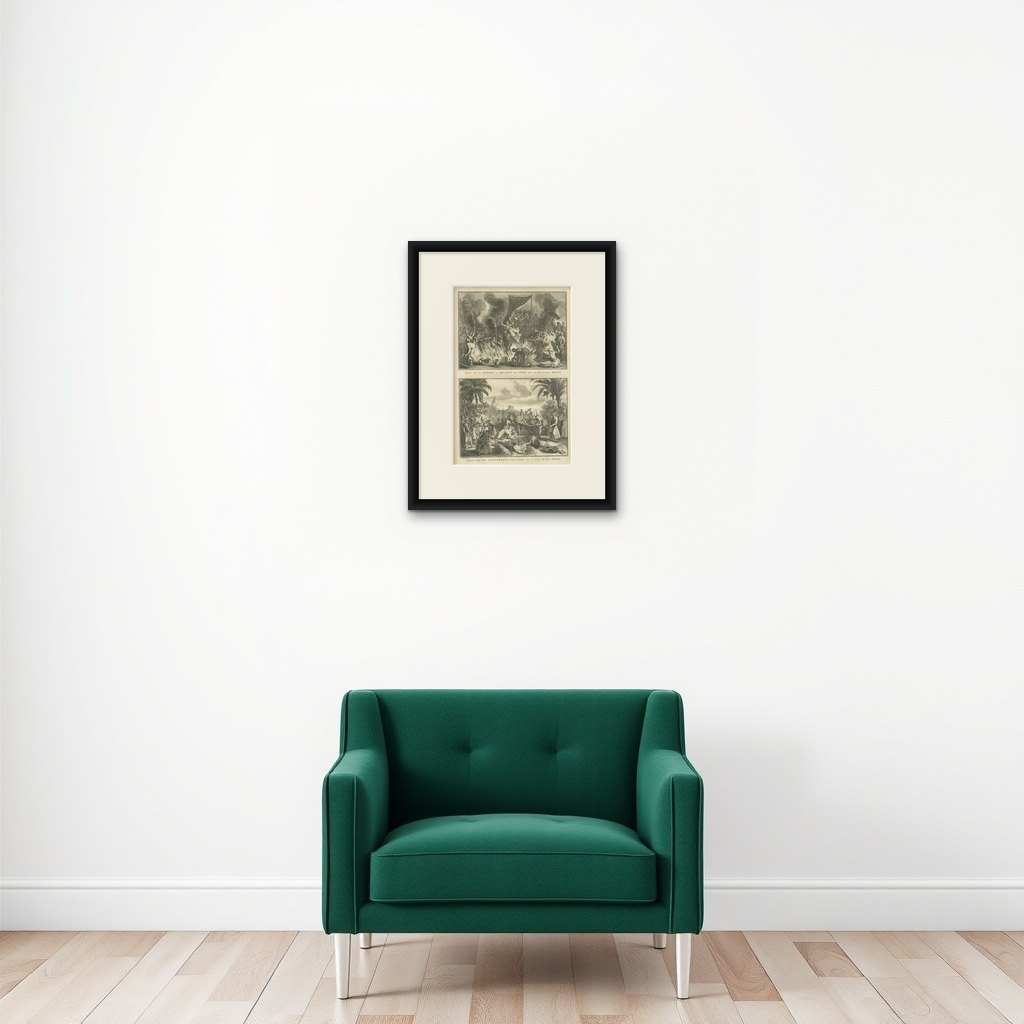
Tragic Rites of Widowhood: Sati and Burial Customs in India
This engraving from Bernard Picart depicts two dramatic and somber rituals associated with widowhood in India:
1. Top Panel: The scene illustrates the practice of Sati, where widows throw themselves into the fire at their husband's funeral pyre. The engraving captures the intense emotion and chaos of the moment, with several figures in various states of distress and mourning. A woman, the central figure, is depicted moving toward the flames, guided and supported by others, as a crowd watches in the background.
2. Bottom Panel: This image shows the burial practice where a widow is buried alive with her deceased husband. The depiction is equally powerful, showing the widow being placed into the grave alongside her husband’s body. Onlookers and other participants are present, some of whom are in states of mourning, while others prepare the grave.
Context and Significance:
The work is part of a larger series titled "Ceremonies et coutumes Religieuses" by Bernard Picart, which explores the religious rites, ceremonies, and customs of various peoples around the world. This series was one of the most comprehensive studies of world religions and their practices available at the time, offering European audiences an extensive view of global cultural diversity. These particular engravings were intended to document and provide insight into the solemn and severe rites associated with death and widowhood in India, reflecting both the fascination and the ethnocentric biases of early 18th-century European perspectives on non-Western cultures.
Technical and Historical Information:
- Artist/Engraver: Bernard Picart, a renowned French artist known for his detailed and expressive engravings. - Medium: Copperplate engraving on vellin-type paper.
These prints, through their detailed and dynamic composition, serve as a historical record of the cultural practices of the time and reflect the intense human emotions associated with these rites.