About this sheet
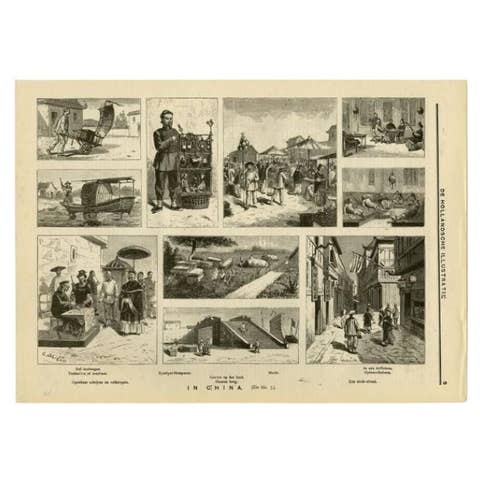
The clip is from the German newspaper "Die Gartenlaube," a popular 19th-century illustrated magazine. The text at the top of the page, "Der erste Priester in Korea," and the style of the illustrations are characteristic of this publication. "Die Gartenlaube" was known for its informative articles and detailed illustrations about various cultures and countries, making it a likely source for this print from 1896.
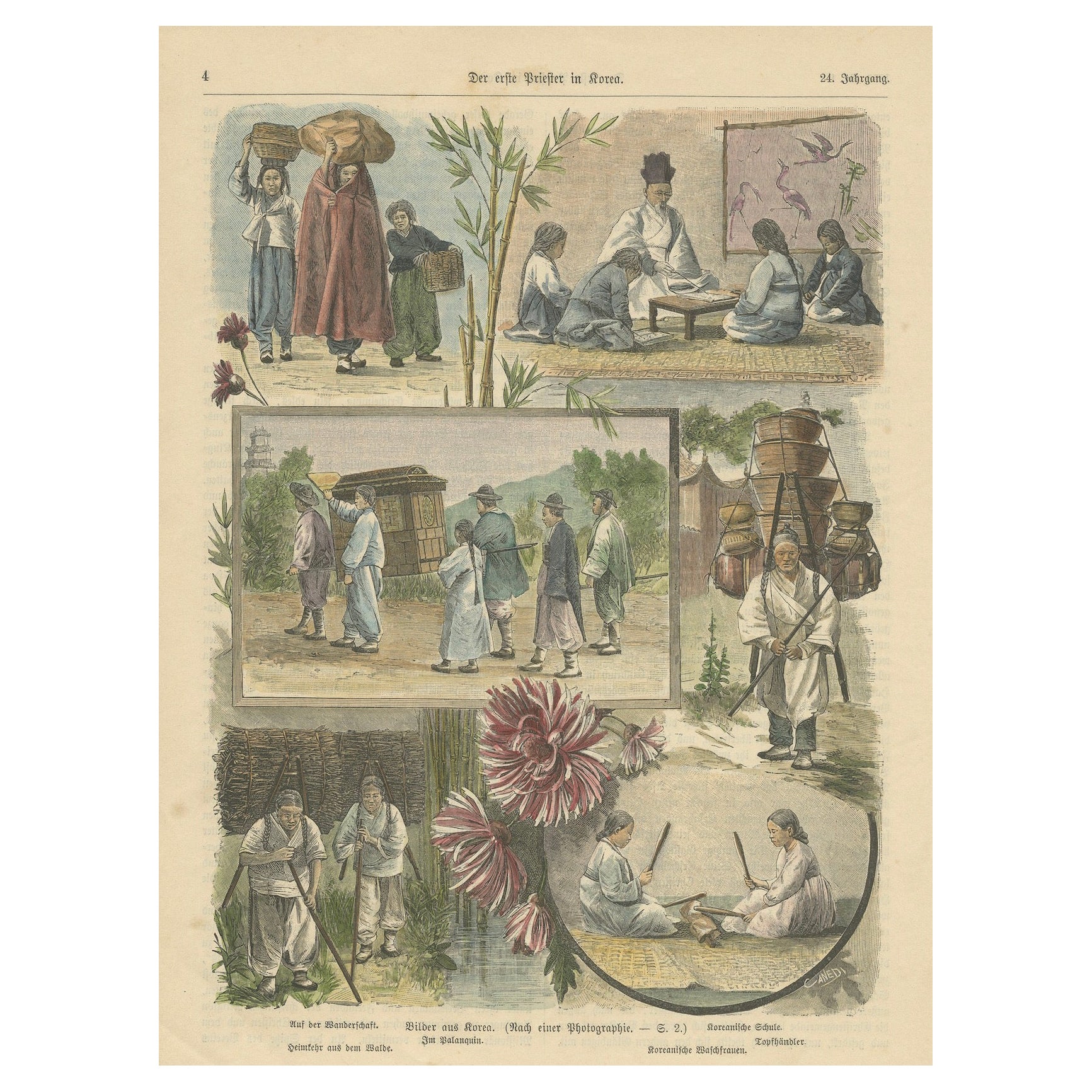
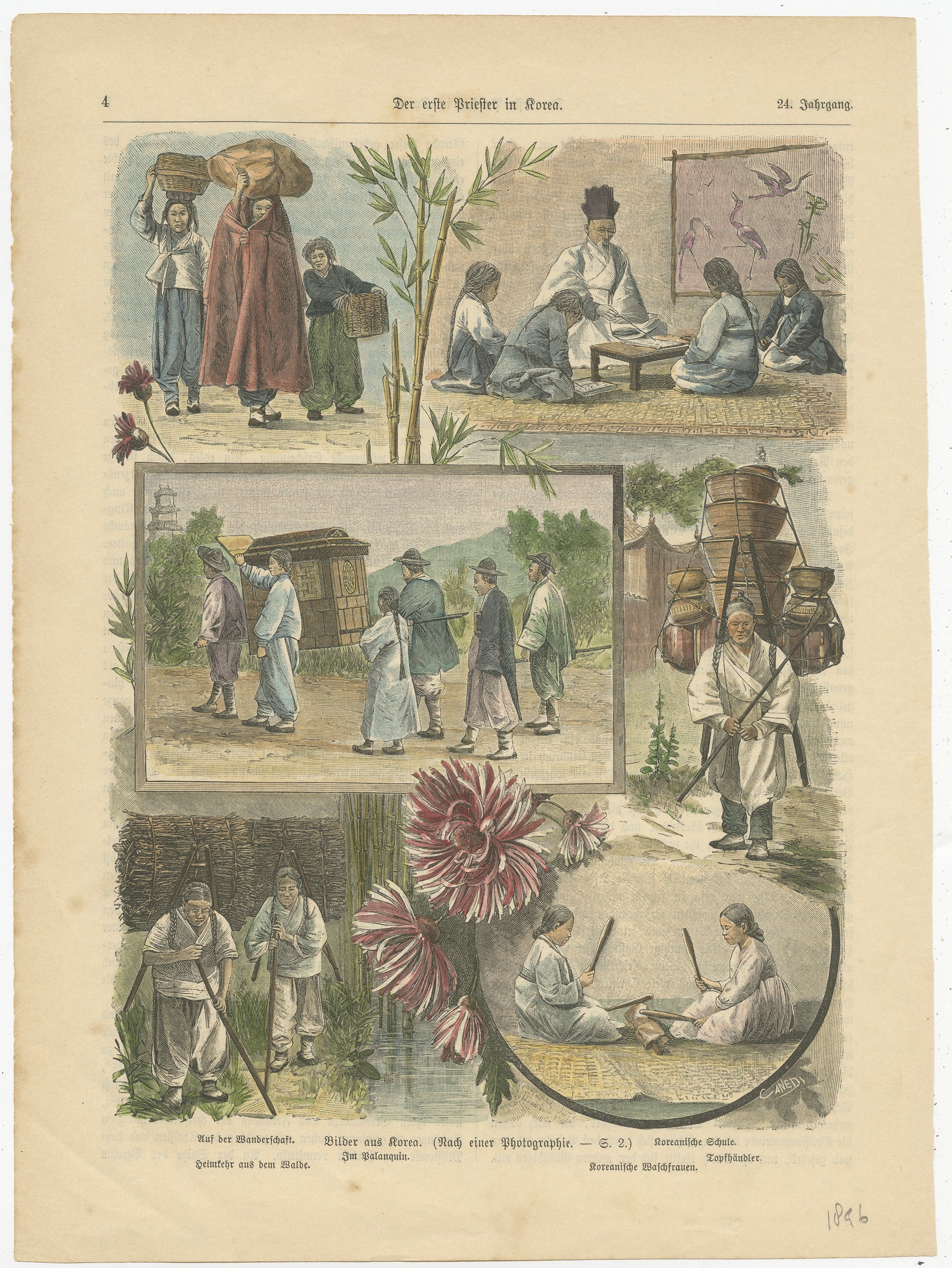
This is an illustration from a German publication dated 1896, depicting scenes from Korea. The text at the top, "Der erste Priester in Korea," translates to "The First Priest in Korea." The illustrations showcase various aspects of Korean life and culture during that period. Here are the key elements depicted:
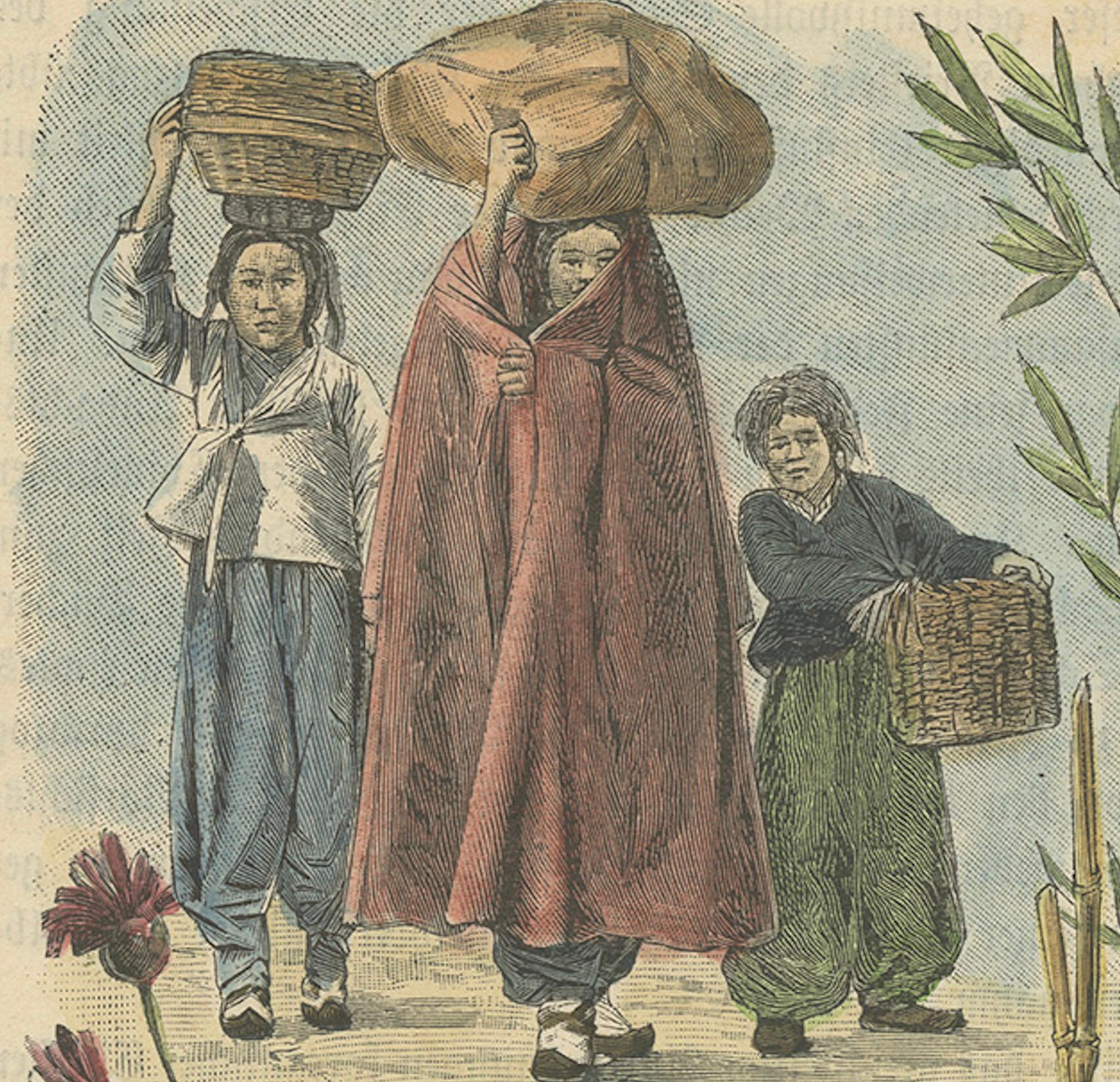
1. **Top Left Image**: Shows two women, one carrying a basket on her head and another holding a basket in her hand, both dressed in traditional Korean clothing. This likely represents everyday life and labor.
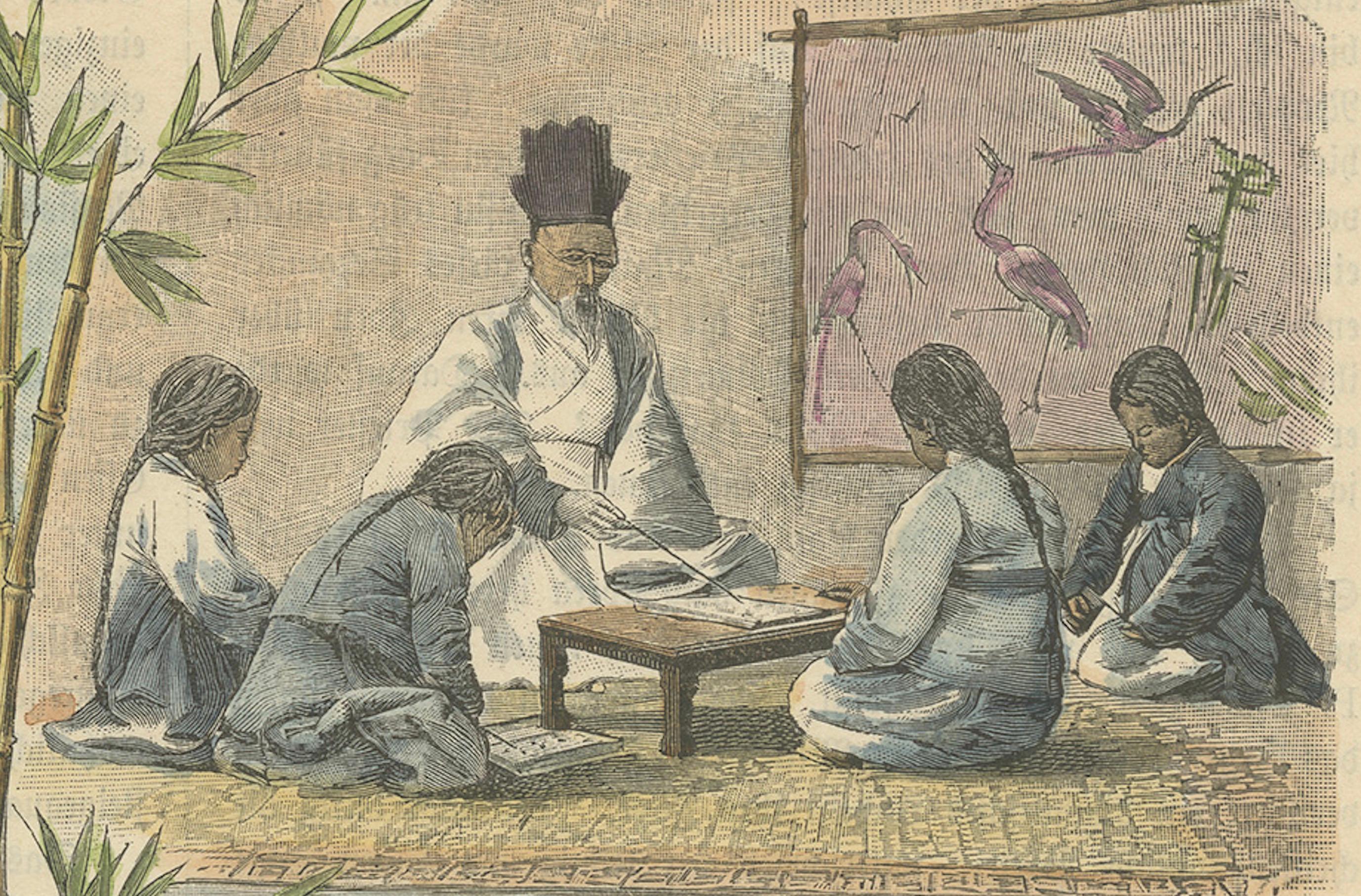
2. **Top Right Image**: Displays a scene of people gathered around a table, possibly engaging in a traditional activity or ceremony. The attire suggests it may be a formal or religious setting.
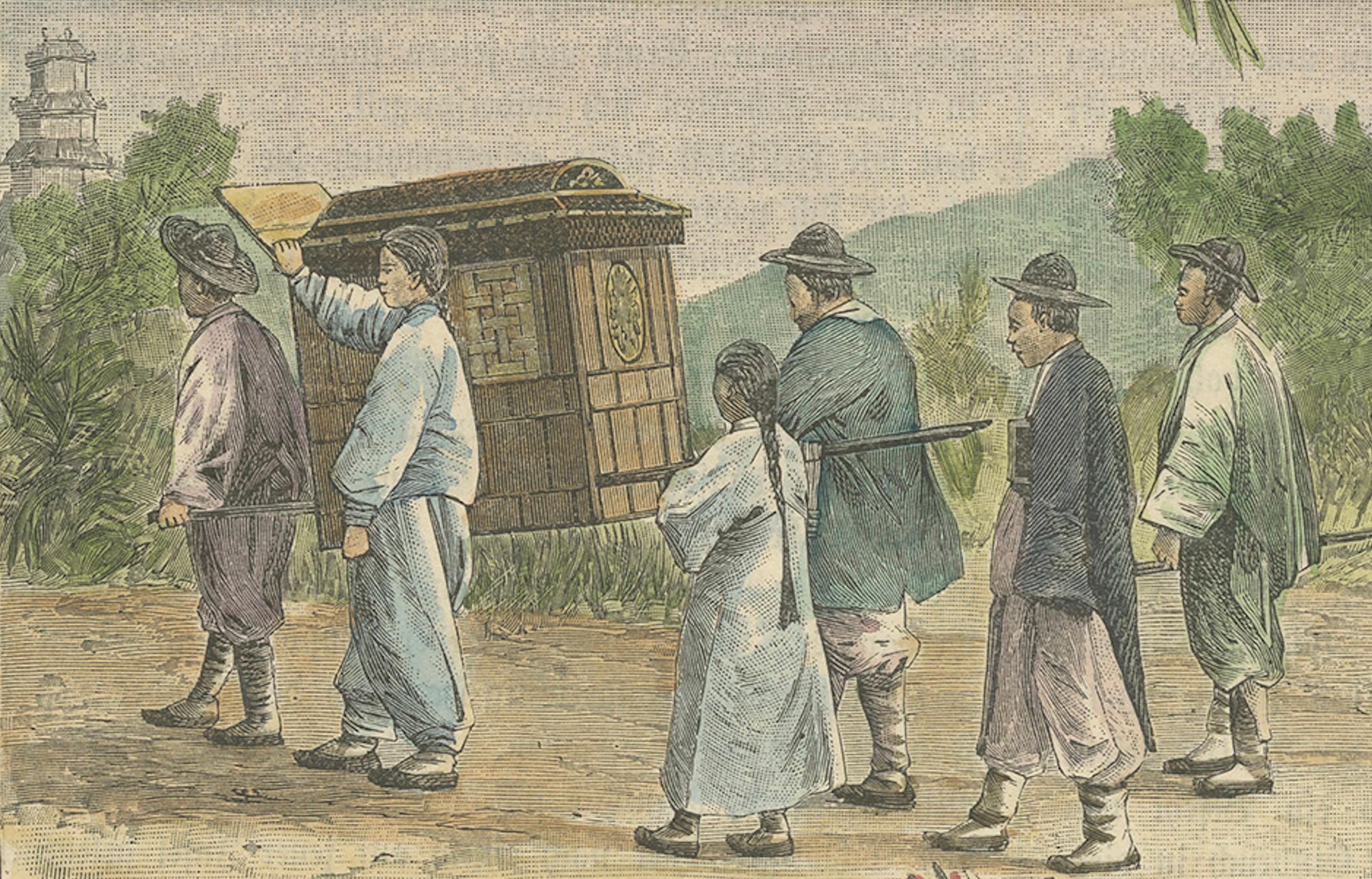
3. **Middle Image**: Illustrates a group of people transporting a person in a palanquin, a traditional mode of transportation for the upper class or officials.
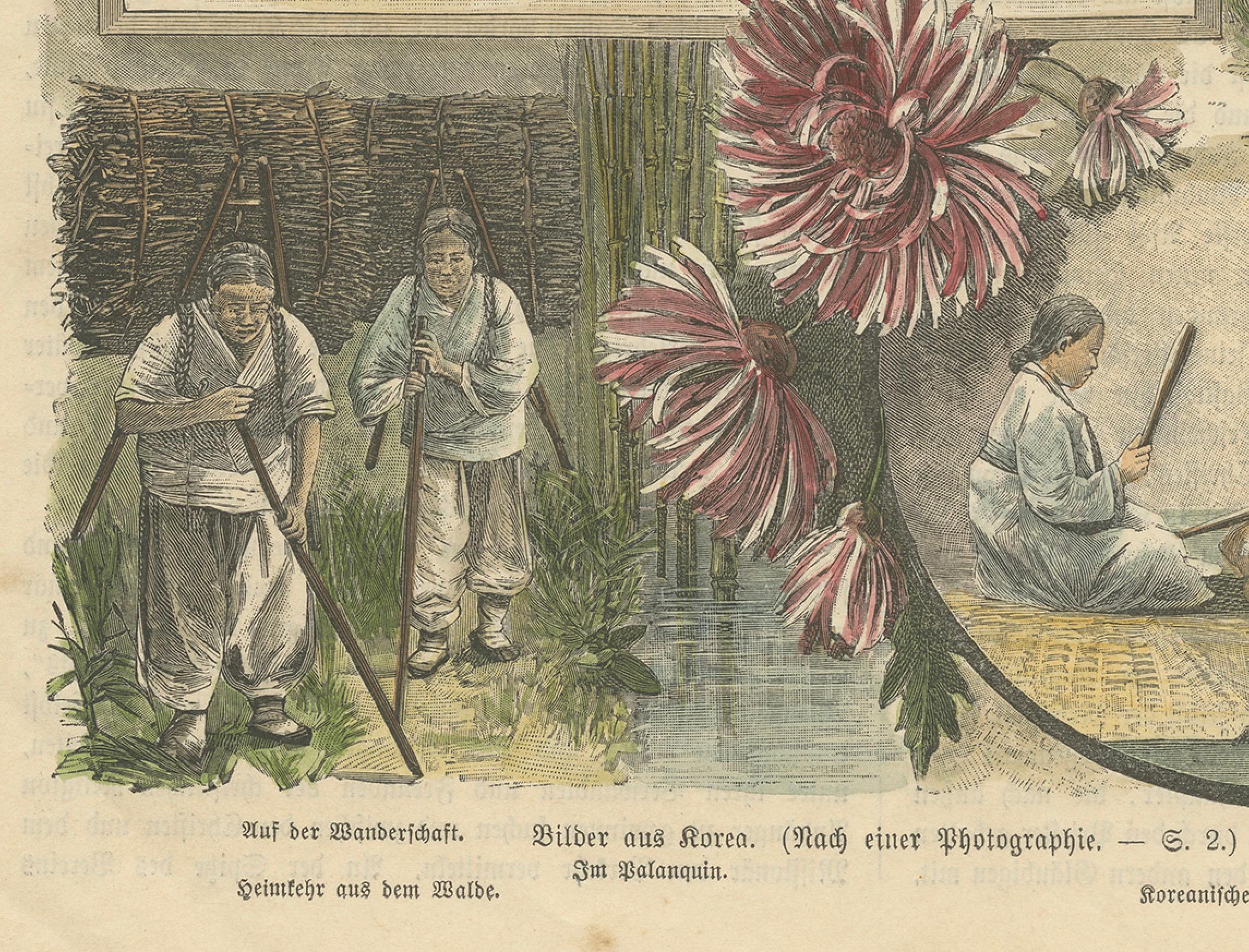
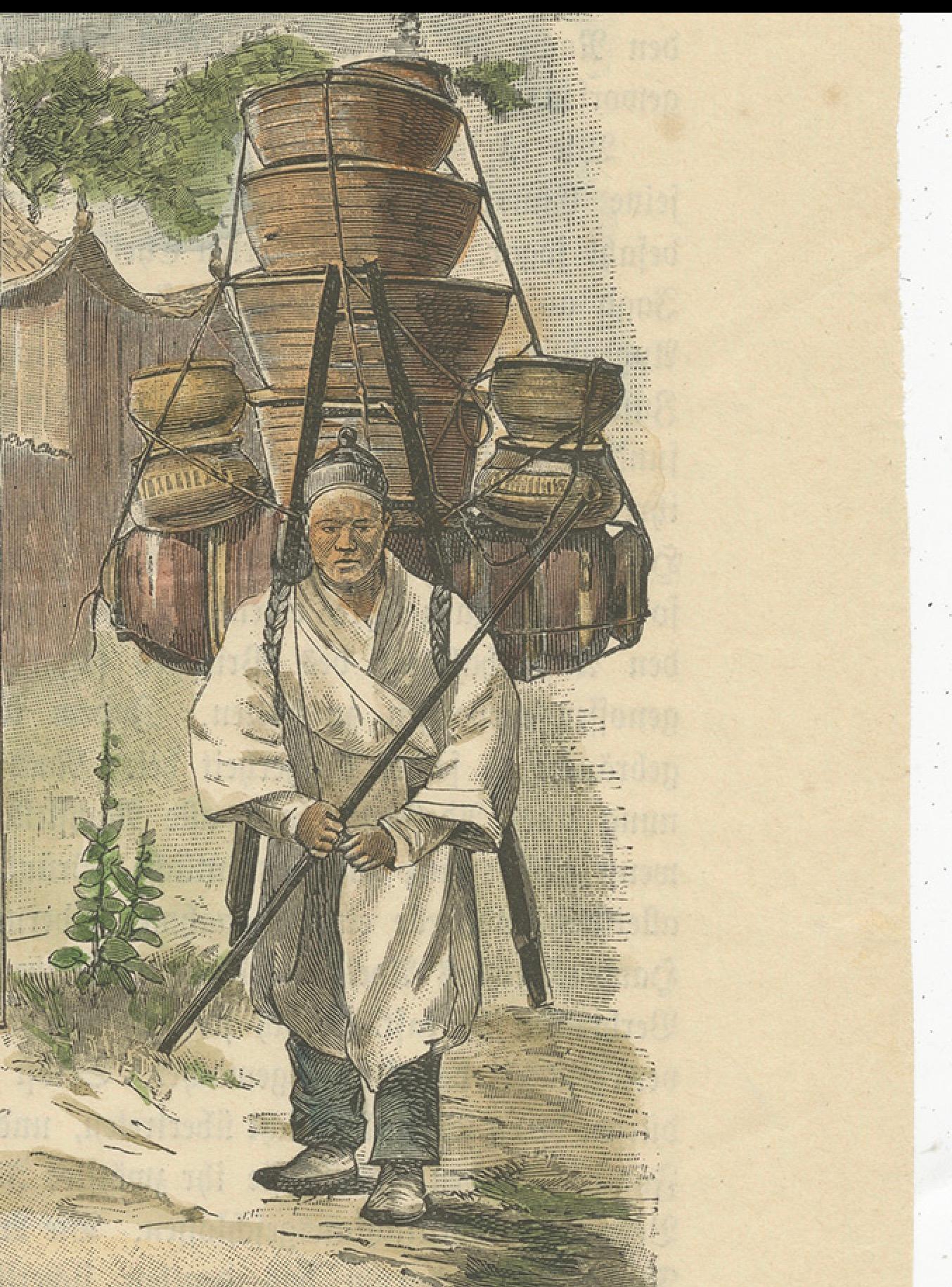
4. **Bottom Left Image**: Features two men carrying large bundles on their backs, indicating the laborious tasks and transportation methods of the time.
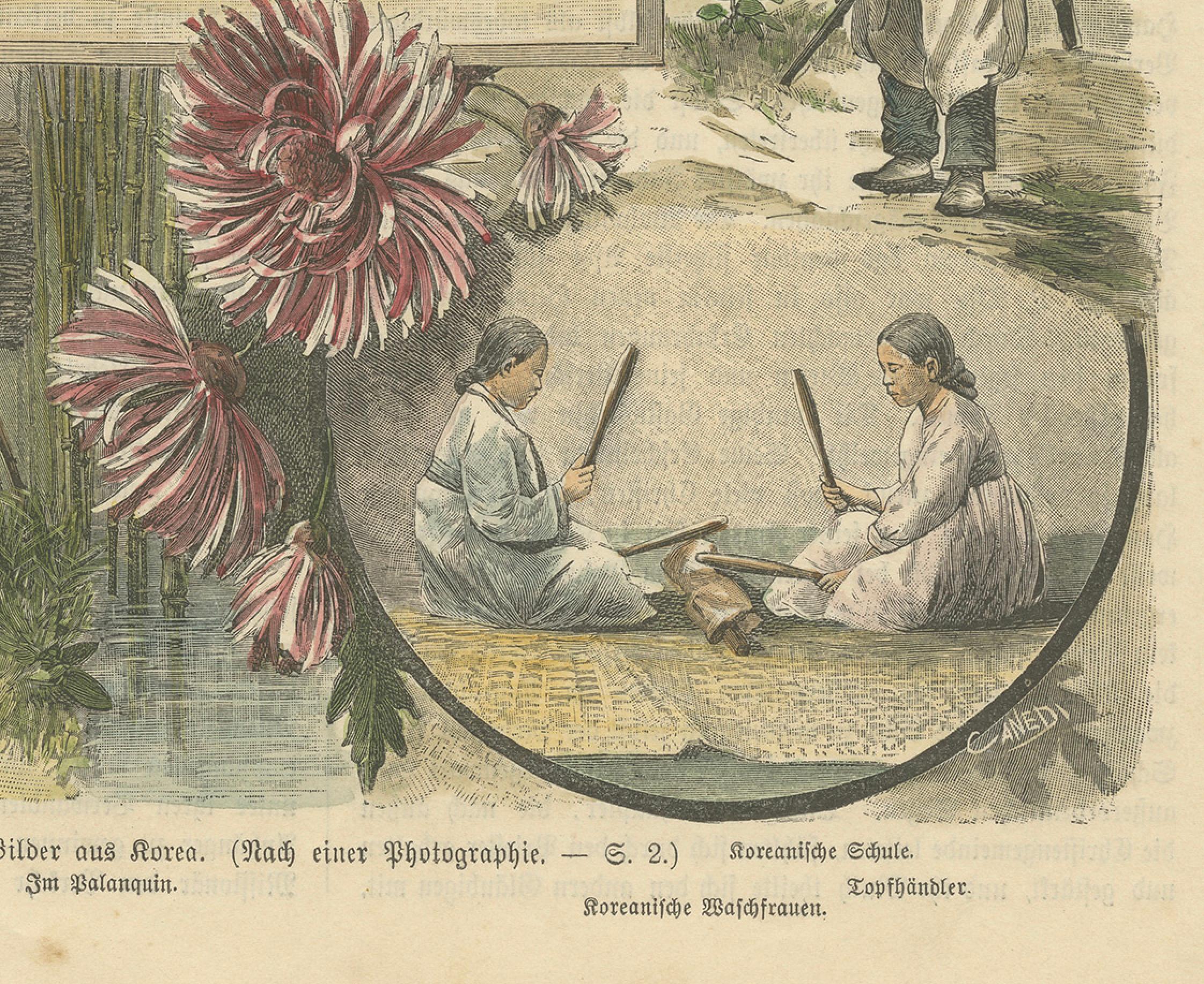
5. **Bottom Center Image**: Shows women seated on the ground, engaged in what appears to be a traditional Korean game or activity, with a backdrop of chrysanthemums, a flower culturally significant in Korea.
6. **Bottom Right Image**: Depicts a person carrying a heavy load with large containers on a pole, highlighting the manual labor involved in everyday tasks.
The publication seems to be a visual and cultural representation of Korea from a Western perspective in the late 19th century, likely aimed at educating or informing German readers about life in Korea. The detailed illustrations provide a glimpse into traditional Korean attire, activities, and social structures during that era.