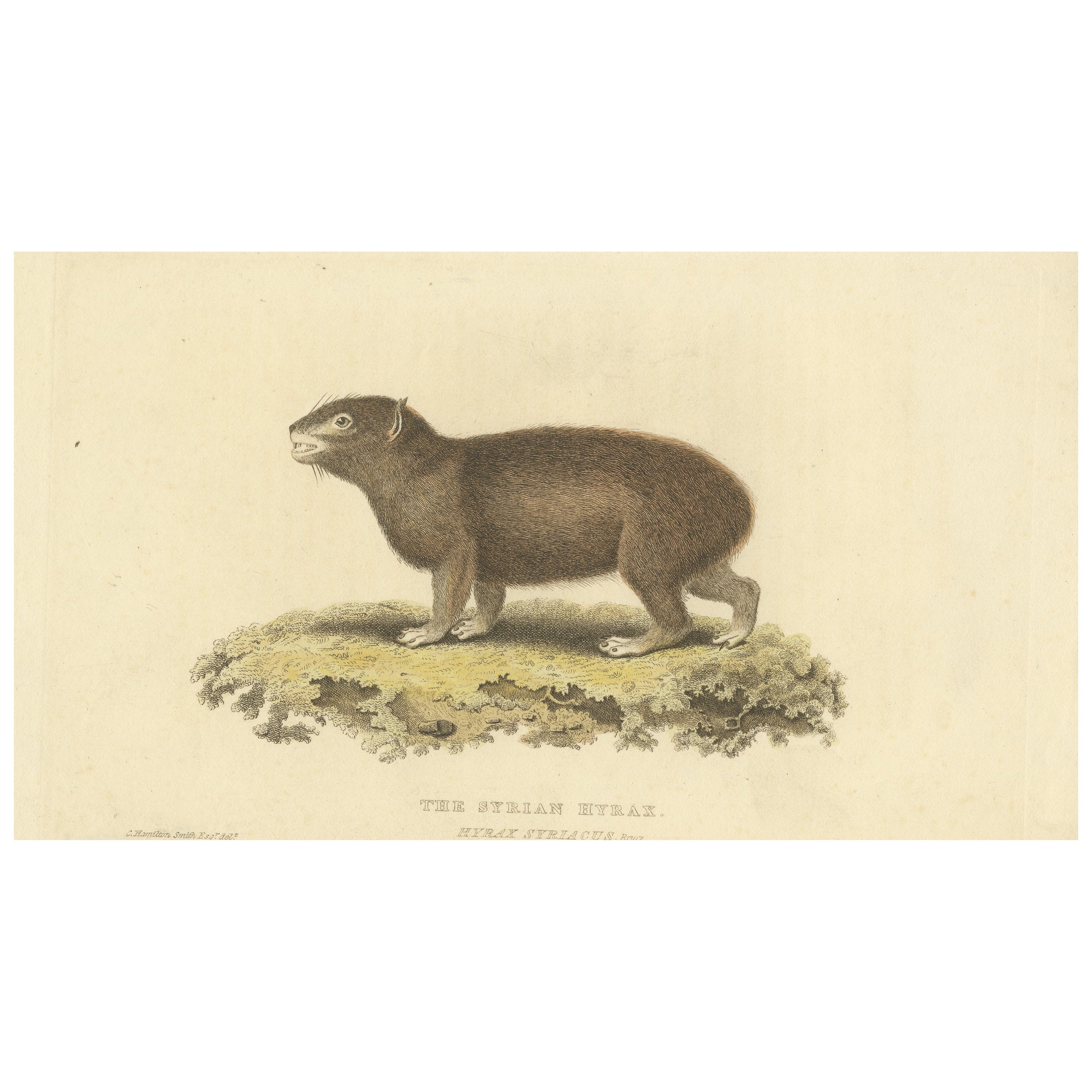
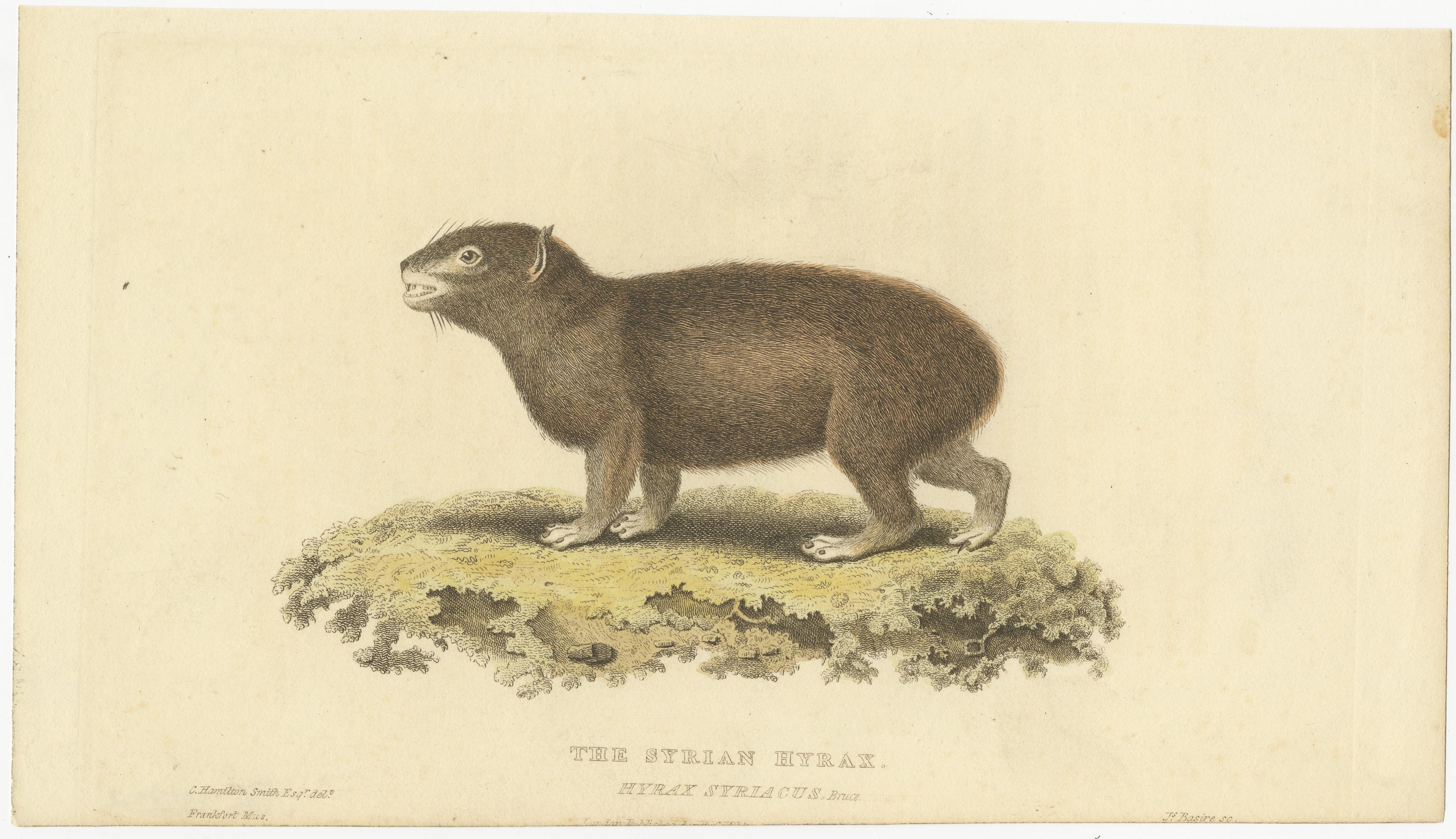
Original Hand Colored Antique Print of a Syrian Hyrax, 1825
€ 180
One of a kind: this is the sheet in the photographs. Ships from Langweer, the Netherlands.
Date
1825
Sheet size
13.4 × 24 cm (5.3 × 9.4 in)
Condition
Good
Reference
BG-13585-1
Condition
General age-related toning. Minor wear, blank verso. Text line cut short at the bottom. Image is intact. Please study image carefully.
About this sheet
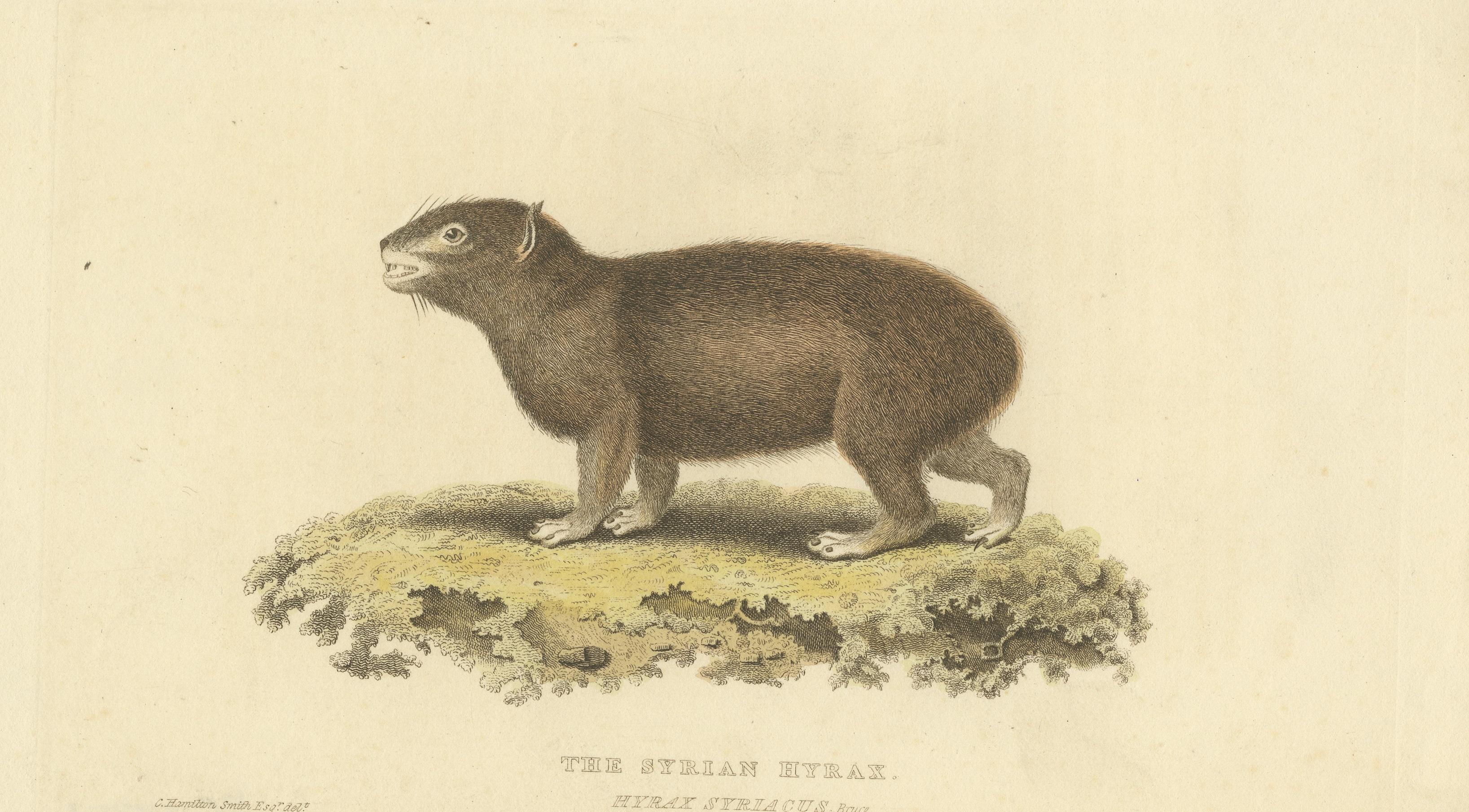
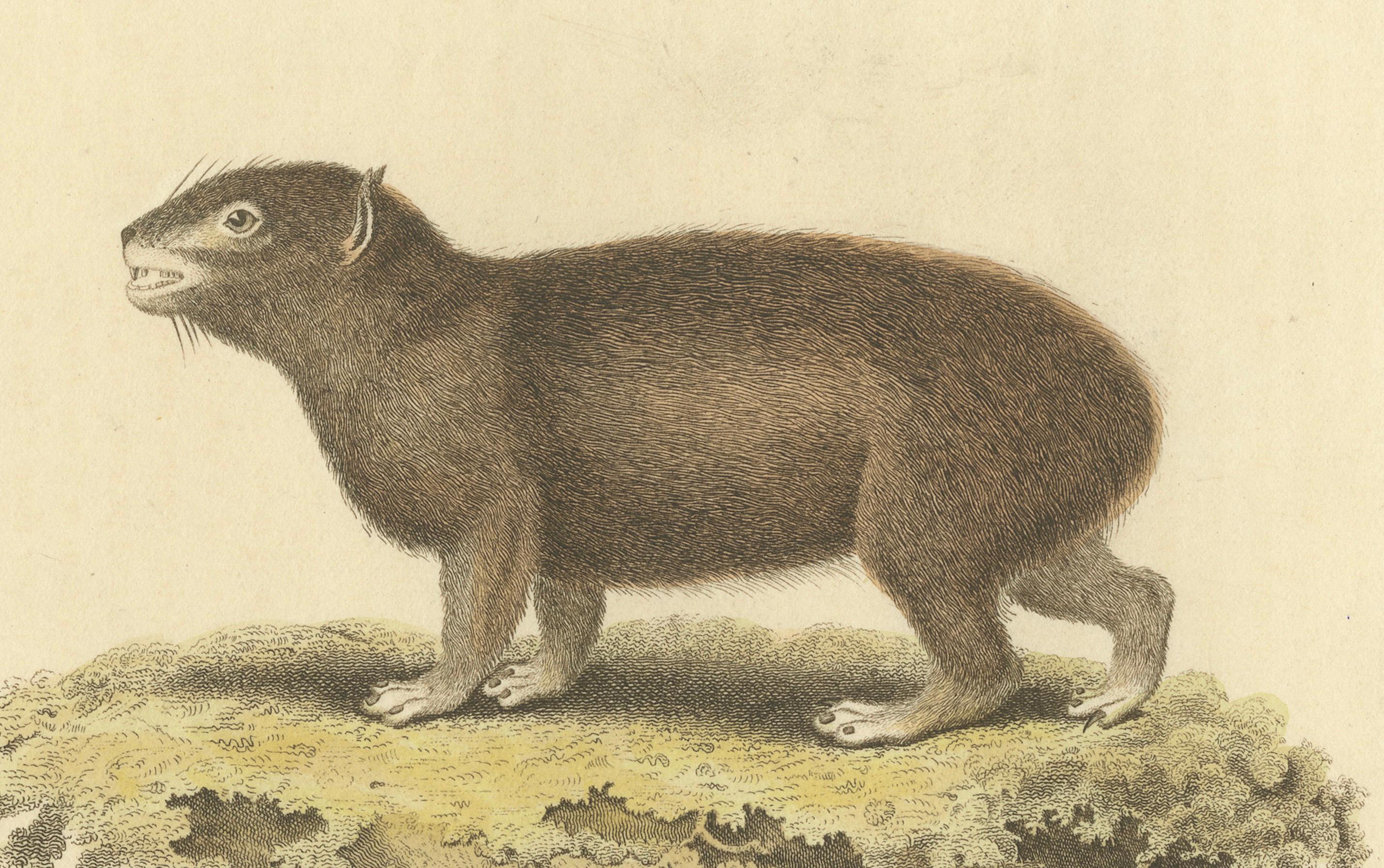
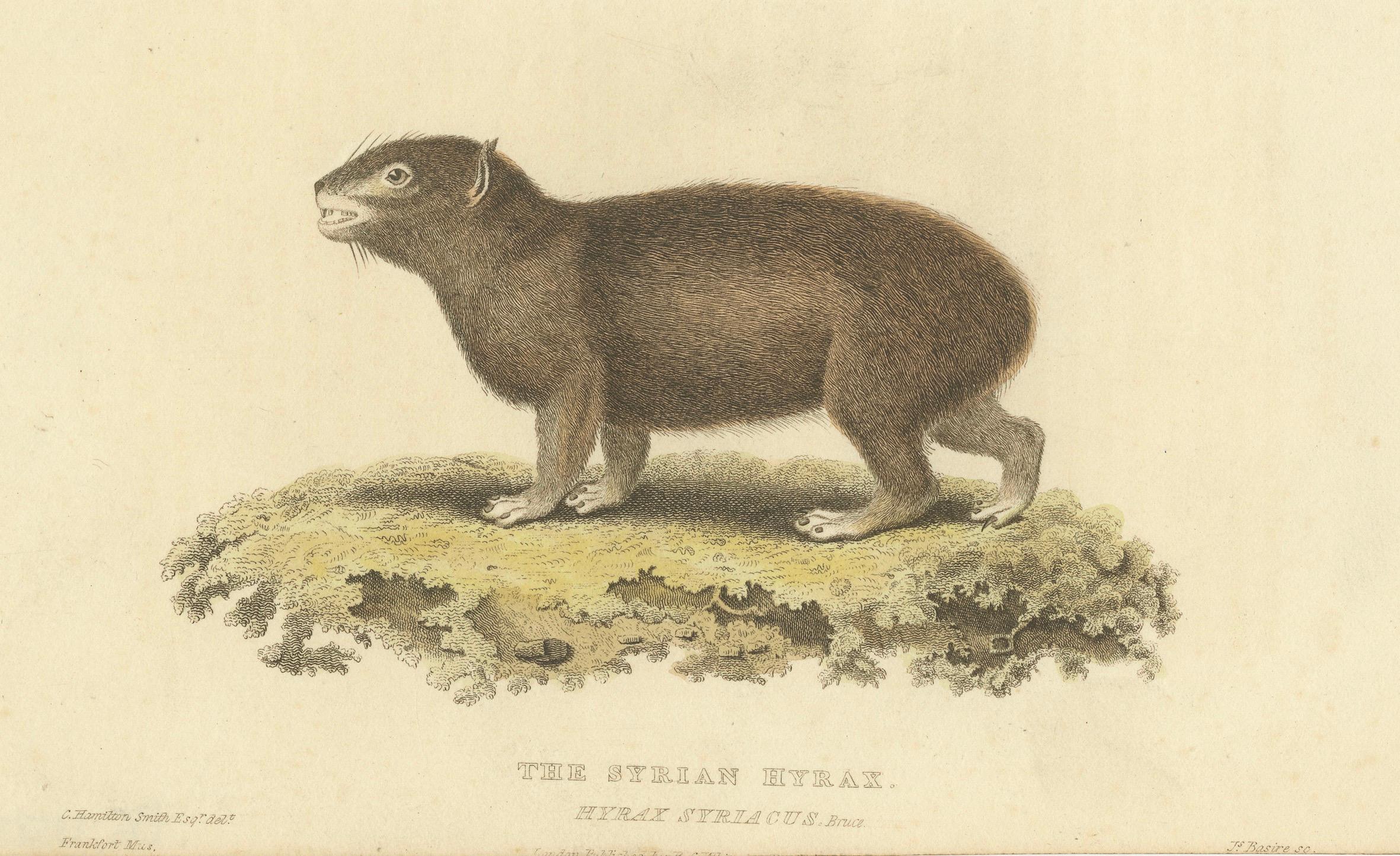
The engraving is an exquisitely hand-colored print titled "The Syrian Hyrax, Hyrax Syriacus," showcasing the likeness of a hyrax, a small mammal known for its robust, compact body, short limbs, and lack of a visible tail. This illustration captures the hyrax in a natural pose on a rocky surface, surrounded by vegetation, which may be indicative of its natural habitat. The details in the coloring convey a lifelike appearance to the animal's fur and the texture of the rocks and plants.
James Basire, a respected engraver of the time, is credited with the engraving, which is derived from a drawing by Charles Hamilton Smith. Smith was a prominent figure known for his contributions to natural history illustration. Basire's engraving would have been executed with fine lines and careful attention to detail, a characteristic that his work was known for.
Published by G. B. Whittaker in London in 1825, this piece is a reflection of the period's interest in documenting flora and fauna from around the world. The hyrax, though it bears a resemblance to a guinea pig or a rabbit, is uniquely adapted to its environment, and this print would have served as an informative illustration for those curious about foreign wildlife. The practice of hand-coloring prints such as this one was a way to bring the subjects to life, offering a more vivid representation of the animal to the public and scholars alike.