Antique Print of the City of Ten-Tchoo-Foo, China, 1796
€ 690
Original antique · The actual sheet photographed · Certificate of authenticity on request · Sold unframed · Worldwide shipping from € 15 (rates)
Date
1796
Sheet size
59 × 80 cm (23.2 × 31.5 in)
Condition
Good
Reference
BGJC-178
What the condition grades mean
Excellent
Bright and clean, with no faults worth mentioning.
Very good
Only light signs of age, such as faint toning.
Good
Normal signs of age for a sheet of this period: toning, some foxing, small marks or neat old repairs.
Fair
Clear faults such as staining, tears or repairs, priced to match.
Every fault we see is written in the condition note, and the whole sheet is shown uncropped in the photos.
Condition
Some foxing and marginal tears. Minor defects from handling. Please review the images for further condition details.
About this sheet
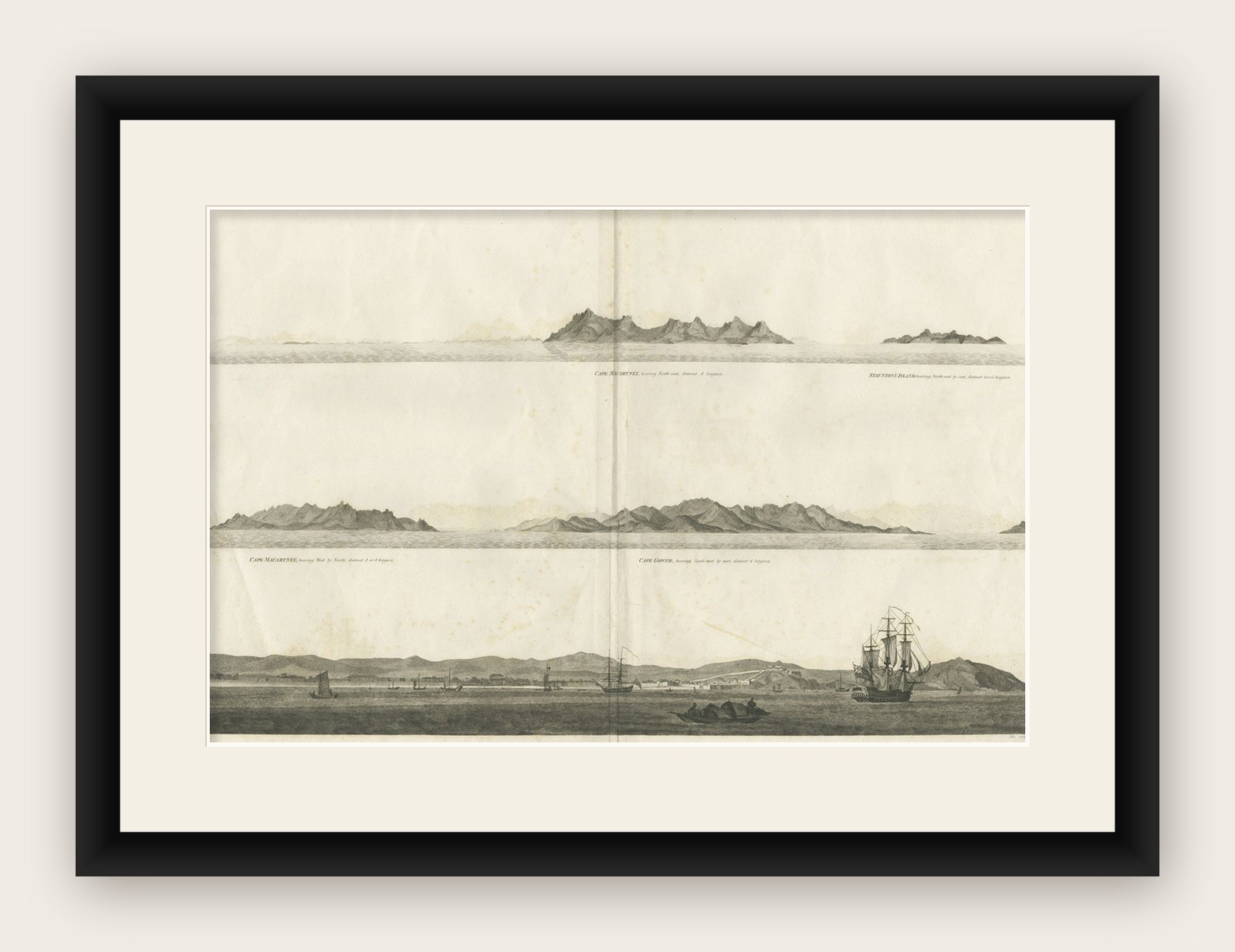
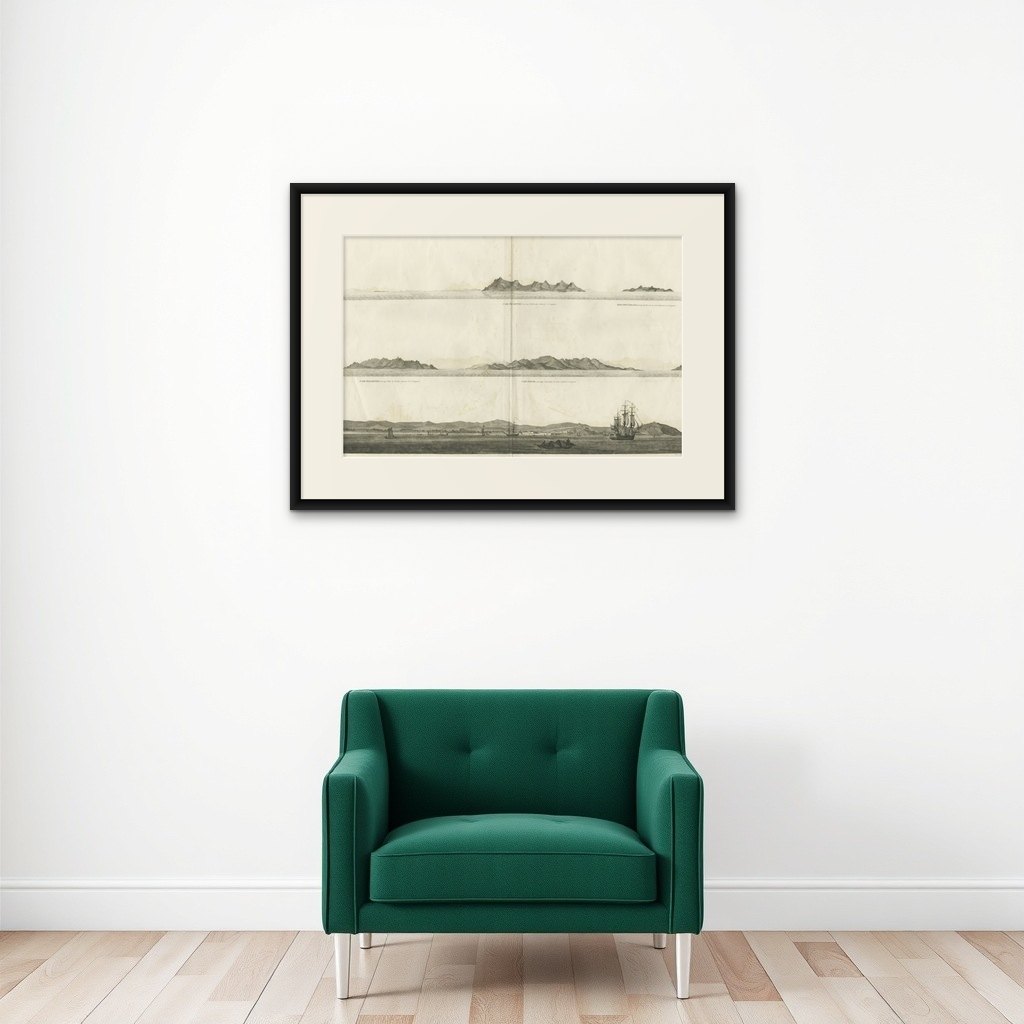
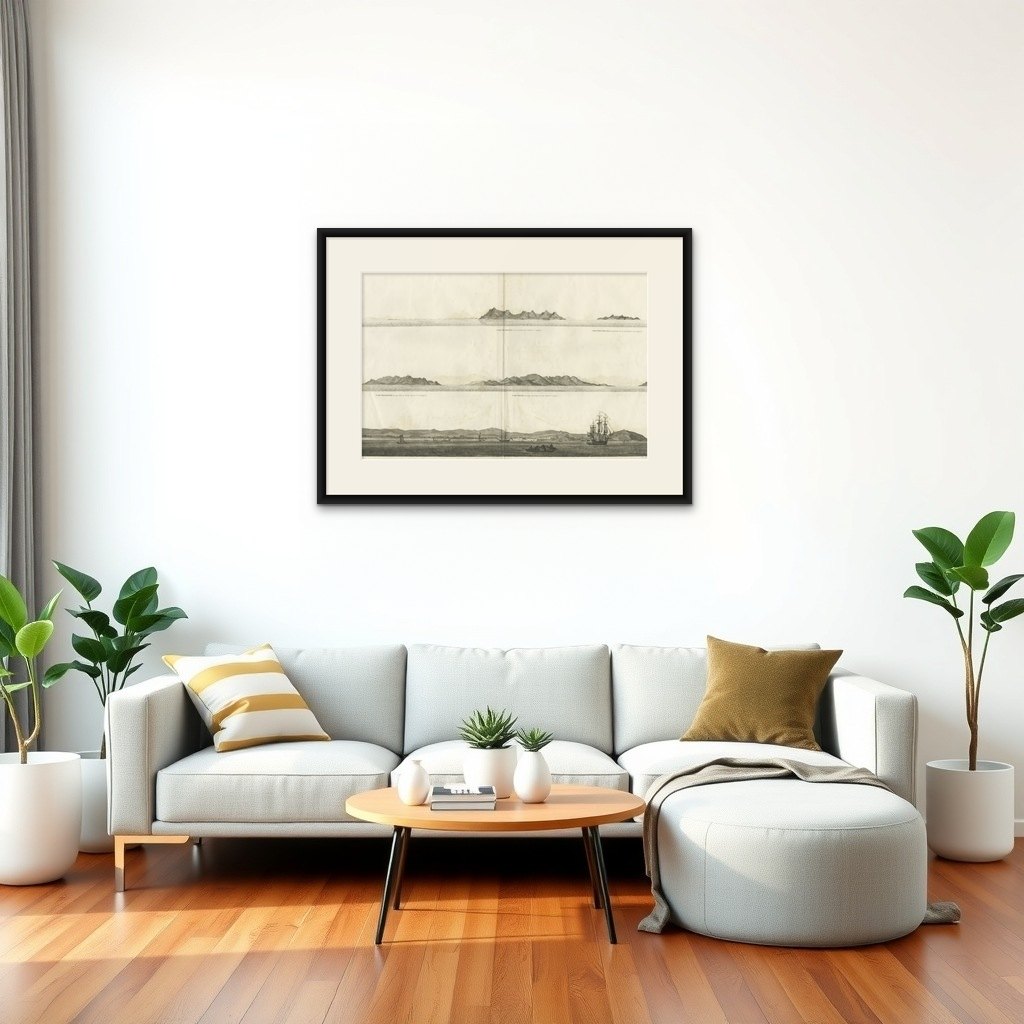
Antique print titled 'View of the City of Ten-Tchoo-Foo from the Anchorage of the Hindostan in the Strait of Mi-a-Tau Bearing South-West'. Together on a sheet with 'Cape Maccartney and Cape Gower'.
The top two views depict coastal profile views of local islands named after important people in the Embassy, including Macartney, Staunton, and Gower. Below, a view of the city of Ten-Tchoo-Foo taken from aboard the Hindostan, one of the ships on the mission. These land approach views appeared in the account of George Macartney's travels to China, published by George Nicol. Macartney was Britain's first envoy to China, and was tasked with convincing Emperor Qianlong to ease restrictions on trade between Great Britain and China by allowing the British to have a permanent embassy in the country. Sir George Staunton prepared the official report, 'An Authentic Account of an Embassy from the King of Great Britain to the Emperor of China', which included charts and views based on manuscript sketches and drawings by Sir John Barrow, the personal secretary of Macartney, as well as the artists William Alexander and Thomas Hickey.
From another source: Macartney was dispatched to Beijing in 1792, traveling via Madeira, Tenerife, Rio de Janeiro, the Cape of Good Hope and Indonesia. He was accompanied by Staunton, and a retinue of suitably impressive size, including Staunton's 11-year-old son who was nominally the ambassador's page. On the embassy's arrival in China it emerged that the 11-year-old was the only European member of the embassy able to speak Mandarin, and thus the only one able to converse with the Emperor. The embassy, the first such to China, had two objectives: the first to register with the Emperor, British displeasure at the treatment that the British merchants were receiving from the Chinese, the second to gain permission for a British minister to be resident in China. The first objective was achieved, the second was not. Macartney was twice granted an audience with the Emperor and in December 1793 he was sumptuously entertained by the Chinese viceroy in Canton, and returned to England via Macao and St. Helena, arriving in September 1794. This important text produced some of the earliest accurate maps of the interior of China and provided many invaluable geographical and cultural observations. This rare print depicts the Shantung Peninsula, and includes one harbor view and two elevations printed on one sheet. The top elevation depicts Cape Macartney and Staunton's Head from the north east, while the middle elevation shows Cape Macartney and Cape Gower from the north west. At the bottom is a view of the city of Ten-Tchoo-Foo from the ocean.