Ancient Inscriptions from Sinai and Egypt – Inscriptio Memnonis, c.1710 Engraved
€ 520
One of a kind: this is the sheet in the photographs. Ships from Langweer, the Netherlands.
Date
1710
Sheet size
41.5 × 27.5 cm (16.3 × 10.8 in)
Condition
Good
Reference
BG-14102-76, -77
Condition
Very good condition. Fold lines as issued. Light age-toning along edges; no tears or staining. Plate impressions strong and clear.
About this sheet
Ancient Inscriptions from Sinai and Egypt – Inscriptio Memnonis, c.1710
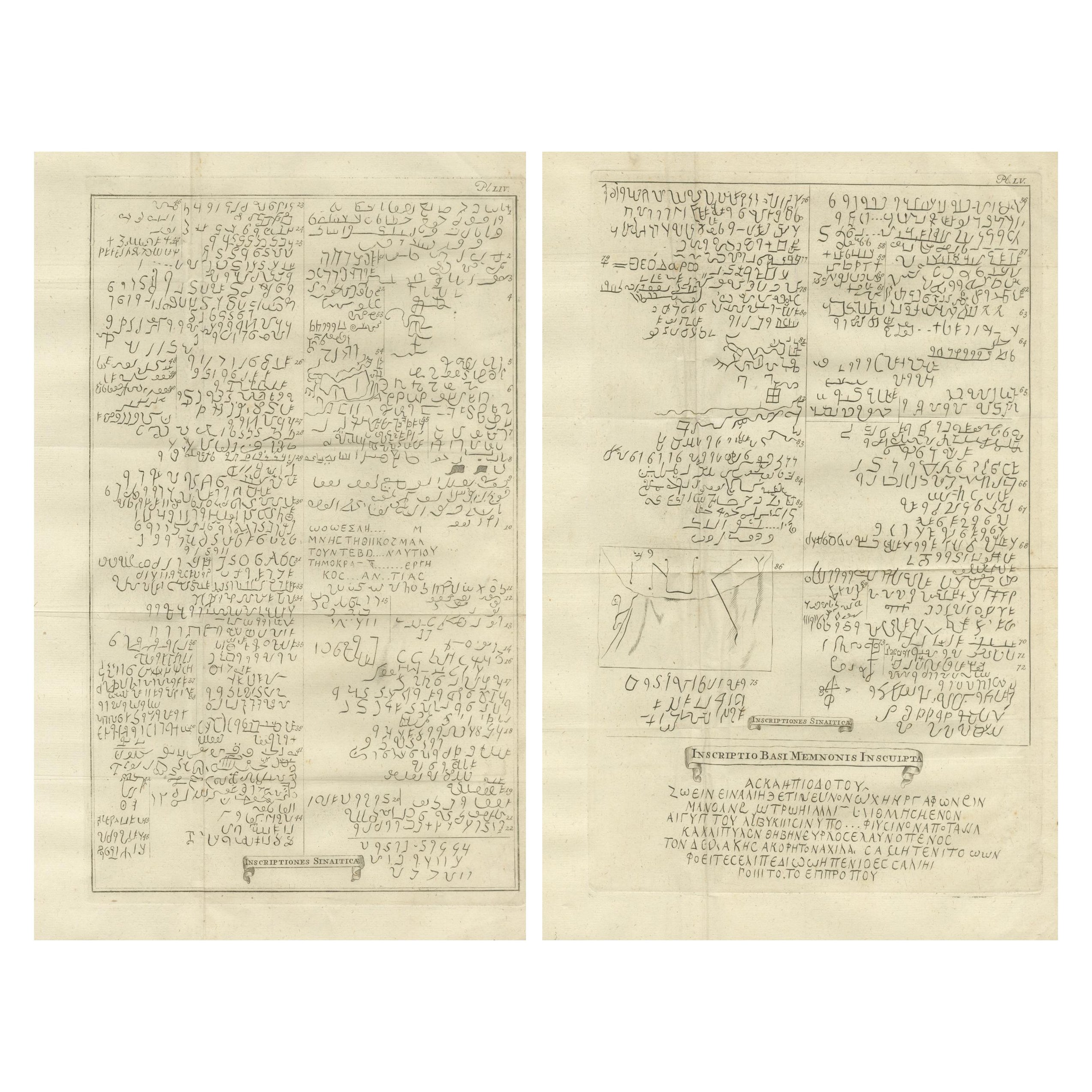
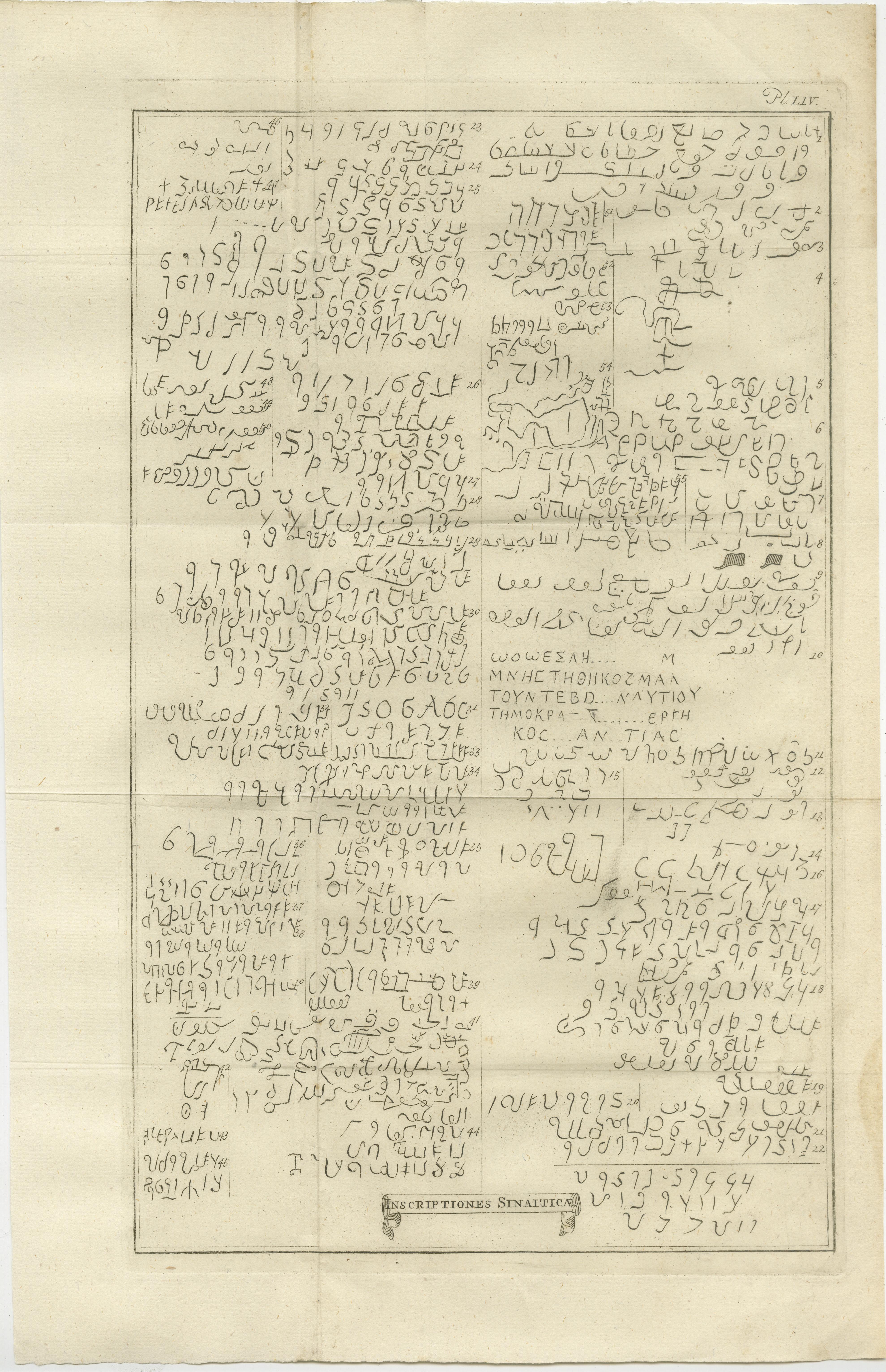
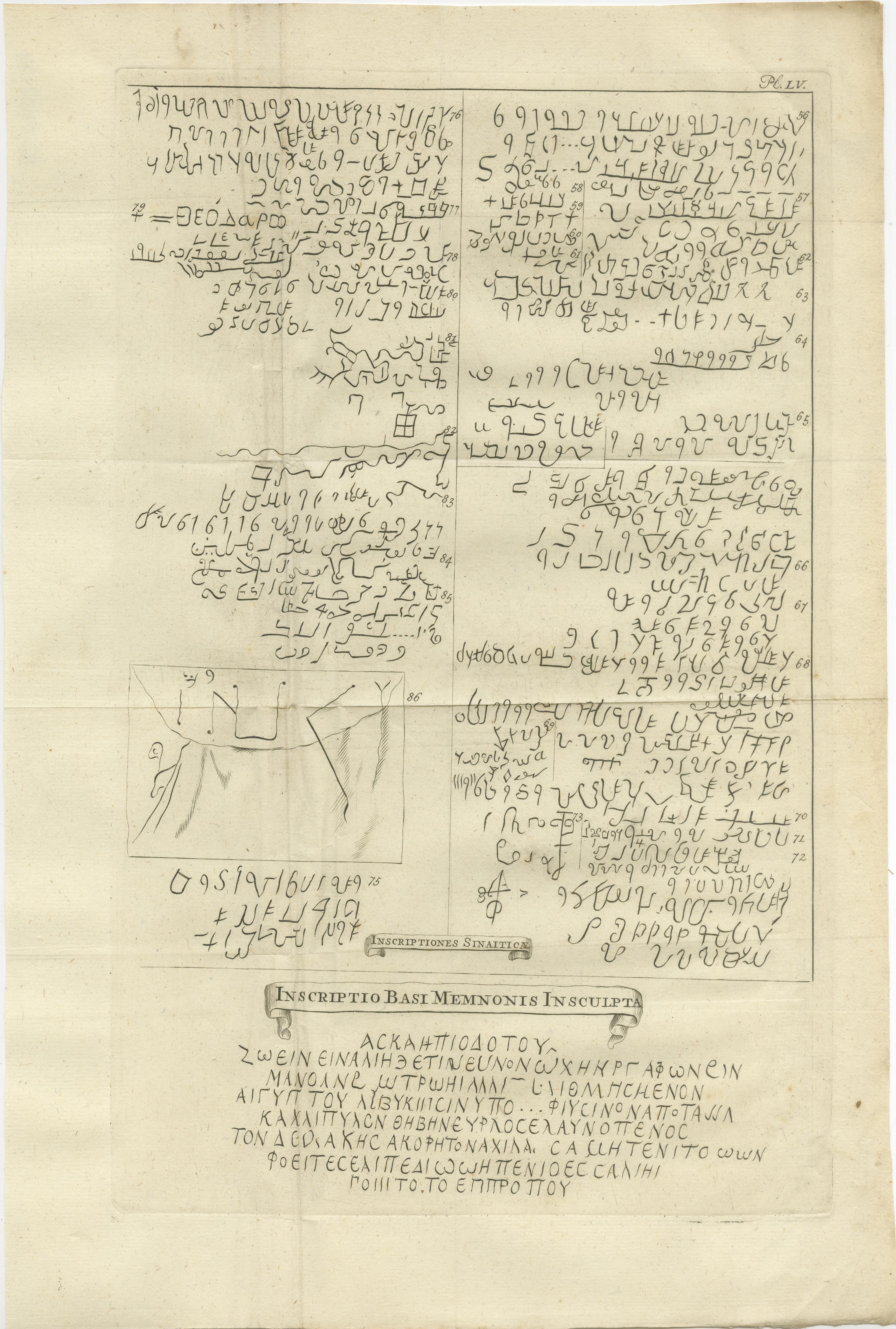
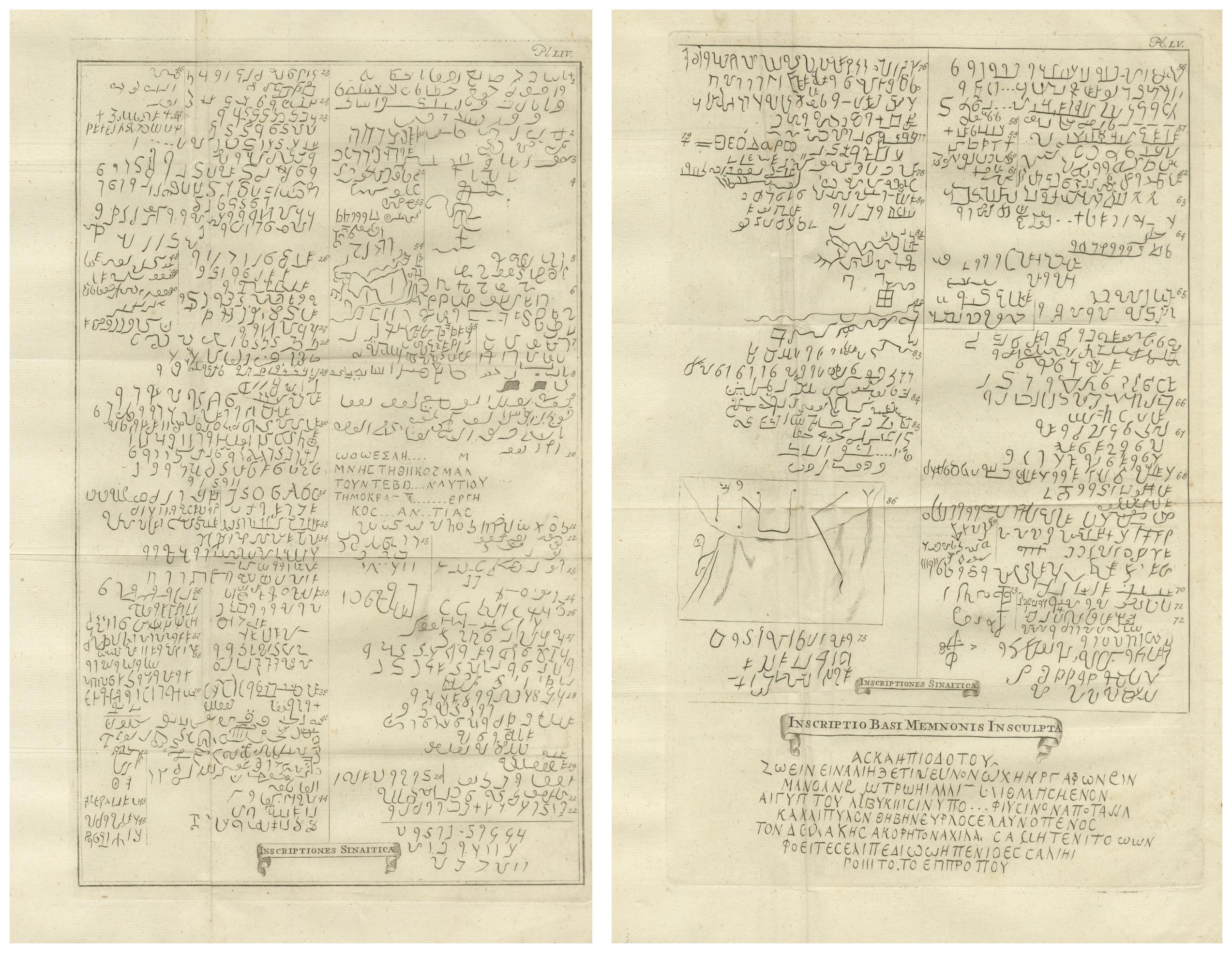
This intriguing double-plate engraving features a meticulously rendered compilation of ancient inscriptions discovered on temple walls and monuments in the Sinai Peninsula and Egypt, reproduced in the early 18th century. The left sheet bears the heading *Inscriptions Sinaitica*, while the right expands with a second part of *Inscriptions Sinaitica* and a featured cartouche titled *Inscriptio Basi Memnonis Insculpta*.
The engravings display a range of scripts including early Semitic, Greek, and hieroglyphic-like symbols, methodically copied from wall carvings and stelae. Some areas are organized in columns, while others show fragmented lines and small illustrations, such as the sketch of a rock carving at the bottom right of the right plate. The inscriptions are not translated here, preserving their enigmatic and scholarly quality.
These prints likely originate from Cornelis de Bruijn's travel publication around 1710, which brought to light many ruins and inscriptions previously unknown to European audiences. De Bruijn's documentation of the *Sinaitic* inscriptions predated modern decipherment and served as a valuable resource for scholars attempting to understand early writing systems and intercultural contact in the ancient Near East.
Of particular interest is the "Inscriptio Basi Memnonis" — a Greek text inscribed on the base of the famed "Colossi of Memnon" near Thebes (modern Luxor), once believed to emit mystical sounds at sunrise. Such inscriptions from Greek travelers and Roman visitors served as ancient graffiti and testimonies of early tourism to Egypt.
Condition: Very good condition. Fold lines as issued. Light age-toning along edges; no tears or staining. Plate impressions strong and clear.
Framing tips: Display side-by-side in a double window frame, or in a wide-format horizontal frame with archival matting in ivory or parchment tones. Ideal for a study, library, or setting themed around archaeology, philology, or travel.
Technique: Copperplate engraving Maker: After Cornelis de Bruijn, The Netherlands, circa 1710