About this sheet
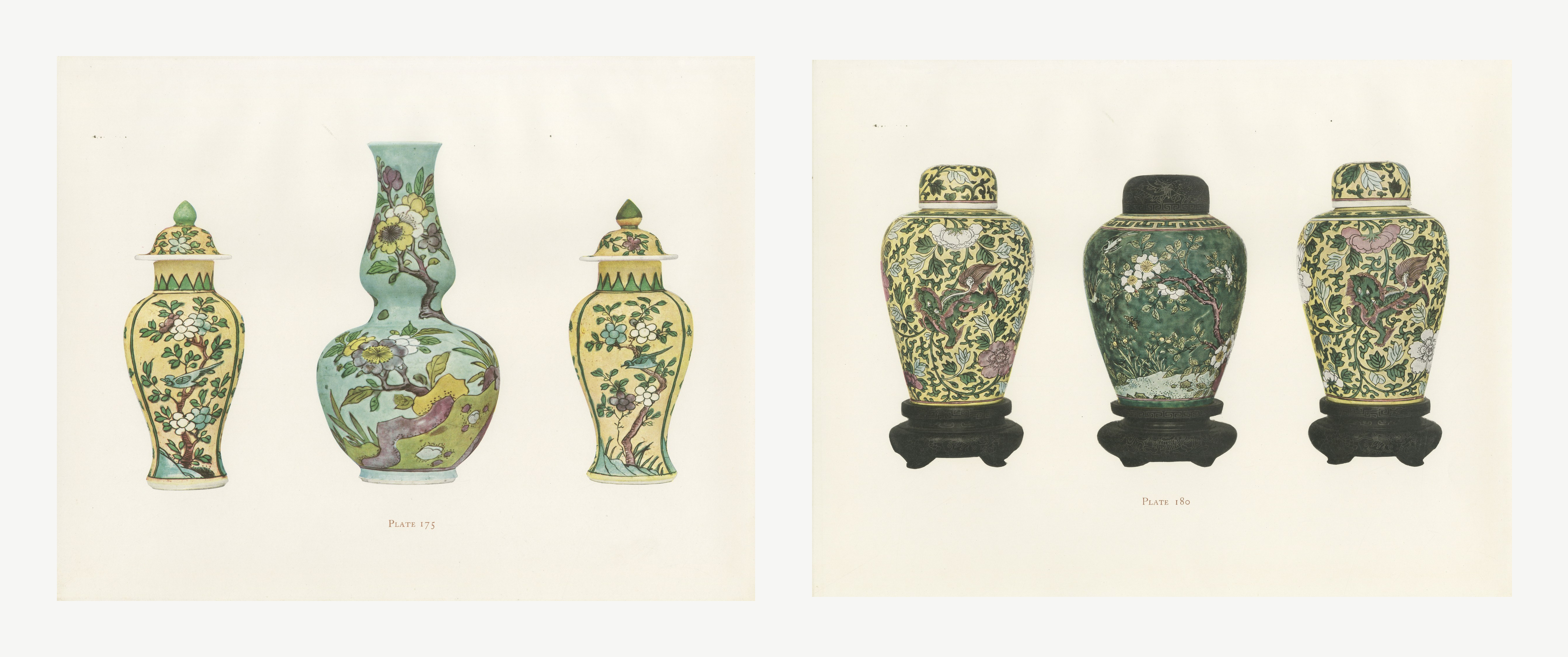
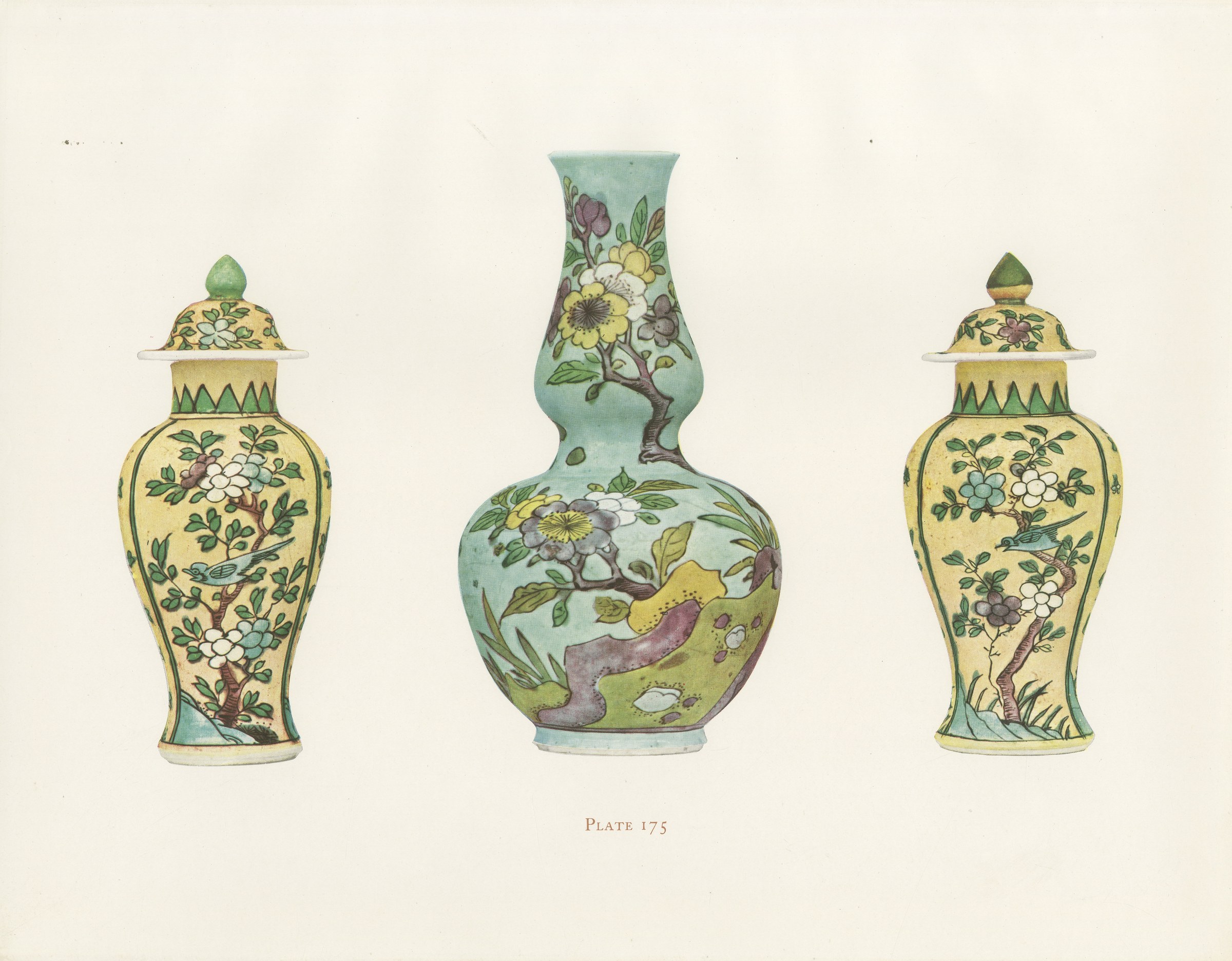
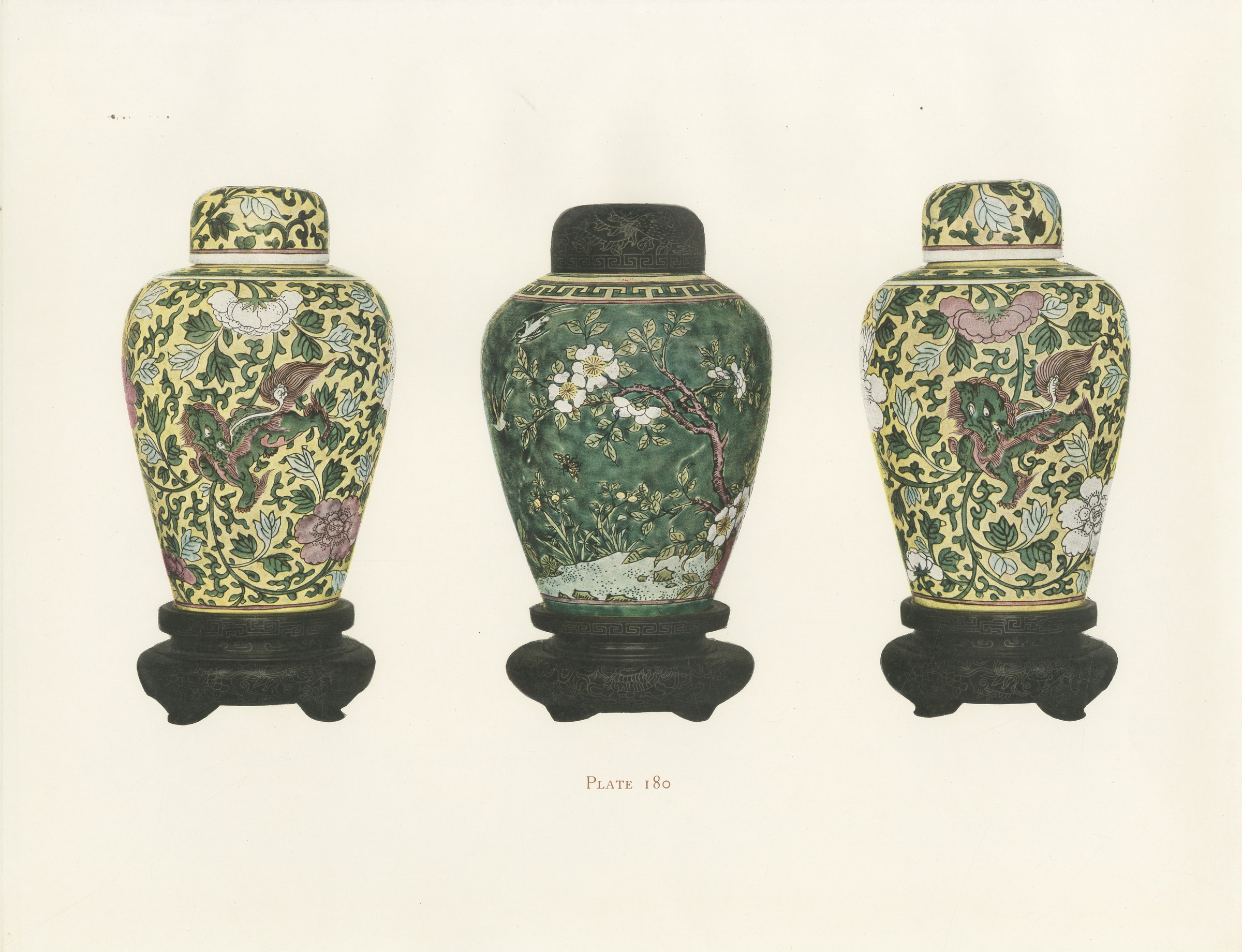
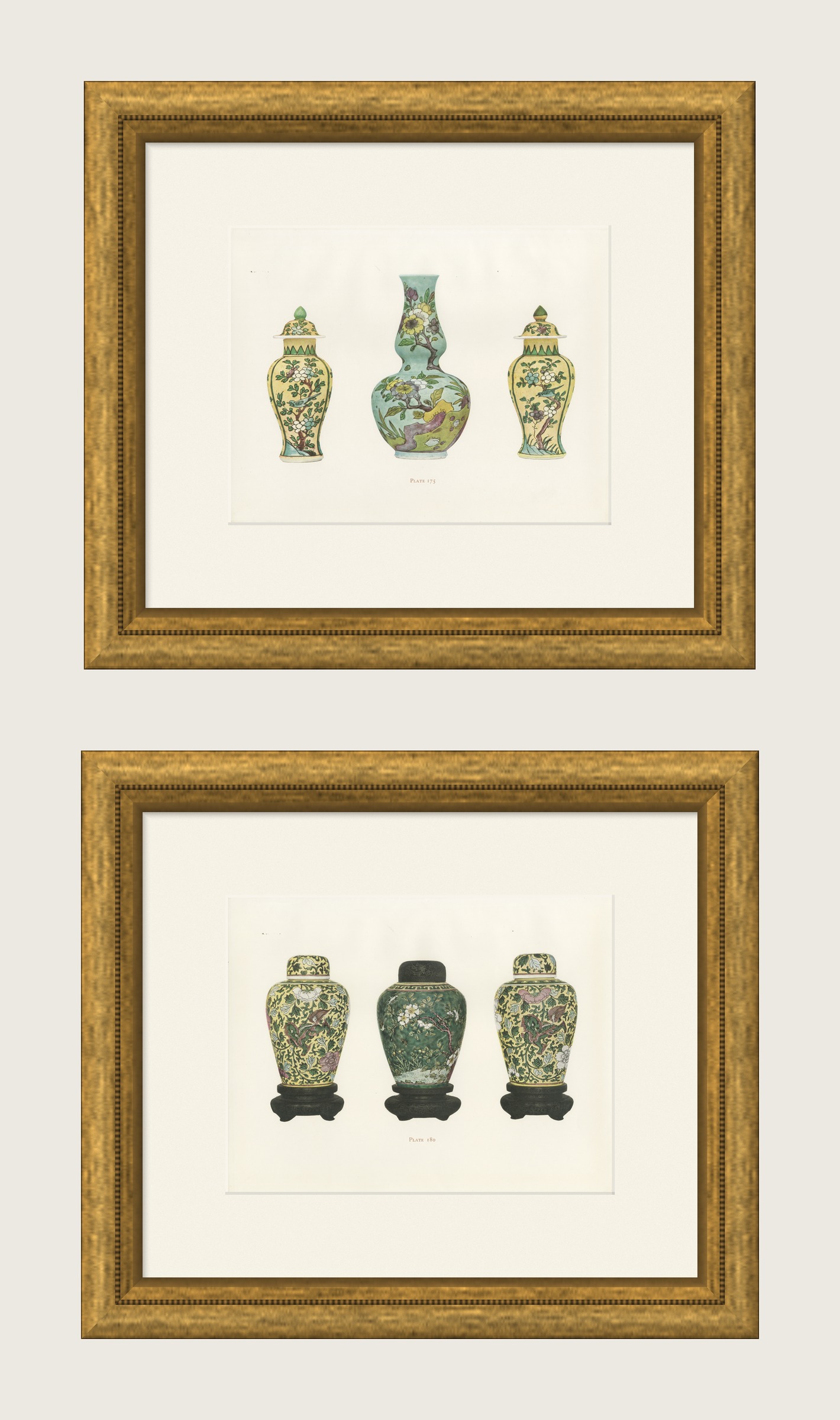
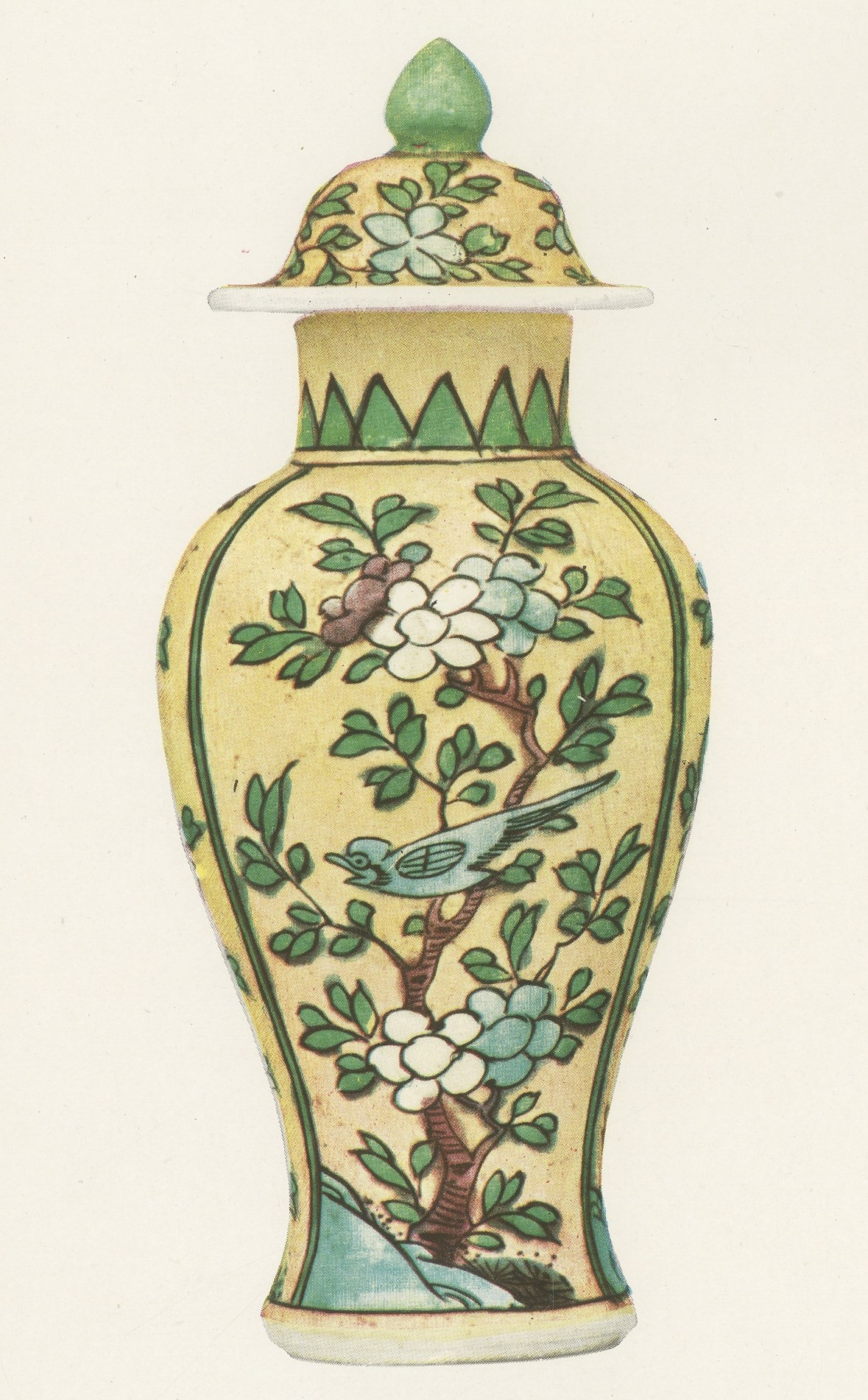
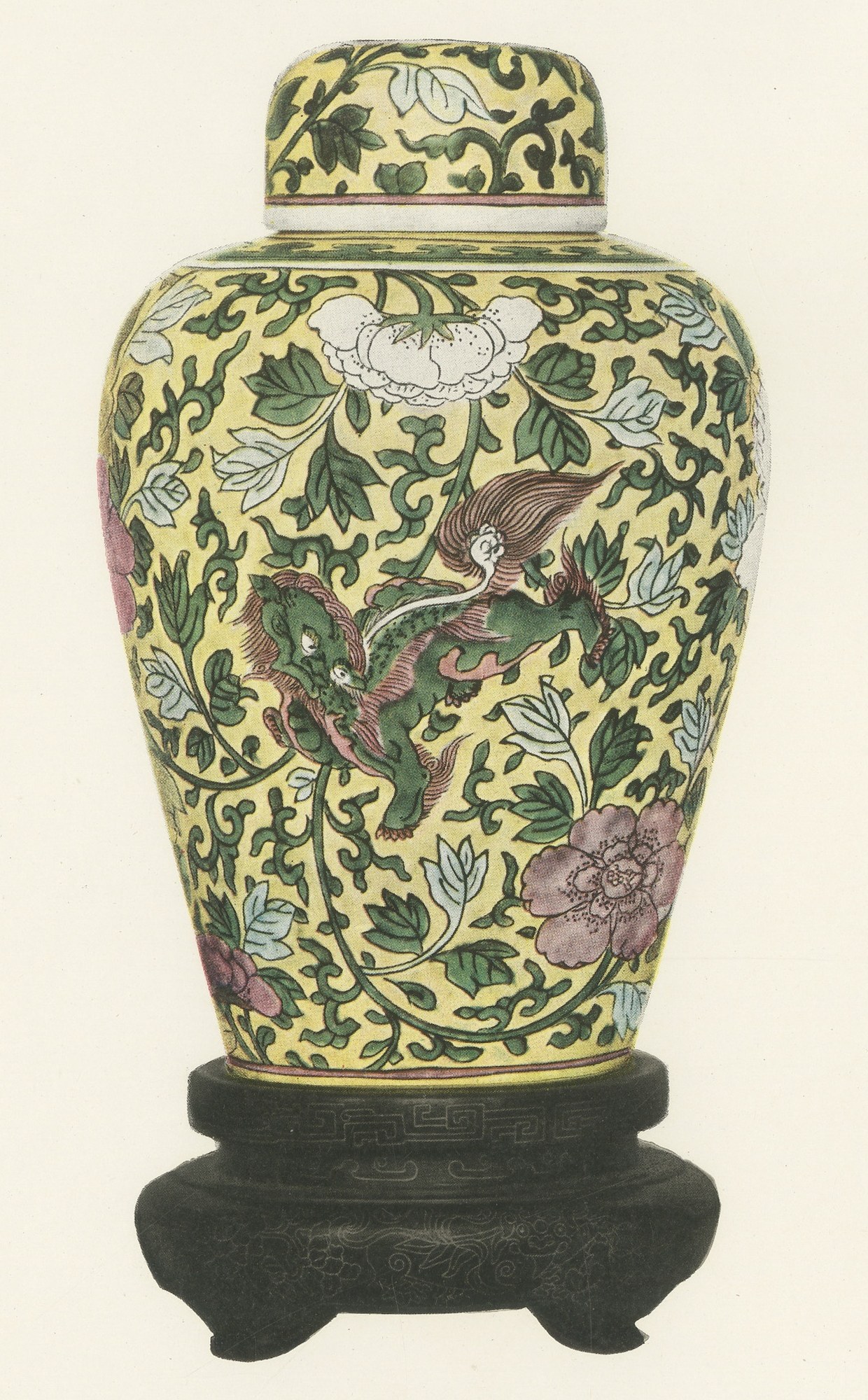
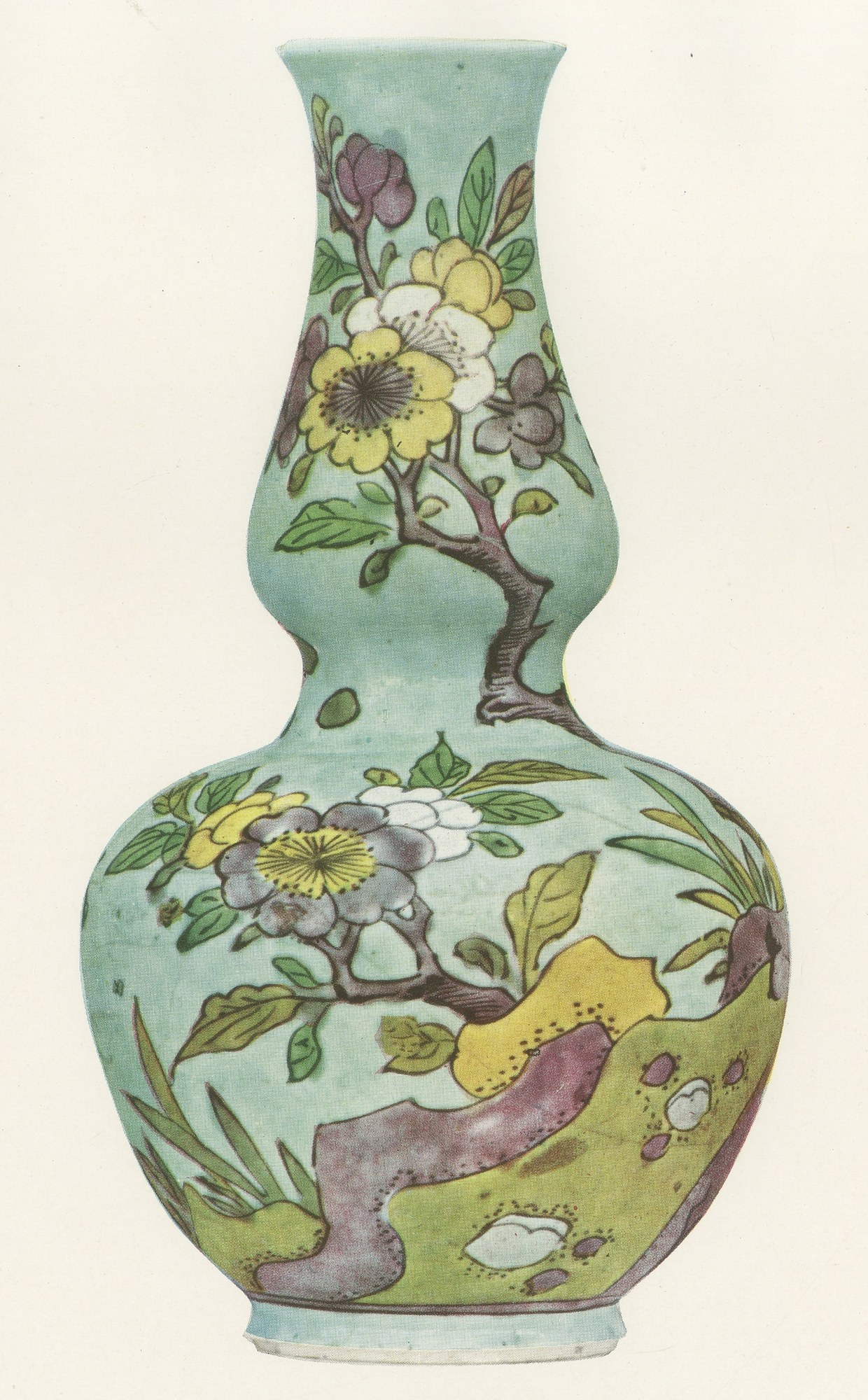
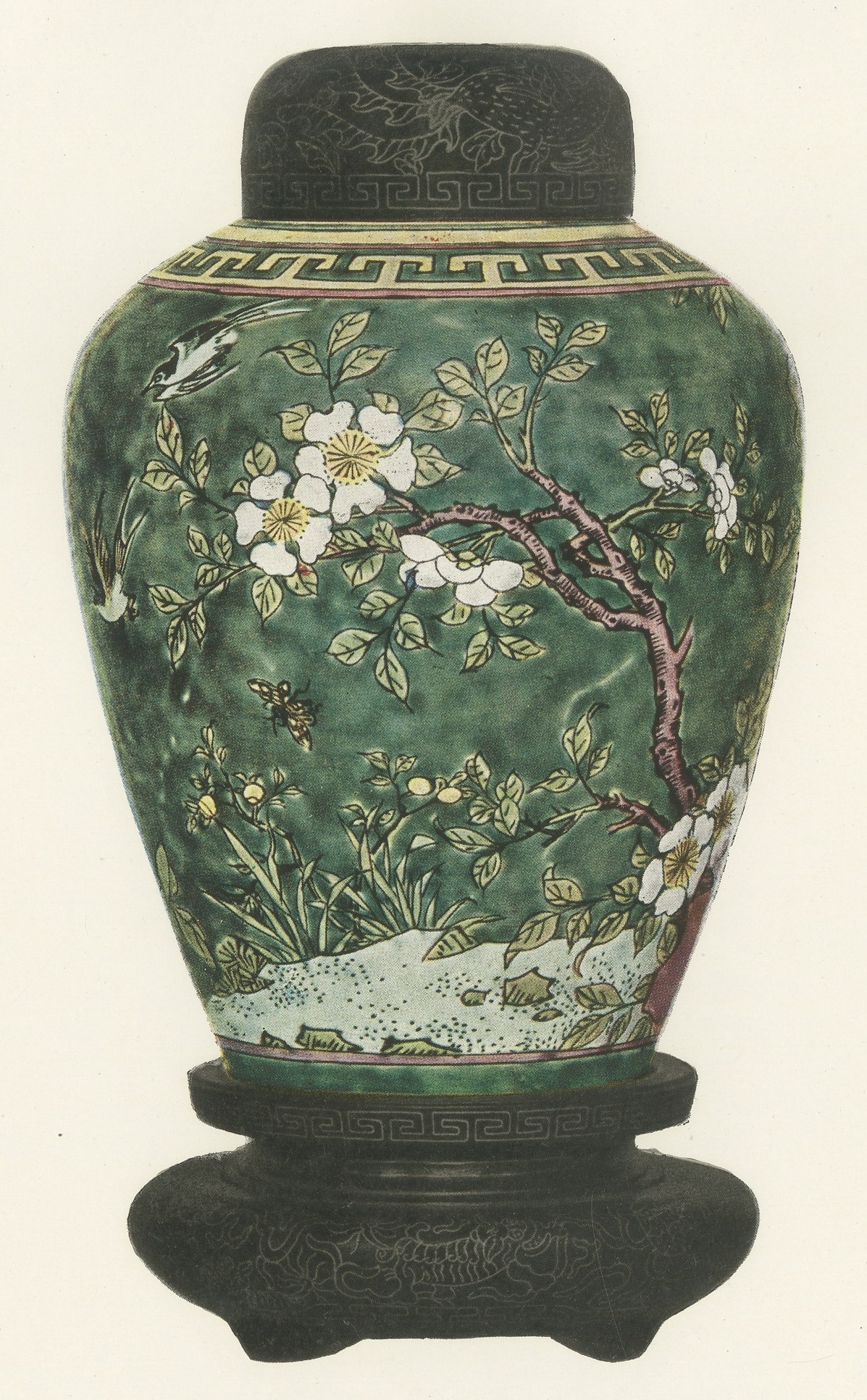
This is a set of two original 1911 color plates, Plates 175 and 180 from Volume II of Gorer and Blacker's Chinese Porcelain and Hard Stones, sold together as one lot. What links them: yellow and green ground jar groups. Plate 175: Group of three vases (a bottle of gourd form and a pair of small jars and covers). In the middle a bottle of gourd form, with widened mouth, having a delicate green ground decorated with rocks and a flowering peach-tree; the rocks, outlined and stippled in aubergine, are colored with green, aubergine, and yellow. The pair of small jars and covers are decorated in enamels with rocks and flowering trees, in the middle of which are birds, all detached upon a ground of yellow enamel, the periphery divided into four panels by fillets. The book gives it to the Early Kang-he period and records height 7 inches (17.8 cm); diameter 4 1/4 inches (10.7 cm), the book giving a size for each piece shown. In the collection of H. J. Duveen, Esq. Plate 180: Group of three jars and covers. The pair, having a yellow ground, is decorated with a brocade design in which flowers and foliage are associated with lions; shades of green and aubergine, in conjunction with the yellow ground, furnish the three colors, san ts'ai. The other vase, with a wooden cover, has a lovely ground of mottled apple-green; the aubergine of the tree-trunks, the yellow of the flower-centers and of the T border on the shoulder, and the shades of green furnish another set of three colors, and it is displayed with similar rocks and plants. The book gives it to the Kang-he period and records height 6 1/4 inches (15.9 cm); diameter 2 1/2 inches (6.3 cm), the book giving a size for each piece shown. In the collection of G. L. Bevan, Esq.
Chinese Porcelain and Hard Stones, by Edgar Gorer and J. F. Blacker, was published in London by Bernard Quaritch in 1911 in two volumes with two hundred and fifty four color plates, and these sheets are among them, from Volume II. The plates are color collotypes, a photographic process that reproduces continuous tone without a visible dot screen, which is why the glazes keep their depth on paper.
The book appeared at the height of the Edwardian passion for Chinese porcelain, when English and American collections were being formed at speed and a dealer's catalog could shape taste. R. L. Hobson of the British Museum attacked Gorer's attributions in print when the work appeared, and later scholarship has revised many attributions of this kind, which is part of what makes the volumes interesting to read now.
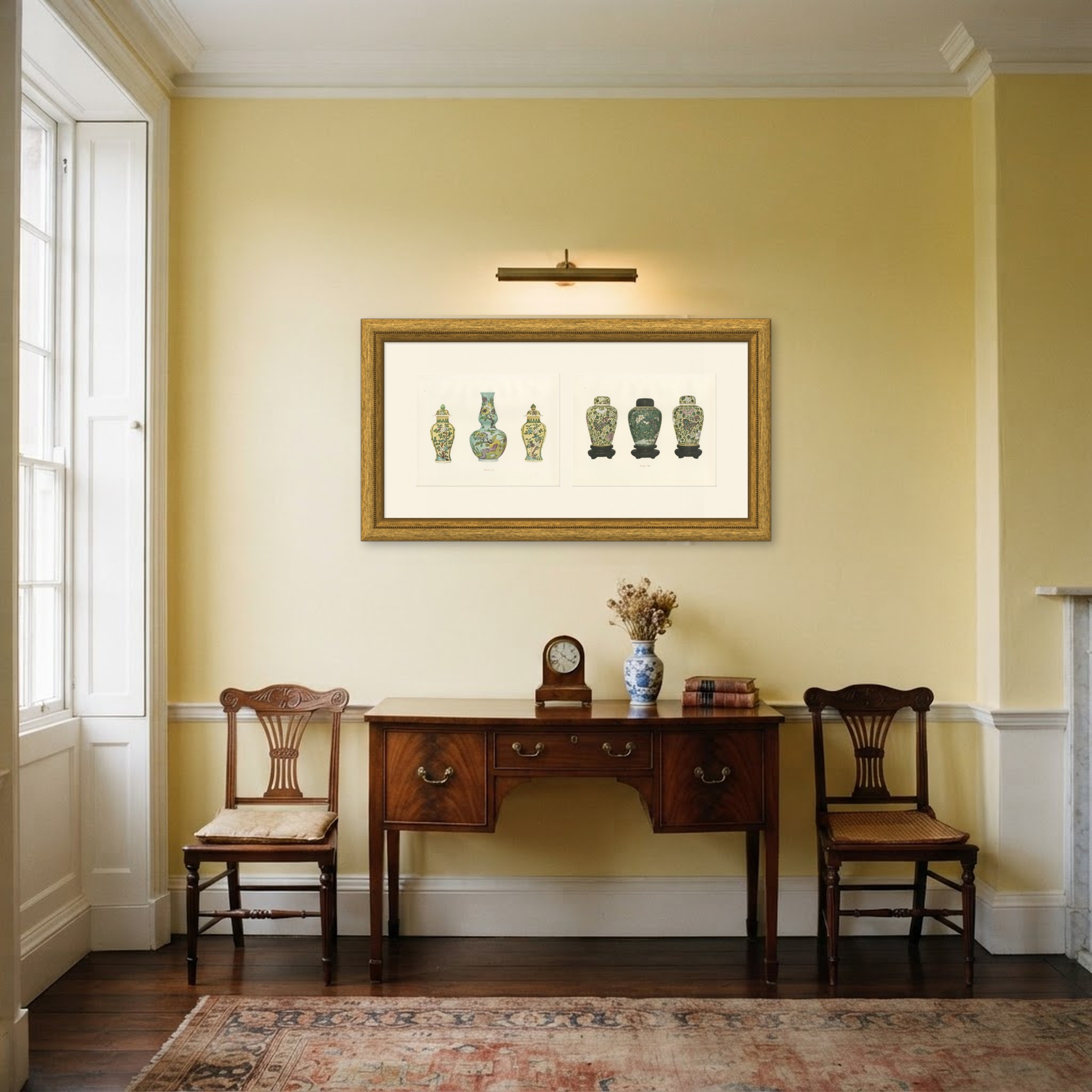
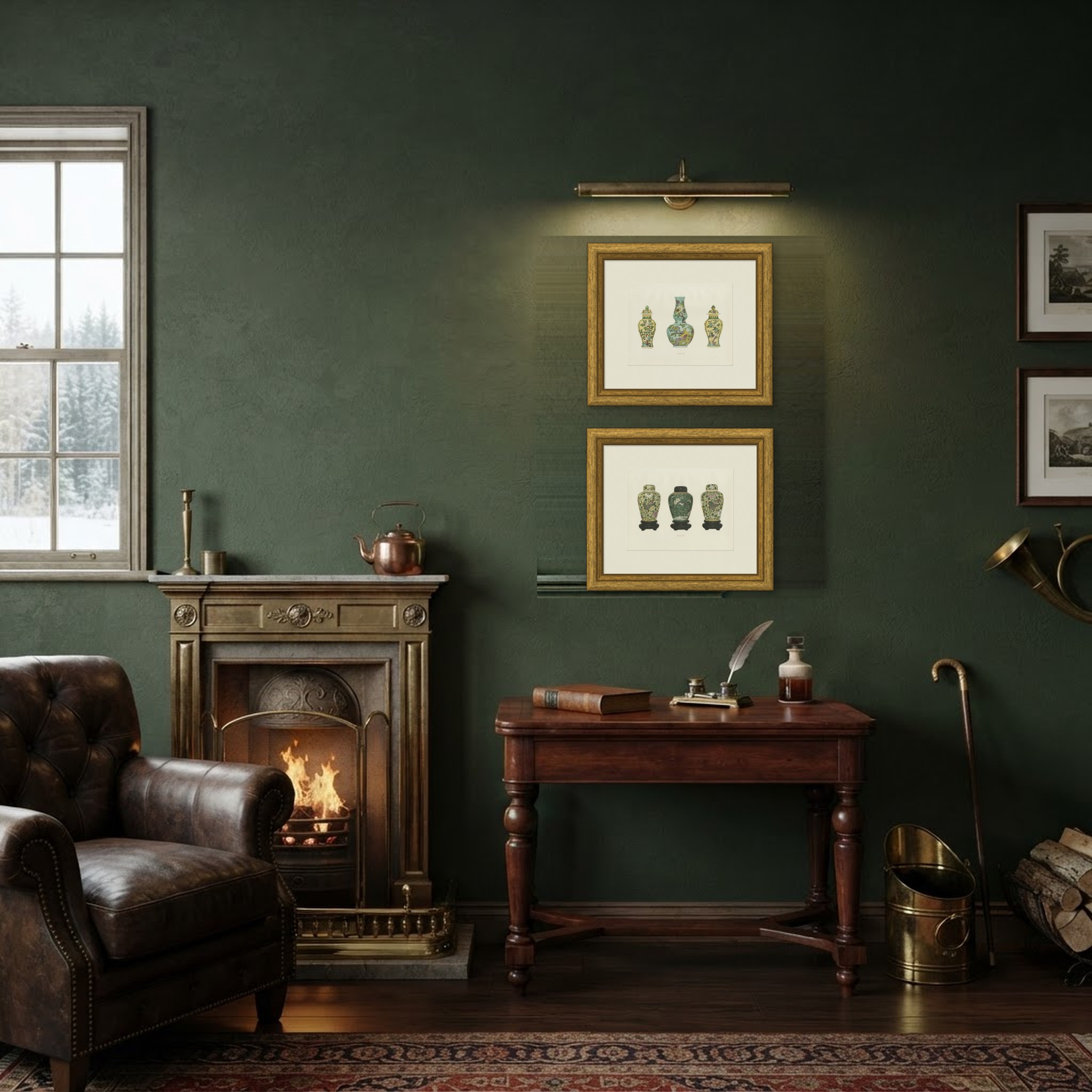
Collectors of Chinese ceramics, of early color printing and of Edwardian book illustration all look for these plates, and they work equally well in an interior scheme as in a collection. The two sheets are the same size and were printed by the same hand, so they hang as one group.
These are original antique prints, not modern reproductions. They are two original sheets sold together as one lot, and the set is never split.
Even age toning throughout. Light foxing in the margins of one of the two sheets. Slight wear at the corners of one of the two sheets.
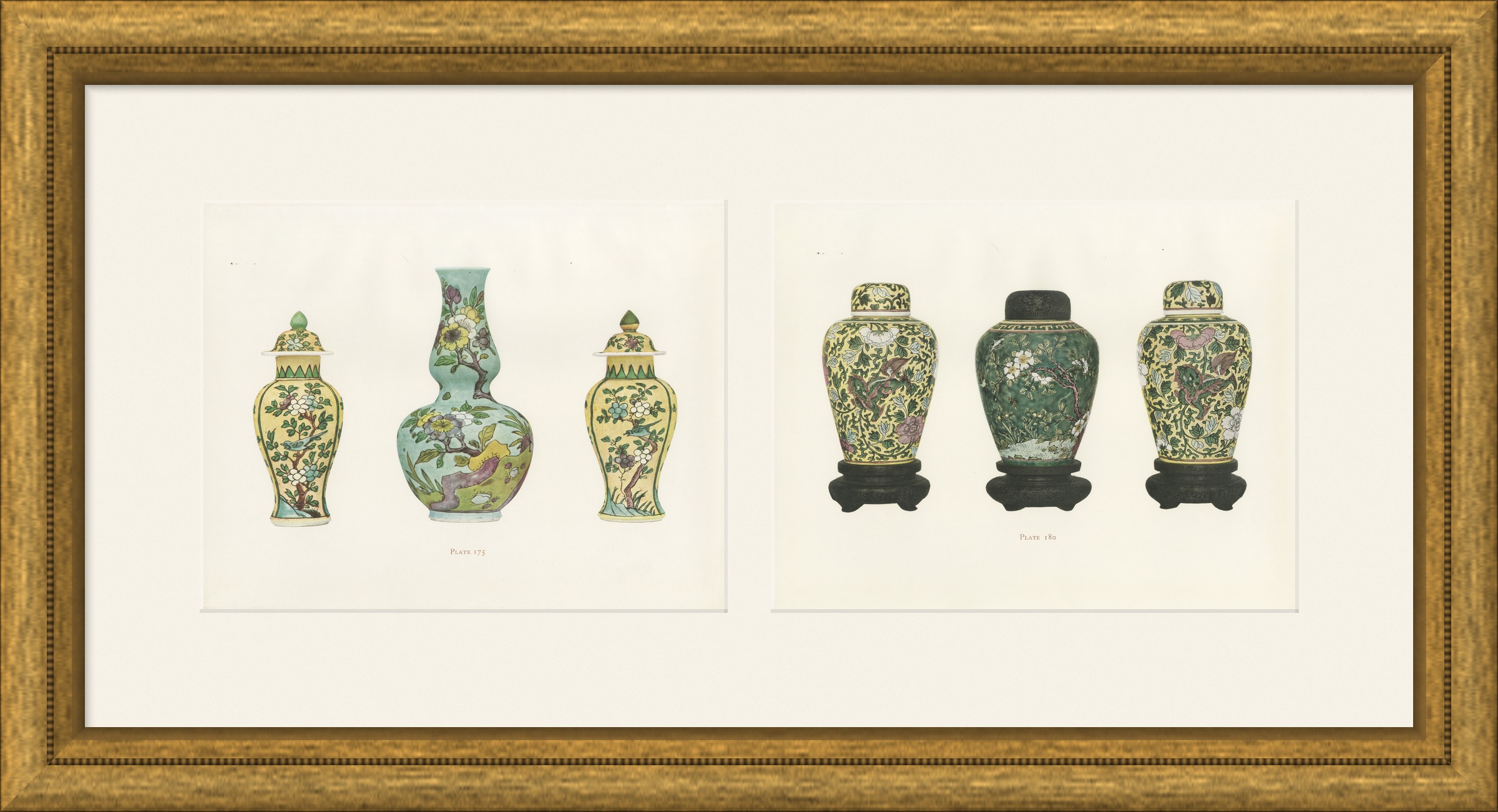
This item is sold unframed. Any framed or interior images are shown for presentation and inspiration only, unless the listing explicitly states that the item is sold framed.