Turkish Embroidery and Indian Saddle Cover, Antique Textile Pair, 1851-1852
€ 645
Original antique · The actual sheet photographed · Certificate of authenticity on request · Sold unframed · Worldwide shipping from € 15 (rates)
Date
1851 to 1852
Mapmaker / artist
Drawn by H. N. Humphreys, lithographed by F. Bedford, under the direction of M. Digby Wyatt
Publisher
Day and Son, Lithographers to the Queen, London
Technique
Chromolithograph
Coloring
Printed color
Sheet size
51.5 × 34 cm (20.3 × 13.4 in)
Condition
Good
Reference
BG-14491-10
What the condition grades mean
Excellent
Bright and clean, with no faults worth mentioning.
Very good
Only light signs of age, such as faint toning.
Good
Normal signs of age for a sheet of this period: toning, some foxing, small marks or neat old repairs.
Fair
Clear faults such as staining, tears or repairs, priced to match.
Every fault we see is written in the condition note, and the whole sheet is shown uncropped in the photos.
Condition
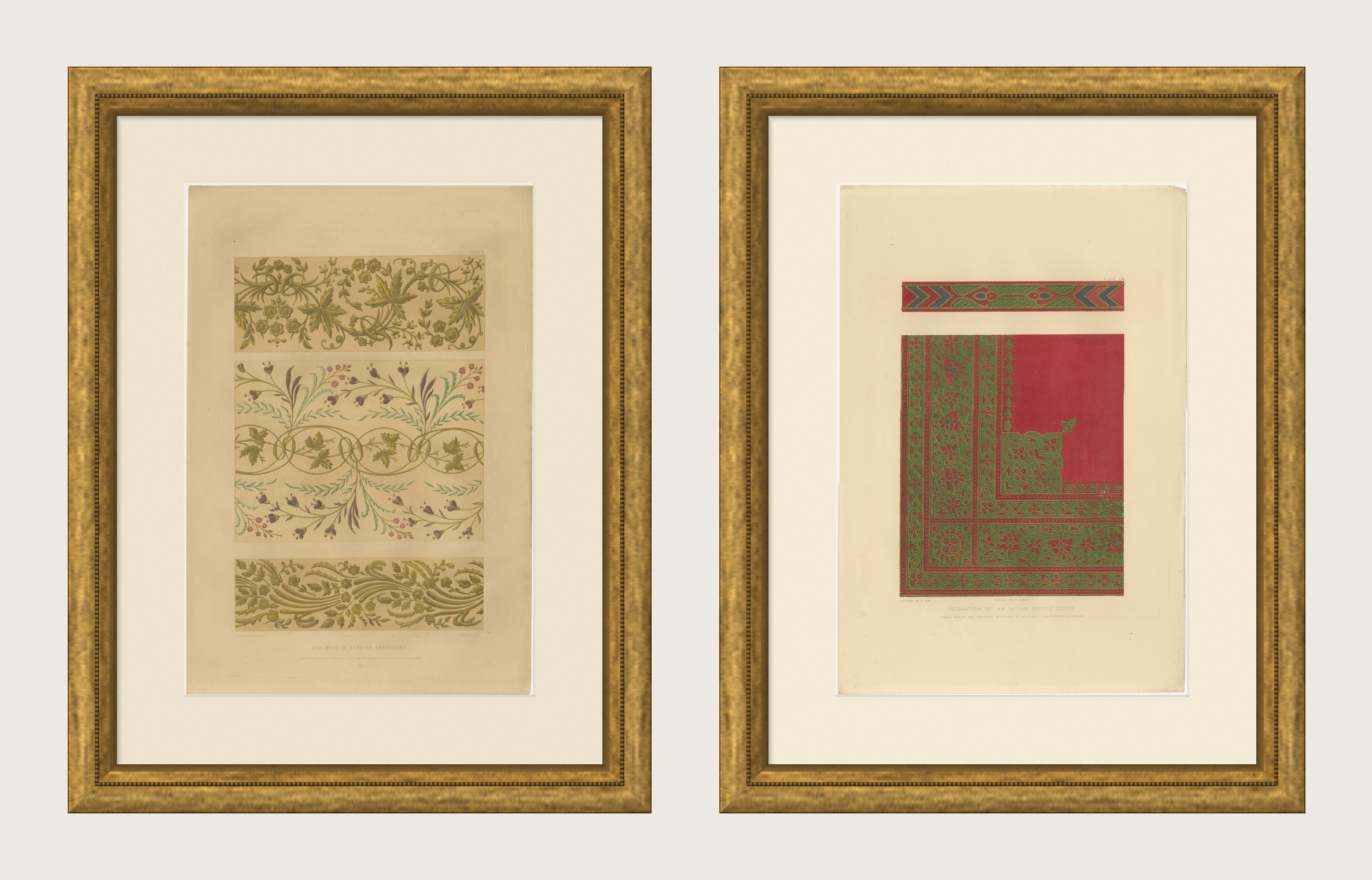
Two sheets, both age toned. Plate 10 is markedly browner than plate 104 and its tone runs into the printed area. Light corner wear on both and minor nicks along the left edge of plate 10. Neither sheet shows foxing.
About this sheet
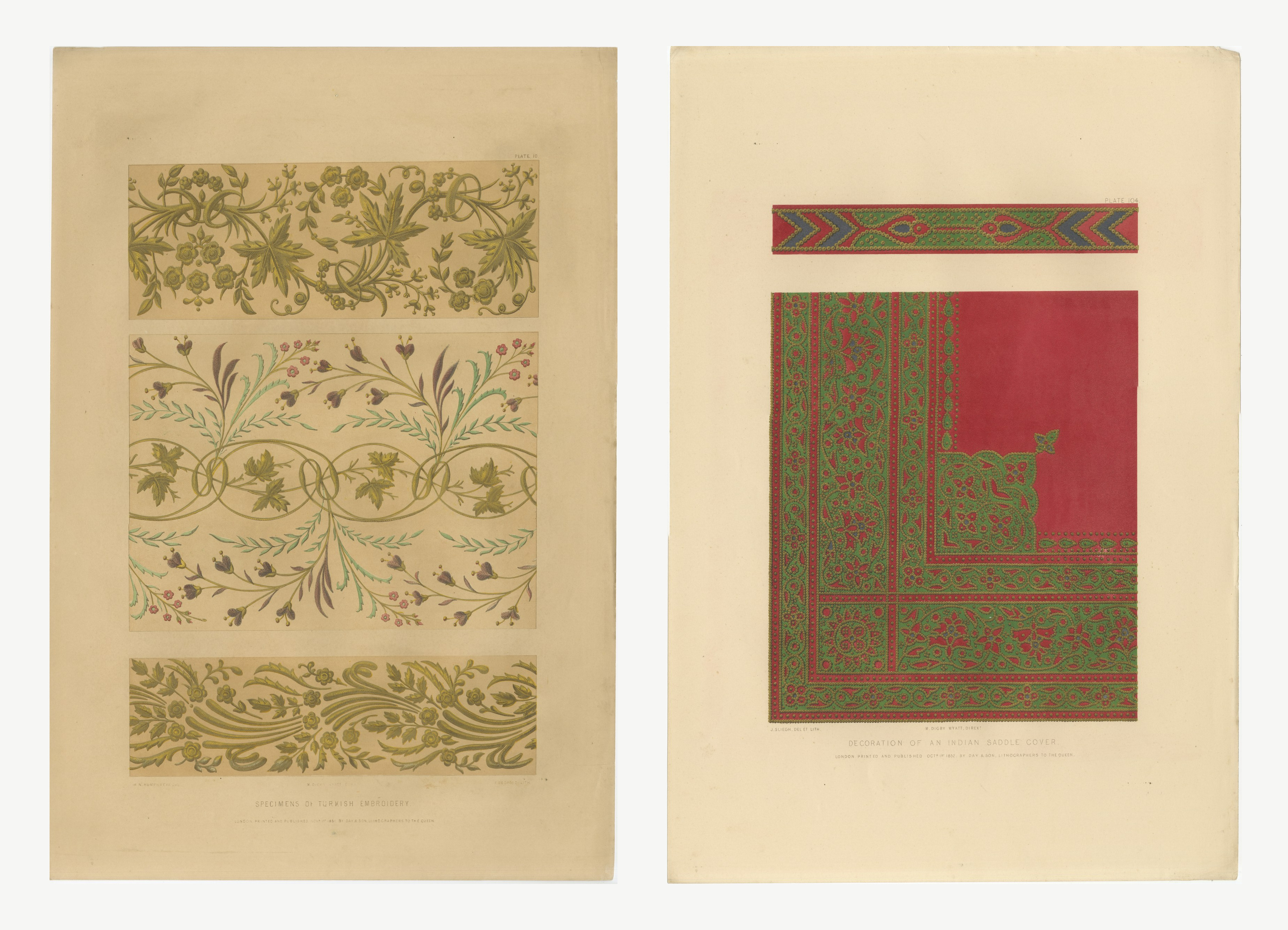
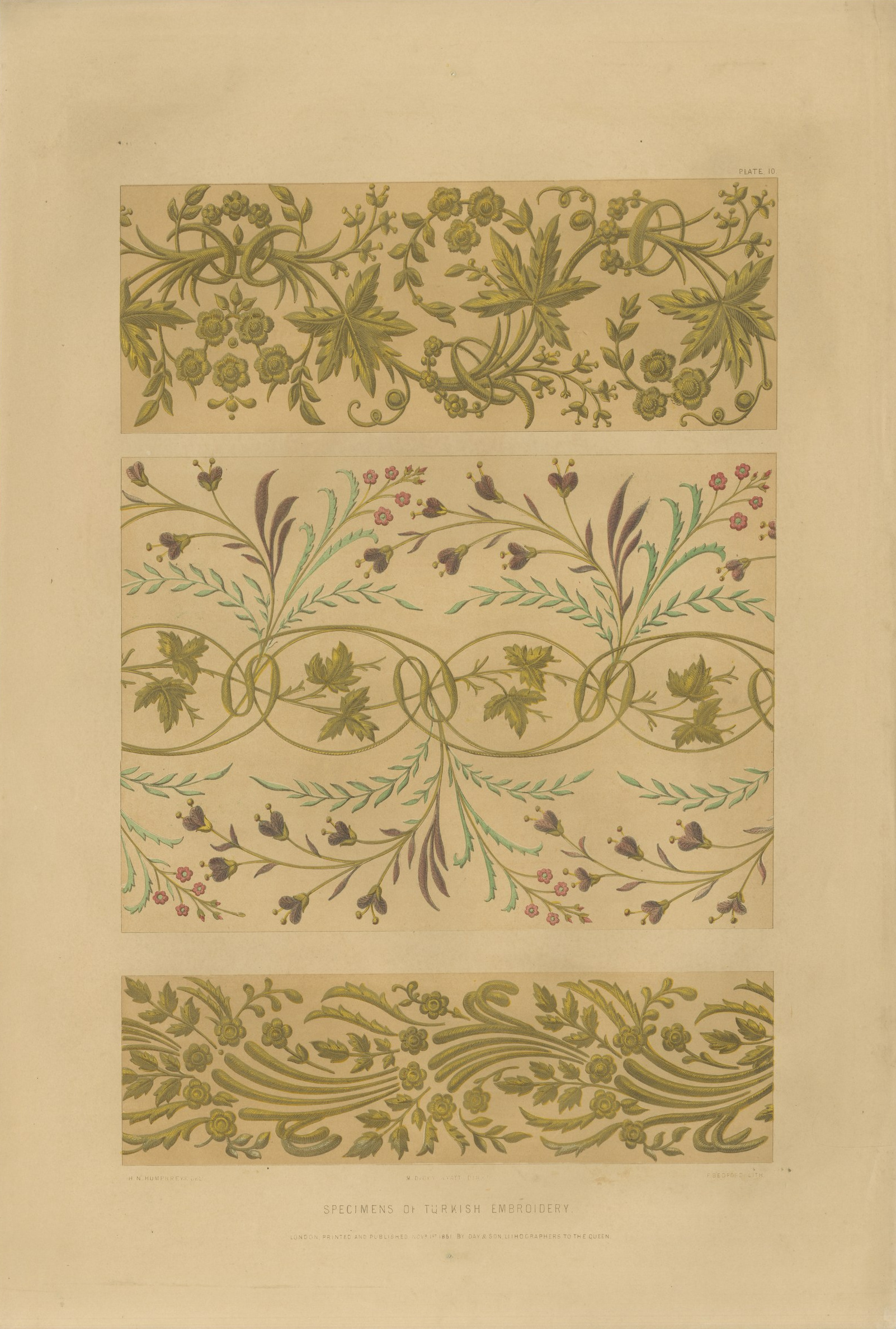
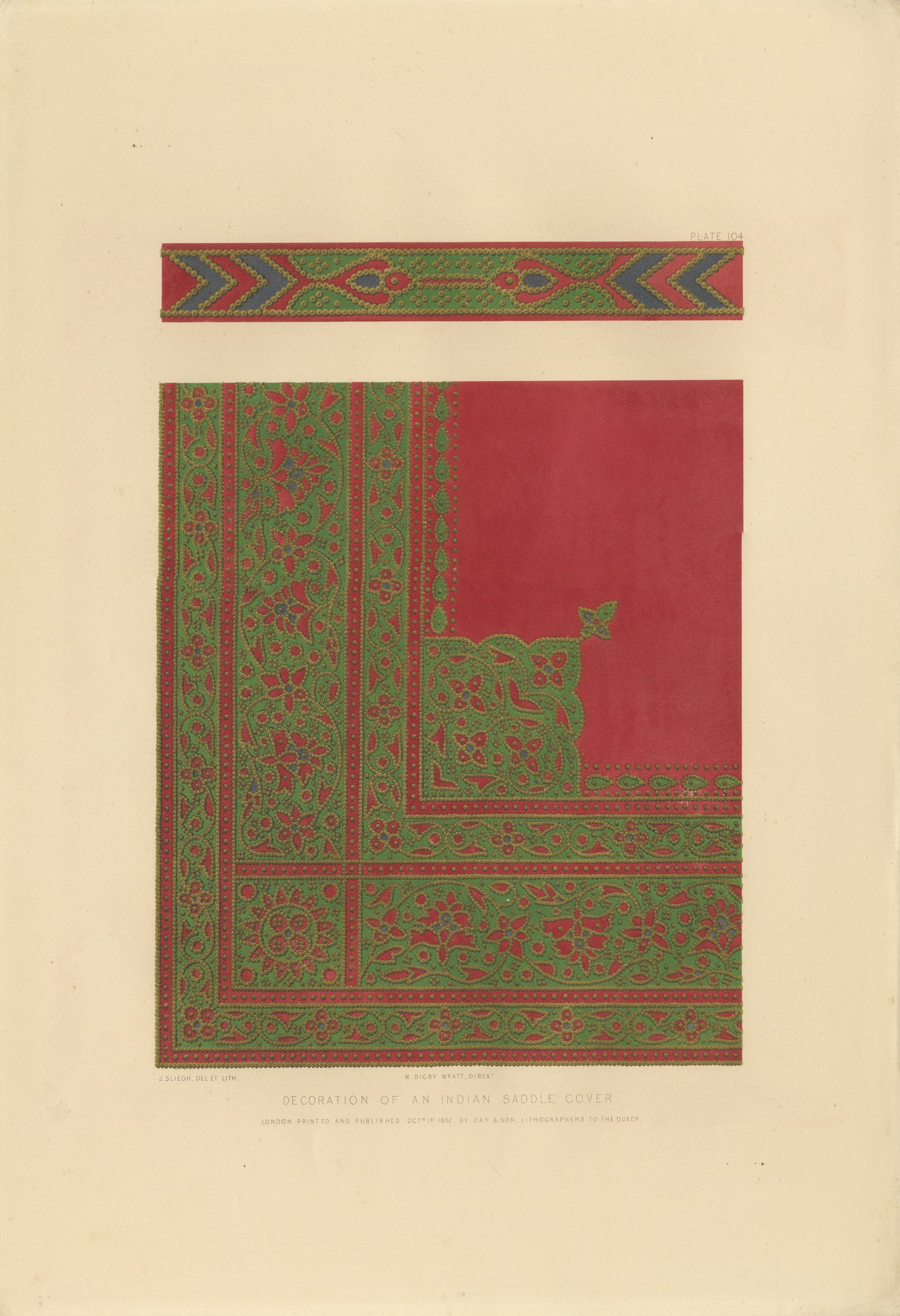
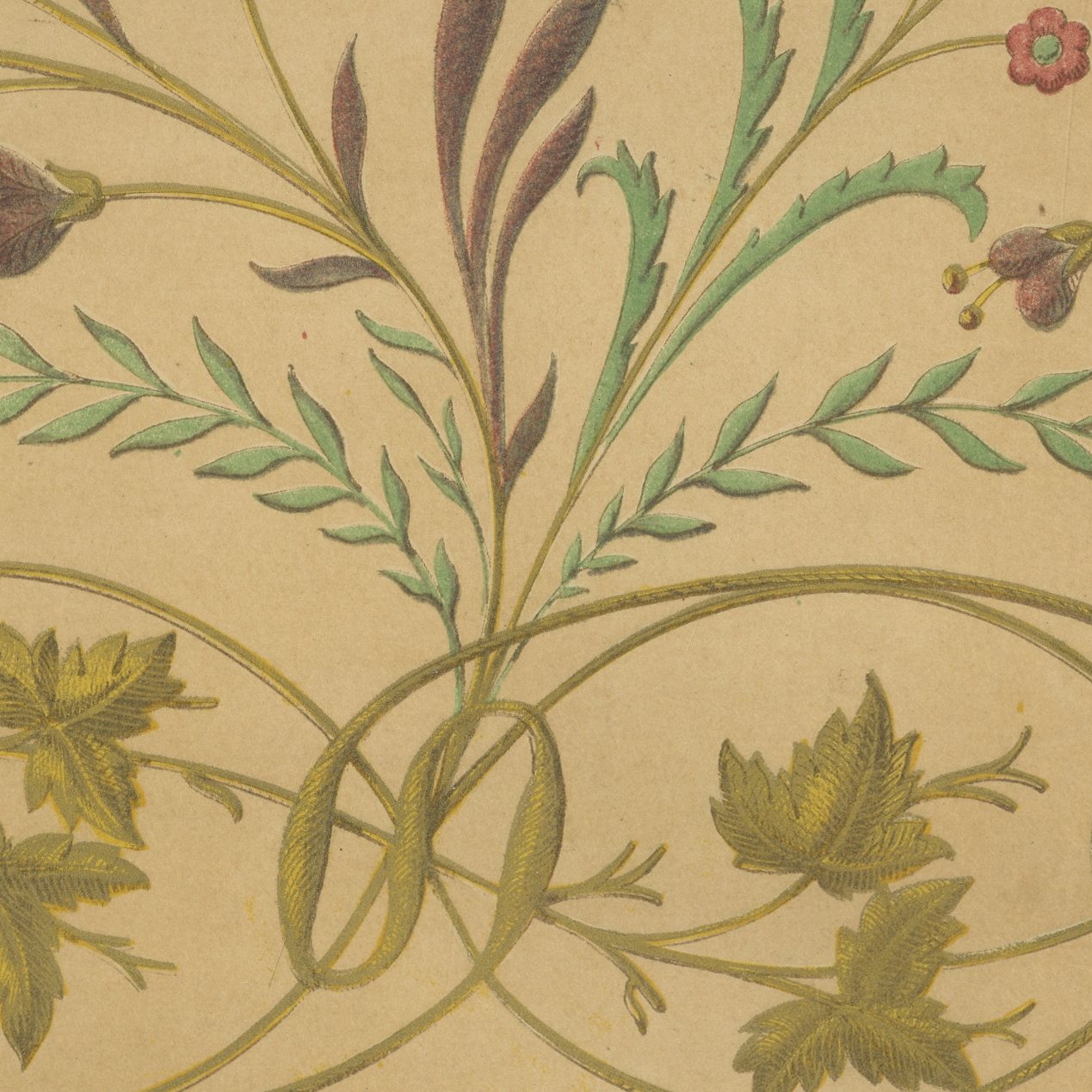
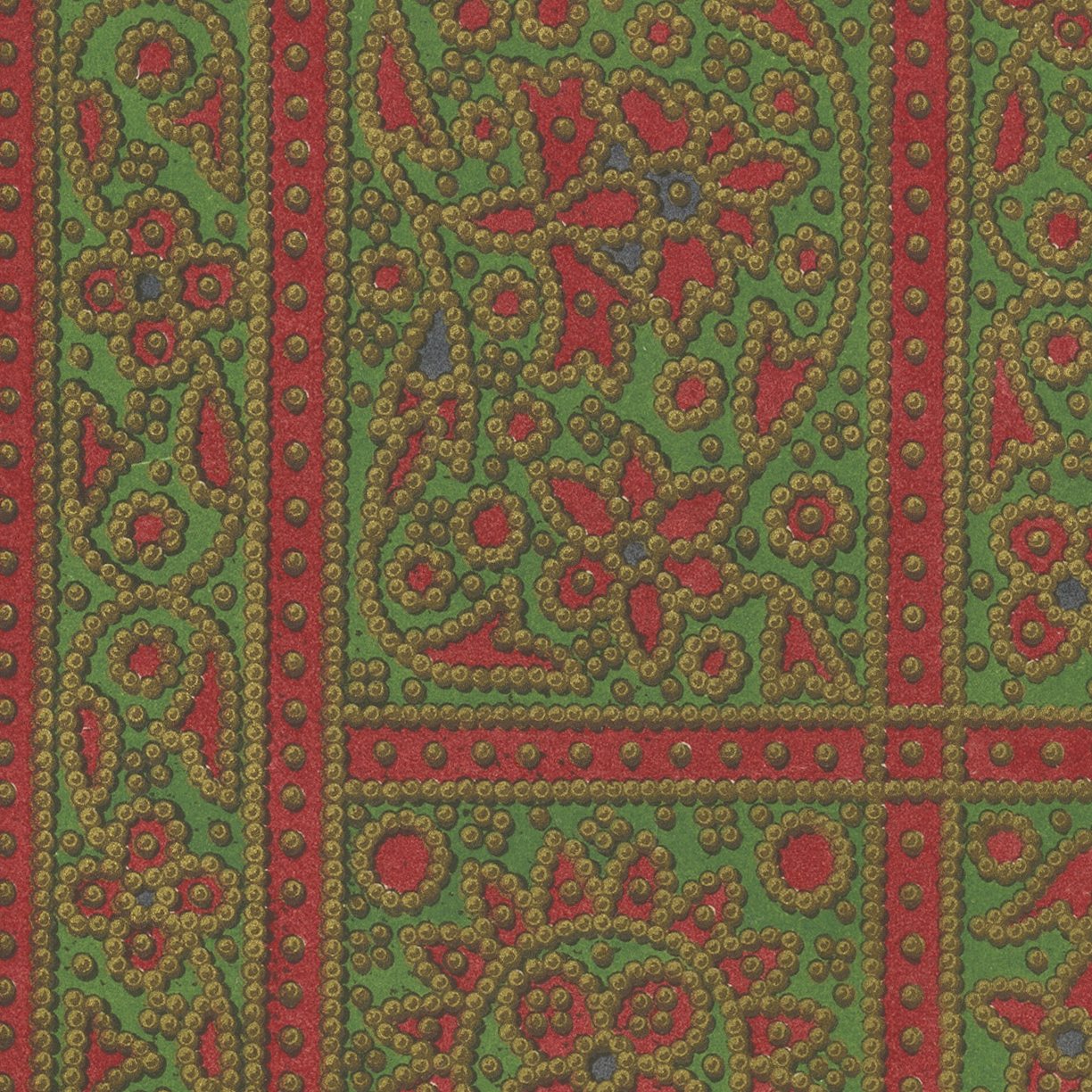
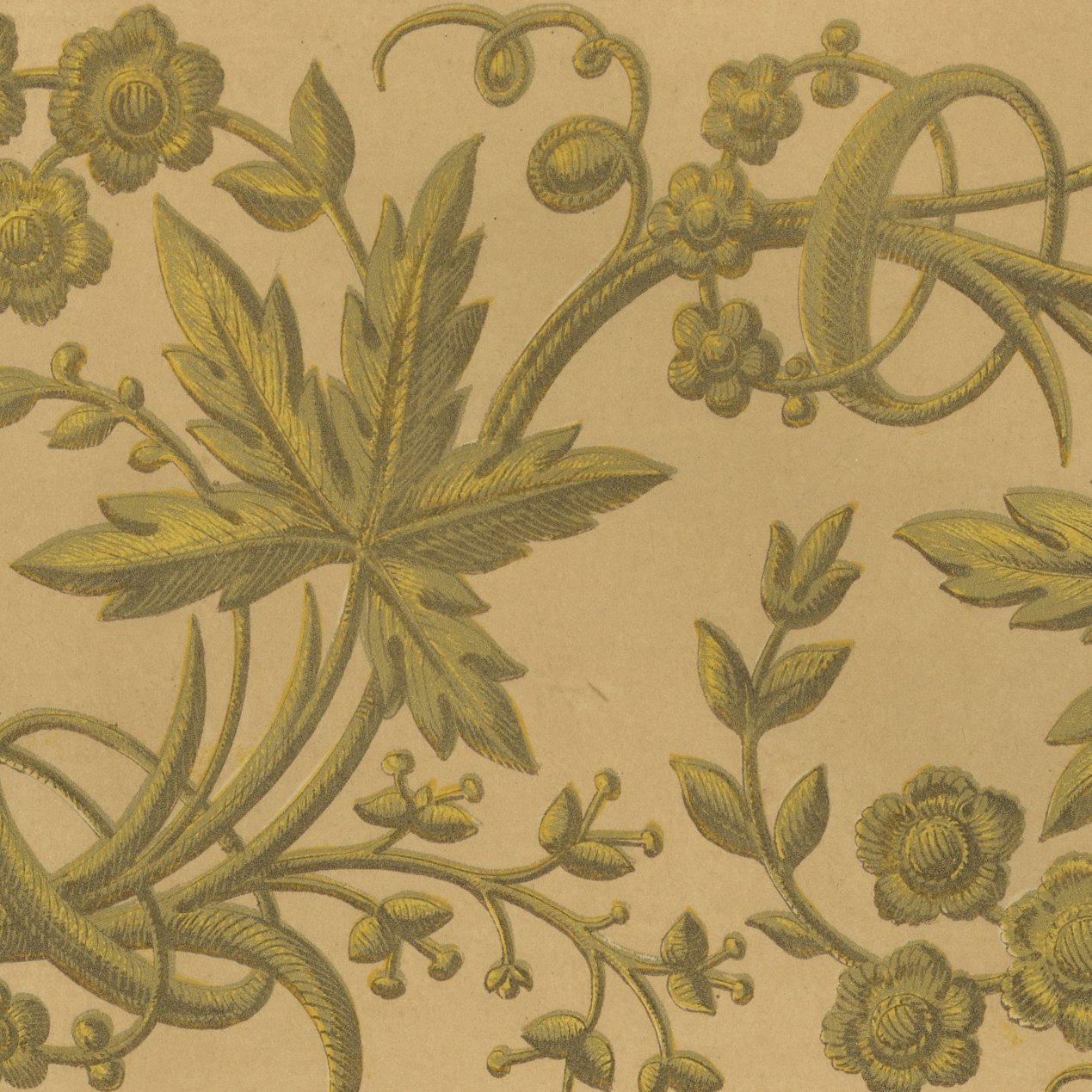
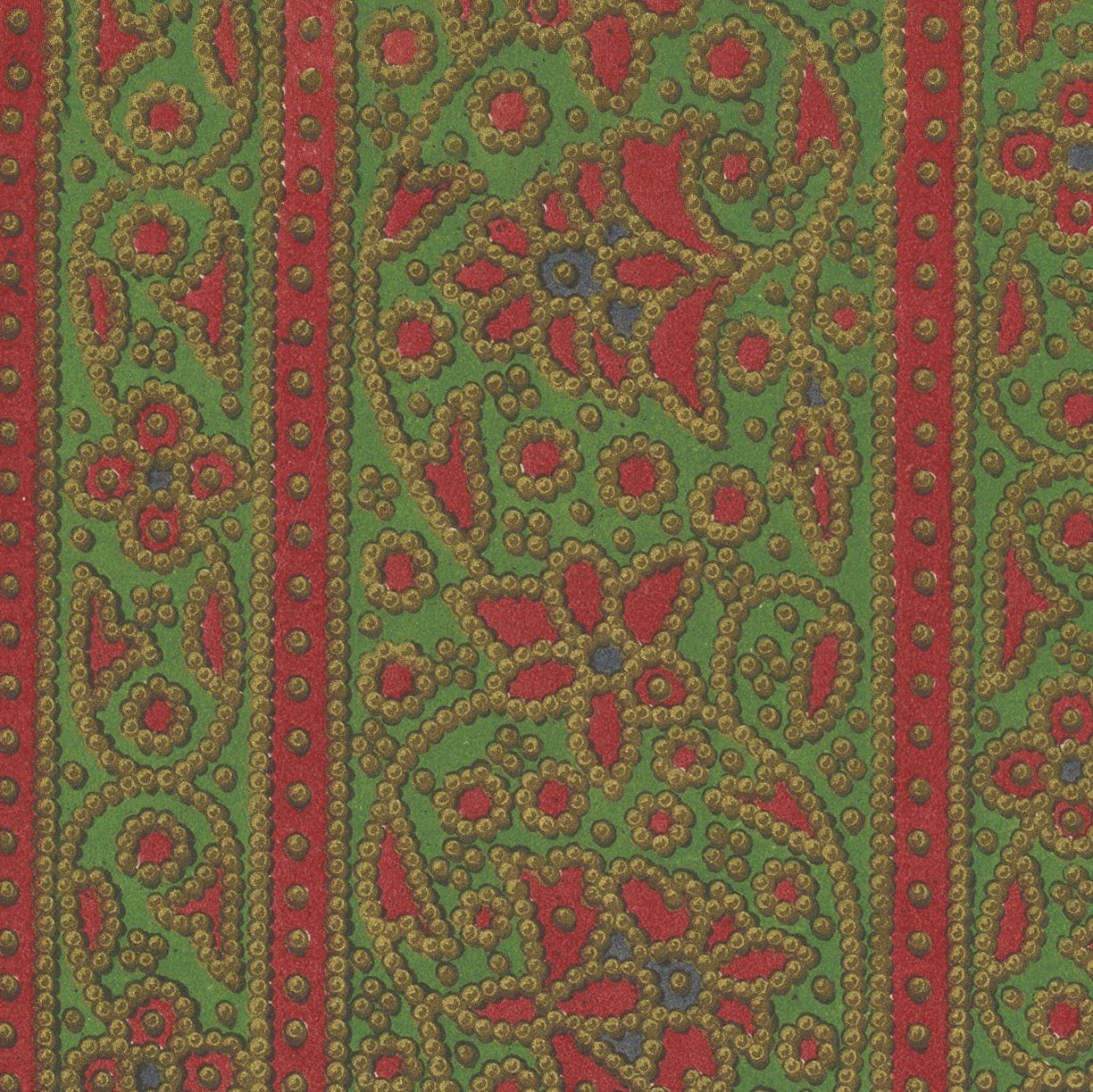
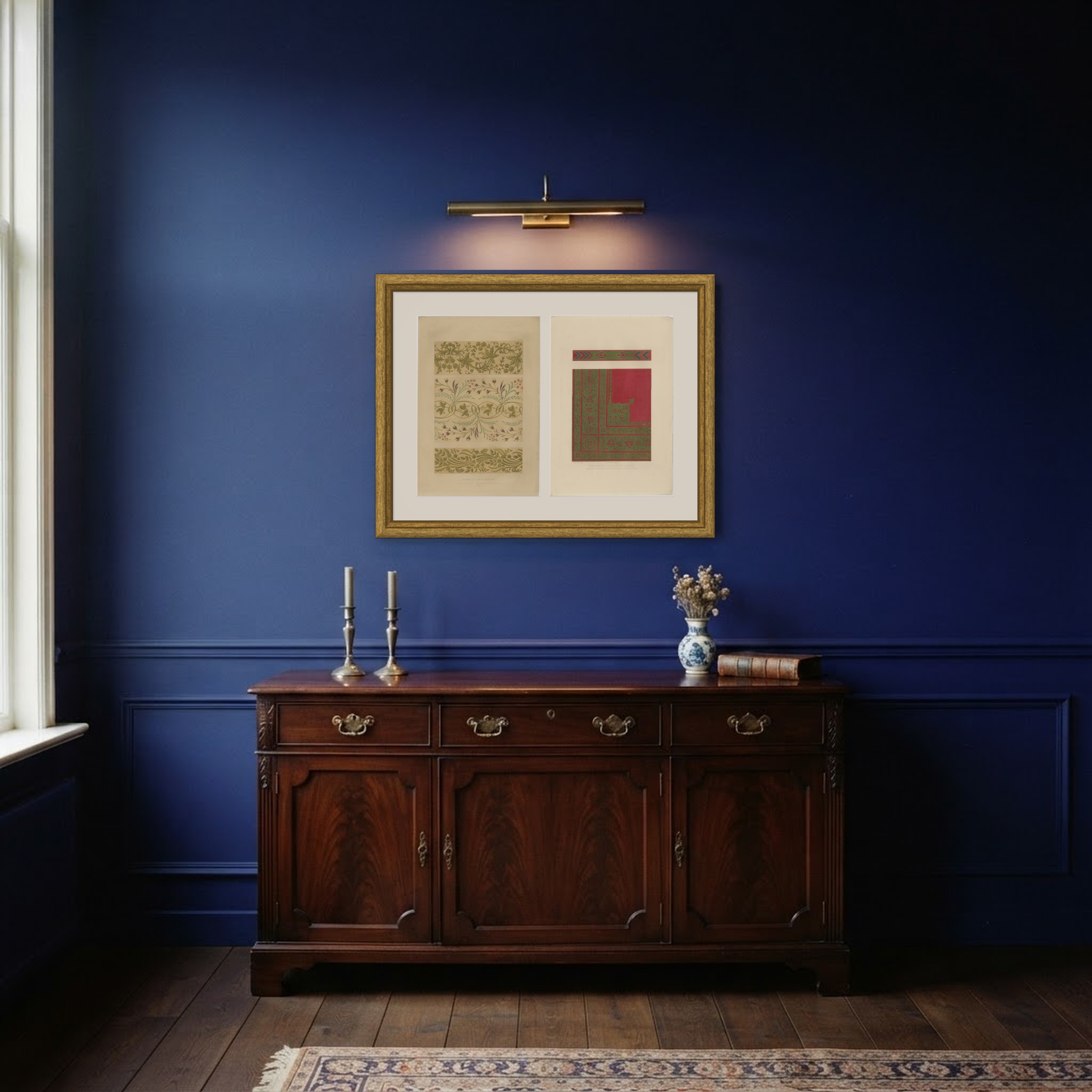
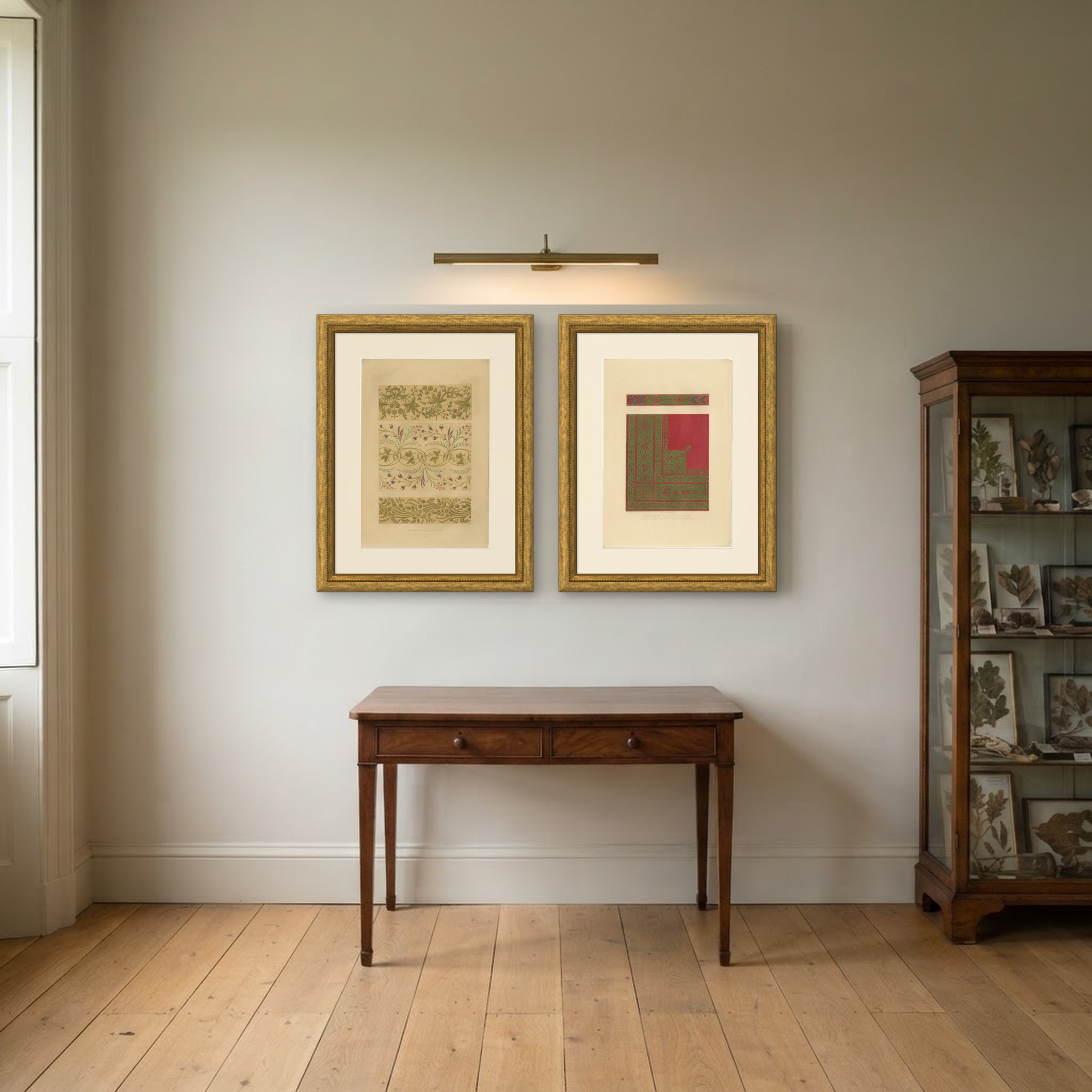
This is a set of two original sheets sold together, two antique chromolithographs recording eastern textiles shown at the Great Exhibition of 1851. The first lays three bands of Turkish embroidery across the sheet: a scrolling vine of leaves and rosettes in olive and gold, a wide interlacing ribbon of foliage set between borders of carnations and sprigs in green, crimson and gold, and a bolder running scroll of acanthus in two tones of olive. The second draws the corner of an Indian saddle cover at large scale, a plain crimson field inside a broad green border worked with a dense scroll of flowers in crimson and gold, with a narrow band of chevrons and lozenges in red, green and blue running above it.
Both sheets come from The Industrial Arts of the Nineteenth Century, Matthew Digby Wyatt's record of the Great Exhibition of 1851, published in London by Day and Son, lithographers to the Queen, between 1851 and 1853 and dedicated by permission to Prince Albert. The work was issued to subscribers in forty parts in printed paper wrappers, and the two volumes together carry about a hundred and sixty large folio plates. The project came from the publishers, who approached Wyatt soon after the exhibition opened wanting to show, on a large scale, what color printing could do for industrial education. Chromolithography was then new and costly, and each color on a sheet was printed from its own stone. Francis Bedford, John Sleigh, John Alfred Vinter and their colleagues drew and lithographed the plates under Wyatt's direction, and every plate carries its own imprint and date.
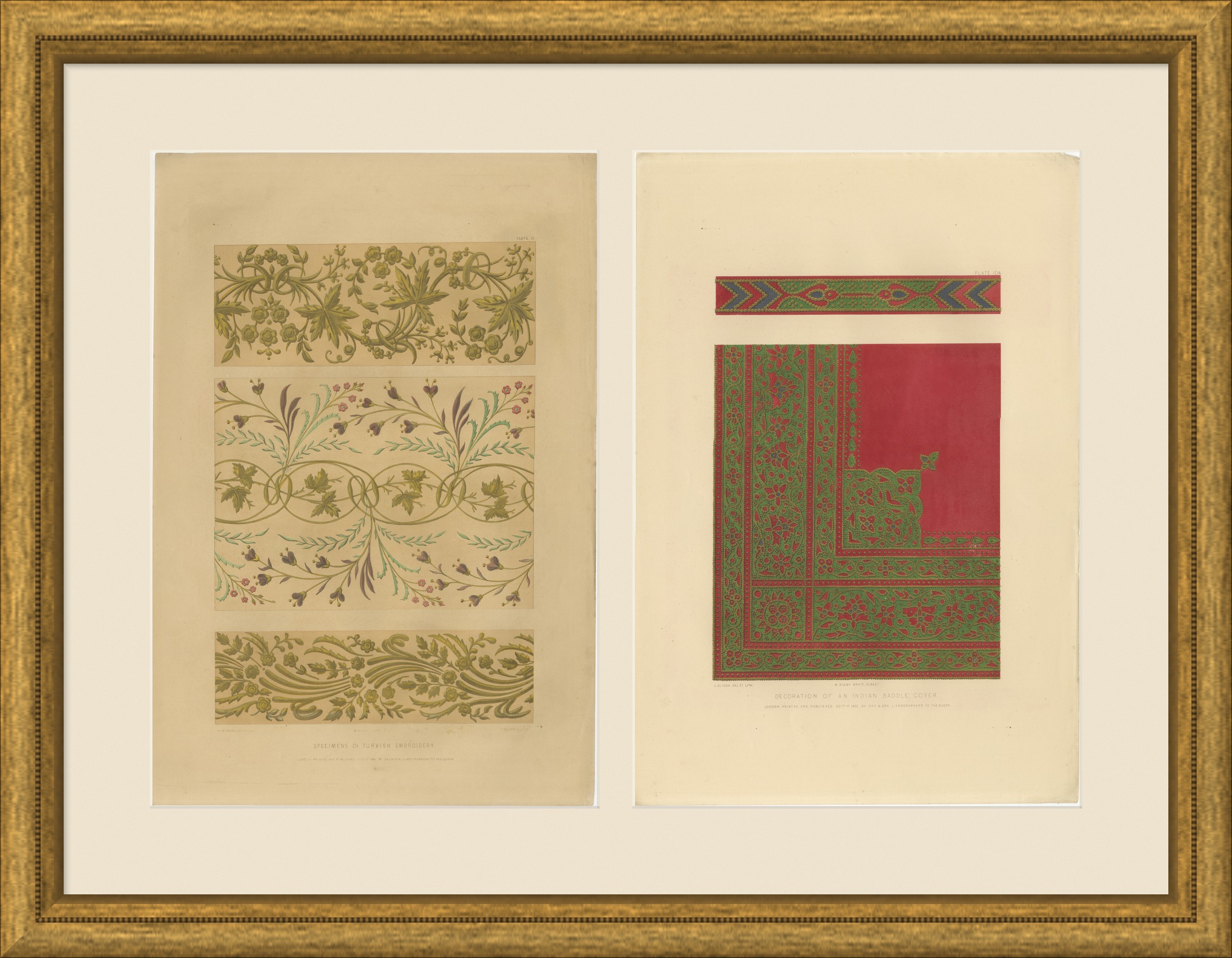
English designers studied the Turkish and Indian exhibits closely, and what they took from them was flat pattern, disciplined color and no illusion of depth, the principles that run through Owen Jones, Christopher Dresser and the Arts and Crafts movement. The two sheets are the same size and the same upright shape, their palettes of green, crimson and gold answer each other, and they were drawn for the same book under the same direction. Hung as a pair in matching frames they make a quiet, strong wall for a hall, a bedroom or any room that already carries kilims, carpets or embroidery.
Two sheets, both age toned. Plate 10 is markedly browner than plate 104 and its tone runs into the printed area. Light corner wear on both and minor nicks along the left edge of plate 10. Neither sheet shows foxing.
These are original antique prints, not modern reproductions. This item is sold unframed. Any framed or interior images are shown for presentation and inspiration only, unless the listing explicitly states that the item is sold framed.