About this sheet
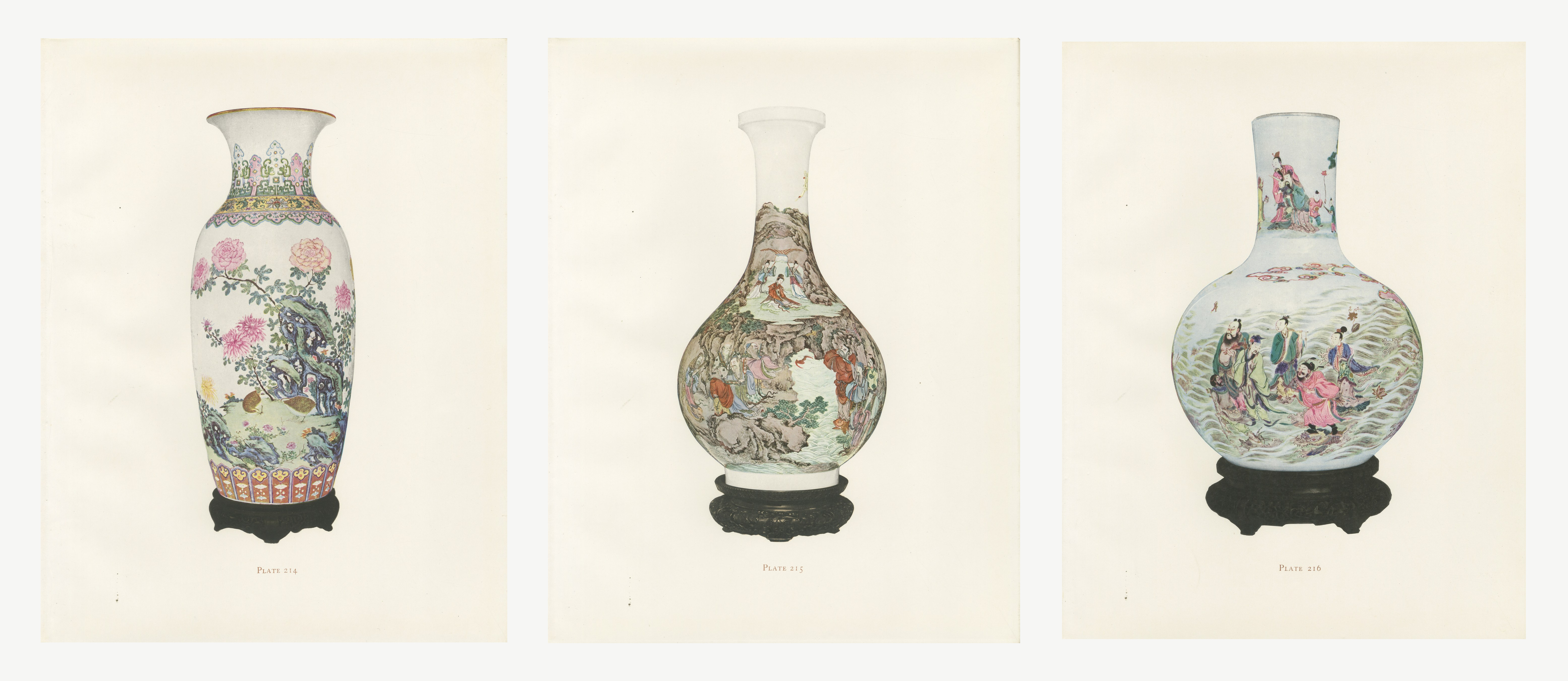
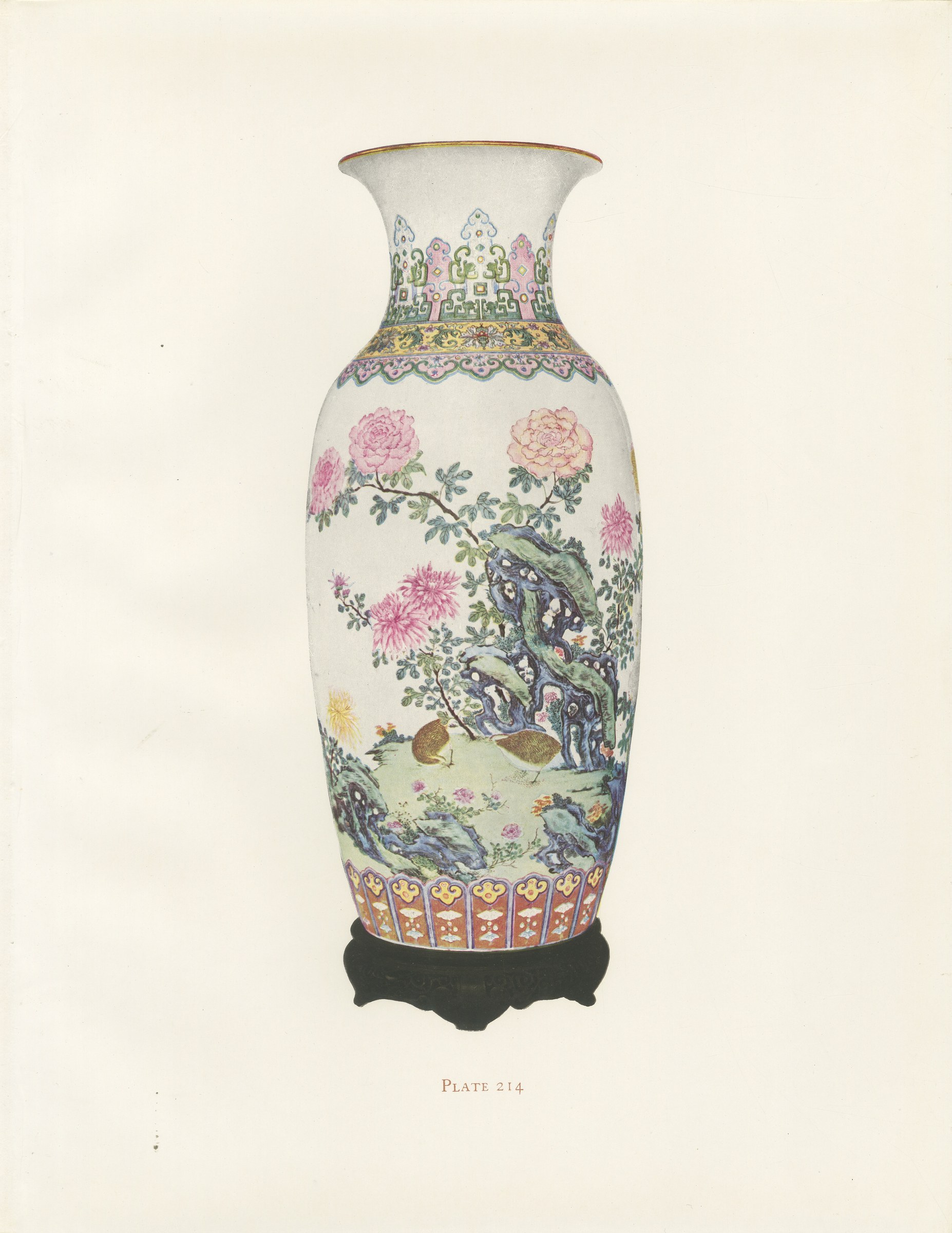
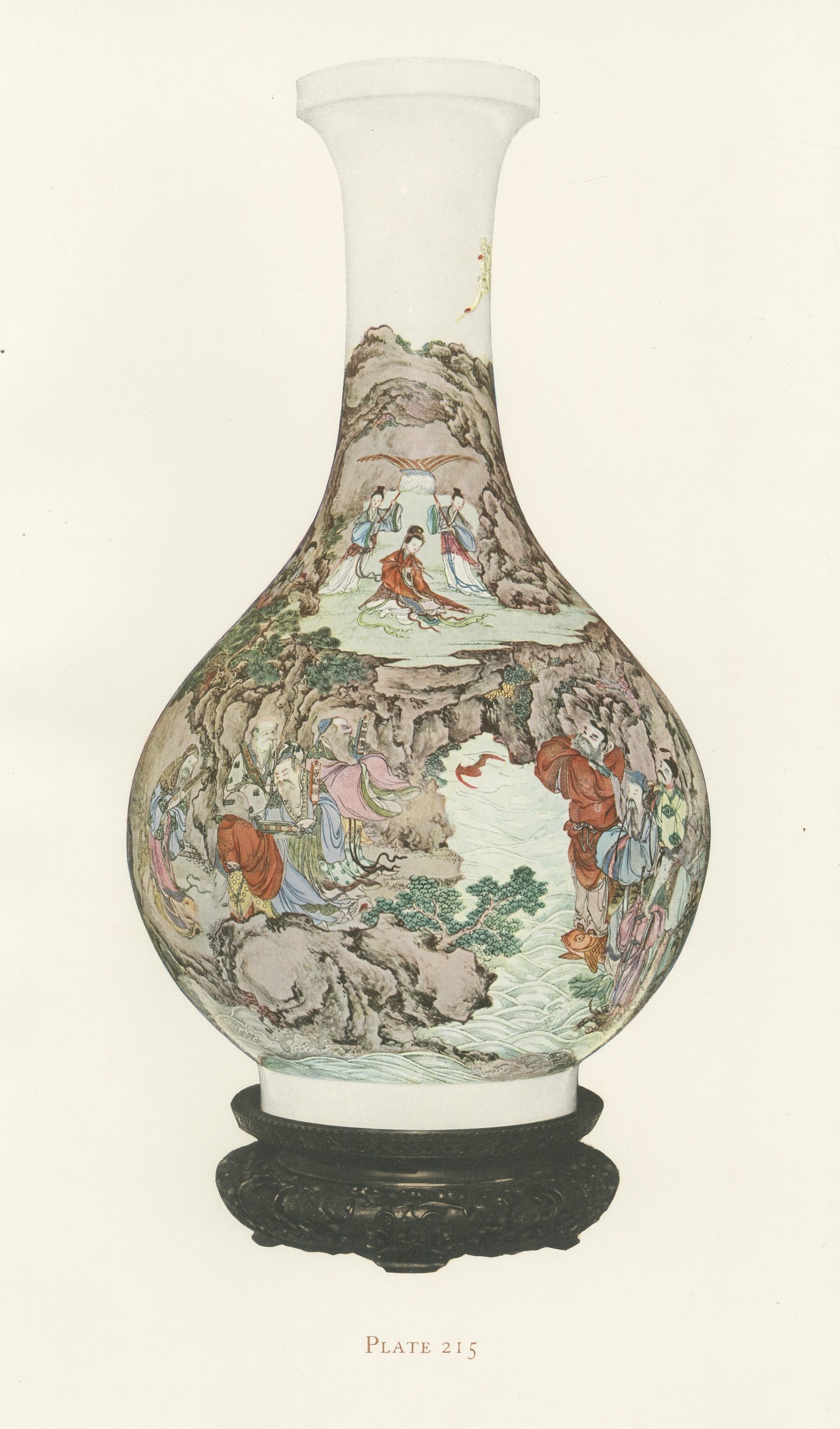
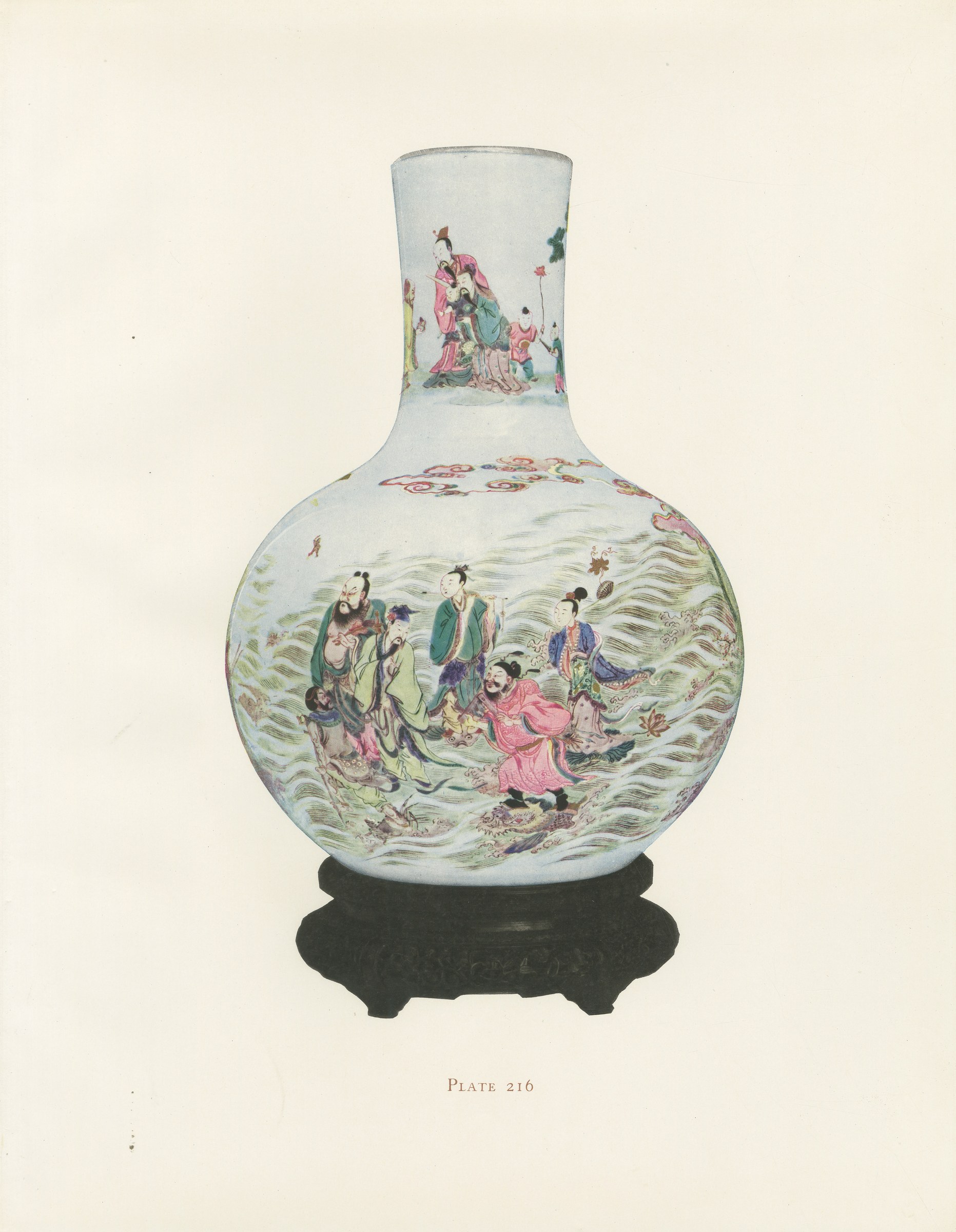
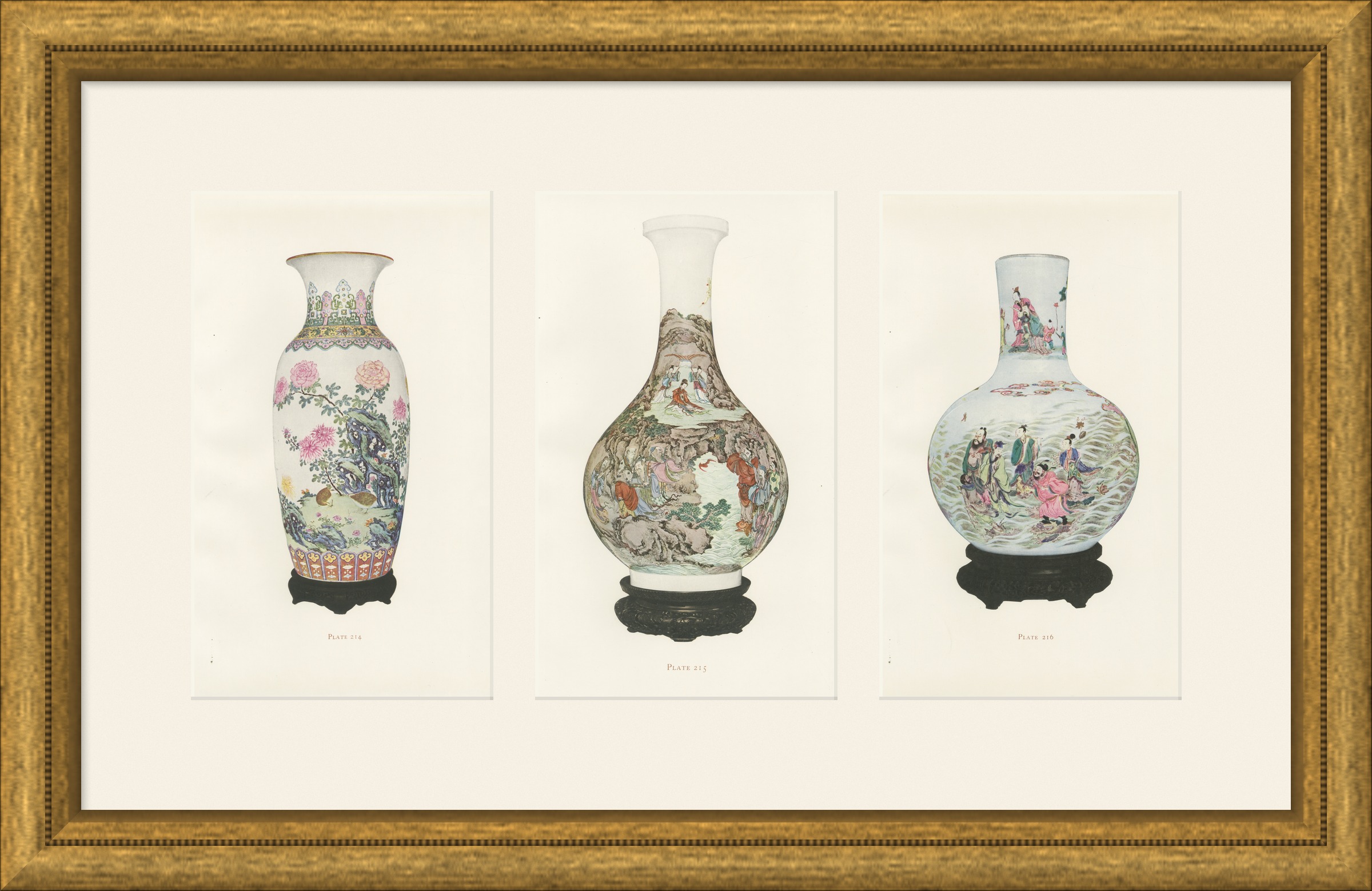
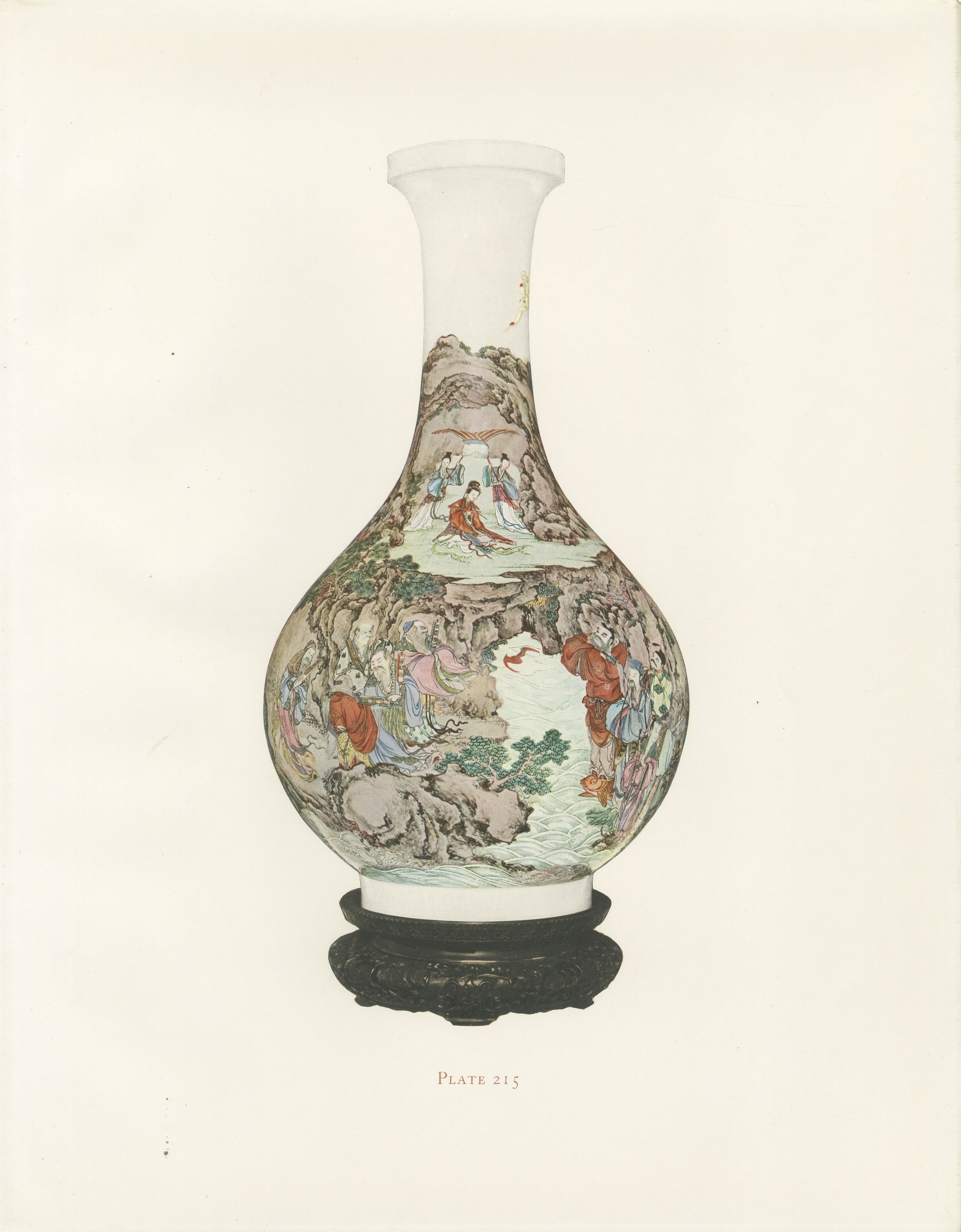
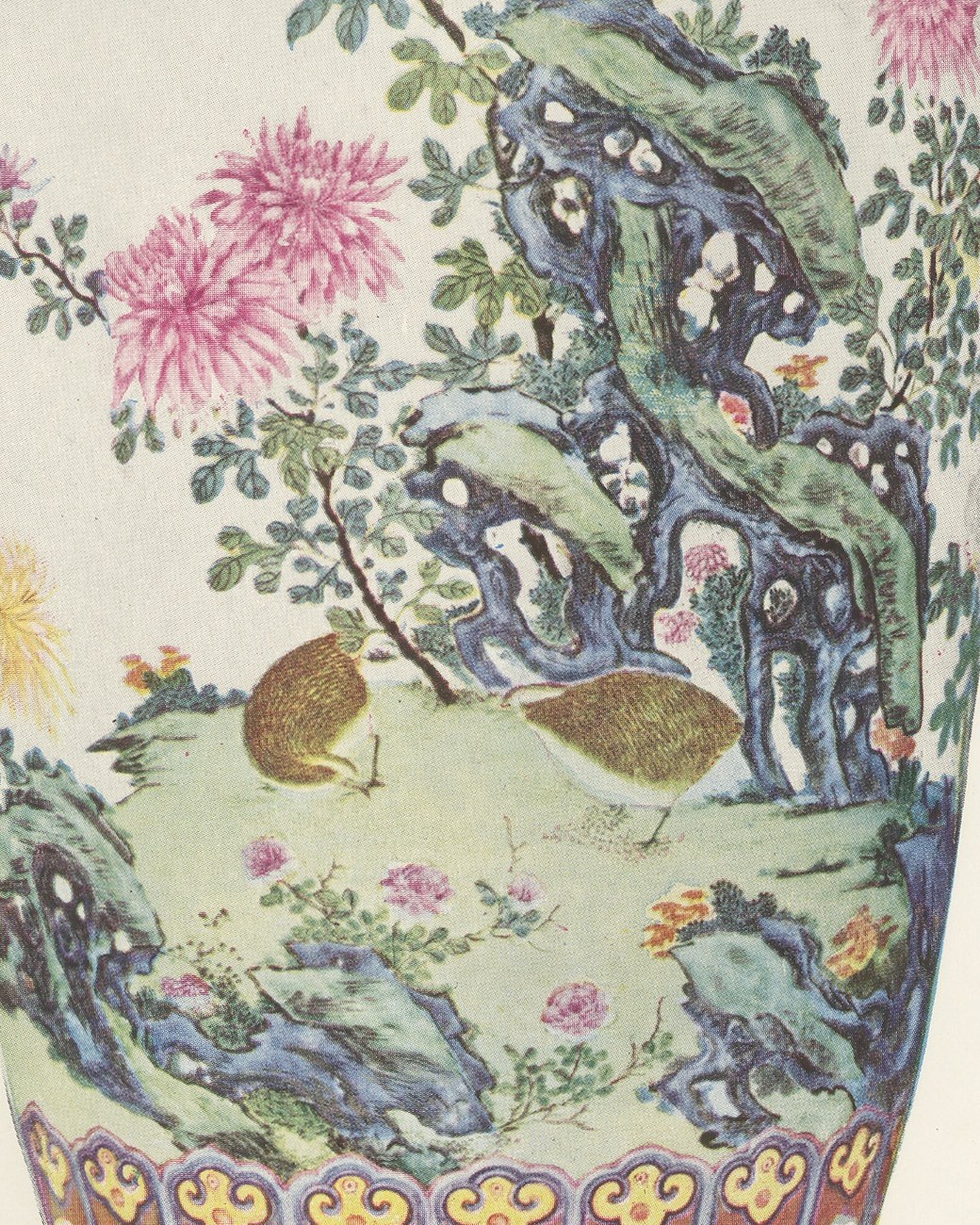
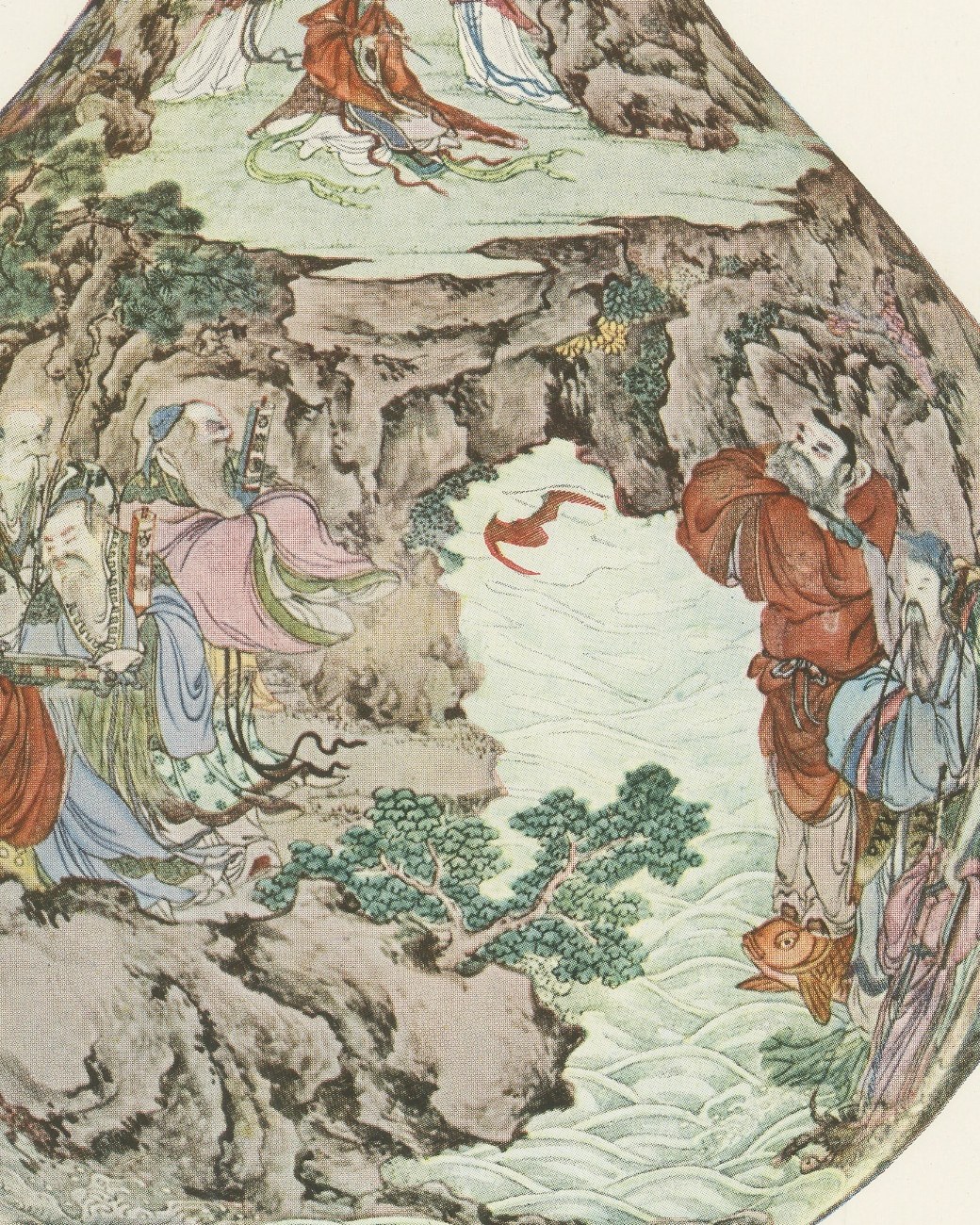
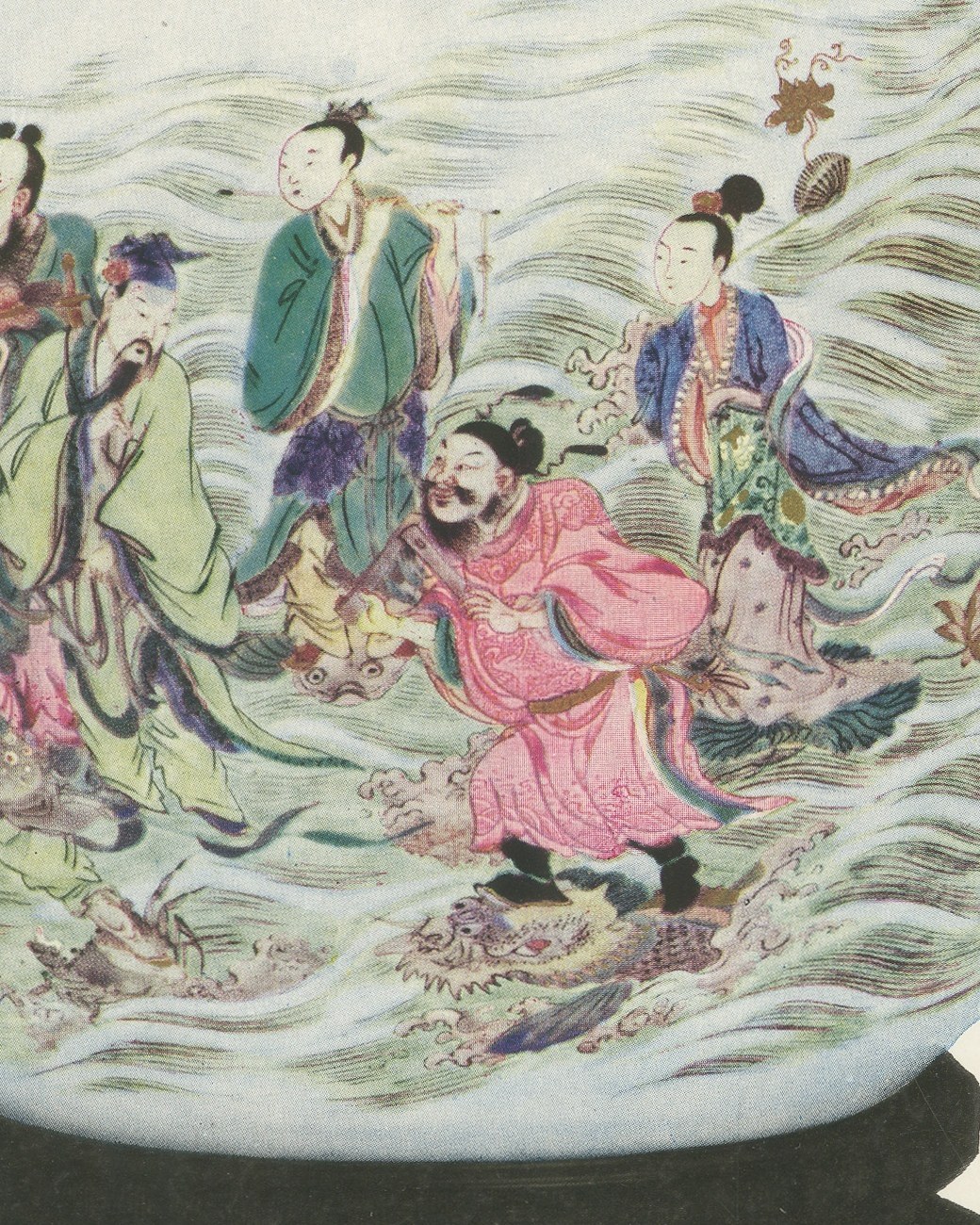
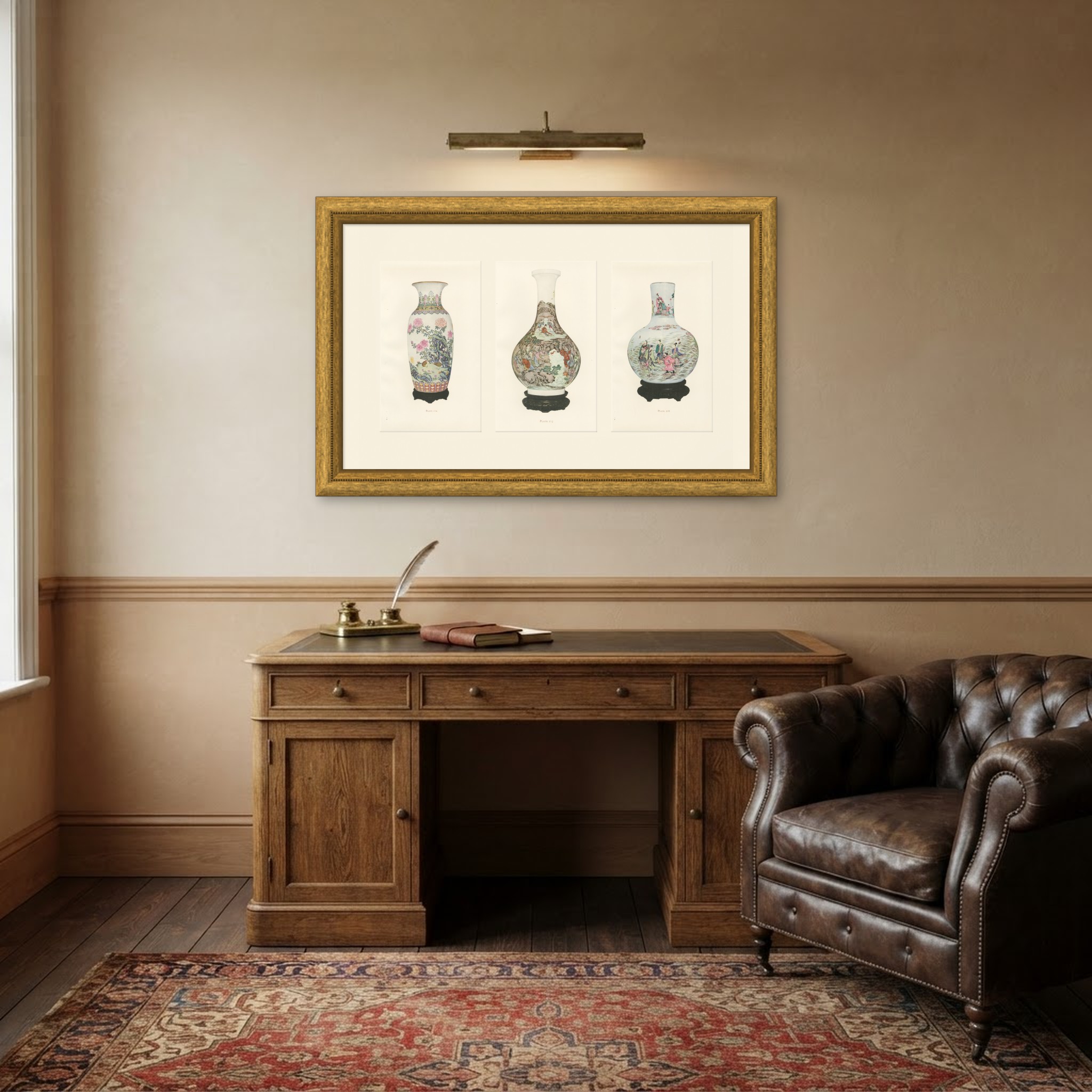
This is a set of three original 1911 color plates, Plates 214, 215 and 216 from Volume II of Gorer and Blacker's Chinese Porcelain and Hard Stones, sold together as one lot. What links them: three large famille rose vessels. Plate 214: Vase, very large, cylindro-ovoid. A fine white ground with a border of conventional palmettes on the neck in fine enamels, above others: a brocade upon a yellow ground, and green ju-i heads upon a rose ground, and at the base a border of godroons enclosing yellow ju-i heads; the figures are drawn and shaded in color. The book gives it to the Kien-lung period and records height 27 1/4 inches (69.2 cm); diameter 12 inches (30.5 cm). In the collection of G. R. Davies, Esq. Plate 215: Large bottle, with wide mouth. Hsi Wang Mu, queen-mother of the genii, is seated upon a plateau in the sacred mountain, her two attendants standing near with fans whilst seven others bring offerings of flowers and fruit; above them, to the right, Shou Lao is approaching; minute painting in the polychromes of the Yung Chêng period. The book gives it to the Yung Chêng period and records height 26 inches (66 cm); diameter 14 inches (35.5 cm). In the collection of General Brayton Ives. Plate 216: Bottle, large, globular. A soft delicate celadon glaze with a continuous design of the eight Taoist immortals crossing the cosmic sea; above them Shou Lao, in a yellowish robe, is offering the peach of immortality to the emperors Yao and Shun; where the enamels are opaque they are ornamented with enamel upon enamel, with the best results. The book gives it to the Yung-ching period and records height 20 3/4 inches (52.8 cm); diameter 15 inches (38 cm). In the collection of G. R. Davies, Esq.
The plates belong to Edgar Gorer and J. F. Blacker's Chinese Porcelain and Hard Stones, issued in London by Bernard Quaritch in 1911, a work in two volumes whose two hundred and fifty four color plates were printed to the highest standard the period could reach. The plates are color collotypes, a photographic process that reproduces continuous tone without a visible dot screen, which is why the glazes keep their depth on paper.
Edgar Gorer was one of the most visible dealers in Chinese art of his generation. He traded as S. Gorer and Son at 170 New Bond Street with a branch at 500 Fifth Avenue in New York, dealt chiefly in Kangxi, Yongzheng and Qianlong porcelain, and sold to Sir William Lever. He died on 7 May 1915 when the Lusitania was torpedoed, and his body was never recovered.
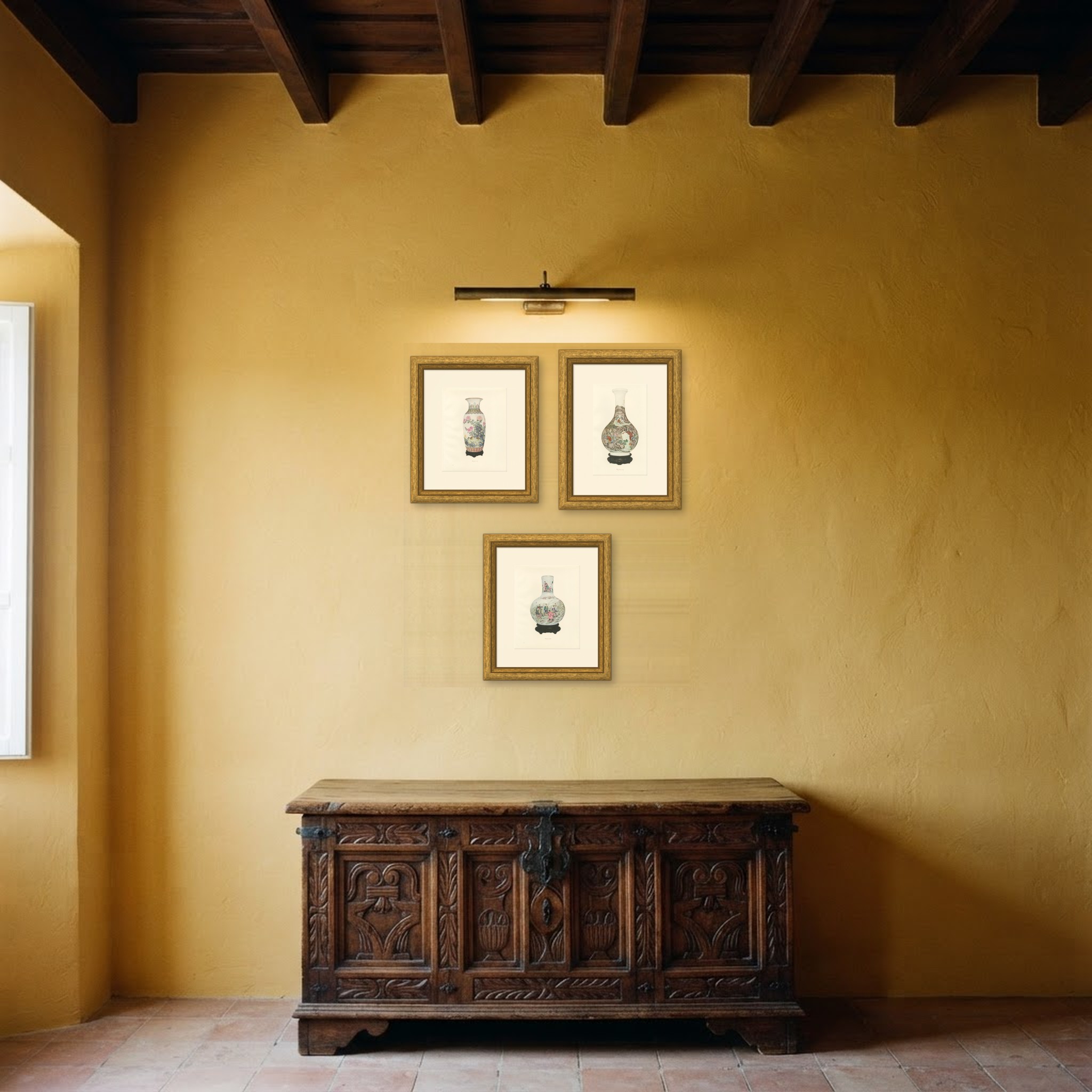
It hangs well in a bedroom or a small sitting room where a large picture would overwhelm the wall, and it rewards being hung at eye level where the detail can be read. The three sheets are the same size and were printed by the same hand, so they hang as one group.
These are original antique prints, not modern reproductions. They are three original sheets sold together as one lot, and the set is never split.
Even age toning throughout. Light foxing in the margins of all three sheets. Slight wear at the corners of two of the three sheets.
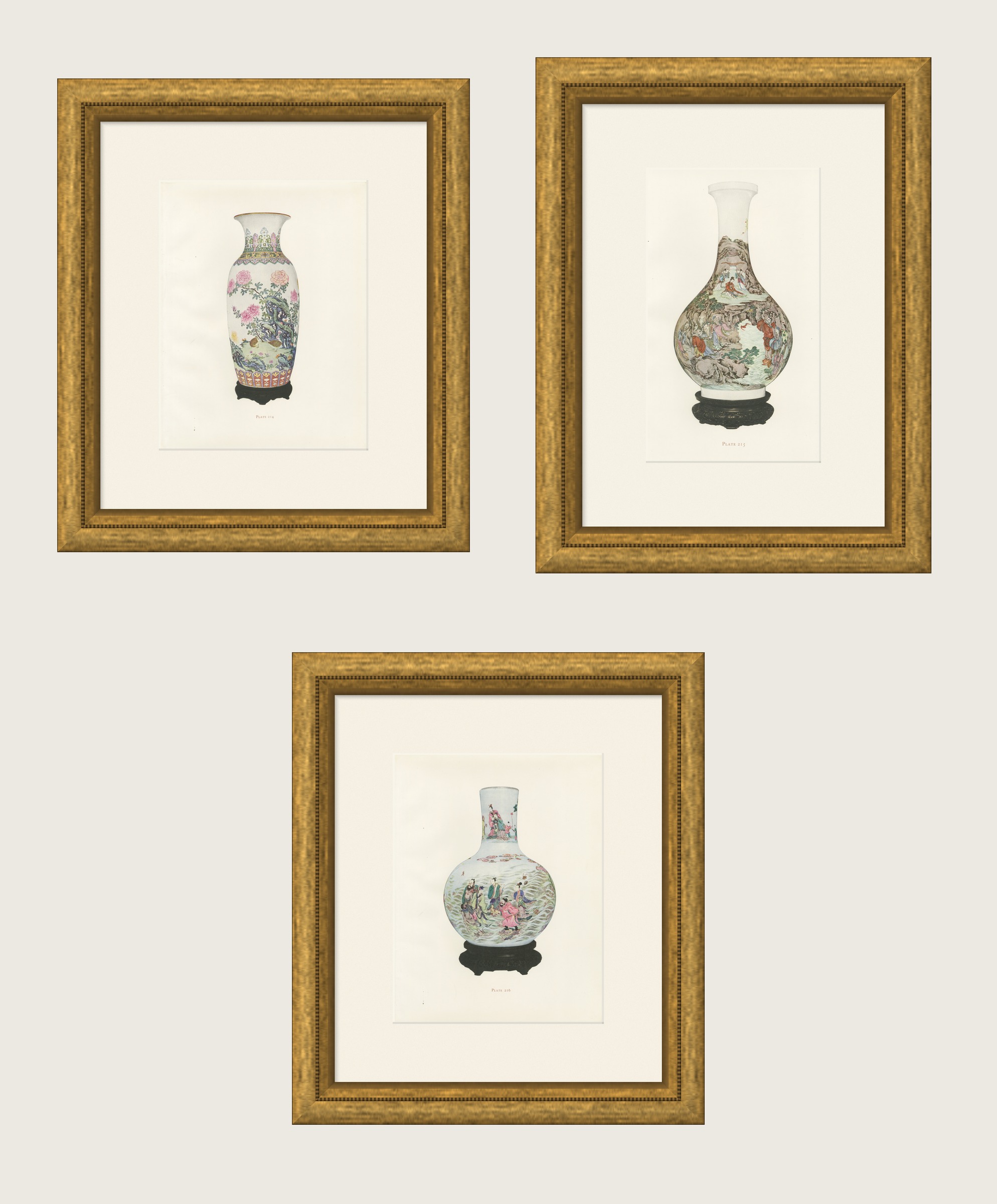
This item is sold unframed. Any framed or interior images are shown for presentation and inspiration only, unless the listing explicitly states that the item is sold framed.