About this sheet
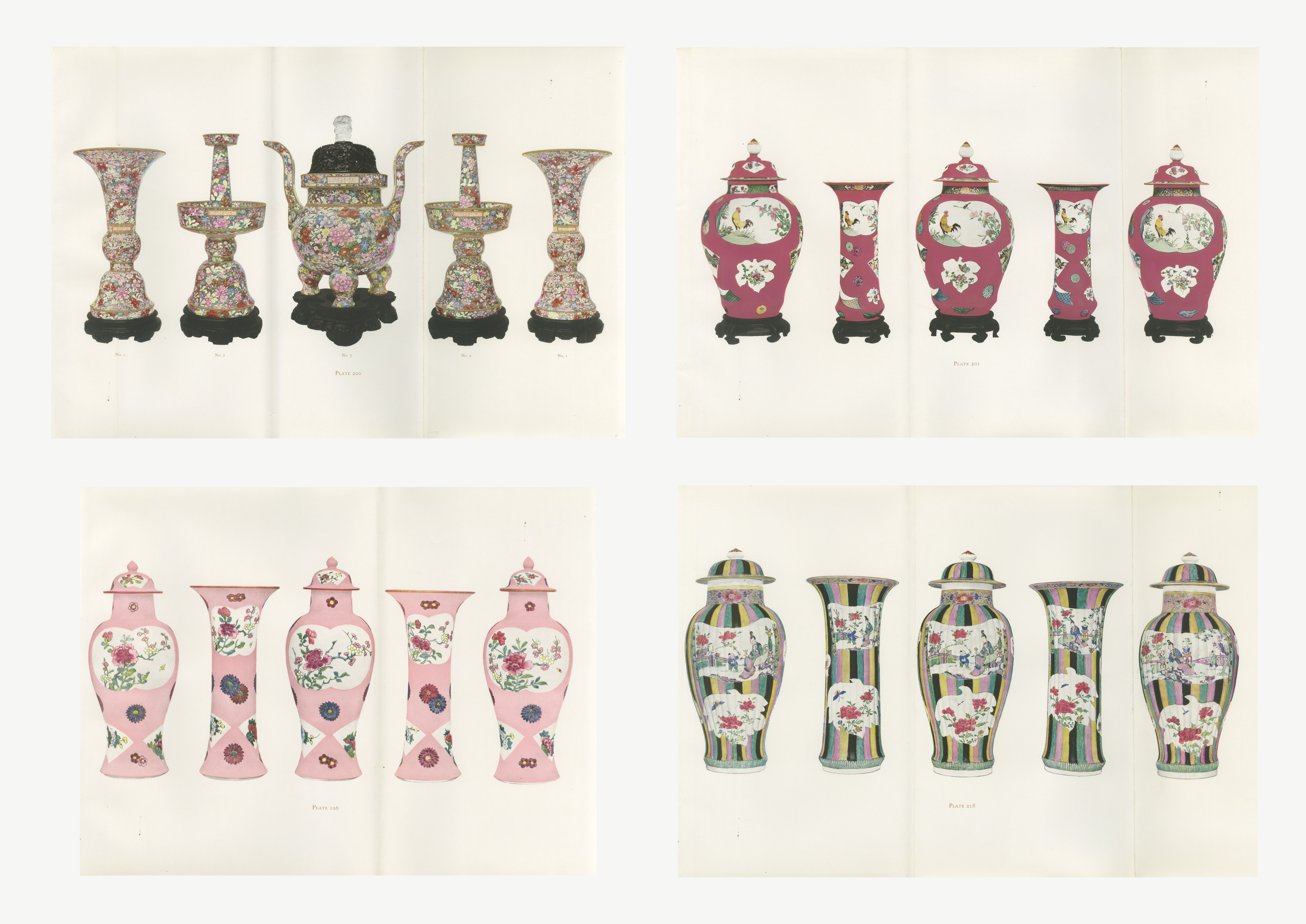
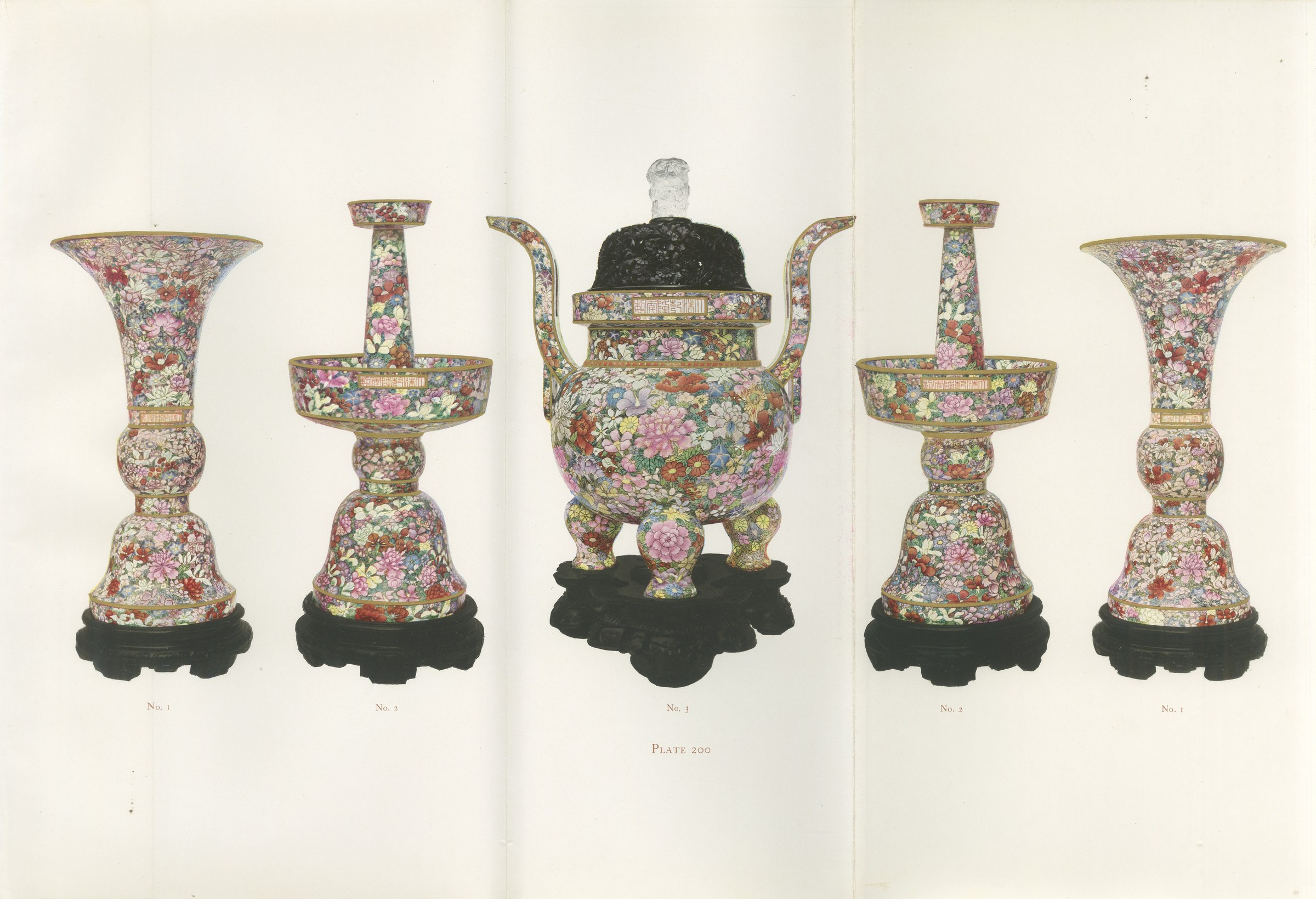
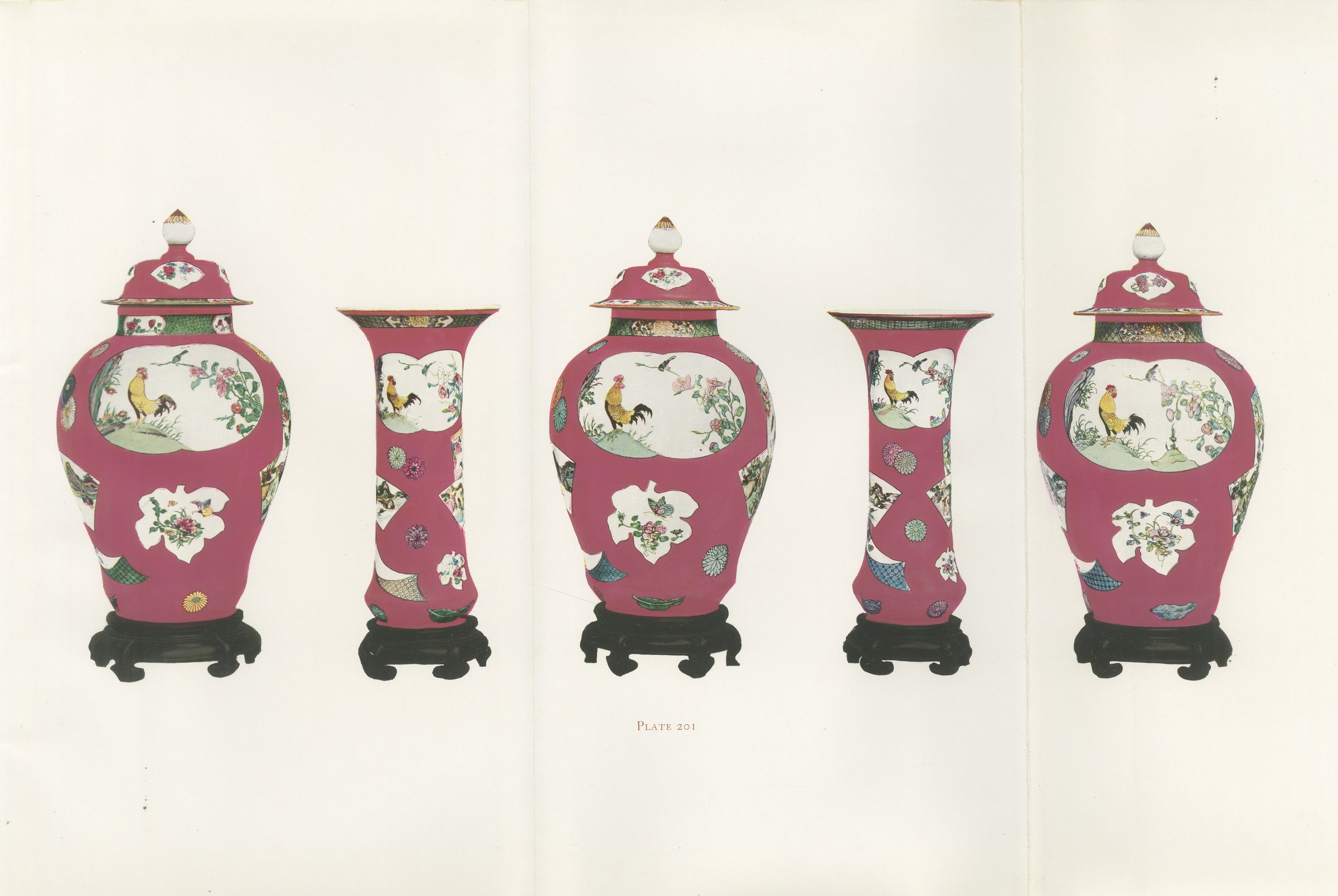
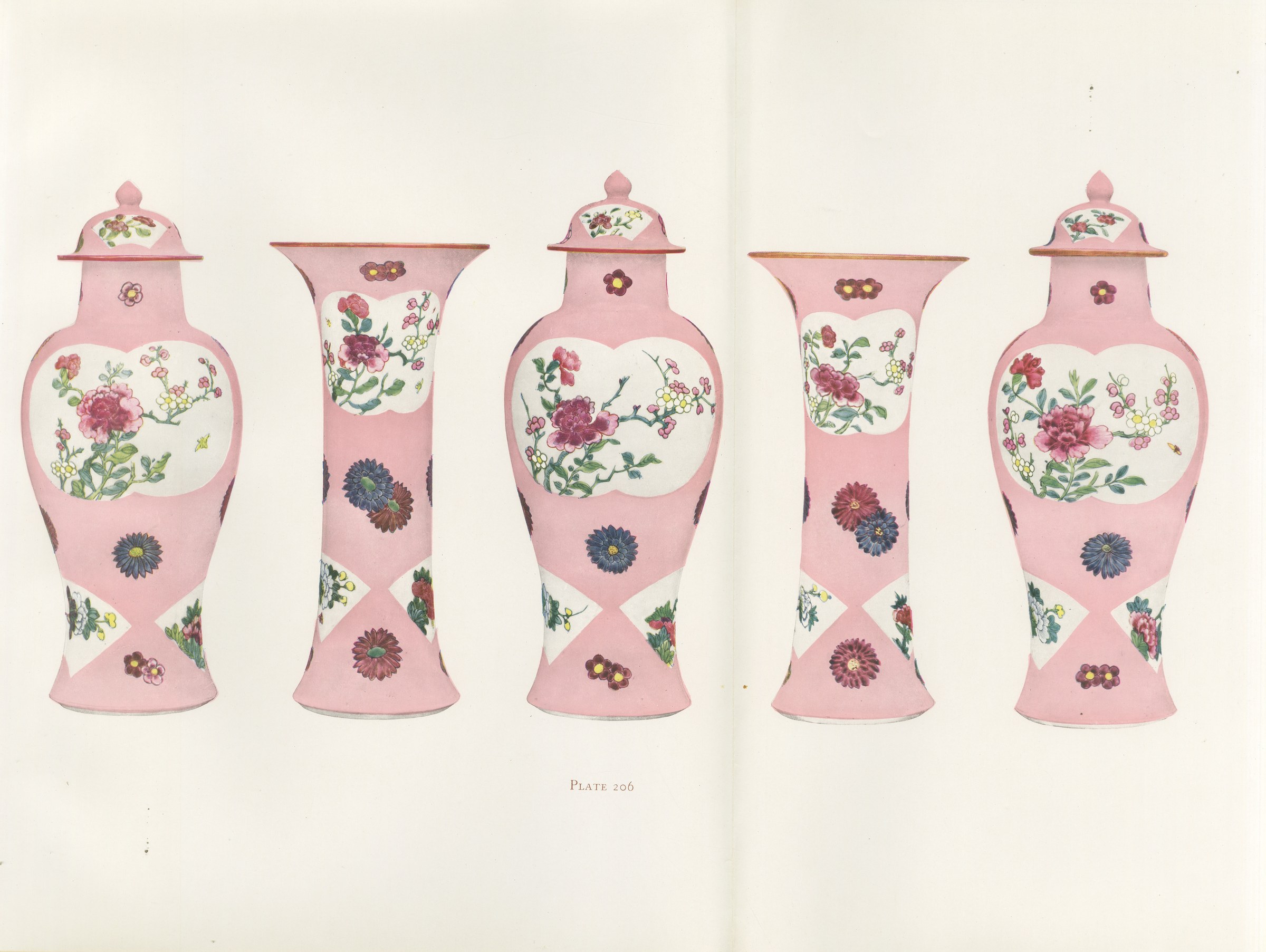
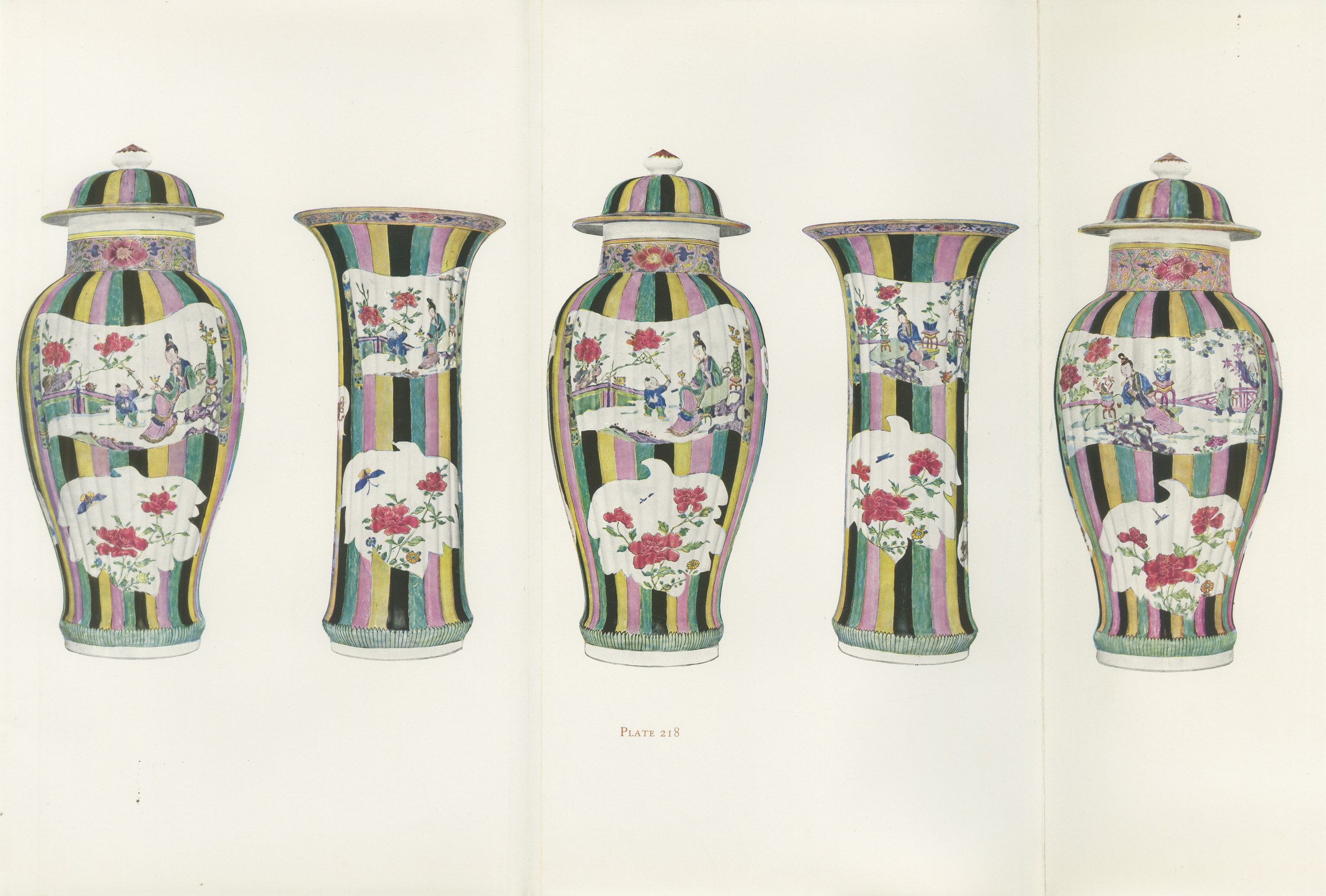
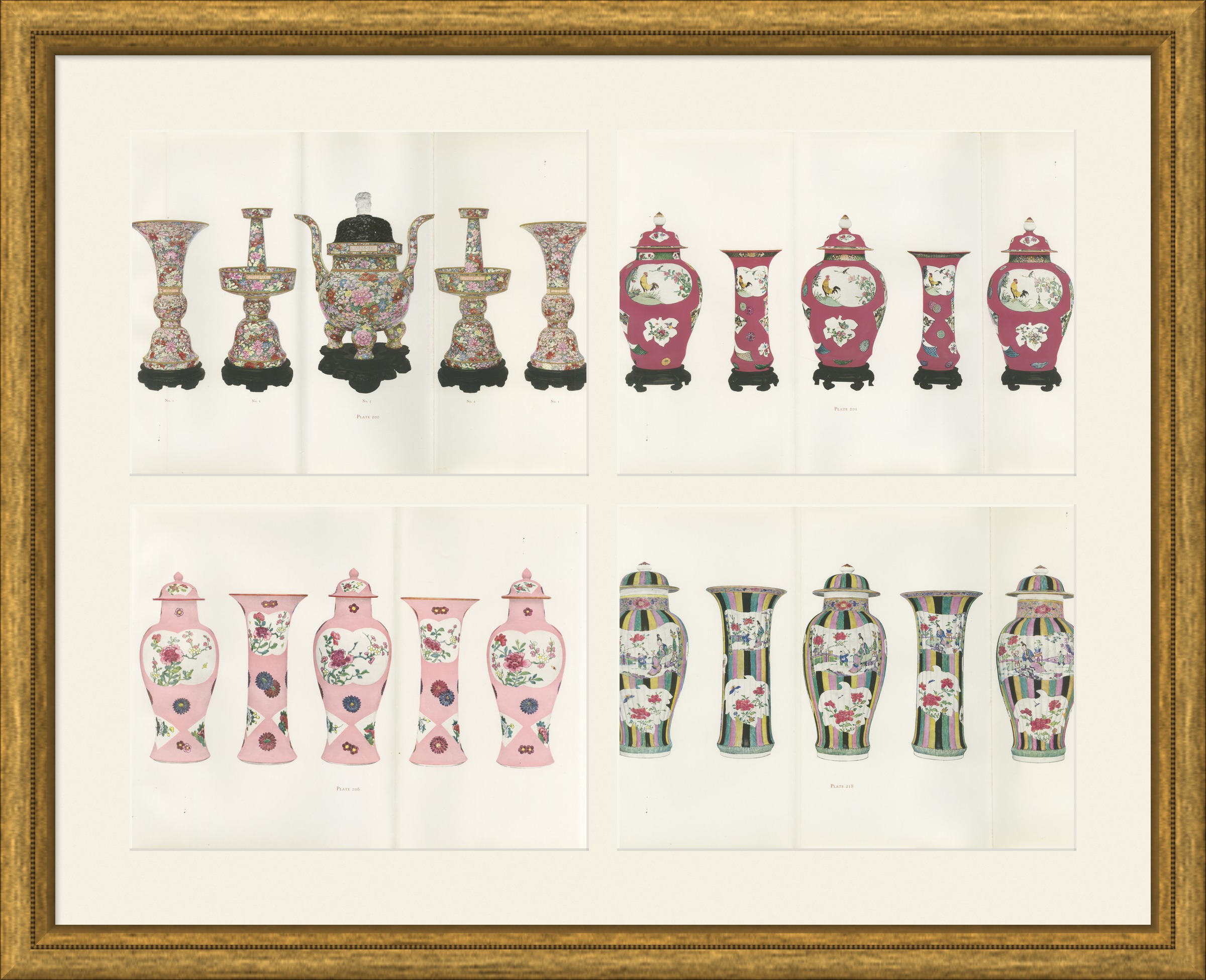
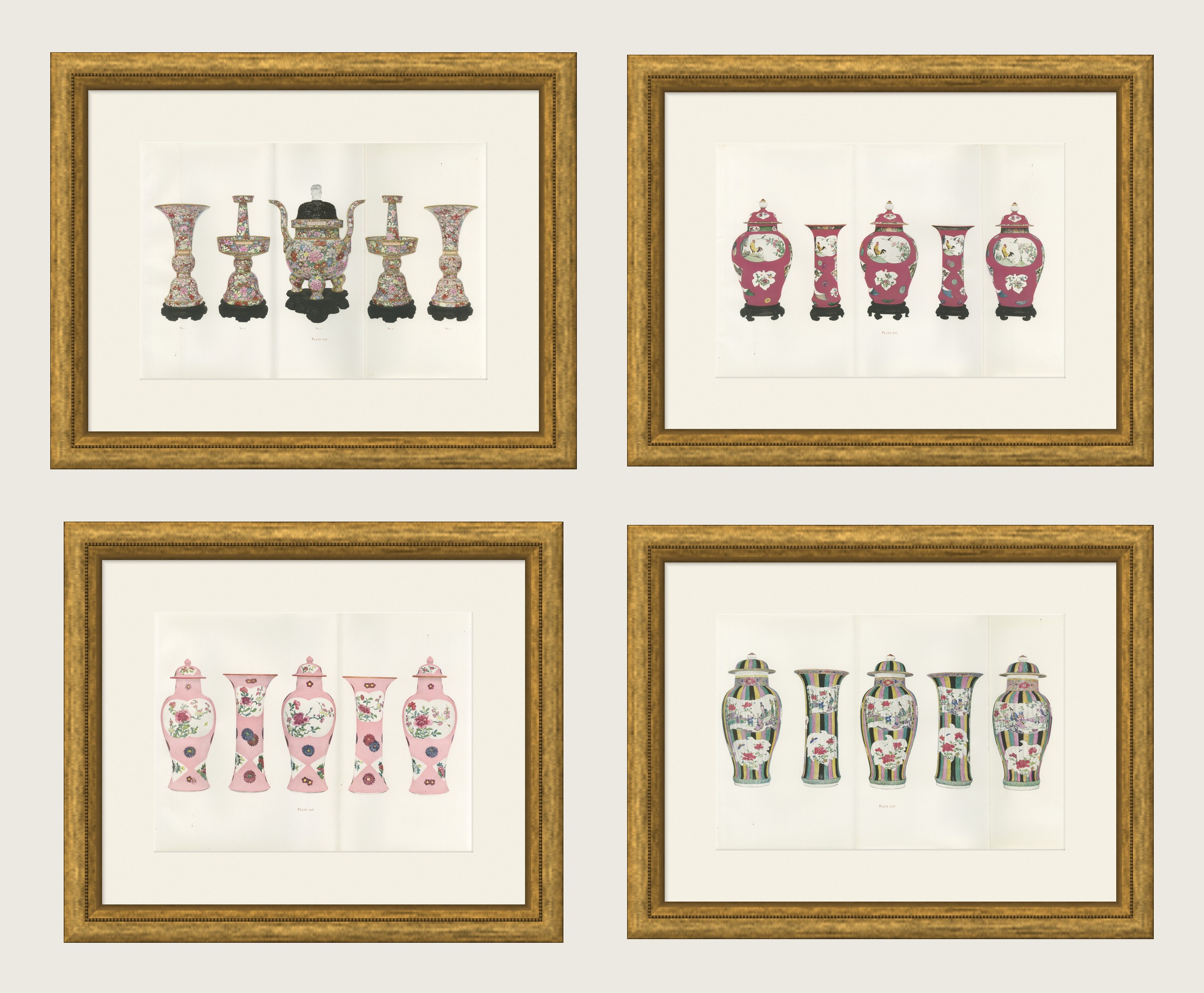
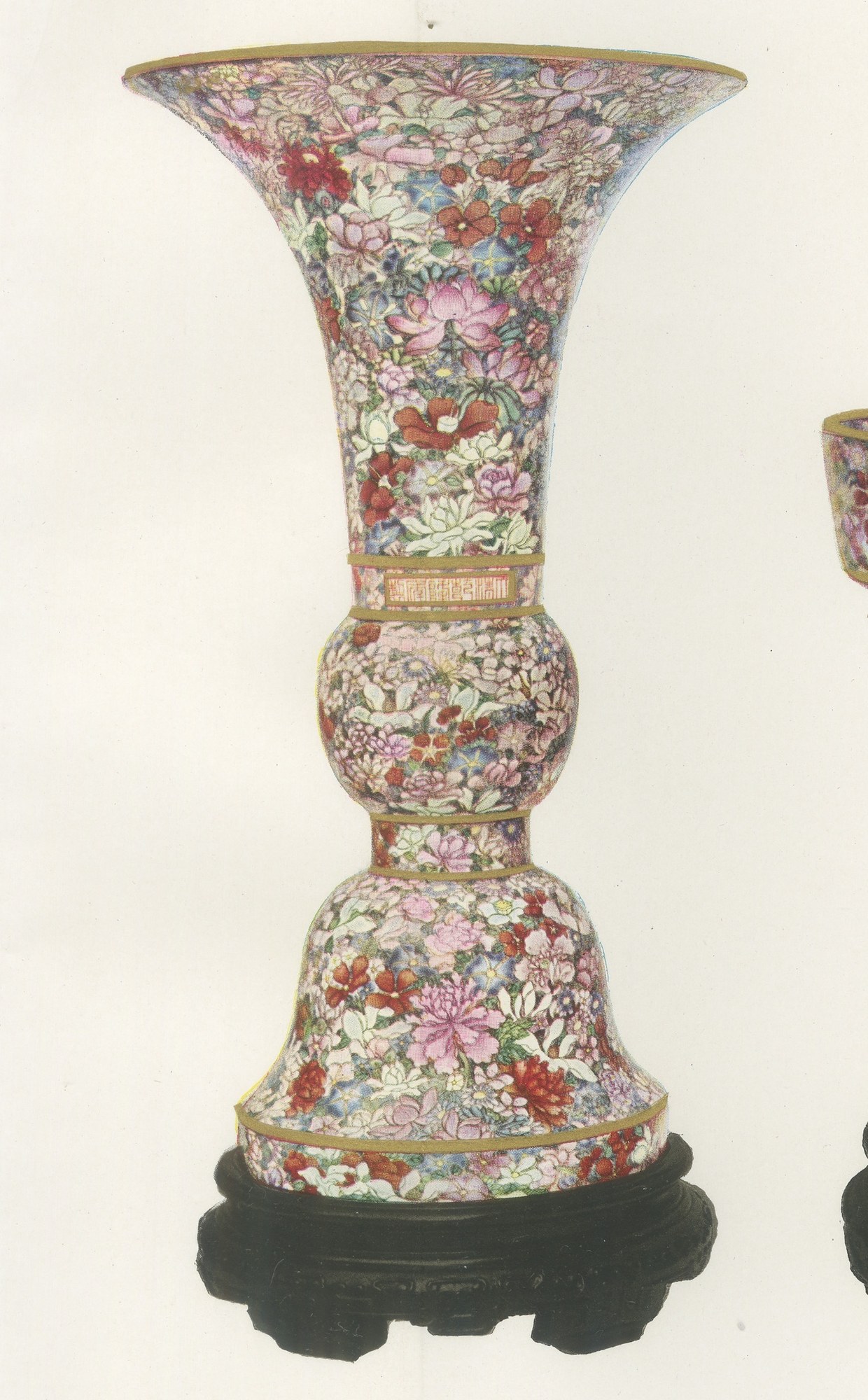
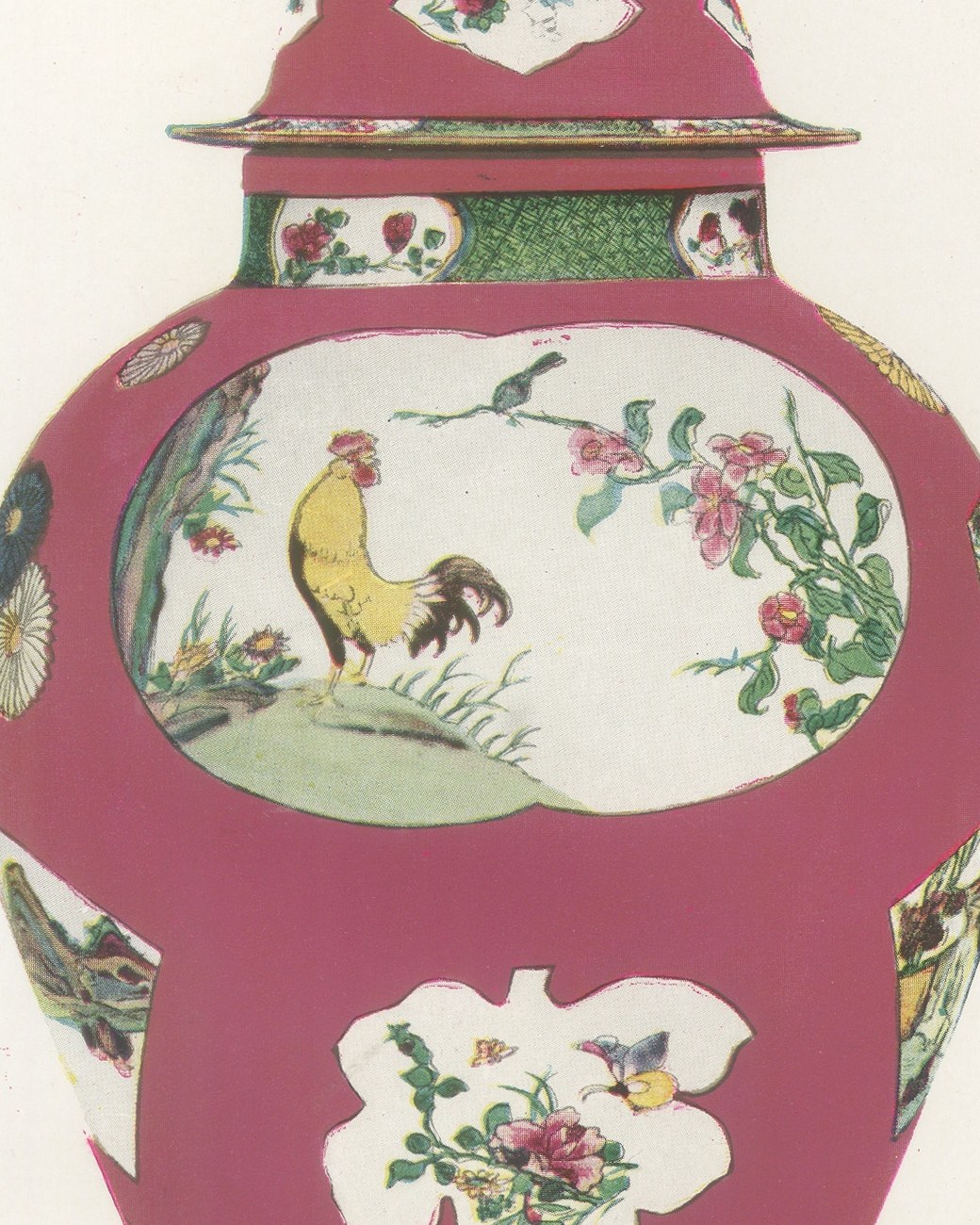
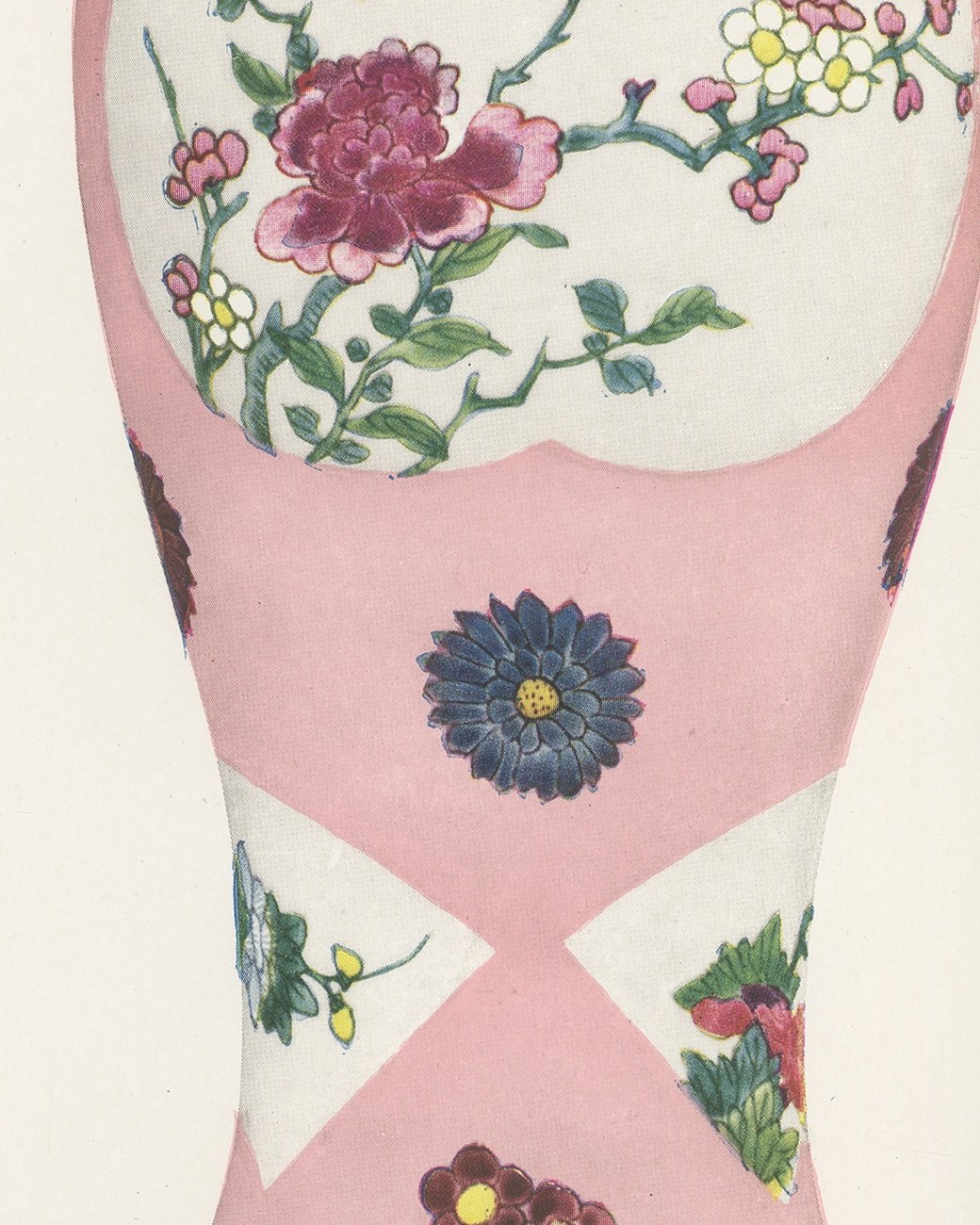
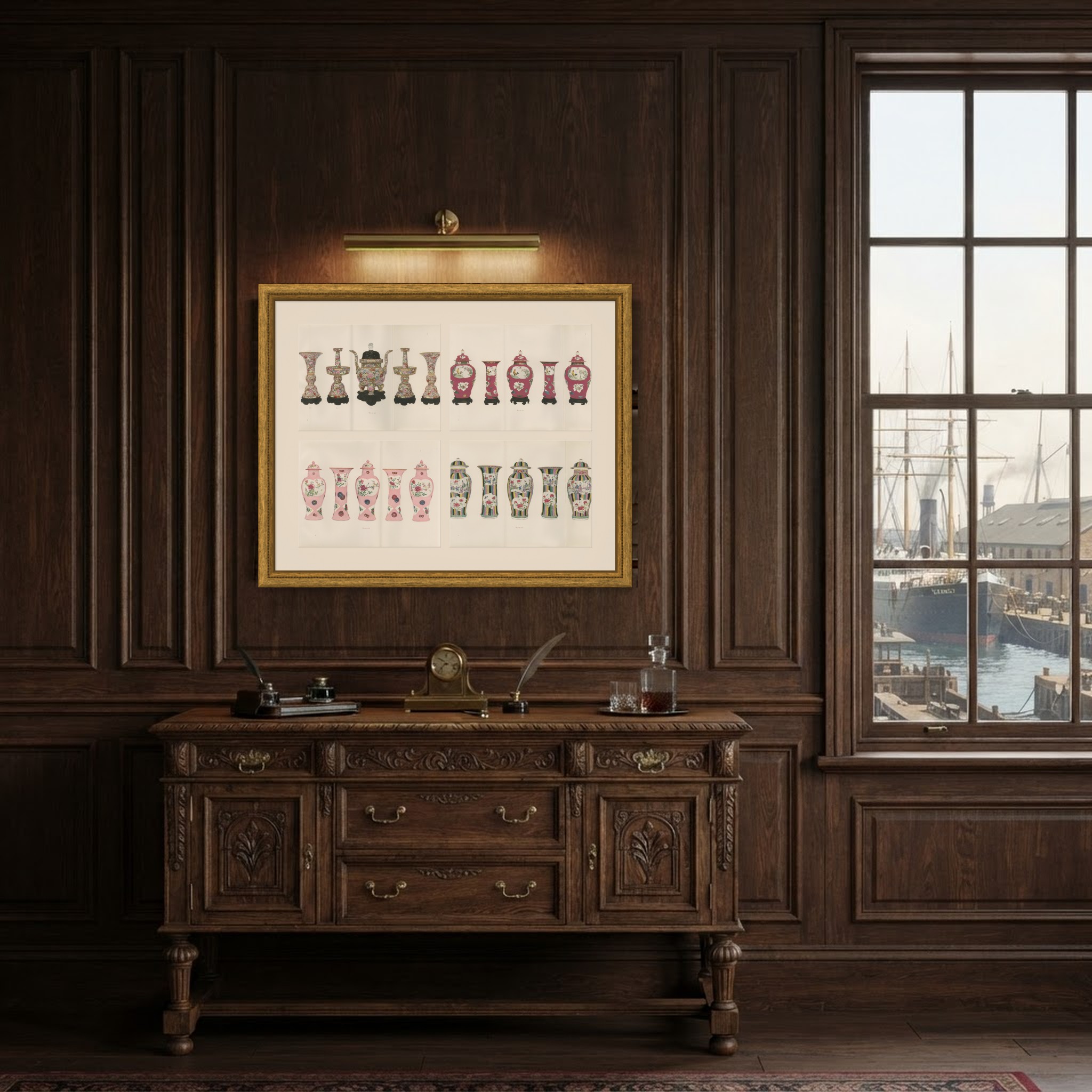
This is a set of four original 1911 color plates, Plates 200, 201, 206 and 218 from Volume II of Gorer and Blacker's Chinese Porcelain and Hard Stones, sold together as one lot. What links them: the four folding garniture plates. Plate 200: Altar set, or garniture of five pieces: an incense-burner, ting or koro, two beaker vases, and two candlesticks. The ting (No. 3) has a flattened spherical form with two raised handles and a cover in wood, surmounted by a rock crystal knob; the beakers (No. 1) have wide mouths with a raised orbicular central band repeated in the candlesticks (No. 2), which are decorated also inside; flowers include dianthus, etc. The book gives it to the Kien-lung period and records height 20 1/2 inches (52 cm); width 17 3/4 inches (45 cm), the book giving a size for each piece shown. In the collection of his honor Judge Gary. Plate 201: Garniture of five pieces: a set of three ovoid jars and covers and two beakers. A rich ruby ground brilliantly decorated; isolated chrysanthemums of yellow and rose are scattered over the deep rose ground, which is interrupted by a number of white reserves. The book gives it to the Yung-ching period and records height 17 5/8 inches (44.8 cm); diameter 10 inches (25.3 cm), the book giving a size for each piece shown. In the collection of G. L. Bevan, Esq. Plate 206: Garniture of three vases and covers and two beakers. All similarly decorated with a soft rose ground charged with flowers and reserved with panels in white; the two large panels, shaped as persimmon fruit, contain peonies and prunus in rose and white enamels with foliage. The book gives it to the Yung-ching period and records height 11 inches (27.9 cm); diameter 4 3/4 inches (11.5 cm), the book giving a size for each piece shown. In the collection of Mrs. Paul Nelke. Plate 218: Set of three vases and two beakers, with harlequin decoration. The colors, black, yellow, pink, and green, are applied upon molded strips extending from the top border to the bottom in regular succession. This ground is interrupted by reserves of the chüan, volumen, or Japanese form. The book gives it to the Kien-lung period and records height 18 1/2 inches (47 cm); diameter 8 inches (20.3 cm), the book giving a size for each piece shown. In the collection of S. E. Kennedy, Esq.
The sheets come from Chinese Porcelain and Hard Stones, the two volume work by the London dealer Edgar Gorer and the writer J. F. Blacker, published by Bernard Quaritch of 11 Grafton Street, New Bond Street, in 1911 in an edition of one thousand numbered copies. The plates are color collotypes, a photographic process that reproduces continuous tone without a visible dot screen, which is why the glazes keep their depth on paper.
What gives these plates their standing is the quality of the collections they record. Pieces illustrated here passed through the great Edwardian cabinets, and several are now in museums, so the book is a photographic record of where this material sat a century ago.
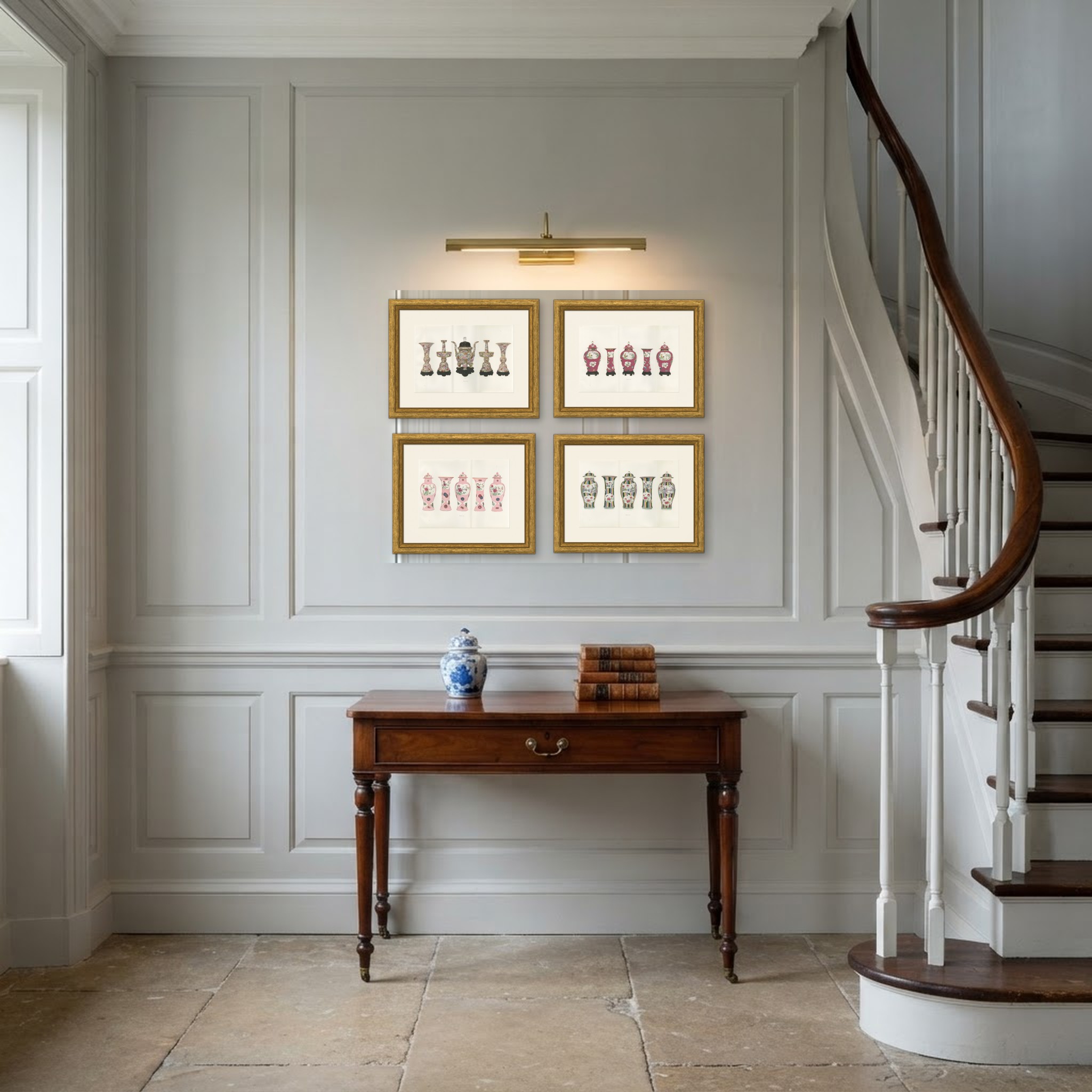
Collectors of Chinese ceramics, of early color printing and of Edwardian book illustration all look for these plates, and they work equally well in an interior scheme as in a collection. The four sheets are folding plates of the same height, 31 cm, opening to between 42 and 47 cm wide, and were printed by the same hand, so they hang as one group. Each carries the folds it was bound with.
These are original antique prints, not modern reproductions. They are four original sheets sold together as one lot, and the set is never split.
Even age toning throughout. Light foxing in the margins of all four sheets. Slight wear at the corners of two of the four sheets. An edge uneven in one place on one of the four sheets.
This item is sold unframed. Any framed or interior images are shown for presentation and inspiration only, unless the listing explicitly states that the item is sold framed.