About this sheet
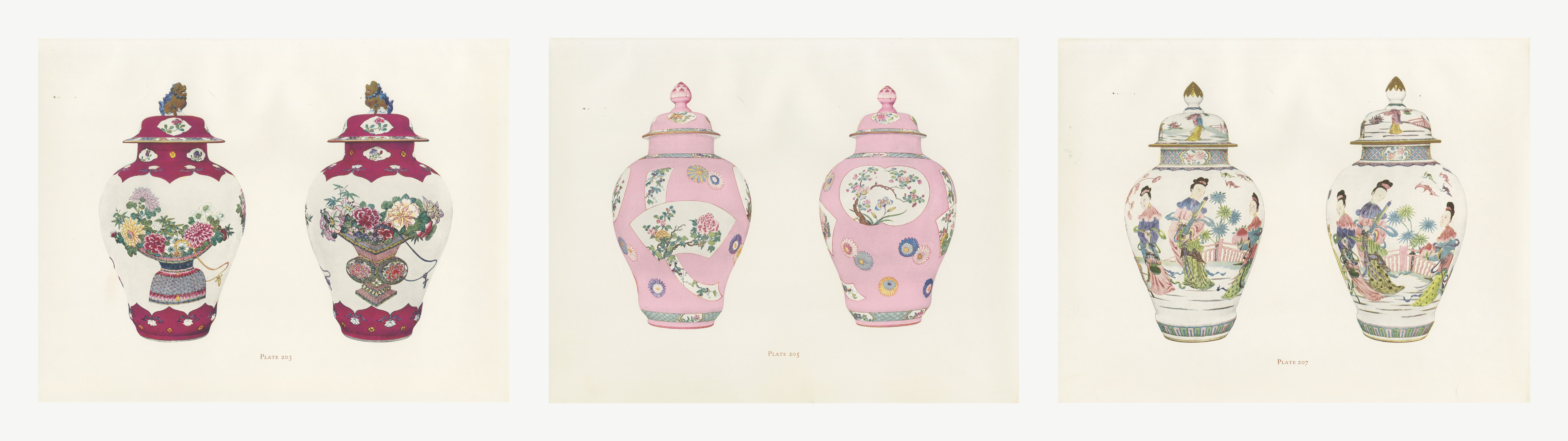
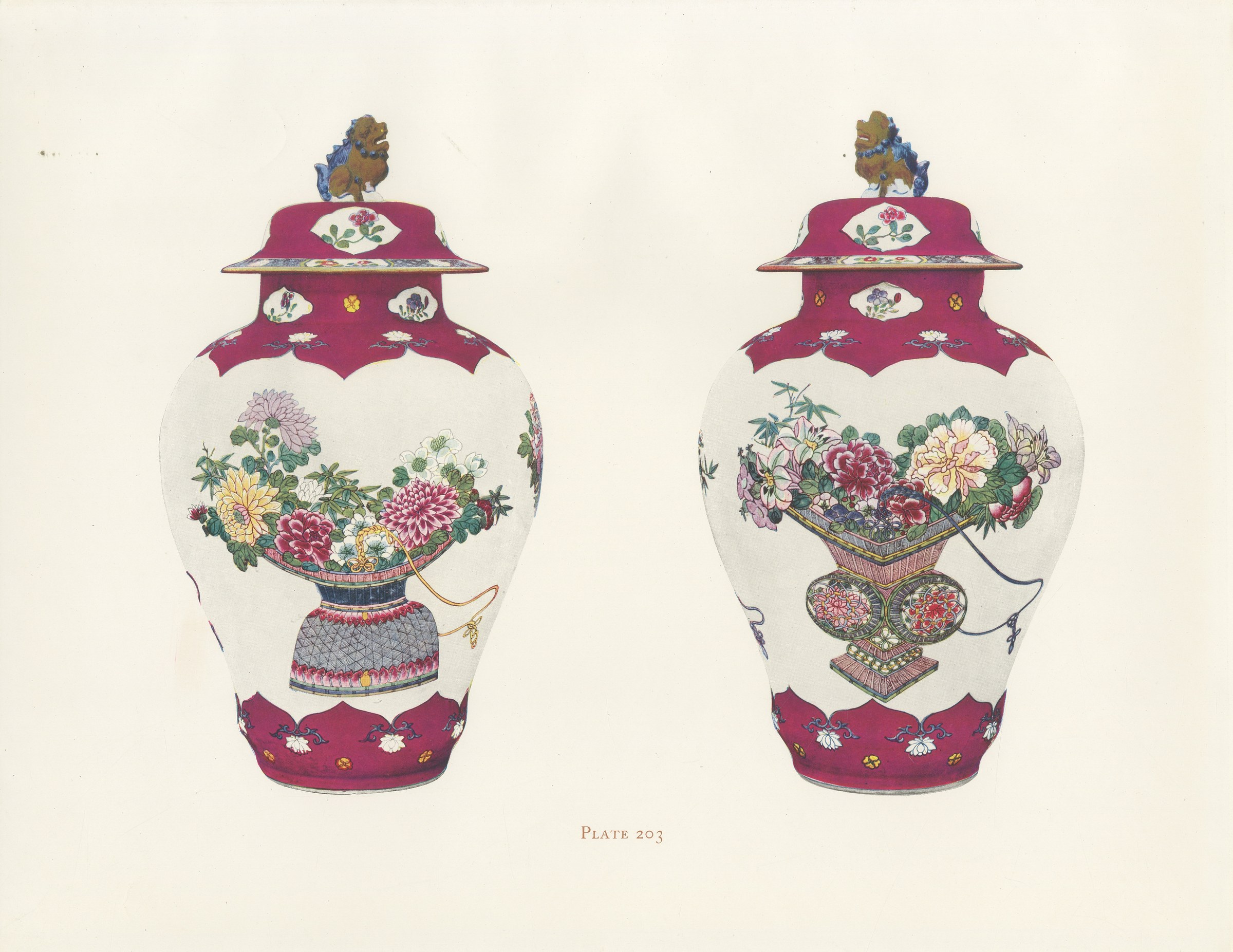
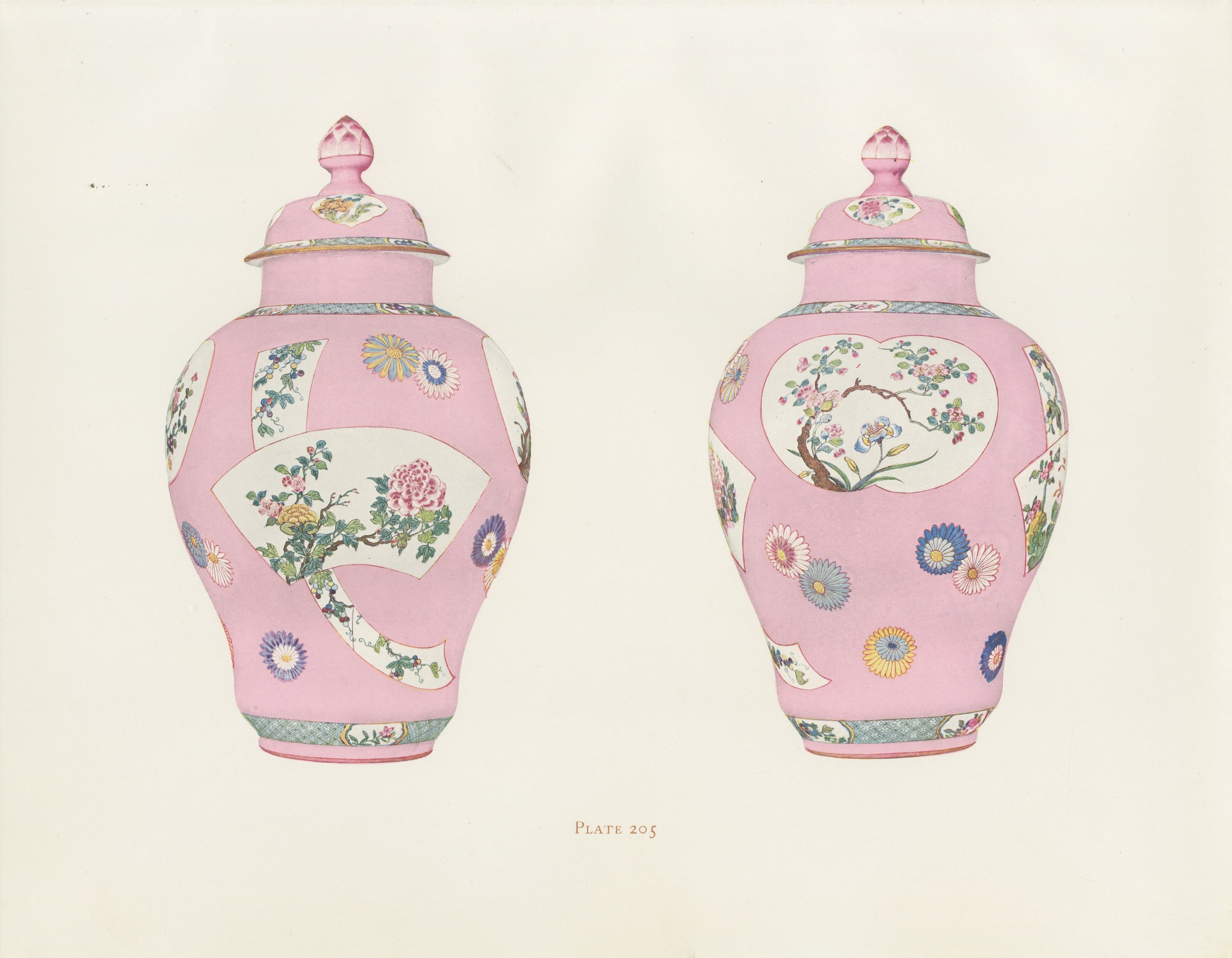
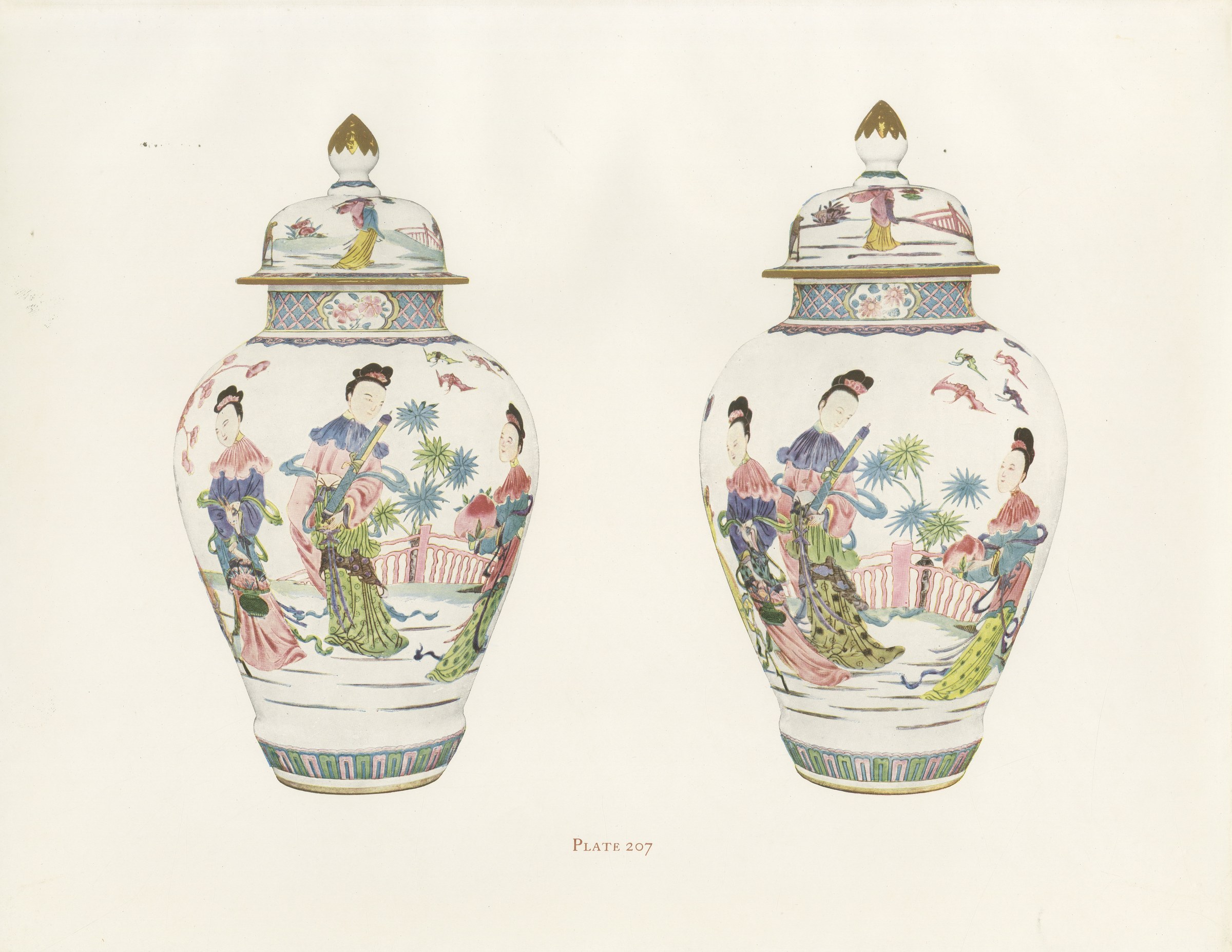
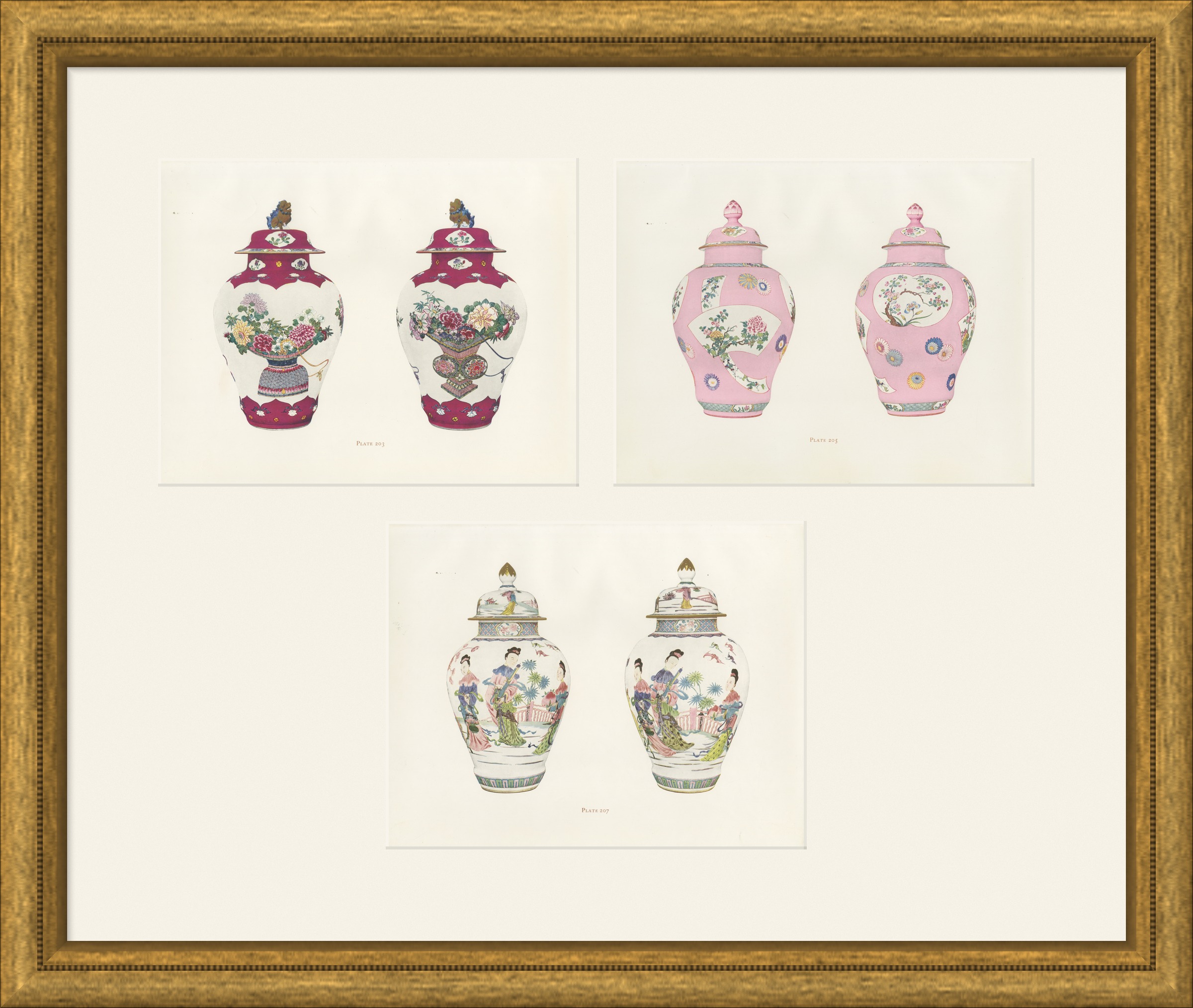
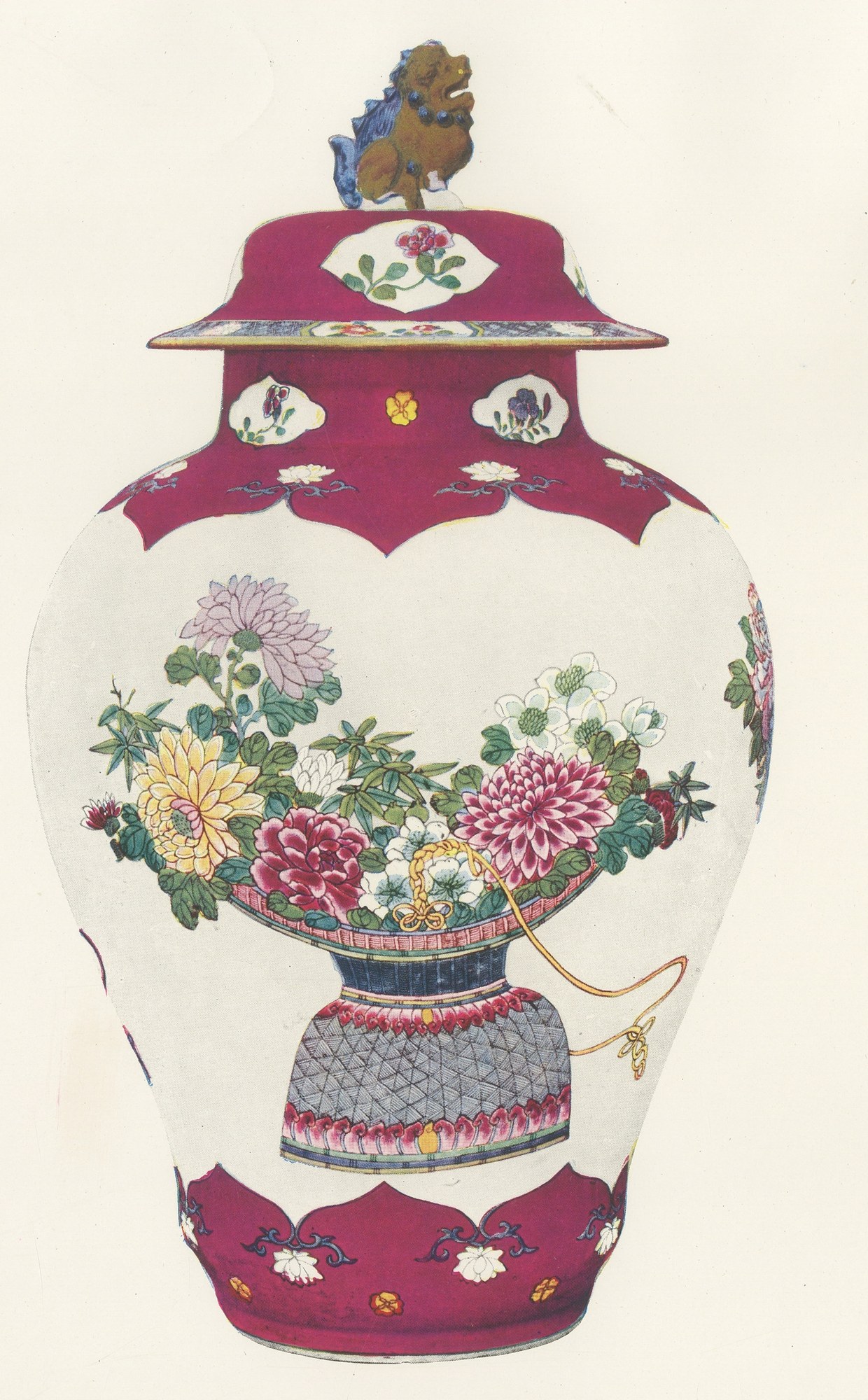
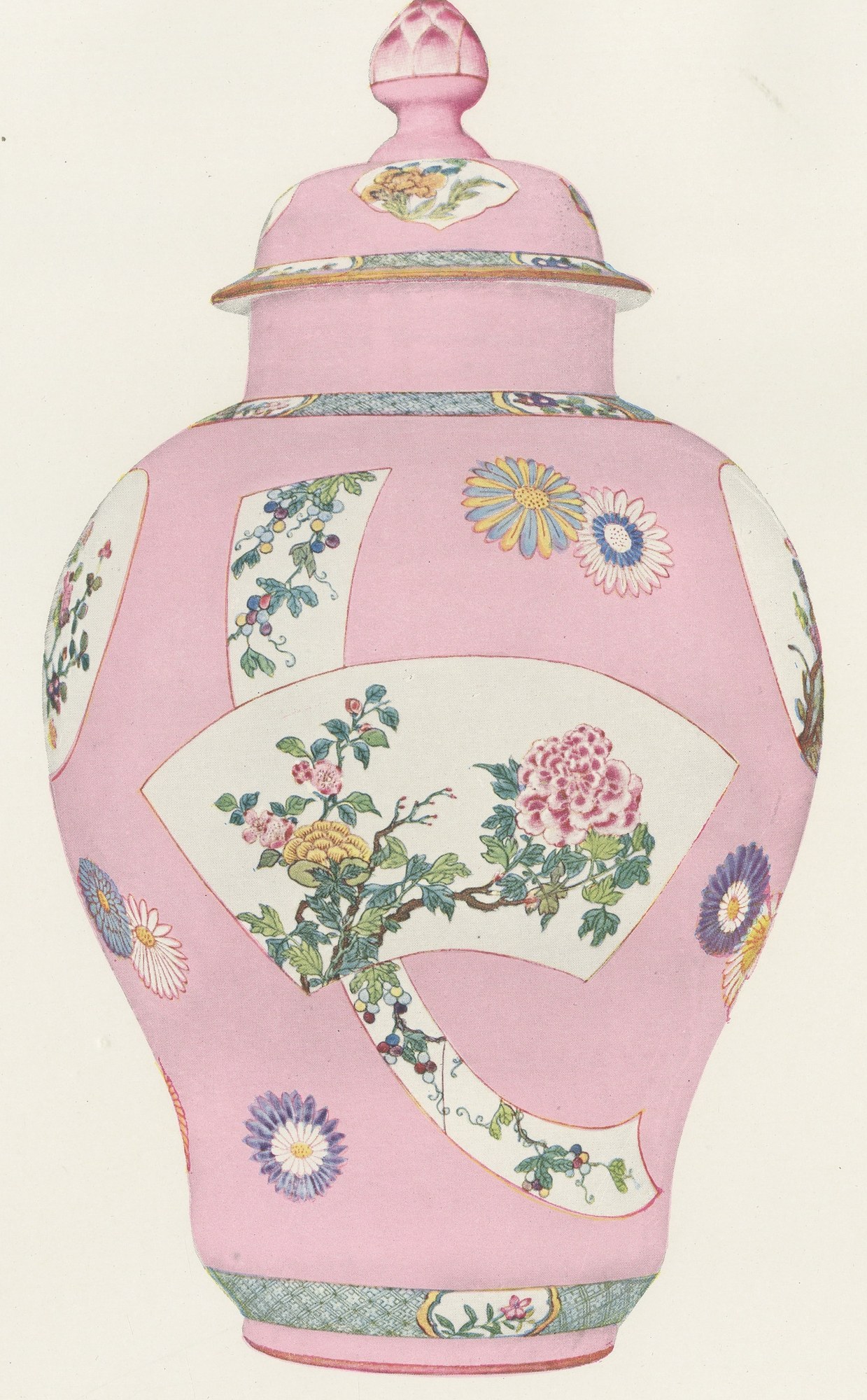
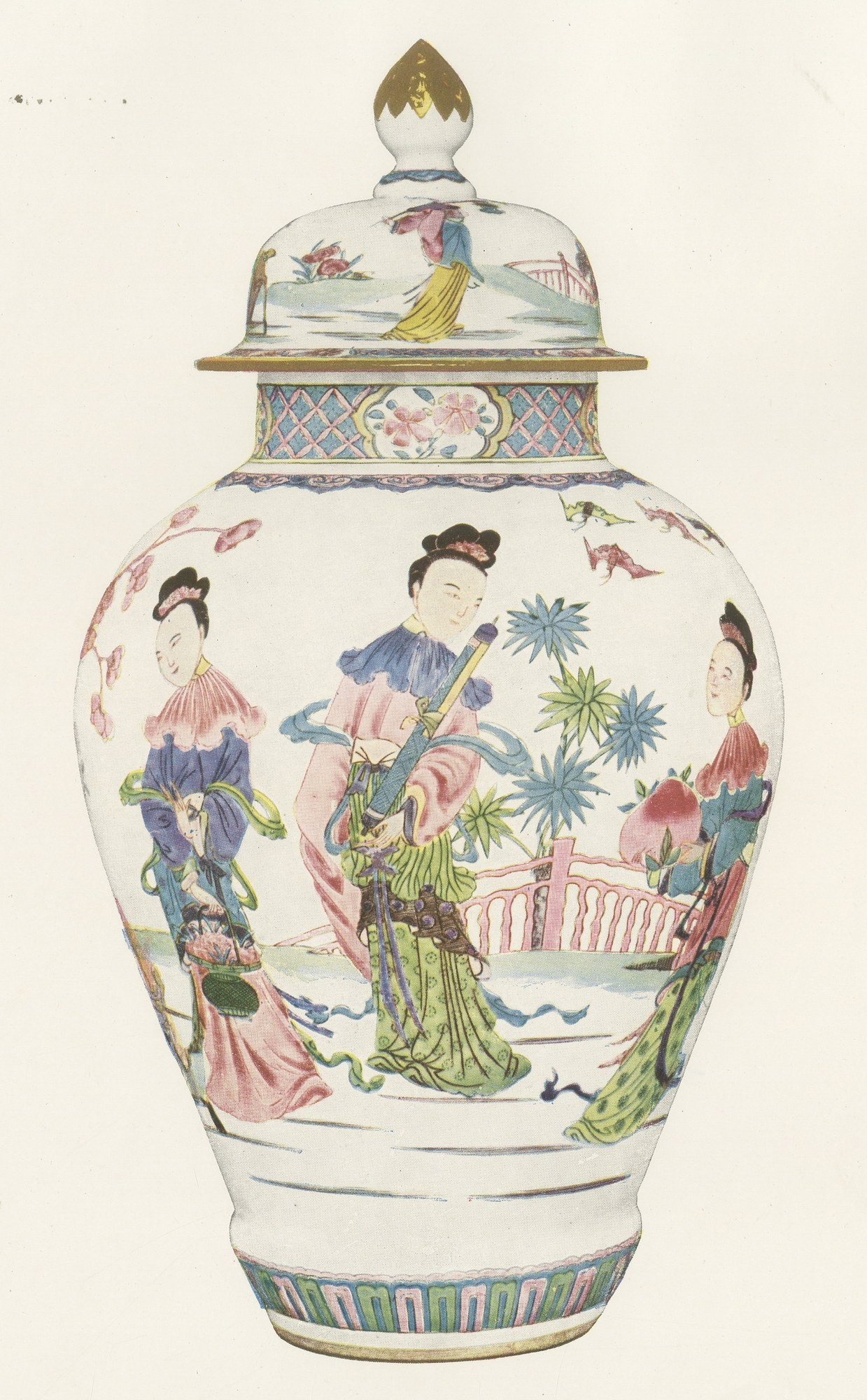
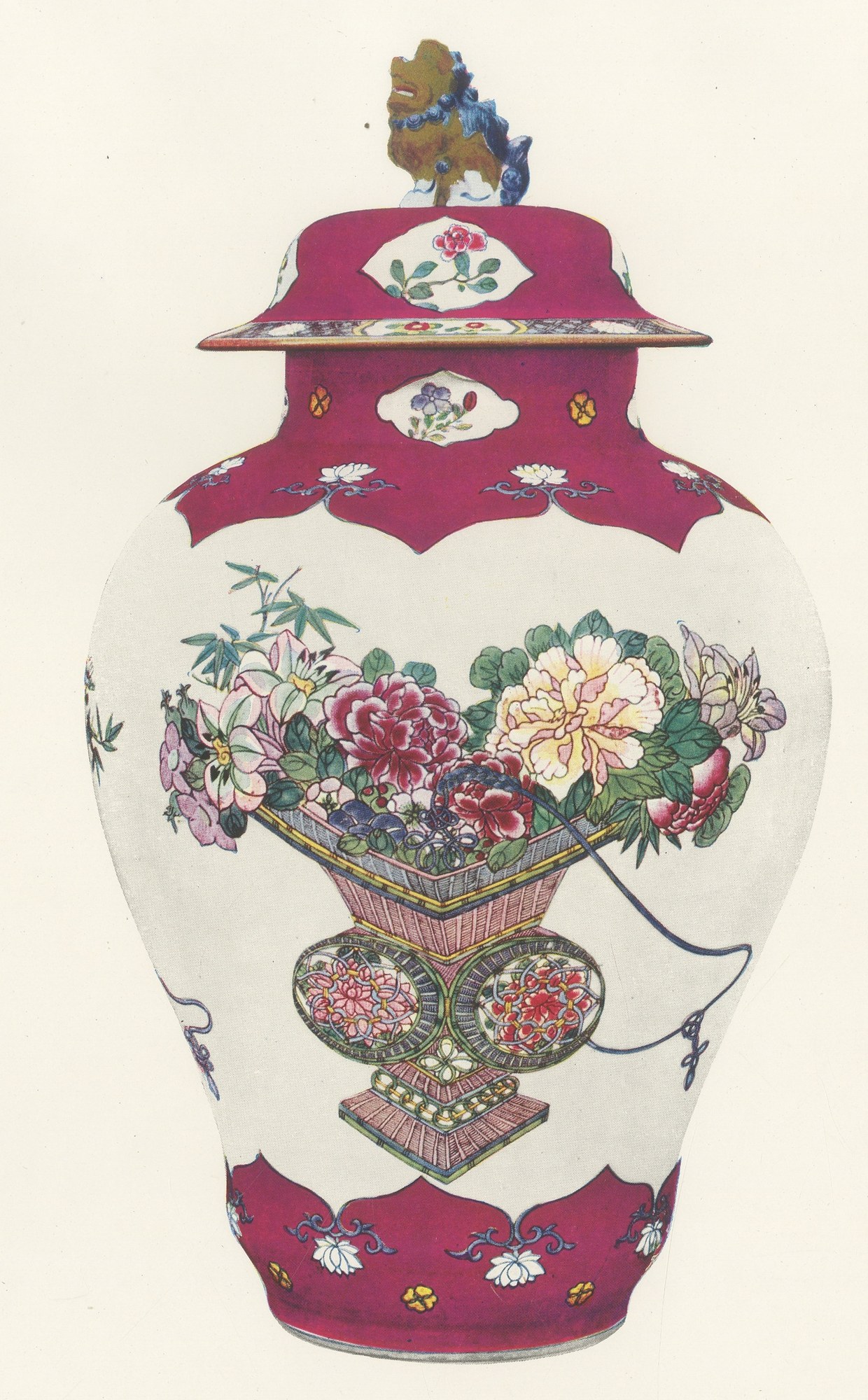
This is a set of three original 1911 color plates, Plates 203, 205 and 207 from Volume II of Gorer and Blacker's Chinese Porcelain and Hard Stones, sold together as one lot. What links them: rose ground jars and covers. Plate 203: Vase, oviform, or jar and cover (two views). A white ground with a ju-i head shaped border in deep ruby enamel, ornamented by erect foliated lotus on the top with similar lotus pendent at the base; the ruby border decorated on the neck with single yellow flowers and interrupted by white panels containing flowers; a red-gilt knob rises from a white panel. The book gives it to the Yung-ching period and records height 17 3/4 inches (45.2 cm); diameter 10 1/2 inches (26.6 cm). In the collection of Henry Hirsch, Esq. Plate 205: Pair of jars and covers. A soft soufflé rose-color ground, the red from gold, with colored chrysanthemums scattered in pairs or singly, interrupted by reserves in white framed with a single line, the reserves of different shapes of persimmon, fan, etc.; leaves in shades of green and the stems in brown. The book gives it to the Yung-ching period and records height 17 1/2 inches (44.5 cm); diameter 10 1/4 inches (26 cm). In the Salting Collection, Victoria and Albert Museum. Plate 207: Pair of jars and covers. Splendid examples of the famille rose decoration upon a white ground; the painting represents Hsi Wang Mu, the queen-mother of the West, consort of Tung Wang Kung, sovereign lord of the East, carrying a basket of flowers, attended by figures; zones of ju-i heads about the knob, and five bats flying above the figures in different colors. The book gives it to the Yung-ching period and records height 18 3/8 inches (46.7 cm); diameter 10 inches (25.3 cm). From the collection formed by Sir William Bennett.
Chinese Porcelain and Hard Stones, by Edgar Gorer and J. F. Blacker, was published in London by Bernard Quaritch in 1911 in two volumes with two hundred and fifty four color plates, and these sheets are among them, from Volume II. The plates are color collotypes, a photographic process that reproduces continuous tone without a visible dot screen, which is why the glazes keep their depth on paper.
The book appeared at the height of the Edwardian passion for Chinese porcelain, when English and American collections were being formed at speed and a dealer's catalog could shape taste. R. L. Hobson of the British Museum attacked Gorer's attributions in print when the work appeared, and later scholarship has revised many attributions of this kind, which is part of what makes the volumes interesting to read now.
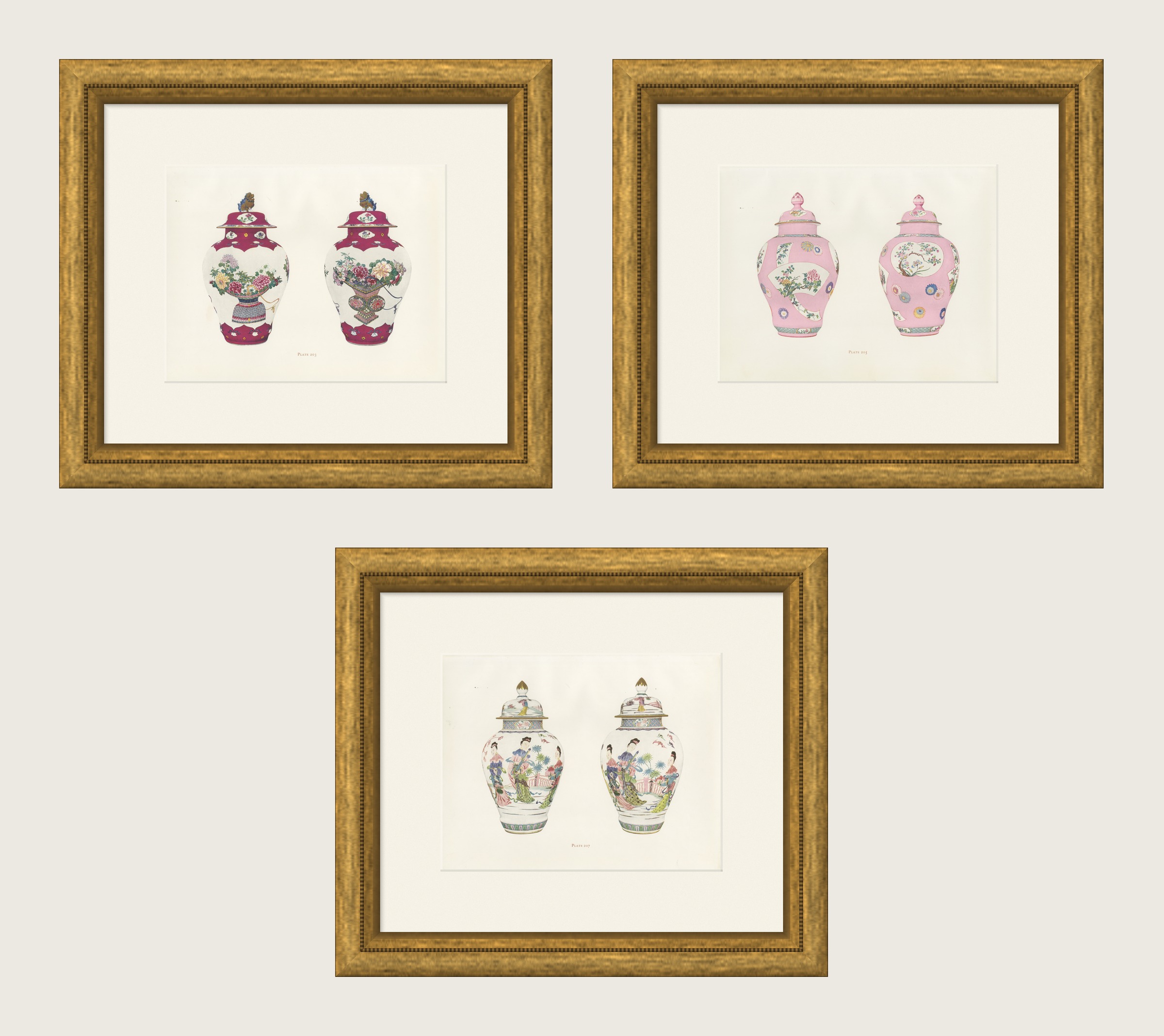
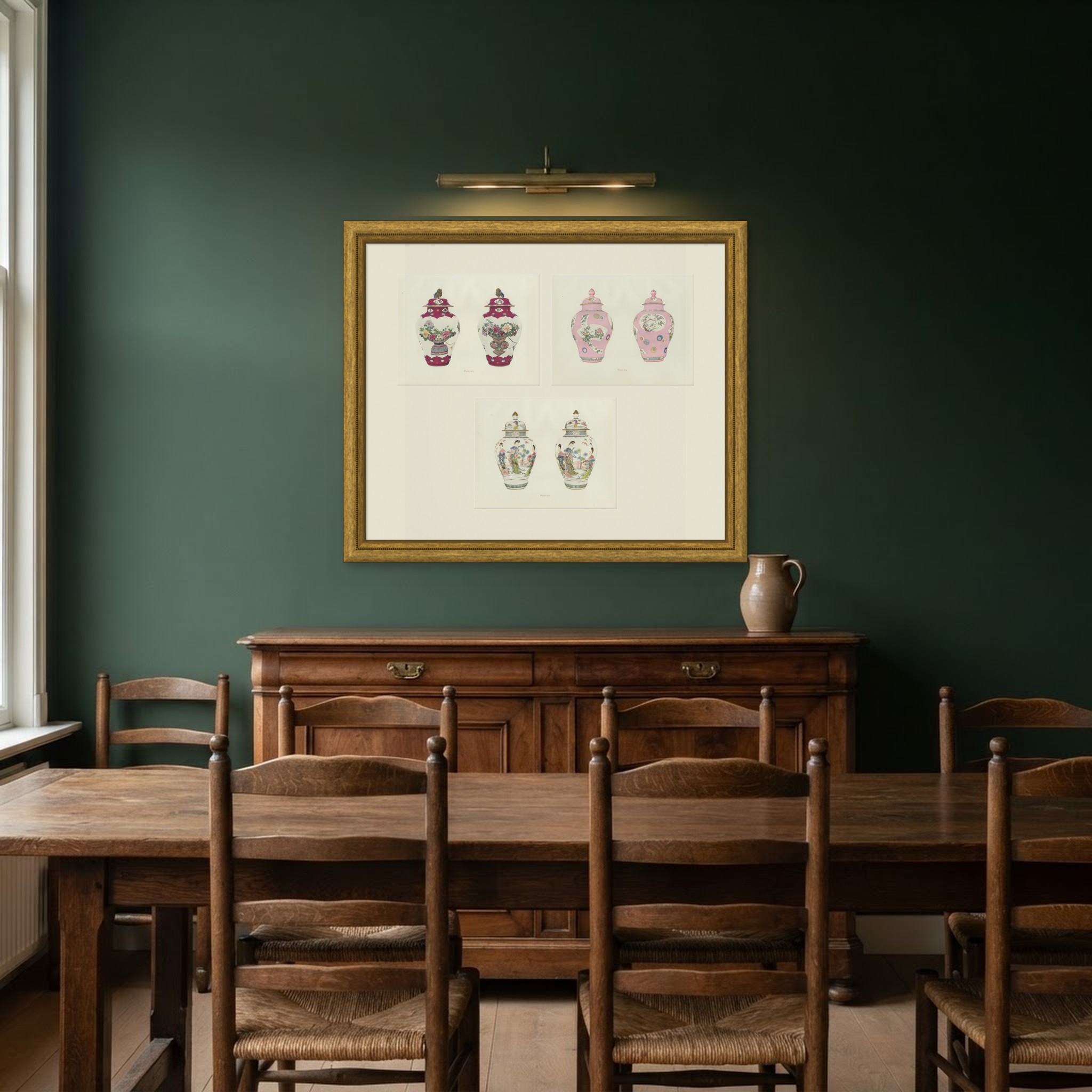
Framed simply in a dark wood molding with a generous cream mount, it holds a wall on its own and sits comfortably beside furniture of almost any period. The three sheets are the same size and were printed by the same hand, so they hang as one group.
These are original antique prints, not modern reproductions. They are three original sheets sold together as one lot, and the set is never split.
Even age toning throughout. All corners complete on every sheet.
This item is sold unframed. Any framed or interior images are shown for presentation and inspiration only, unless the listing explicitly states that the item is sold framed.