About this sheet
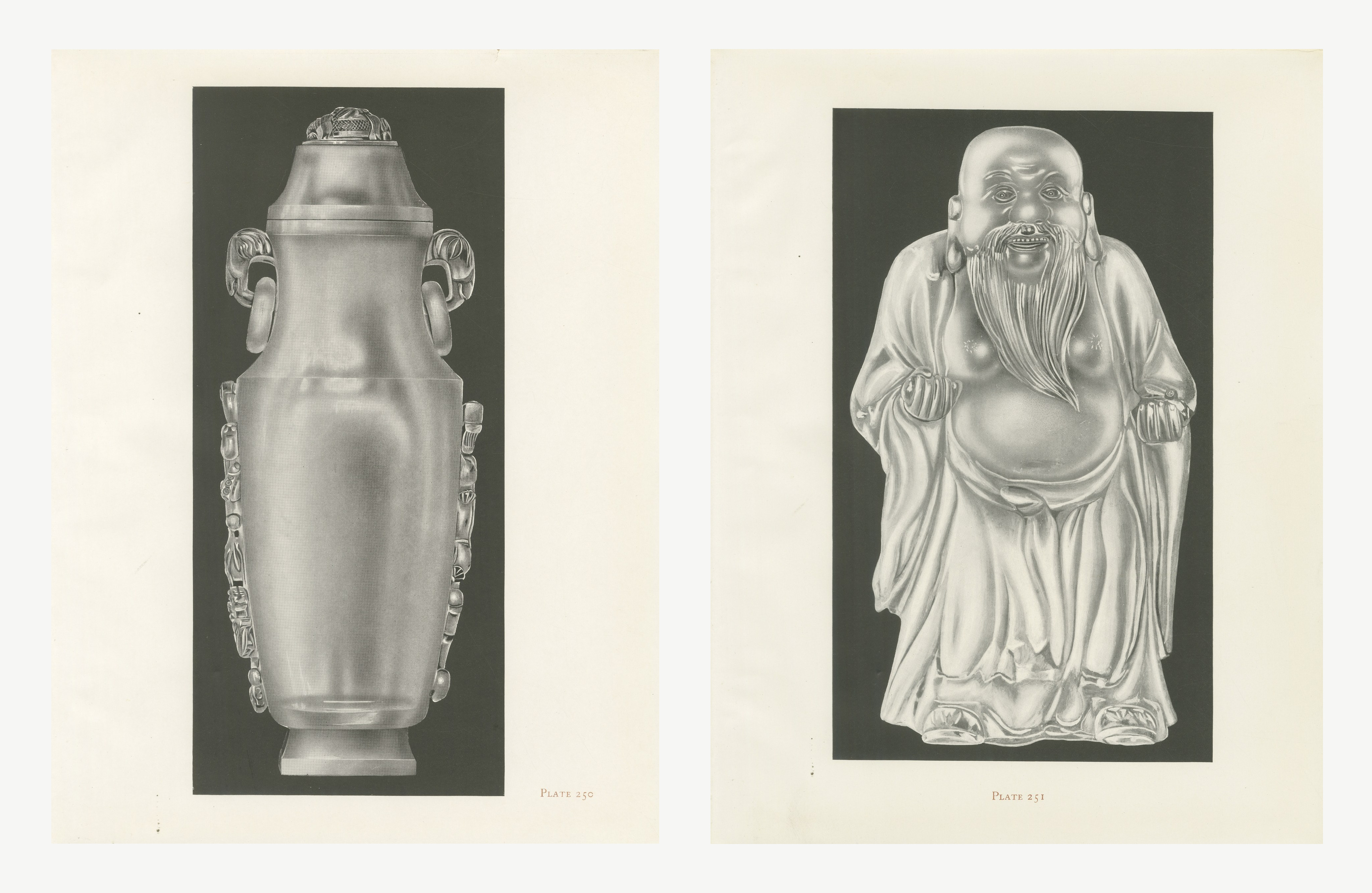
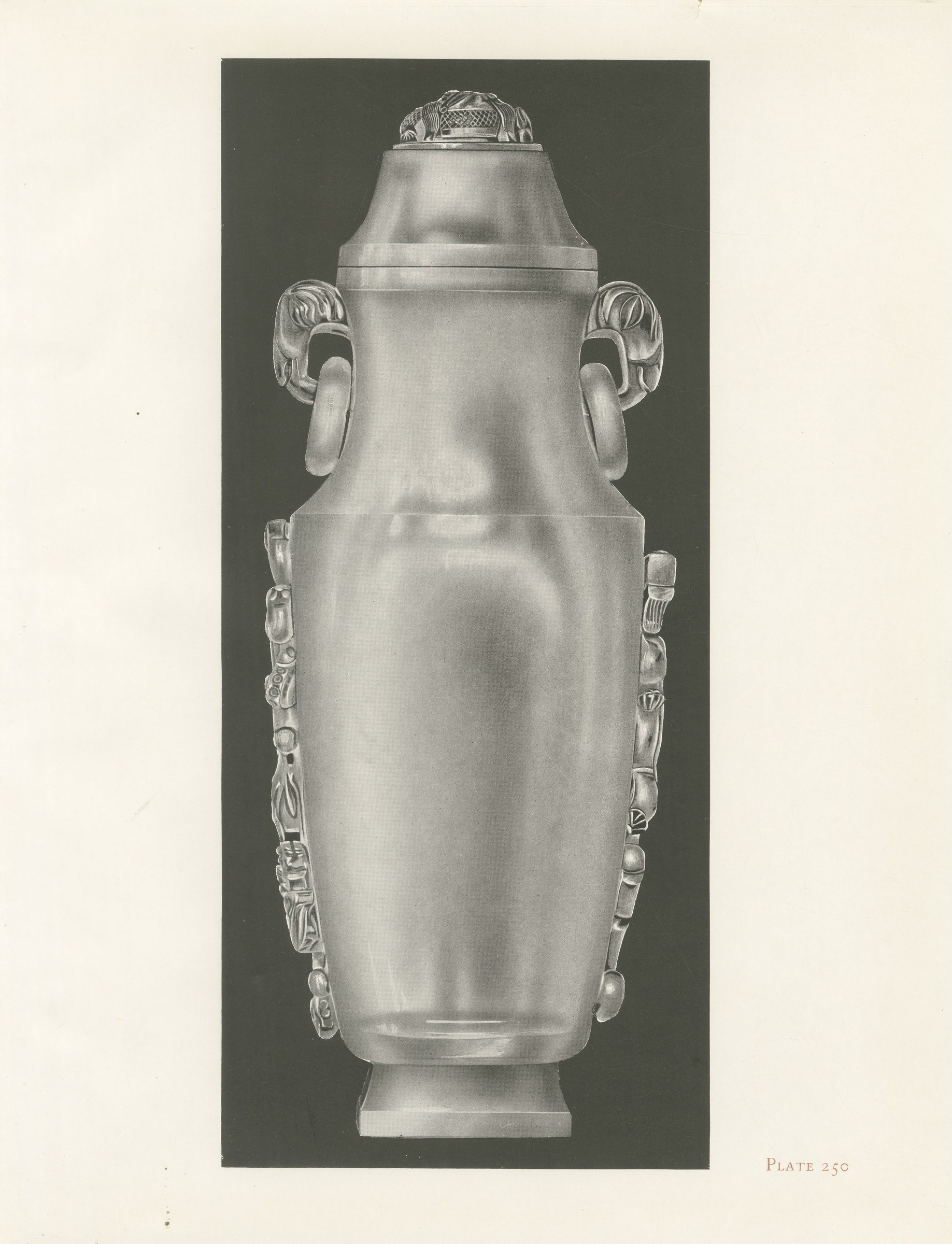
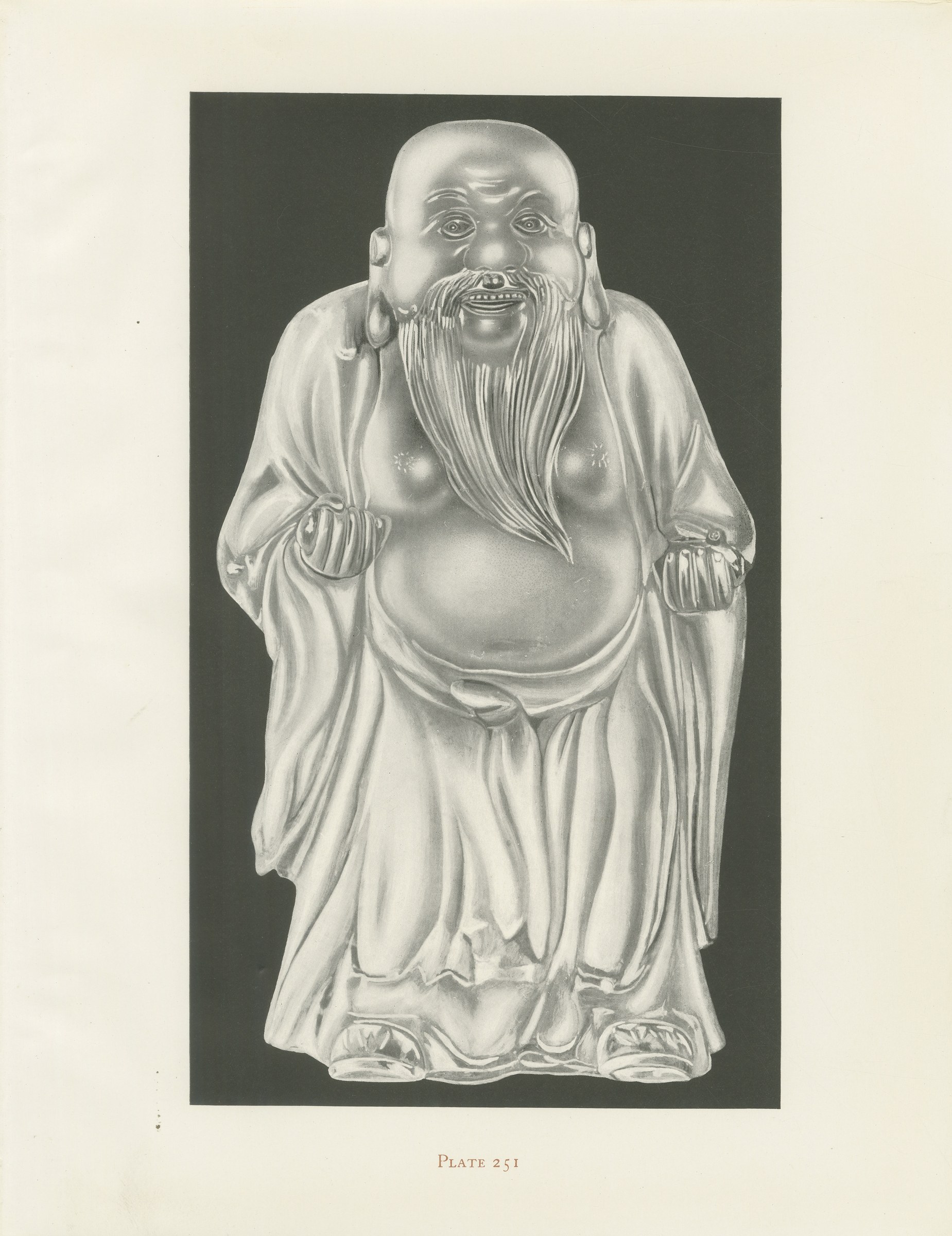
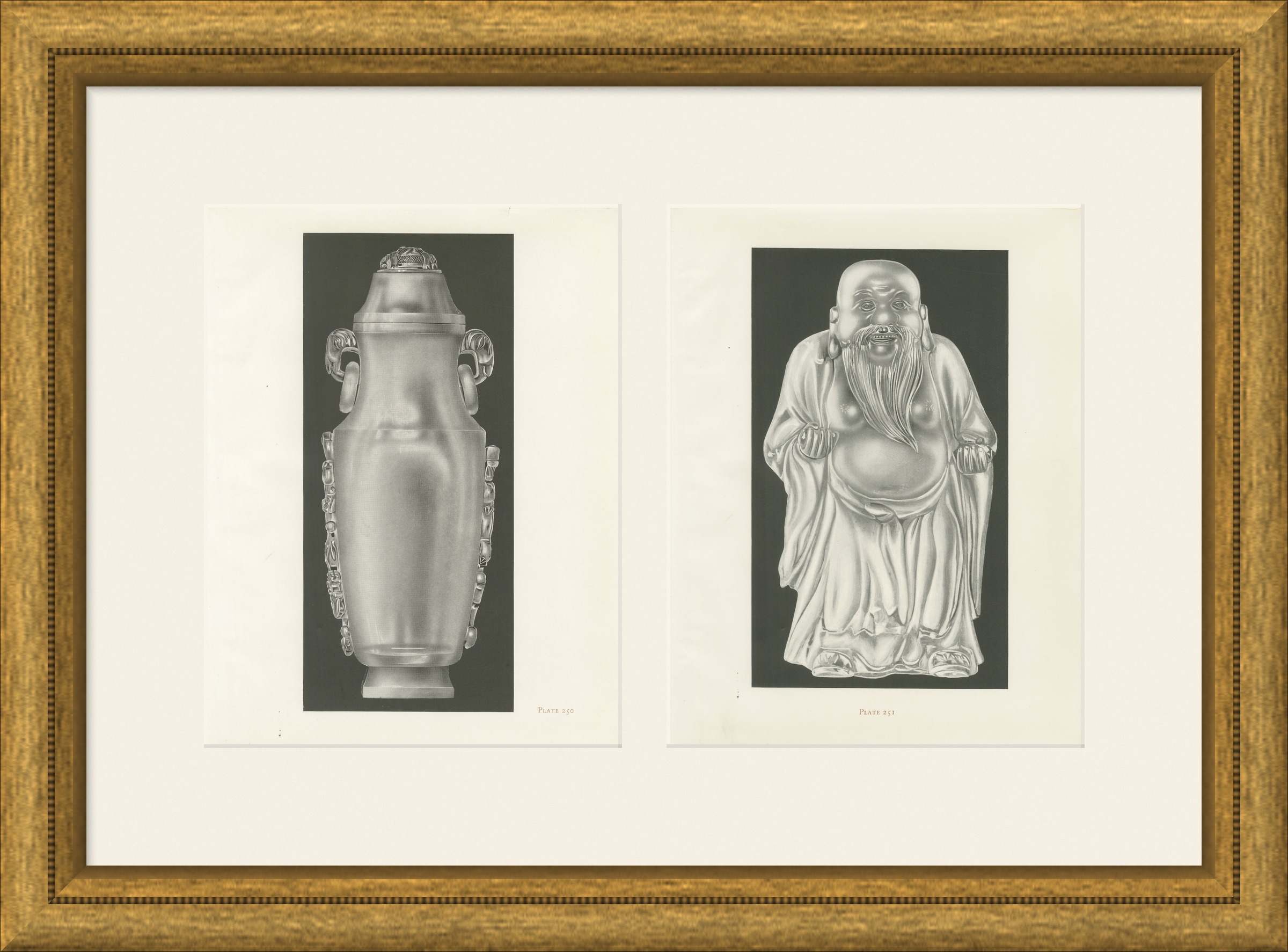
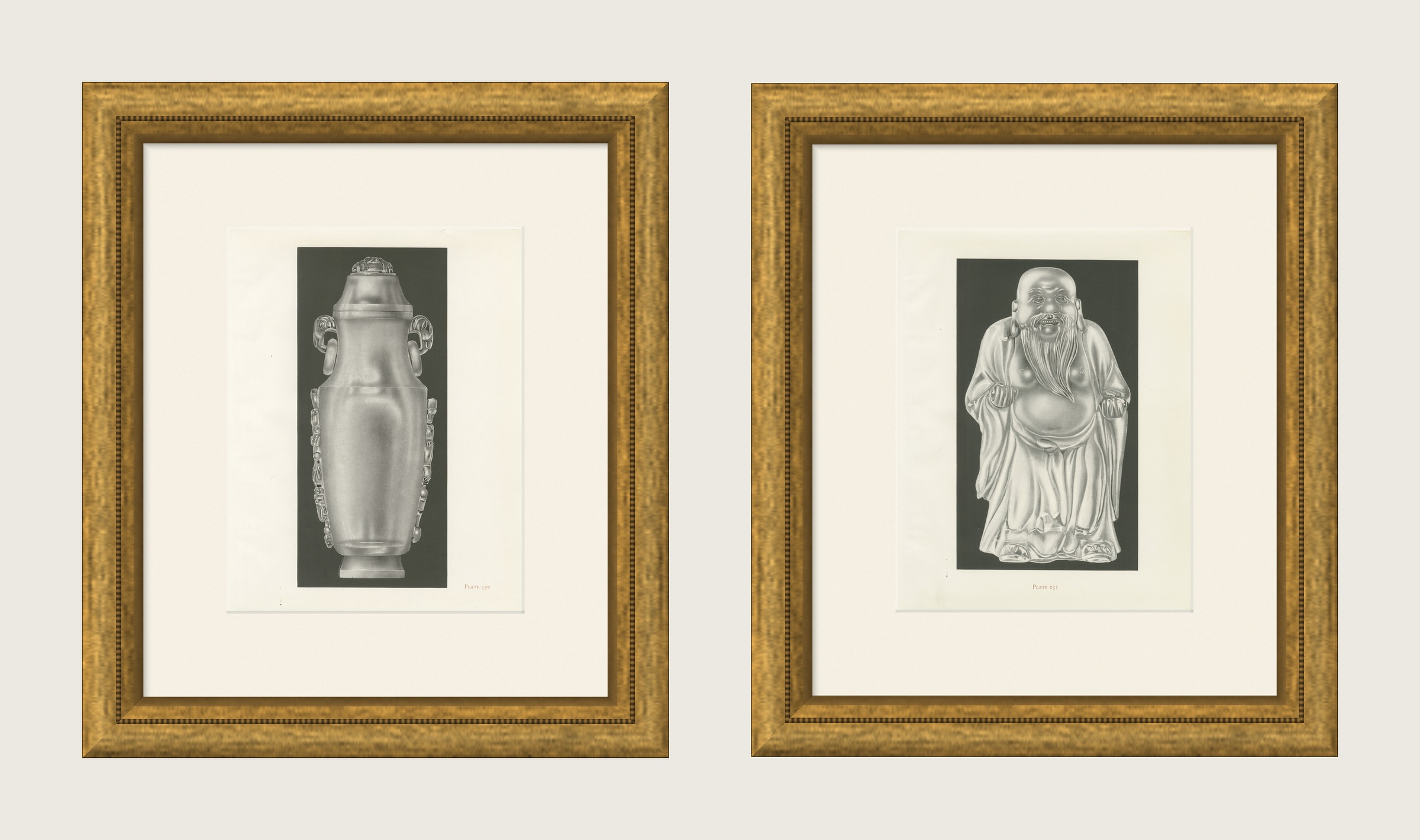
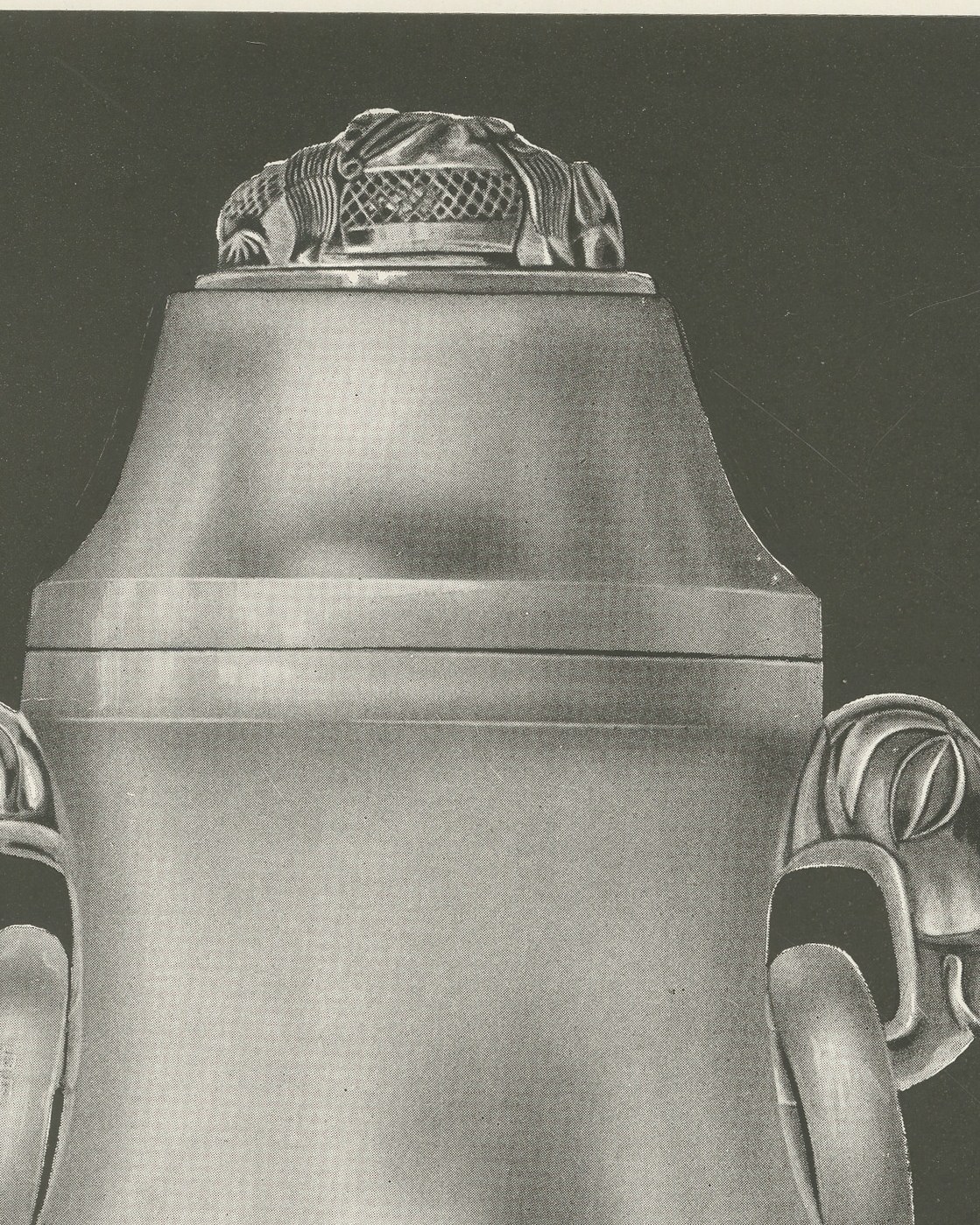
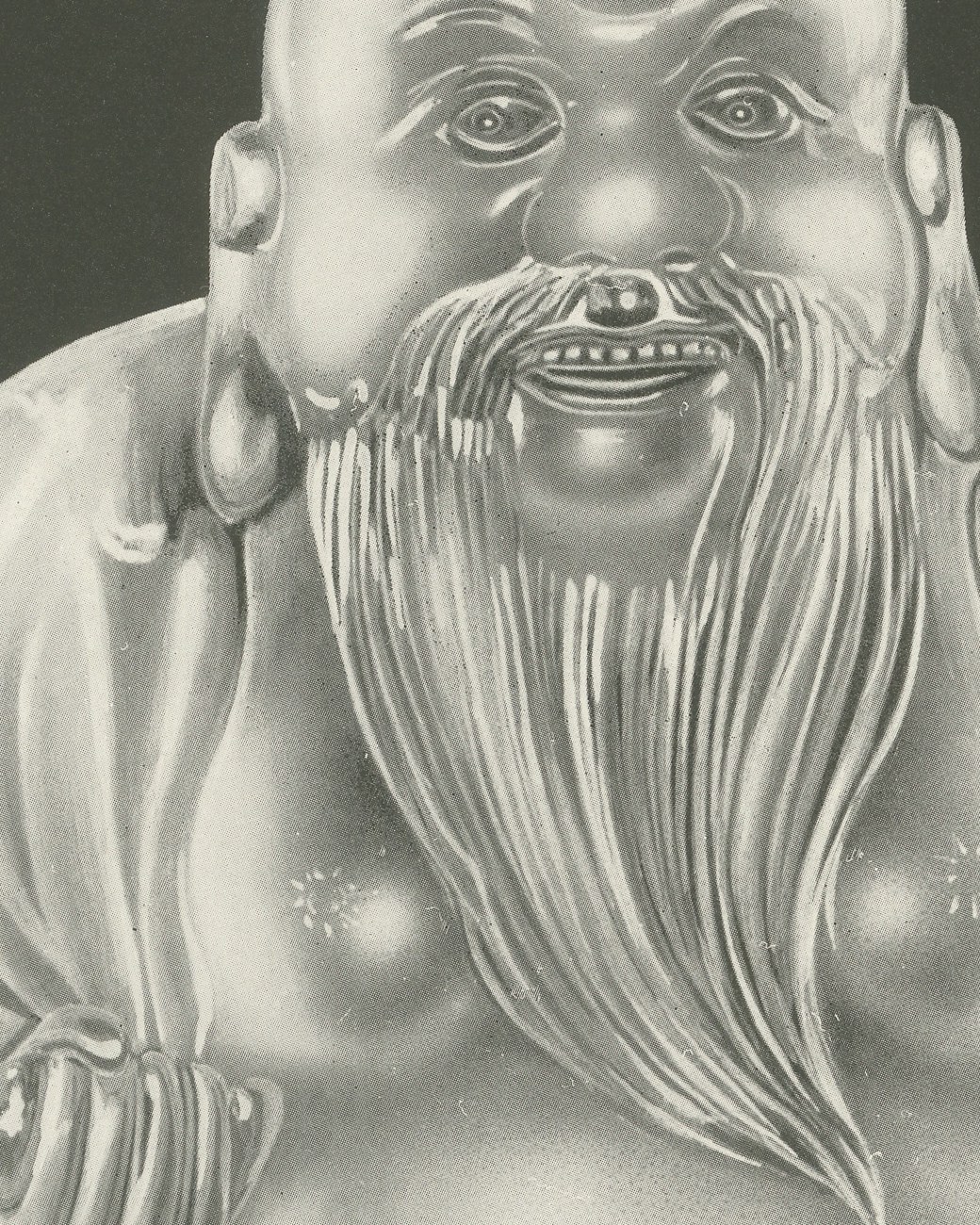
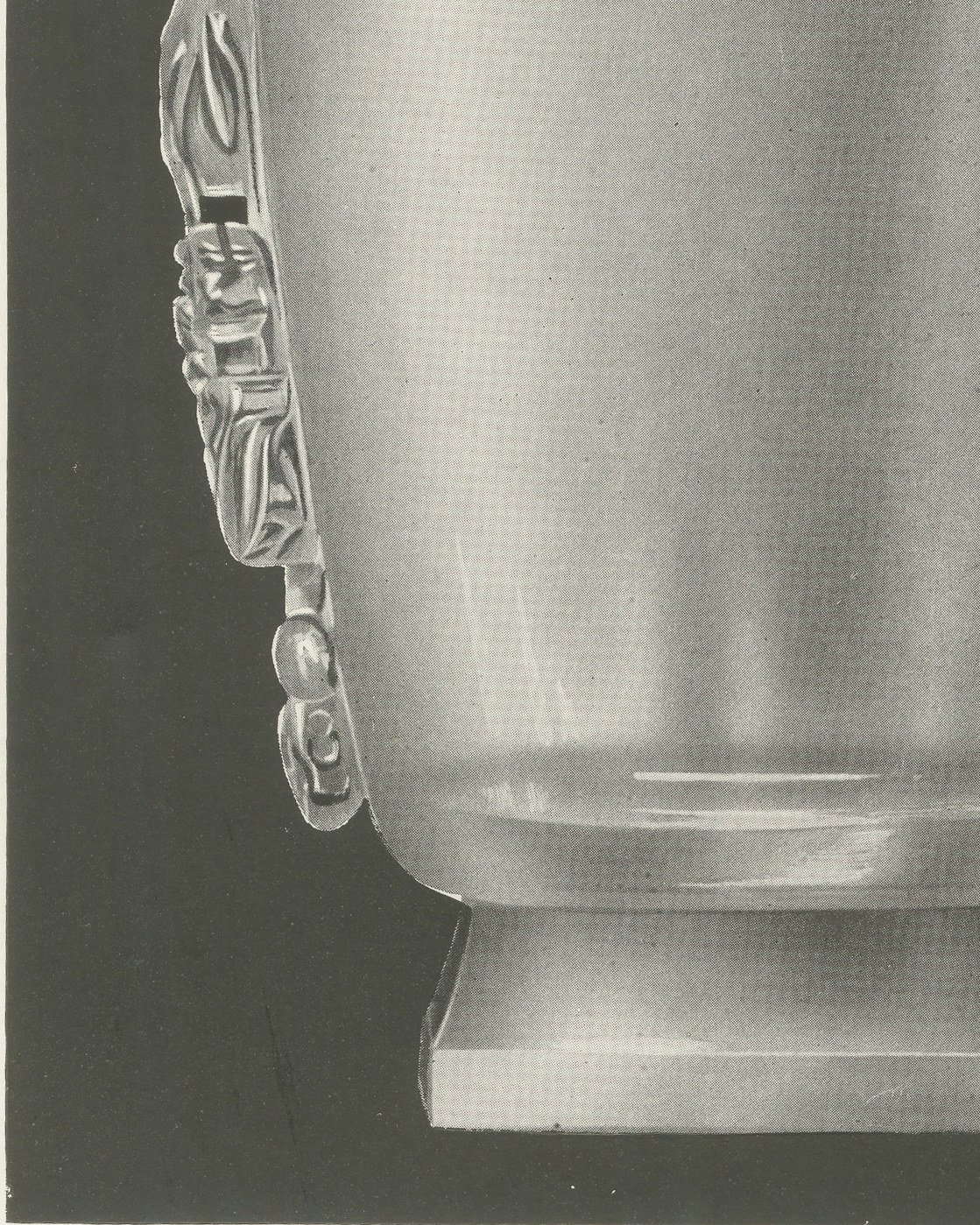
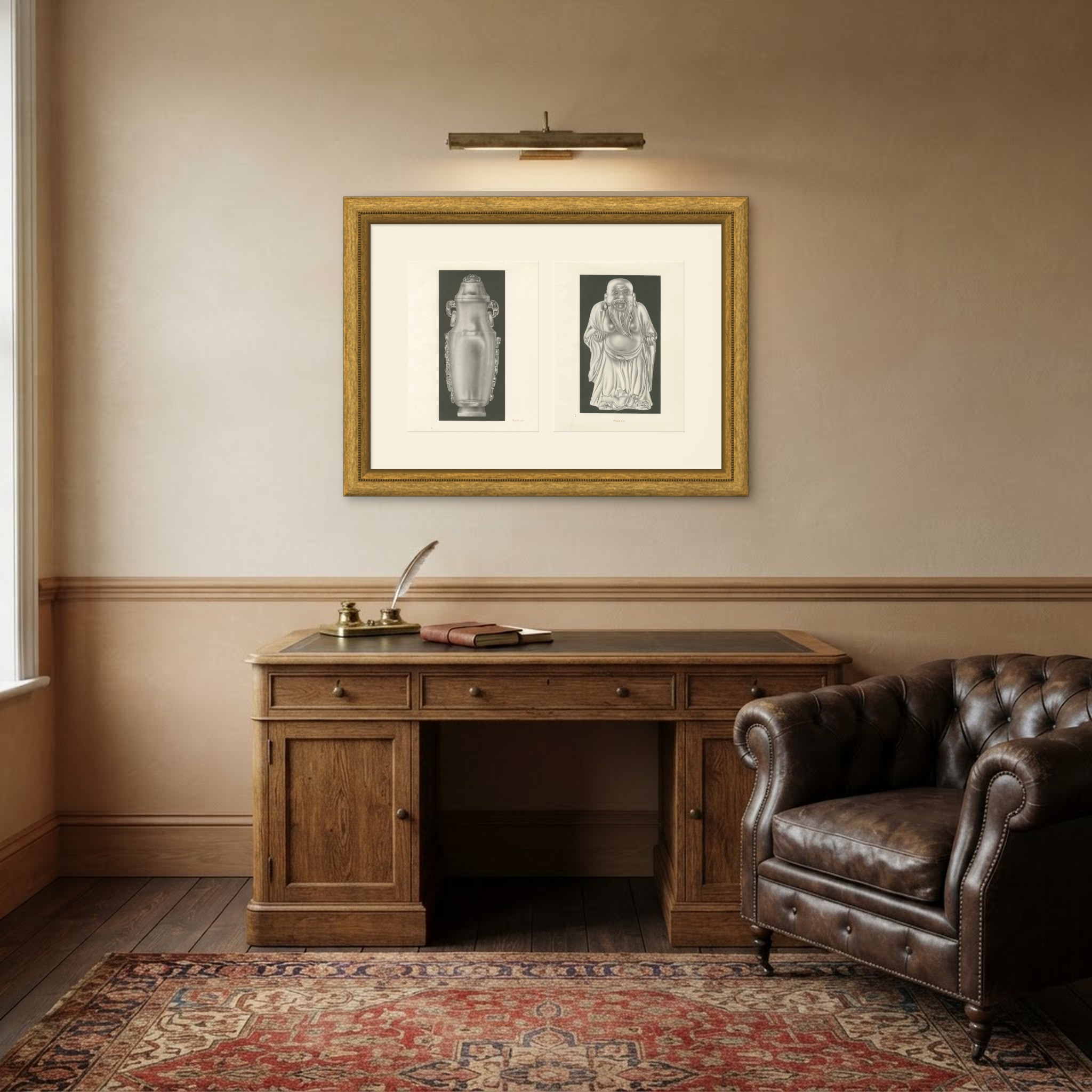
This is a set of two original 1911 color plates, Plates 250 and 251 from Volume II of Gorer and Blacker's Chinese Porcelain and Hard Stones, sold together as one lot. What links them: the two black ground rock crystal plates. Plate 250: Vase, flattened quadrangular, in rock crystal of perfect quality and remarkable size. The faces at front and back are plain; each side is decorated with a chih-lung, or ornamental dragon, extending the whole length of the body. Above these are the elephant-head handles supporting large movable rings; at the base, inside, the crystal is cut into a simple sunk border, repeated at the rim, which receives the cover, which has sloping sides and a flat top surmounted by a coiled chih-lung in openwork with horns and scales engraved. The book gives it to the Kien-lung period and records height 15 1/4 inches (38.7 cm); width 6 inches (15.2 cm). In the collection of H. S. Whitaker, Esq. Plate 251: Magnificent figure of Pu-tai, god of contentment, the future Buddha, in clear transparent rock crystal. Shown as a fat, smiling old man, shaven-headed, with a pig-tail rolled up, long-bearded and fat-bellied; his scanty robes, bound by a loose girdle, fall from the shoulders in graceful folds, and in each hand he holds a peach. The title "god of porcelain" is said to be incorrectly used, as well as being an imaginary title. The book gives it to the Kien-lung period and records height 10 1/2 inches (26.7 cm); width 6 1/2 inches (16.5 cm). In the collection of H. S. Whitaker, Esq.
The plates belong to Edgar Gorer and J. F. Blacker's Chinese Porcelain and Hard Stones, issued in London by Bernard Quaritch in 1911, a work in two volumes whose two hundred and fifty four color plates were printed to the highest standard the period could reach. The plates are color collotypes, a photographic process that reproduces continuous tone without a visible dot screen, which is why the glazes keep their depth on paper.
Edgar Gorer was one of the most visible dealers in Chinese art of his generation. He traded as S. Gorer and Son at 170 New Bond Street with a branch at 500 Fifth Avenue in New York, dealt chiefly in Kangxi, Yongzheng and Qianlong porcelain, and sold to Sir William Lever. He died on 7 May 1915 when the Lusitania was torpedoed, and his body was never recovered.
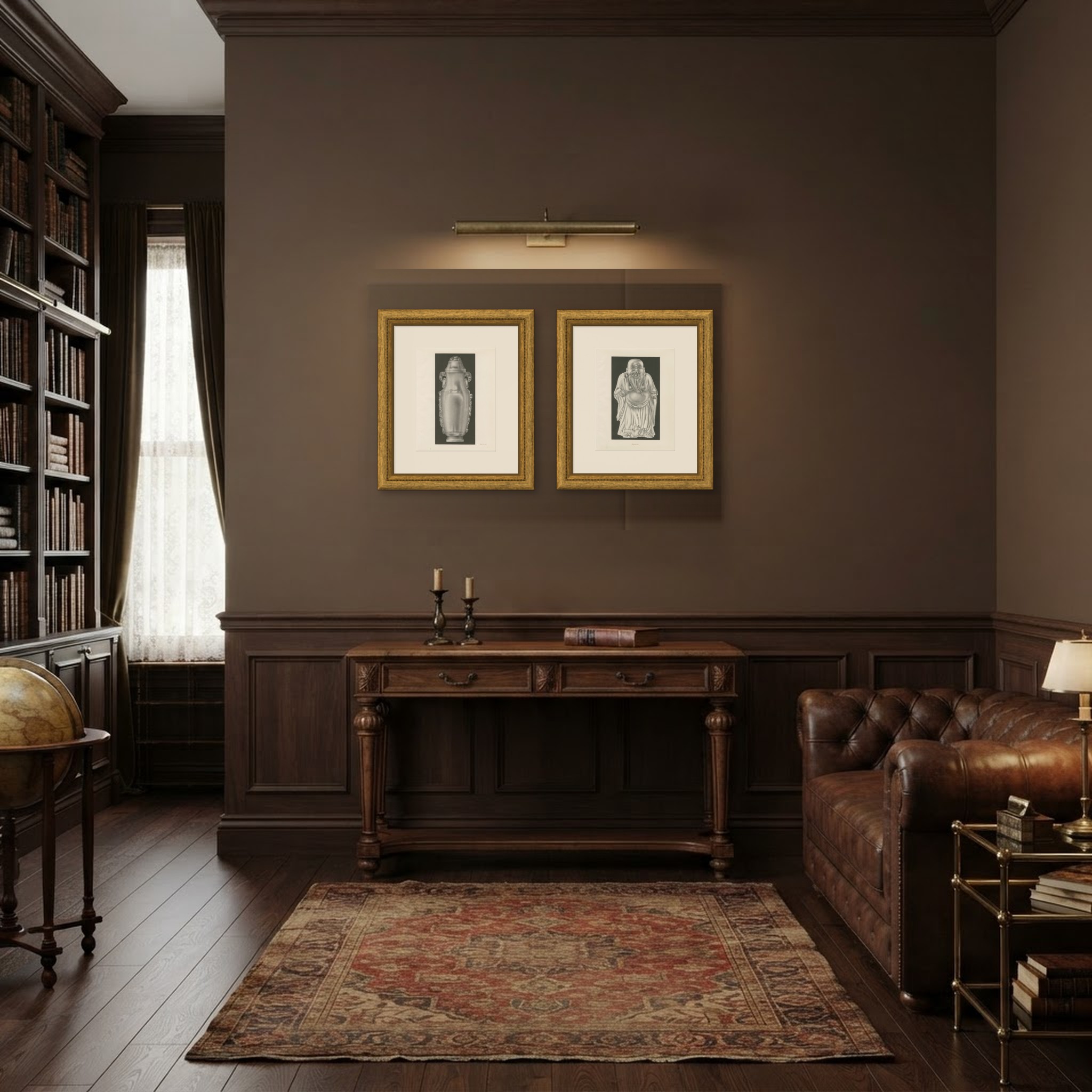
Collectors of Chinese ceramics, of early color printing and of Edwardian book illustration all look for these plates, and they work equally well in an interior scheme as in a collection. The two sheets are the same size and were printed by the same hand, so they hang as one group.
These are original antique prints, not modern reproductions. They are two original sheets sold together as one lot, and the set is never split.
Even age toning throughout. Light foxing in the margins of both sheets. All corners complete on every sheet.
This item is sold unframed. Any framed or interior images are shown for presentation and inspiration only, unless the listing explicitly states that the item is sold framed.