Renaissance Ornament Panel with Mythological Figures & Scrollwork – ca. 1869
€ 290
Original antique · The actual sheet photographed · Certificate of authenticity on request · Sold unframed · Worldwide shipping from € 15 (rates)
Date
1869
Mapmaker / artist
Firmin-Didot, Paris, after Pauquet, c.1869
Technique
Chromolithograph
Sheet size
40.4 × 28.8 cm (15.9 × 11.3 in)
Condition
Excellent
Reference
BG-13766-53
What the condition grades mean
Excellent
Bright and clean, with no faults worth mentioning.
Very good
Only light signs of age, such as faint toning.
Good
Normal signs of age for a sheet of this period: toning, some foxing, small marks or neat old repairs.
Fair
Clear faults such as staining, tears or repairs, priced to match.
Every fault we see is written in the condition note, and the whole sheet is shown uncropped in the photos.
Condition
Minor edge wear, strong colors, clean image area.
About this sheet
Renaissance Ornament Panel with Mythological Figures & Scrollwork – Pl. LIII
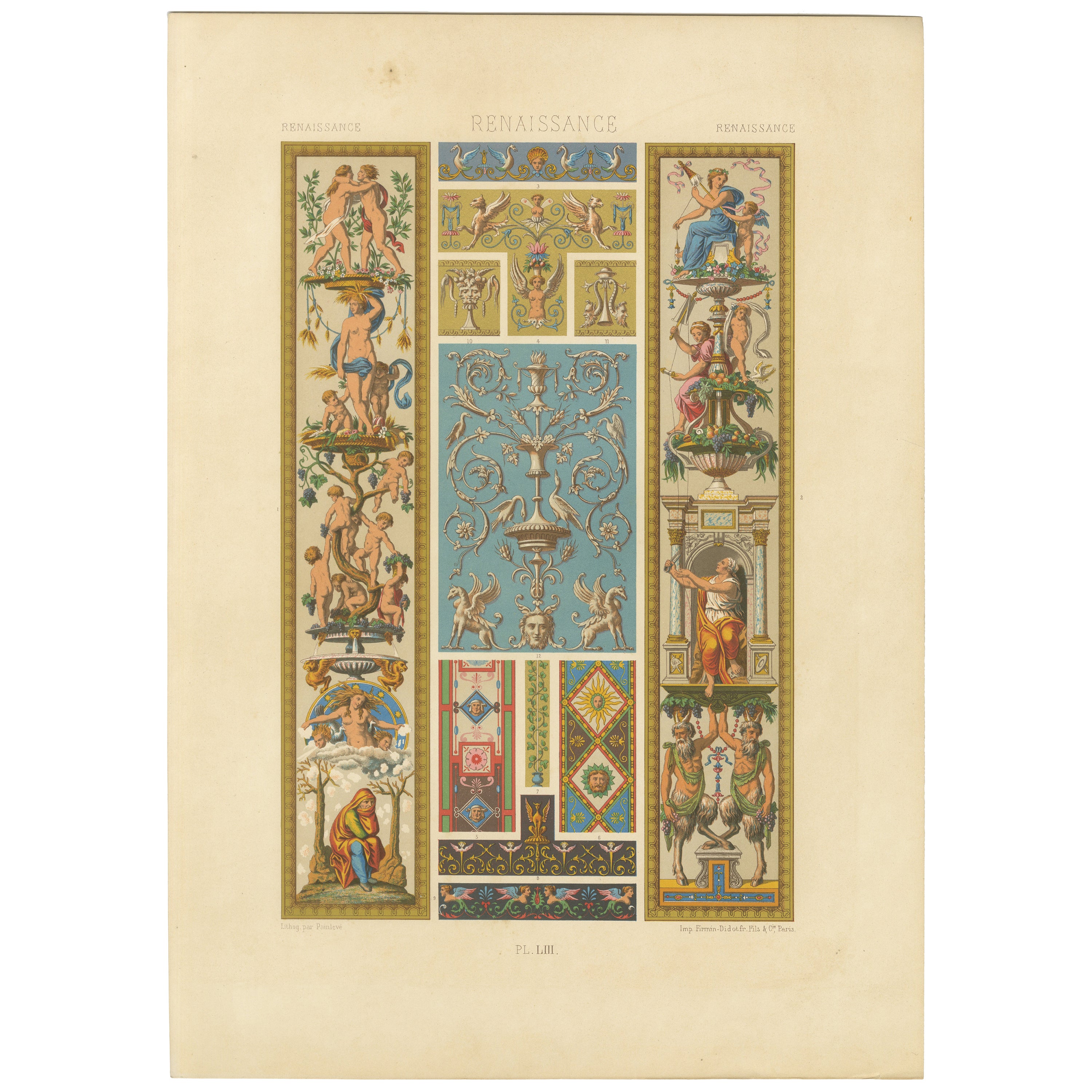
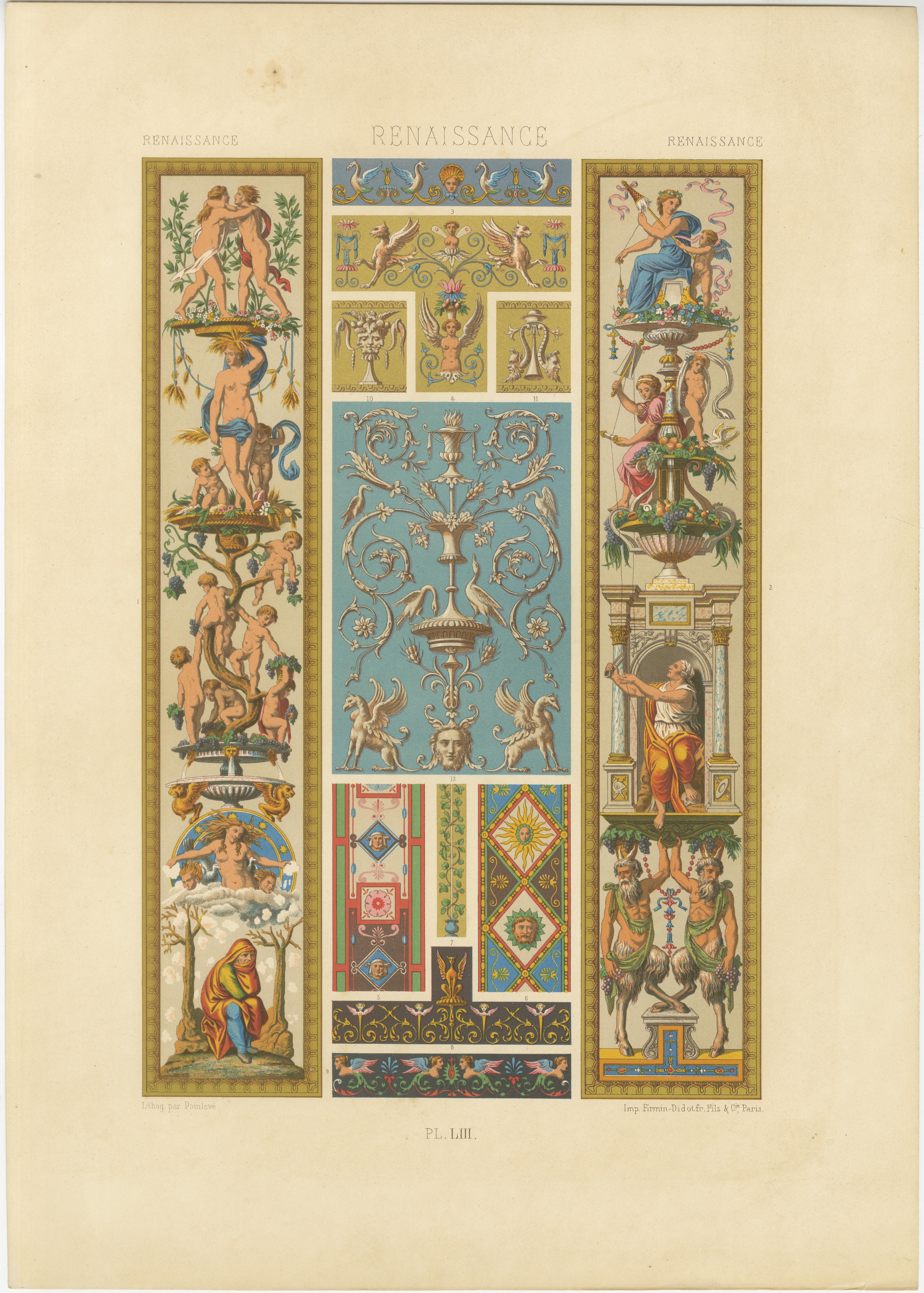
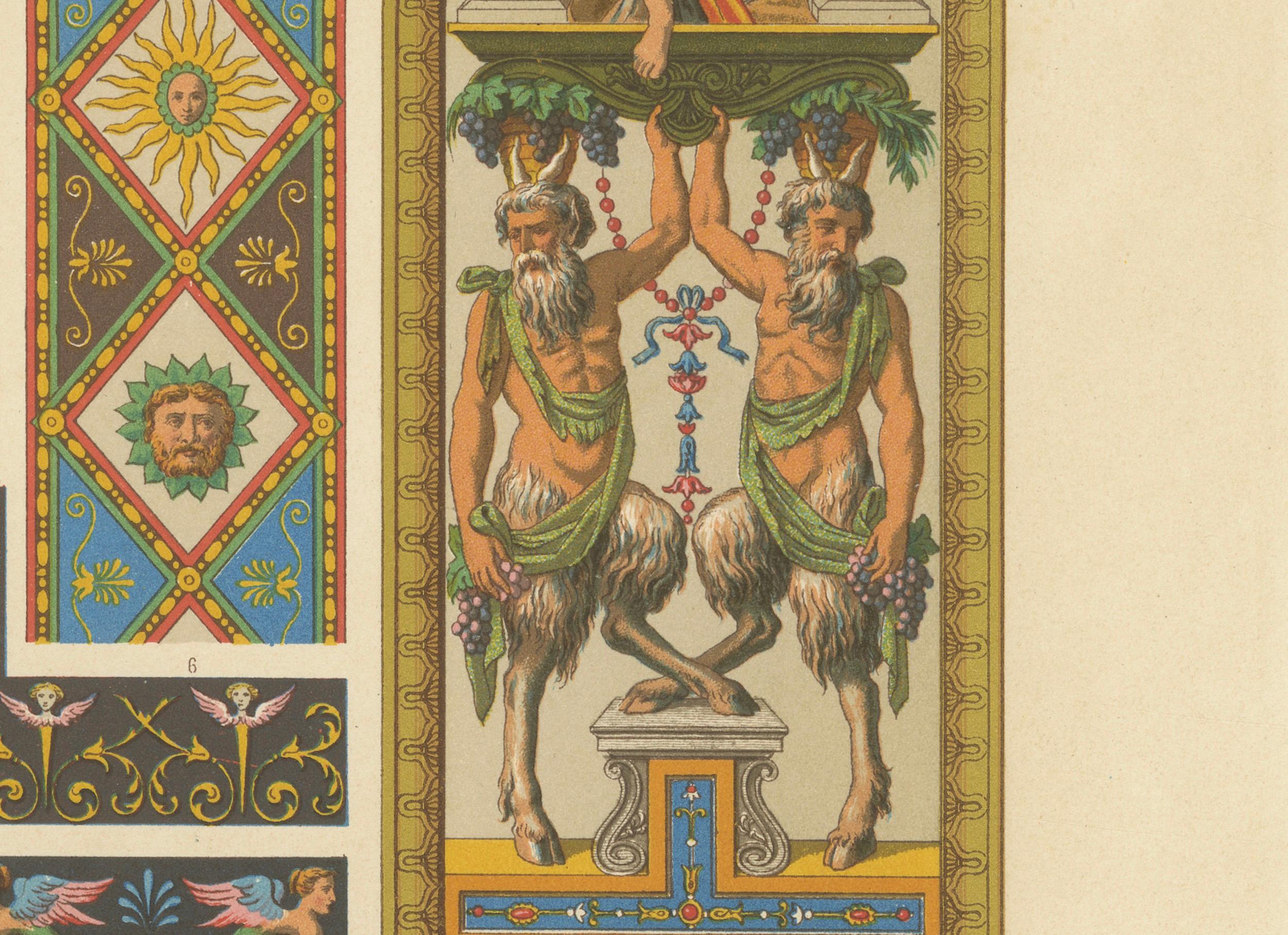
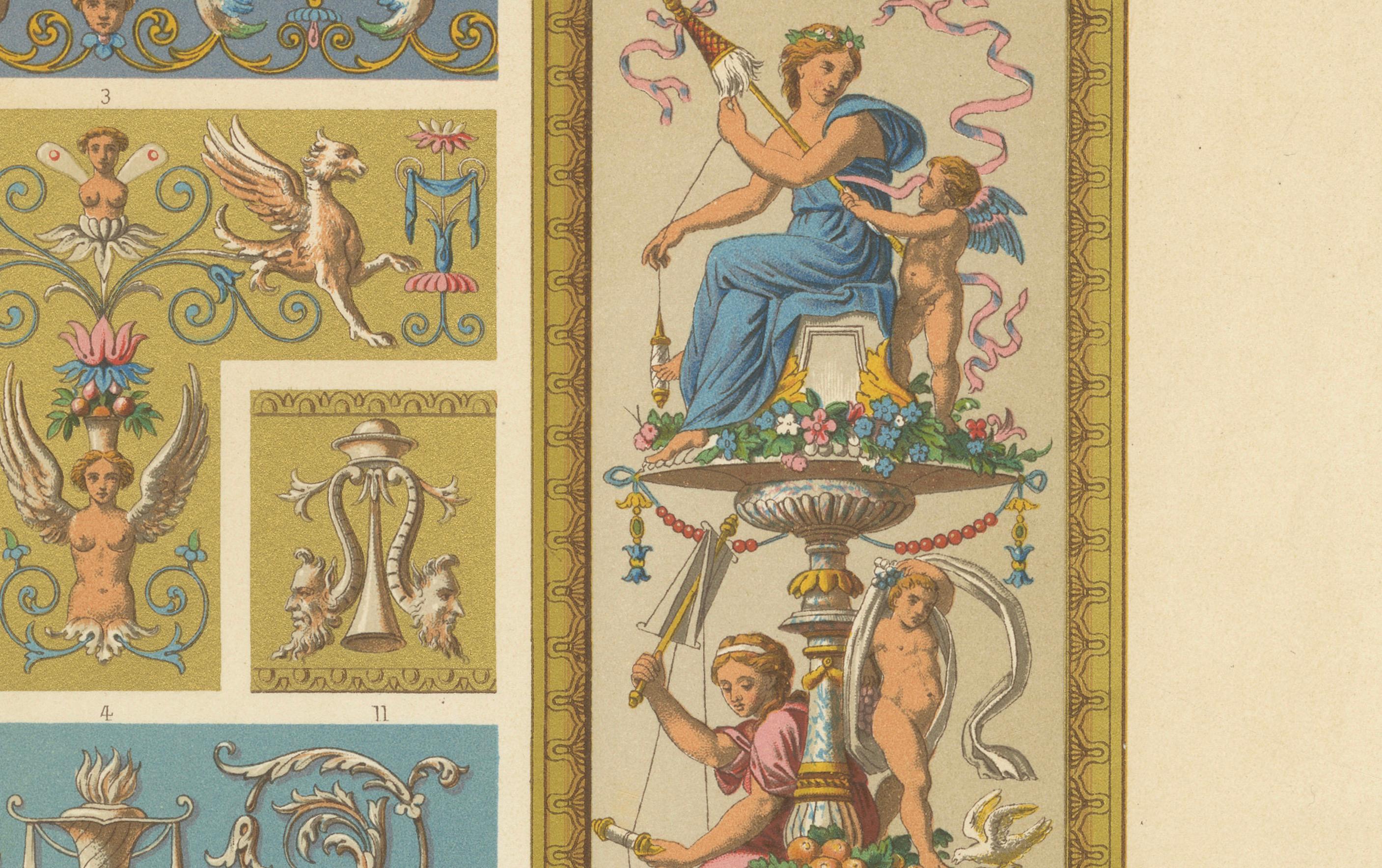
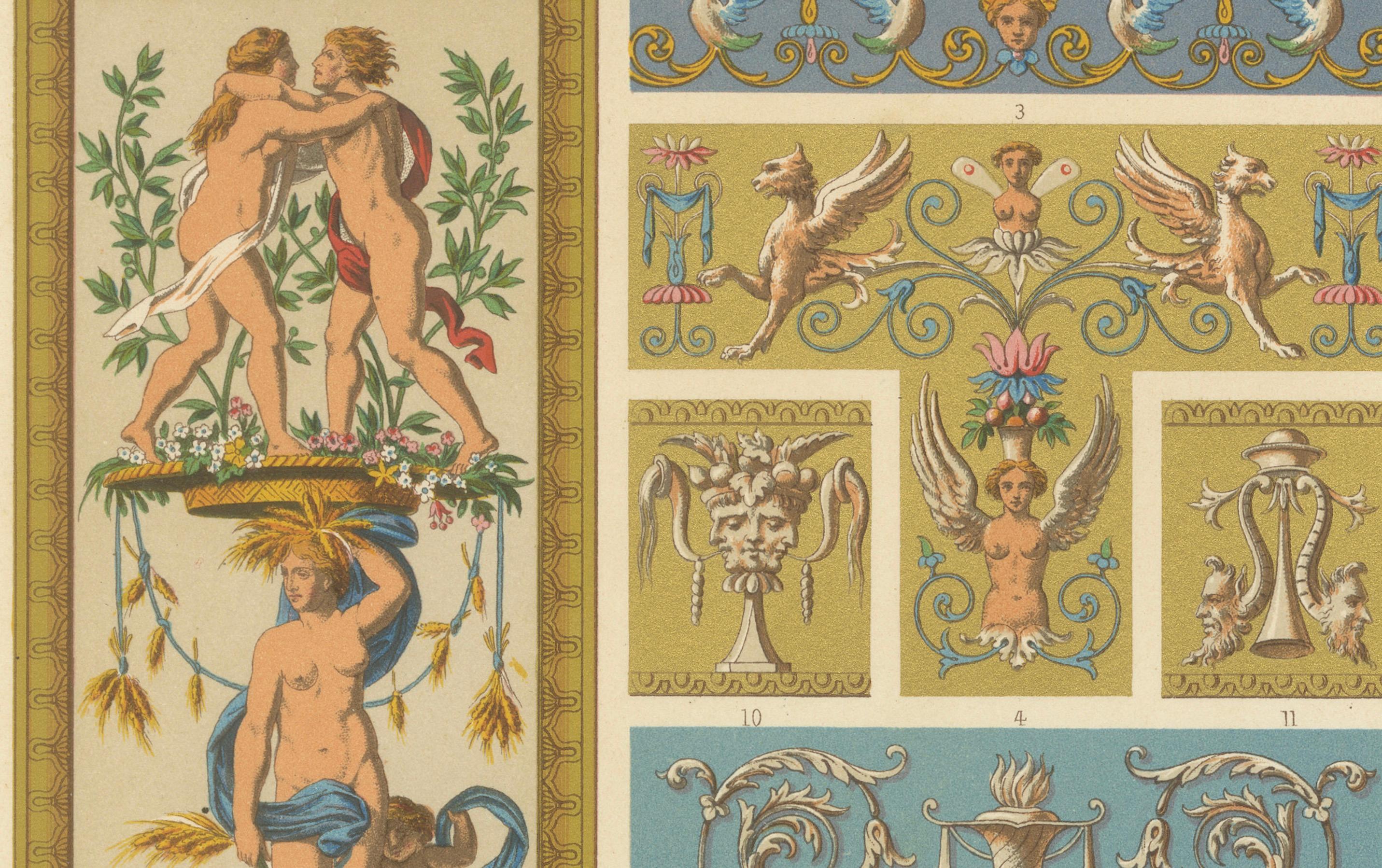
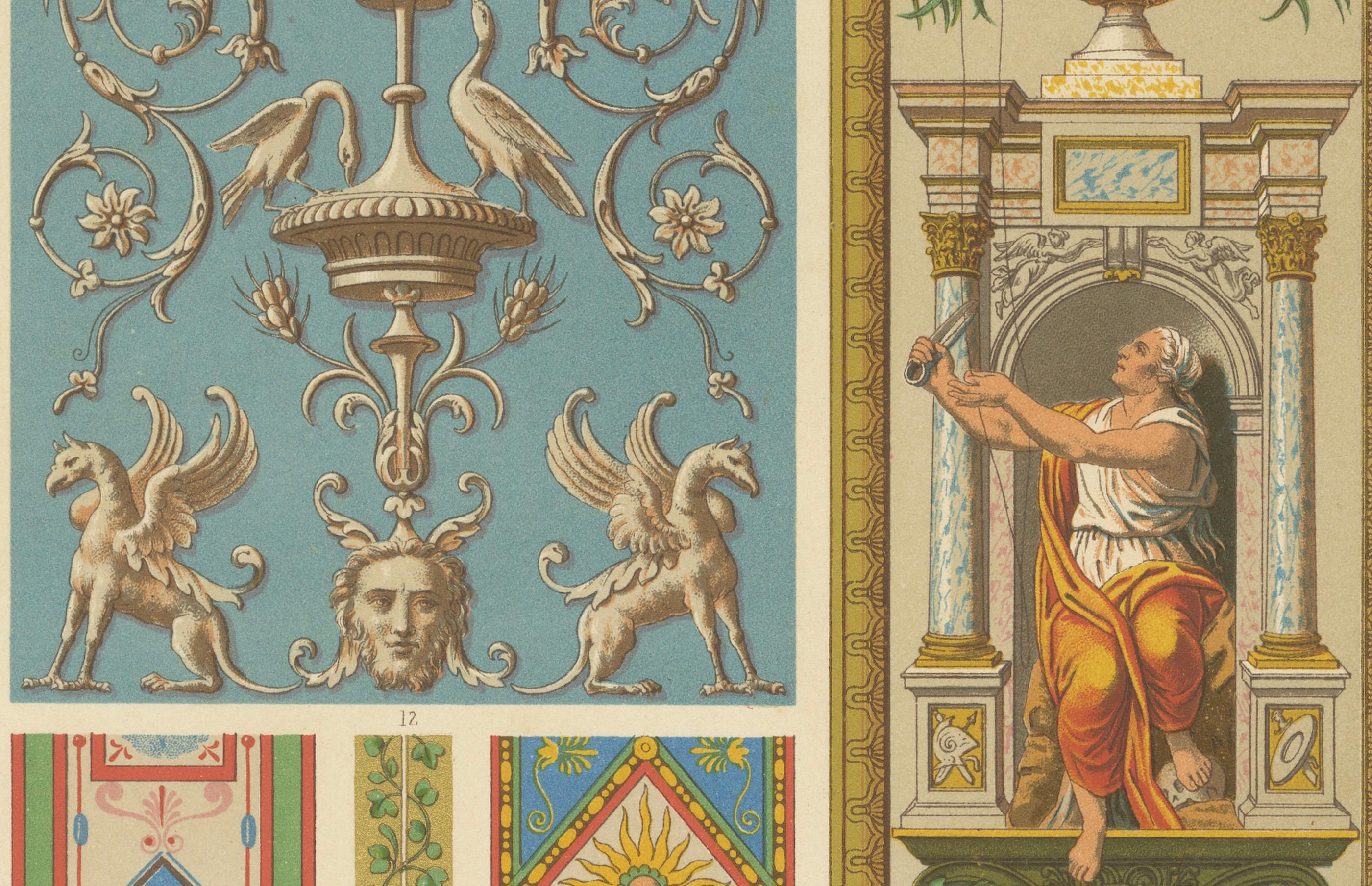
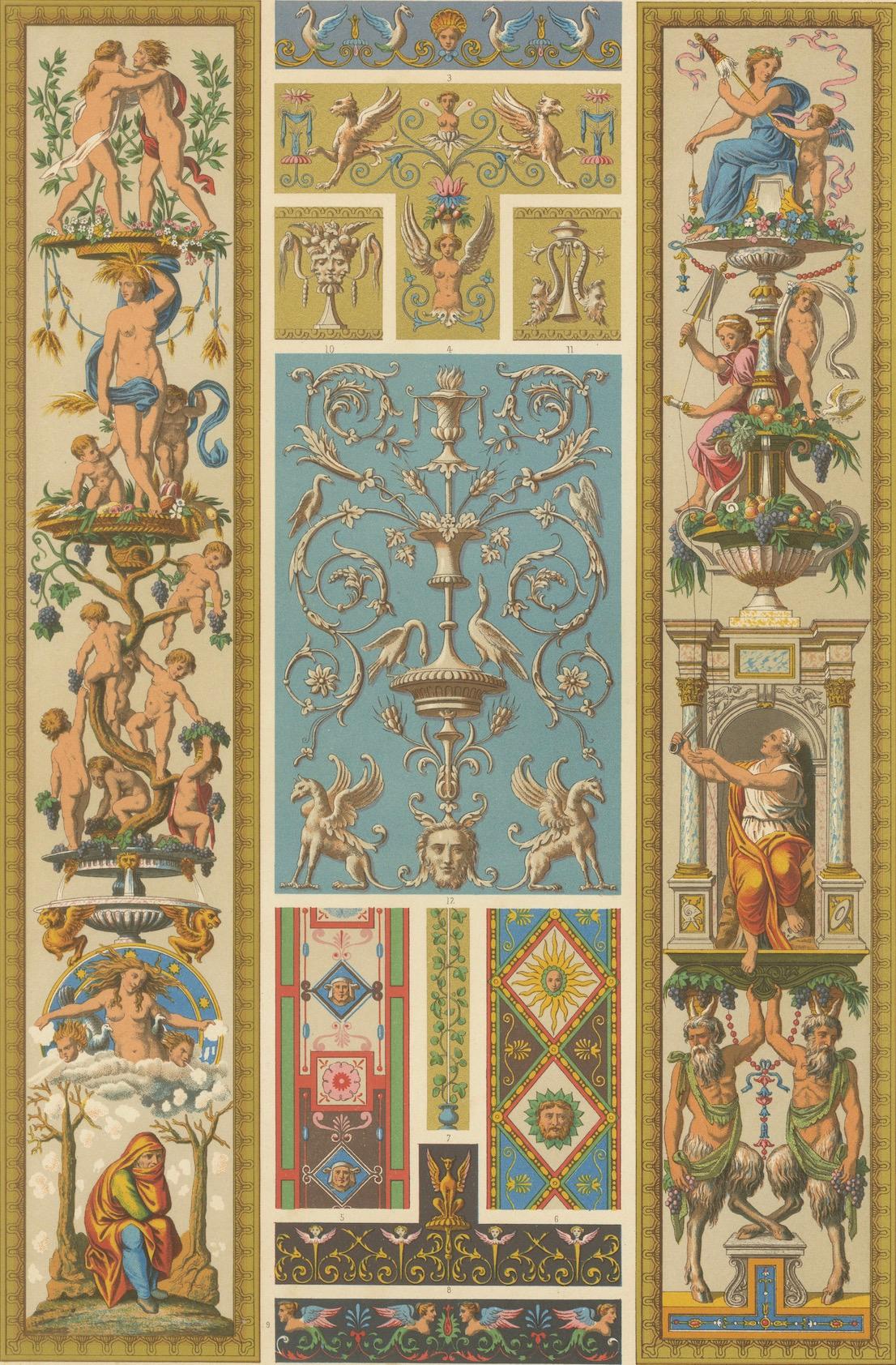
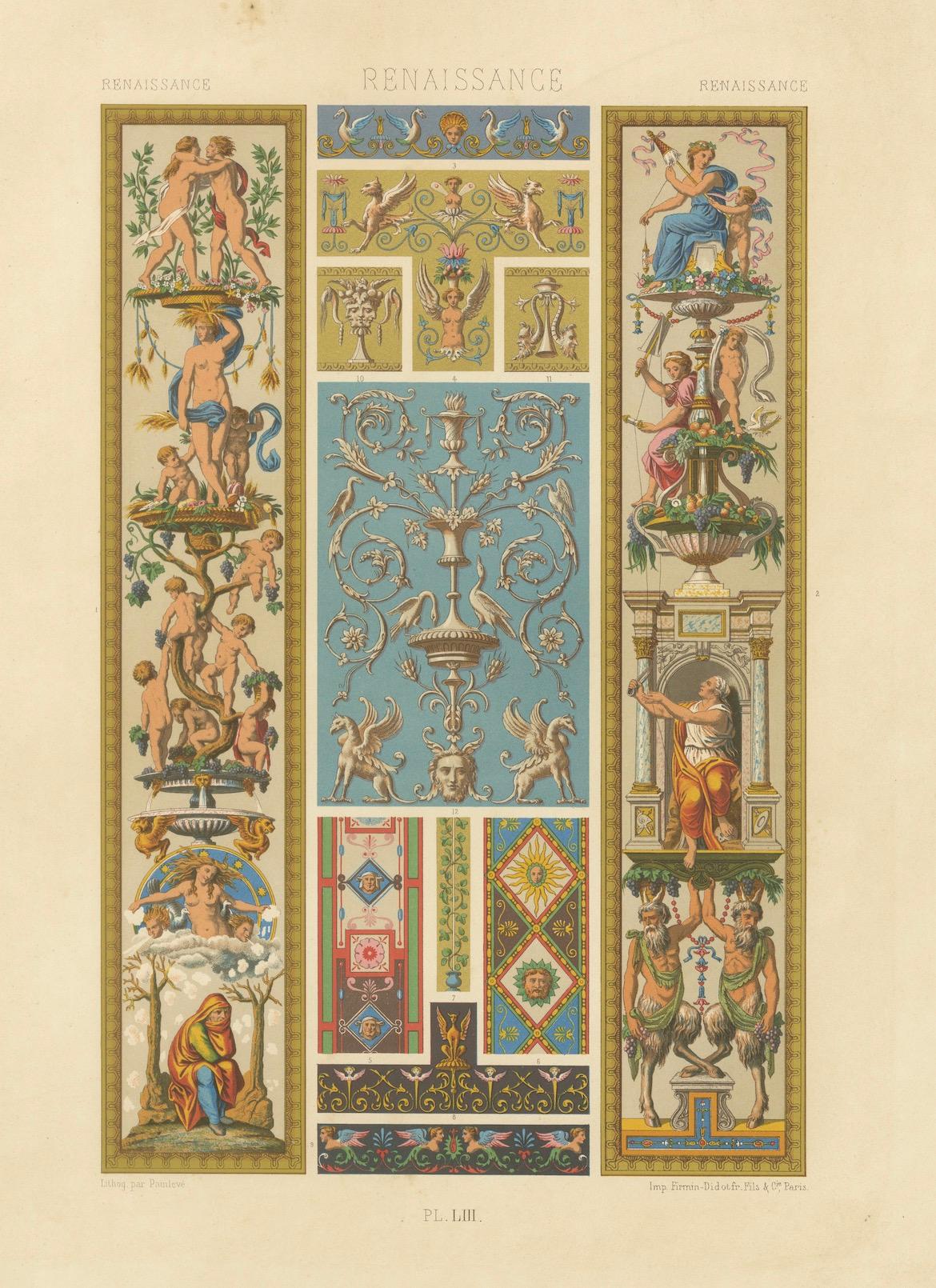
This richly colored chromolithograph, Plate LIII from L’Ornement Polychrome (Paris, c.1869), captures the essence of Renaissance decorative design through a superb array of grotesques, mythological figures, and architectural embellishments. Rendered with great precision and vivid polychrome tones, the sheet showcases vertical ornamental panels typical of interior friezes, mural decoration, and manuscript borders of the 16th century.
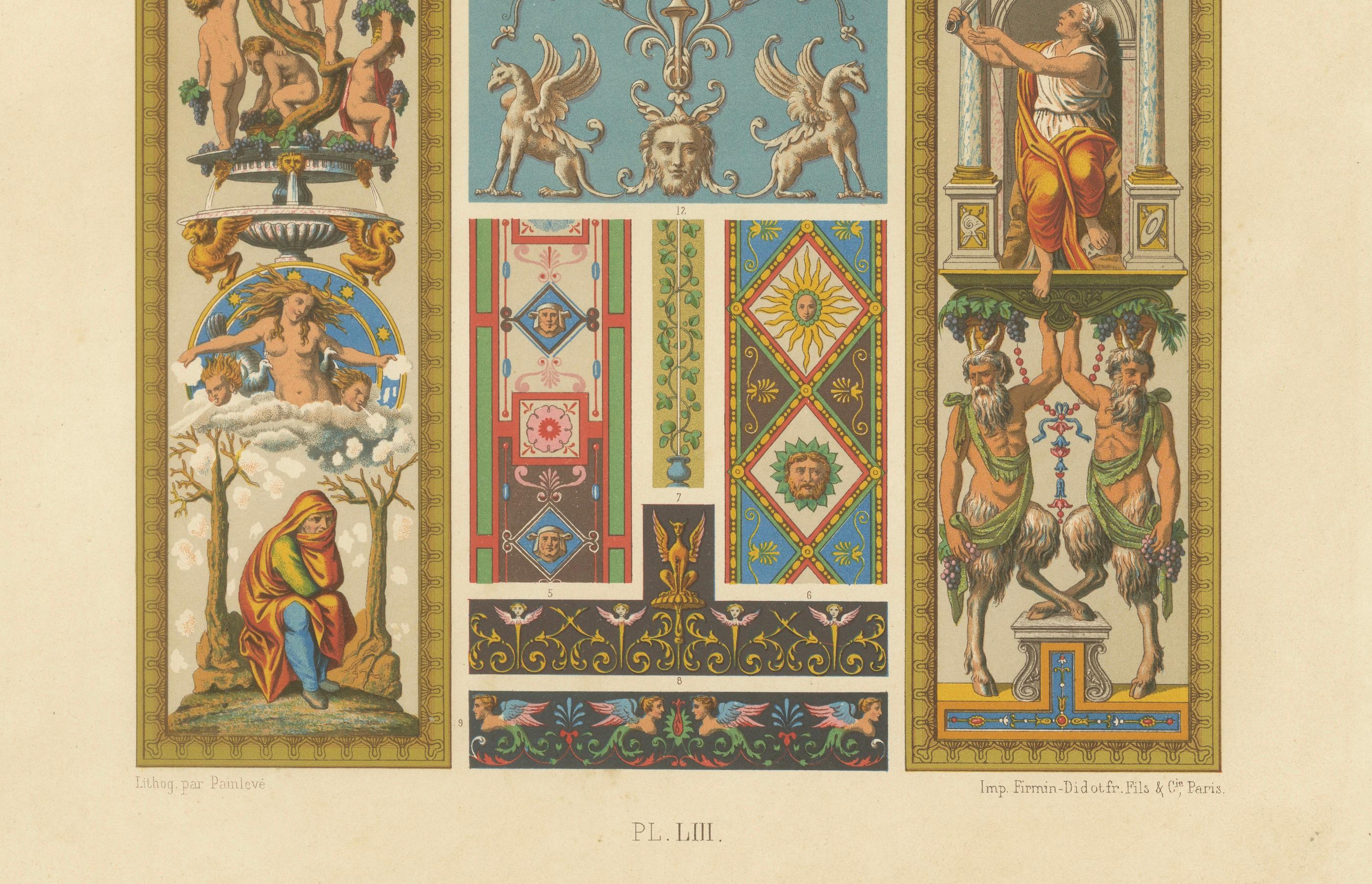
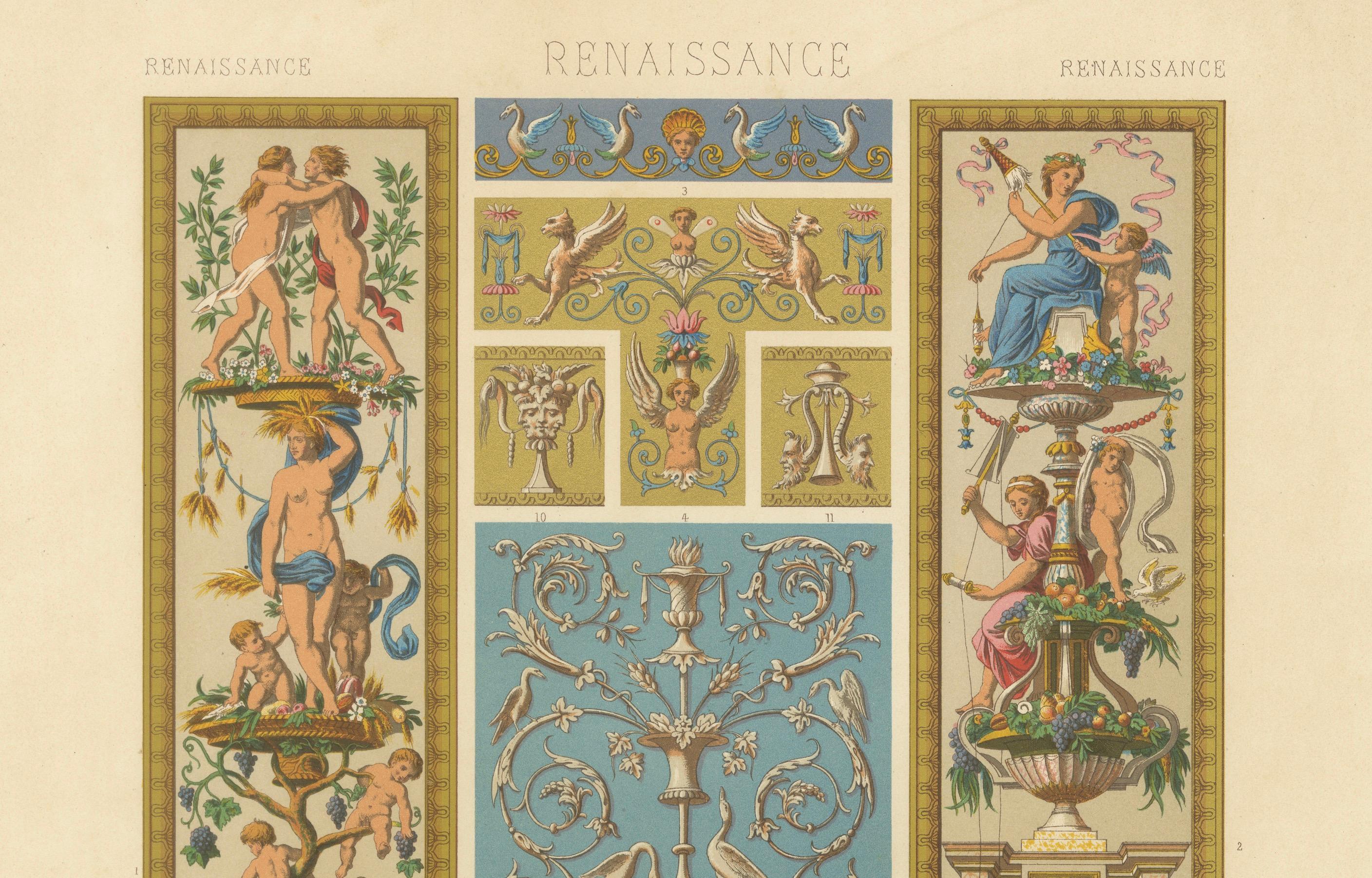
The left and right vertical panels feature classical figures in niches and on elaborate fountains, including putti, muses, and satyrs, entwined with vegetal scrolls and festoons of fruit and flowers. At the top left, a pair of embracing nudes recalls allegorical themes of fertility and love, while at the bottom right, satyr herms and richly dressed figures allude to Bacchic imagery and theatrical Renaissance decoration.
The central panel presents exquisite scrollwork on a sky-blue background, centered on a candelabrum entwined with birds, griffins, dolphins, and horned masks—an elaborate composition in the grotesque tradition. Surrounding it are smaller panels displaying interlace motifs, geometric tiling, and richly gilded borders.
This plate was lithographed by Pauquet and printed by Firmin-Didot in Paris, both prominent names in 19th-century printmaking. Their collaboration under Racinet’s direction brought forward some of the most important studies in polychromatic ornamentation for artists, architects, and historians.
This print serves as both a decorative masterpiece and a historical reference—ideal for framing, academic study, or design inspiration rooted in the harmony and grandeur of the Renaissance.
Framing tips: Pair with a gold or mahogany frame. Use a cream or light blue mat to harmonize with the central motif and enhance visual contrast.