About this sheet
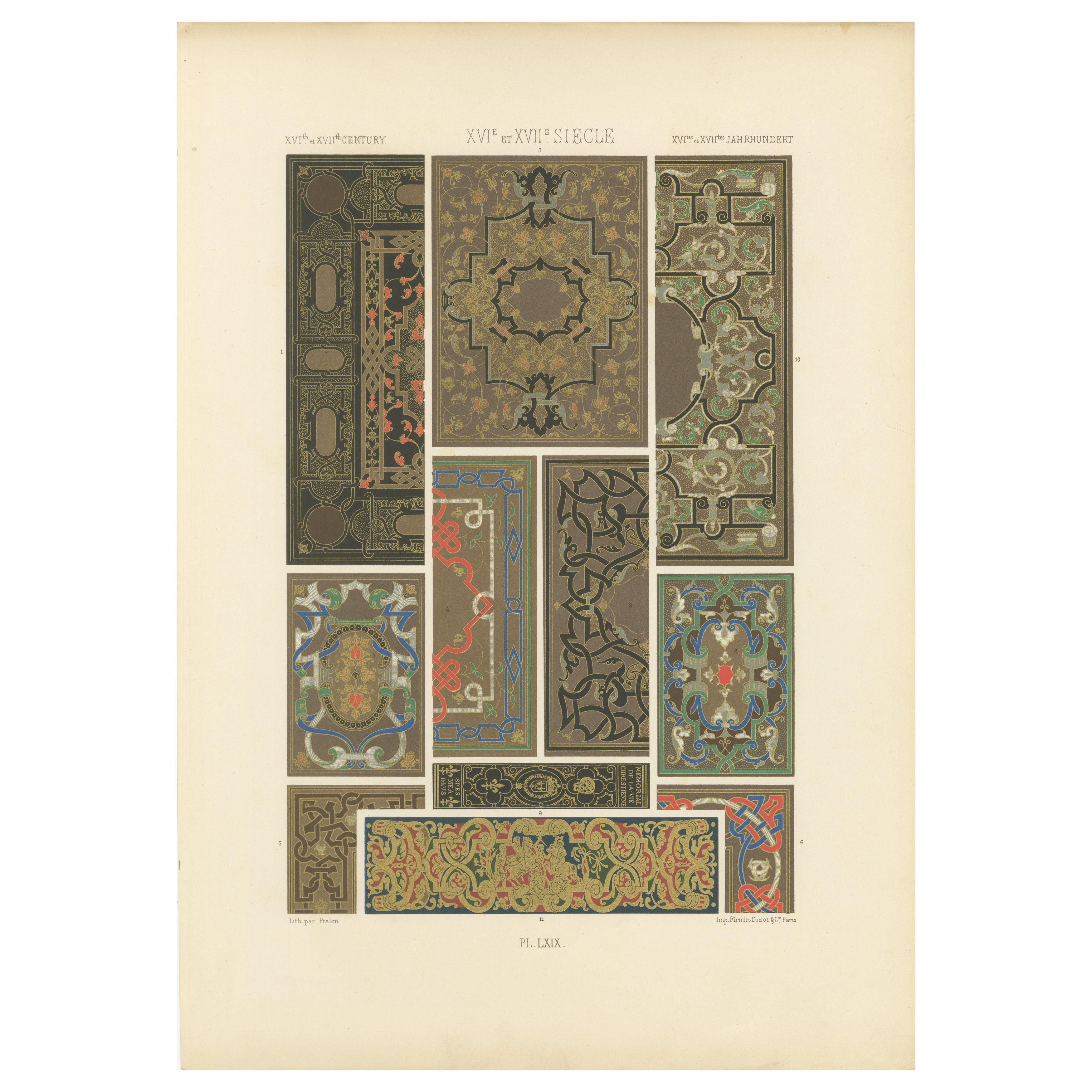
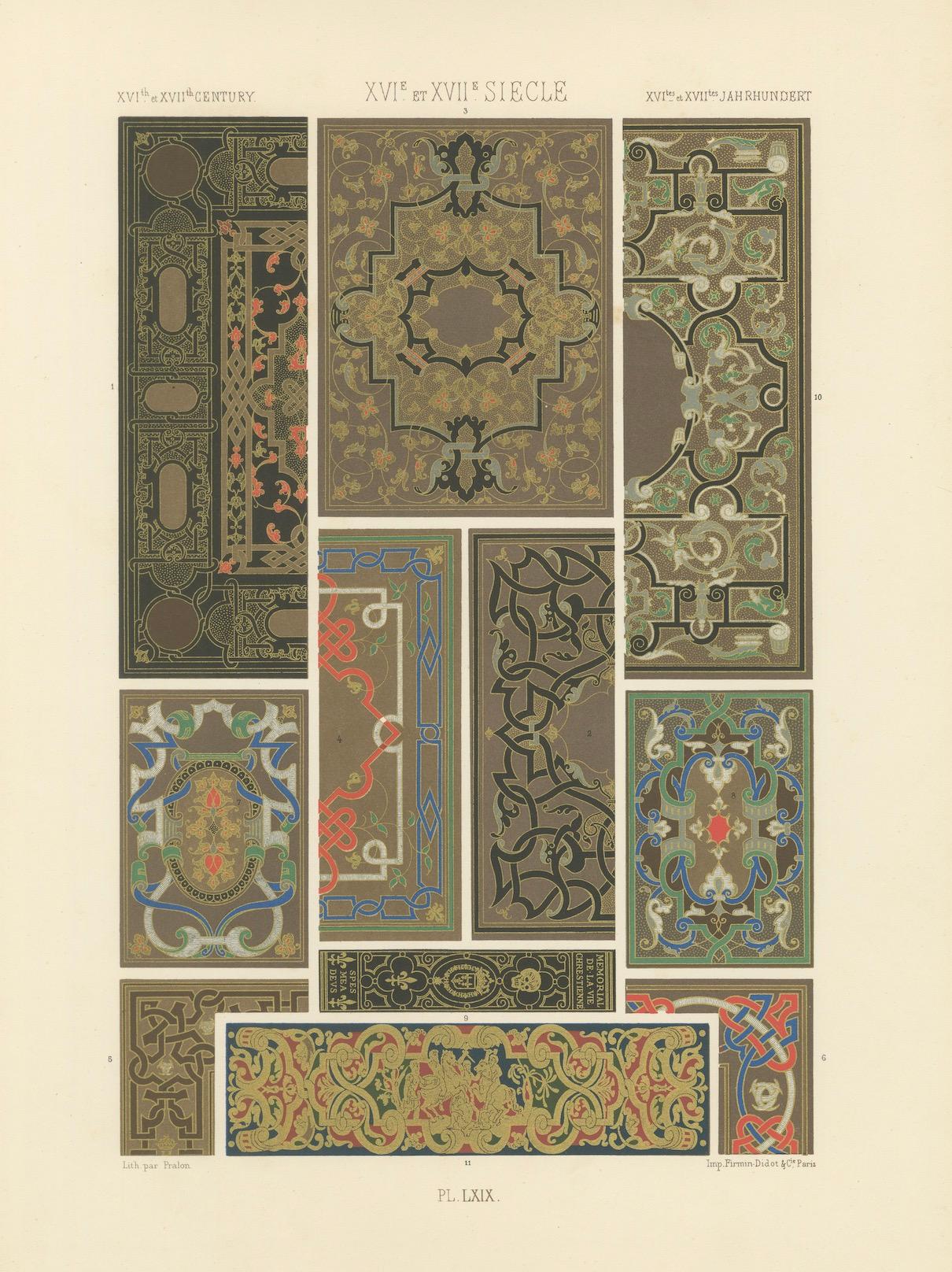
Renaissance Decorative Panels – XVIe et XVIIe Siècle, Ornamental Print Plate LXIX
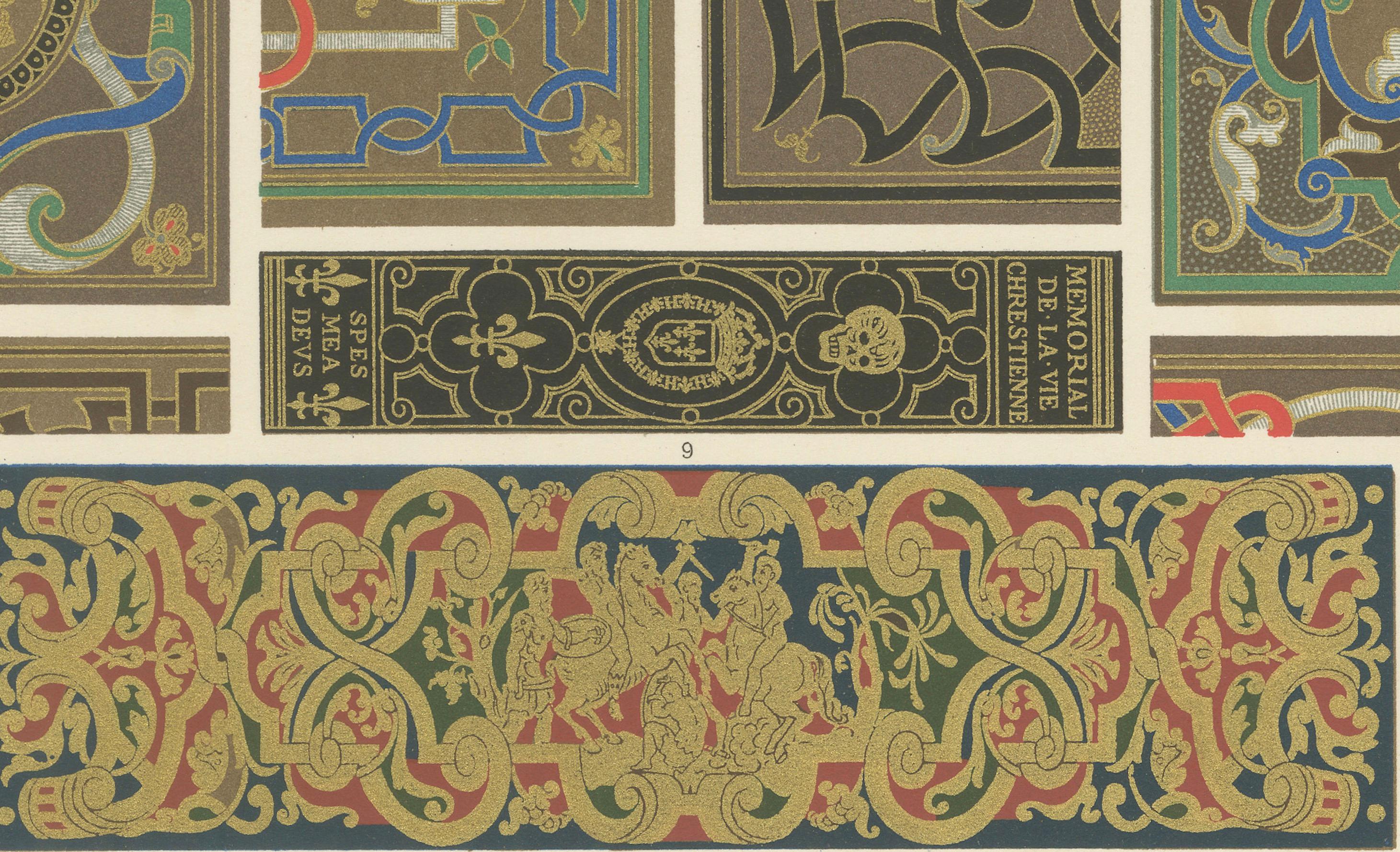
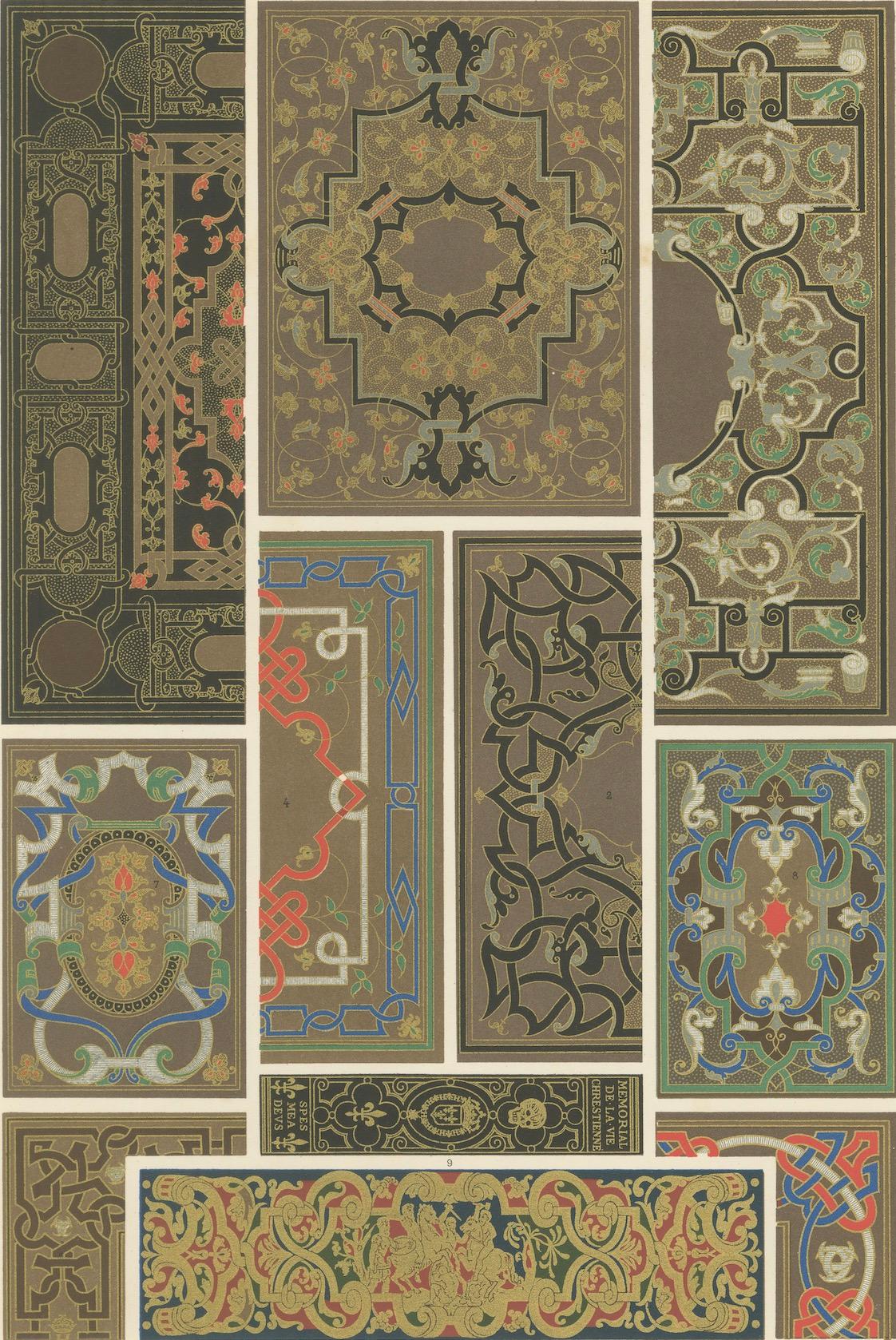
This highly refined chromolithograph, Plate LXIX from the celebrated L'Ornement Polychrome series, presents a curated selection of ornamental panel motifs from the 16th and 17th centuries. Lithographed by Pailon and published by Firmin-Didot et Cie, Paris, the print showcases Renaissance and early Baroque design elements that bridge Gothic intricacy with classical symmetry.
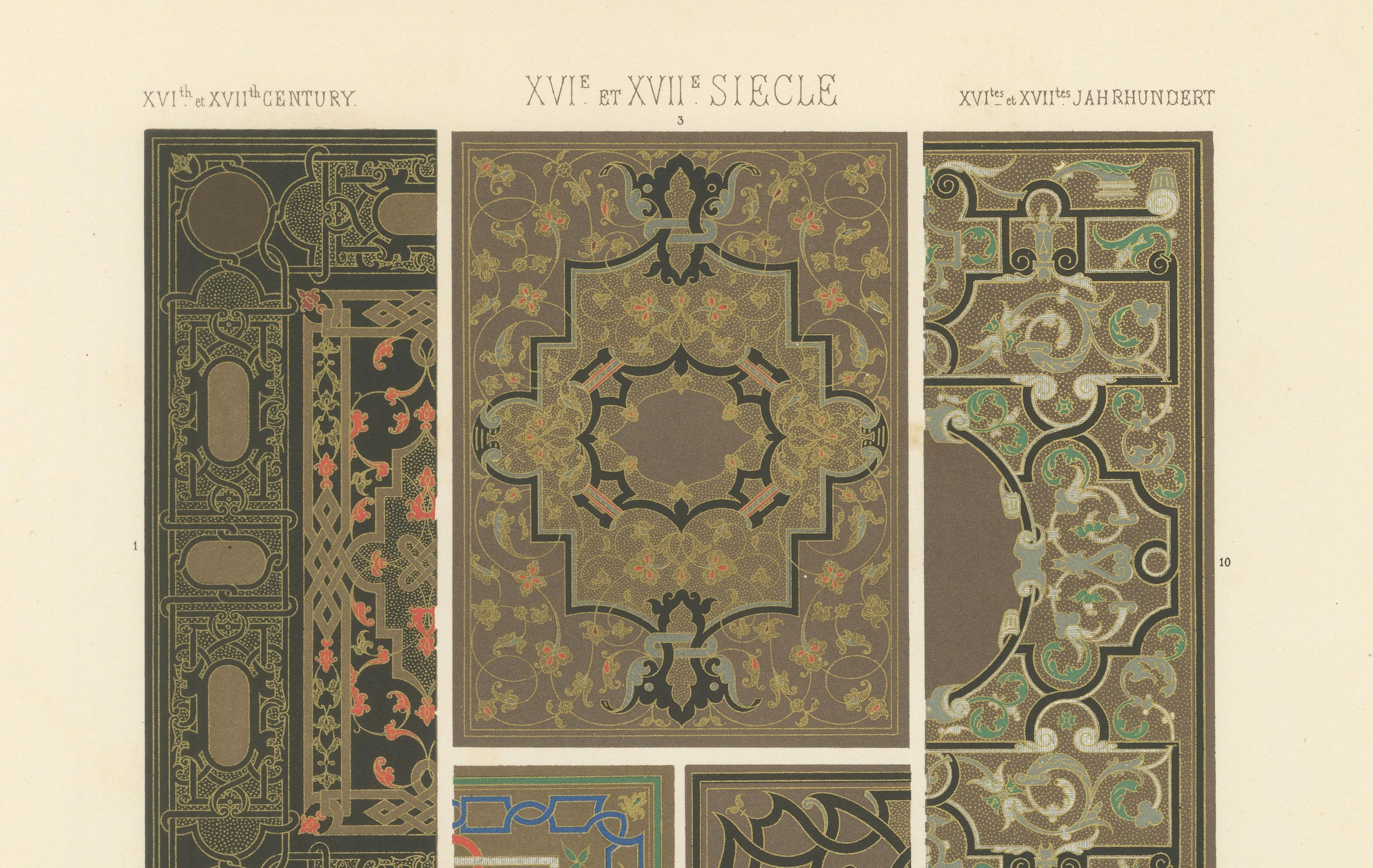
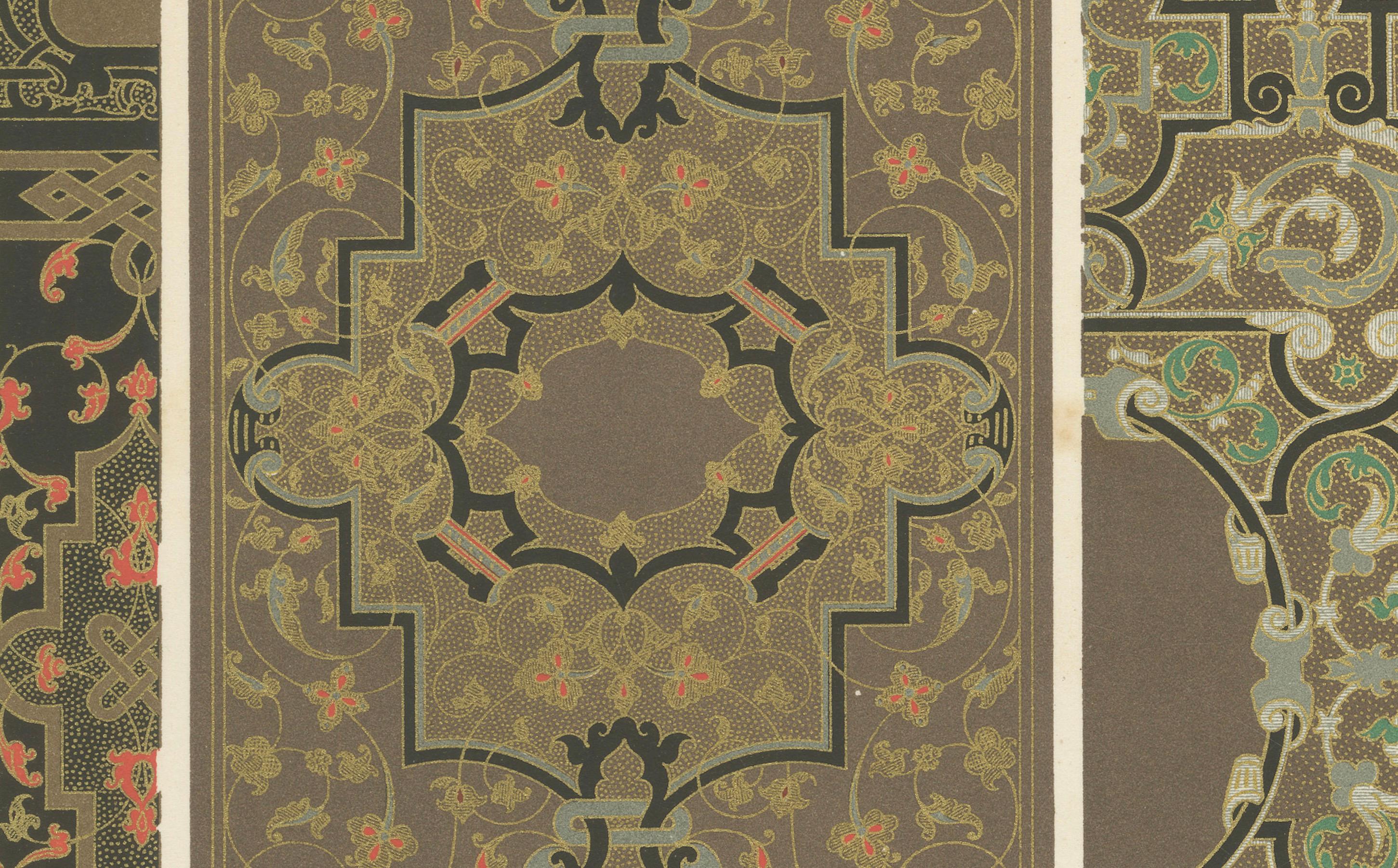
The central focus is on a large, stylized floral ceiling or wall motif in golden hues and fine black linework, surrounded by an assortment of panel borders, cartouches, and decorative fragments. The color palette consists mainly of subdued gold, olive green, black, and muted reds, balanced by occasional accents in cobalt blue and turquoise.
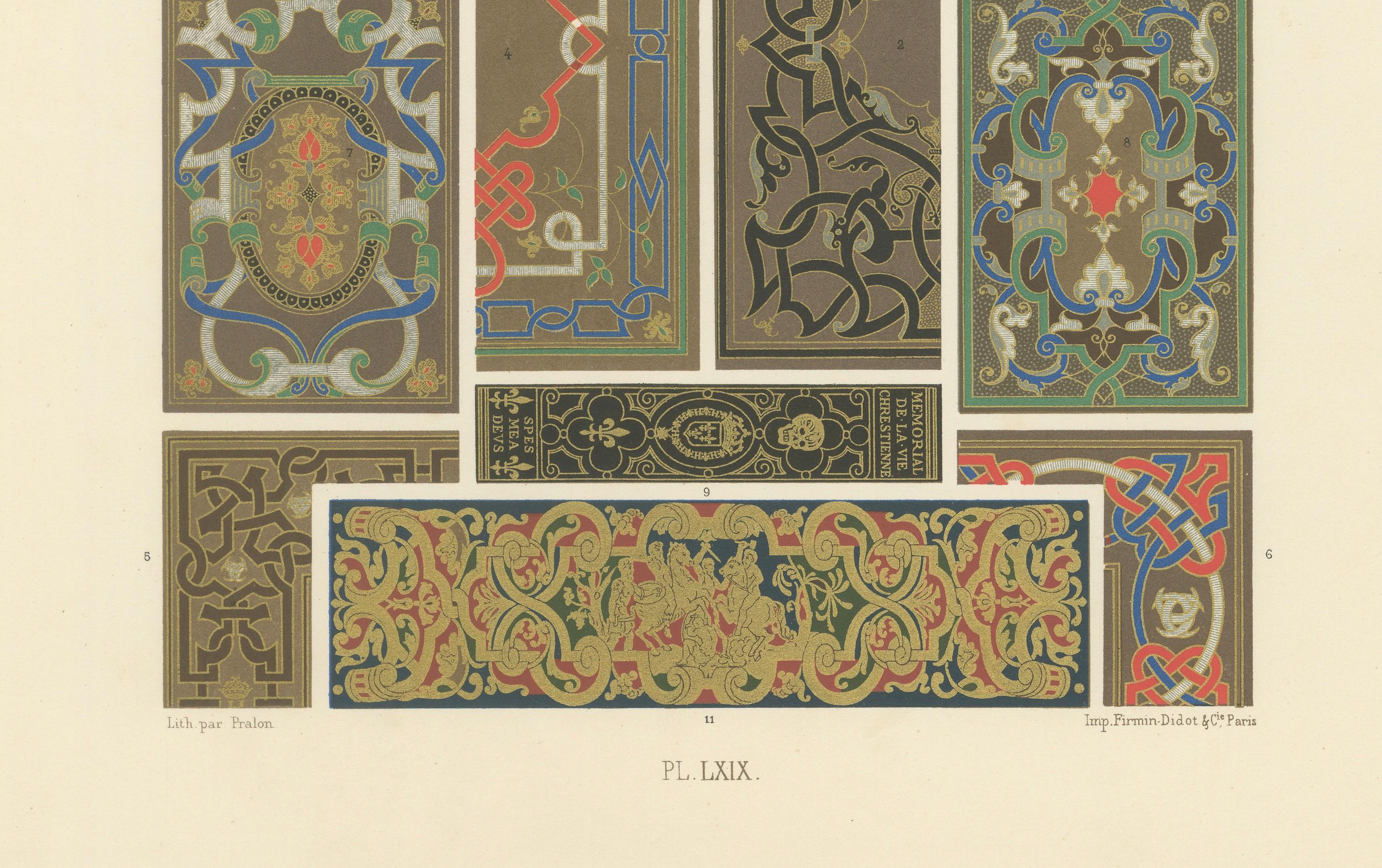
Several patterns on this plate demonstrate early Islamic influences, evident in the knotted strapwork and interlacing lines found in the bottom right and lower center segments. Others lean into early Baroque with a greater emphasis on three-dimensional scrollwork, acanthus foliage, and dramatic symmetry.
One strip at the bottom displays elaborate heraldic or grotesque figures within a golden background, while the bottom-right corner features brightly colored Celtic-style knots.
These designs were intended for use in manuscript borders, wood paneling, ceilings, and perhaps luxurious leather bindings or intarsia. Their highly stylized execution provides a clear visual record of transitional ornamentation between the High Renaissance and the early Baroque periods in Europe.
Condition: Excellent overall. Minor toning in the margins; image area clean and colorfully preserved. No tears or marks.
Framing tips: A wide neutral mat with a thin black or antiqued gold frame would suit this print well. Ideal for collectors, interior designers, and institutions focusing on decorative arts, classical architecture, or historical pattern references.
Technique: Chromolithograph
Maker: Pailon (lith.), Firmin-Didot Frères, Paris, c.1869