About this sheet
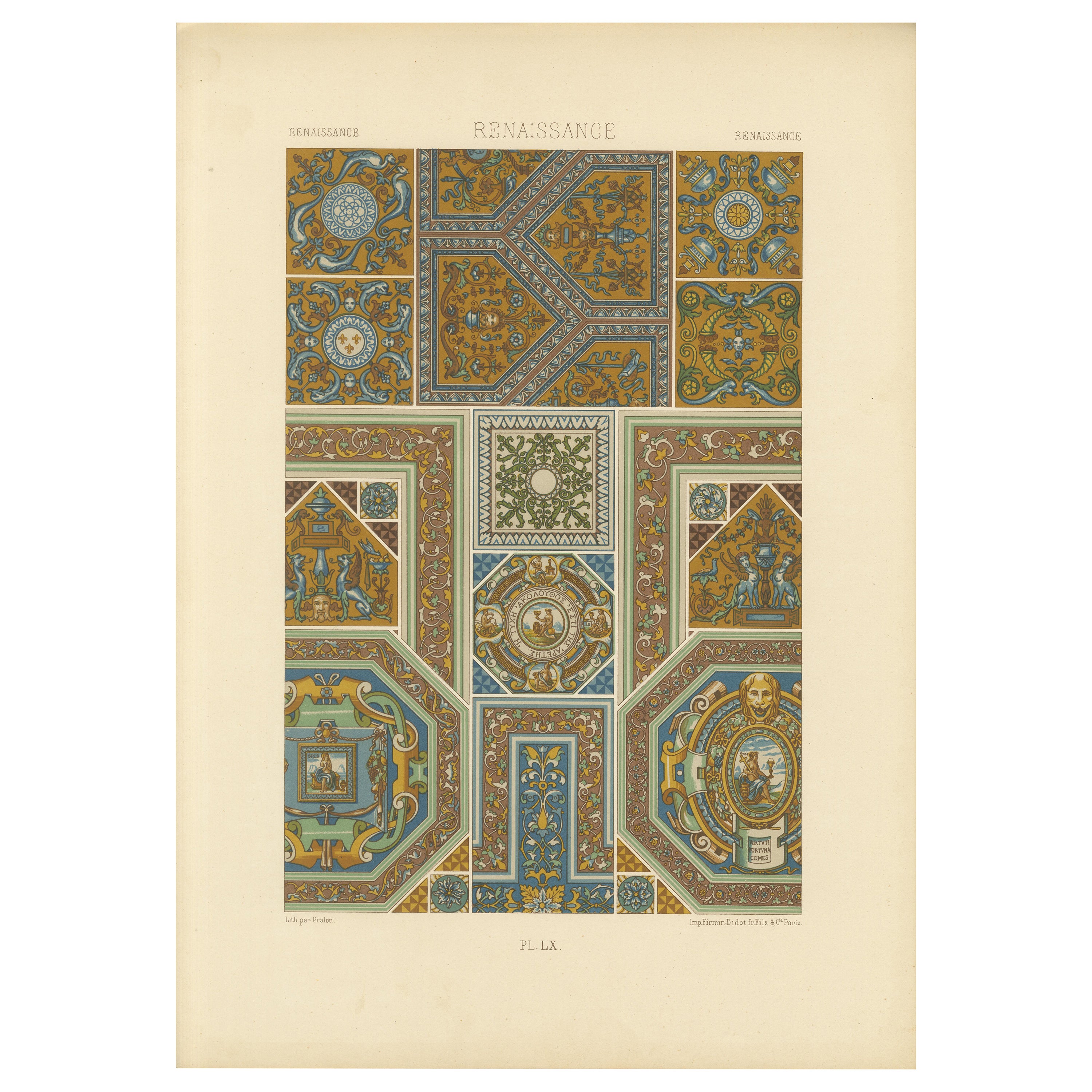
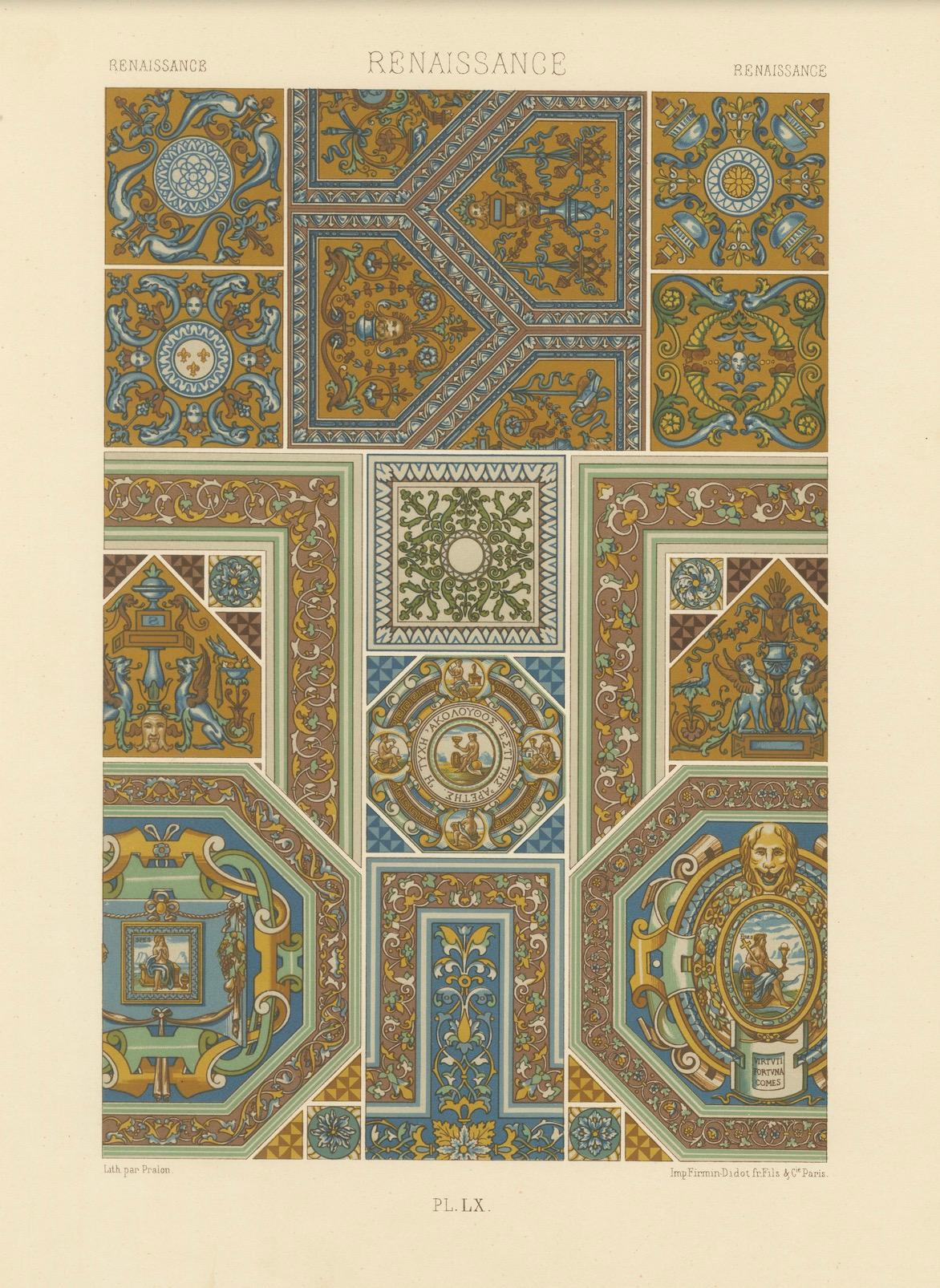
Renaissance Ceiling Designs – Antique Chromolithograph, Pl. LX
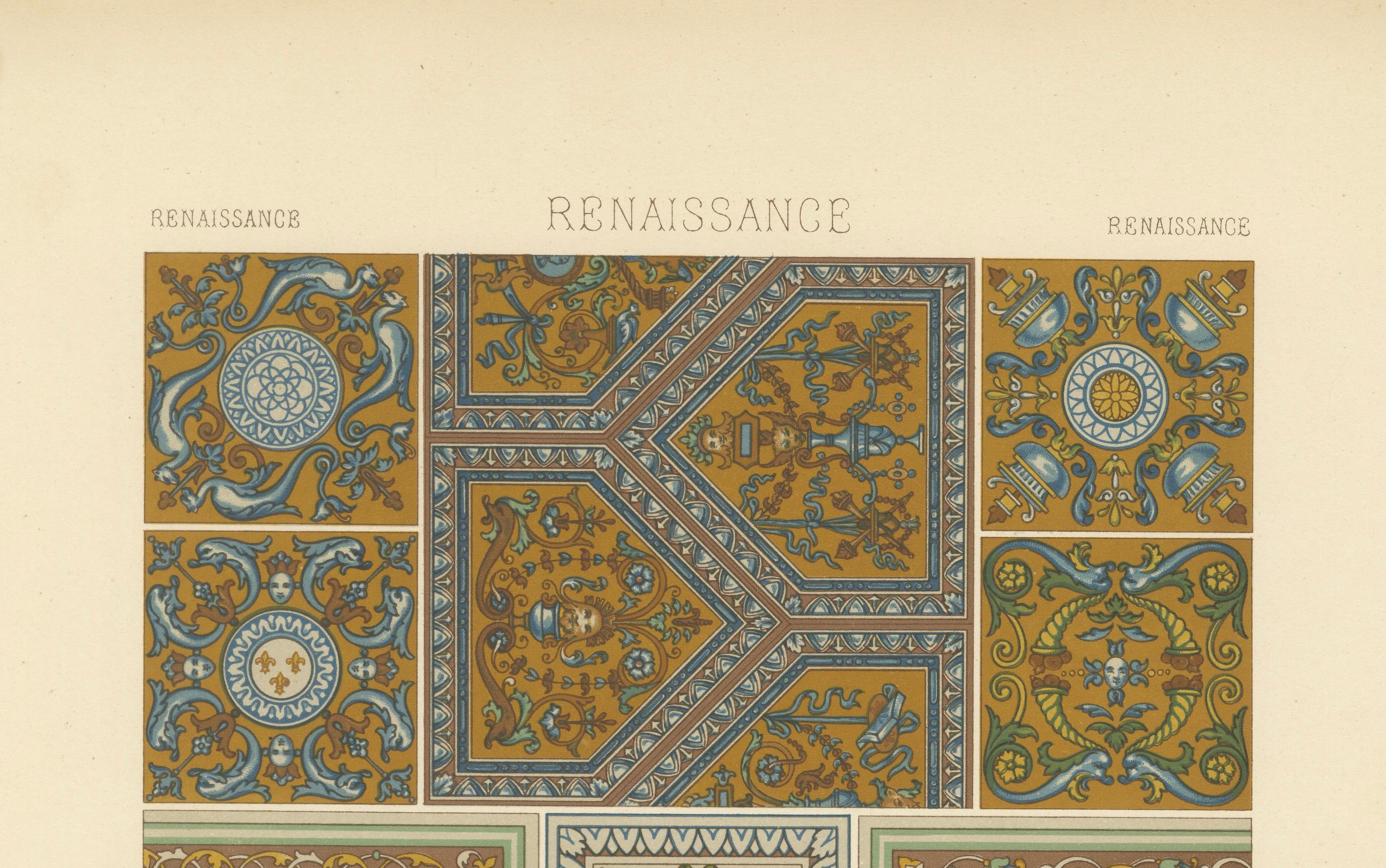
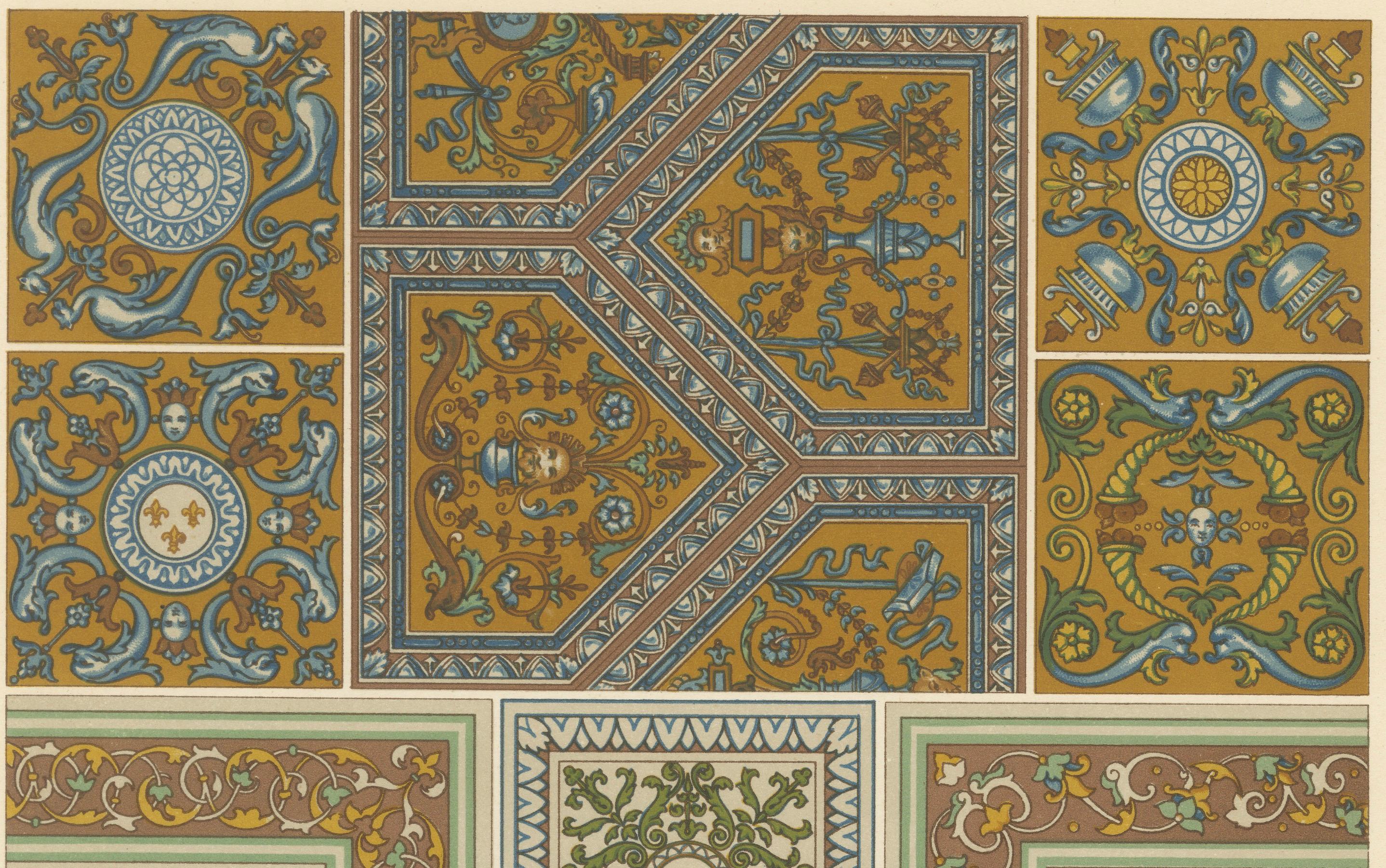
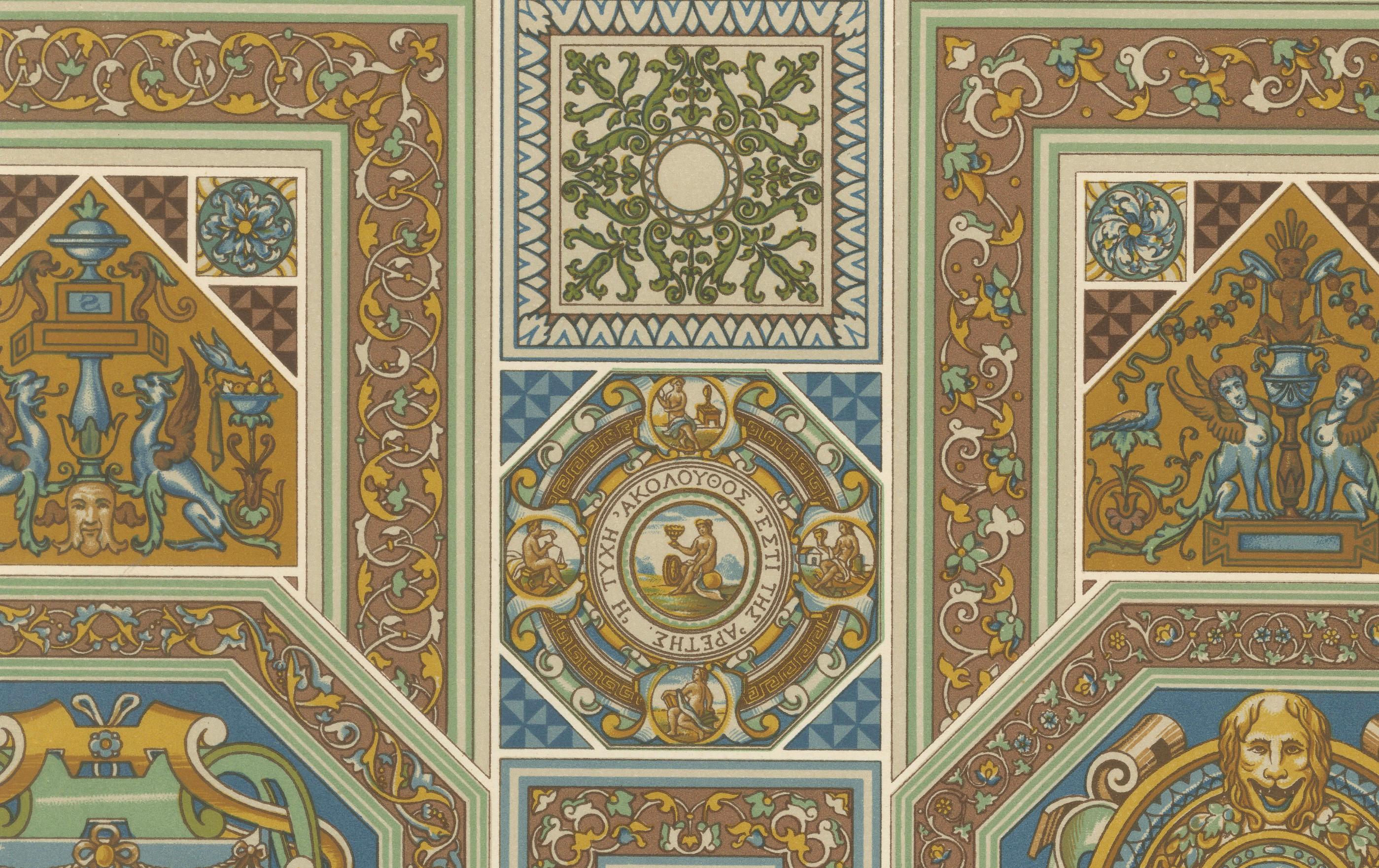
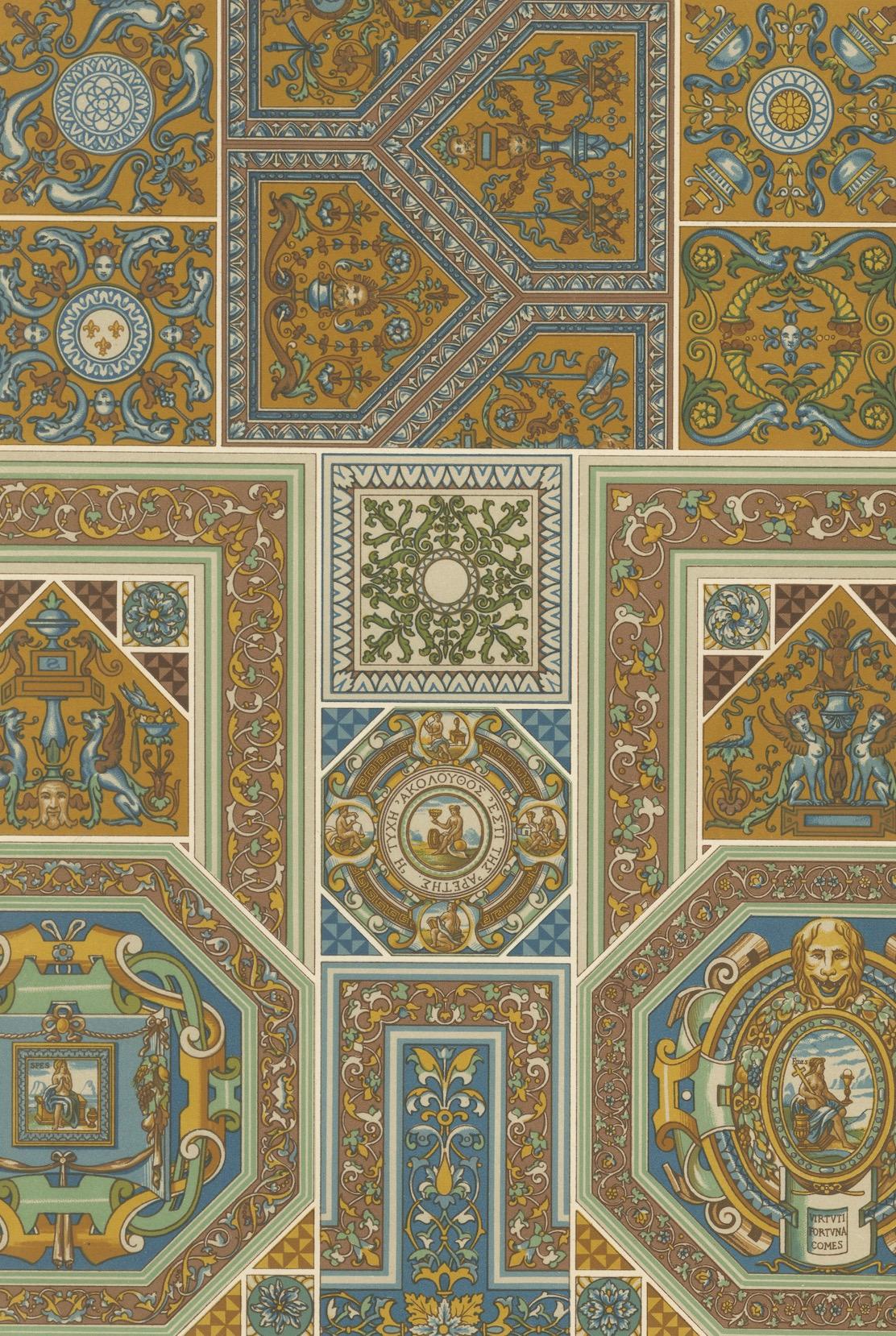
This vibrant chromolithograph, Plate LX from *L'Ornement Polychrome* (Paris, circa 1869), features a striking collection of Renaissance ceiling decorations, showcasing the geometric precision and symbolic richness of Italian interior ornament from the 15th and 16th centuries. Lithographed by Pralon and printed by Firmin-Didot Frères, the work exemplifies the revival of classical harmony and decorative splendor that defined the High Renaissance.
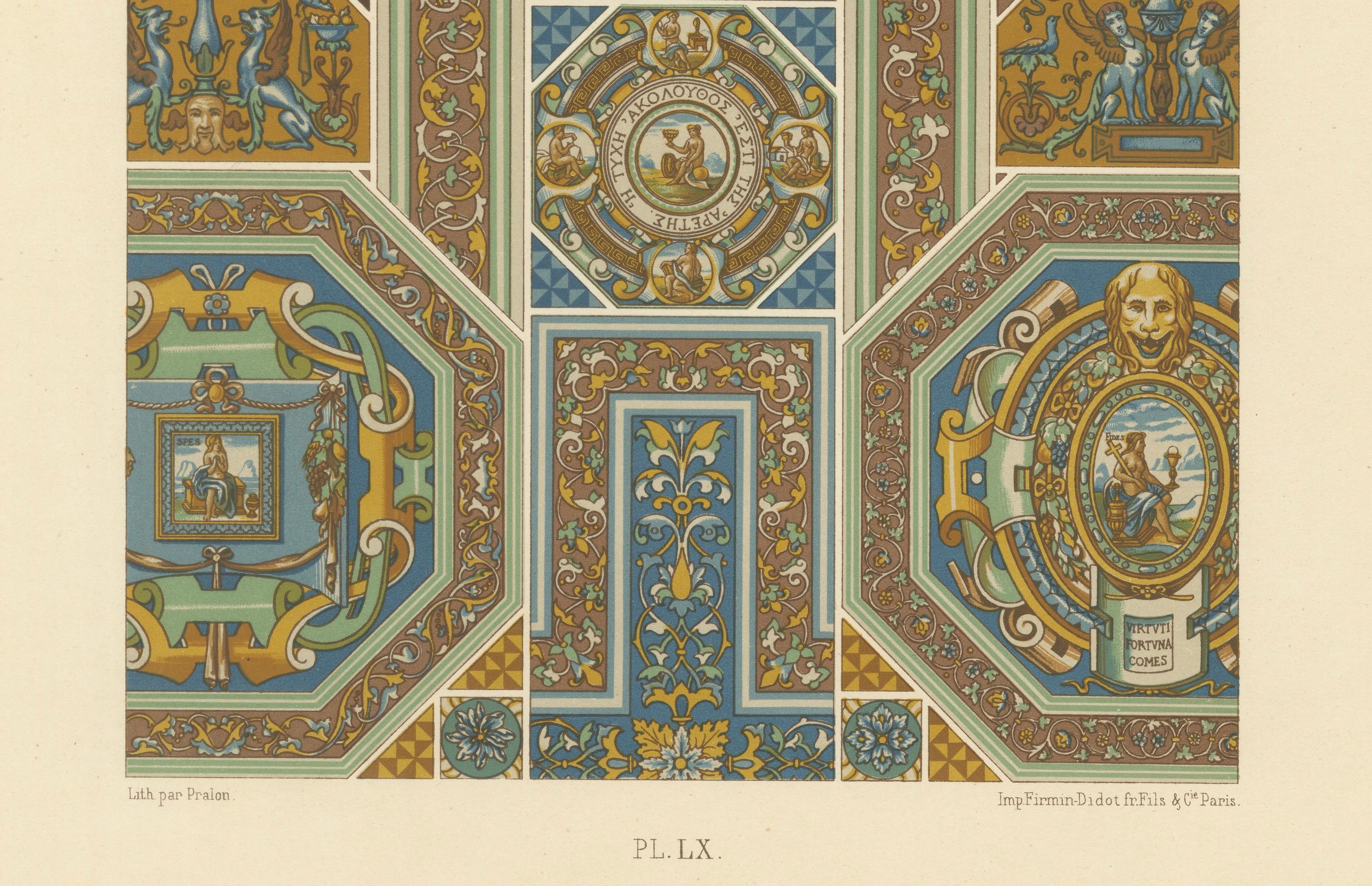
The print presents a series of compartmentalized ceiling panels, combining octagonal, rectangular, and lozenge shapes with a harmonious palette of ochres, turquoise blues, ivory, and warm terracotta. Each section features intricate vegetal scrollwork, medallions with allegorical or mythological figures, heraldic emblems, and architectural flourishes.
Particularly eye-catching is the central roundel bearing the inscription “ΣΥΝΕΙΔΗΣΙΣ” (Syneidēsis – Greek for "conscience"), surrounded by acanthus scrolls and framed by putti and symbolic creatures. Another cartouche bears the Latin “PRUDENTIA MENTEM COMES” (“Prudence is the companion of the mind”), reinforcing the Renaissance ideals of intellect and virtue.
The use of Greek and Latin inscriptions, along with classical motifs such as lyres, urns, masks, and palmettes, links this ornament to the humanist tradition that defined Renaissance decorative arts. Designs like these would have adorned the palazzi of Florence, Mantua, or Rome—often painted in fresco on coffered or stuccoed ceilings.
This plate is a superb example of 19th-century scholarship and artistic reproduction of Renaissance ornament, ideal for collectors of architectural prints or designers seeking historical inspiration.
Condition: Very good. Strong colors and clear impression. Light toning around edges, and a few faint smudges in the lower margin.
Framing tips: A gold or walnut frame with a double mat—ivory outer mat and a narrow inner line in muted blue—will complement the design and bring out the architectural clarity of the composition.
Technique: Chromolithograph
Maker: Pralon (lith.); Firmin-Didot Frères, Paris, c.1869