About this sheet
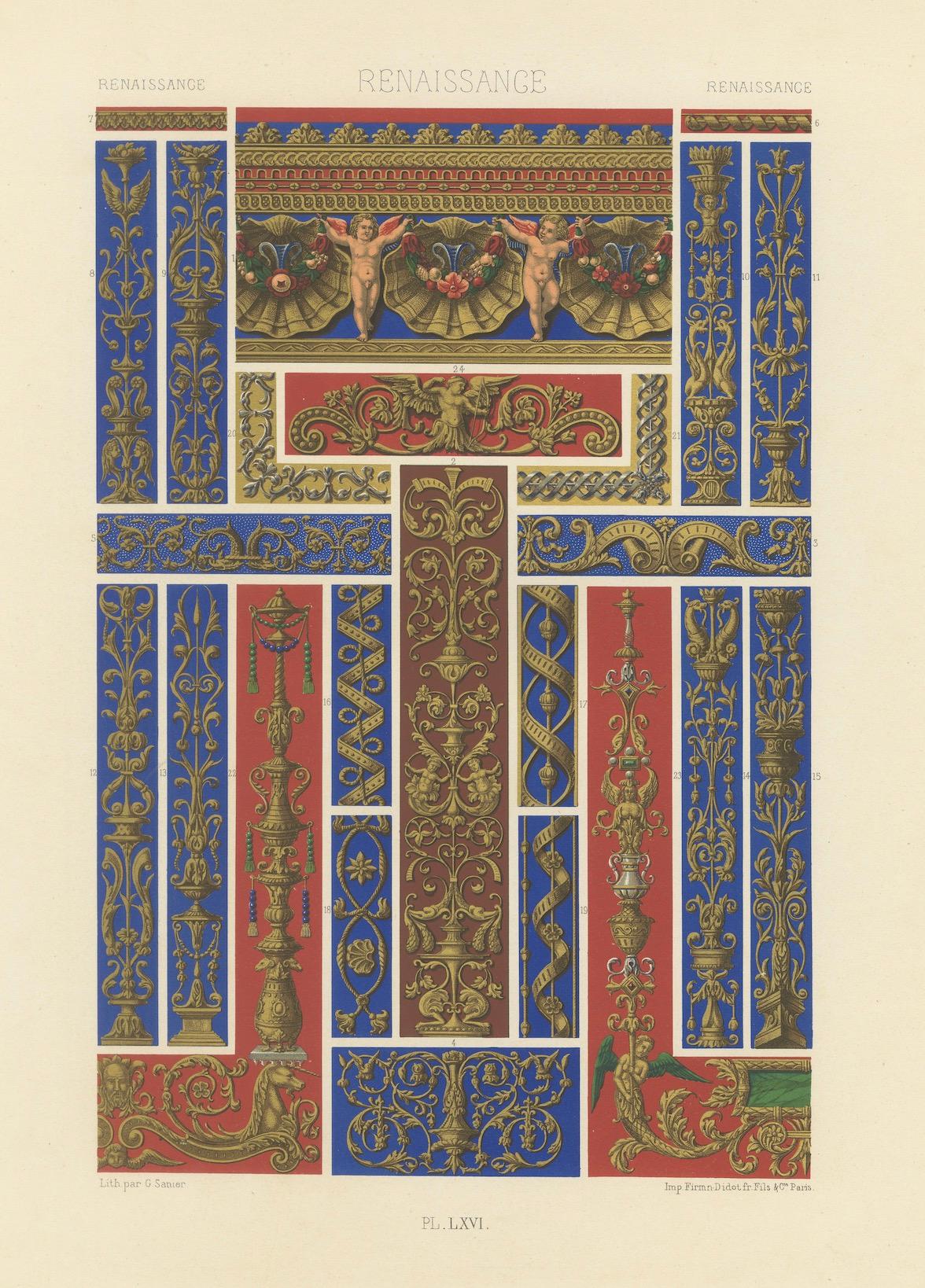
Renaissance Architectural Ornament – Gilded Scrollwork and Cherub Panels, Plate LXVI
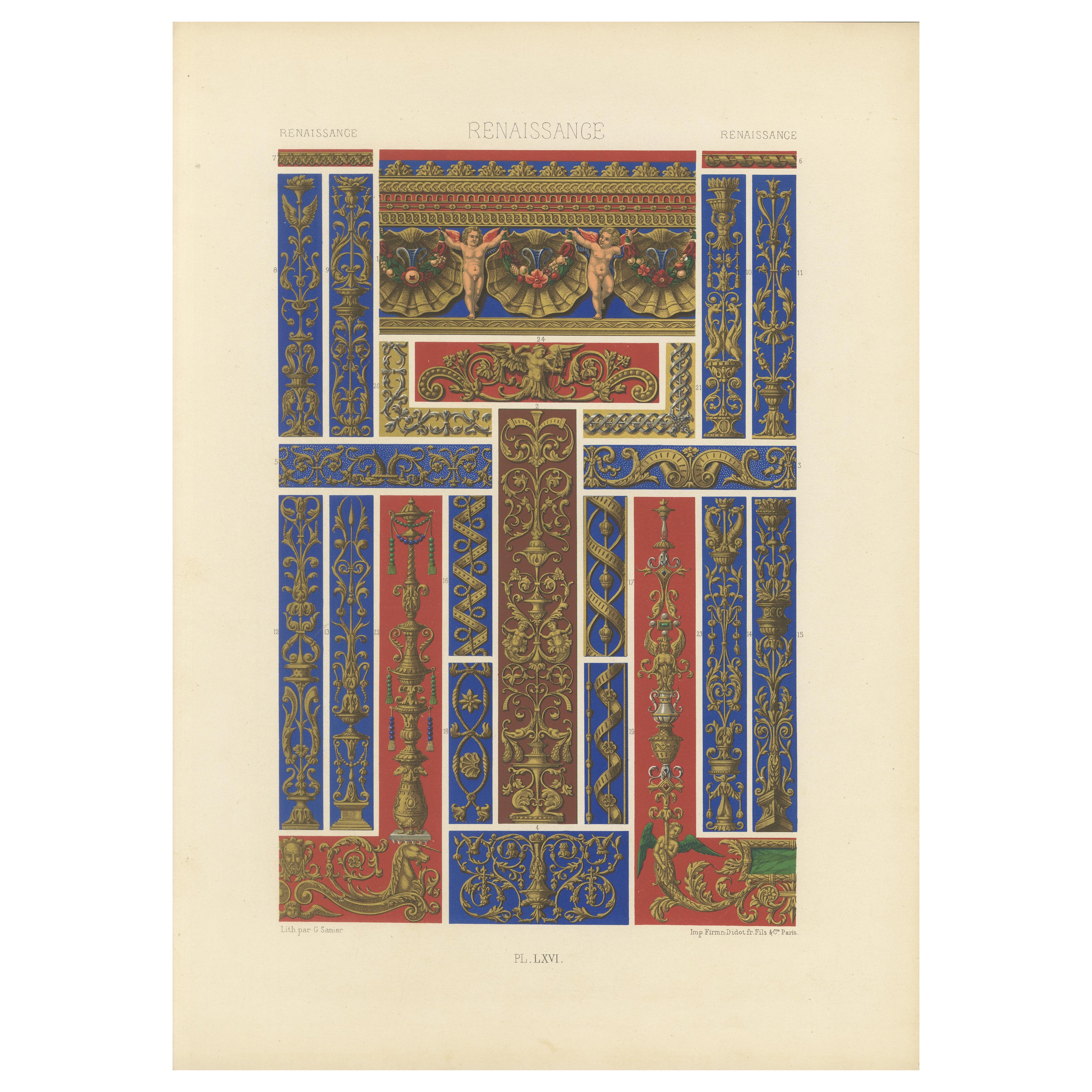
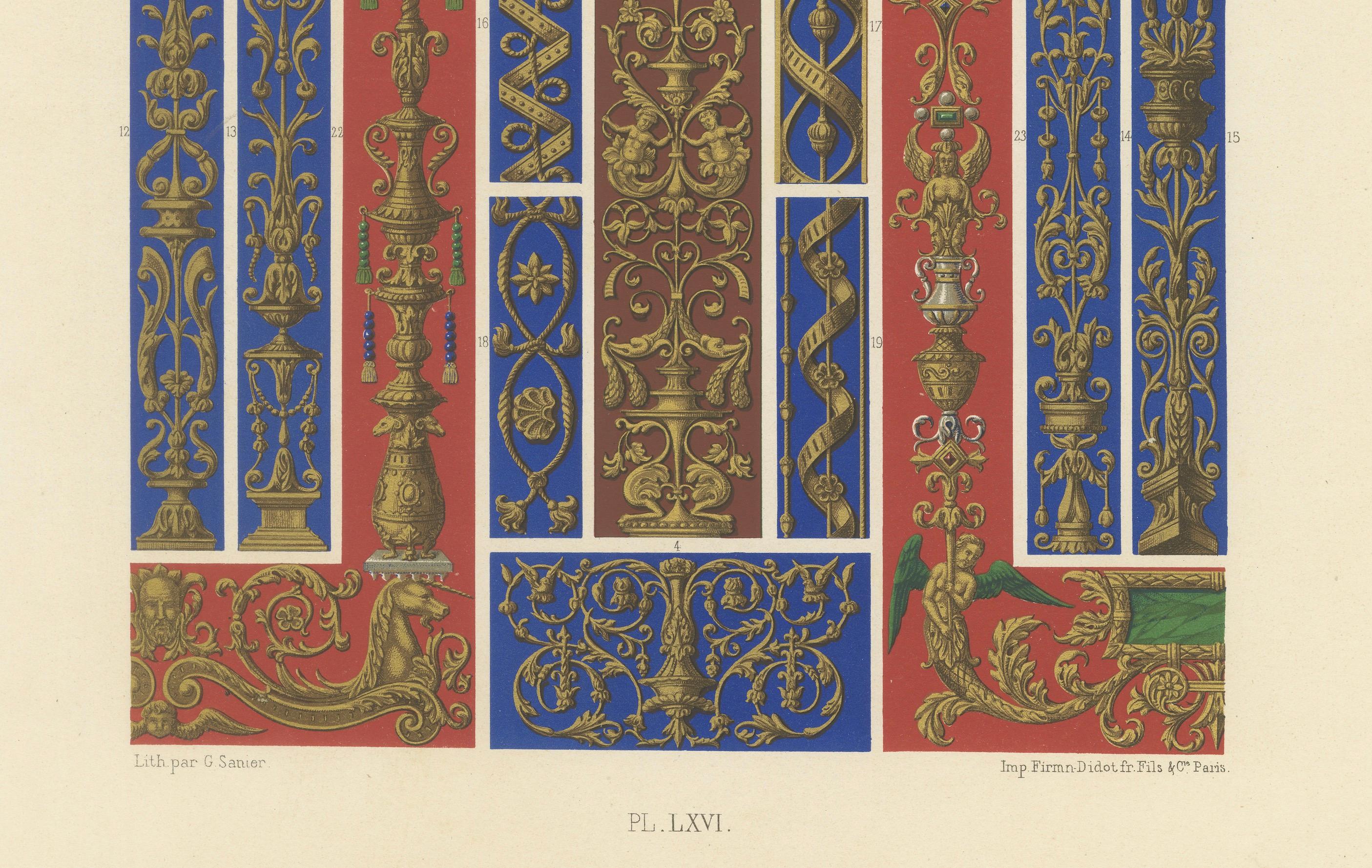
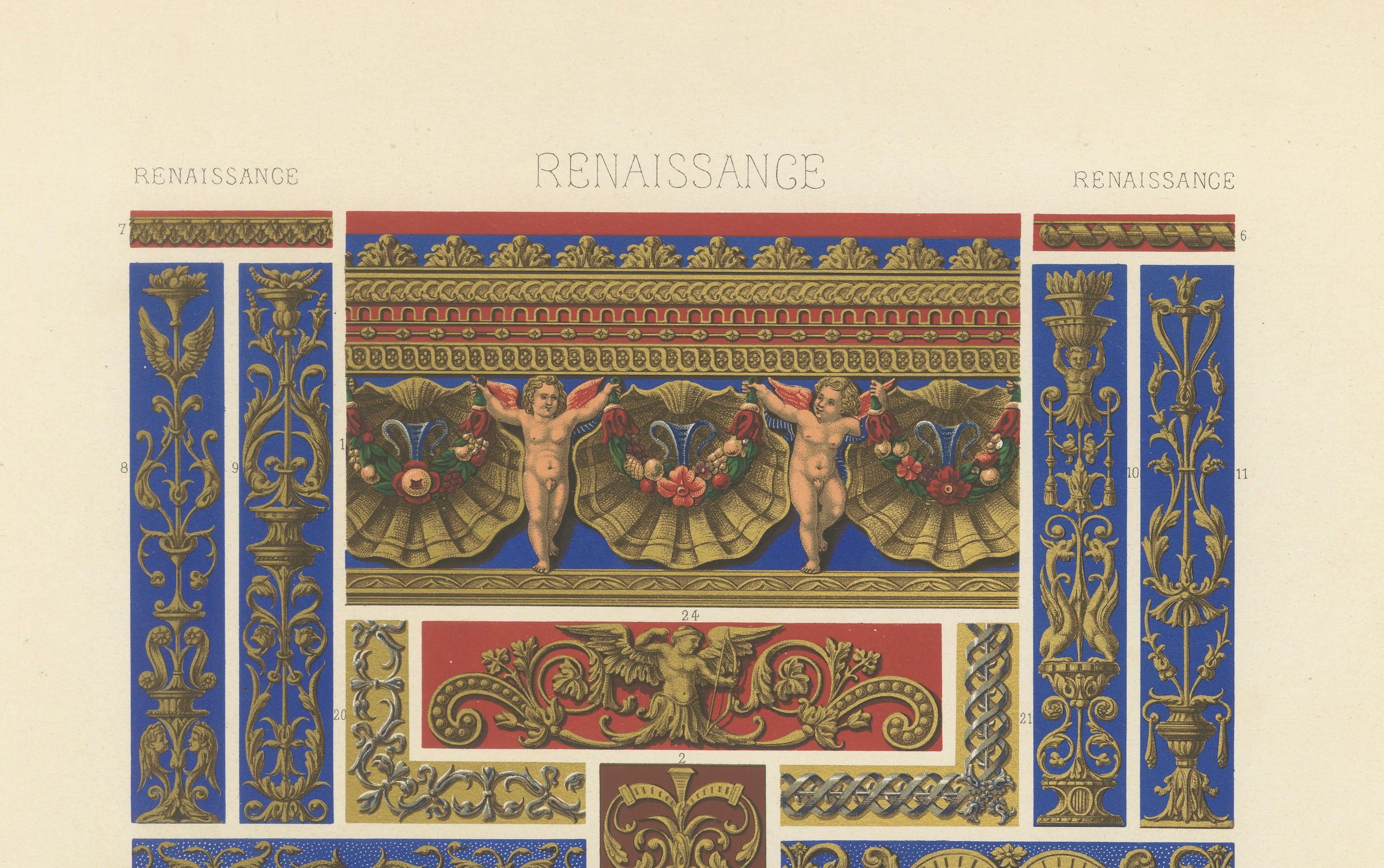
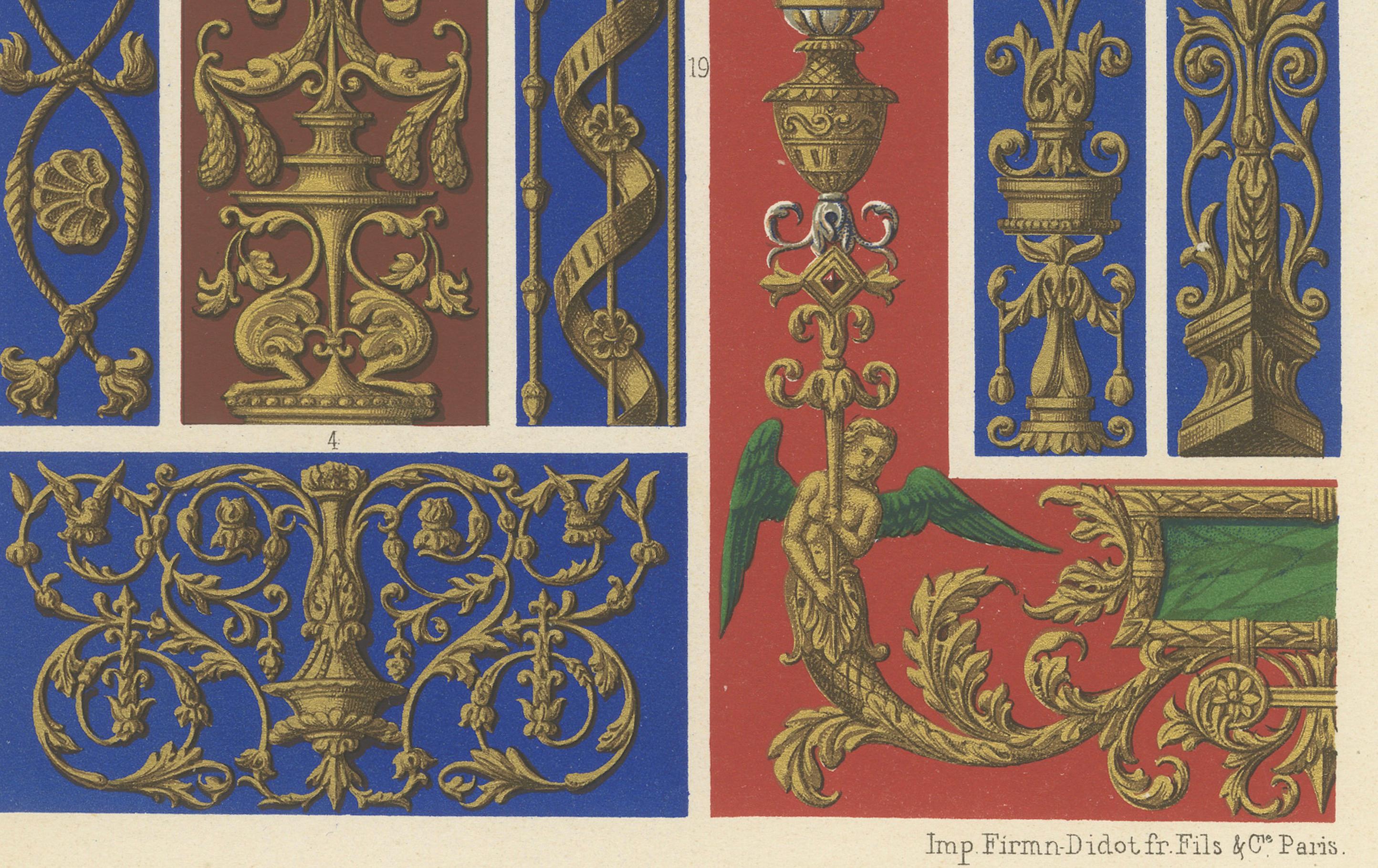
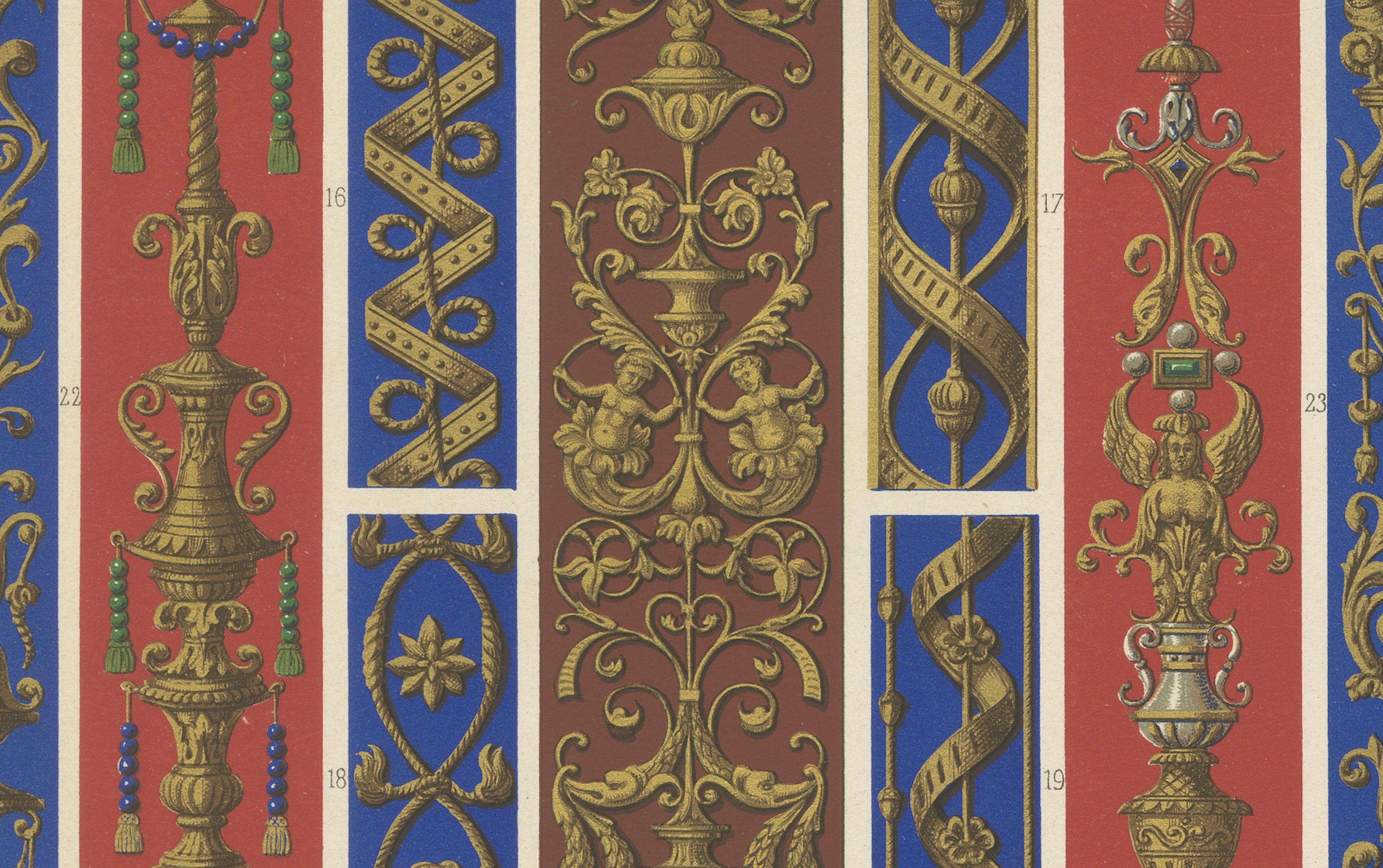
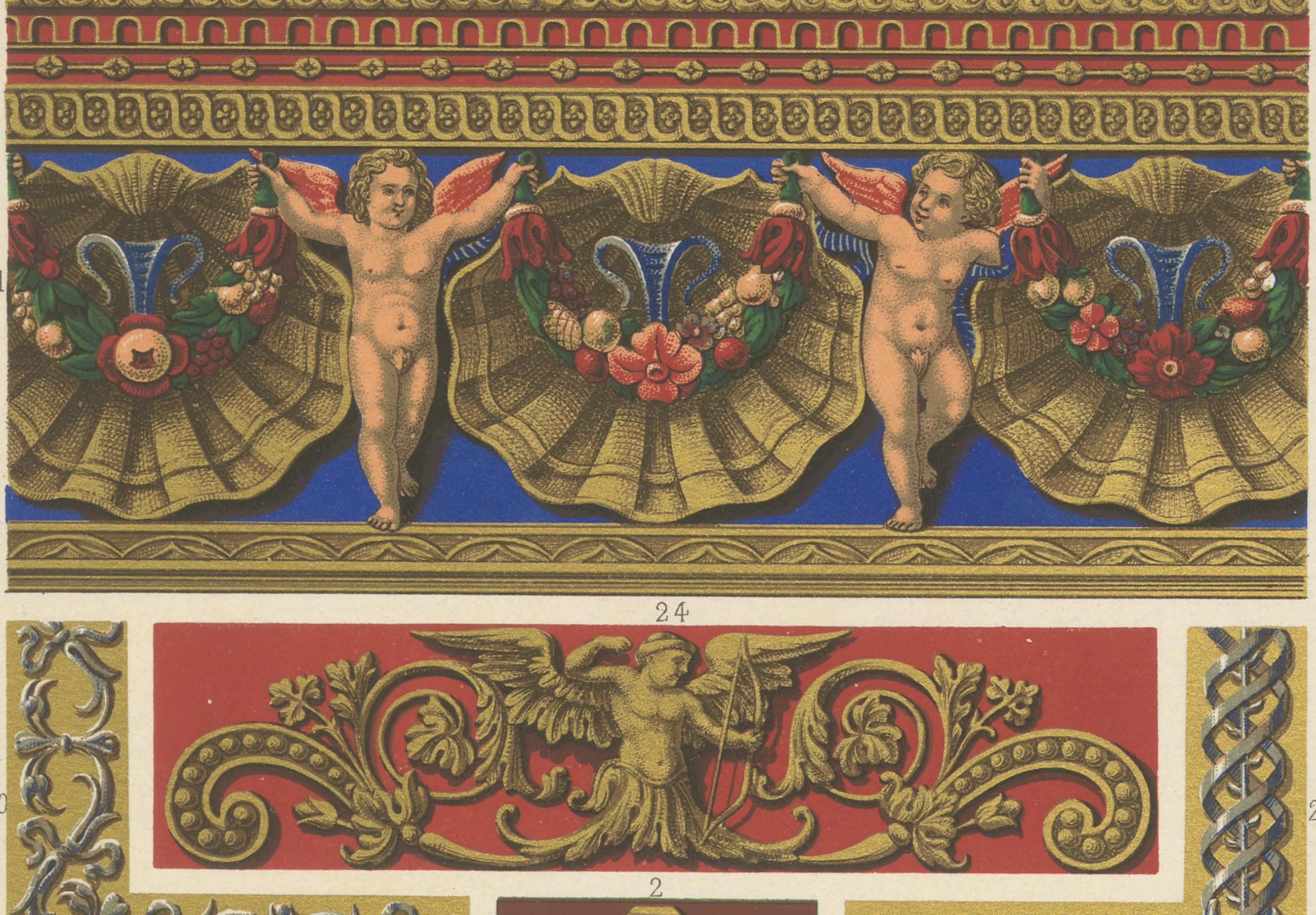
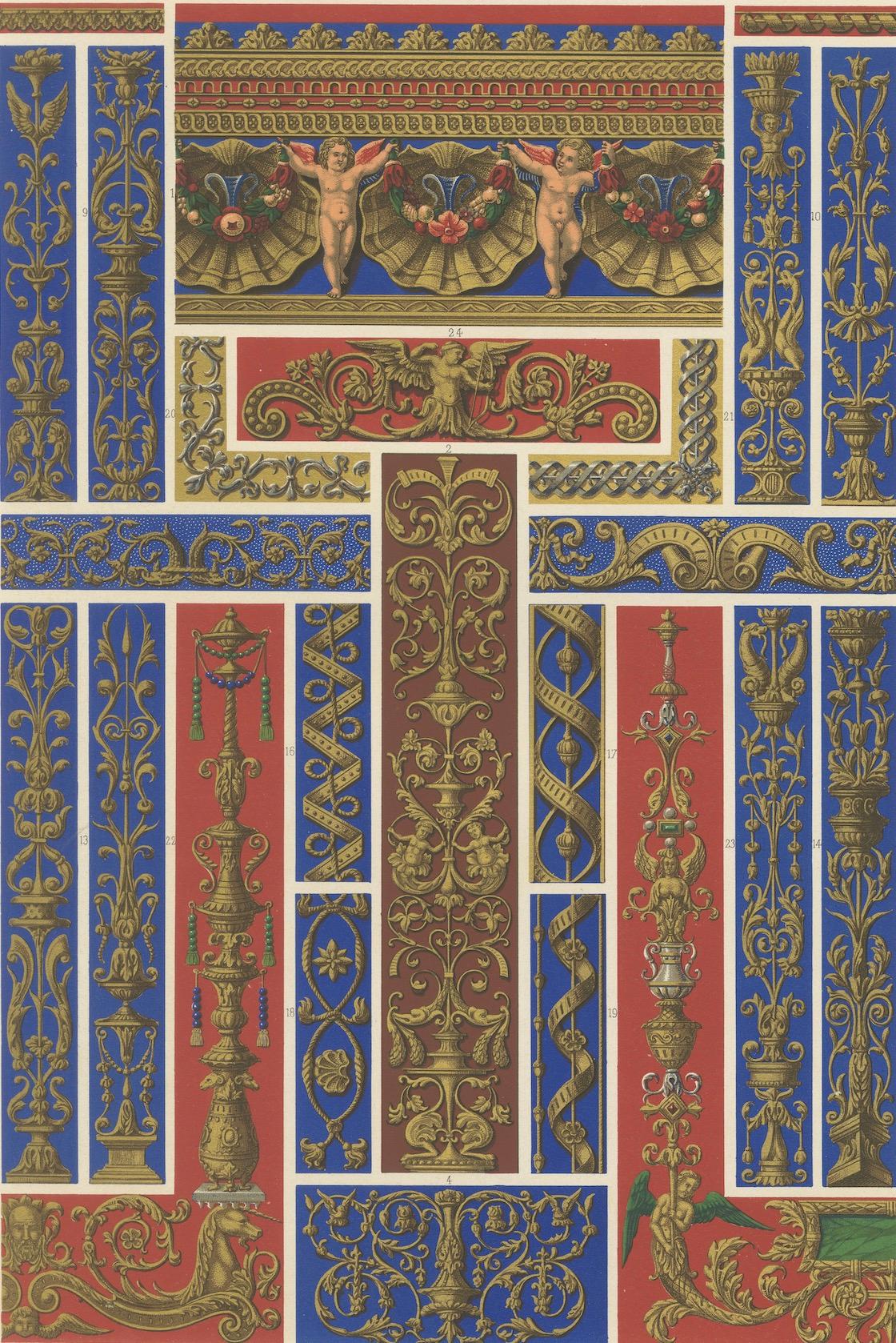
This elaborate chromolithograph from L’Ornement Polychrome (Plate LXVI) showcases a rich selection of Renaissance architectural ornaments, rendered with exquisite detail and vibrant coloration. Lithographed by G. Saurer and published by Firmin-Didot Frères in Paris, the plate presents a collection of gilded scrollwork, floral motifs, decorative pilasters, and friezes typical of 16th-century European interior and architectural embellishment.
Set against striking red and cobalt-blue backgrounds, the golden motifs are organized into vertical and horizontal bands resembling sections of pilasters, cornices, or friezes. The central frieze displays putti (cherubs) holding swags of fruit and fabric, flanked by scrolling acanthus leaves, rosettes, and anthemion patterns. The gilded highlights and deep jewel tones emphasize the lavish aesthetic of High Renaissance ornament.
Other details include stylized urns, baluster forms, torches, arabesques, grotesques, and winged beasts—all recurring motifs in Renaissance architecture and furnishings. Many of these motifs were used in painted ceilings, furniture decoration, and palace interiors, referencing both classical antiquity and contemporary humanist symbolism.
This plate is a valuable visual reference for collectors, interior designers, and historians interested in the rich vocabulary of Renaissance design. It captures the grandeur and meticulous symmetry that defined the artistic ideals of the time.
Condition: Excellent condition with rich colors and only light toning to the margins. No significant blemishes visible.
Framing tips: For a striking presentation, use a dark wood frame with gold trim or an antiqued gilt frame. A cream or ivory mat with a thin red or blue inner border can draw attention to the vivid palette and intricate gilding.
Technique: Chromolithograph
Maker: G. Saurer (lith.), Firmin-Didot Frères, Paris, c.1869