About this sheet
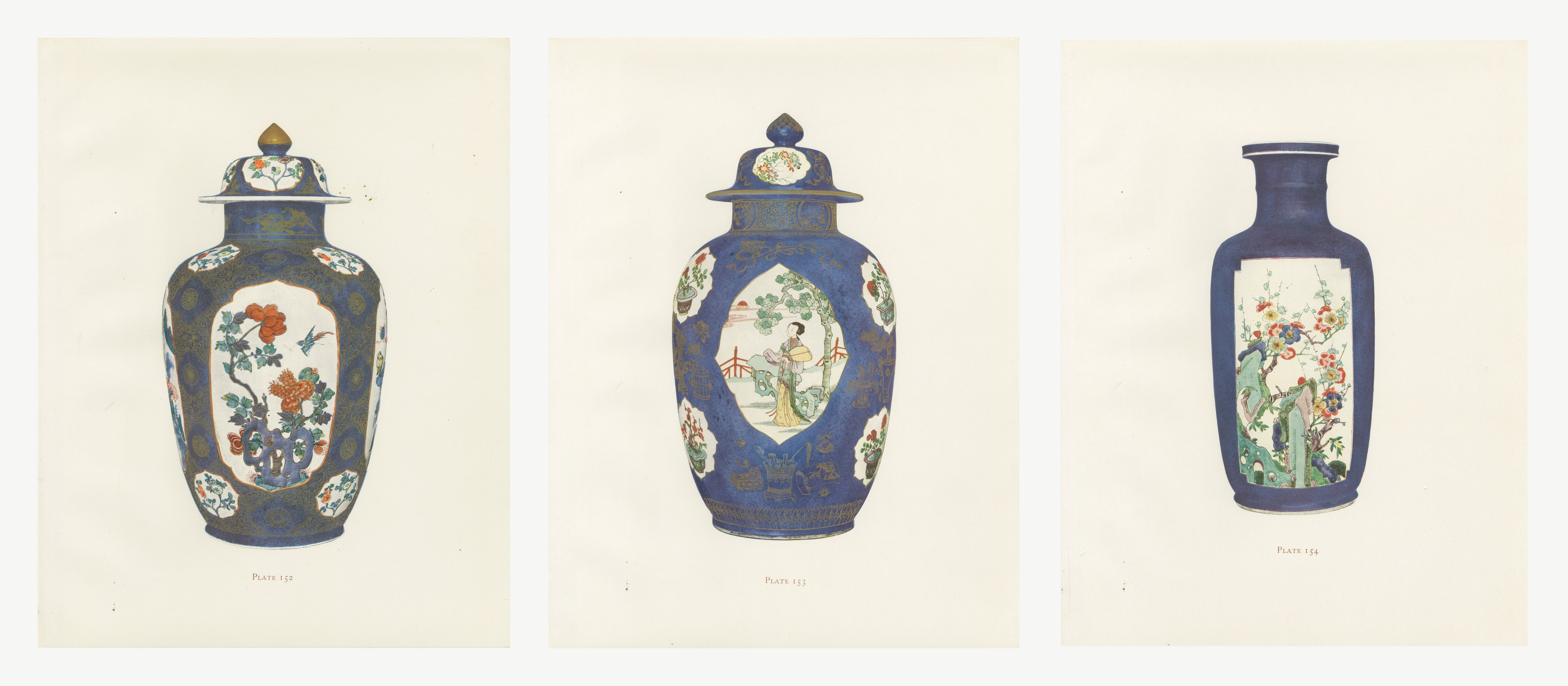
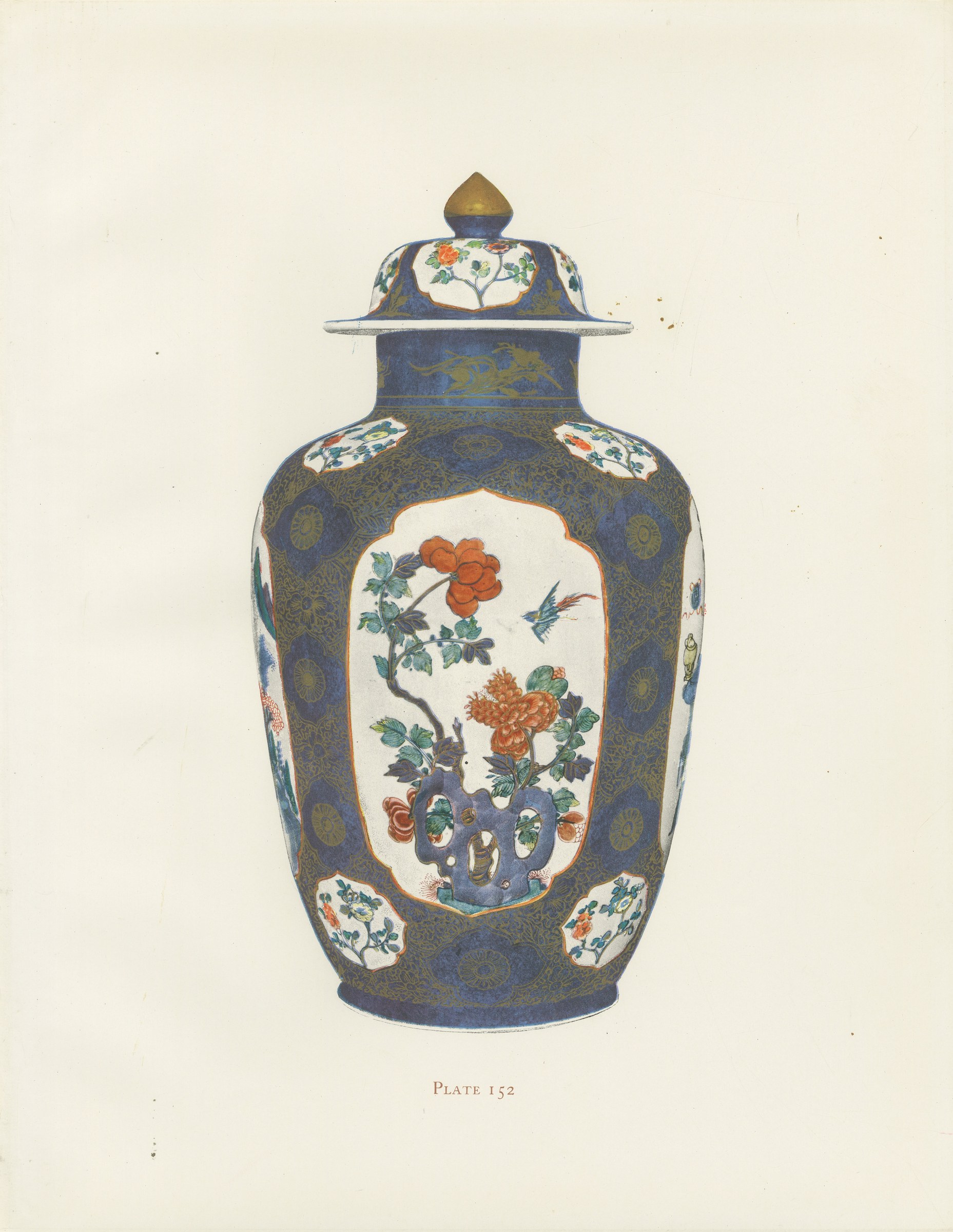
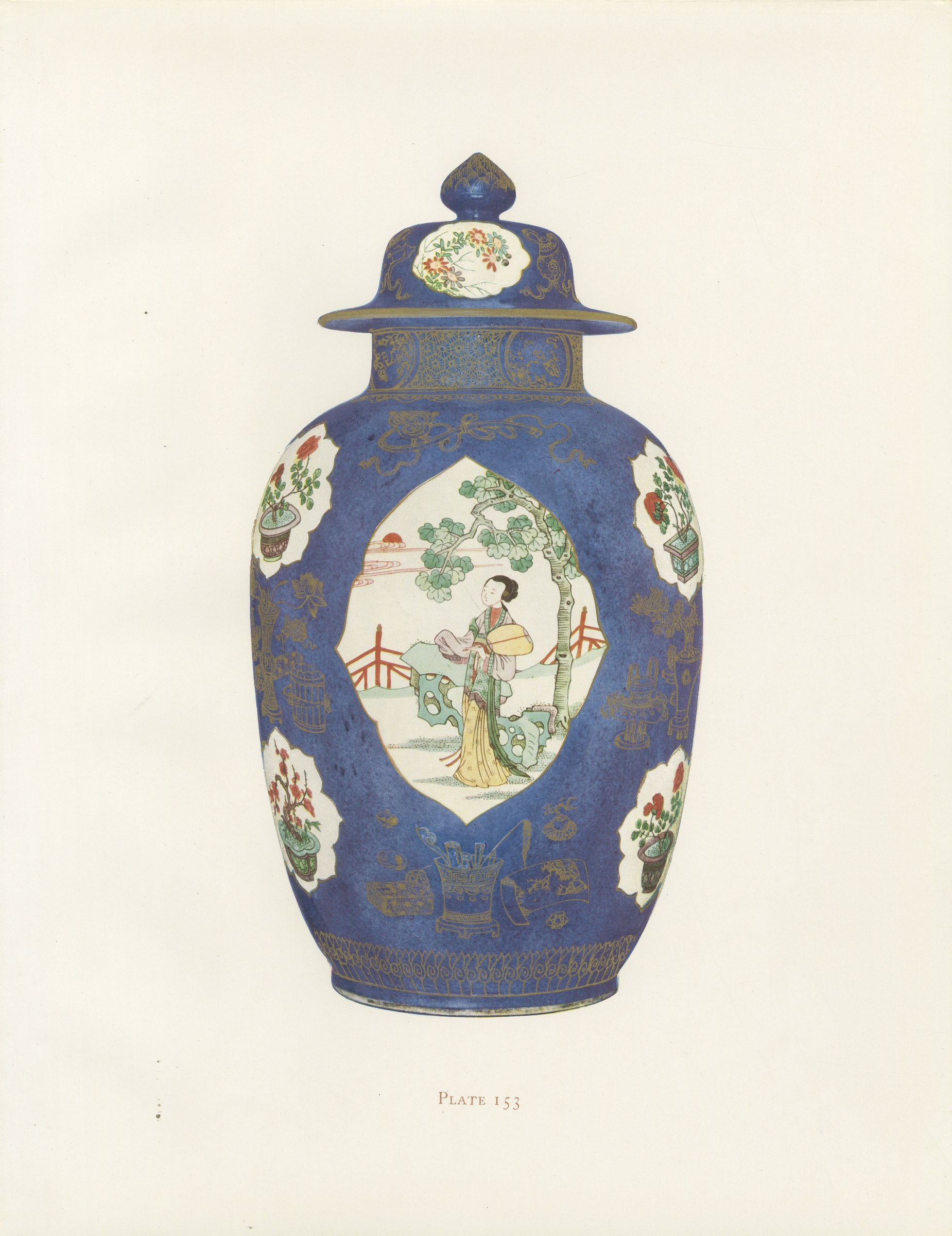
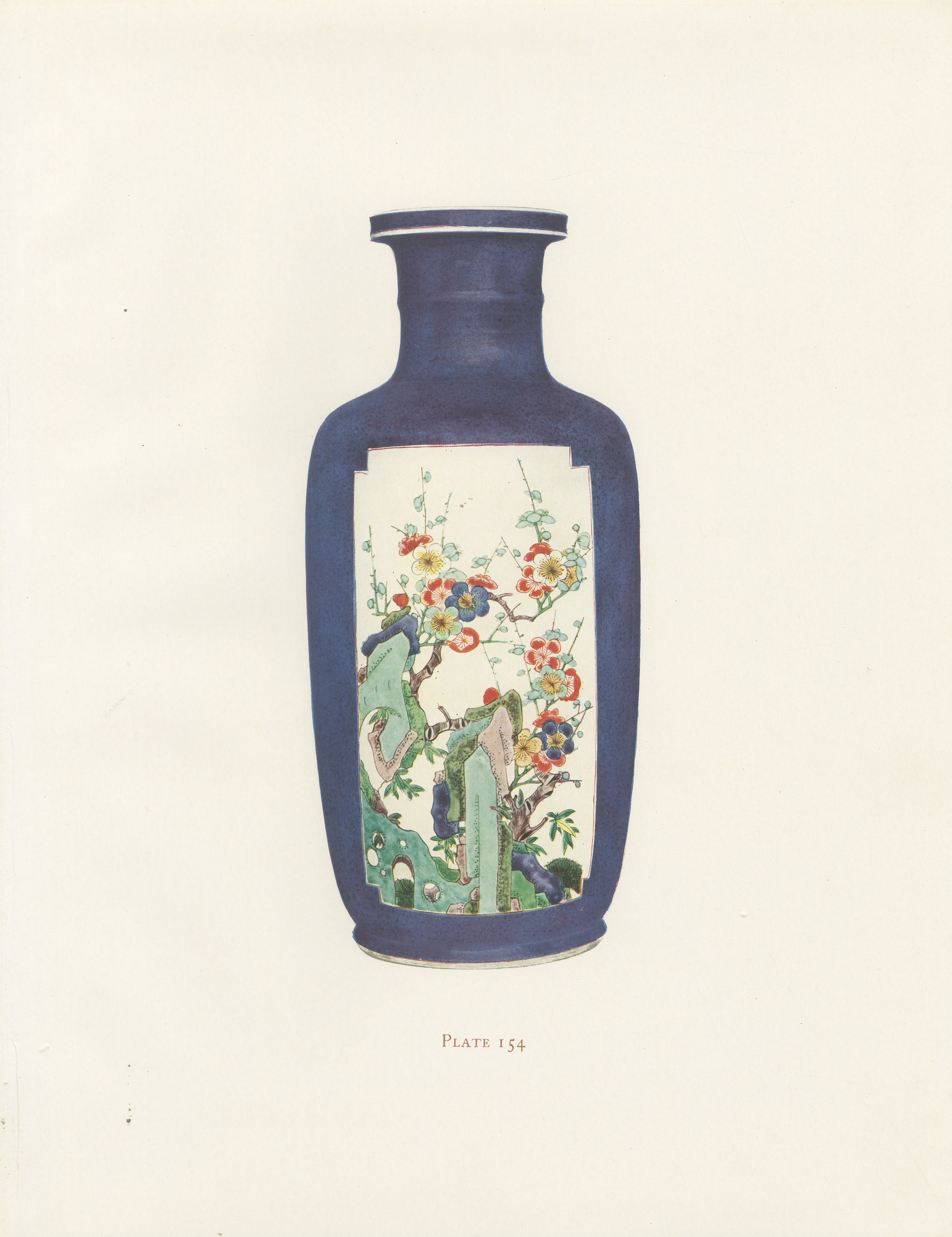
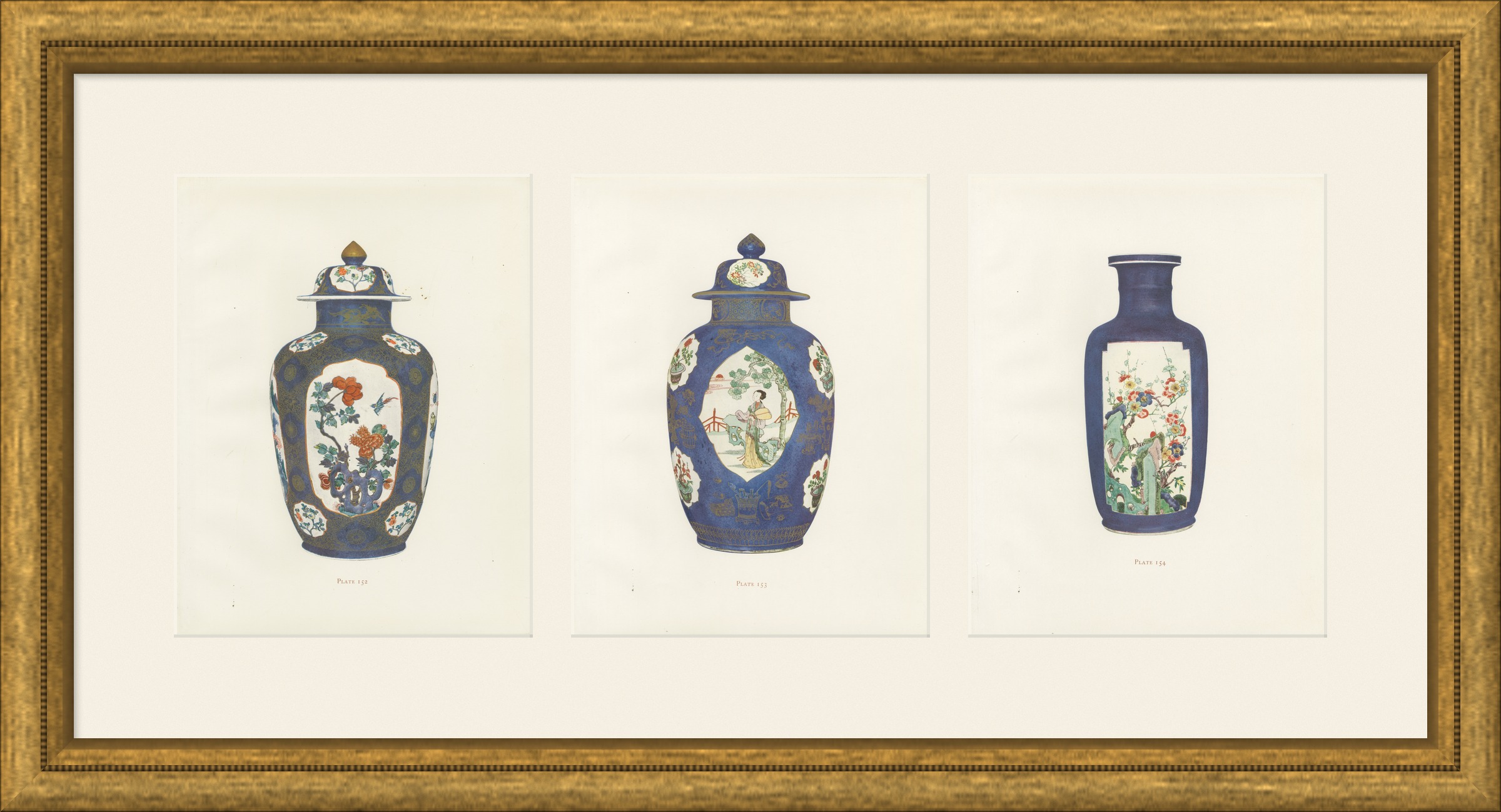
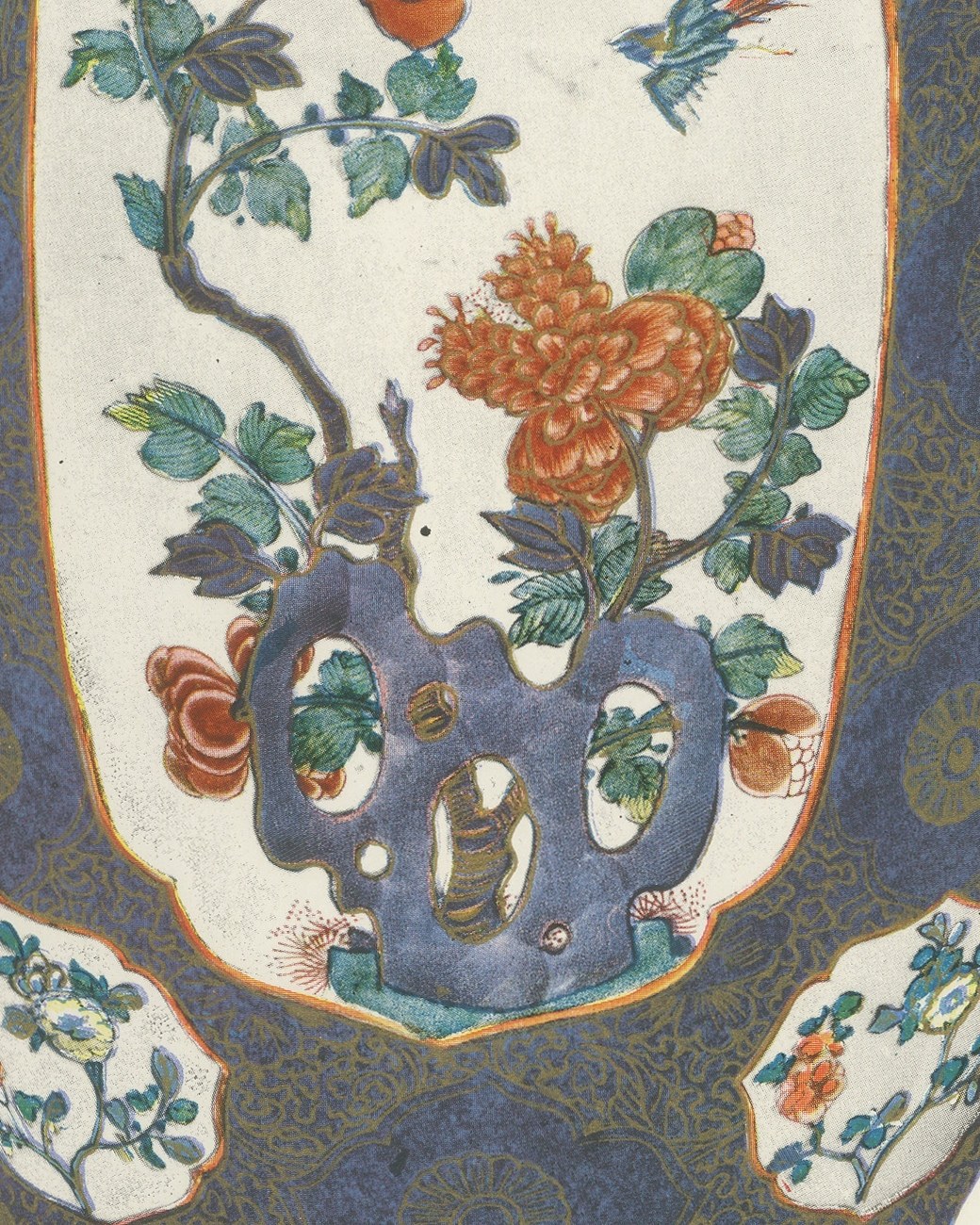
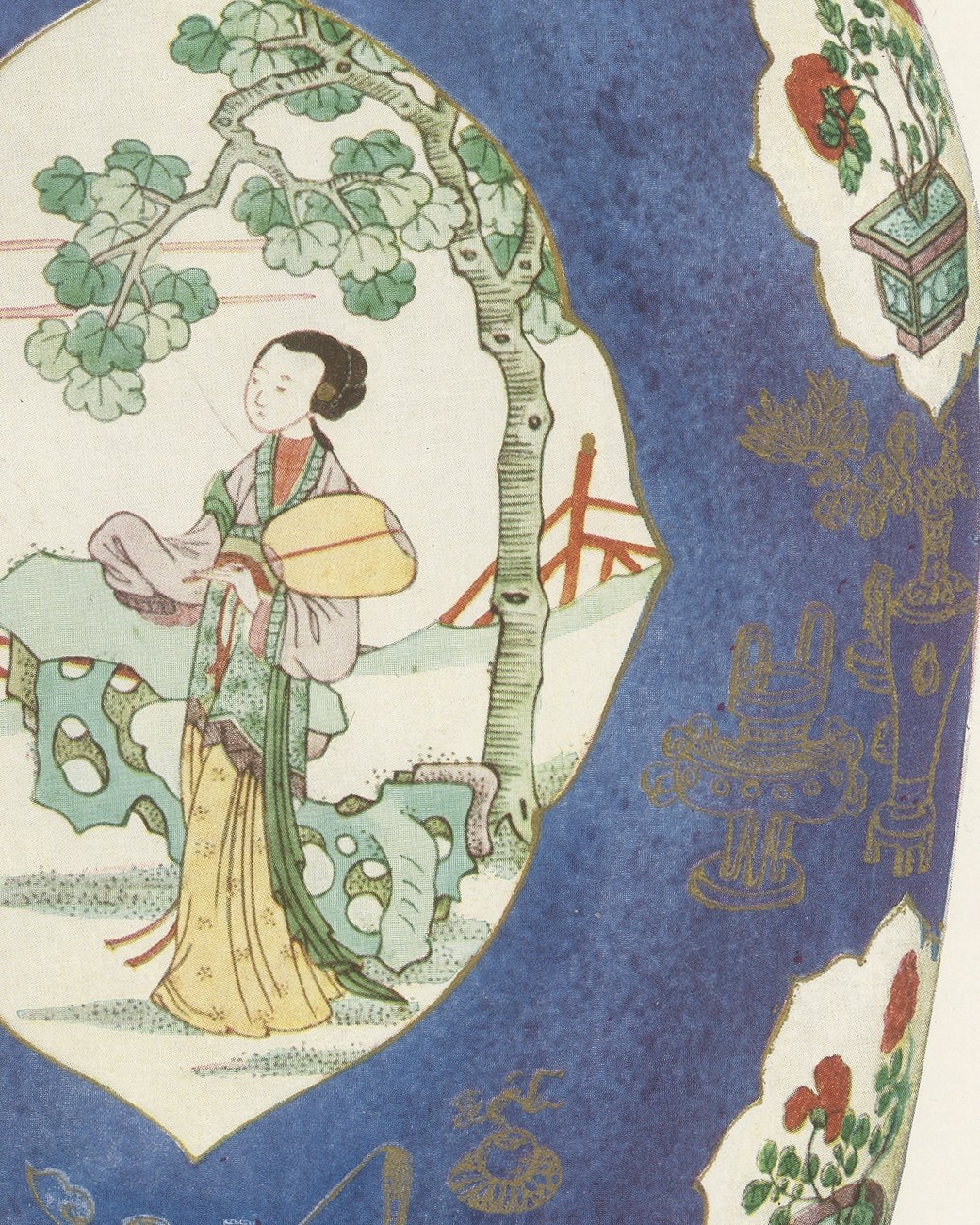
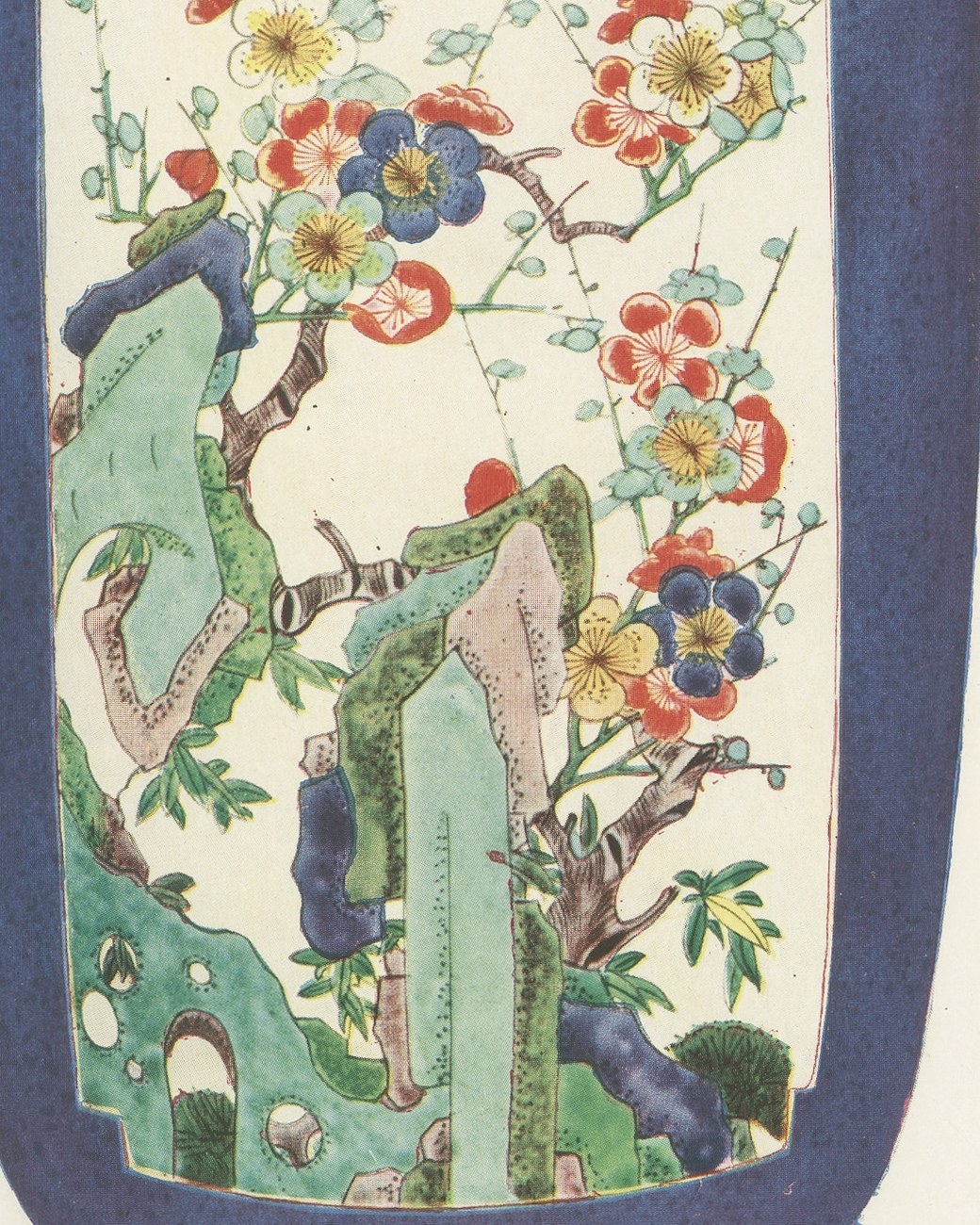
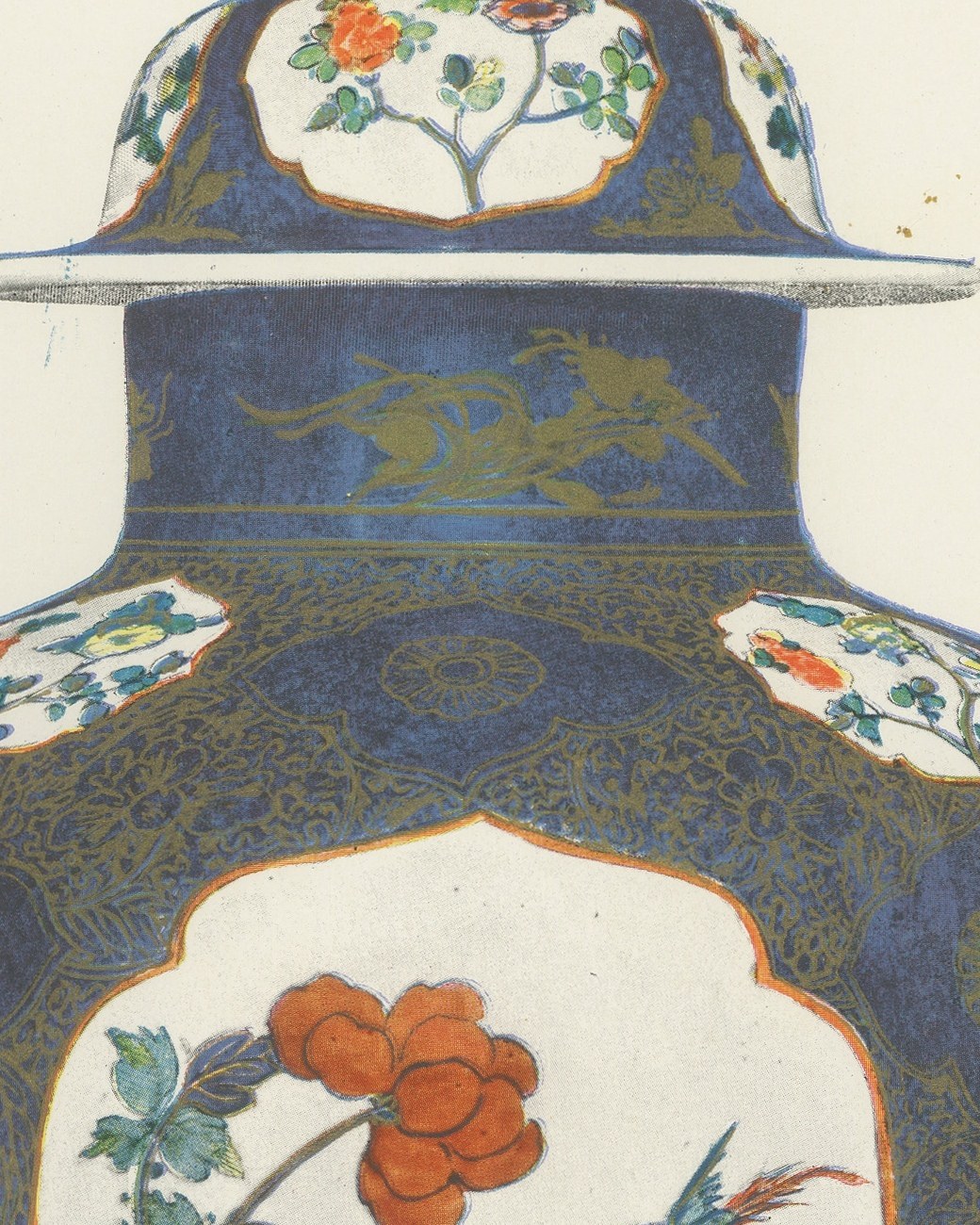
This is a set of three original 1911 color plates, Plates 152, 153 and 154 from Volume II of Gorer and Blacker's Chinese Porcelain and Hard Stones, sold together as one lot. What links them: powder blue and gold with famille verte panels. Plate 152: One of a pair of cylindro-ovoid jars and covers. A ground of fine powder-blue covered with a brocade design of flowers, foliage, and panels in gold, cut by several panels with white grounds bearing various designs; the four long panels contain flowers alternating with other subjects. The gold is quickly worn off, leaving but a trace behind. The book gives it to the Kang-he period and records height 18 1/8 inches (46 cm); diameter 10 inches (25.3 cm). From the collection formed by Sir William Bennett. Plate 153: Vase, oviform, and cover. A beautiful example of fine powder-blue ground pencilled with rich gold ornament, enclosing nine ju-i head shaped panels in which, on a white ground reserved, the decoration of the famille verte is applied with consummate skill. Those on the cover have sprays of flowers. The book gives it to the Kang-he period and records height 18 inches (45.6 cm). From the collection formed by Richard Bennett, Esq., D.L. Plate 154: Vase, cylindrical, club-shaped or rouleau. A ground of powder-blue cobalt under the glaze with two oblong panels reserved in white; the blue and white are of the finest quality, as is the five-color decoration, wu ts'ai. The panel in the illustration shows a group of erect figures. The book gives it to the Kang-he period and records height 17 inches (43.2 cm); diameter 7 3/4 inches (19.6 cm). From the collection formed by Richard Bennett, Esq., D.L.
The sheets come from Chinese Porcelain and Hard Stones, the two volume work by the London dealer Edgar Gorer and the writer J. F. Blacker, published by Bernard Quaritch of 11 Grafton Street, New Bond Street, in 1911 in an edition of one thousand numbered copies. The plates are color collotypes, a photographic process that reproduces continuous tone without a visible dot screen, which is why the glazes keep their depth on paper.
What gives these plates their standing is the quality of the collections they record. Pieces illustrated here passed through the great Edwardian cabinets, and several are now in museums, so the book is a photographic record of where this material sat a century ago.
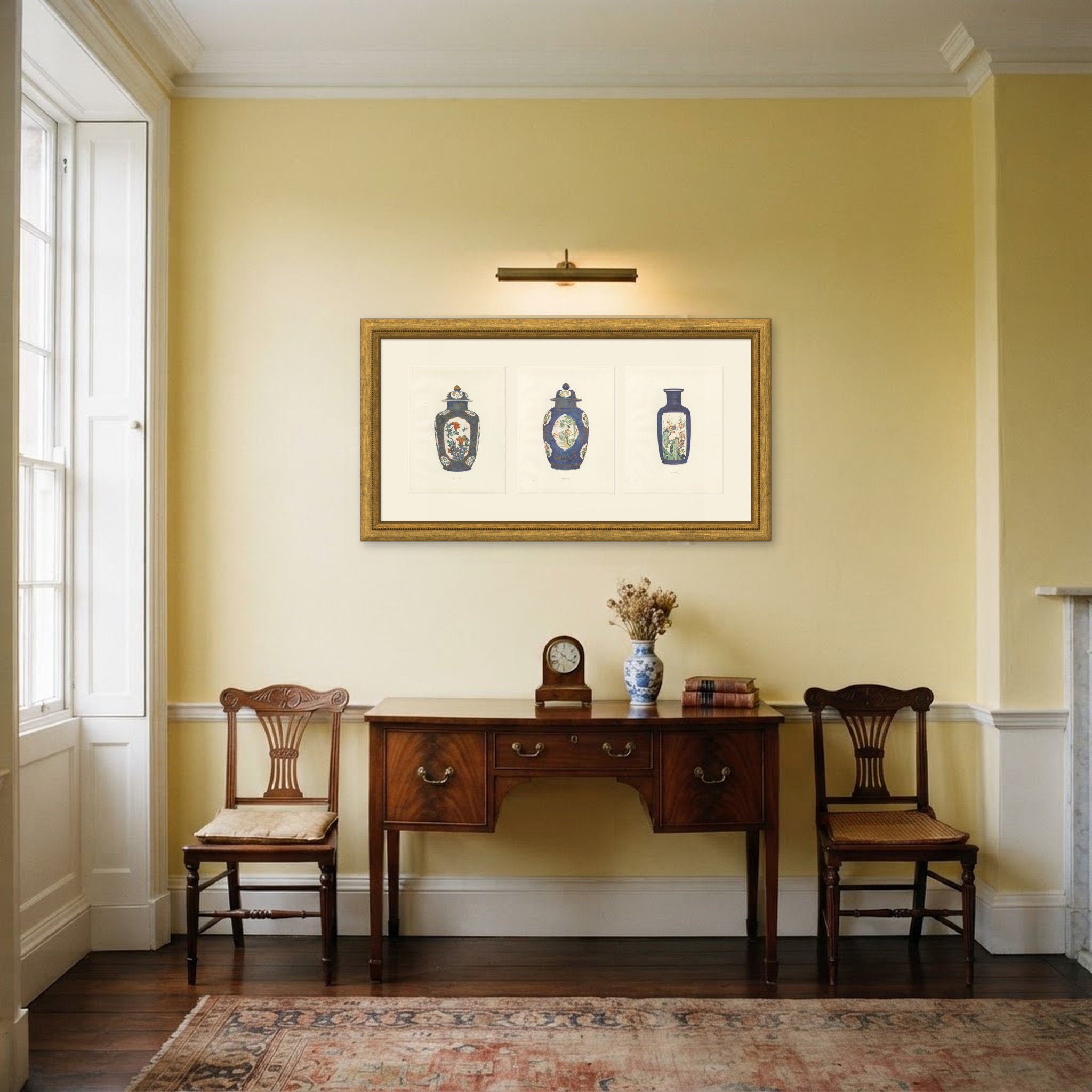
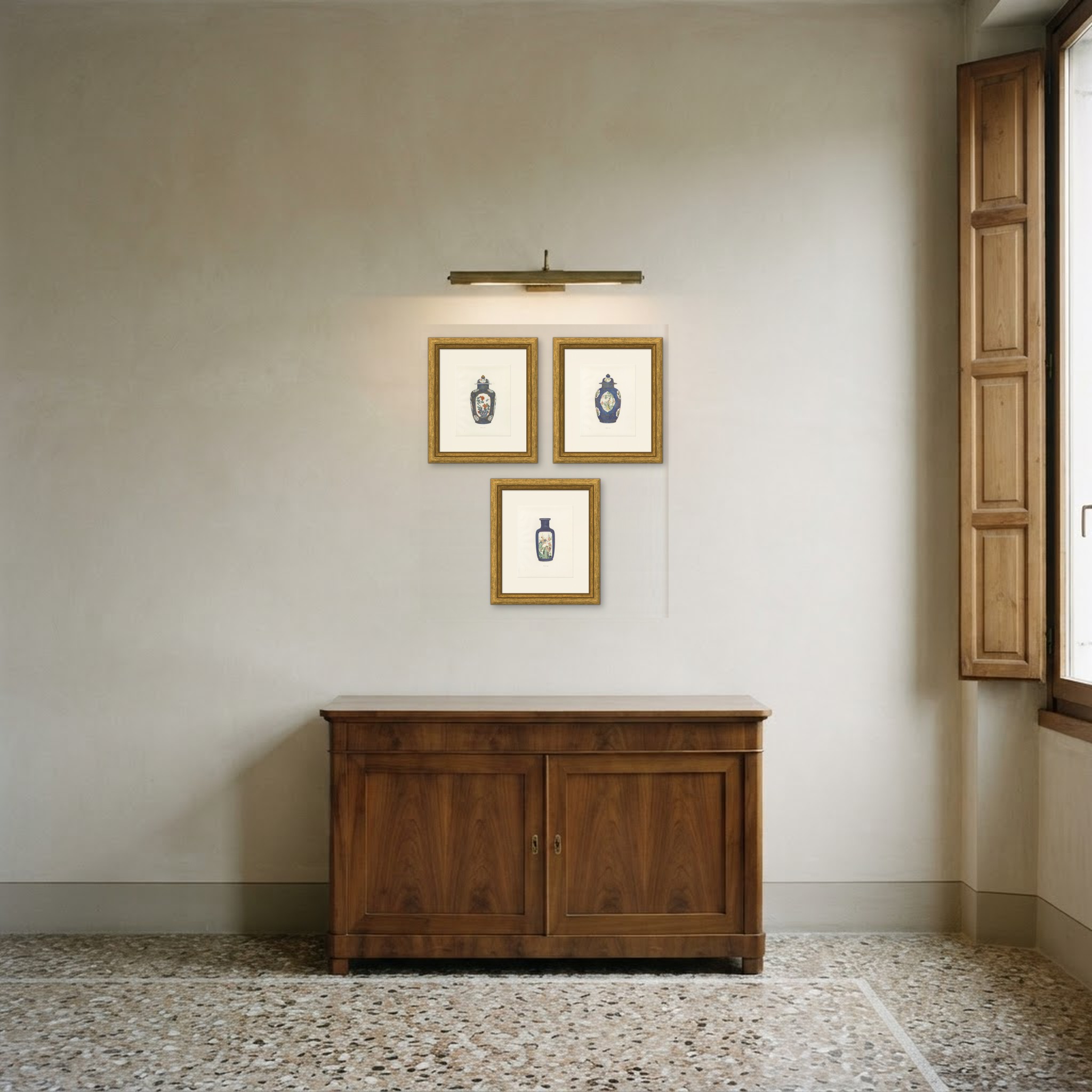
A sheet of this size frames well at about forty by fifty centimeters and suits a study, a hallway or a dining room where its color can be seen close to. The three sheets are the same size and were printed by the same hand, so they hang as one group.
These are original antique prints, not modern reproductions. They are three original sheets sold together as one lot, and the set is never split.
Even age toning throughout. Light foxing in the margins of all three sheets. All corners complete on every sheet.
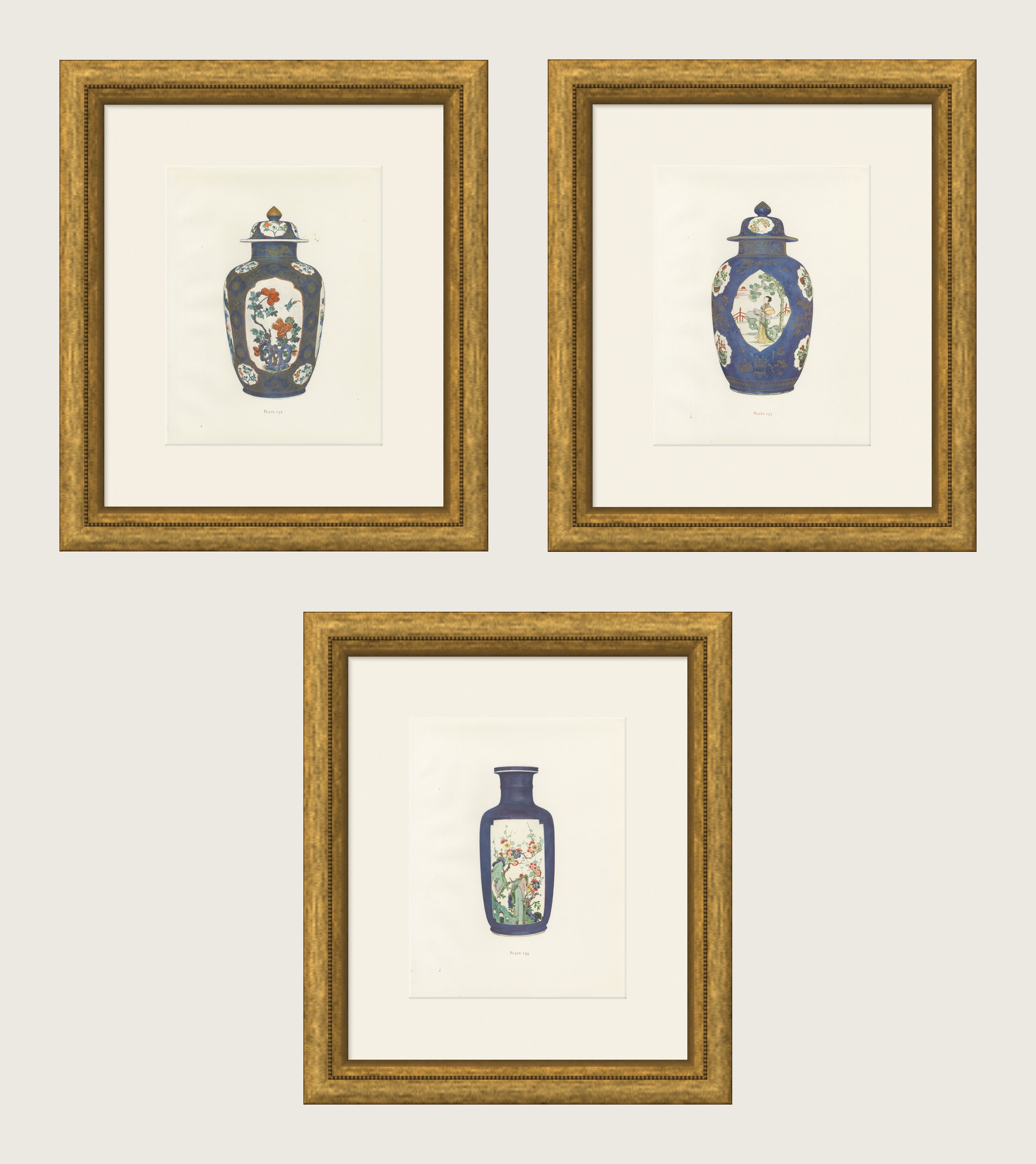
This item is sold unframed. Any framed or interior images are shown for presentation and inspiration only, unless the listing explicitly states that the item is sold framed.