About this sheet
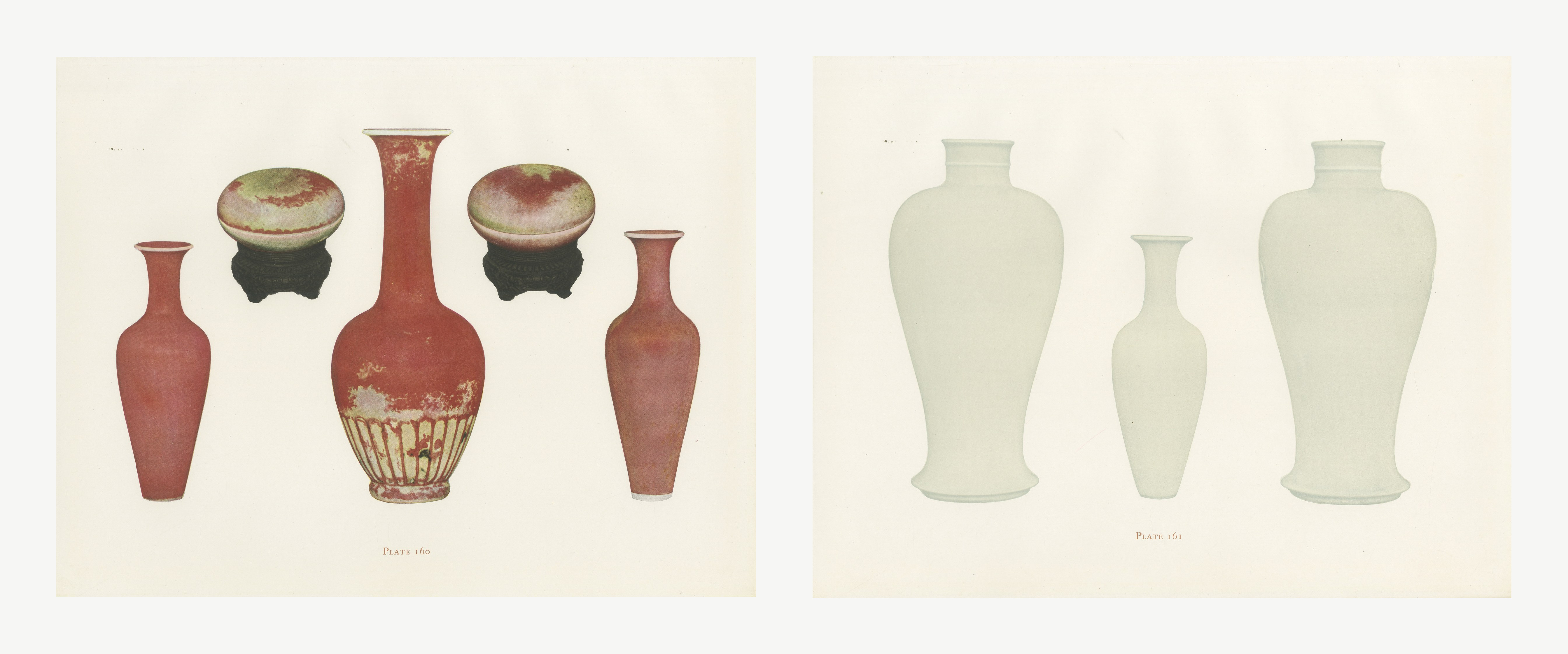
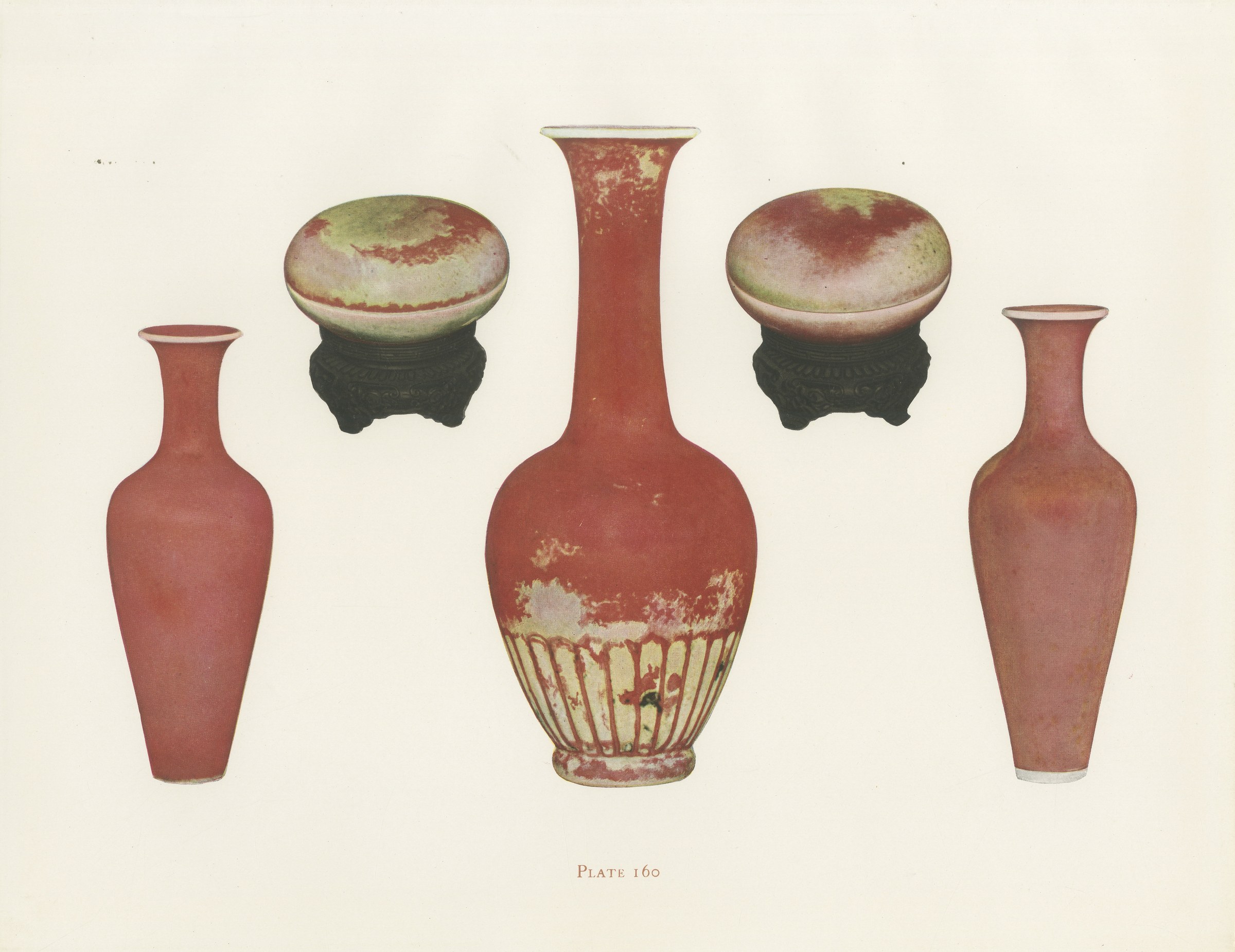
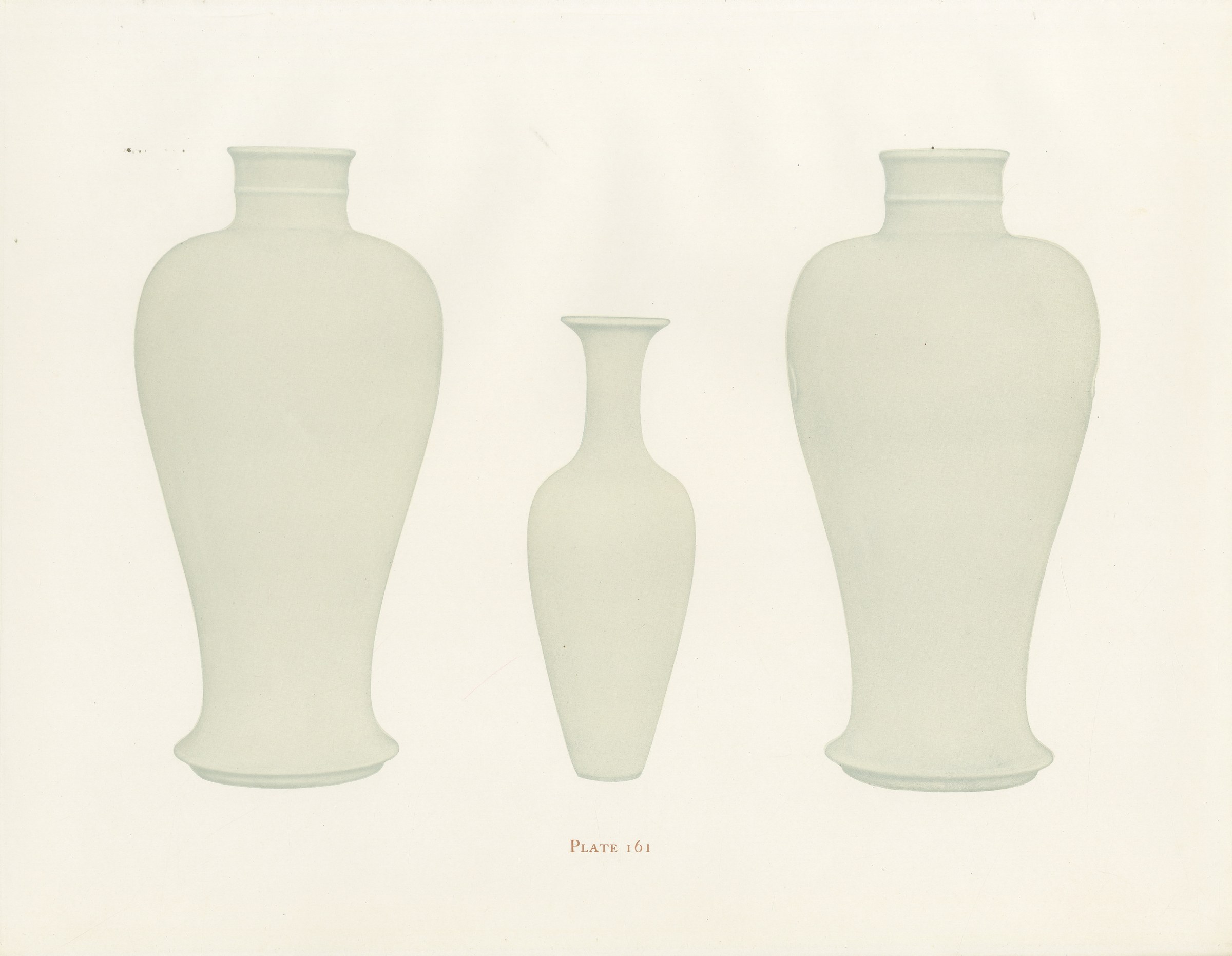
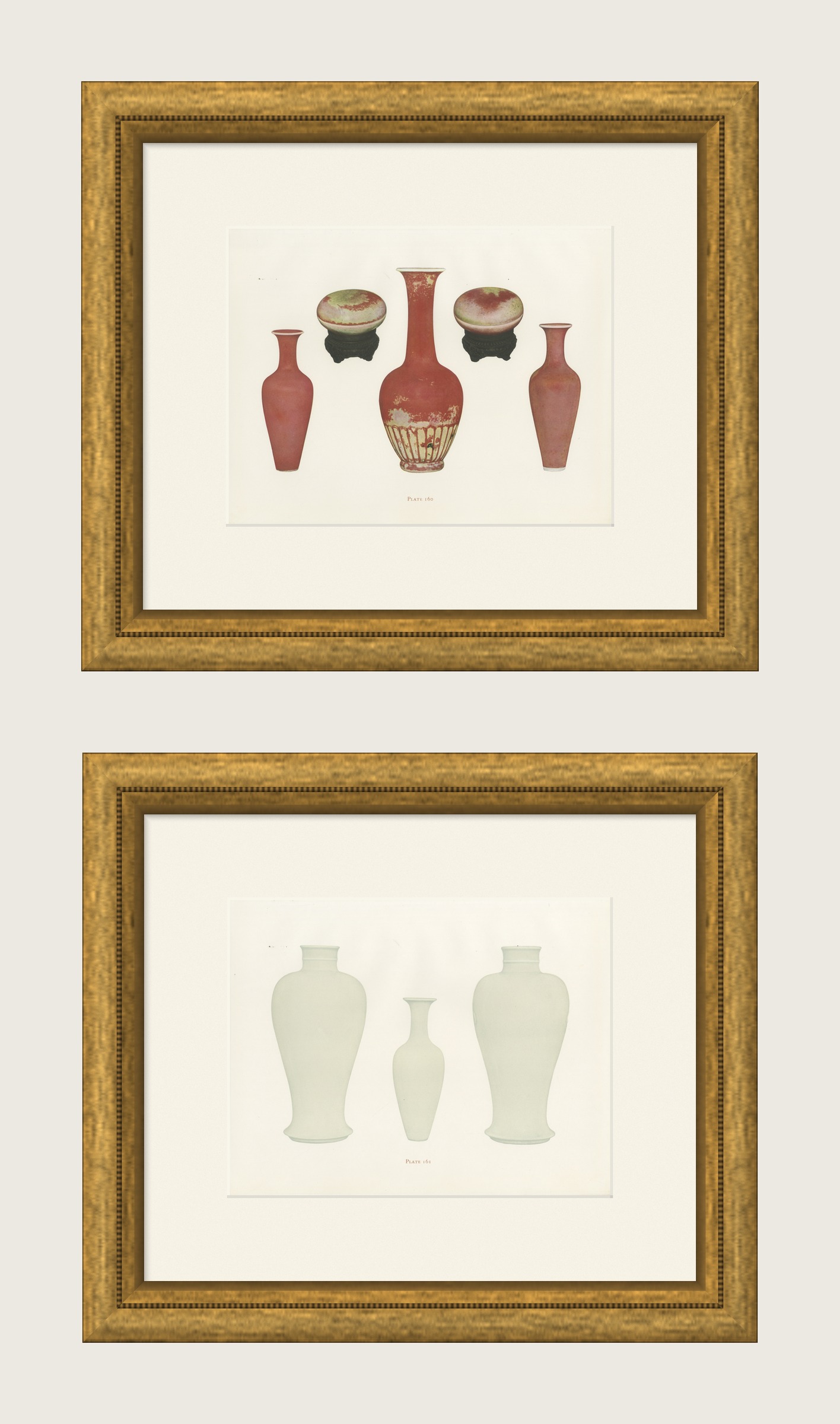
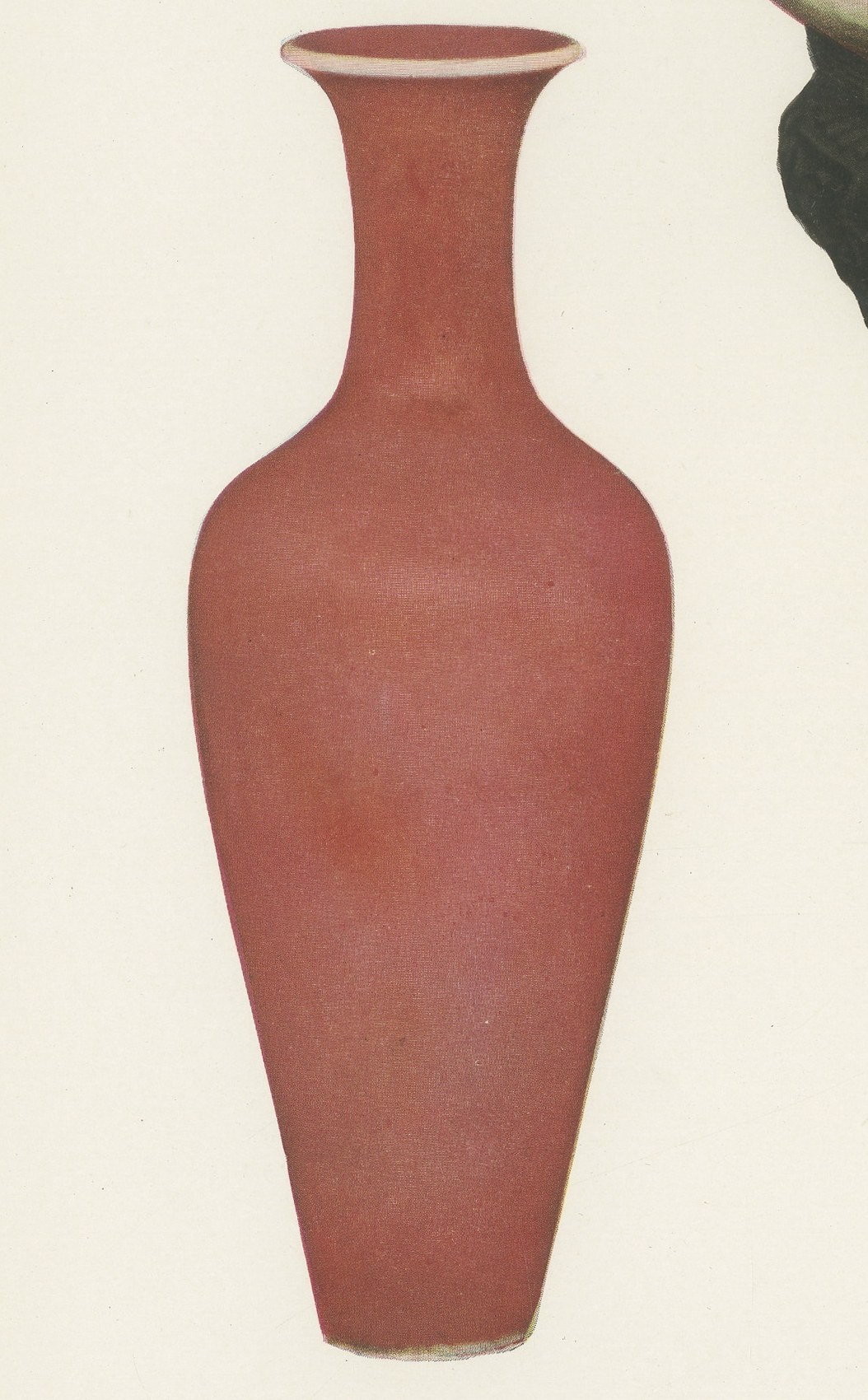
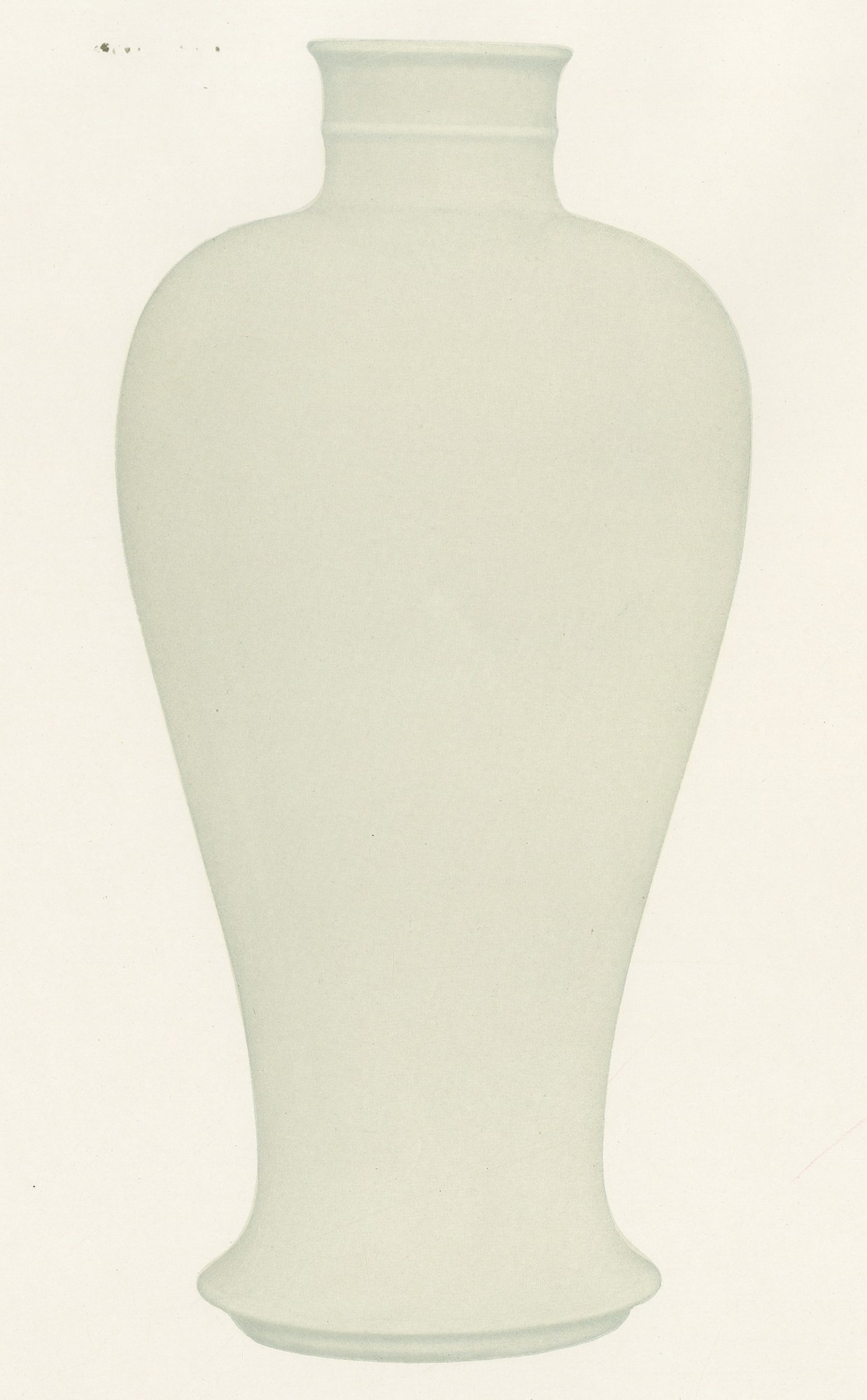
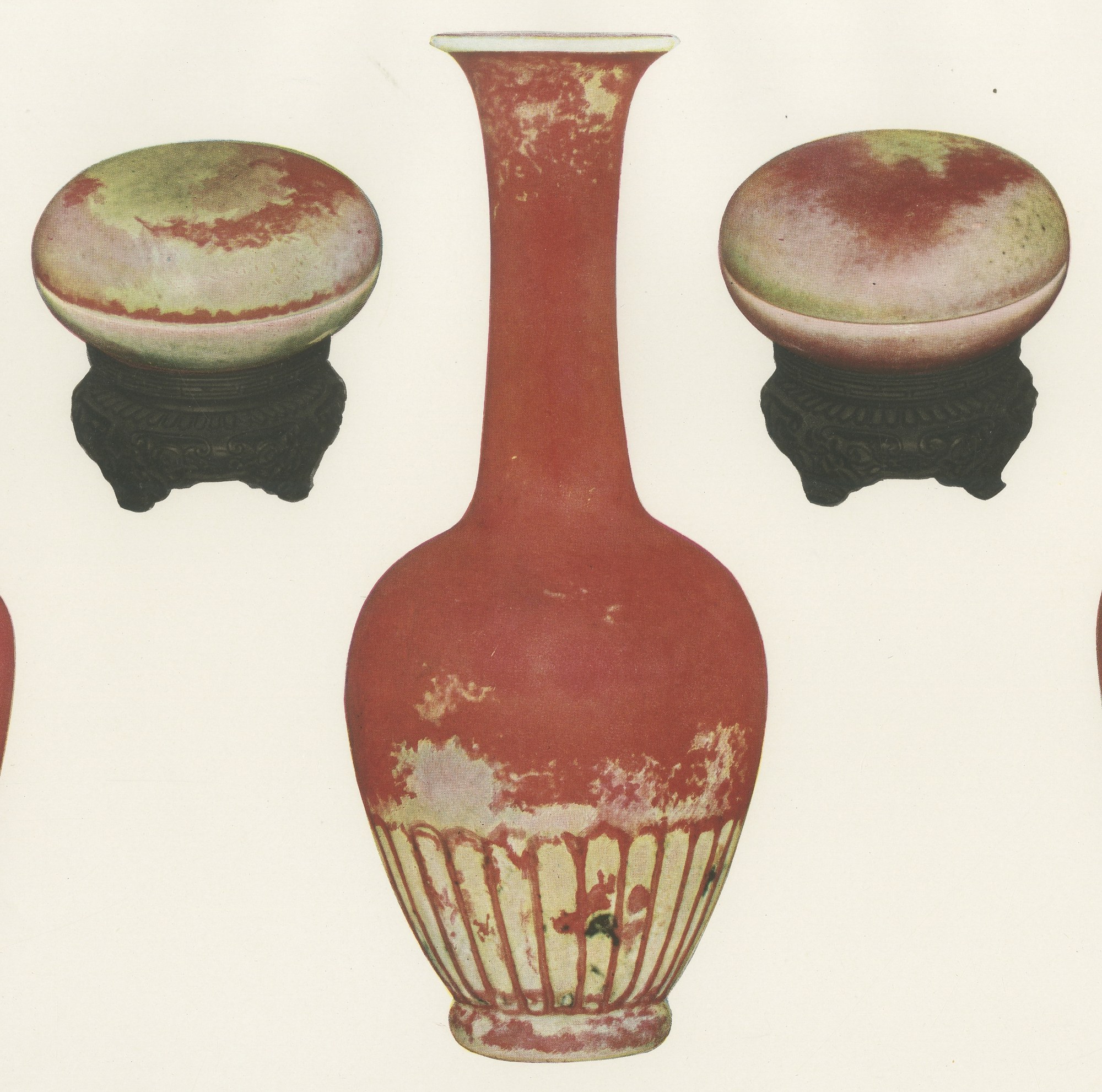
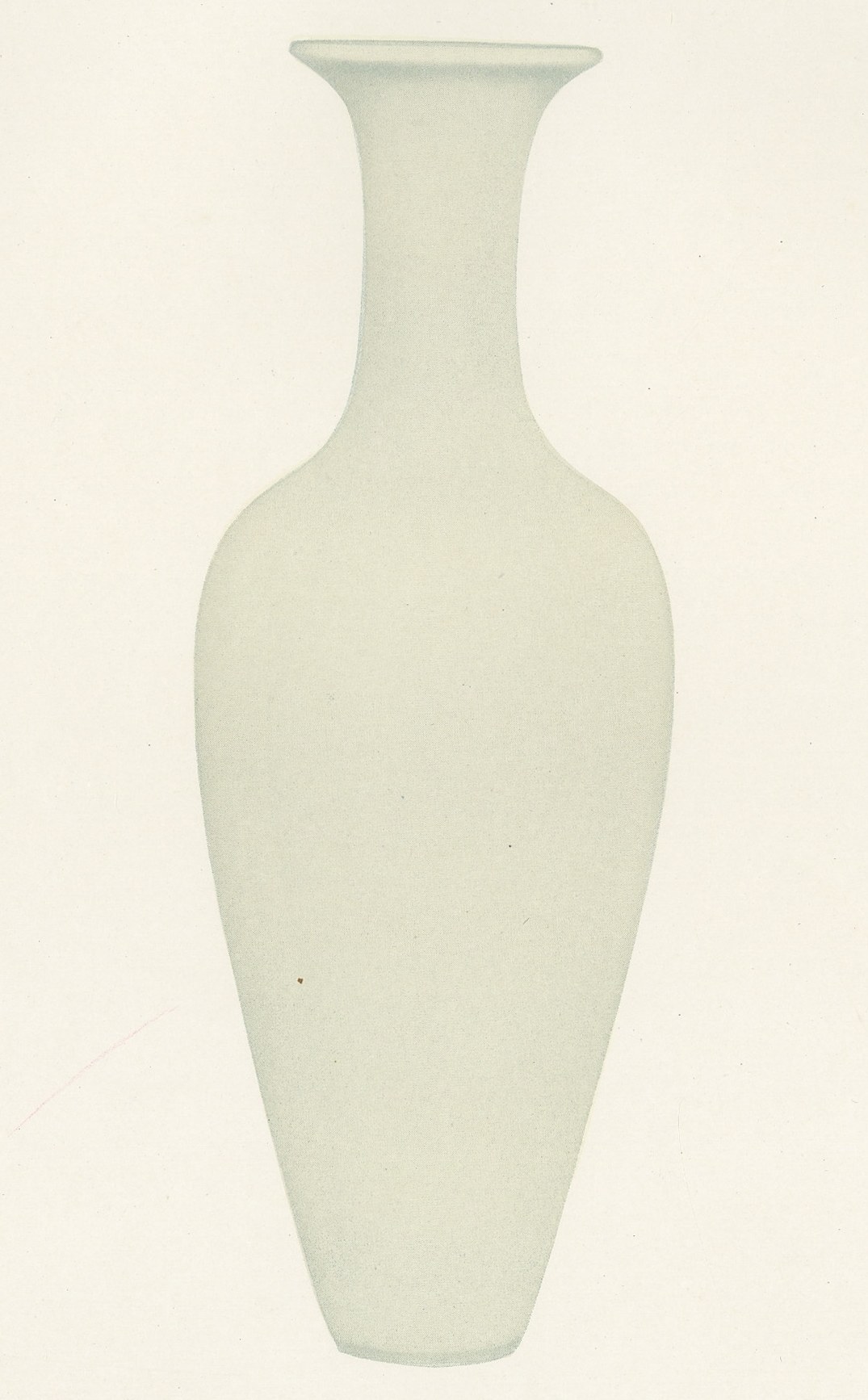
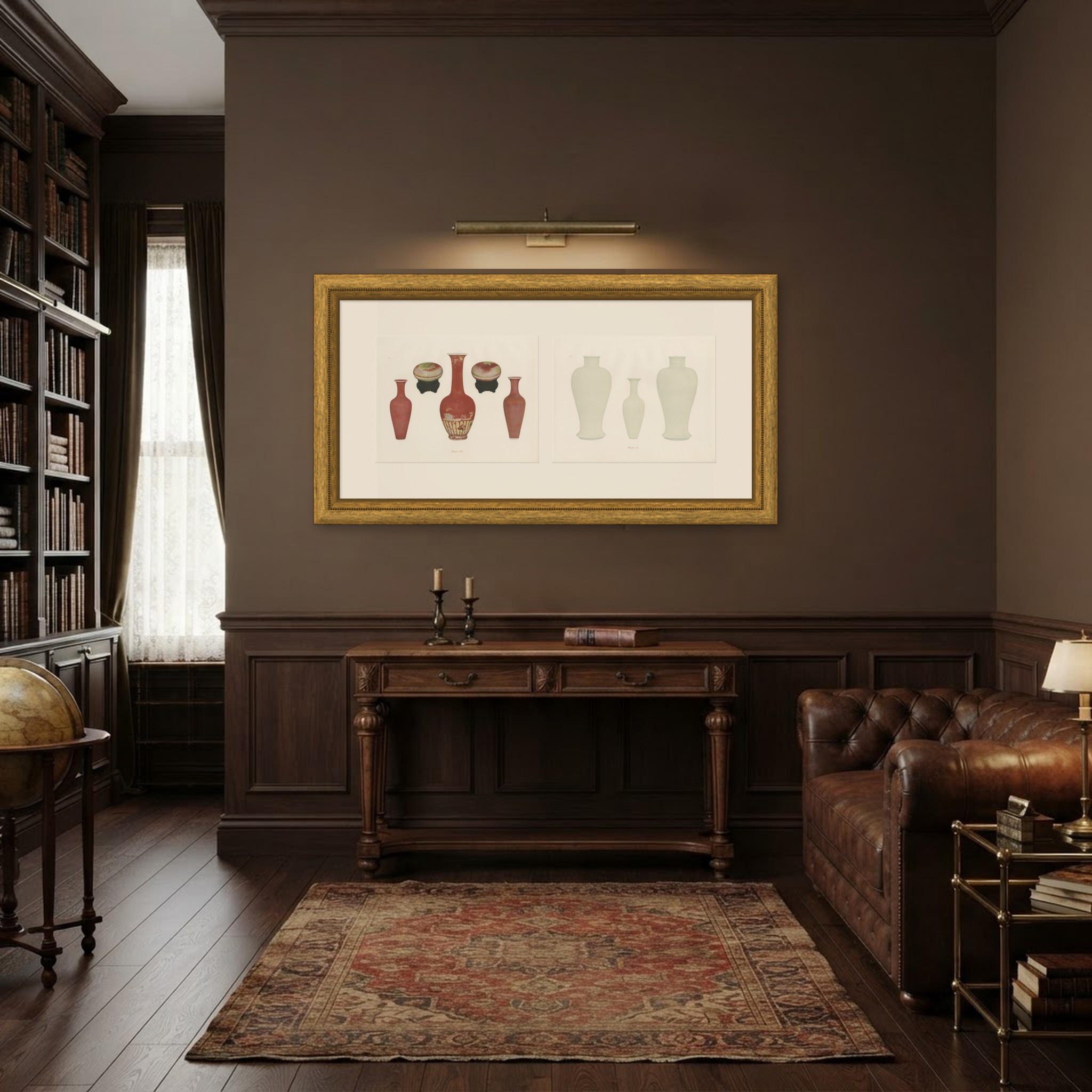
This is a set of two original 1911 color plates, Plates 160 and 161 from Volume II of Gorer and Blacker's Chinese Porcelain and Hard Stones, sold together as one lot. What links them: peach bloom and clair de lune groups. Plate 160: Group of five pieces. The extraordinary peach-bloom glaze, sometimes called peach-blow, described by Dr. Bushell as "a pale red, becoming pink in some parts, in others mottled with russet spots displayed upon a background of light green celadon tint." One piece has spots of green; the two slender vases of unguentarium form have white borders and the compressed ring at the base; the bottle has a ground of red which varies in tone from light to dark. The book gives it to the Kang-he period and records diameter 2 7/8 inches (7.2 cm); height 6 inches (15.2 cm), the book giving a size for each piece shown. From the collection formed by Richard Bennett, Esq., D.L. Plate 161: Group of three vases in pearl gray , clair de lune. Pearl gray, clair de lune, variously described as being like a pearl blue-tinted, or a pale gray color lightly tinted with blue, or the color of the clear sky when the moon shines; a singular and rare self color without any aid from ornament. The two jars, or gallipots, have a raised fillet upon the neck where the color is fainter, as it is upon the false ju-i head handles at the sides. The book gives it to the Kang-he period and records height 6 1/4 inches (16 cm); diameter 2 1/4 inches (5.7 cm), the book giving a size for each piece shown. From the collection formed by Richard Bennett, Esq., D.L.
The sheets come from Chinese Porcelain and Hard Stones, the two volume work by the London dealer Edgar Gorer and the writer J. F. Blacker, published by Bernard Quaritch of 11 Grafton Street, New Bond Street, in 1911 in an edition of one thousand numbered copies. The plates are color collotypes, a photographic process that reproduces continuous tone without a visible dot screen, which is why the glazes keep their depth on paper.
What gives these plates their standing is the quality of the collections they record. Pieces illustrated here passed through the great Edwardian cabinets, and several are now in museums, so the book is a photographic record of where this material sat a century ago.
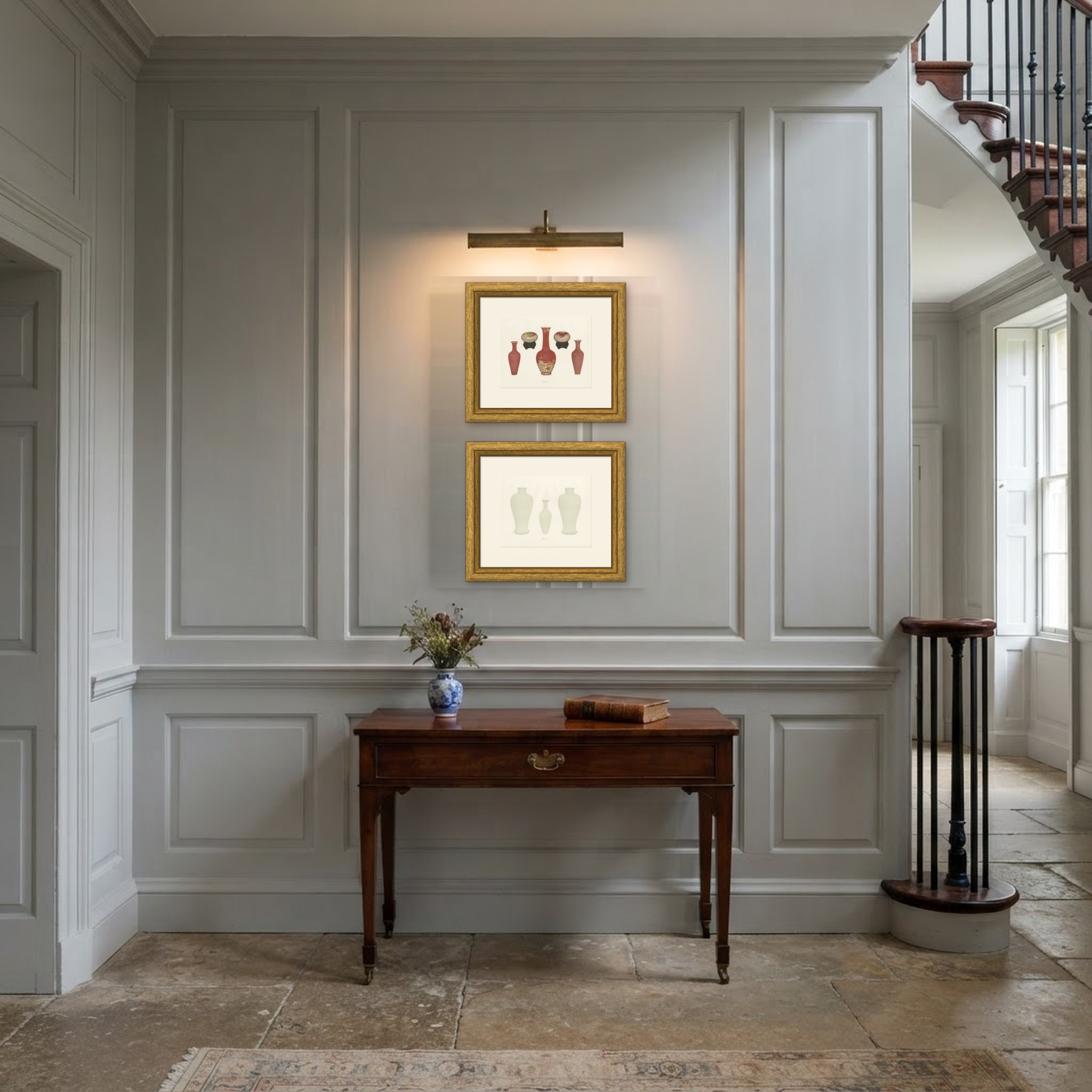
Collectors of Chinese ceramics, of early color printing and of Edwardian book illustration all look for these plates, and they work equally well in an interior scheme as in a collection. The two sheets are the same size and were printed by the same hand, so they hang as one group.
These are original antique prints, not modern reproductions. They are two original sheets sold together as one lot, and the set is never split.
Even age toning throughout. Light foxing in the margins of both sheets. Slight wear at the corners of both sheets.
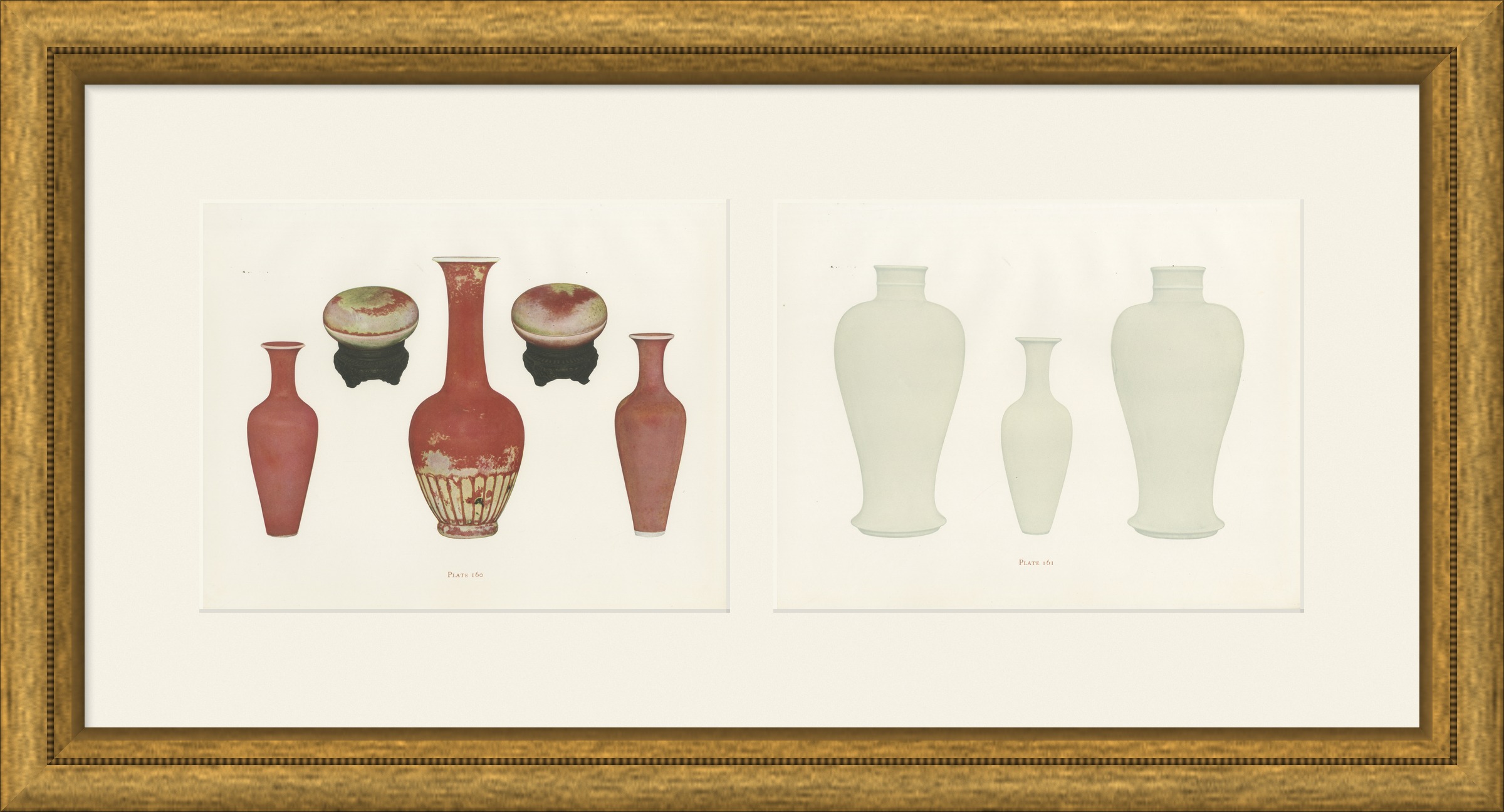
This item is sold unframed. Any framed or interior images are shown for presentation and inspiration only, unless the listing explicitly states that the item is sold framed.