About this sheet
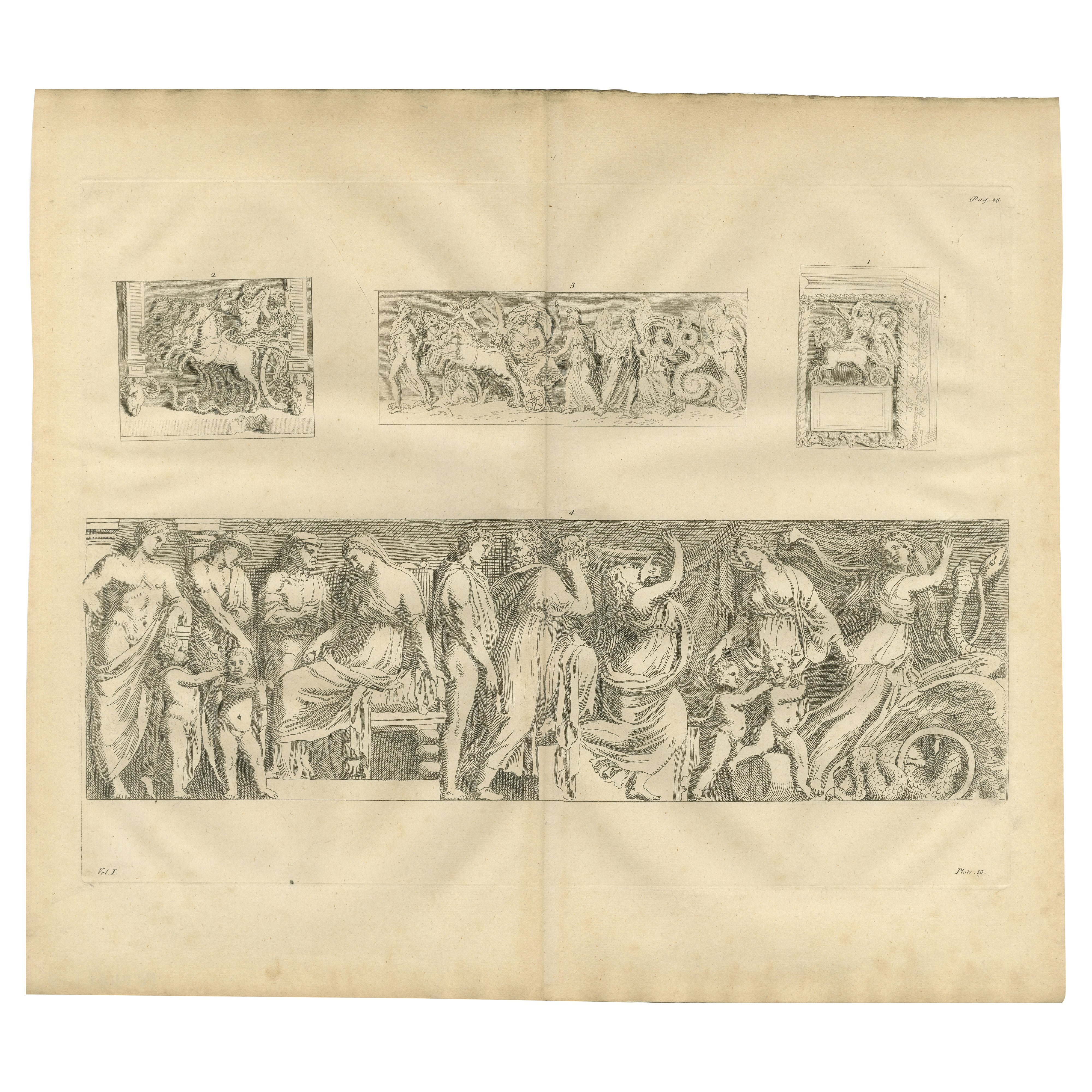
Monumental Classical Relief Scene, Montfaucon Antiquity Explained Engraving, 1721
Description
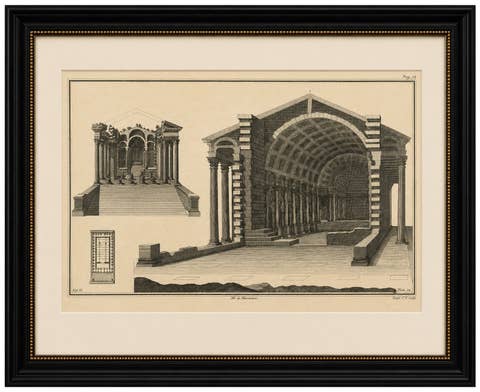
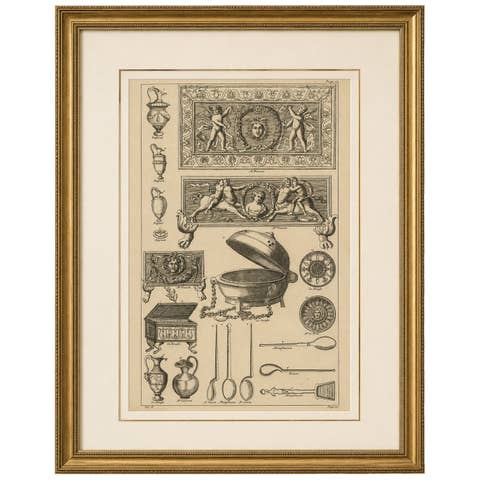
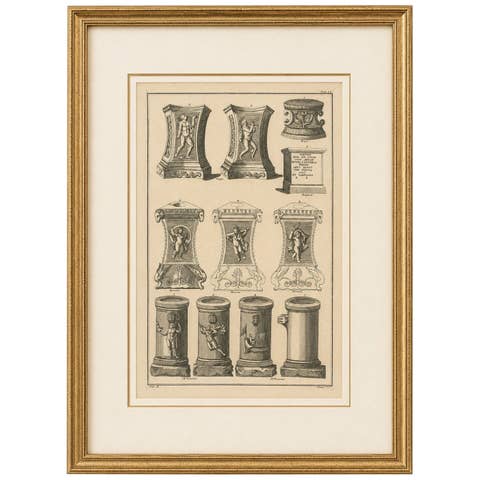
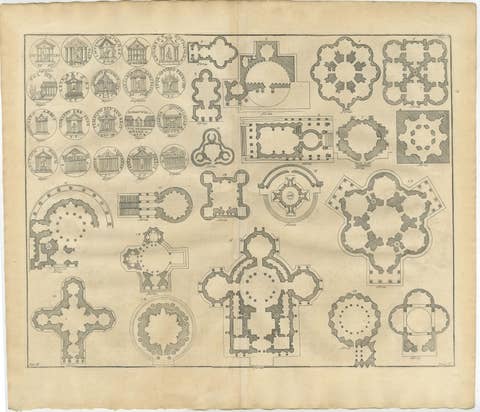
This impressive and richly scaled engraving originates from the landmark antiquarian work Antiquity Explained and Represented in Sculptures by Bernard de Montfaucon, translated into English by David Humphreys and published in London in 1721 by J. Tonson and J. Watts.
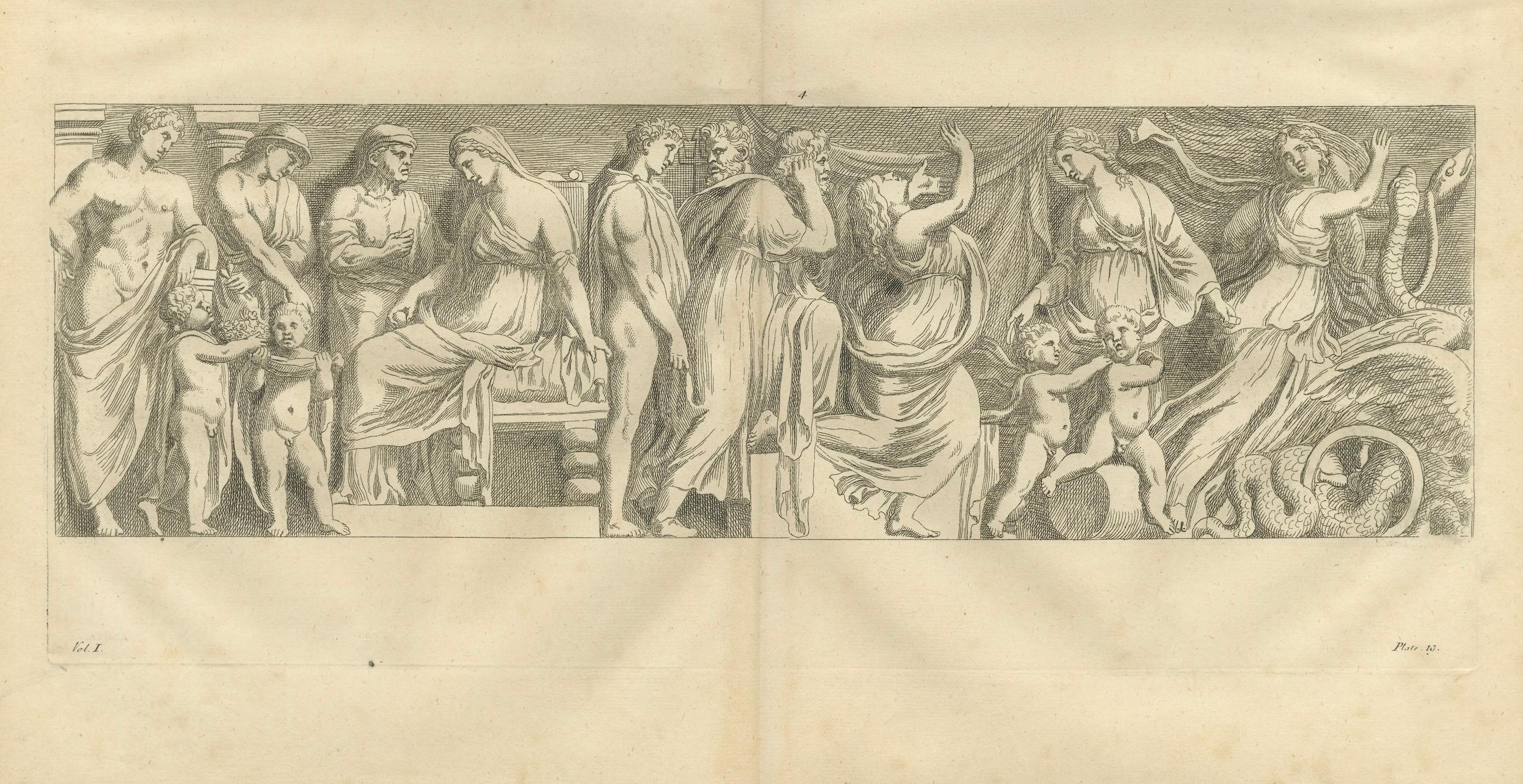
The plate reproduces a continuous classical relief scene inspired by ancient Roman sculpture, populated by draped mythological figures, attendants, and putti arranged in a broad frieze-like composition. Rather than functioning as a single narrative illustration, the image operates architecturally, echoing the rhythm, balance, and theatrical procession of carved marble reliefs displayed in Roman villas and palaces.
While the engraving is intentionally soft in line—faithful to Montfaucon’s documentary approach rather than later neoclassical bravura—its true strength lies in scale and visual mass. The expansive horizontal format creates immediate wall presence, making this print exceptionally suitable for interior decoration, especially in large rooms, stair halls, libraries, or hotel-scale spaces where architectural balance matters more than minute engraving detail.
This plate exemplifies Montfaucon’s pioneering method: documenting classical antiquity as an integrated visual language of sculpture, relief, and ornament, rather than isolating individual statues. As such, it appeals not only to collectors of early archaeology and classical studies, but also to interior designers seeking historically grounded, quietly authoritative décor.
When framed with generous margins, the composition reads almost like a fragment of ancient stonework—timeless, neutral, and elegant—blending seamlessly into both classical and contemporary interiors.
Condition report
Original 18th-century engraving on laid paper. Overall toned with age, consistent with early 18th-century impressions. Vertical centerfold as issued. Soft printing typical of the publication. No major tears or losses; margins intact. A strong decorative example.
Framing tips
Highly recommended to frame large with wide off-white or light stone-colored matting to enhance its architectural feel. A simple black, dark walnut, or antique gilt frame works particularly well. Museum glass suggested for large-scale presentation.
Technique: Engraving
Maker: Bernard de Montfaucon, published in London, 1721