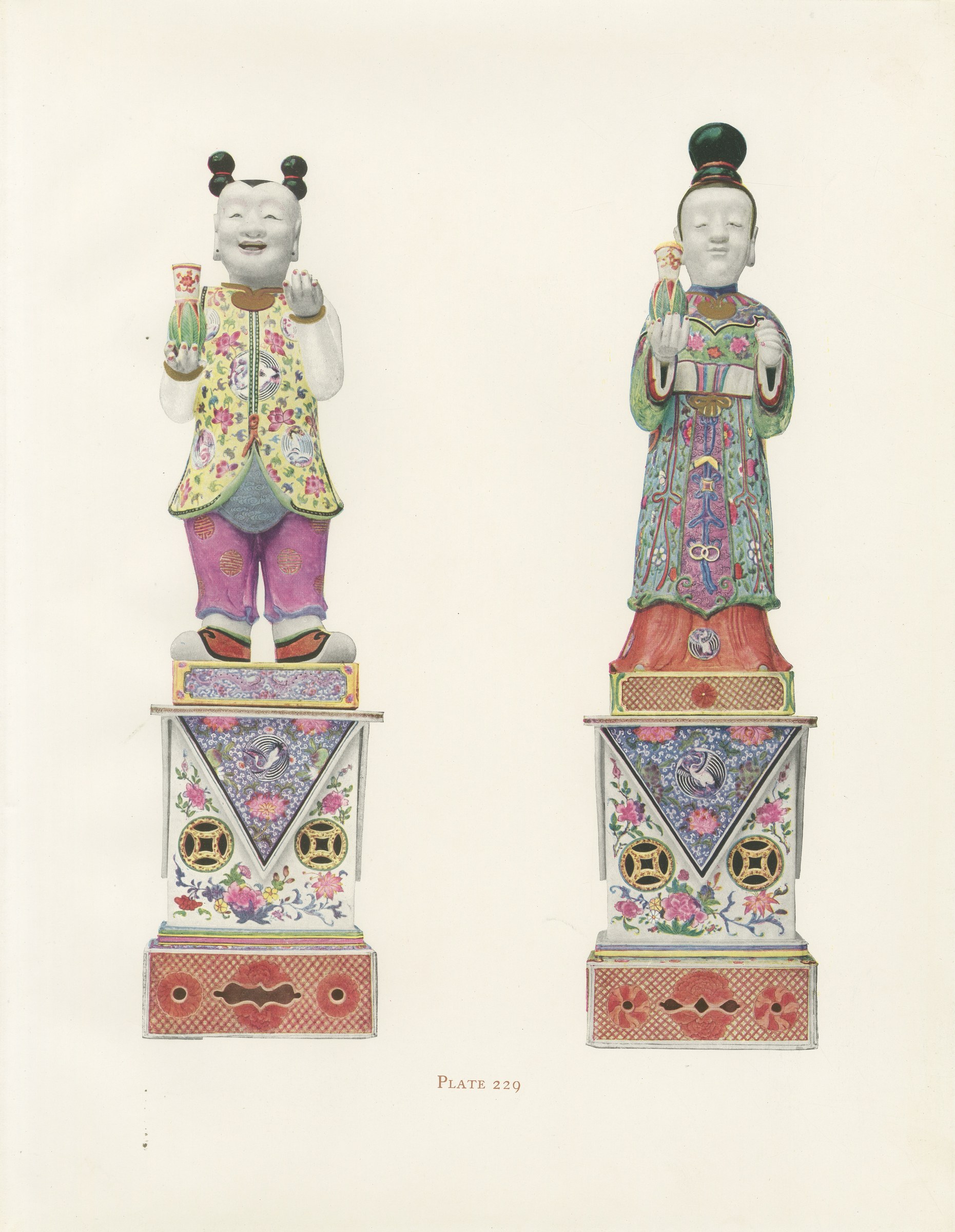
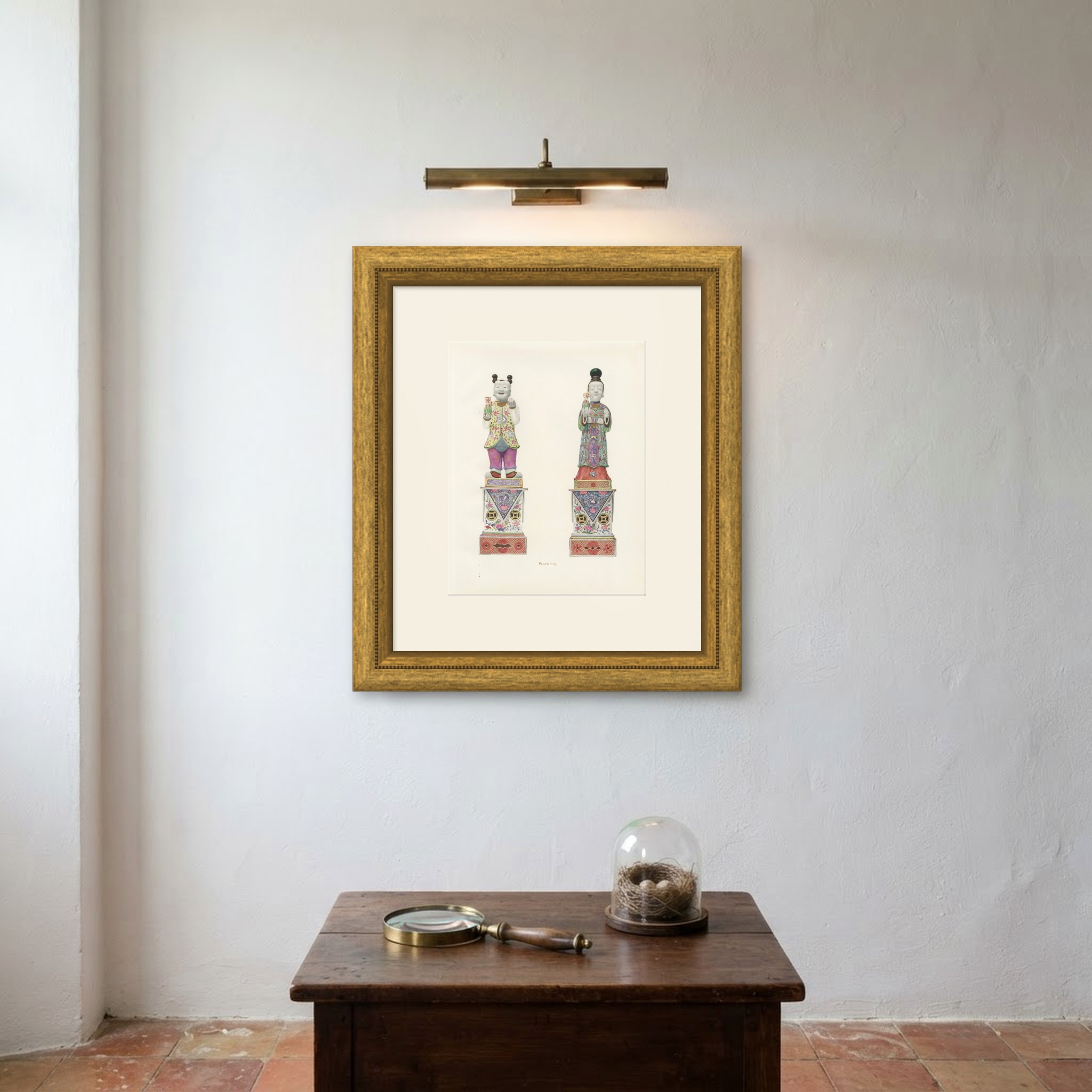
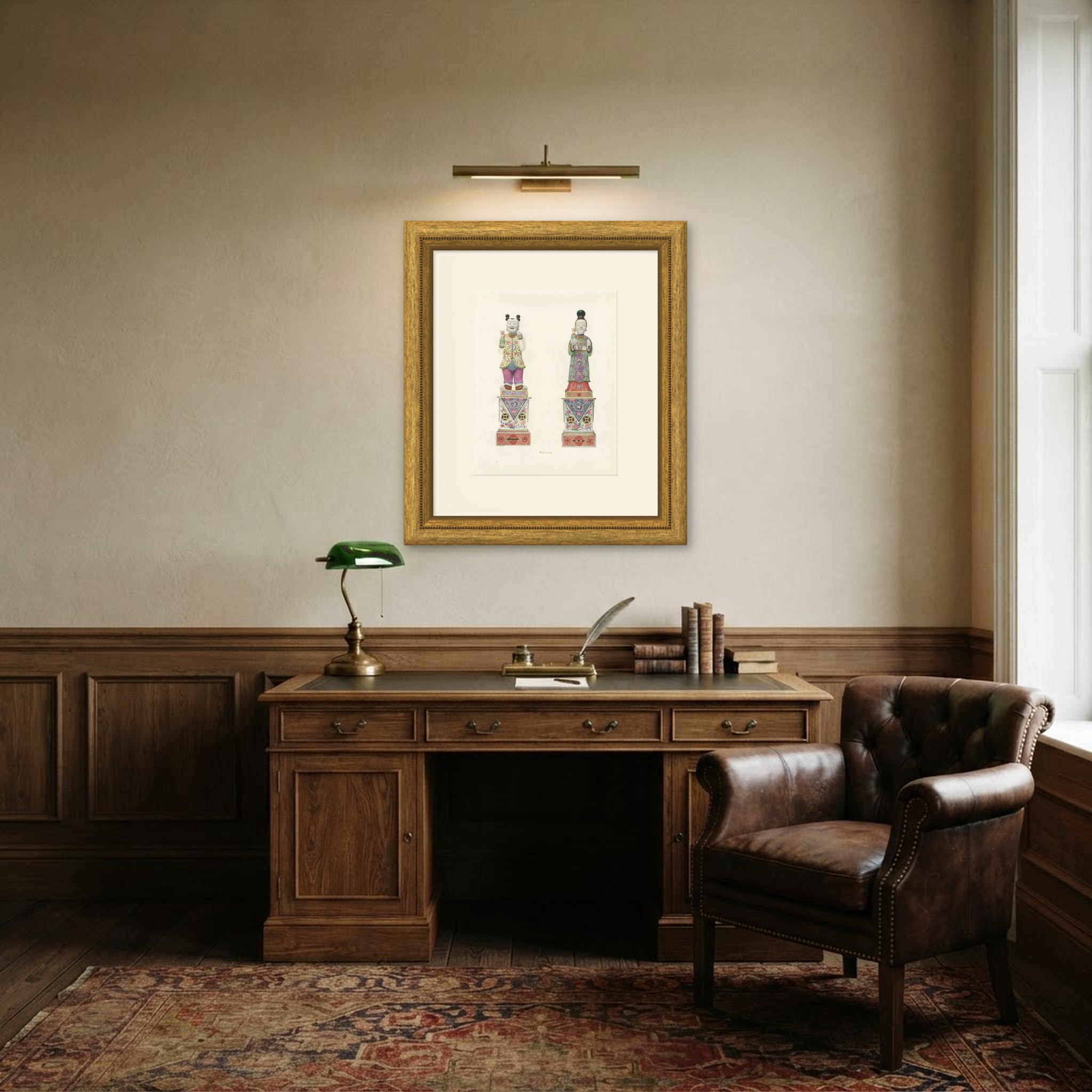
Milo Fo and Kuan Yin, Chinese Kien-lung Buddhist Figures, Color Plate, 1911
€ 235
Original antique · The actual sheet photographed · Certificate of authenticity on request · Sold unframed · Worldwide shipping from € 15 (rates)
Date
1911
Mapmaker / artist
Edgar Gorer and J. F. Blacker
Publisher
Bernard Quaritch, 11 Grafton Street, New Bond Street, London
Coloring
Printed color
Sheet size
31 × 24 cm (12.2 × 9.4 in)
Condition
Good
Reference
BG-14405-229
What the condition grades mean
Excellent
Bright and clean, with no faults worth mentioning.
Very good
Only light signs of age, such as faint toning.
Good
Normal signs of age for a sheet of this period: toning, some foxing, small marks or neat old repairs.
Fair
Clear faults such as staining, tears or repairs, priced to match.
Every fault we see is written in the condition note, and the whole sheet is shown uncropped in the photos.
Condition
Even age toning. A few small foxing spots in the margin. Slight wear at the bottom left and bottom right corners. Minor edge wear, shallow nicks along the right.
About this sheet
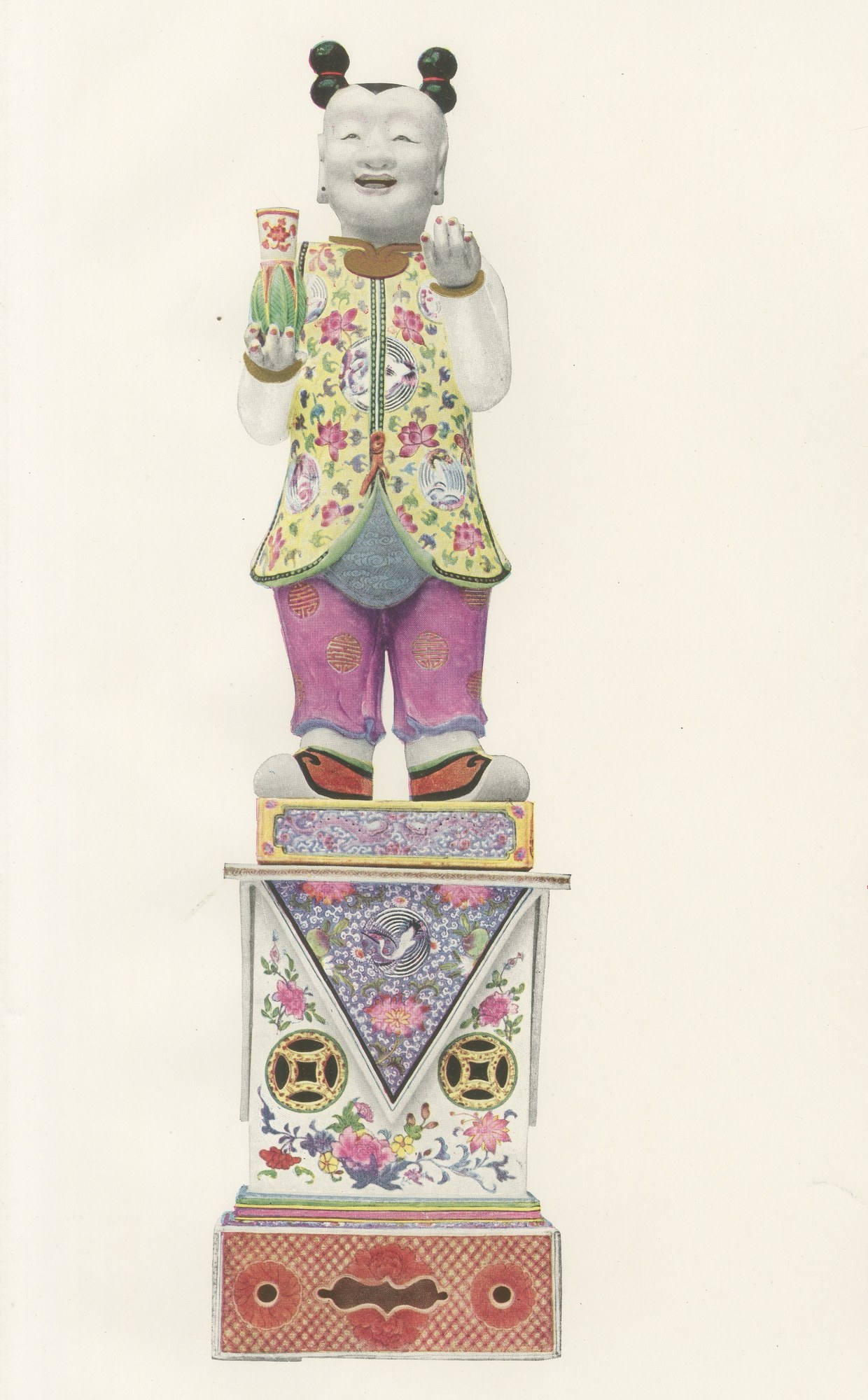
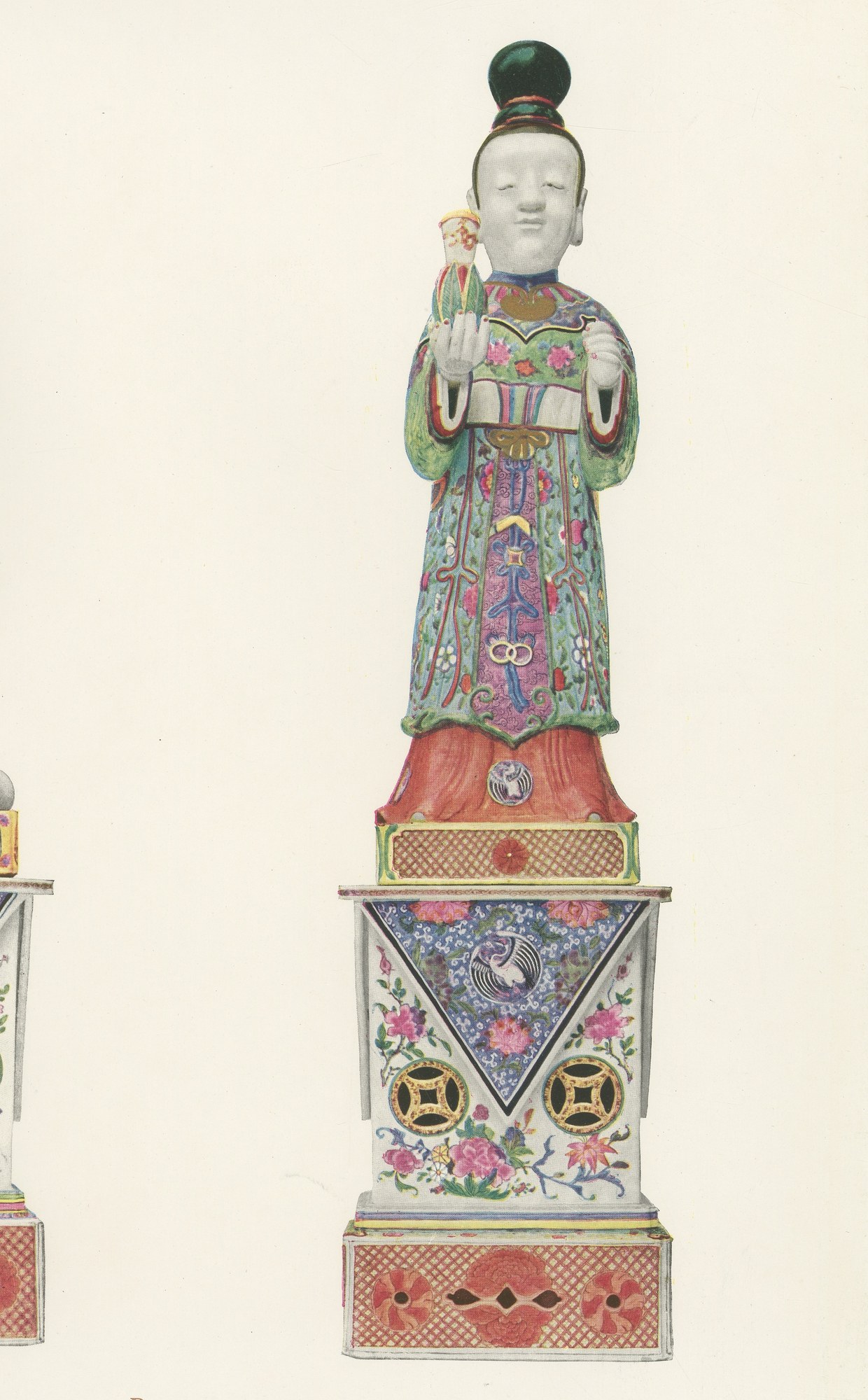
Plate 229 from Volume II of Gorer and Blacker's Chinese Porcelain and Hard Stones, an original 1911 color plate of a pair of large figures of the Buddhist divinities Milo Fo and Kuan Yin, three feet six inches high. Pair of large figures of Buddhist divinities (Milo Fo and Kuan Yin). Upon his head may be seen a coiffure of two black excrescences with a flat patch of hair between them. Supporting a decorated vase rising from a lotus bud, the divinity is wearing a yellow brocade coat, a blue apron, and charming ornament. The book gives it to the Kien-lung period and records height 3 feet 6 inches (105.3 cm); width 10 1/2 inches (26.7 cm).
It was published in 1911 by Bernard Quaritch of New Bond Street, London, in Edgar Gorer and J. F. Blacker's Chinese Porcelain and Hard Stones, a work of two volumes and two hundred and fifty four color plates limited to one thousand numbered copies. The plates are color collotypes, a photographic process that reproduces continuous tone without a visible dot screen, which is why the glazes keep their depth on paper.
What gives these plates their standing is the quality of the collections they record. Pieces illustrated here passed through the great Edwardian cabinets, and several are now in museums, so the book is a photographic record of where this material sat a century ago.
Framed simply in a dark wood molding with a generous cream mount, it holds a wall on its own and sits comfortably beside furniture of almost any period.
This is an original antique print, not a modern reproduction.
Even age toning. A few small foxing spots in the margin. Slight wear at the bottom left and bottom right corners. Minor edge wear, shallow nicks along the right.
This item is sold unframed. Any framed or interior images are shown for presentation and inspiration only, unless the listing explicitly states that the item is sold framed.