About this sheet
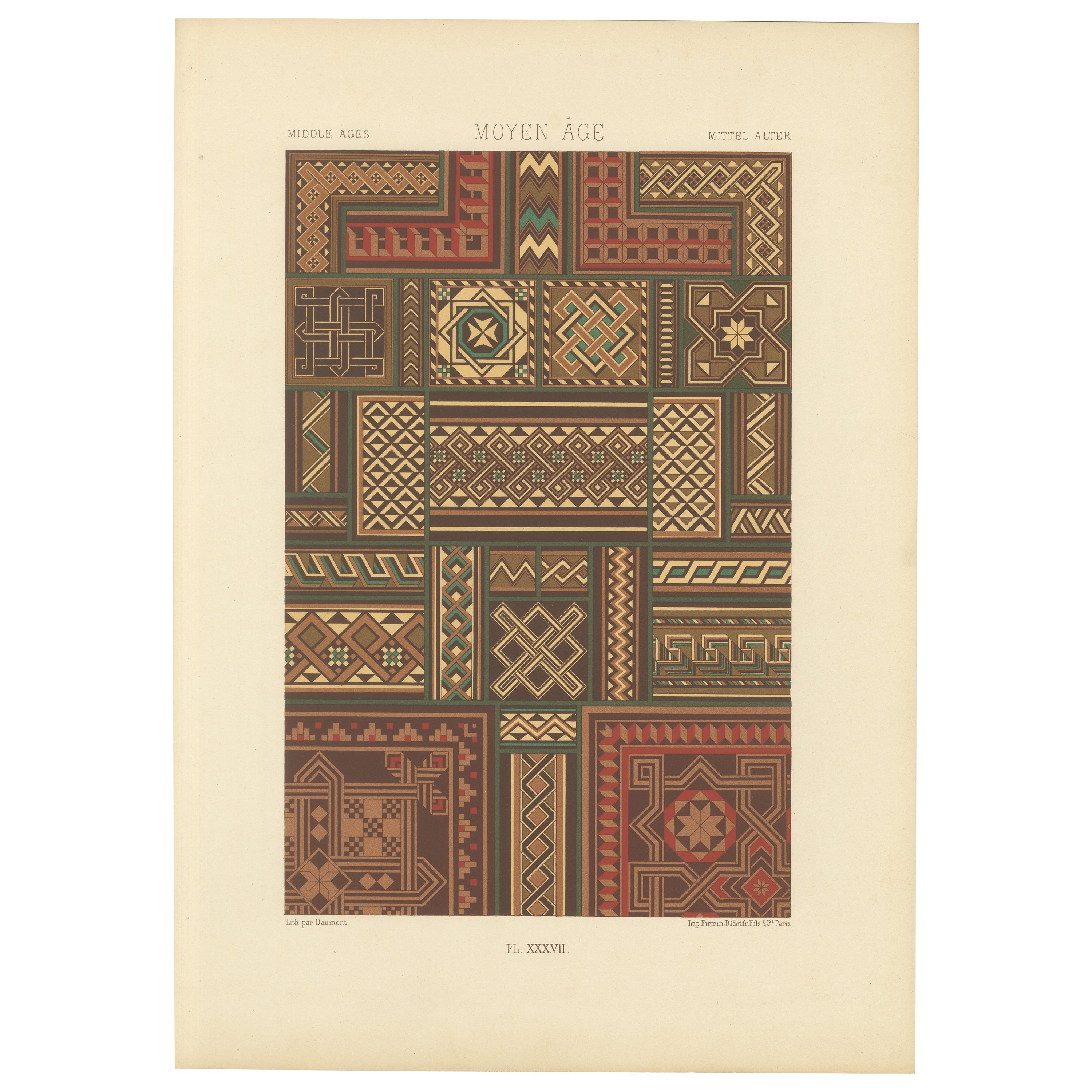
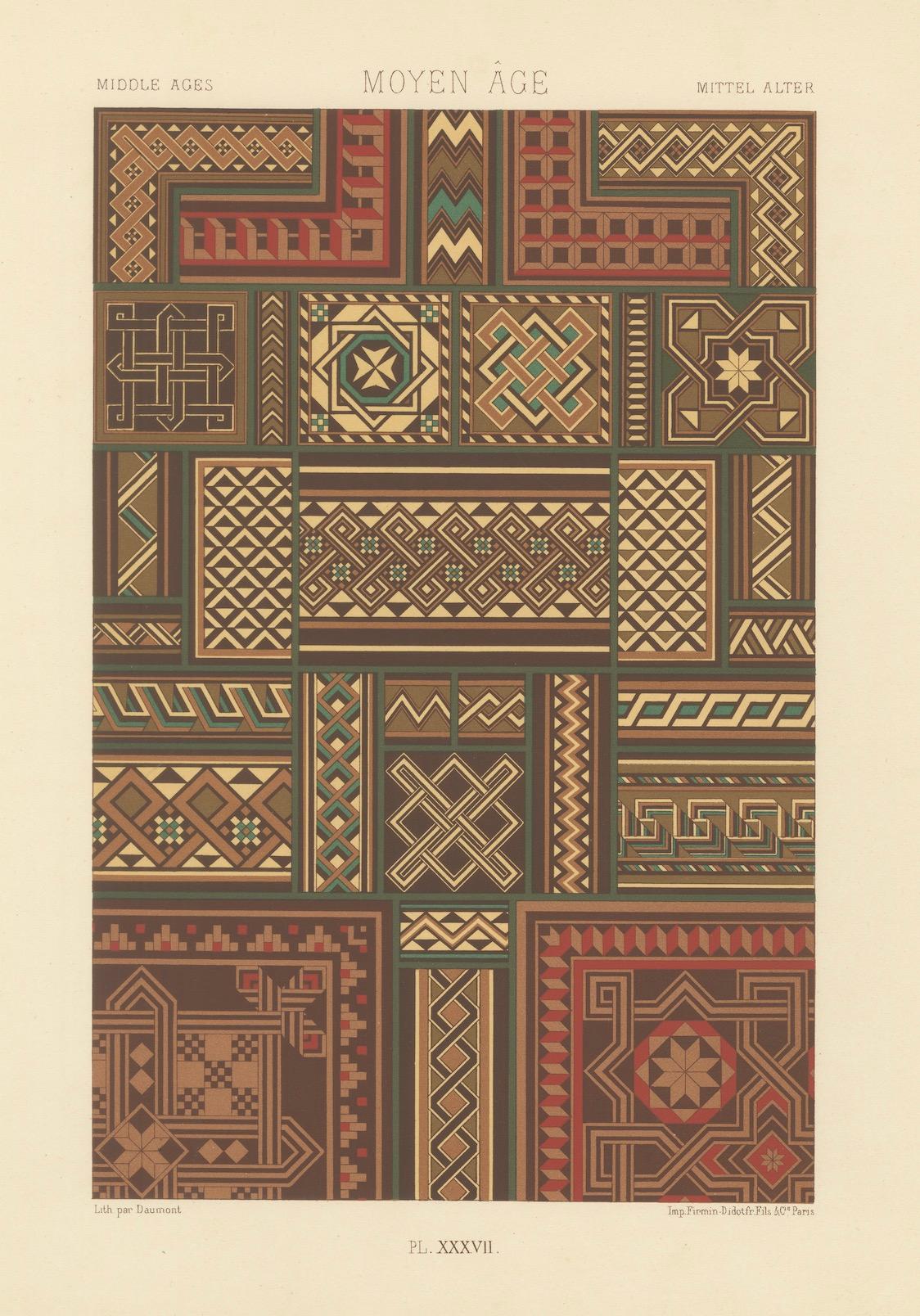
Middle Ages Interlace Motifs – Antique Print of Medieval Knotwork Patterns, c.1869
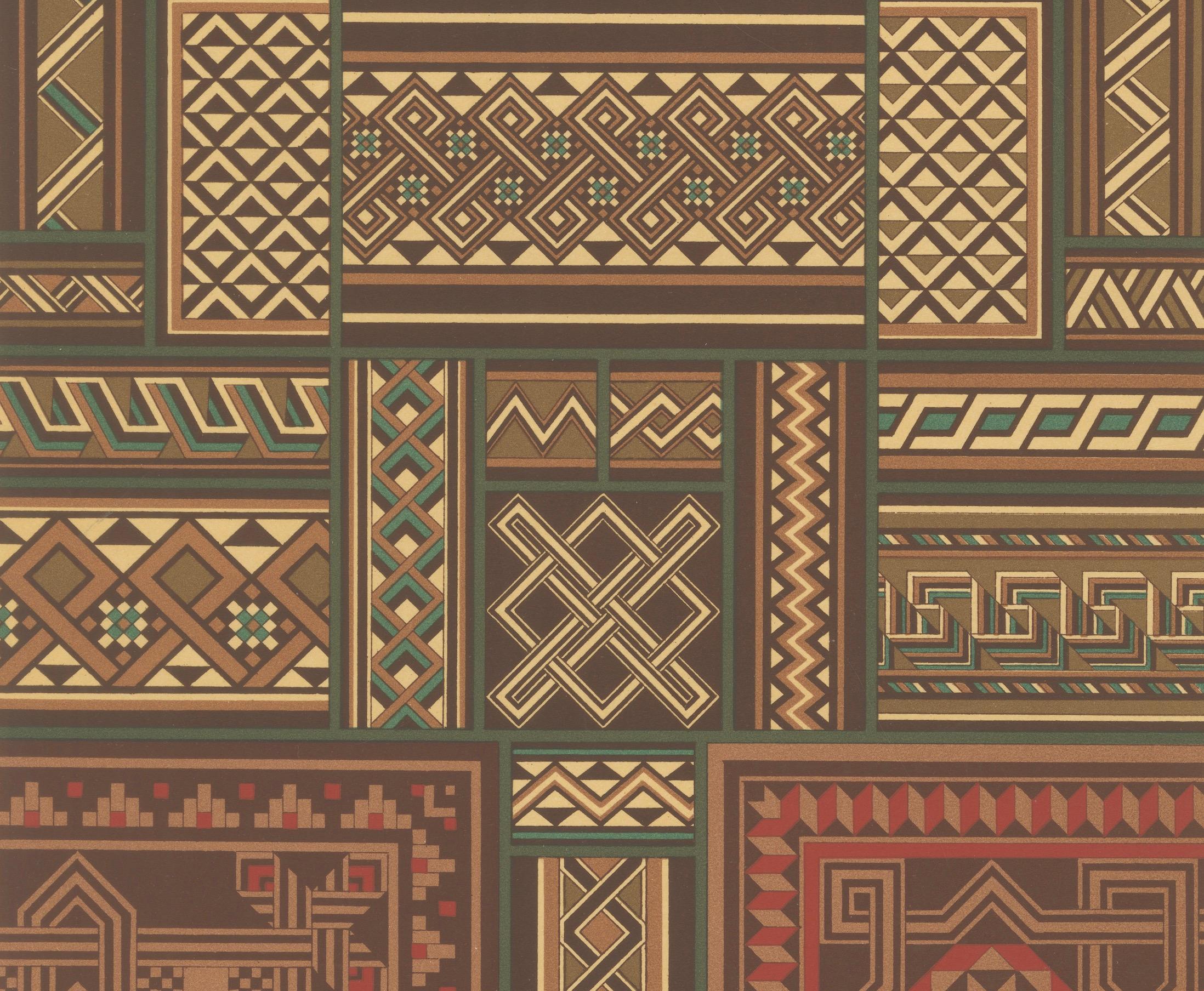
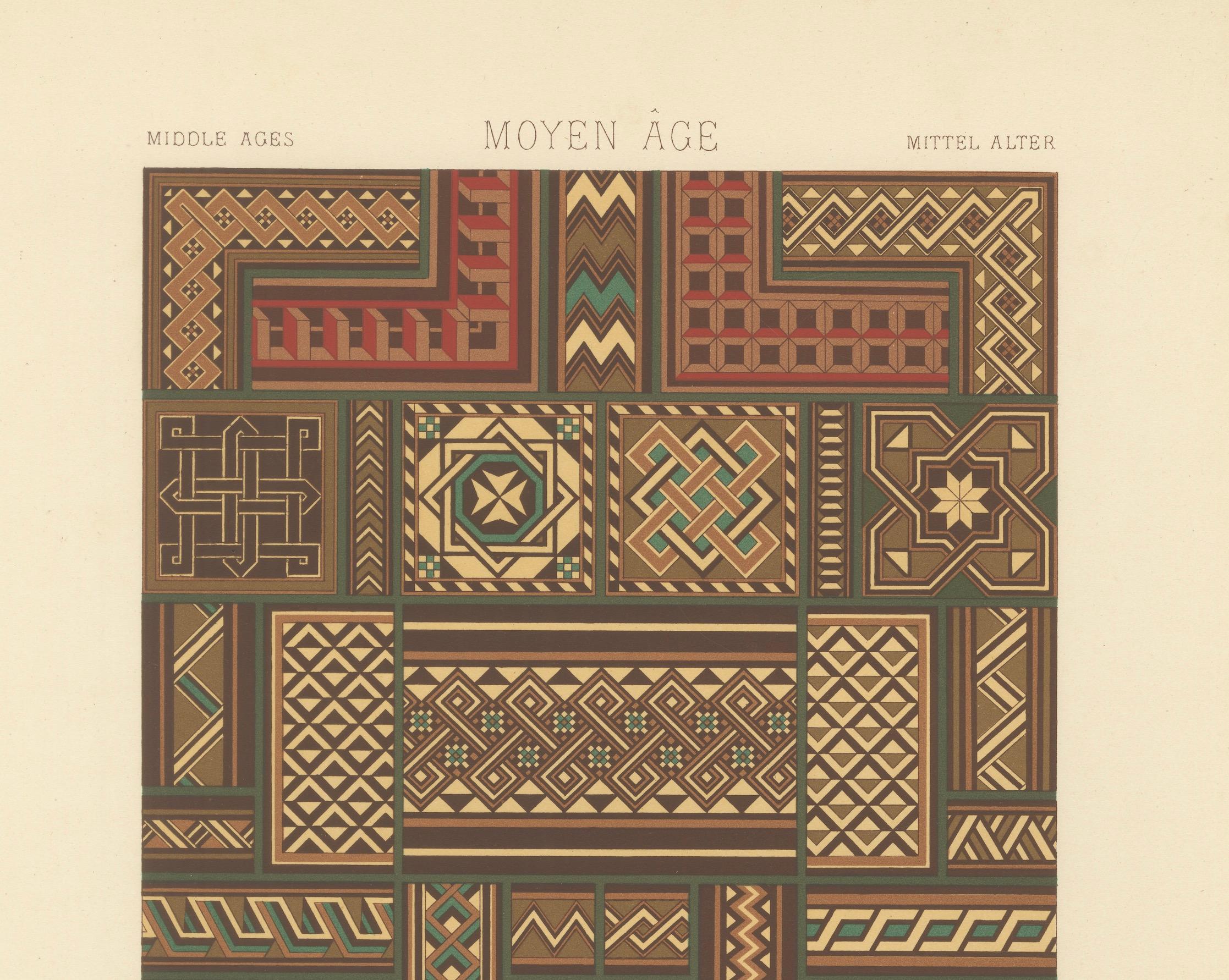
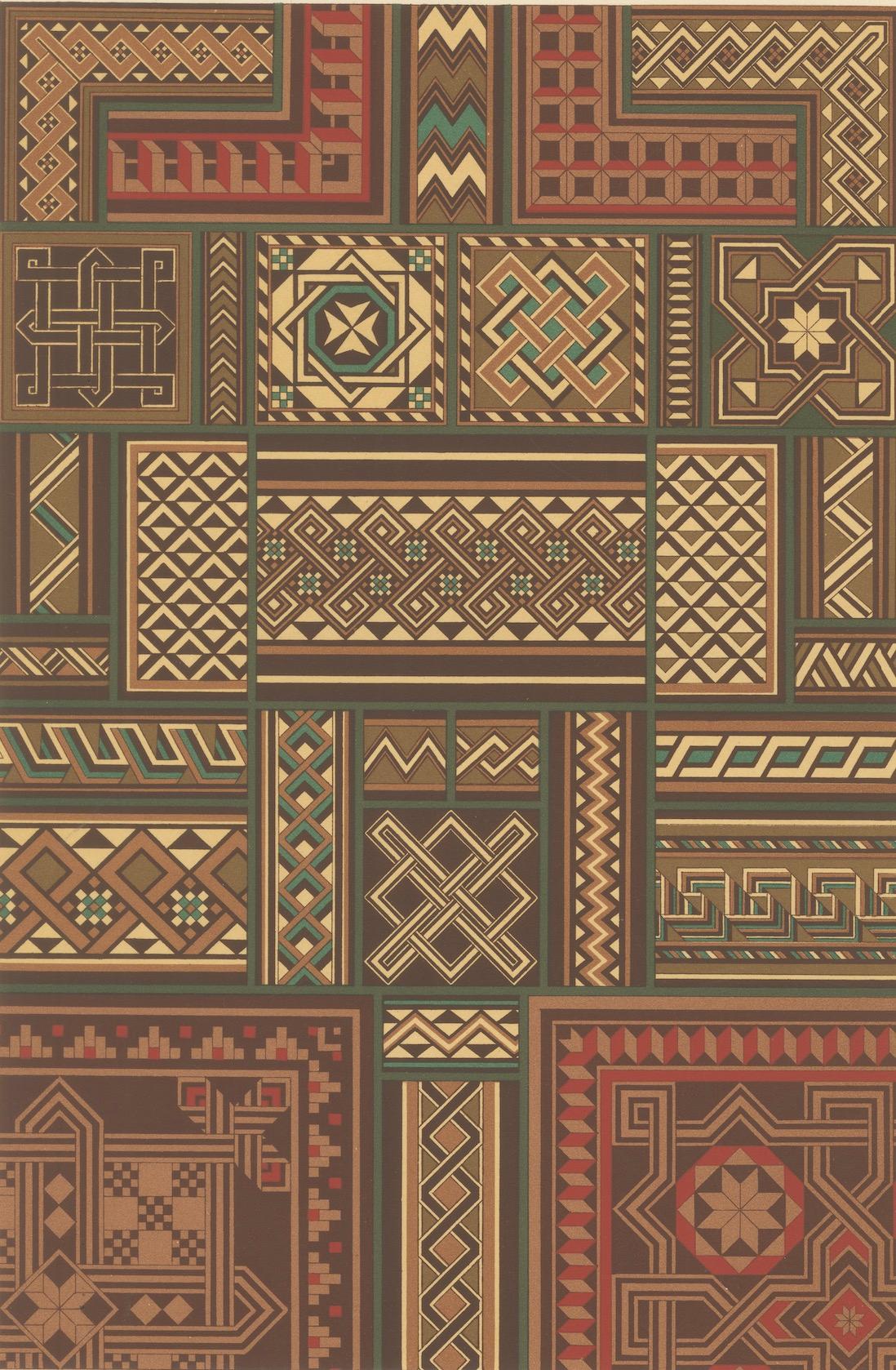
This antique chromolithograph from Plate XXXVII of L'Ornement Polychrome features a rich compilation of medieval interlace and geometric motifs, typical of Western European decorative art during the Middle Ages. Rendered in deep tones of brown, ochre, forest green, and muted red, the plate evokes the visual language of medieval stonework, illuminated manuscripts, and wooden carvings.
The intricate panels display an array of knotwork, lozenge, and braid patterns with interwoven bands forming endless loops and symmetrical configurations. These designs are closely associated with Romanesque and early Gothic styles, but they also bear strong connections to earlier Celtic and Byzantine influences. The interlacing knots, labyrinthine paths, and grid-based tiling illustrate the medieval fascination with order, repetition, and spiritual symbolism.
Many of the patterns resemble ornamental borders from church interiors, floors, and architectural friezes. Others appear well-suited for mosaic floors, illuminated page decoration, or textile applications. The visual density and balance between positive and negative space give the plate a rhythmic and harmonious feel, emphasizing medieval artisans’ skill in combining mathematical rigor with ornamental beauty.
Lithographed by Daumont and printed by Firmin-Didot in Paris, this print formed part of Racinet’s monumental survey of global ornamentation. Albert Racinet’s *L'Ornement Polychrome* remains a cornerstone in design history, offering detailed, color-accurate reproductions of historical styles for artists, decorators, and collectors.
A visually impactful print for those drawn to medieval design, pattern history, or knotwork symbolism. It makes a compelling decorative piece or a thoughtful gift for historians, pattern designers, and lovers of ancient craftsmanship.
Condition: Excellent overall. Clean impression with strong color registration. Minimal toning along margins. No visible tears, creases, or repairs.
Framing tips: Best displayed in a dark walnut or mahogany frame with a moss green or ivory mat to enhance the earthy, architectural tones of the design.
Technique: Chromolithograph
Maker: Firmin-Didot, Paris, after Albert Racinet, c.1869