About this sheet
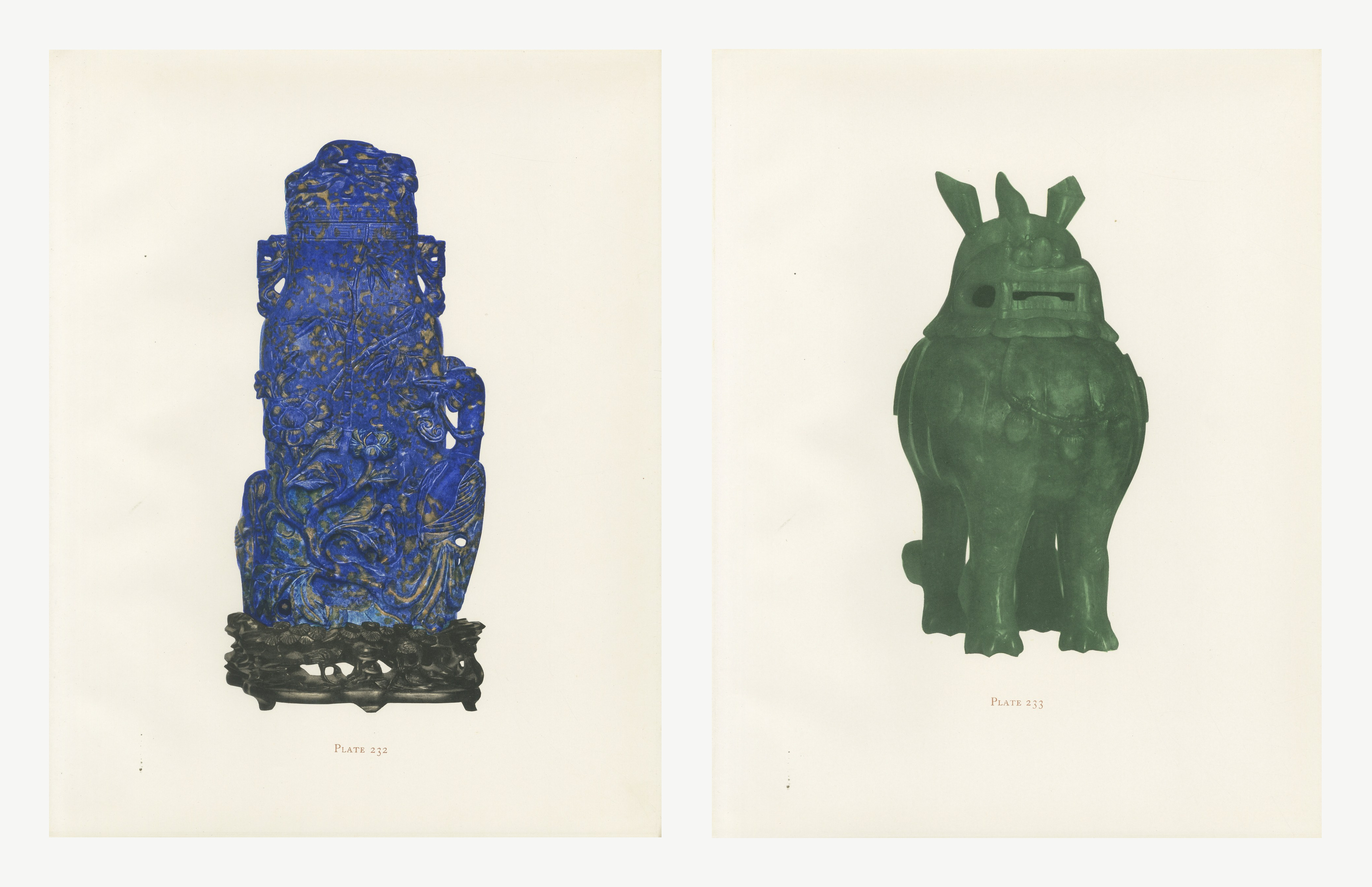
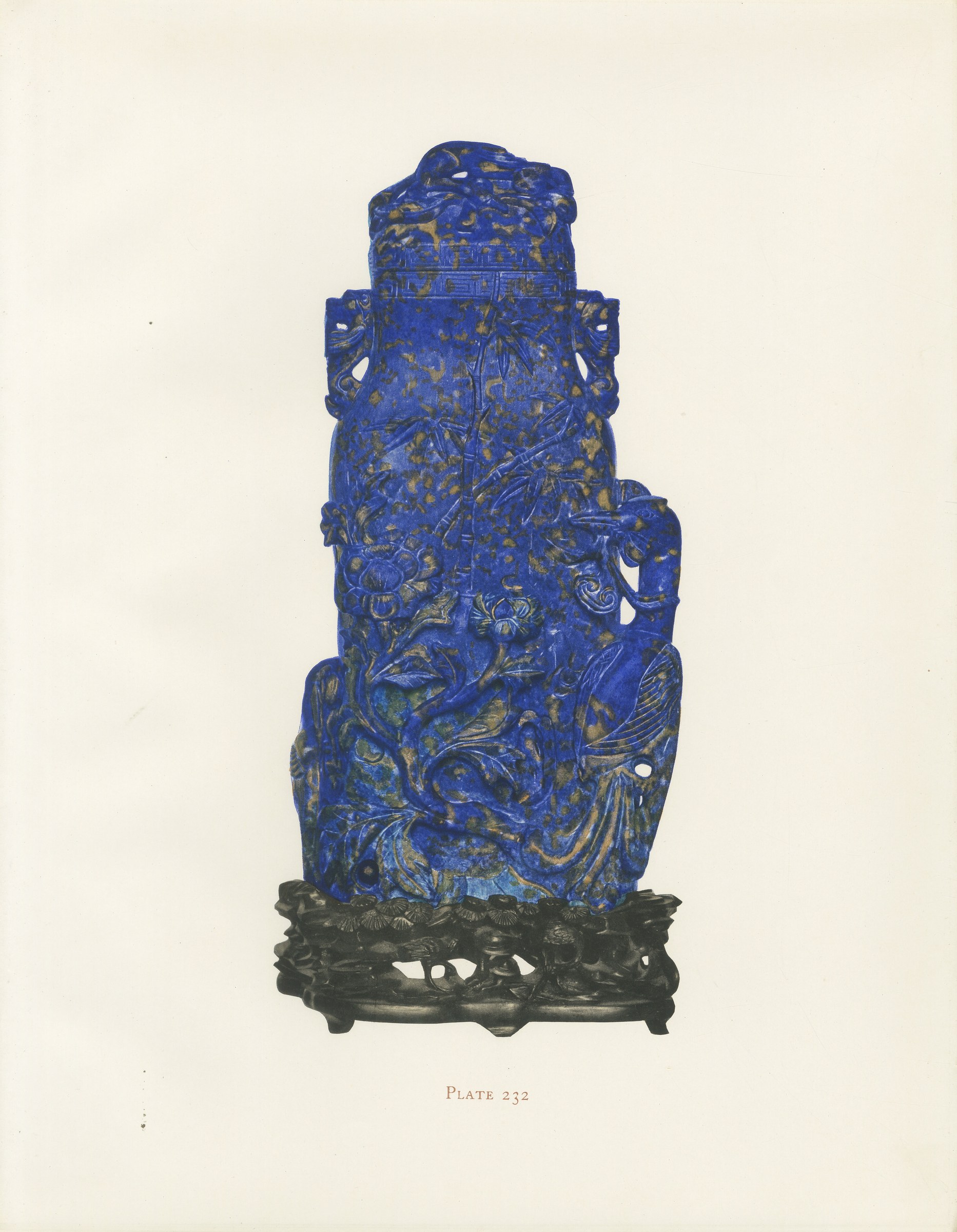
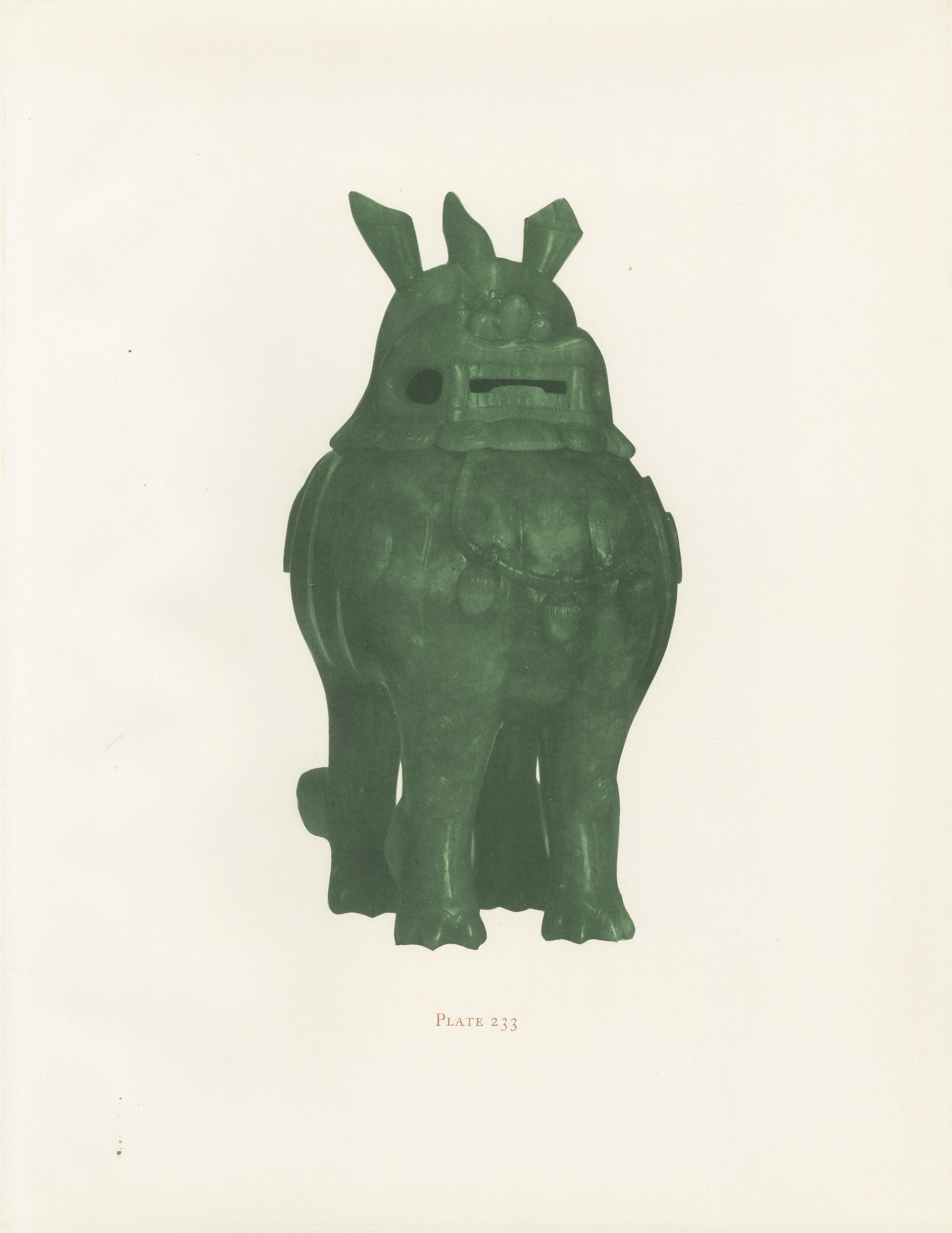
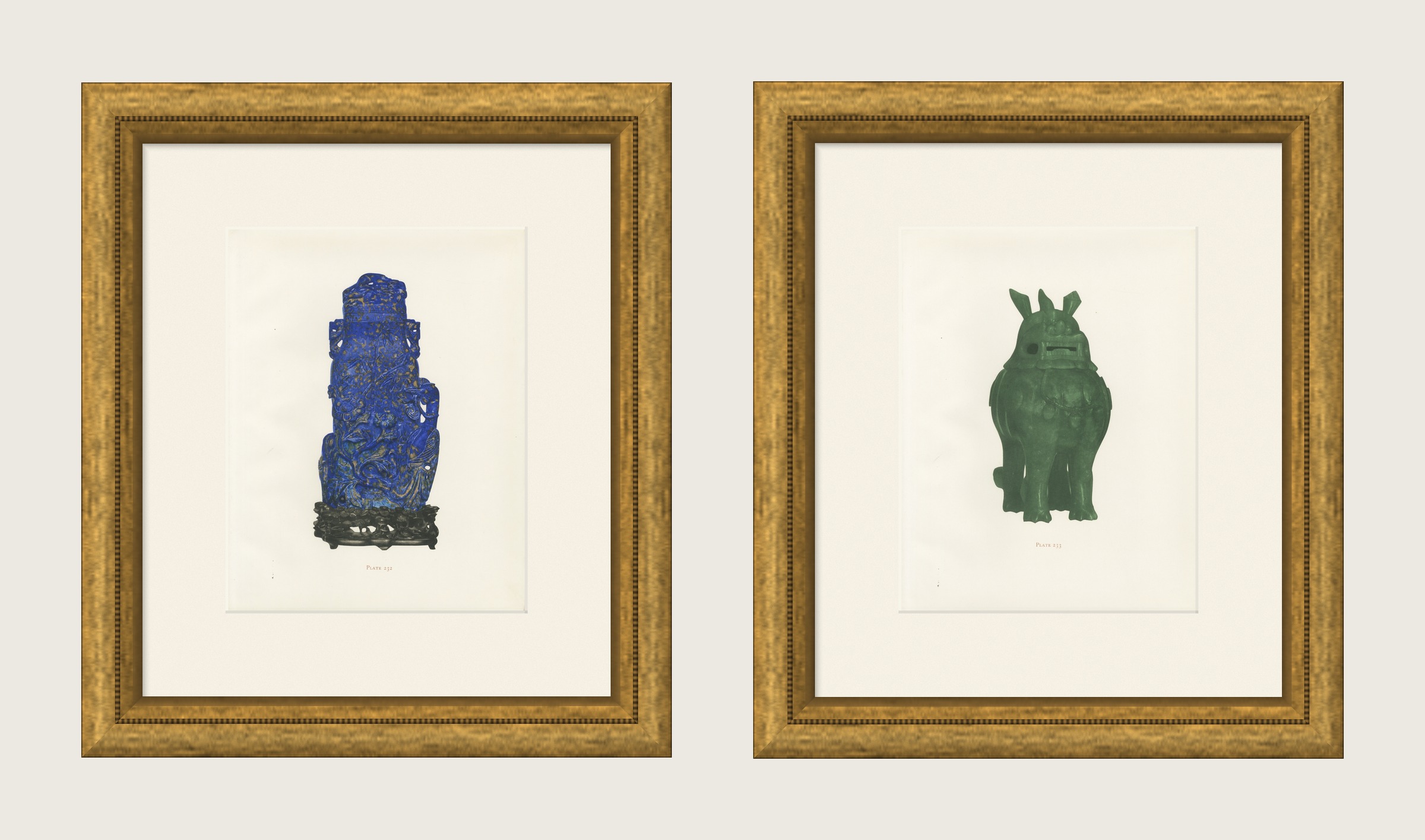
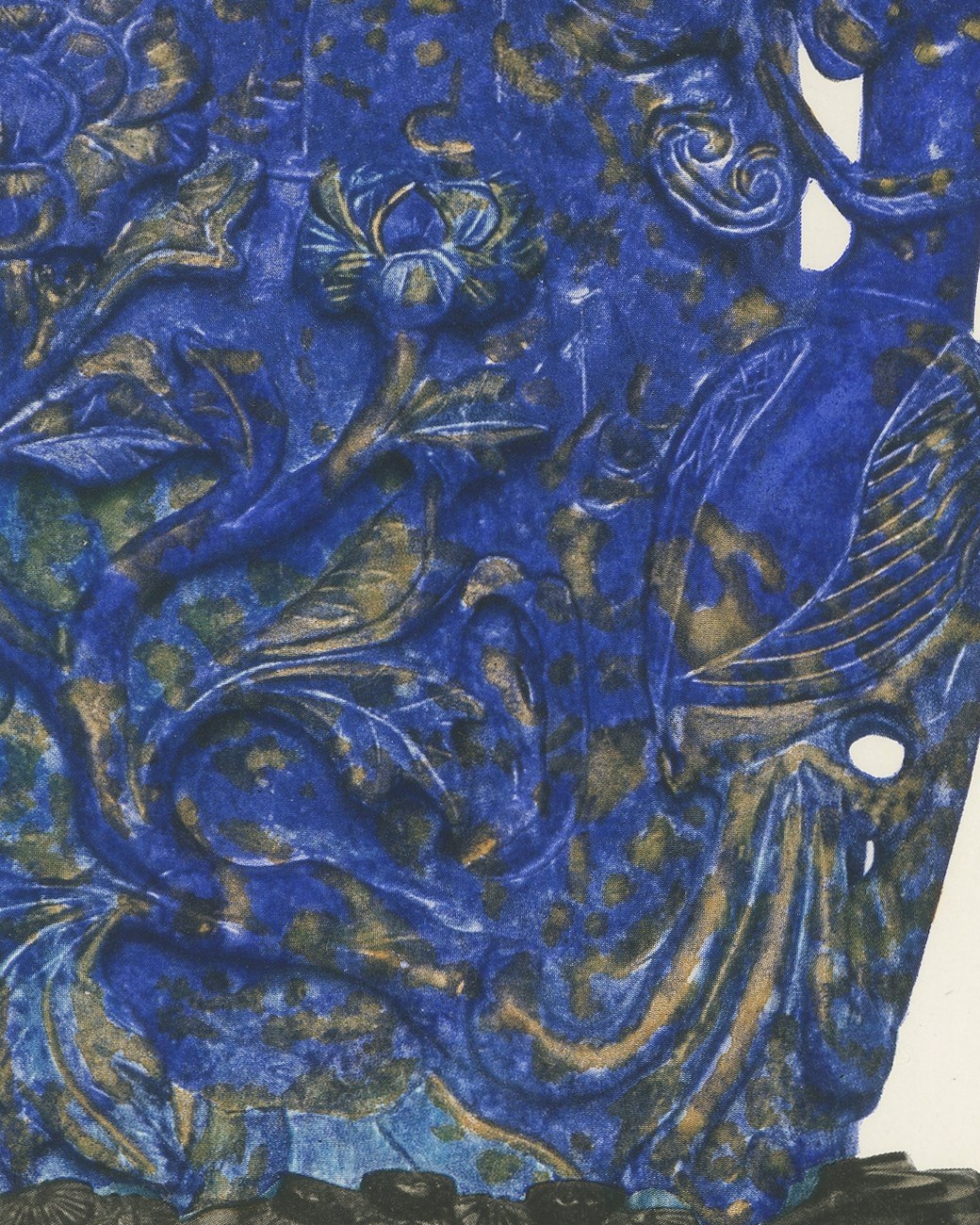
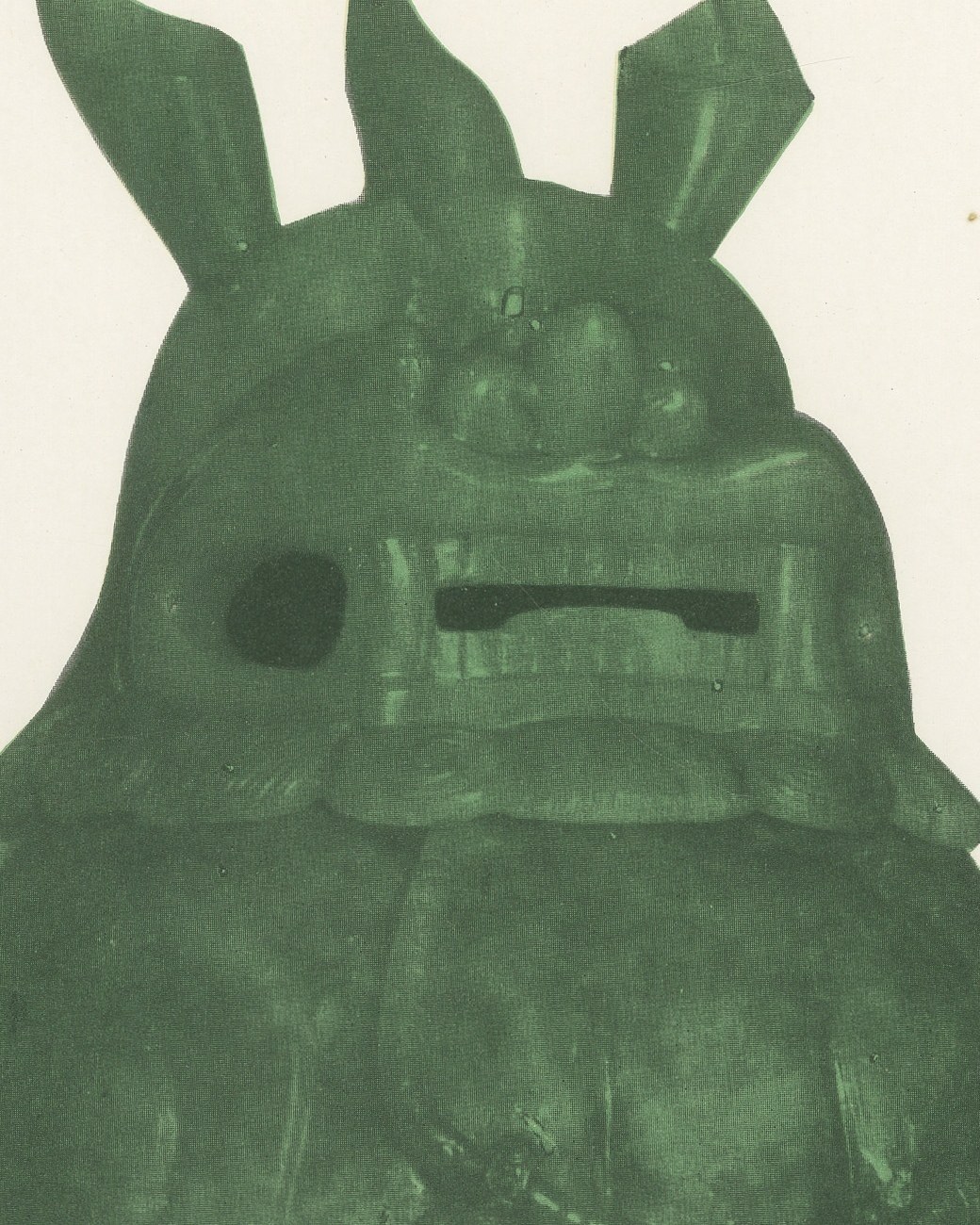
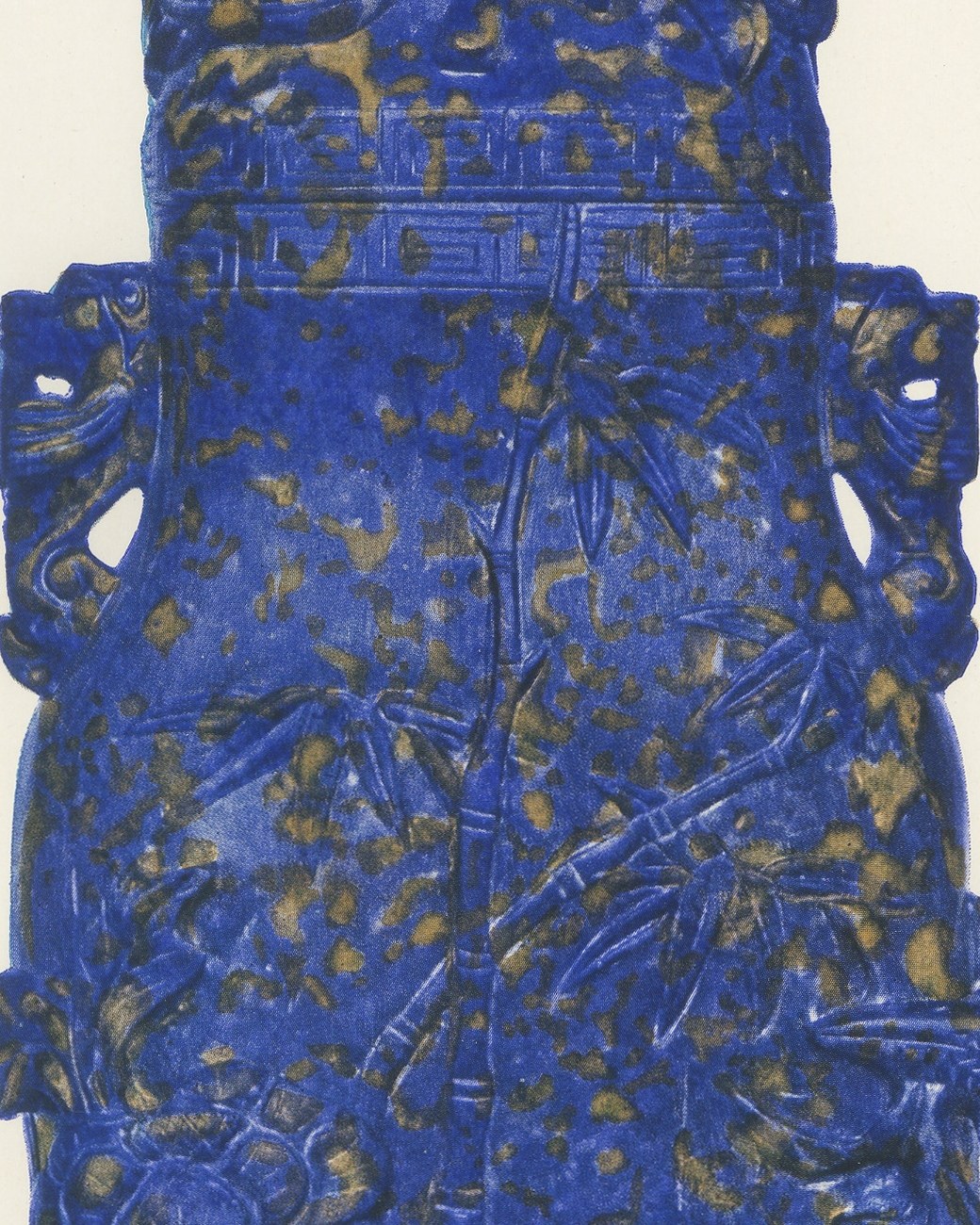
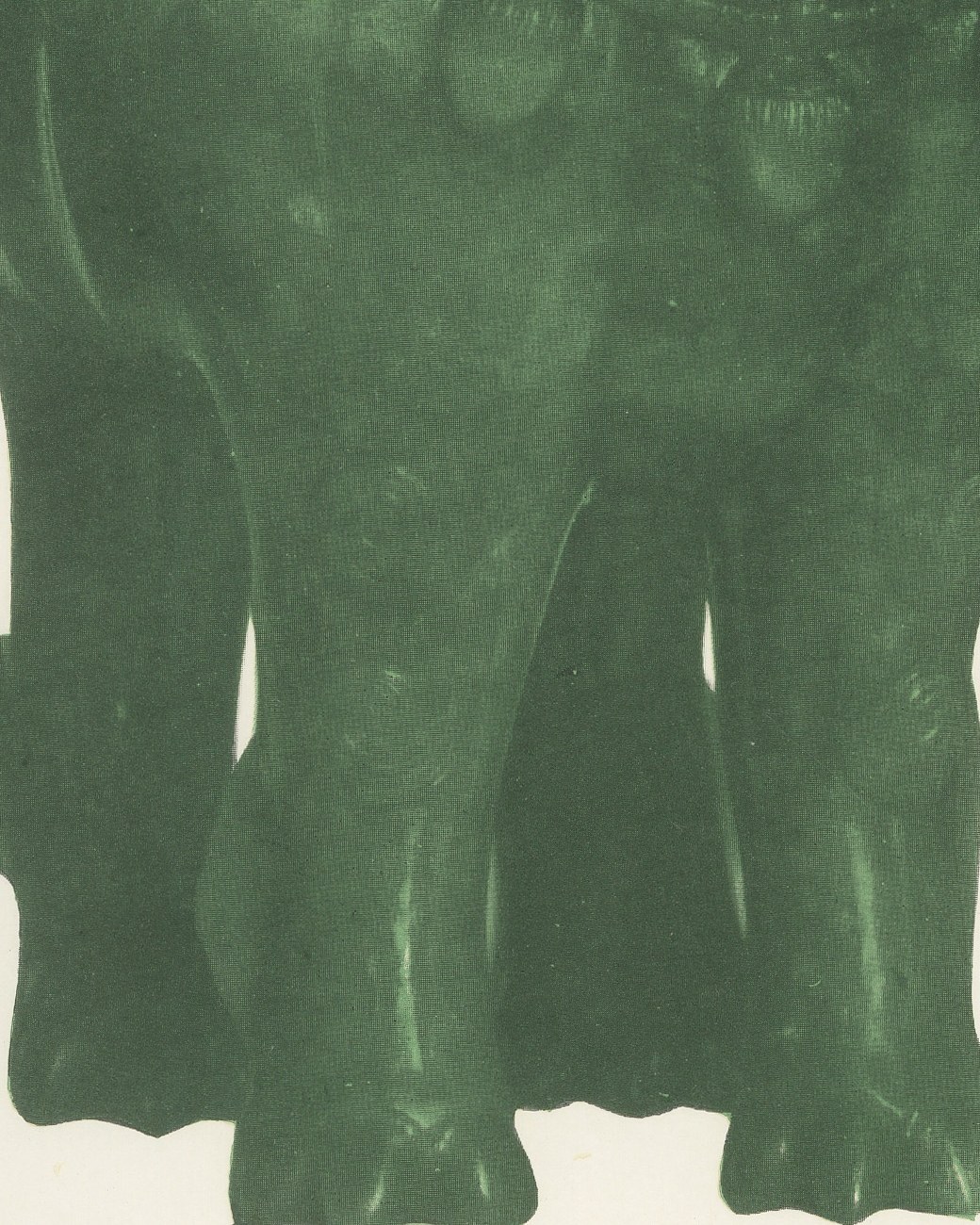
This is a set of two original 1911 color plates, Plates 232 and 233 from Volume II of Gorer and Blacker's Chinese Porcelain and Hard Stones, sold together as one lot. What links them: lapis lazuli and green aventurine. Plate 232: Vase and cover, of lapis lazuli. Decorated in high relief and openwork. On one side a fêng-huang is standing upon rocks; above is the conventional dragon, the chih-lung, or salamander, often called mang, resting upon the clouds. On the other side is another chih-lung, with a fêng-huang. The book gives it to the Kang-he period and records height 10 1/4 inches (26 cm); width 5 1/8 inches (13 cm). In the collection of H. S. Whitaker, Esq. Plate 233: Ting, or incense-burner, in green aventurine. Representing a dragon, or rather the archaic winged monster, the traditional shou lu. The body is carved with a conventional design, showing wings, ribs, and tufts of hair on the legs; and in front three bells threaded upon a cord. Of the various tints of aventurine this green variety is highly valued. The book gives it to the Kien-lung period and records height 7 1/2 inches (19 cm); width 3 3/4 inches (9.5 cm). In the collection of S. E. Kennedy, Esq.
The sheets come from Chinese Porcelain and Hard Stones, the two volume work by the London dealer Edgar Gorer and the writer J. F. Blacker, published by Bernard Quaritch of 11 Grafton Street, New Bond Street, in 1911 in an edition of one thousand numbered copies. The plates are color collotypes, a photographic process that reproduces continuous tone without a visible dot screen, which is why the glazes keep their depth on paper.
What gives these plates their standing is the quality of the collections they record. Pieces illustrated here passed through the great Edwardian cabinets, and several are now in museums, so the book is a photographic record of where this material sat a century ago.
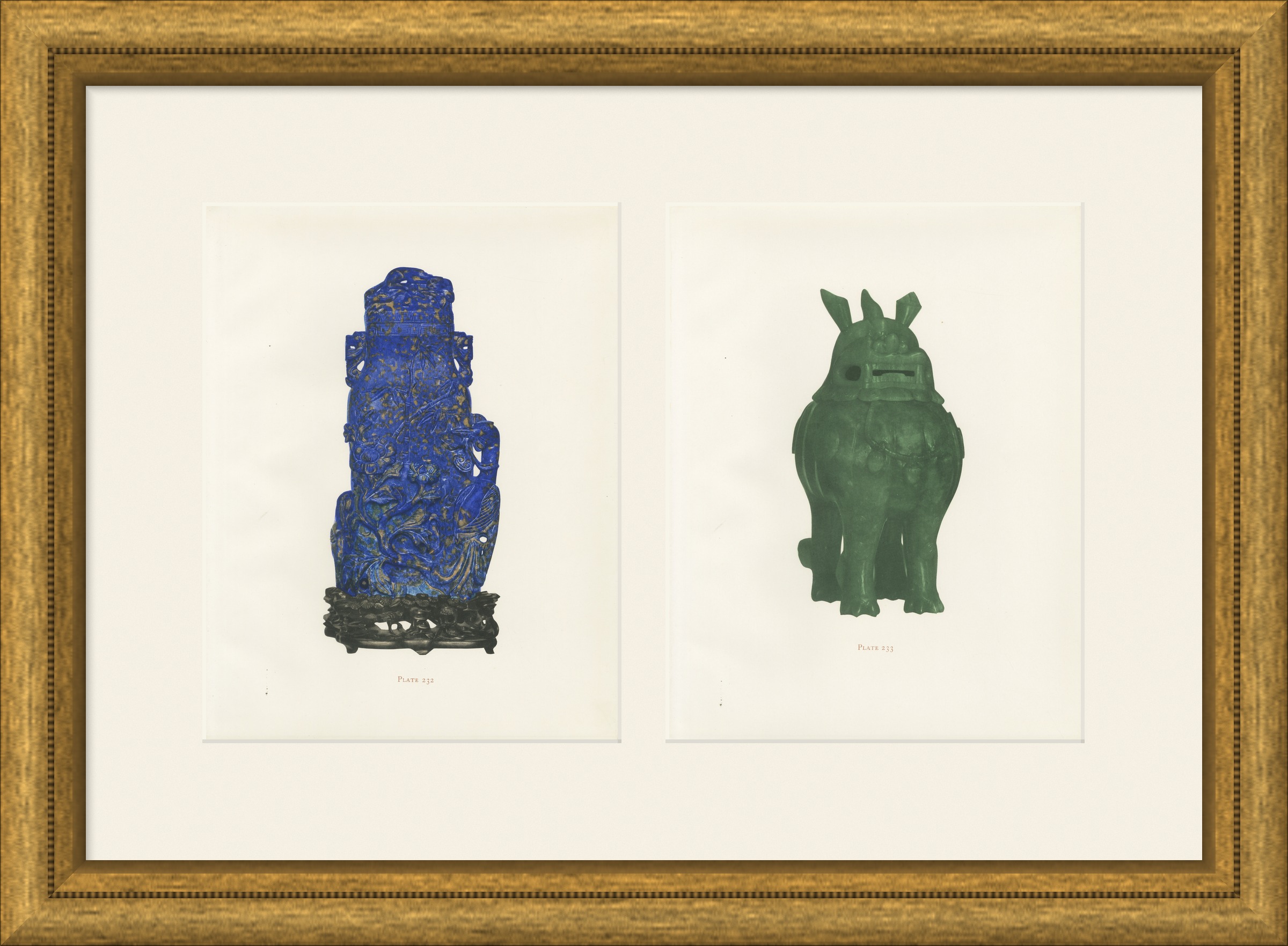
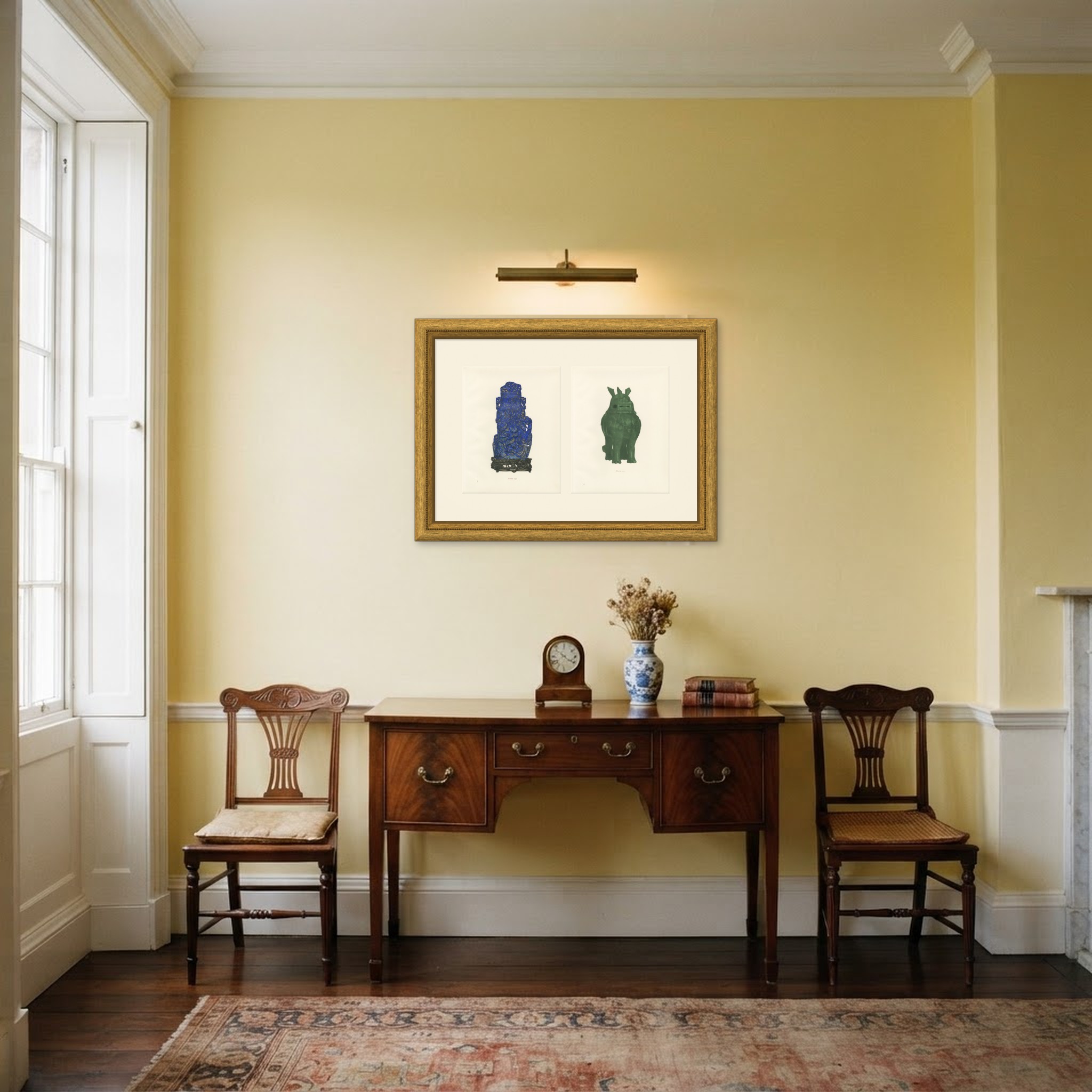
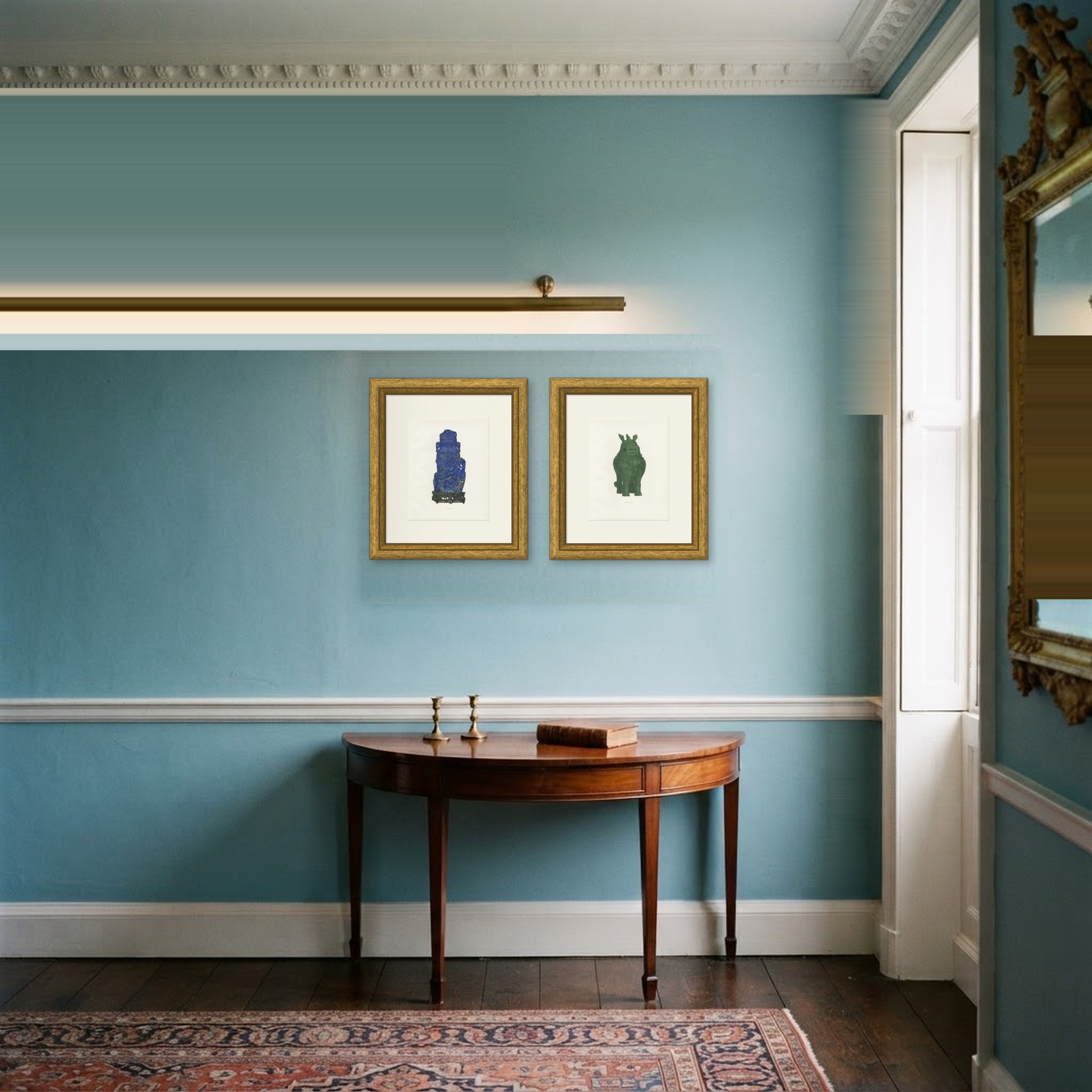
A sheet of this size frames well at about forty by fifty centimeters and suits a study, a hallway or a dining room where its color can be seen close to. The two sheets are the same size and were printed by the same hand, so they hang as one group.
These are original antique prints, not modern reproductions. They are two original sheets sold together as one lot, and the set is never split.
Even age toning throughout. Handling soiling along the edges of one of the two sheets. Light foxing in the margins of both sheets. Slight wear at the corners of one of the two sheets.
This item is sold unframed. Any framed or interior images are shown for presentation and inspiration only, unless the listing explicitly states that the item is sold framed.