Italian Faience Coupe d’Accouchée – Antique Decorative Arts Lithograph 1869
€ 450
One of a kind: this is the sheet in the photographs. Ships from Langweer, the Netherlands.
Date
1869
Sheet size
53 × 35 cm (20.9 × 13.8 in)
Reference
BG-12770-88
Condition
Very good, with some mild age toning and light foxing confined to the margins. Plate mark visible. Strong impression with vibrant color preserved. Please study the image carefully.
About this sheet
Antique Lithograph of Italian Faience Coupe d’Accouchée, Delange, 1869
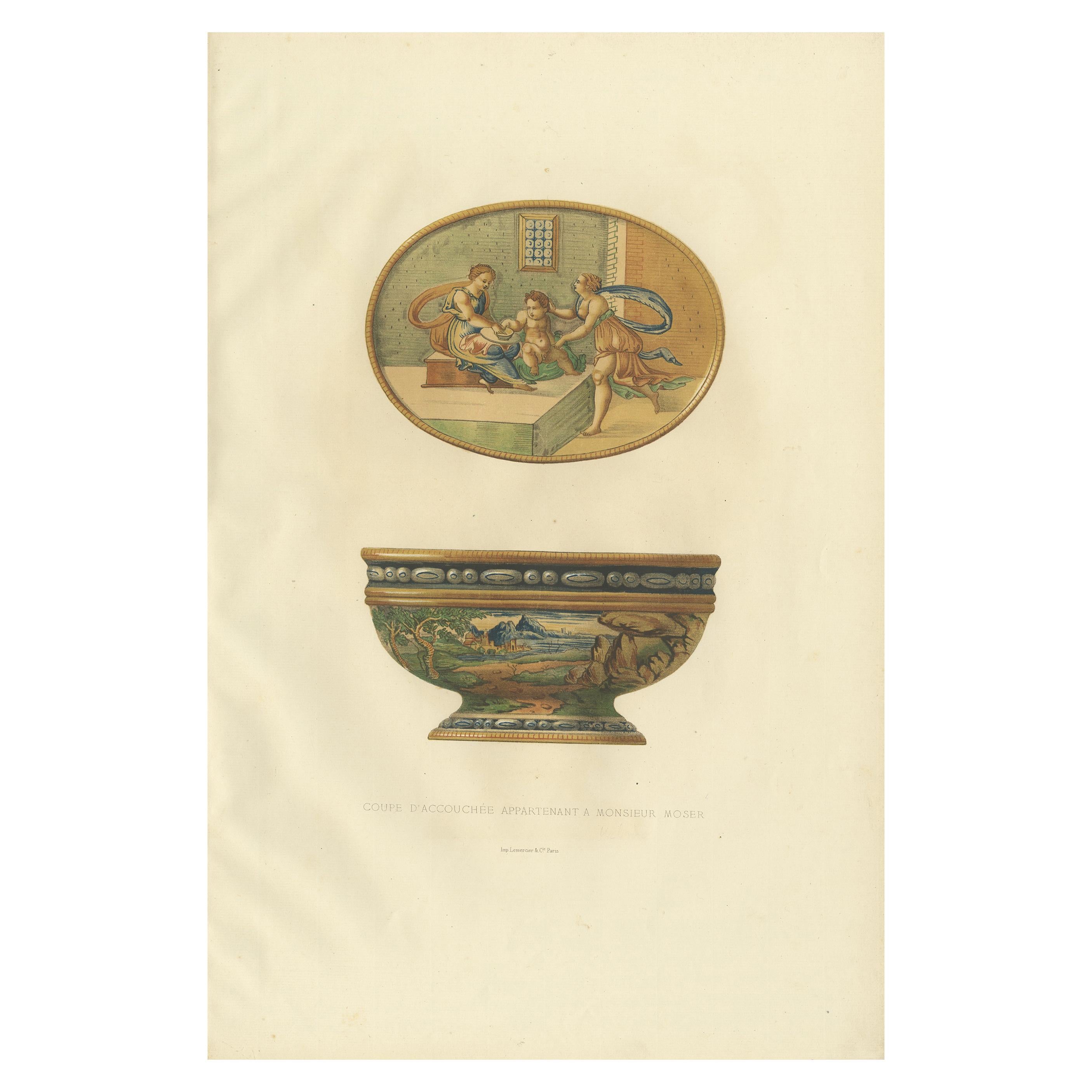
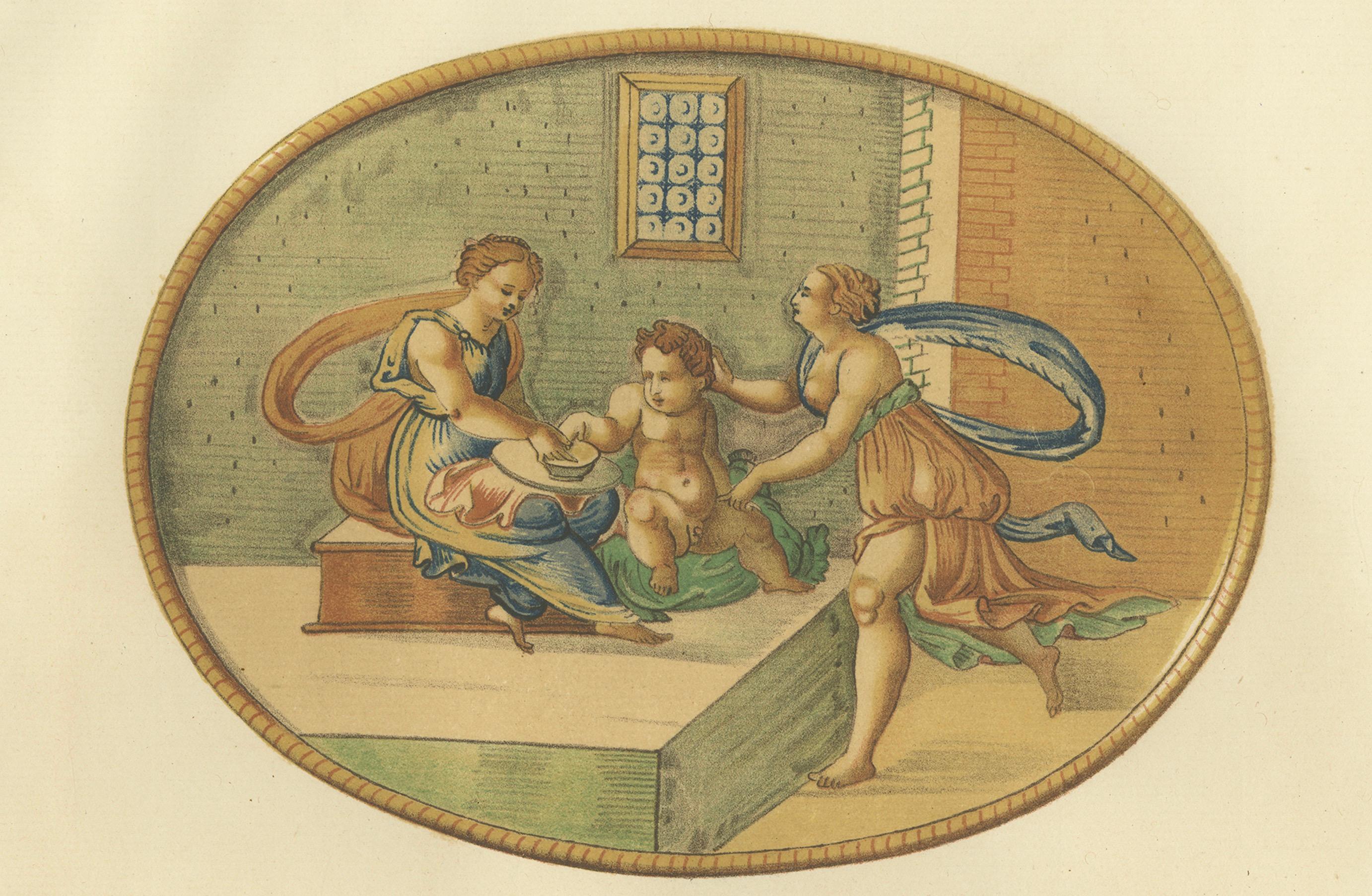
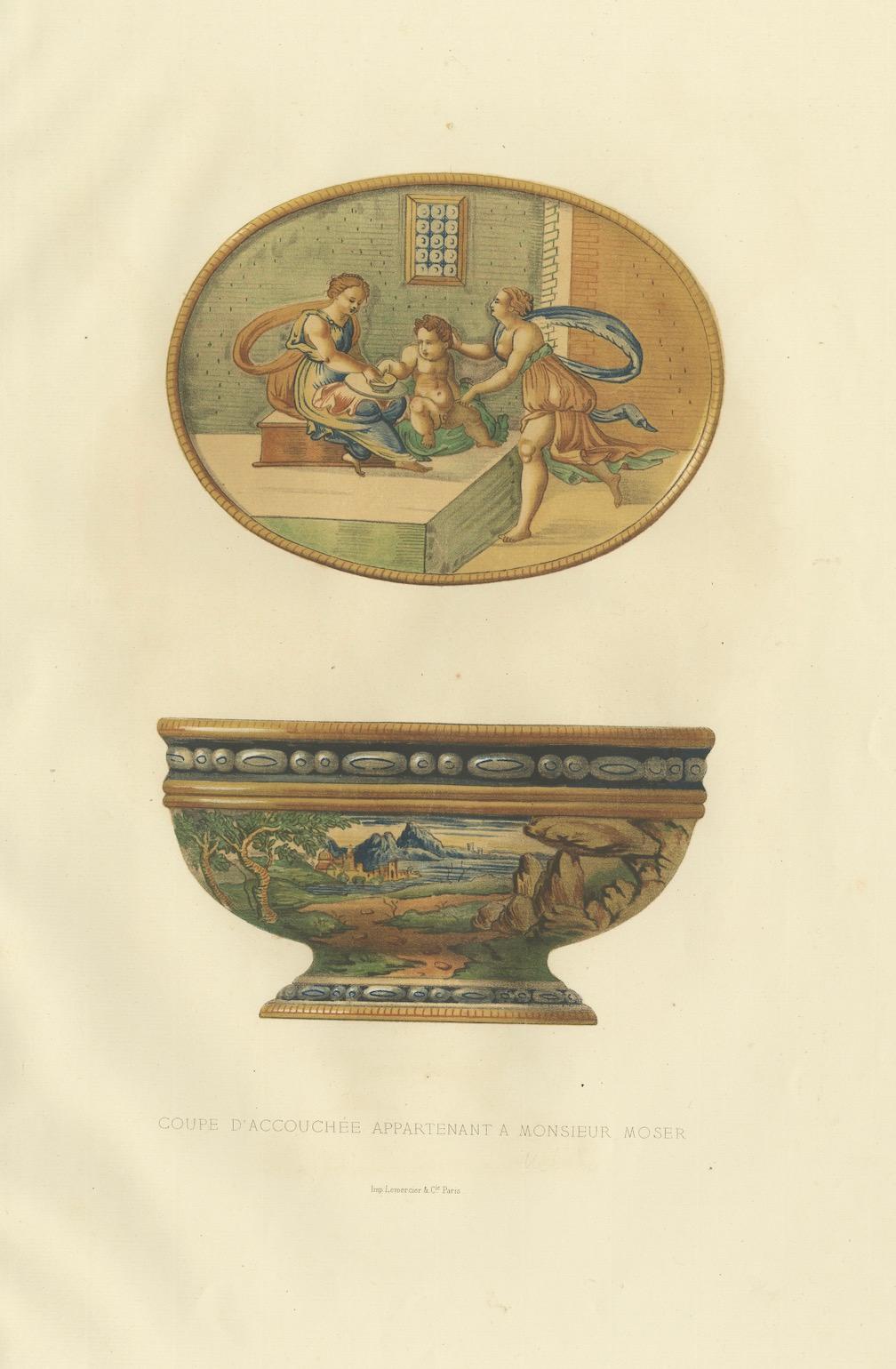
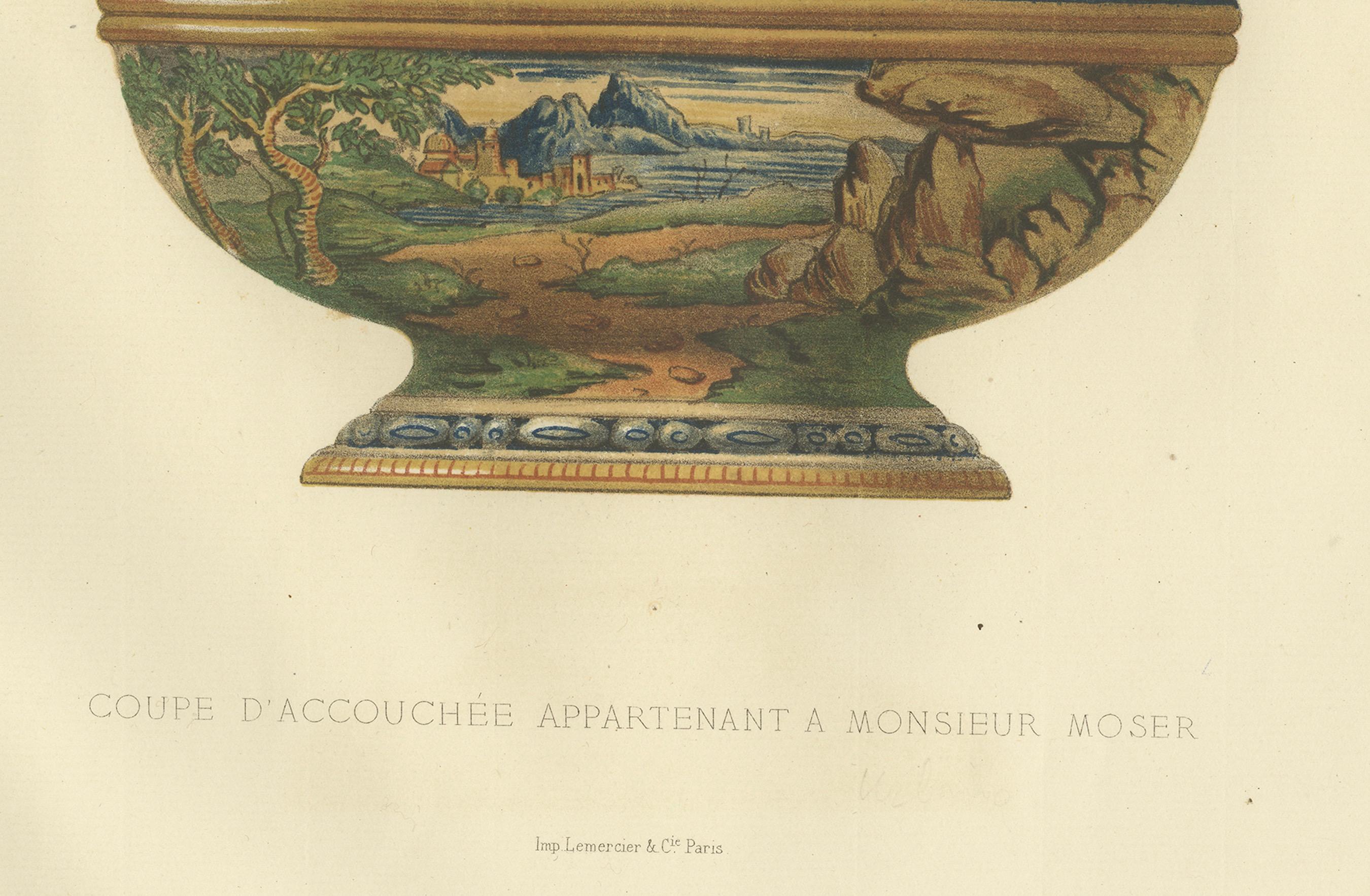
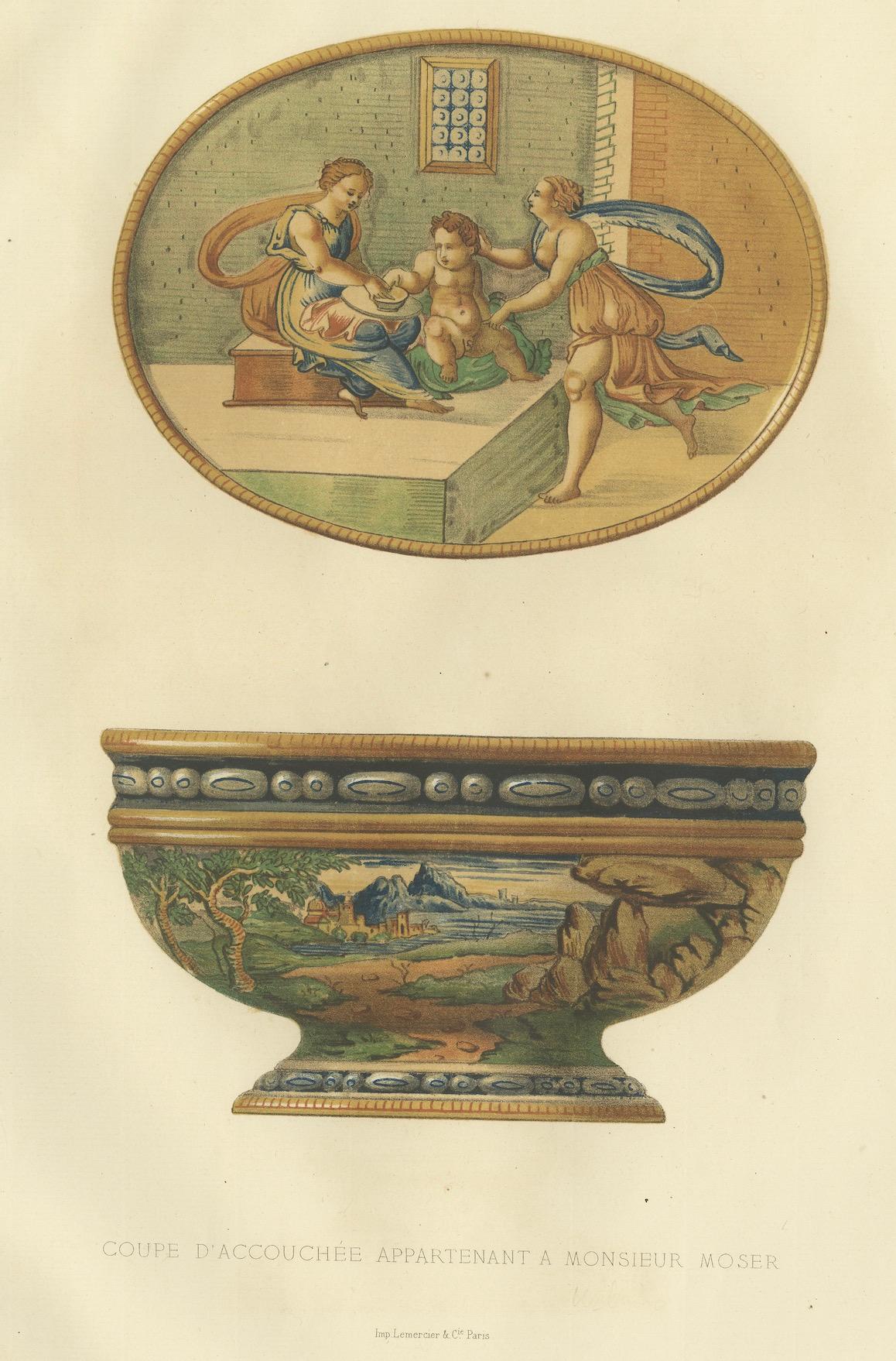
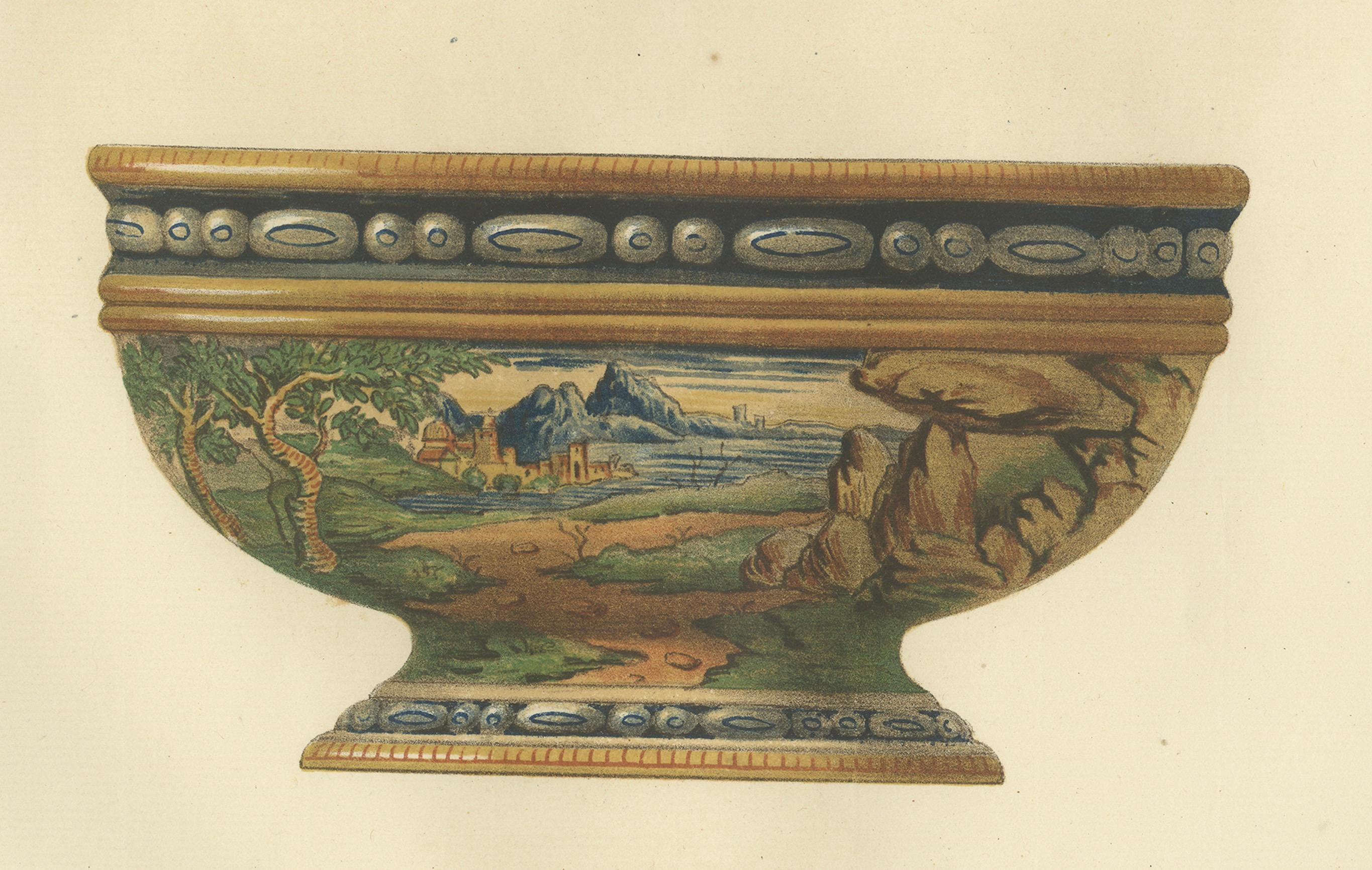
Large-format antique lithograph depicting a richly decorated Italian faience 'coupe d’accouchée (childbirth bowl), once belonging to Monsieur Moser. These bowls, often gifted to women after childbirth, were both celebratory and symbolic objects, decorated with lively mythological or domestic imagery. The interior medallion of this example portrays a tender Renaissance scene: two attendants assisting a seated mother with an infant, set within an architectural space. The exterior of the bowl is painted with a continuous landscape of mountains, rivers, and fortified towns, blending pastoral calm with allegorical symbolism.
This lithograph originates from Henri Delange’s *Recueil de Faïences Italiennes des XVe, XVIe et XVIIe Siècles* (Paris, 1869), one of the most important catalogues of Renaissance Italian maiolica. The work preserves in print the most remarkable pieces of tin-glazed pottery from the 15th to 17th centuries, documenting objects that were prized in princely and aristocratic collections across Europe. The *coupe d’accouchée* illustrates how maiolica was not only decorative but also deeply tied to the rituals of family and society in Renaissance Italy.
Condition: Very good, with some mild age toning and light foxing confined to the margins. Plate mark visible. Strong impression with vibrant color preserved. Please study the image carefully.
Framing tips: This lithograph, with its dual depiction of interior and exterior views, will be most effectively framed with a wide cream or ivory mat to allow both images to stand out clearly. A gilt frame will echo the warm tones of the composition, while a dark wood frame will provide contrast. Double matting with a fine blue or green inner line can enhance the Renaissance palette and bring out the landscape tones.
Technique: Color lithograph Maker: Henri Delange, Paris, 1869