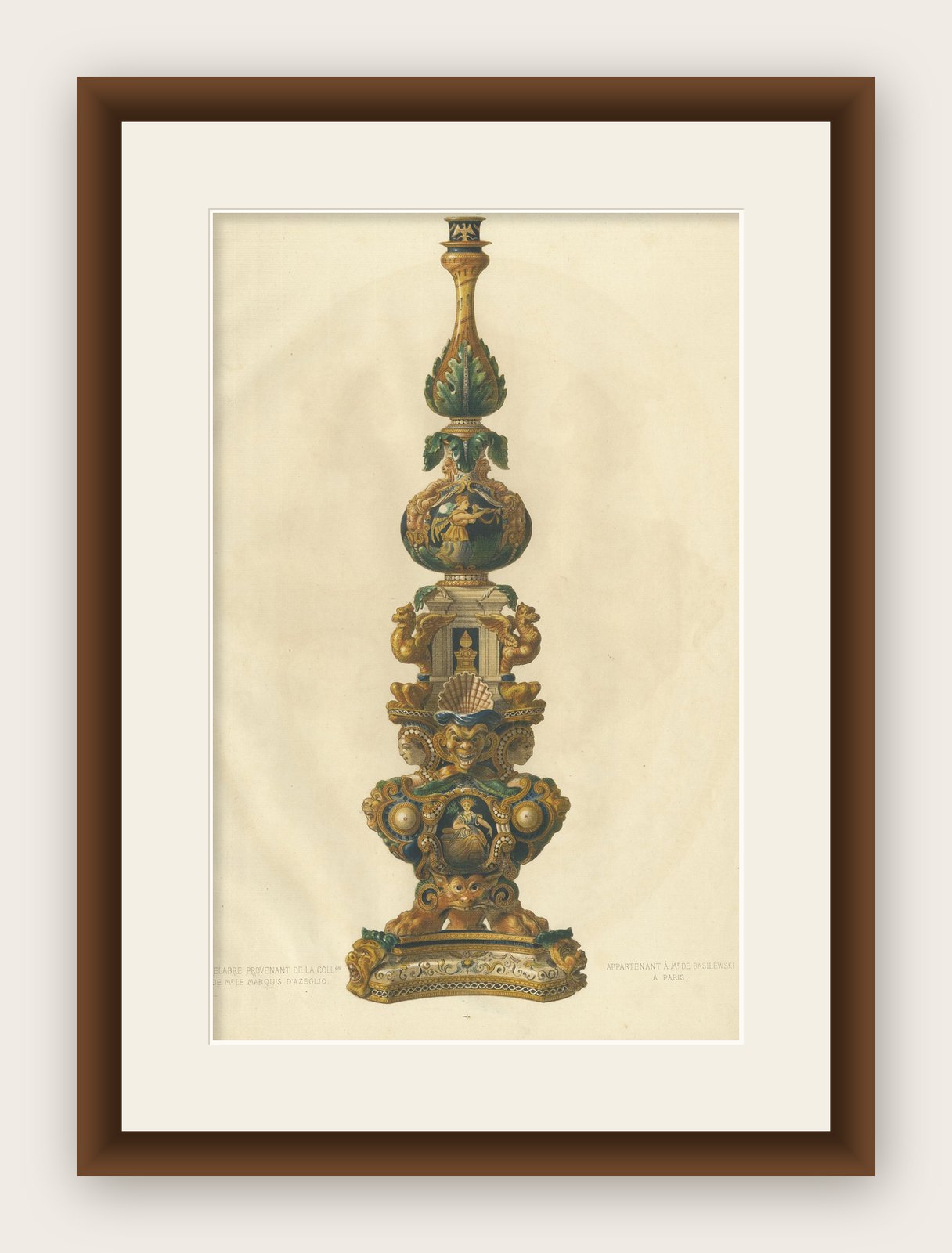
Italian Faience Candelabrum – Antique Decorative Arts Lithograph, 1869
€ 450
Original antique · The actual sheet photographed · Certificate of authenticity on request · Sold unframed · Worldwide shipping from € 15 (rates)
Date
1869
Mapmaker / artist
Henri Delange, Paris, 1869
Technique
Color lithograph
Sheet size
53 × 35 cm (20.9 × 13.8 in)
Reference
BG-12770-94
What the condition grades mean
Excellent
Bright and clean, with no faults worth mentioning.
Very good
Only light signs of age, such as faint toning.
Good
Normal signs of age for a sheet of this period: toning, some foxing, small marks or neat old repairs.
Fair
Clear faults such as staining, tears or repairs, priced to match.
Every fault we see is written in the condition note, and the whole sheet is shown uncropped in the photos.
Condition
Very good, with light age toning and faint foxing in the margins. The plate retains strong colors and detail. Plate mark visible. Please examine the image carefully.
About this sheet
Antique Lithograph of Italian Faience Candelabrum, Delange, 1869
Large-format antique lithograph depicting an elaborate Italian faience candelabrum in grotesque style. This remarkable piece, once in the collection of the Marquis d’Azeglio and later belonging to Mr. de Basilewski in Paris, showcases the height of Renaissance ceramic artistry. The candelabrum is richly decorated with hybrid masks, shells, griffons, volutes, and painted roundels featuring allegorical figures. The tall, tapering shaft rises from a sculptural base populated by grotesque heads and ornament, culminating in a candle socket decorated with architectural and botanical motifs.
This print is from Henri Delange’s Recueil de Faïences Italiennes des XVe, XVIe et XVIIe Siècles (Paris, 1869), a celebrated catalog of Renaissance maiolica and faience masterpieces. The grotesque decoration reflects the Renaissance rediscovery of classical antiquity, inspired by ancient Roman frescoes and ornament discovered in the Domus Aurea. Italian ceramicists adapted these fantastical motifs into maiolica forms, resulting in extraordinary pieces that blended painting, sculpture, and functional design.
Framing tips: This lithograph’s vertical composition will be best emphasized with a tall frame. Use a wide ivory or pale cream mount to provide balance, and consider a dark wood frame for contrast or gilt for resonance with the golden tones. A double mat with a fine green or blue line can echo the Renaissance palette and enrich the presentation.