About this sheet
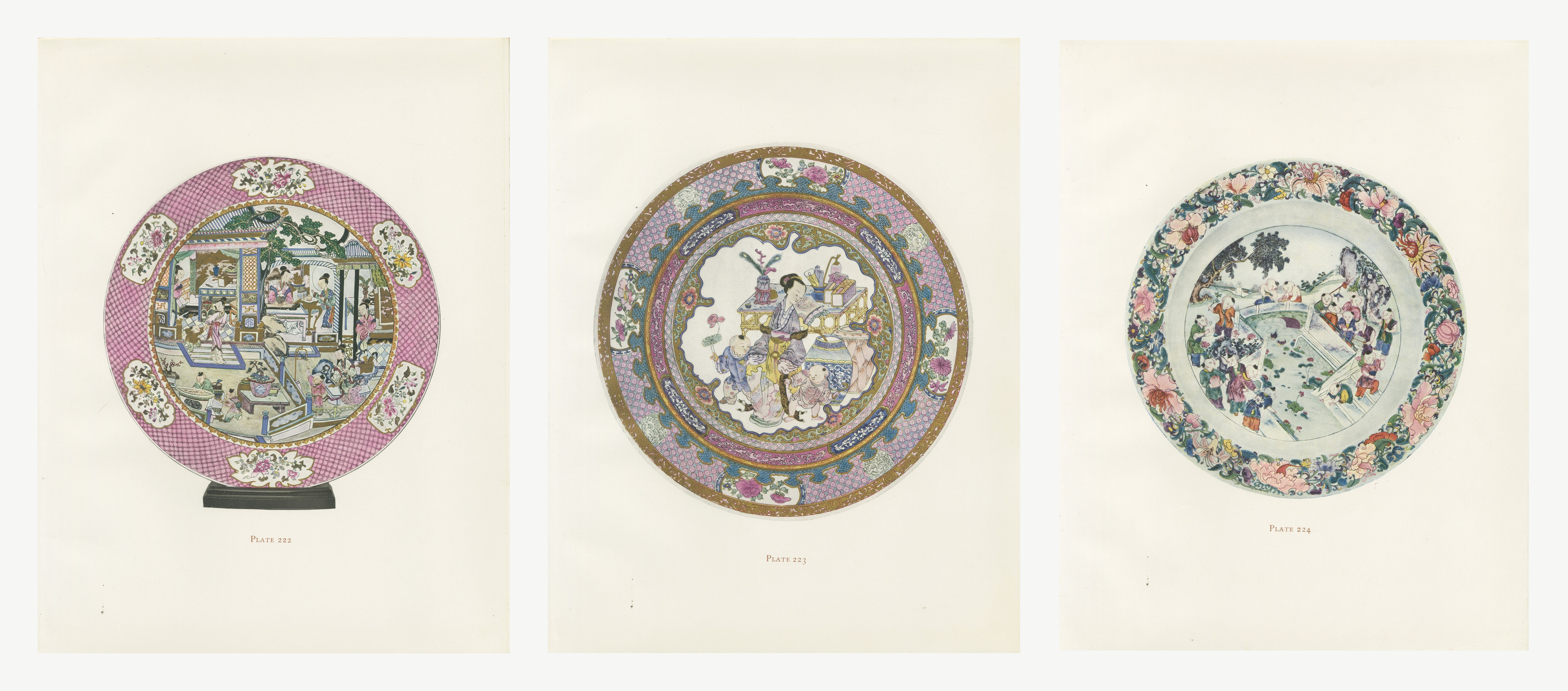
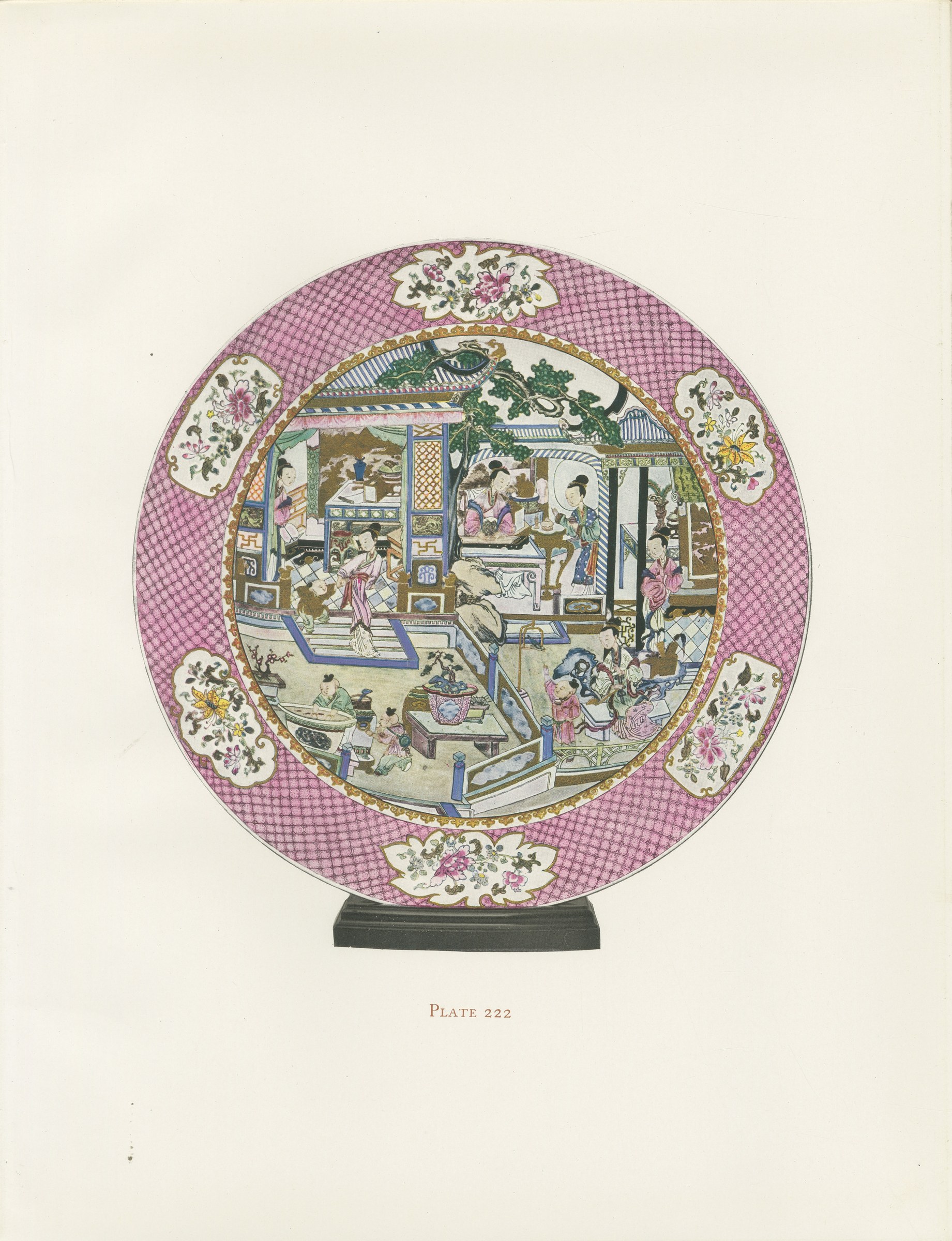
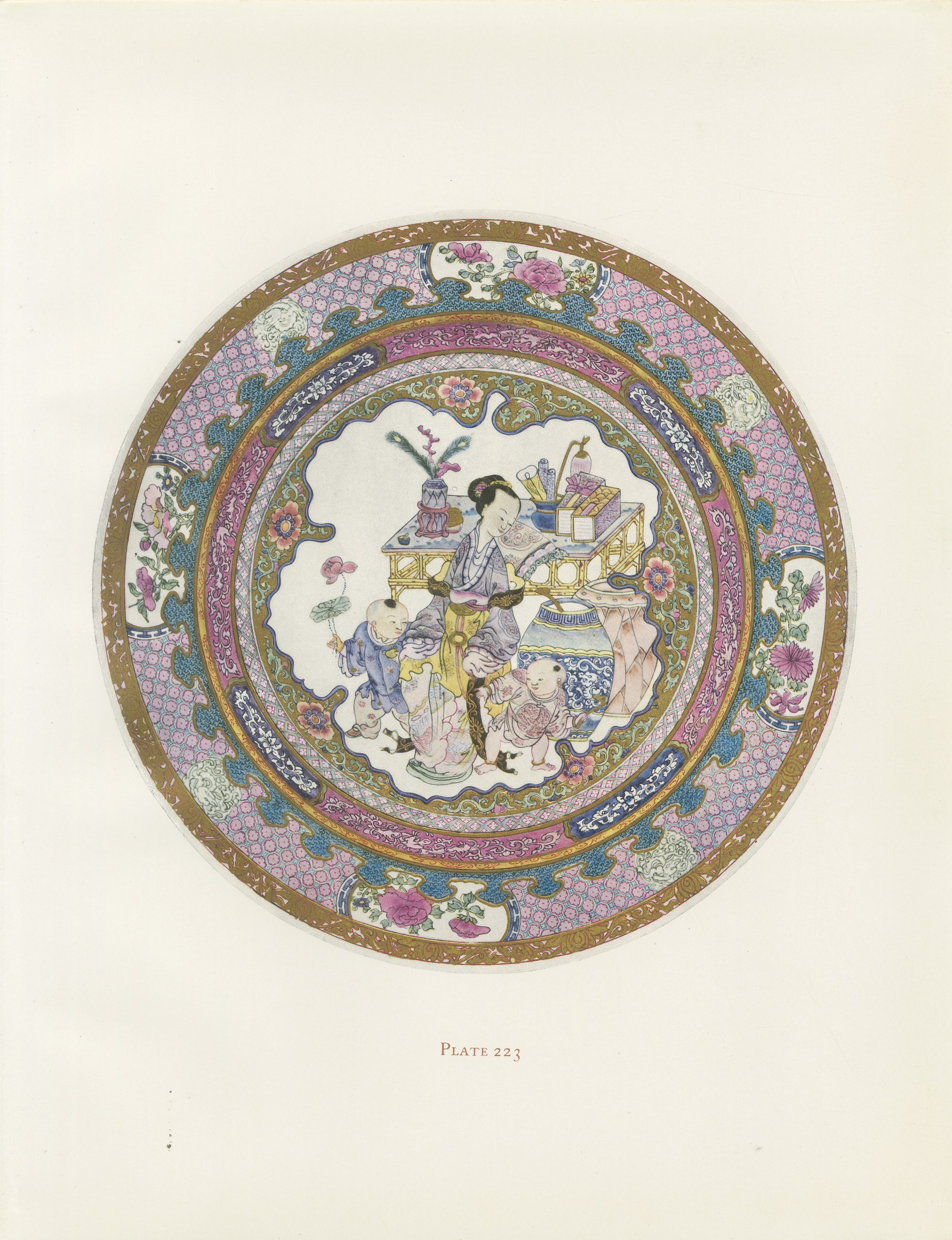
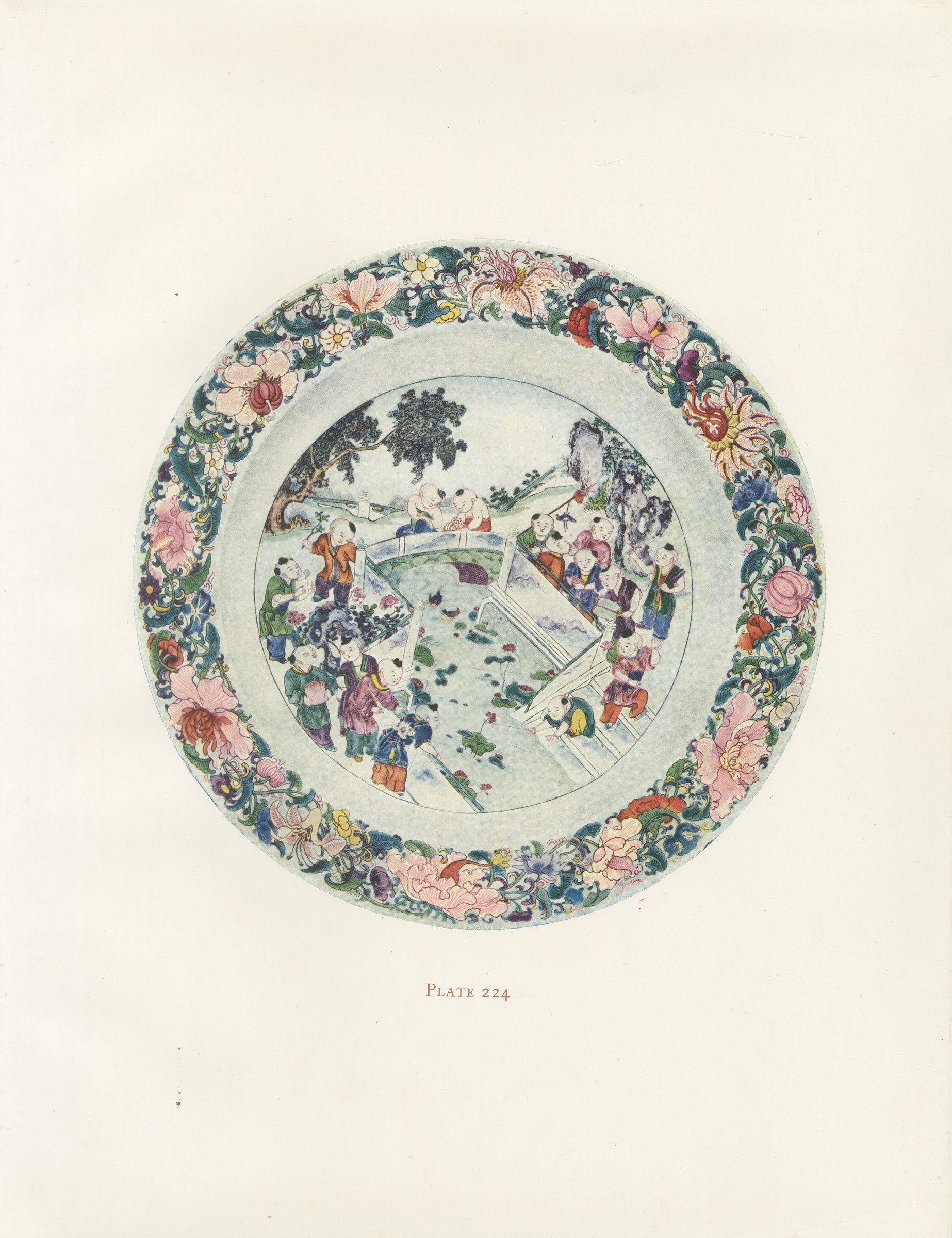
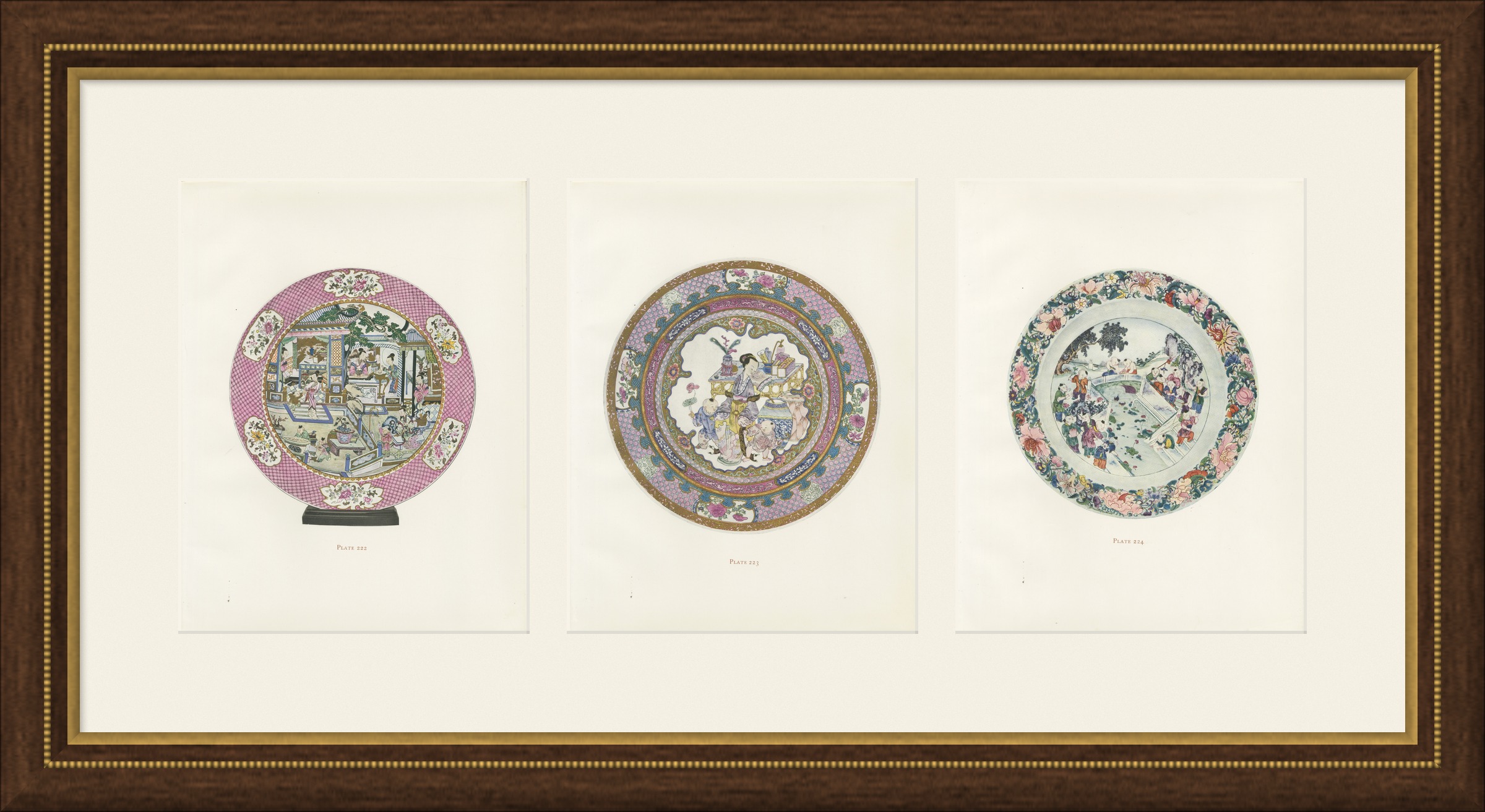
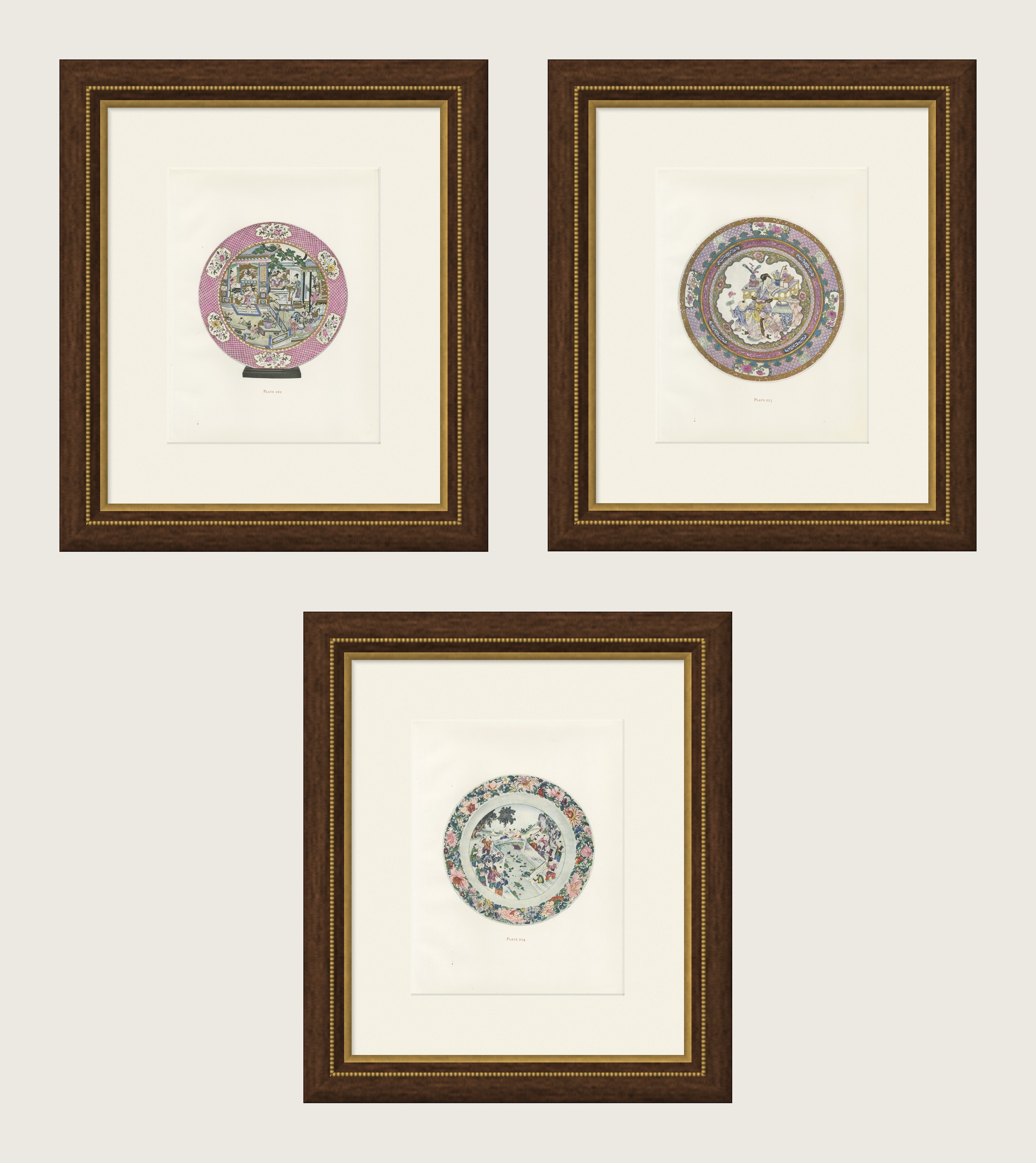
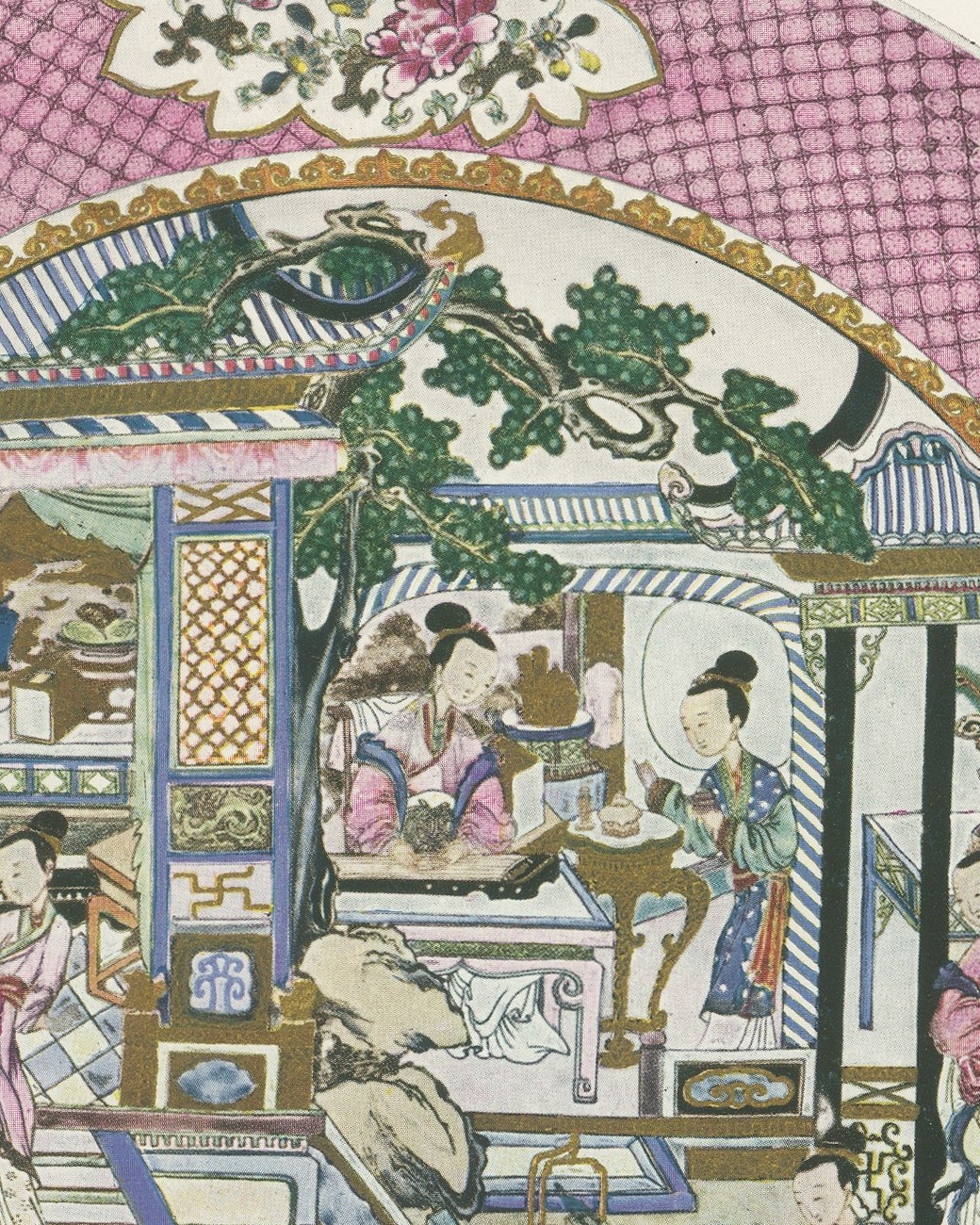
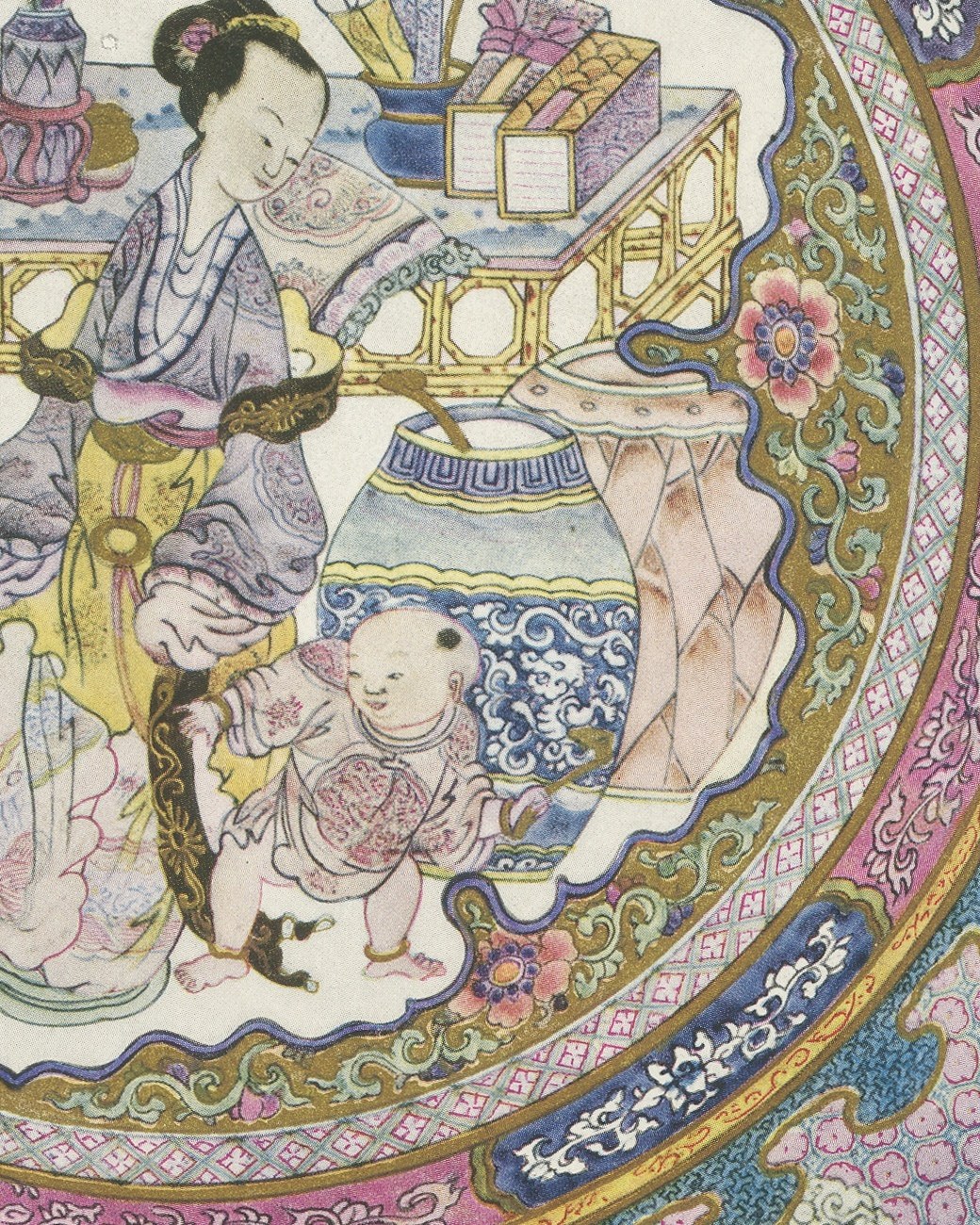
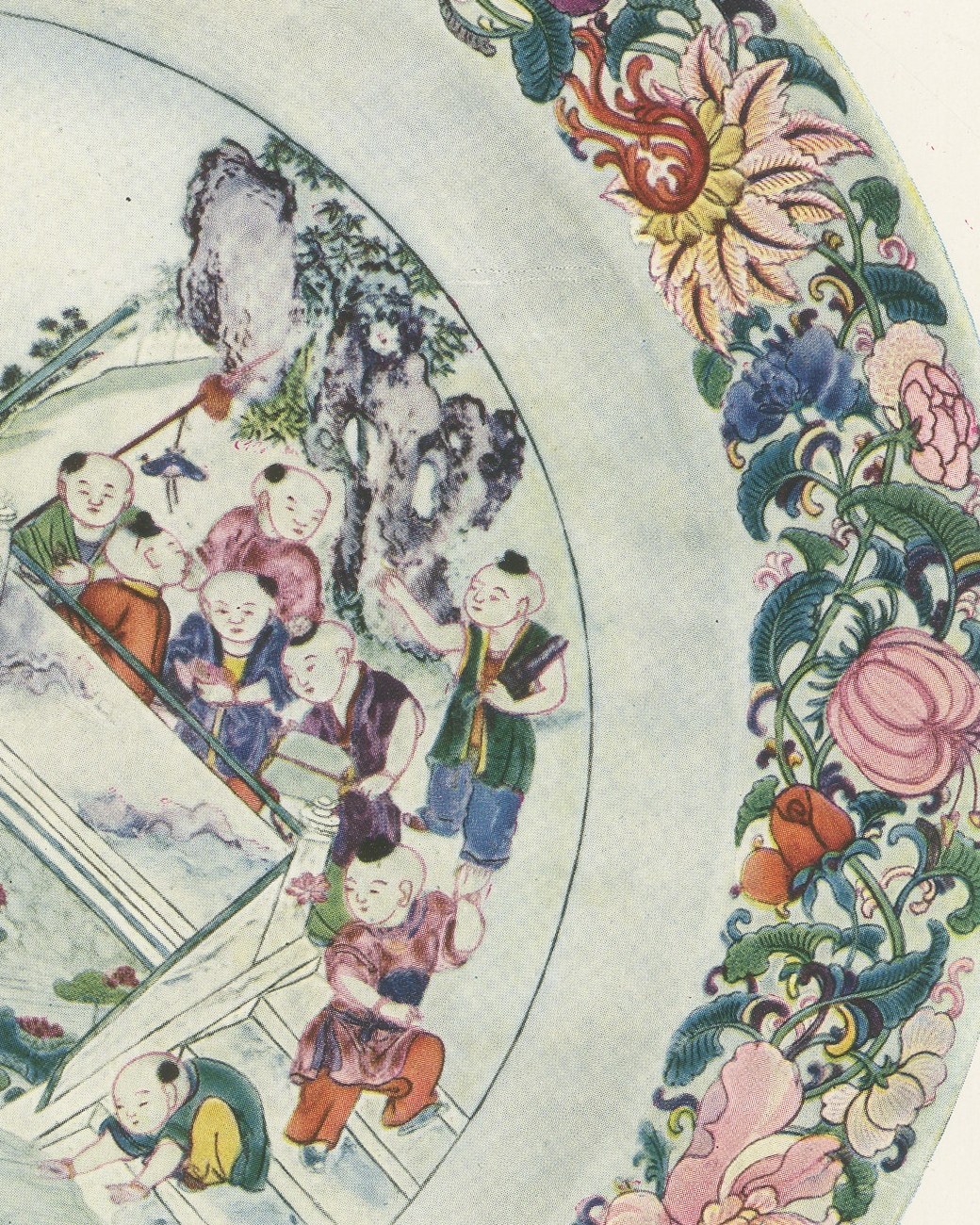
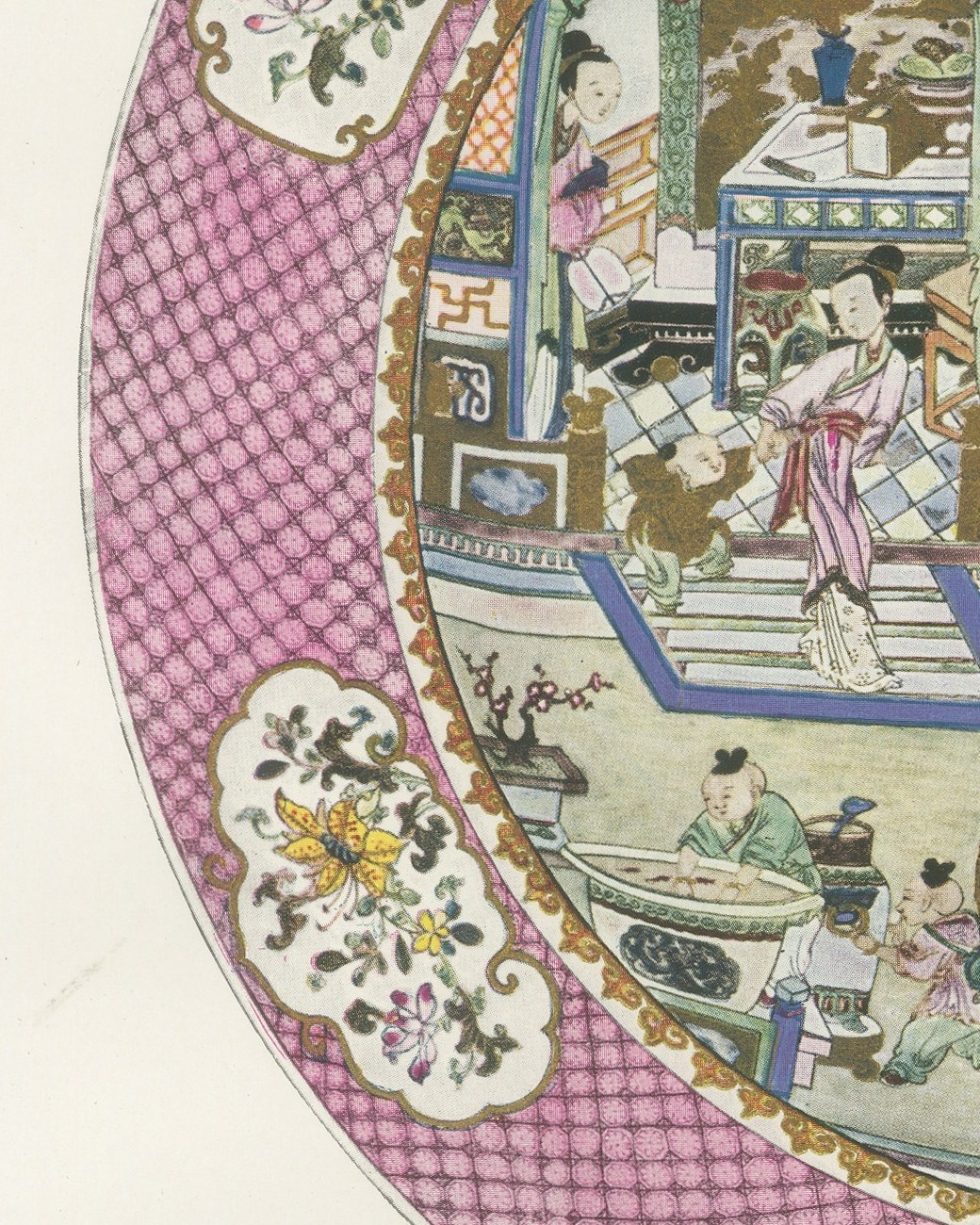
This is a set of three original 1911 color plates, Plates 222, 223 and 224 from Volume II of Gorer and Blacker's Chinese Porcelain and Hard Stones, sold together as one lot. What links them: famille rose plates and dishes. Plate 222: Large plate. Decoration of the famille rose. The border of rose mosaic, outlined in black, is interrupted by six reserves of varied forms outlined in gold, enclosing roses, lilies, lotus, and other flowers in rose, yellow, and other tints. At the center, with a border of ju-i heads; the colors are paler and less brilliant than during the Kang-he period. The book gives it to the Yung-ching period and records diameter 21 3/8 inches (54.3 cm). In the collection of S. E. Kennedy, Esq. Plate 223: Plate, ruby-backed, seven-bordered, egg-shell. The real narrow border has ornamental foliage and flowers in gold, followed on the rim by a mosaic ground in rose interrupted by four white reserves containing enameled flowers, alternating with four seals formed by coiled dragons. The back has a beautiful ruby glaze. The book gives it to the Yung-ching period and records diameter 8 1/8 inches (20.5 cm). In the collection of Clive Kenrick, Esq. Plate 224: Dish, large, round, with flat rim and deep fall. Decorated with the fine enamels of the famille rose and with a rich rouge de fer, all upon a white ground. The design upon the rim is a beautiful border of fruit and flowers; the scene on the base inside shows figures with a balustrade. The book gives it to the Yung-ching period and records diameter 16 5/8 inches (42.3 cm). In the collection of G. R. Davies, Esq.
The plates belong to Edgar Gorer and J. F. Blacker's Chinese Porcelain and Hard Stones, issued in London by Bernard Quaritch in 1911, a work in two volumes whose two hundred and fifty four color plates were printed to the highest standard the period could reach. The plates are color collotypes, a photographic process that reproduces continuous tone without a visible dot screen, which is why the glazes keep their depth on paper.
Edgar Gorer was one of the most visible dealers in Chinese art of his generation. He traded as S. Gorer and Son at 170 New Bond Street with a branch at 500 Fifth Avenue in New York, dealt chiefly in Kangxi, Yongzheng and Qianlong porcelain, and sold to Sir William Lever. He died on 7 May 1915 when the Lusitania was torpedoed, and his body was never recovered.
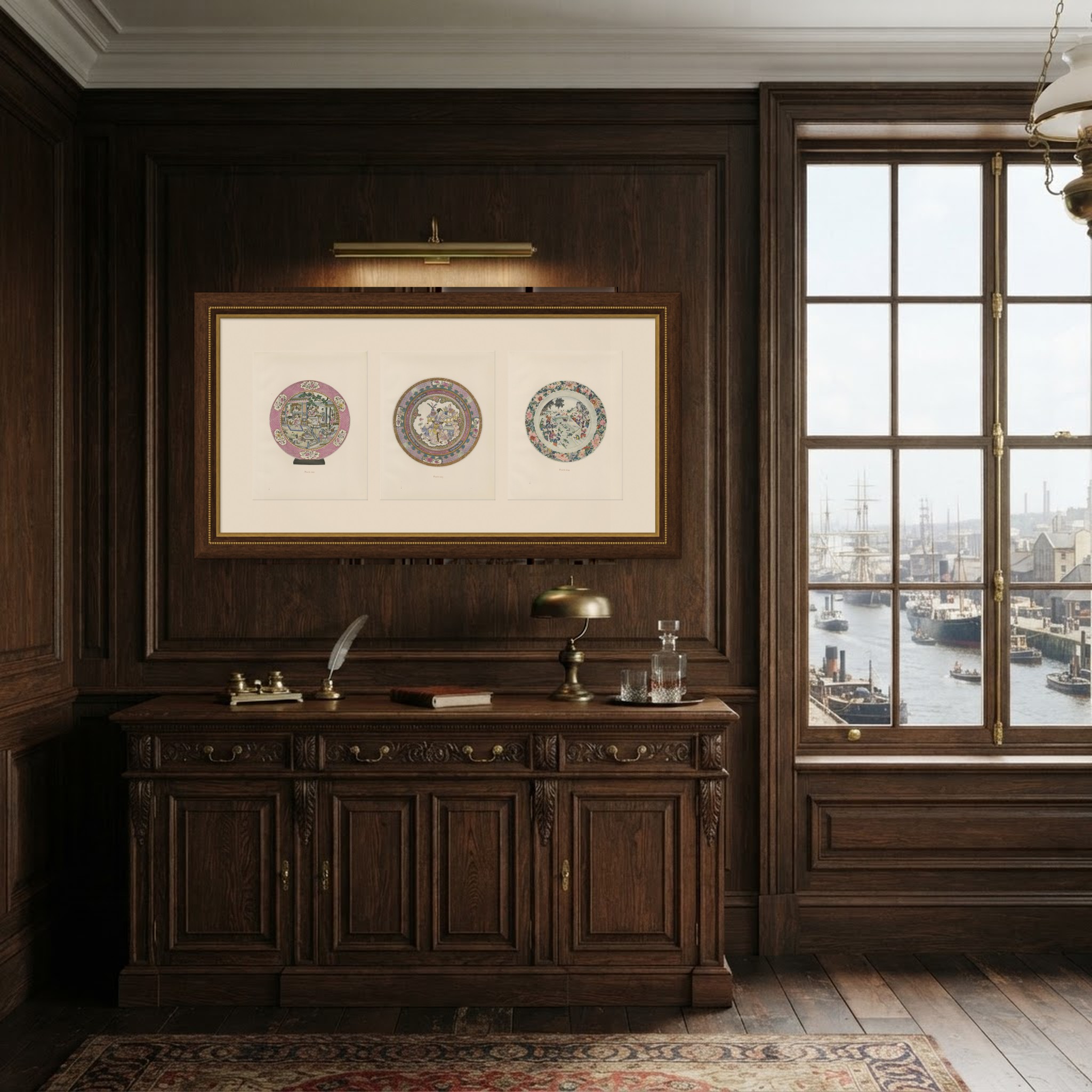
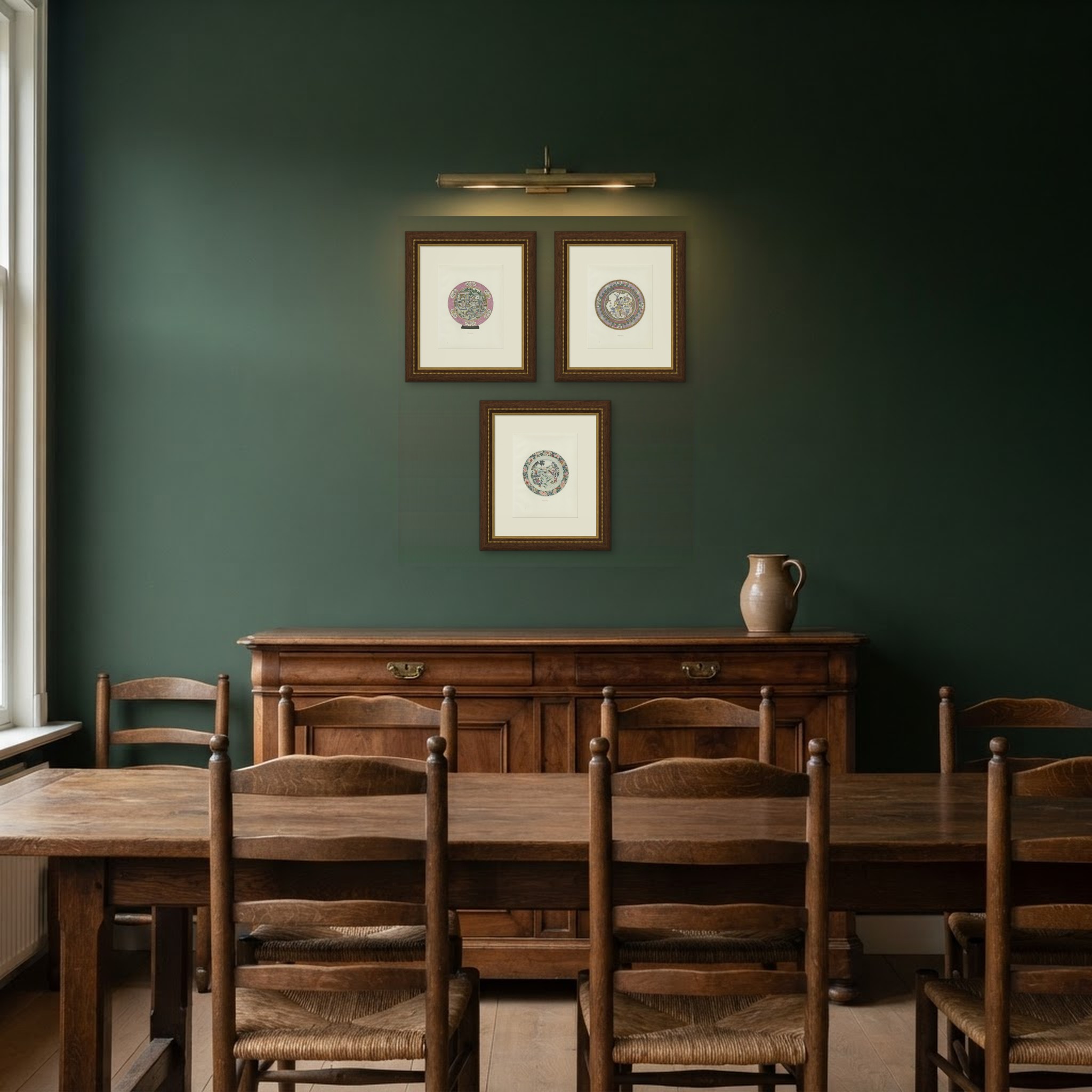
A sheet of this size frames well at about forty by fifty centimeters and suits a study, a hallway or a dining room where its color can be seen close to. The three sheets are the same size and were printed by the same hand, so they hang as one group.
These are original antique prints, not modern reproductions. They are three original sheets sold together as one lot, and the set is never split.
Even age toning throughout. Light foxing in the margins of all three sheets. Slight wear at the corners of two of the three sheets. Shallow nicks along an edge of one of the three sheets.
This item is sold unframed. Any framed or interior images are shown for presentation and inspiration only, unless the listing explicitly states that the item is sold framed.